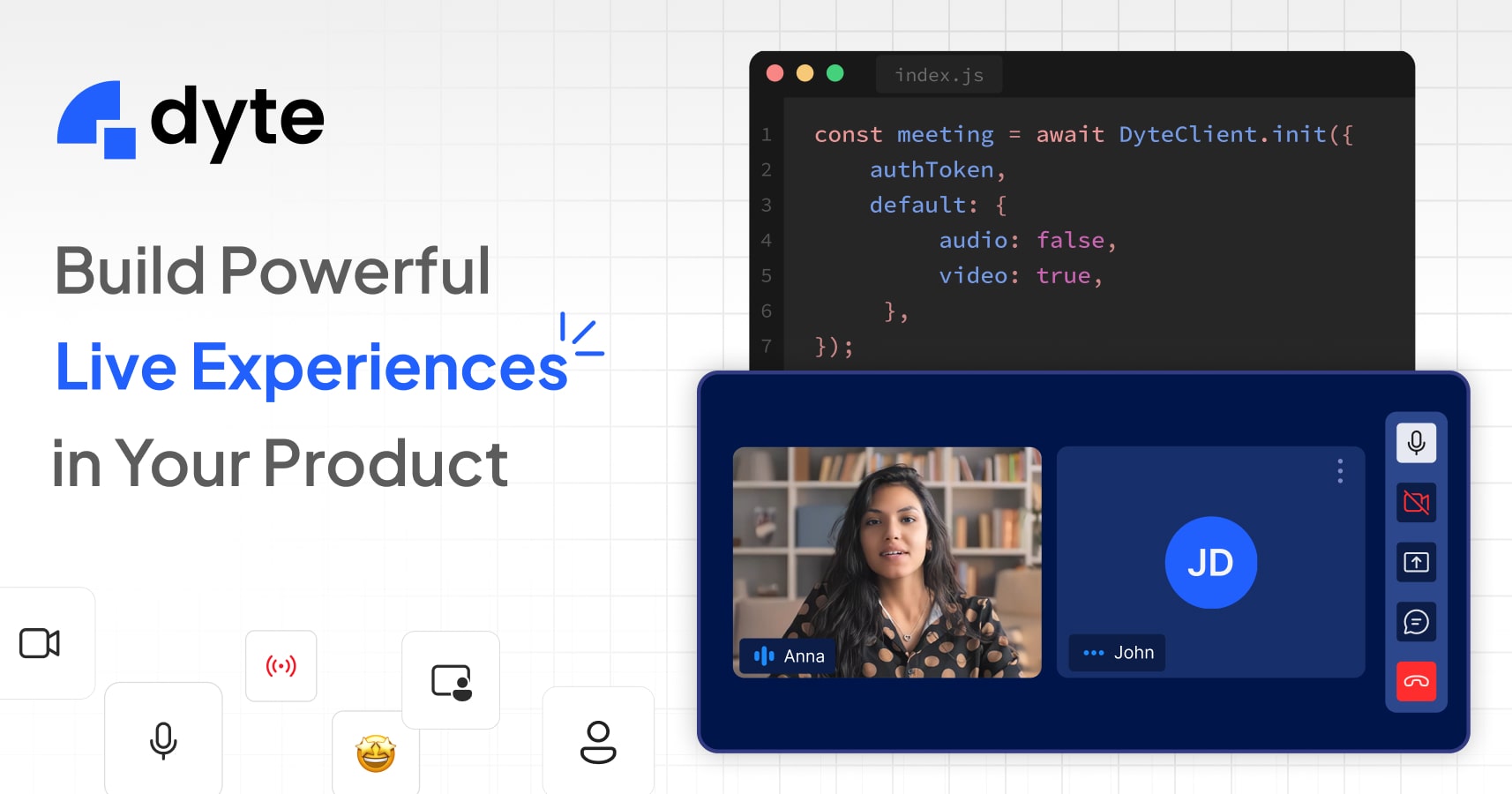
Dyte is a developer-focused SDK platform for easily embedding high-quality, customizable, and secure live video and audio experiences into any application. It provides pre-built UI components, powerful plugins, and a robust backend, enabling developers to build interactive communication features for industries like telehealth, ed-tech, and virtual events with minimal effort, all while prioritizing security with SOC2 and HIPAA compliance.
Microsoft's central hub for discovering, using, and contributing to a vast portfolio of open-source projects. It offers developers access to powerful tools, frameworks, and AI/ML libraries, fostering collaboration and innovation within a global community.
Product overview
Dyte Product overview
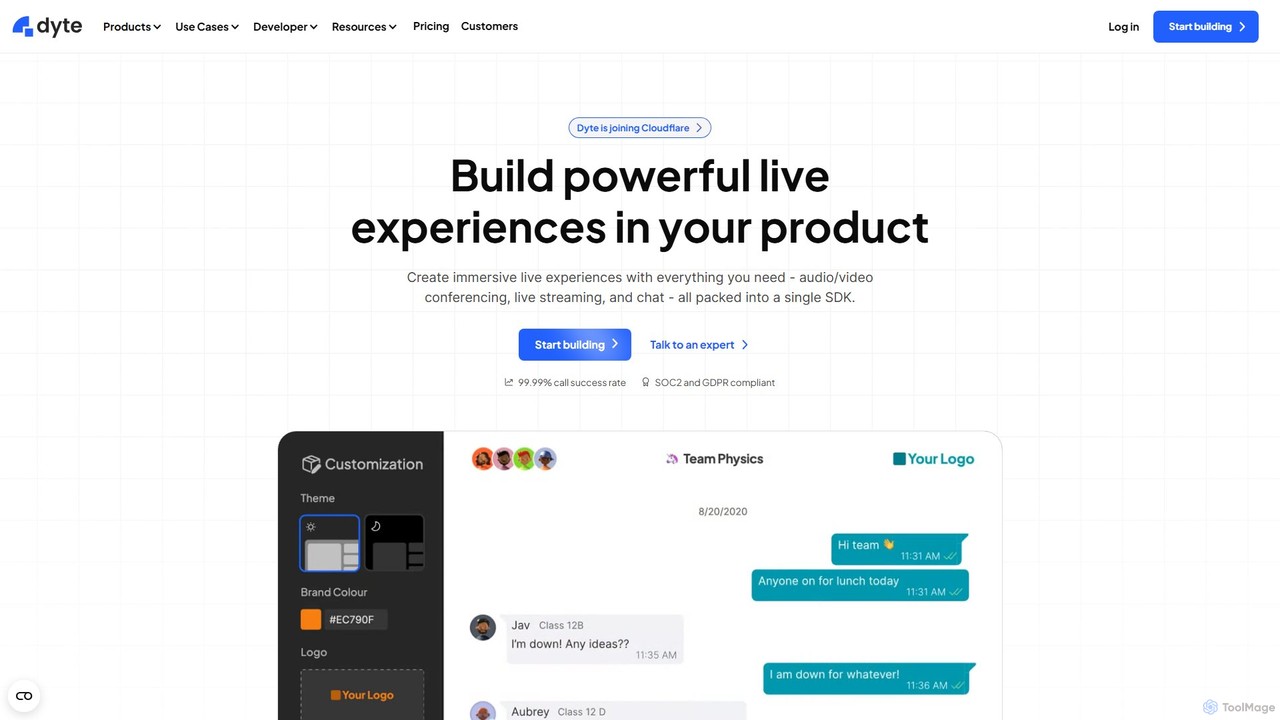
Dyte is a developer-focused SDK platform for easily embedding high-quality, customizable, and secure live video and audio experiences into any application. It provides pre-built UI components, powerful plugins, and a robust backend, enabling developers to build interactive communication features for industries like telehealth, ed-tech, and virtual events with minimal effort, all while prioritizing security with SOC2 and HIPAA compliance.
Microsoft Open Source Product overview
Microsoft's central hub for discovering, using, and contributing to a vast portfolio of open-source projects. It offers developers access to powerful tools, frameworks, and AI/ML libraries, fostering collaboration and innovation within a global community.
Detailed feature comparison
| Feature | Dyte | Microsoft Open Source |
|---|---|---|
| Primary category | Api | Platform |
| Added | 2025-08-15 | 2025-08-01 |
| Pricing | Freemium | Free |
| Official website | dyte.io | opensource.microsoft.com |
| Product type | Website | Website |
| Performance data | ||
| User rating | Not verified | Not verified |
| Comments | 0 | 0 |
| Monthly visits | 40.1K | 210K |
| Monthly growth | -15.7% | 50.5% |
| Favorites | 119 | 106 |
| Details | View details | View details |
Dyte vs Microsoft Open Source monthly traffic
Compare Dyte and Microsoft Open Source by monthly reach, traffic trend, visit depth, top regions, and acquisition sources.
How to interpret the traffic data
In the Dyte vs Microsoft Open Source monthly traffic comparison, Dyte currently shows 40.1K visits and Microsoft Open Source shows 210K; Microsoft Open Source has about 5.2 times the visible traffic of Dyte, an absolute difference of about 169.9K visits. This reflects visible reach, not feature quality or paid users.
Both tools provide verified traffic details, so monthly trends, visit depth, regions, and acquisition sources can be compared on the same basis.
Dyte monthly traffic:
Latest traffic
Monthly traffic trend
- 2025/9: 52.8K Monthly visits
- 2026/1: 49.3K Monthly visits
- 2026/2: 42.1K Monthly visits
- 2026/3: 50.7K Monthly visits
- 2026/4: 47.5K Monthly visits
- 2026/5: 40.1K Monthly visits
Top regions
Top 5 countries/regions
| Country/region | Percentage | Traffic |
|---|---|---|
| ๐ฎ๐ณIndia | 30.72% | 12.3K |
| ๐บ๐ธUnited States | 25.75% | 10.3K |
| ๐ณ๐ฌNigeria | 20.77% | 8.3K |
| ๐จ๐ฆCanada | 12.21% | 4.9K |
| ๐ป๐ณVietnam | 10.55% | 4.2K |
Traffic sources
| Source type | Percentage | Traffic |
|---|---|---|
| Direct | 93.56% | 37.5K |
| Referral | 6.31% | 2.5K |
| 0.13% | 52 |
Search keywords
Microsoft Open Source monthly traffic:
Latest traffic
Monthly traffic trend
- 2025/9: 137.2K Monthly visits
- 2026/1: 72.4K Monthly visits
- 2026/2: 73.7K Monthly visits
- 2026/3: 117.3K Monthly visits
- 2026/4: 139.5K Monthly visits
- 2026/5: 210K Monthly visits
Top regions
Top 5 countries/regions
| Country/region | Percentage | Traffic |
|---|---|---|
| ๐บ๐ธUnited States | 54.77% | 115K |
| ๐ฎ๐ณIndia | 16.45% | 34.5K |
| ๐ฏ๐ตJapan | 9.88% | 20.7K |
| ๐จ๐ฆCanada | 9.6% | 20.2K |
| ๐ฌ๐งUnited Kingdom | 9.3% | 19.5K |
Traffic sources
| Source type | Percentage | Traffic |
|---|---|---|
| Referral | 50.87% | 106.8K |
| Direct | 48.22% | 101.3K |
| 0.91% | 1.9K |
Search keywords
Usage comparison
Compare the core capabilities of Dyte and Microsoft Open Source
Dyte Core features
Microsoft Open Source Core features
Use cases
Dyte Use cases
Microsoft Open Source Use cases
Dyte vs Microsoft Open Source๏ผIn-depth comparison and selection guidance
First decide whether the products solve the same kind of need
This in-depth Dyte vs Microsoft Open Source comparison uses only the product records, taxonomy, audience, traffic, and community signals available on this page. Dyte is primarily listed under โApiโ, while Microsoft Open Source is primarily listed under โPlatformโ, so the first decision is whether your actual task matches their recorded scope.
The structured fields currently show these decision-relevant differences: Primary category (Dyte: Api; Microsoft Open Source: Platform); Pricing (Dyte: Freemium; Microsoft Open Source: Free); Monthly visits (Dyte: 40.1K; Microsoft Open Source: 210K); Monthly growth (Dyte: -15.7%; Microsoft Open Source: 50.5%); Favorites (Dyte: 119; Microsoft Open Source: 106). These facts are more useful for selection than brand visibility alone.
What market visibility and monthly traffic mean
In the Dyte vs Microsoft Open Source monthly traffic comparison, Dyte currently shows 40.1K visits and Microsoft Open Source shows 210K; Microsoft Open Source has about 5.2 times the visible traffic of Dyte, an absolute difference of about 169.9K visits. This reflects visible reach, not feature quality or paid users.
Both tools provide verified traffic details, so monthly trends, visit depth, regions, and acquisition sources can be compared on the same basis.
If public market visibility is an important first-pass criterion, investigate Microsoft Open Source first. The final choice should still follow taxonomy, use case, and a real trial because higher traffic does not prove broader capabilities or better workflow fit.
Product positioning, use cases, and roles
Dyte and Microsoft Open Source currently overlap in shared categories: Collaboration; shared tags: collaboration and developer tools. This can place both on the same shortlist, but it does not prove equal implementation, depth, or cost.
Dyte's unique categories/tags are Api, Communication Sdk, Streaming, API, audio sdk, edtech, live streaming, and live video; Microsoft Open Source's are Platform, Machine Learning, Code Repository, AI, azure, coding, framework, and github. These unique fields are the strongest differentiators: validate the product whose recorded scope matches the task instead of following traffic alone.
What ratings, comments, and favorites can tell you
Dyte has no verified rating, 0 comments, 119 favorites, and 110 likes๏ผMicrosoft Open Source has no verified rating, 0 comments, 106 favorites, and 102 likesใ
Neither product has enough rating or comment samples for a credible reputation ranking.
Selection guidance by actual need
When to evaluate Dyte first
Put Dyte on the priority trial list when the task aligns with โApiโ and especially Api, Communication Sdk, Streaming, API, audio sdk, and edtech. This follows recorded positioning and does not imply unlisted capabilities are absent.
Dyte also currently records: pricing is freemium, product type is website, 40.1K verified monthly visits, no verified user rating. Verify any hard requirement around price, platform, or reach before trial, and do not let sparse review data substitute for testing.
When to evaluate Microsoft Open Source first
Put Microsoft Open Source on the priority trial list when the task aligns with โPlatformโ and especially Platform, Machine Learning, Code Repository, AI, azure, and coding. This follows recorded positioning and does not imply unlisted capabilities are absent.
Microsoft Open Source also currently records: pricing is free, product type is website, 210K verified monthly visits, no verified user rating. Verify any hard requirement around price, platform, or reach before trial, and do not let sparse review data substitute for testing.
How to validate the recommendation before deciding
The available data describes positioning, public visibility, and community signals, but it cannot prove output quality, speed, integration effort, privacy, or long-term cost in your workflow. Before deciding, run the same representative tasks in Dyte and Microsoft Open Source, then record completion time, accuracy, manual corrections, and the real paid threshold. A like-for-like trial turns this comparison into a defensible adoption decision.
Comparison FAQ
How should I choose between Dyte and Microsoft Open Source?
Where does this comparison data come from?
What do unknown fields mean?
Related AI tools

ContribHub
ContribHub is a dedicated platform designed to bridge the gap between developers and open-source projects. It simplifies finding projects that match your skills, interests, and desired contribution type, from coding and UI design to documentation and testing. By providing curated lists, advanced filtering, and direct GitHub integration, ContribHub makes contributing to open source more accessible and rewarding for everyone.
Developer Communities
OpenSauced
OpenSauced is an AI-powered analytics and collaboration platform for open source projects. It provides deep insights into GitHub repositories and contributors, helping teams and maintainers understand project health, track contributions beyond code, and make data-driven decisions. With features like collaborative Workspaces, AI-driven StarSearch, and detailed Insight Pages, it empowers the open source community to build successful and sustainable projects.
Code Collaboration
LiveKit
LiveKit is an all-in-one, open-source platform for building, deploying, and scaling real-time voice and video AI agents. It provides ultra-low latency infrastructure, powerful APIs, and state-of-the-art AI tools to enable developers to create conversational AI, robotics, and live streaming applications with enterprise-grade reliability and scalability.
Real Time Communication
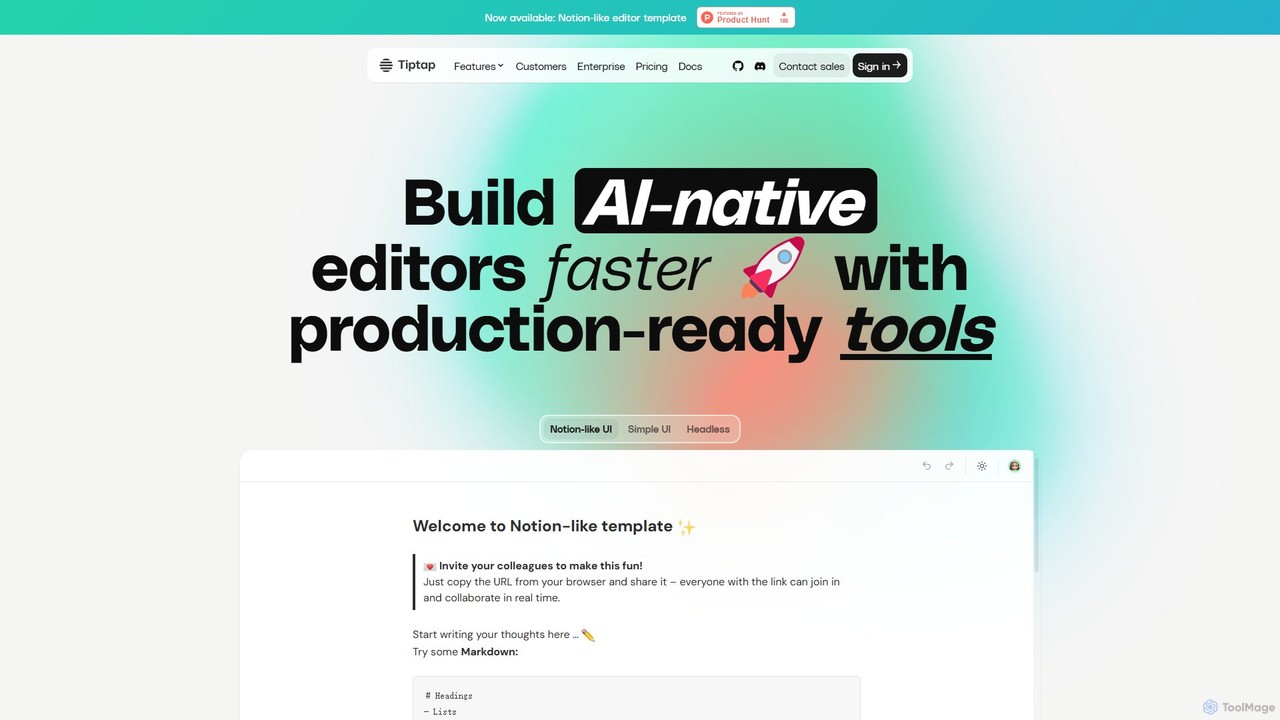
Tiptap
Tiptap is a headless, open-source, and framework-agnostic editor toolkit for developers. It allows for the creation of highly customizable rich text editors with over 100 extensions. Tiptap also offers premium cloud services, including real-time collaboration, AI-powered content generation and editing, document conversion, and commenting features, enabling developers to build sophisticated, modern editing experiences into their applications with ease.
Text Generation
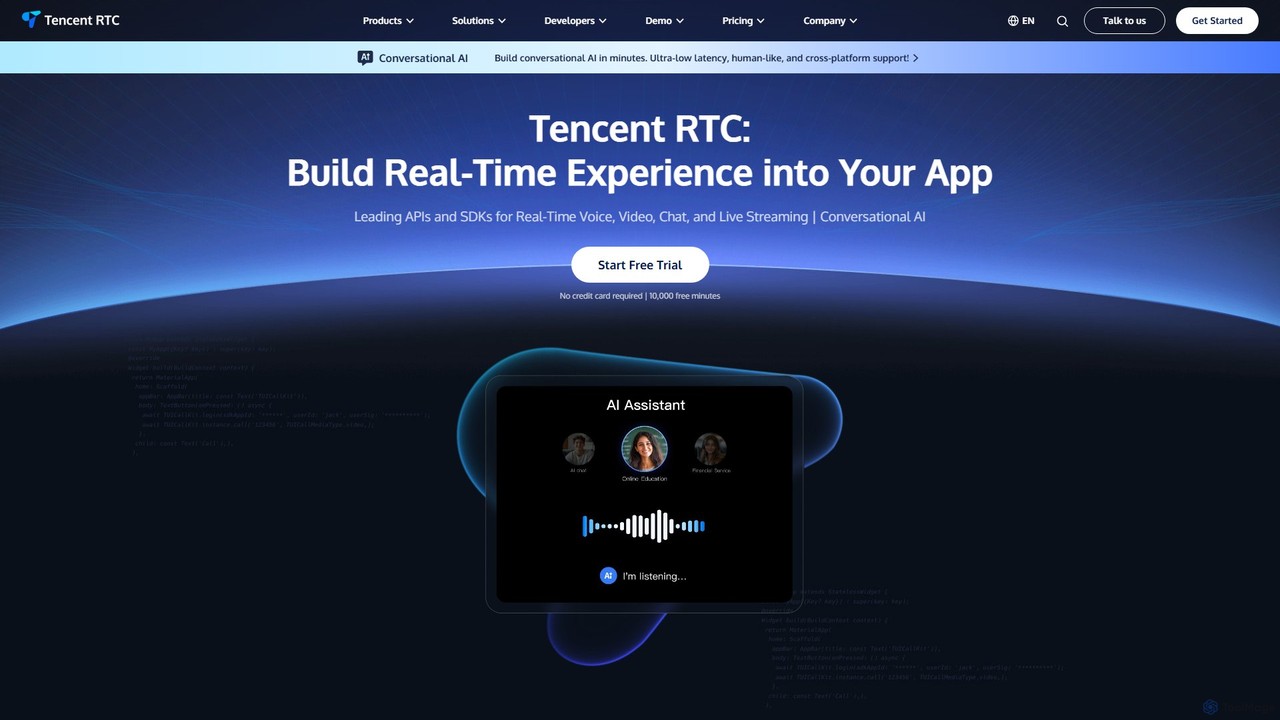
Tencent RTC
A comprehensive developer platform providing powerful APIs and SDKs for real-time voice, video, chat, and live streaming. Tencent RTC enables businesses to build scalable, low-latency, and interactive communication experiences directly into their applications across various industries.
Video Conferencing
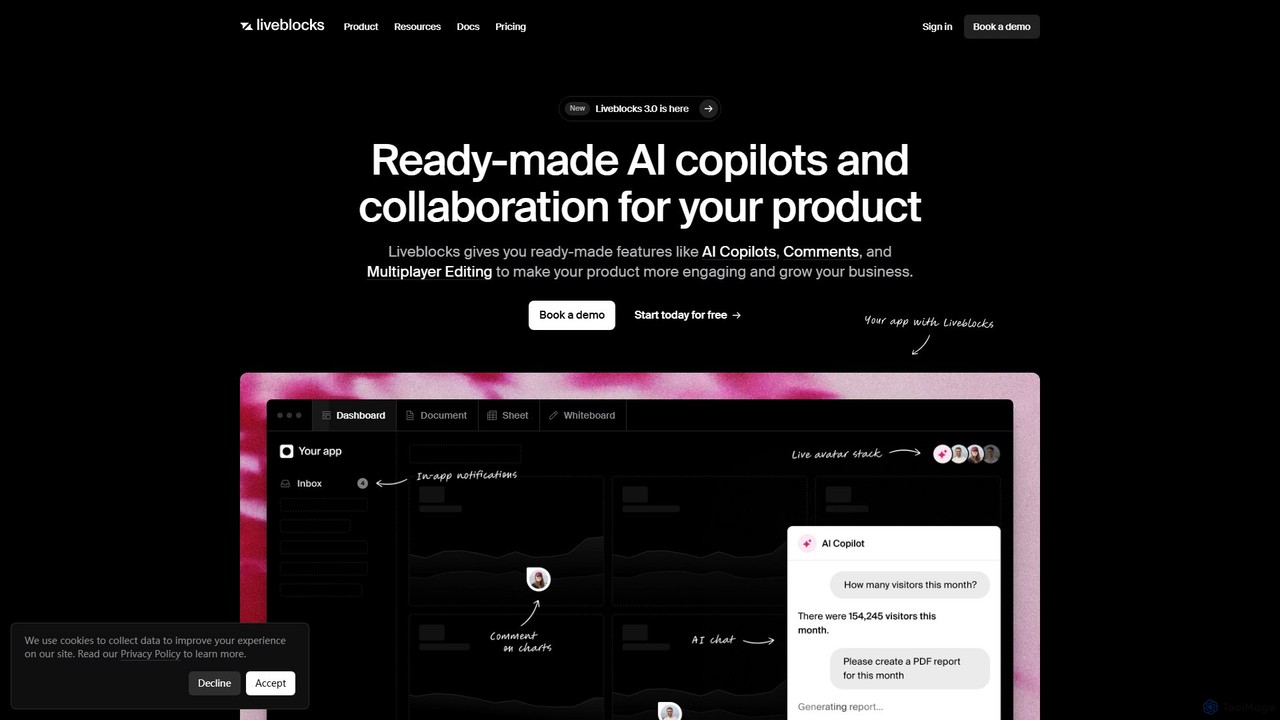
Liveblocks
Liveblocks is a developer platform providing ready-made APIs and components to quickly build real-time collaborative experiences and AI copilots into any product. It handles the complex infrastructure for features like multiplayer editing, comments, and AI chat, allowing teams to ship faster and increase user engagement.
Ai Development
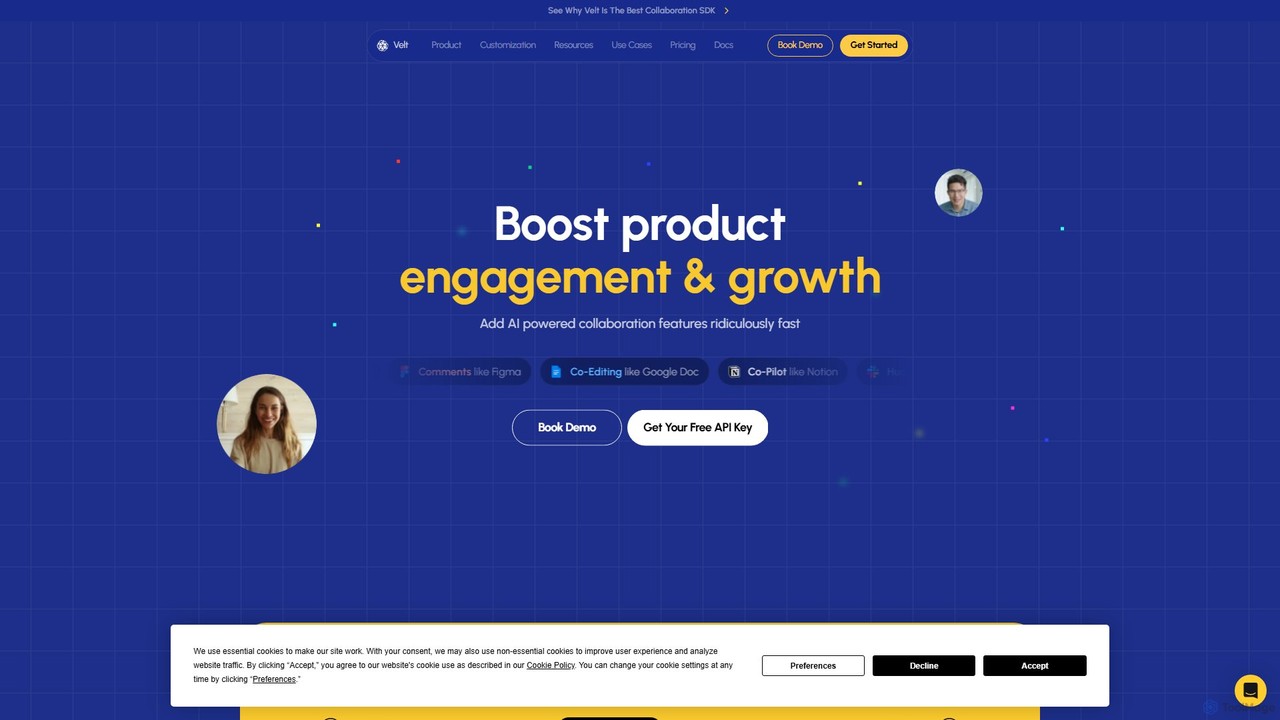
Velt
Velt is an AI-powered SDK for developers to rapidly integrate rich collaboration features like comments, co-editing, and live presence into any web application. It saves months of development time, boosts user engagement, and allows teams to ship features 5x faster.
Customer Engagement
ai-rnd.com
An integrated platform for AI research and development, providing a unified workspace, pre-trained models, and one-click deployment to accelerate the entire AI lifecycle. Ideal for developers, researchers, and enterprises.
Data Management
Ollama
Ollama is a powerful open-source framework for running large language models (LLMs) like Llama 3, Mistral, and Gemma locally on your own hardware. Available for macOS, Windows, and Linux, it simplifies the setup and management of open-source models, enabling private, offline, and cost-effective AI development and usage.
Machine Learning
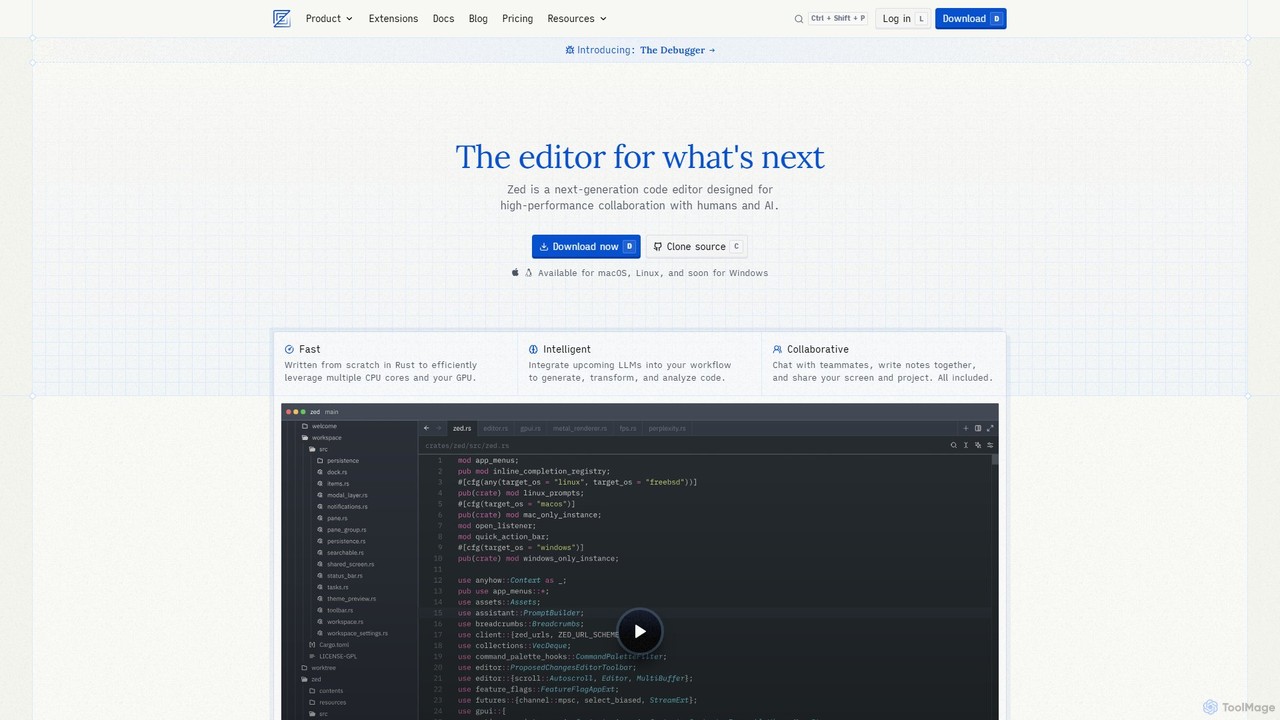
Zed
Zed is a high-performance, collaborative, and AI-powered code editor built from scratch in Rust. Designed for speed and efficiency, it offers real-time collaboration, deep integration with LLMs for agentic editing, and a comprehensive set of built-in tools including a debugger and native Git support. Zed is open-source and available for macOS and Linux, with Windows support coming soon.
Code Generation
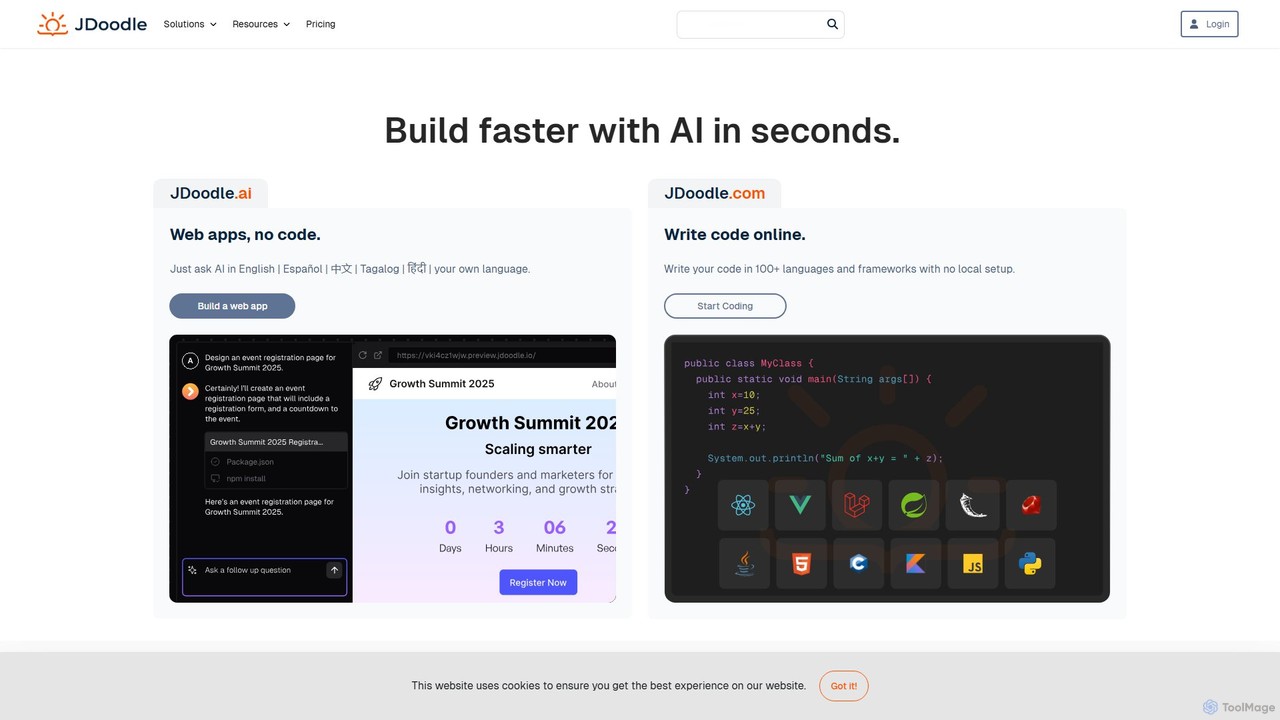
JDoodle
JDoodle is an AI-powered online coding platform and IDE that supports over 96 programming languages and frameworks. It allows developers, students, and educators to write, compile, and execute code directly in the browser with zero setup. Featuring AI assistance, real-time collaboration, and powerful integration APIs, JDoodle is designed to enhance coding productivity and streamline programming education.
Online Ide
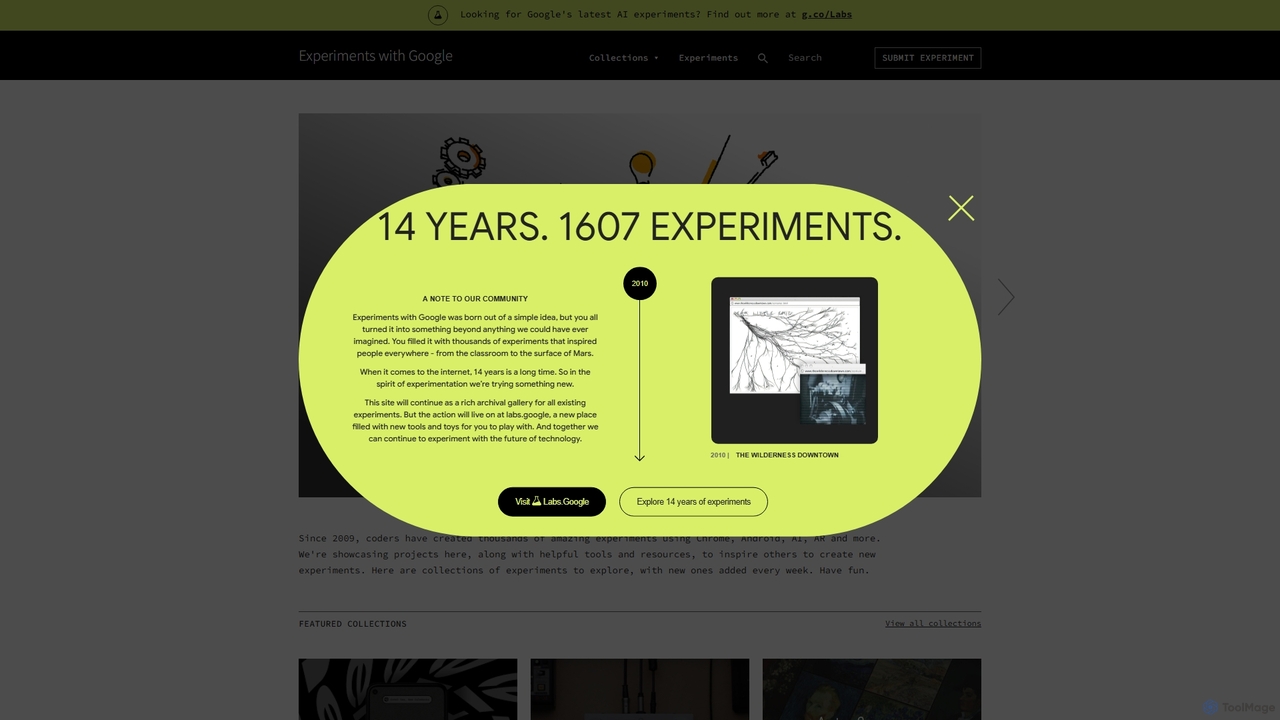
Experiments with Google
A curated online gallery showcasing thousands of creative and innovative experiments built with Google technologies since 2009. It serves as an inspiration hub for developers, designers, and creators, exploring the intersection of technology, art, and culture through AI, AR, WebXR, and more.
Generative Art
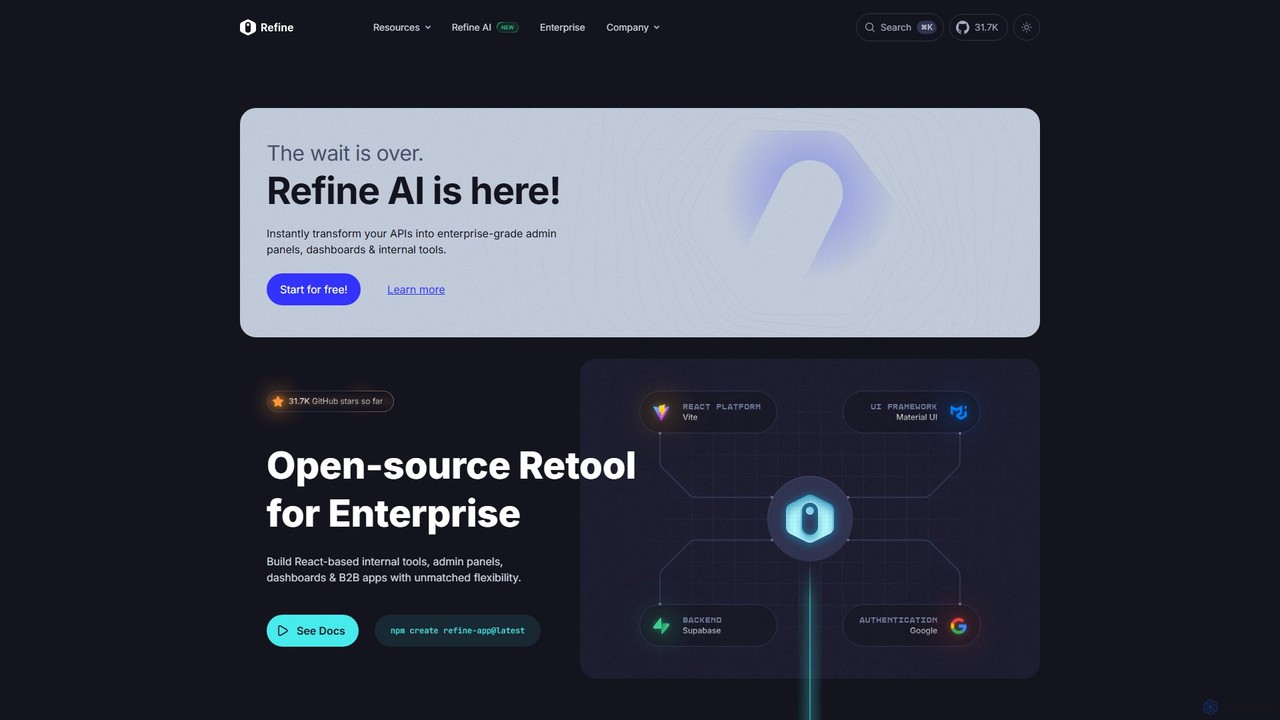
Refine
Refine is an open-source, React-based framework for rapidly building enterprise-grade internal tools, admin panels, dashboards, and B2B applications. It combines the speed of low-code solutions with the flexibility of full-code development, featuring an AI-powered generator to instantly create applications from APIs.
Internal Tools
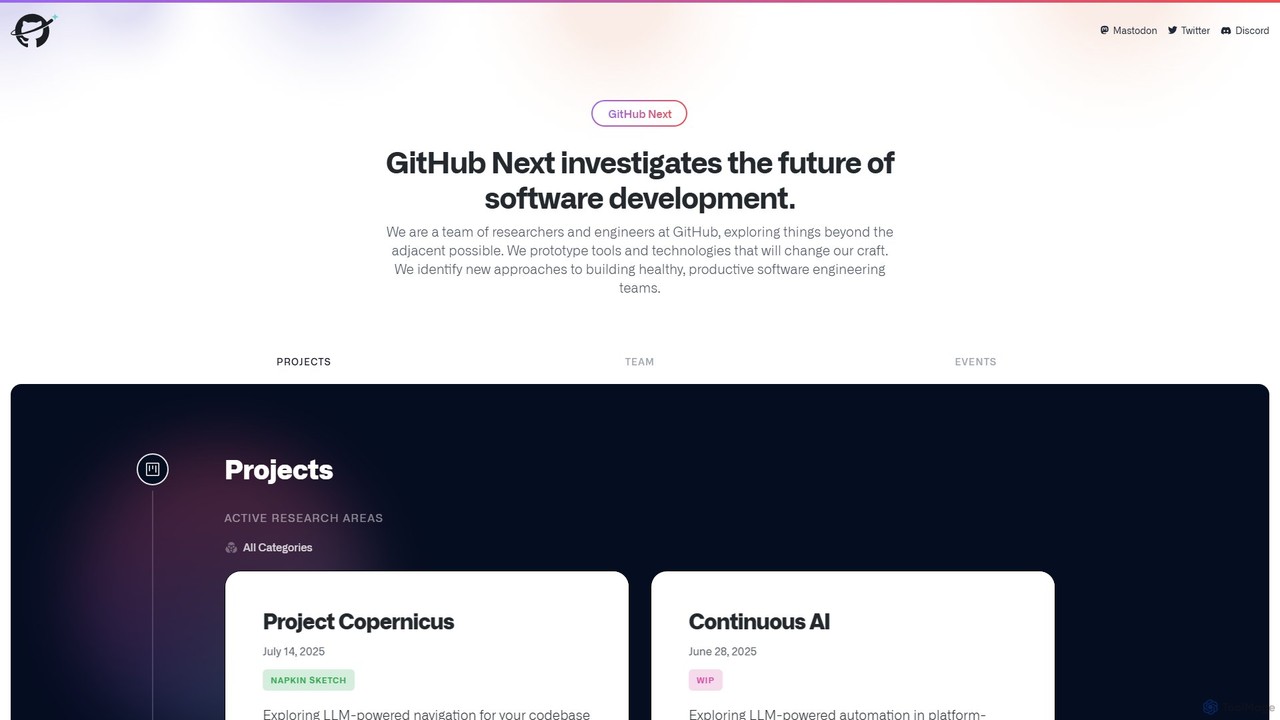
GitHub Next
GitHub Next is GitHub's research and innovation lab, dedicated to exploring the future of software development. It pioneers new tools and technologies, with a strong focus on AI, to enhance developer productivity, collaboration, and overall experience.
Code Assistant
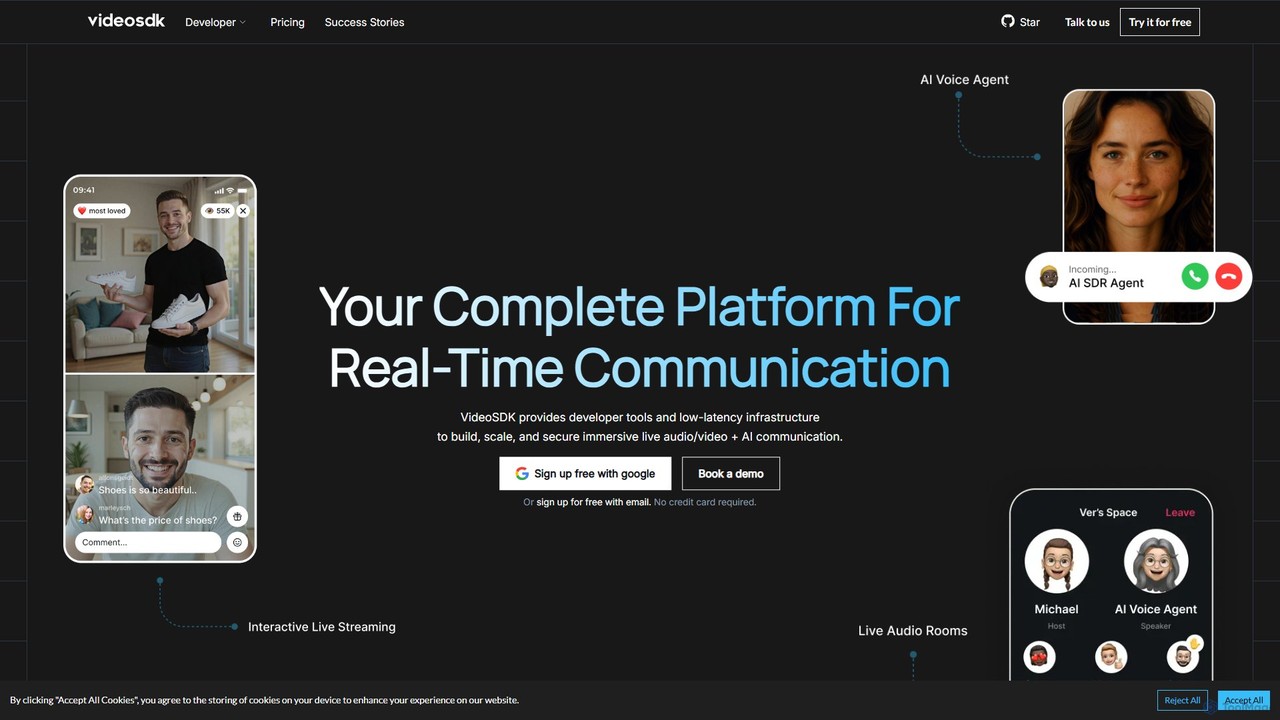
VideoSDK
VideoSDK is a comprehensive developer platform providing APIs and SDKs to build, scale, and secure real-time audio/video communication and interactive live streaming. It features low-latency infrastructure, cross-platform support, and integrated AI capabilities like voice agents, transcription, and summarization, enabling developers to embed immersive communication experiences into any application.
Video Conferencing