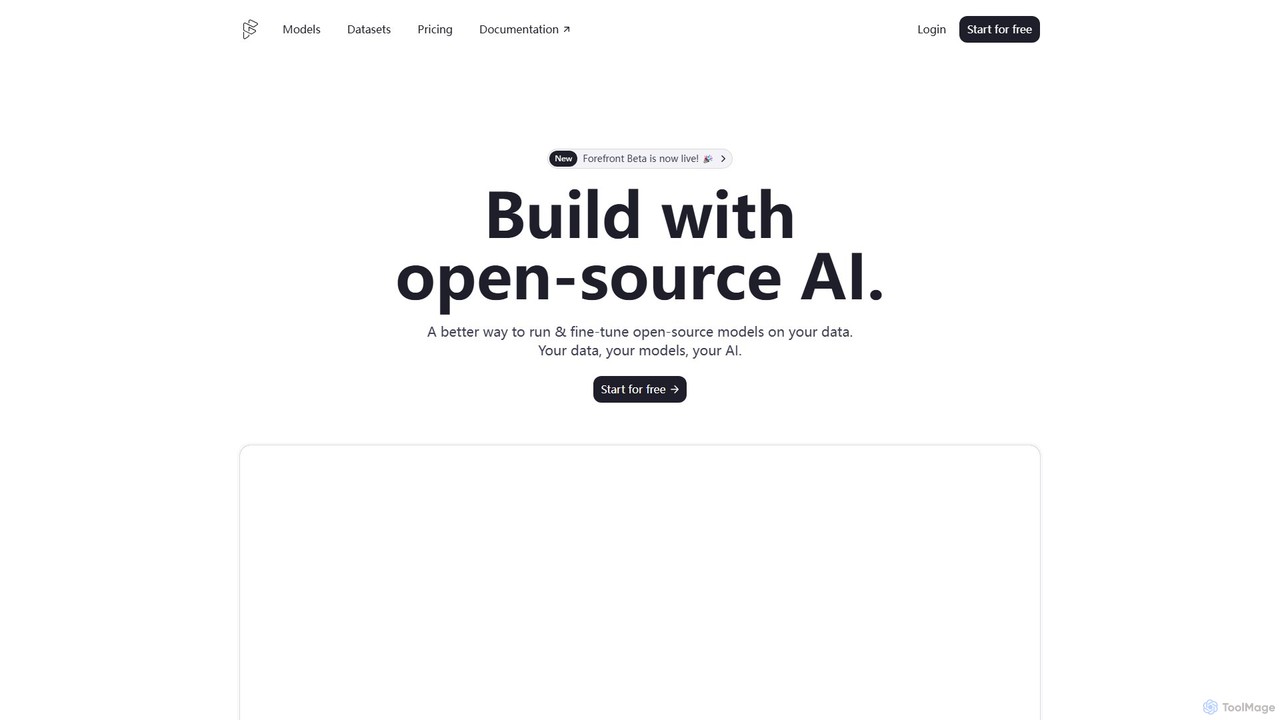
Forefront is a developer platform for building with open-source AI. It simplifies running, fine-tuning, and deploying large language models (LLMs) on your private data, providing a scalable, secure, and cost-effective alternative to closed-source platforms. Own your data, your models, and your AI.

Supabase is an open-source Firebase alternative, providing a complete backend solution built on Postgres. It offers a suite of tools including a database, authentication, instant APIs, edge functions, real-time subscriptions, storage, and vector embeddings to accelerate application development from prototype to production.
Product overview
Forefront Product overview
Forefront is a developer platform for building with open-source AI. It simplifies running, fine-tuning, and deploying large language models (LLMs) on your private data, providing a scalable, secure, and cost-effective alternative to closed-source platforms. Own your data, your models, and your AI.
Supabase Product overview
Supabase is an open-source Firebase alternative, providing a complete backend solution built on Postgres. It offers a suite of tools including a database, authentication, instant APIs, edge functions, real-time subscriptions, storage, and vector embeddings to accelerate application development from prototype to production.
Detailed feature comparison
| Feature | Forefront | Supabase |
|---|---|---|
| Primary category | Large Language Models | Backend |
| Added | 2025-08-16 | 2025-08-10 |
| Pricing | Freemium | Freemium |
| Official website | forefront.ai | supabase.com |
| Product type | Website | Website |
| Performance data | ||
| User rating | Not verified | Not verified |
| Comments | 0 | 0 |
| Monthly visits | 42.9K | 29.3M |
| Monthly growth | -8.2% | 11.7% |
| Favorites | 137 | 125 |
| Details | View details | View details |
Forefront vs Supabase monthly traffic
Compare Forefront and Supabase by monthly reach, traffic trend, visit depth, top regions, and acquisition sources.
How to interpret the traffic data
In the Forefront vs Supabase monthly traffic comparison, Forefront currently shows 42.9K visits and Supabase shows 29.3M; Supabase has about 681.4 times the visible traffic of Forefront, an absolute difference of about 29.2M visits. This reflects visible reach, not feature quality or paid users.
Both tools provide verified traffic details, so monthly trends, visit depth, regions, and acquisition sources can be compared on the same basis.
Forefront monthly traffic:
Latest traffic
Monthly traffic trend
- 2025/9: 98.4K Monthly visits
- 2026/1: 70K Monthly visits
- 2026/2: 59.3K Monthly visits
- 2026/3: 47.3K Monthly visits
- 2026/4: 46.7K Monthly visits
- 2026/5: 42.9K Monthly visits
Top regions
Top 5 countries/regions
| Country/region | Percentage | Traffic |
|---|---|---|
| 🇸🇦Saudi Arabia | 56.73% | 24.4K |
| 🇮🇳India | 13.42% | 5.8K |
| 🇧🇷Brazil | 13.39% | 5.7K |
| 🇺🇸United States | 8.7% | 3.7K |
| 🇪🇸Spain | 7.76% | 3.3K |
Traffic sources
| Source type | Percentage | Traffic |
|---|---|---|
| Direct | 85.37% | 36.6K |
| Referral | 13.21% | 5.7K |
| 1.42% | 610 |
Search keywords
Supabase monthly traffic:
Latest traffic
Monthly traffic trend
- 2025/9: 13.8M Monthly visits
- 2026/1: 18.6M Monthly visits
- 2026/2: 20.1M Monthly visits
- 2026/3: 25.3M Monthly visits
- 2026/4: 26.2M Monthly visits
- 2026/5: 29.3M Monthly visits
Top regions
Top 5 countries/regions
| Country/region | Percentage | Traffic |
|---|---|---|
| 🇺🇸United States | 47.42% | 13.9M |
| 🇮🇳India | 23% | 6.7M |
| 🇧🇷Brazil | 13.44% | 3.9M |
| 🇬🇧United Kingdom | 8.16% | 2.4M |
| 🇵🇰Pakistan | 7.98% | 2.3M |
Traffic sources
| Source type | Percentage | Traffic |
|---|---|---|
| Direct | 94.28% | 27.6M |
| Referral | 3.43% | 1M |
| 2.29% | 669.9K |
Search keywords
Usage comparison
Compare the core capabilities of Forefront and Supabase
Forefront Core features
Supabase Core features
Use cases
Forefront Use cases
Supabase Use cases
Forefront vs Supabase:In-depth comparison and selection guidance
First decide whether the products solve the same kind of need
This in-depth Forefront vs Supabase comparison uses only the product records, taxonomy, audience, traffic, and community signals available on this page. Forefront is primarily listed under “Large Language Models”, while Supabase is primarily listed under “Backend”, so the first decision is whether your actual task matches their recorded scope.
The structured fields currently show these decision-relevant differences: Primary category (Forefront: Large Language Models; Supabase: Backend); Monthly visits (Forefront: 42.9K; Supabase: 29.3M); Monthly growth (Forefront: -8.2%; Supabase: 11.7%); Favorites (Forefront: 137; Supabase: 125); Website (Forefront: forefront.ai; Supabase: supabase.com). These facts are more useful for selection than brand visibility alone.
What market visibility and monthly traffic mean
In the Forefront vs Supabase monthly traffic comparison, Forefront currently shows 42.9K visits and Supabase shows 29.3M; Supabase has about 681.4 times the visible traffic of Forefront, an absolute difference of about 29.2M visits. This reflects visible reach, not feature quality or paid users.
Both tools provide verified traffic details, so monthly trends, visit depth, regions, and acquisition sources can be compared on the same basis.
If public market visibility is an important first-pass criterion, investigate Supabase first. The final choice should still follow taxonomy, use case, and a real trial because higher traffic does not prove broader capabilities or better workflow fit.
Product positioning, use cases, and roles
Forefront and Supabase currently overlap in shared categories: Platform As A Service; shared tags: developer tools and open source. This can place both on the same shortlist, but it does not prove equal implementation, depth, or cost.
Forefront's unique categories/tags are Large Language Models, Model Training, AI infrastructure, API, custom AI, data privacy, fine-tuning, and llm; Supabase's are Backend, Database, No Code & Low Code, AI, authentication, BaaS, backend as a service, and database. These unique fields are the strongest differentiators: validate the product whose recorded scope matches the task instead of following traffic alone.
What ratings, comments, and favorites can tell you
Forefront has no verified rating, 0 comments, 137 favorites, and 119 likes;Supabase has no verified rating, 0 comments, 125 favorites, and 136 likes。
Neither product has enough rating or comment samples for a credible reputation ranking.
Selection guidance by actual need
When to evaluate Forefront first
Put Forefront on the priority trial list when the task aligns with “Large Language Models” and especially Large Language Models, Model Training, AI infrastructure, API, custom AI, and data privacy. This follows recorded positioning and does not imply unlisted capabilities are absent.
Forefront also currently records: pricing is freemium, product type is website, 42.9K verified monthly visits, no verified user rating. Verify any hard requirement around price, platform, or reach before trial, and do not let sparse review data substitute for testing.
When to evaluate Supabase first
Put Supabase on the priority trial list when the task aligns with “Backend” and especially Backend, Database, No Code & Low Code, AI, authentication, and BaaS. This follows recorded positioning and does not imply unlisted capabilities are absent.
Supabase also currently records: pricing is freemium, product type is website, 29.3M verified monthly visits, no verified user rating. Verify any hard requirement around price, platform, or reach before trial, and do not let sparse review data substitute for testing.
How to validate the recommendation before deciding
The available data describes positioning, public visibility, and community signals, but it cannot prove output quality, speed, integration effort, privacy, or long-term cost in your workflow. Before deciding, run the same representative tasks in Forefront and Supabase, then record completion time, accuracy, manual corrections, and the real paid threshold. A like-for-like trial turns this comparison into a defensible adoption decision.
Comparison FAQ
How should I choose between Forefront and Supabase?
Where does this comparison data come from?
What do unknown fields mean?
Related AI tools

LangDrive
LangDrive is a developer-centric platform offering a unified API to fine-tune, manage, and deploy open-source Large Language Models (LLMs). It simplifies the complex MLOps pipeline, enabling businesses to create powerful, custom AI models for specialized tasks with greater control over data and costs.
Api Management
Gadget
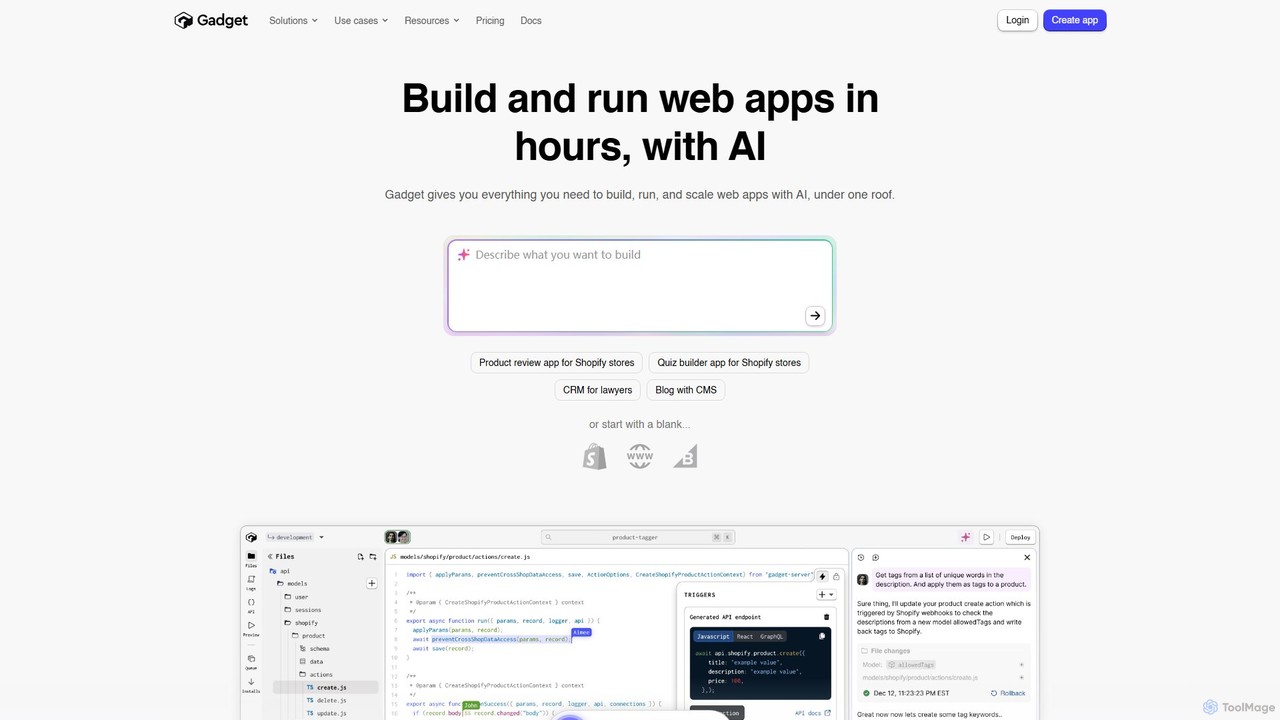
Gadget is an all-in-one, serverless development platform designed to accelerate full-stack web application development, especially for the Shopify ecosystem. It automates backend infrastructure, including databases, APIs, and authentication, allowing developers to build and launch scalable apps, like Shopify apps, significantly faster. An integrated AI assistant further streamlines the coding process.
Backend
Unbody
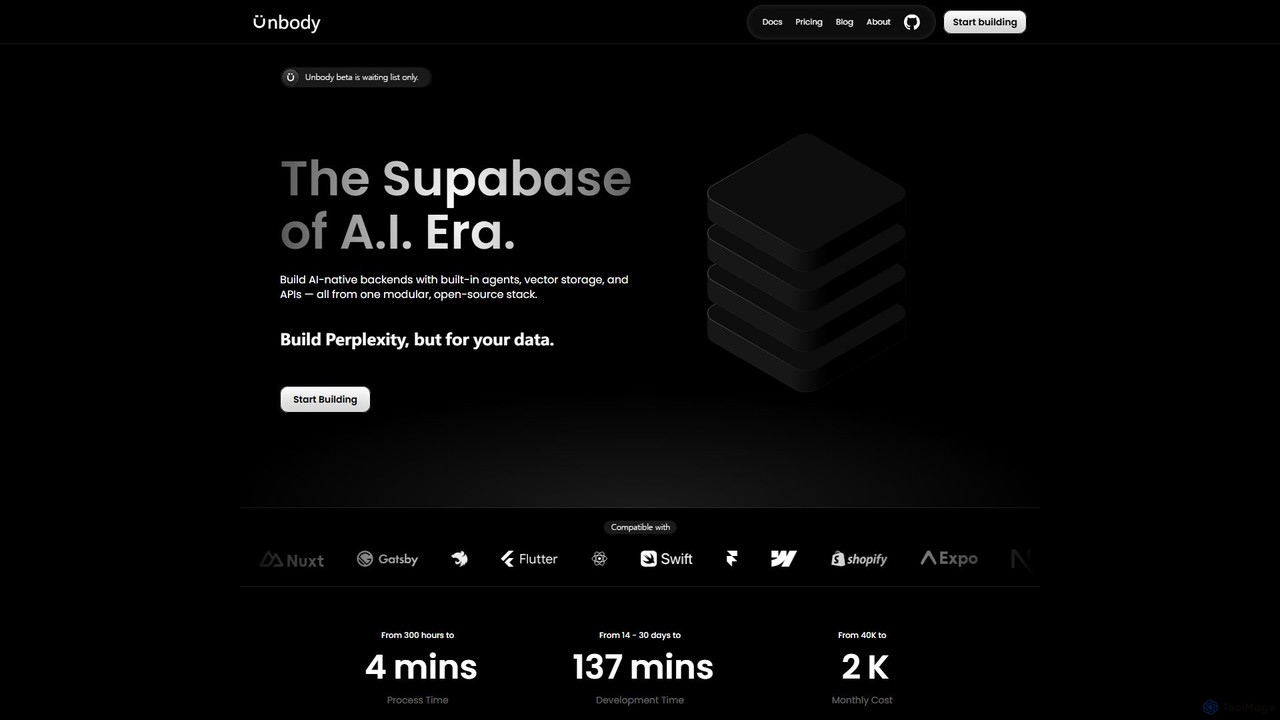
Unbody is an AI-native development stack, described as the "Supabase of the AI Era." It provides developers with a modular, open-source backend featuring built-in agents, vector storage, and a unified API. This allows for the rapid and cost-effective creation of intelligent, adaptive applications by transforming any data into a queryable knowledge base, eliminating the need for fragmented systems and complex AI pipelines.
Vector Database
Backmesh
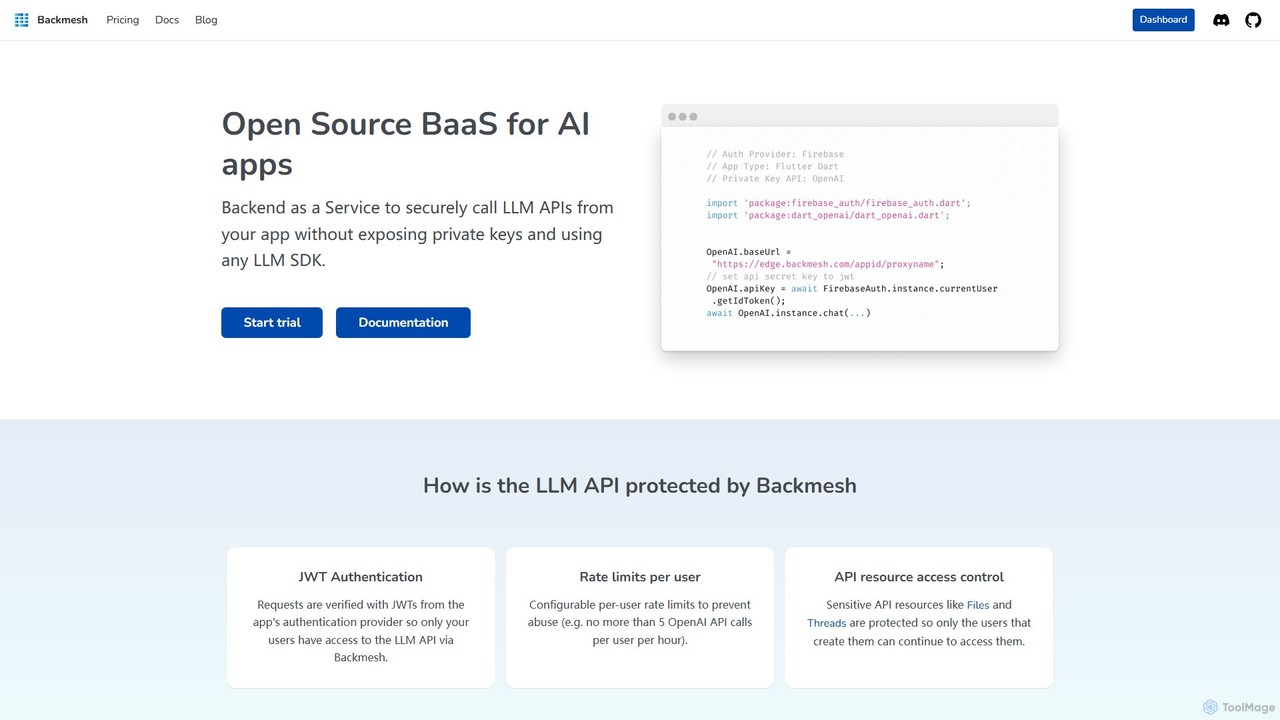
Backmesh is an open-source Backend as a Service (BaaS) designed for AI applications. It acts as a secure LLM API Gatekeeper, allowing developers to call LLM APIs like OpenAI and Gemini directly from web or mobile apps without exposing private keys. It offers features like JWT authentication, per-user rate limiting, and built-in analytics to manage and monitor API usage effectively.
Api
Milvus
Milvus is a high-performance, open-source vector database built for AI applications. It enables developers to manage and search through billions of high-dimensional vectors with minimal latency. Ideal for building scalable systems like retrieval-augmented generation (RAG), recommendation engines, and semantic search, Milvus offers flexible deployment options from local prototyping to large-scale distributed clusters.
Machine Learning
OpenPipe
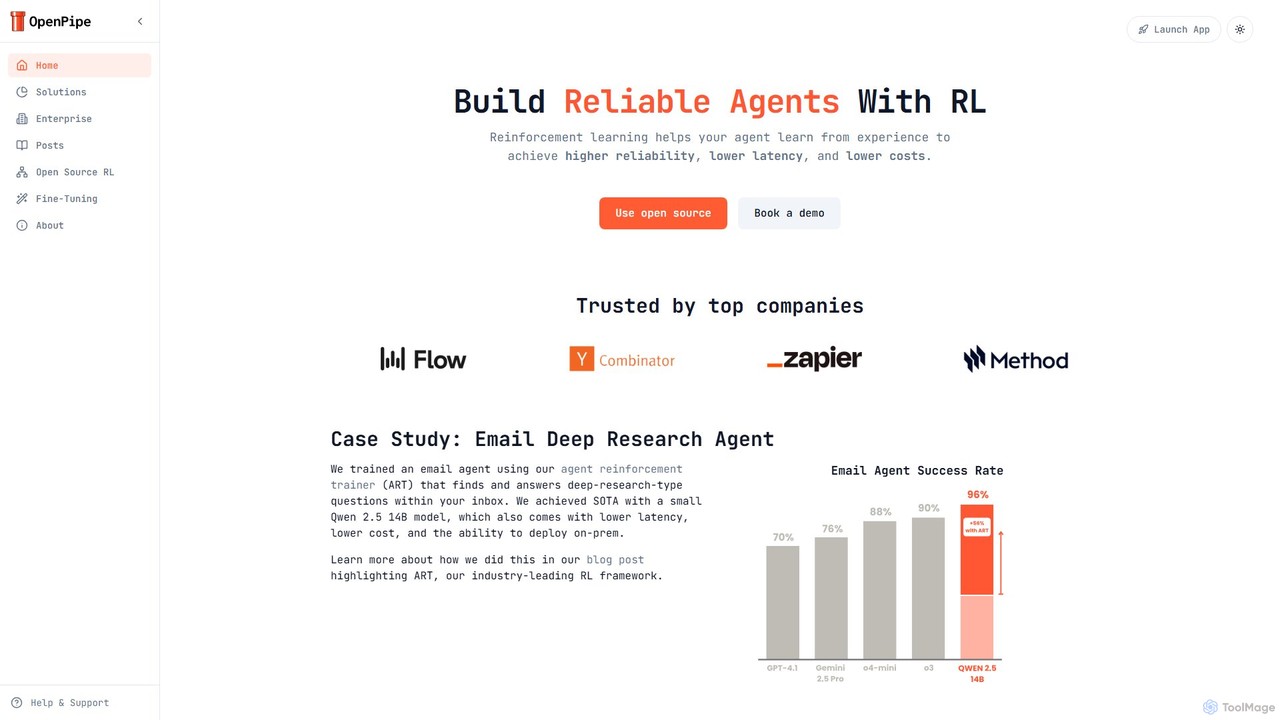
OpenPipe is an enterprise-grade platform for building highly reliable AI agents using Reinforcement Learning (RL) and fine-tuning. It enables developers to create specialized, cost-effective, and low-latency models that outperform large general-purpose APIs. Features include an open-source framework, on-prem deployment, and continuous optimization.
Enterprise Solutions
Metorial
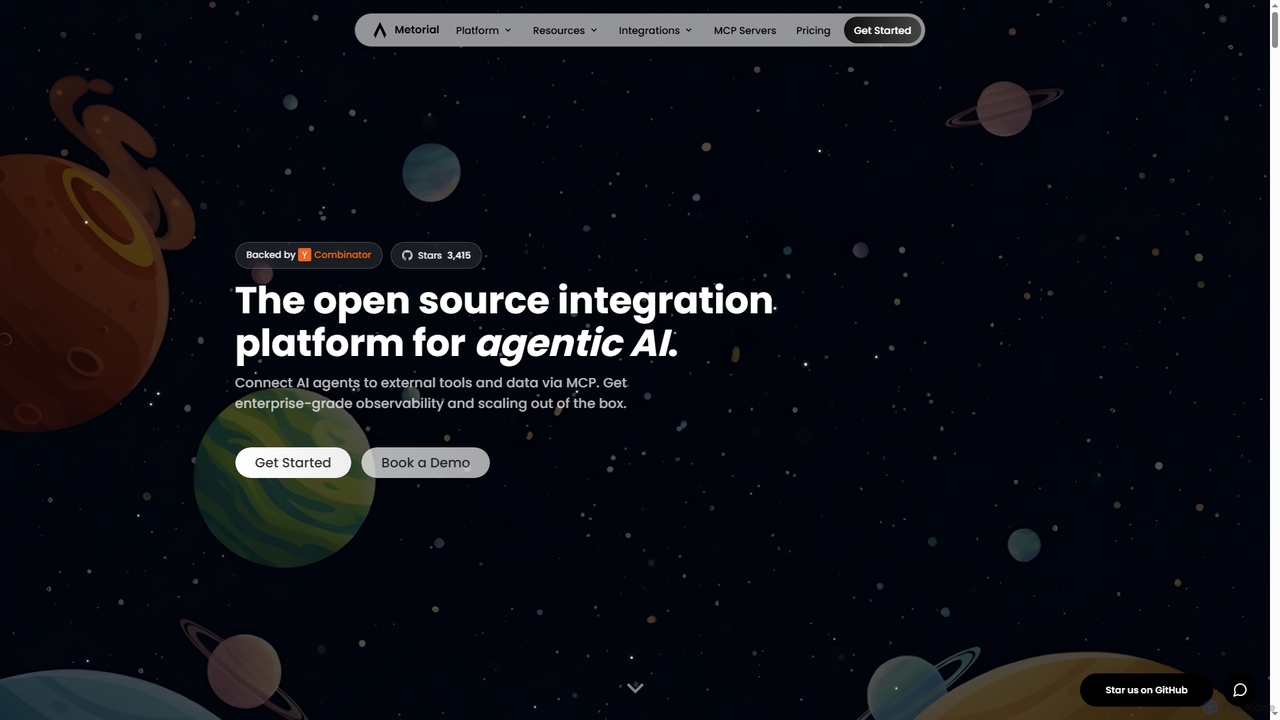
Metorial is an integration platform for AI agents, enabling developers to quickly build, deploy, and monitor powerful agentic AI applications. It provides seamless connections to hundreds of tools, data sources, and APIs via its serverless Model Context Protocol (MCP) platform, offering robust SDKs, observability, and enterprise-grade security for scalable AI solutions.
Agentic Ai
infiniflow
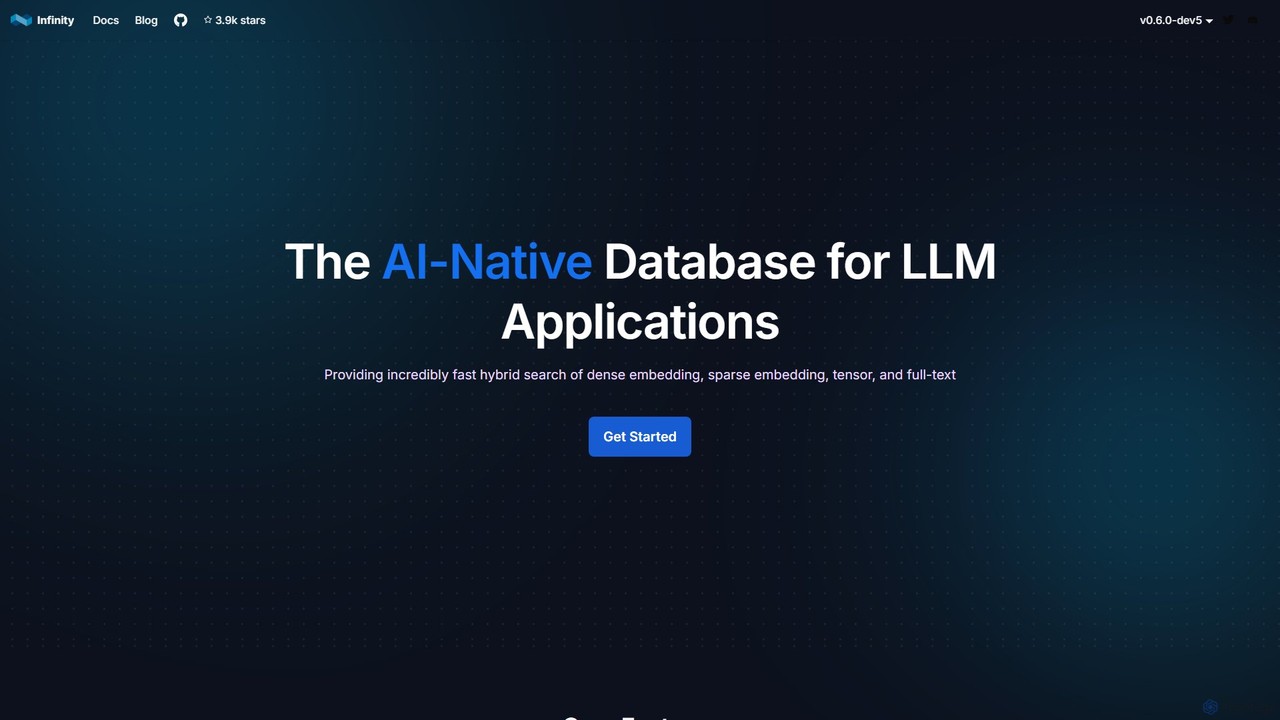
infiniflow is a high-performance, open-source, AI-native database specifically designed for LLM applications. It offers incredibly fast vector search, powerful hybrid search capabilities (vector, full-text, tensor), and simplified deployment. With an intuitive Python API, it's built to power demanding AI tasks like Retrieval-Augmented Generation (RAG) and semantic search with millisecond latency.
Vector Search
Replicate
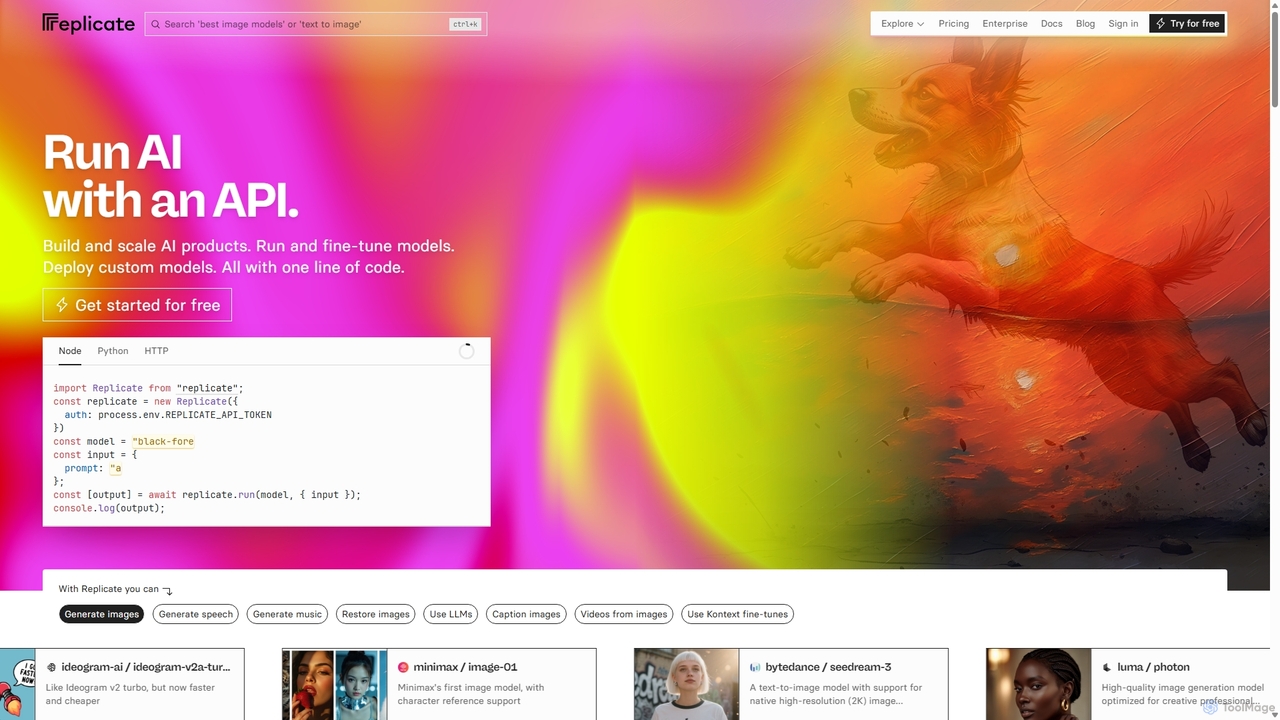
Replicate is a cloud platform for developers to run, fine-tune, and deploy AI models via a simple API. It eliminates the need for managing complex infrastructure, offering access to thousands of models with pay-per-use pricing and automatic scaling.
Machine Learning
Convex
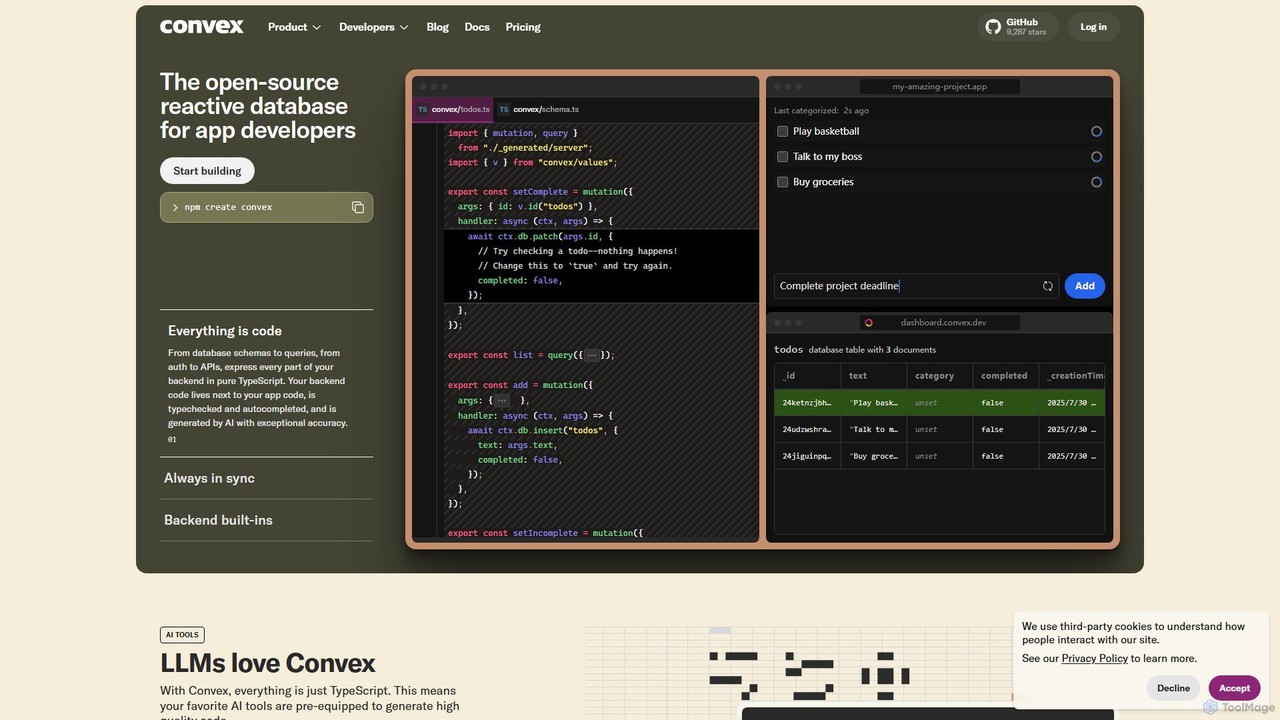
Convex is a backend-as-a-service platform for web developers, offering a reactive TypeScript database that simplifies building full-stack, real-time applications. It provides serverless functions, file storage, and vector search with end-to-end type safety, making it a powerful, developer-friendly alternative to Firebase.
Backend
MonsterAPI
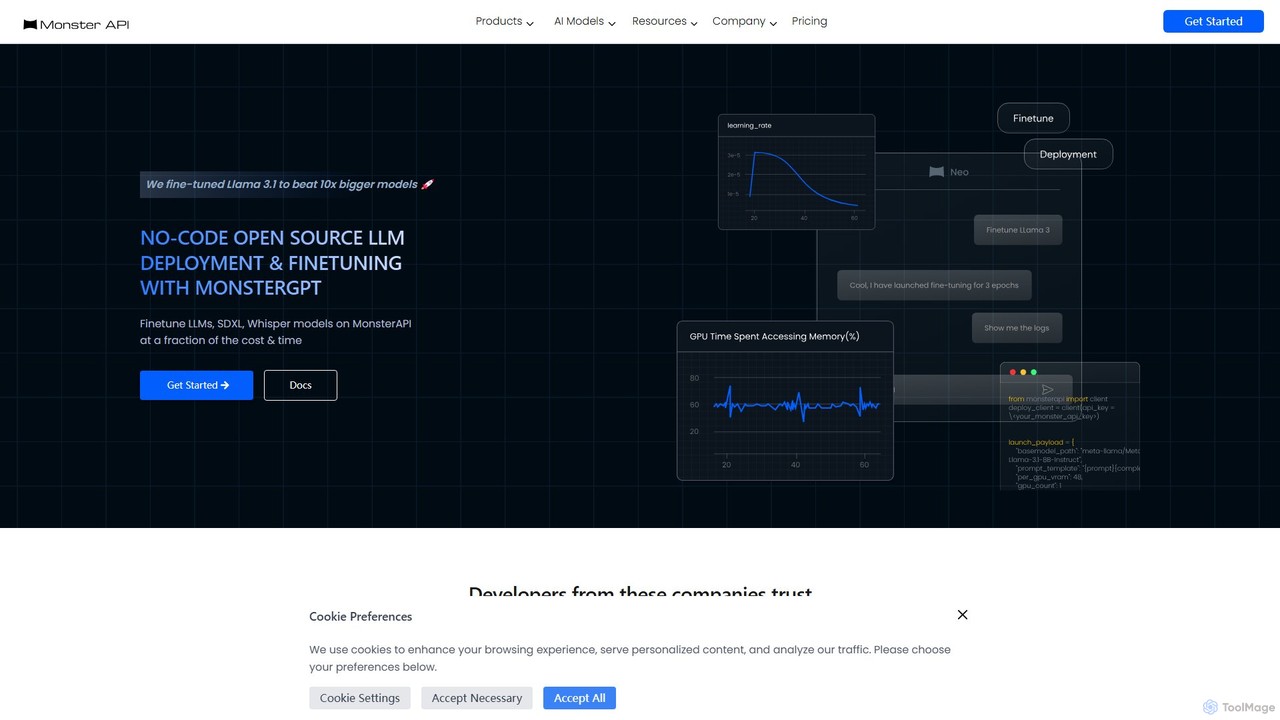
MonsterAPI is a developer-centric platform that simplifies the fine-tuning and deployment of open-source generative AI models. It offers a no-code chat interface, MonsterGPT, to manage complex tasks, supporting models like Llama, SDXL, and Whisper. The platform provides scalable API endpoints and enterprise-grade GPU infrastructure at a fraction of the typical cost and time, making advanced AI accessible to all developers.
Platform As A Service (Paas)
vocode
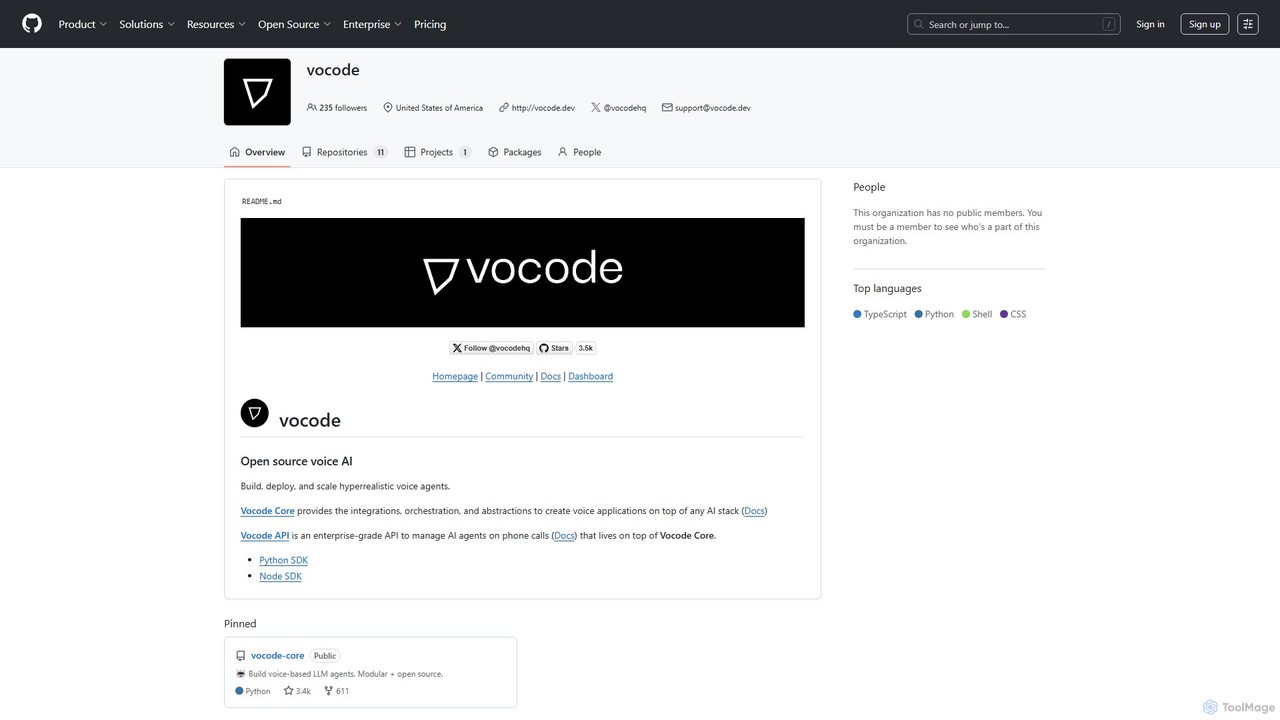
Vocode is an open-source platform for building, deploying, and scaling hyperrealistic voice AI agents. It provides developers with a core framework and an enterprise-grade API to create sophisticated voice-based LLM applications for tasks like automated customer service, sales calls, and interactive voice response (IVR) systems.
Voicebot
Comet
Comet is a family of high-performance, open-source large language models (LLMs) developed by Perplexity AI. Designed for exceptional speed and accuracy, Comet powers fast conversational AI applications and is available for developers via API and direct download.
Natural Language Processing
Ollama
Ollama is a powerful open-source framework for running large language models (LLMs) like Llama 3, Mistral, and Gemma locally on your own hardware. Available for macOS, Windows, and Linux, it simplifies the setup and management of open-source models, enabling private, offline, and cost-effective AI development and usage.
Machine Learning
Firecrawl
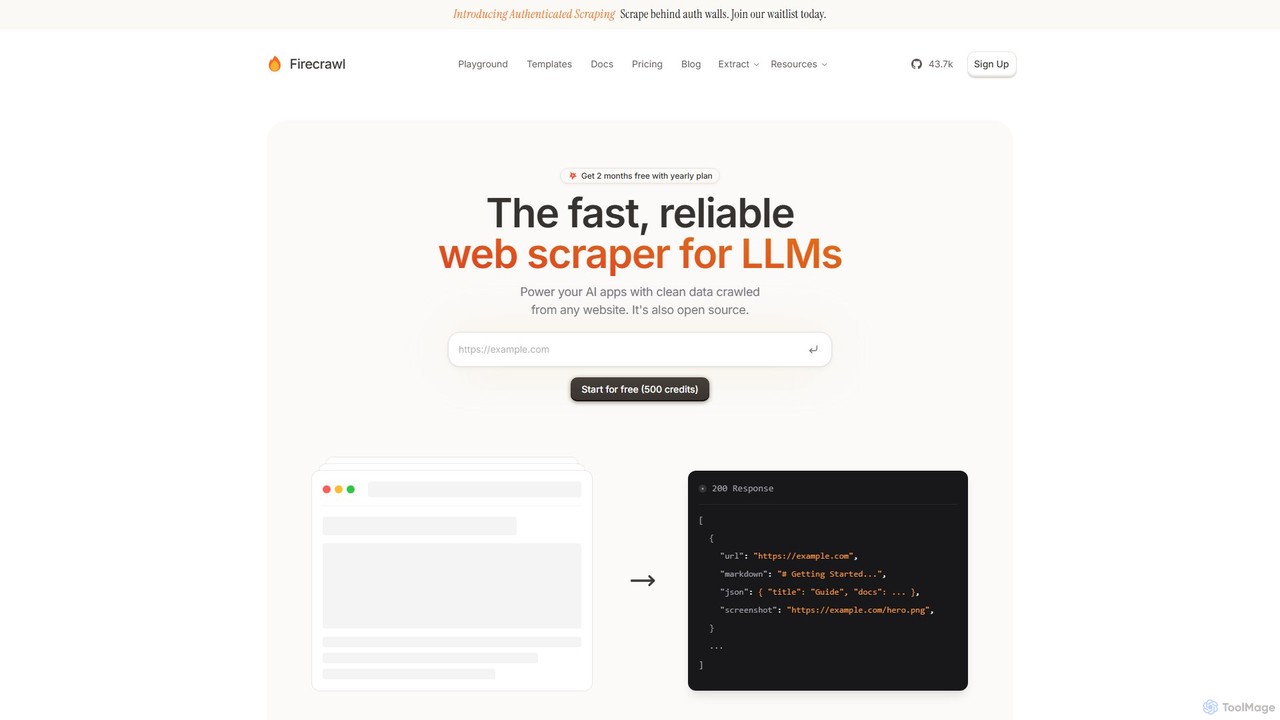
Firecrawl is an open-source, developer-first API that turns any website into clean, LLM-ready data. It handles all the complexities of web scraping, including JavaScript rendering, proxy rotation, and rate limits, allowing you to power AI applications, agents, and RAG systems with reliable web content. It offers scraping, crawling, and search functionalities through a simple API.
Data Collection