ToolMage
Sign in

Best 116 Low Code No Code AI tools for Developer Tools

Popular Low Code No Code AI tools in Developer Tools include Manus 1.5, Manus, IBM, Abacus.AI, BLACKBOX.AI, UiPath, MiniMax Agent, Streamlit, Hex, and Uizard, helping you work more efficiently.

BLACKBOX.AI
Freemium

BLACKBOX.AI

BLACKBOX.AI is an autonomous AI coding agent designed to accelerate software development. It helps developers write code faster, debug efficiently, and can even build full applications from images or text descriptions, integrating seamlessly with popular IDEs like JetBrains.

Code Assistant
Visits 3.9MFavorites 137Likes 143
Ajelix
Freemium

Ajelix

Ajelix is an AI-powered suite of tools designed to enhance productivity for Excel and Google Sheets users. It acts as an AI data analyst, automating tasks, generating formulas and VBA scripts, creating insightful reports, and providing advanced data analysis through a simple chat interface.

Business Intelligence
Visits 106.7KFavorites 122Likes 121
gocodeo
Freemium

gocodeo

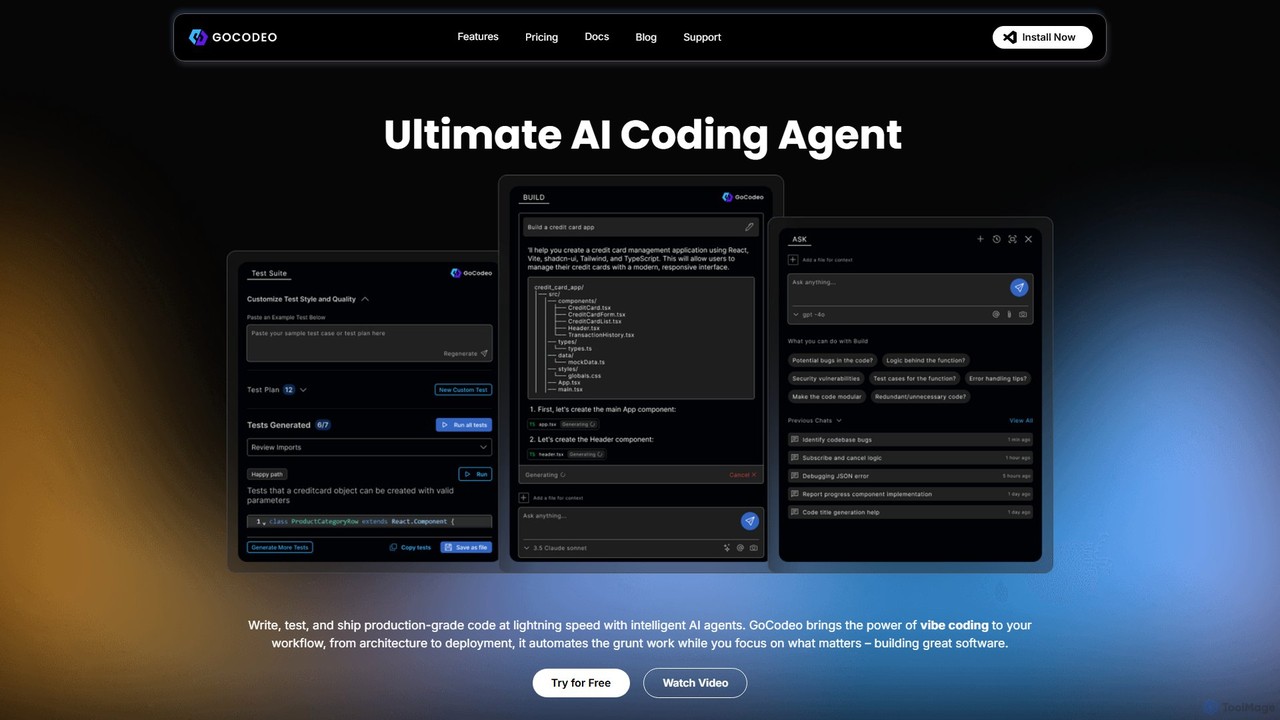
gocodeo is an AI coding agent integrated directly into your IDE (VS Code, IntelliJ) to accelerate the entire software development lifecycle. It helps developers build, test, and deploy projects faster through real-time code generation, automated testing, and seamless integrations. Supporting over 25 frameworks and 100+ tools, it transforms your IDE into an intelligent, context-aware workspace.

Code Assistant
Visits 29.4KFavorites 118Likes 107
Abyss Hub
Freemium

Abyss Hub

Abyss Hub is a platform for creating, sharing, and using no-code AI Widgets. Developers can turn Python scripts into user-friendly tools, while non-technical users can automate complex tasks by simply filling out forms. It's a marketplace connecting AI creators with users seeking automated solutions.

Marketplace
Visits 6.3KFavorites 145Likes 142
Anima
Freemium

Anima

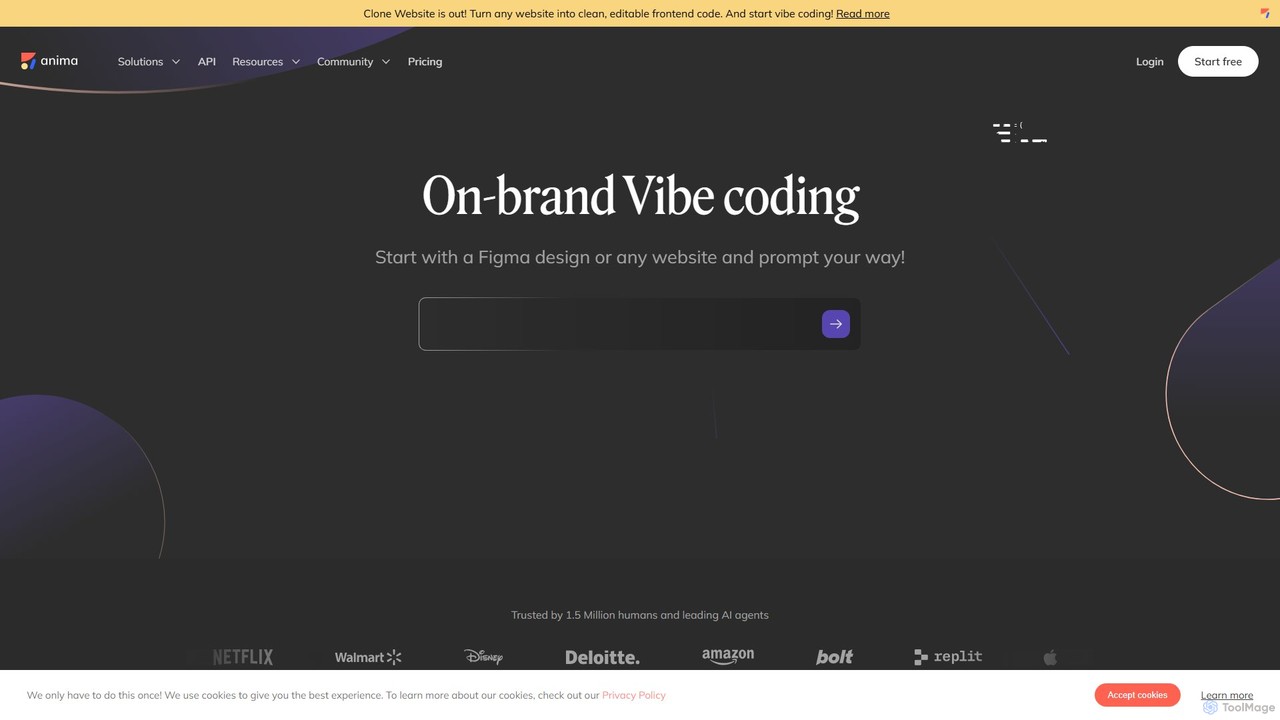
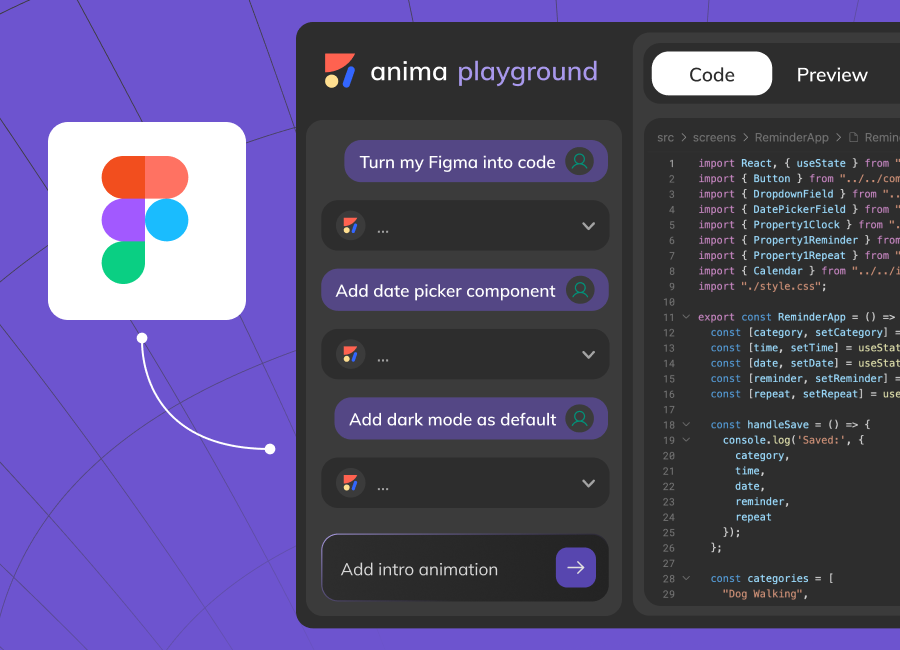
Anima is an AI-powered design-to-code platform that automates frontend development. It transforms designs from Figma, Adobe XD, and Sketch into clean, production-ready React, Vue, and HTML code. Featuring AI-driven iteration and website cloning, it empowers designers, developers, and founders to build and launch web applications and prototypes up to 10x faster.

Design To Code
Visits 327.2KFavorites 150Likes 174
Gooey.AI
Freemium

Gooey.AI

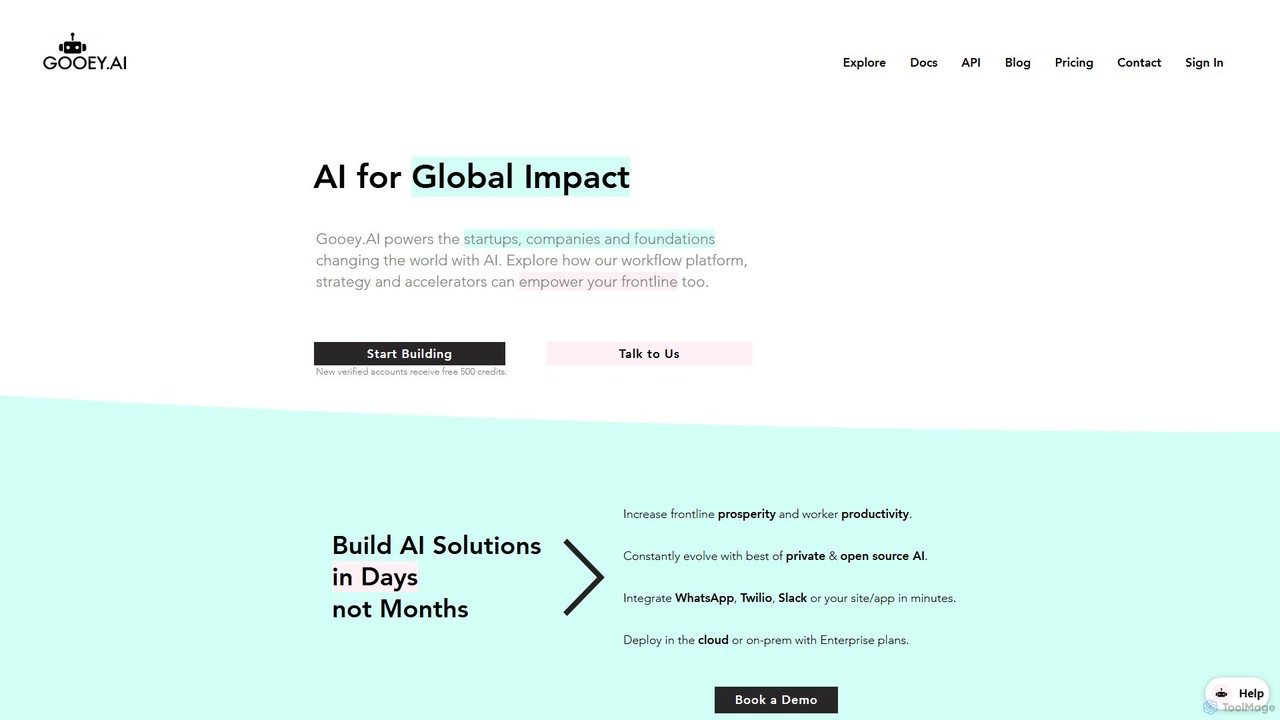
Gooey.AI is a powerful AI workflow platform that enables developers and organizations to build, deploy, and manage complex AI solutions. It provides unified access to the best private and open-source AI models, facilitating the rapid creation of multilingual chatbots, RAG-based copilots, and other generative AI applications with integrations for WhatsApp, Slack, and APIs.

Model Deployment
Visits 109.1KFavorites 158Likes 128
Hex
Freemium

Hex

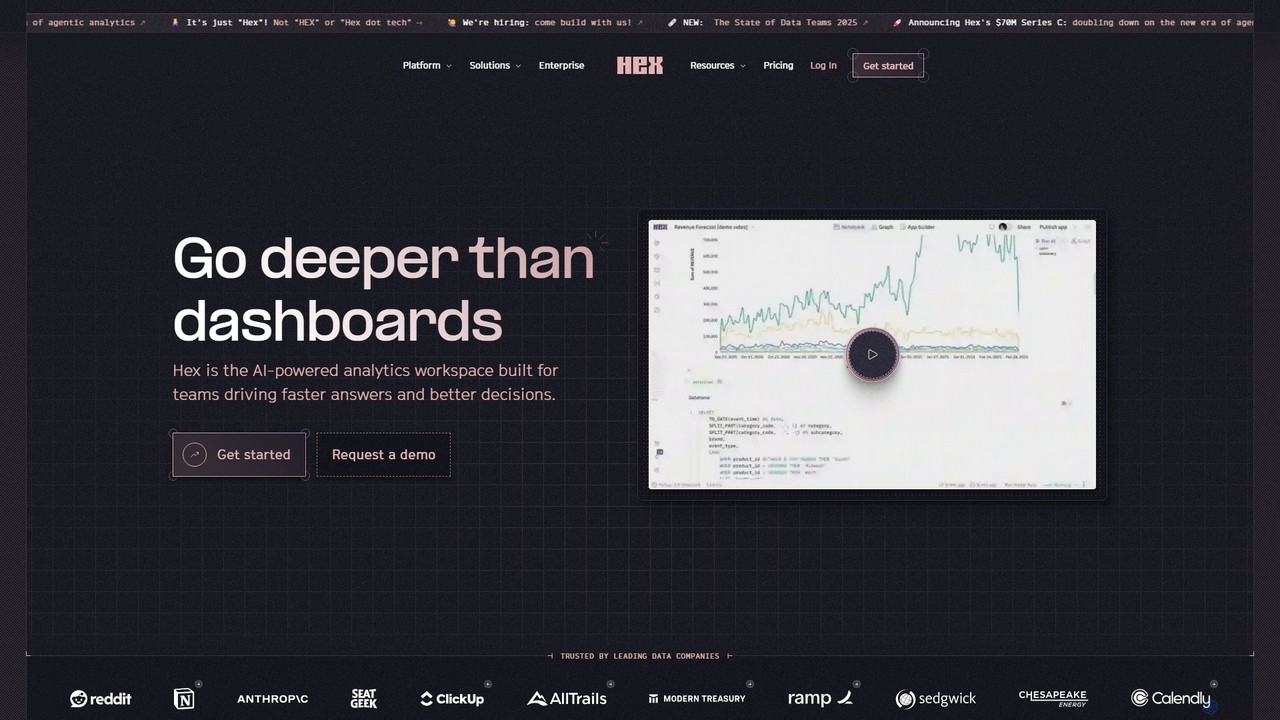
Hex is an AI-powered analytics workspace designed for teams. It integrates notebooks for Python and SQL, interactive data apps, and self-serve exploration into a single collaborative platform, enabling faster, data-driven decision-making.

Data Science
Visits 607KFavorites 157Likes 166
Quadency
Freemium

Quadency

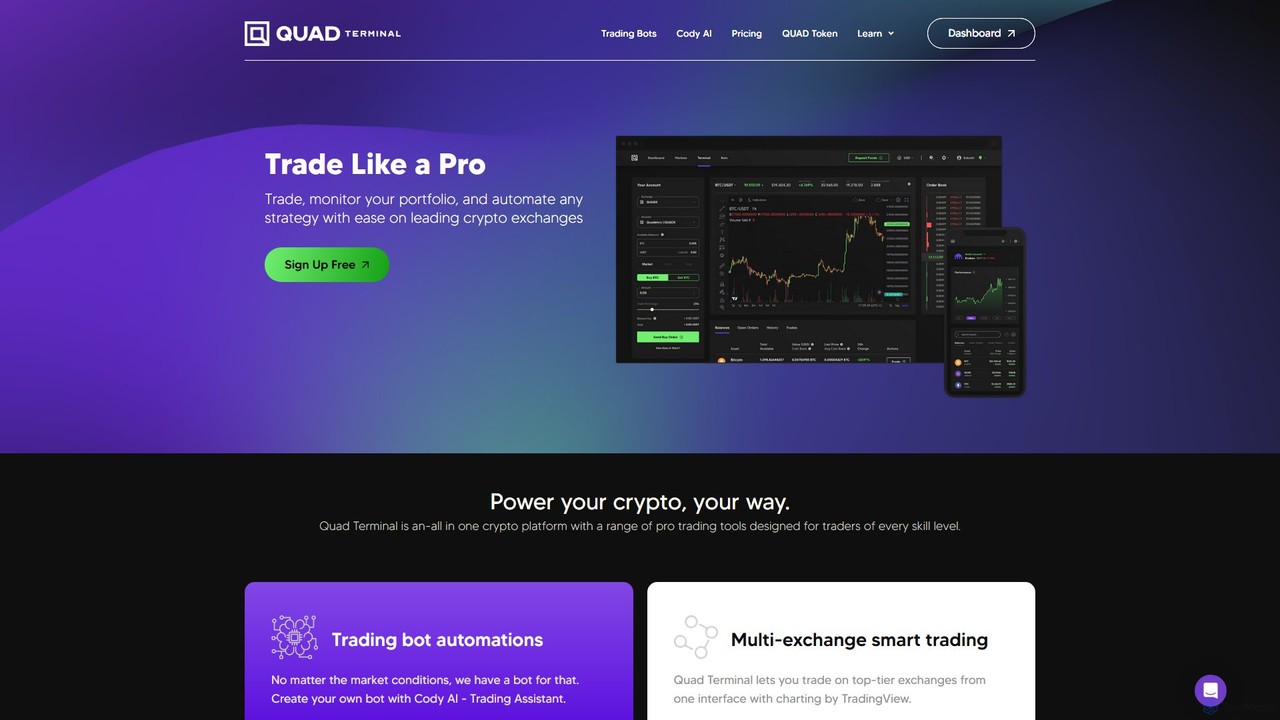
Quadency (now Quad Terminal) is an AI-powered crypto trading and automation platform. It offers a unified terminal to manage multiple exchange accounts, alongside a suite of pre-built trading bots and an innovative AI, Cody, that turns plain English into trading strategies.

Low Code No Code
Visits 9.6KFavorites 159Likes 150
UiPath
Freemium

UiPath

UiPath is a leading enterprise automation platform that combines Robotic Process Automation (RPA) with advanced AI capabilities. It enables businesses to build and manage a workforce of software robots that automate repetitive tasks, streamline processes, and drive digital transformation. From finance to healthcare, UiPath empowers organizations to increase efficiency, reduce costs, and improve accuracy by deploying AI-powered agents and automations at scale.

Data Processing
Visits 1.4MFavorites 145Likes 144
Tynker AI
Freemium

Tynker AI

Tynker AI is an educational platform designed to teach kids and beginners about artificial intelligence and machine learning. Using a visual, block-based coding interface, it makes complex AI concepts accessible, fun, and engaging through interactive lessons and creative project-building.

Low Code No Code
Visits 9.3KFavorites 146Likes 154
OpenServ

OpenServ

OpenServ is a comprehensive platform for developers to rapidly build, deploy, and monetize decentralized, multi-agent AI applications (aApps). It combines a flexible SDK, a low-code orchestration canvas, and a Web3-based economic ecosystem to accelerate the journey from idea to revenue-generating product.

Frameworks
Visits 22KFavorites 144Likes 146
InstaSnippet
Freemium

InstaSnippet

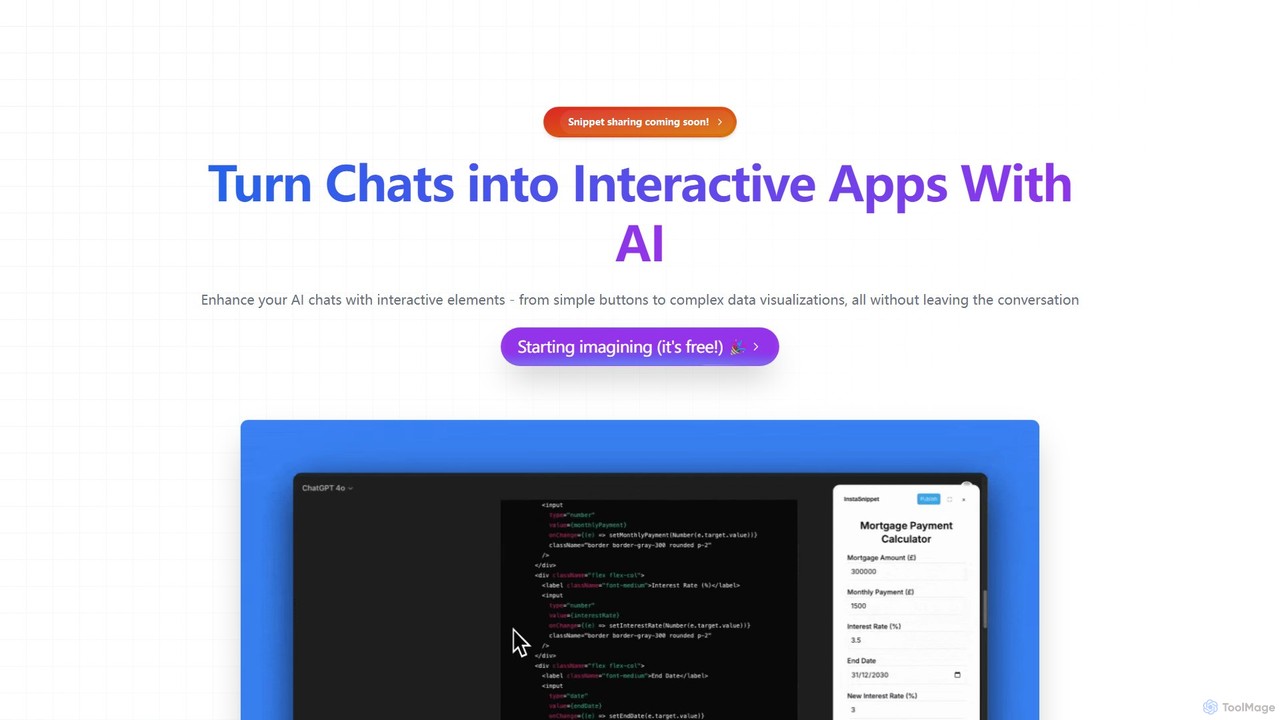
InstaSnippet is an AI-powered platform that transforms your text-based conversations with AI models like ChatGPT and Claude into fully interactive applications. Generate UI components, from simple buttons to complex data visualizations, directly within your chat interface, streamlining the process of prototyping and development.

Data Visualization
Visits 6.3KFavorites 121Likes 123
GetGenerative.ai
Paid

GetGenerative.ai

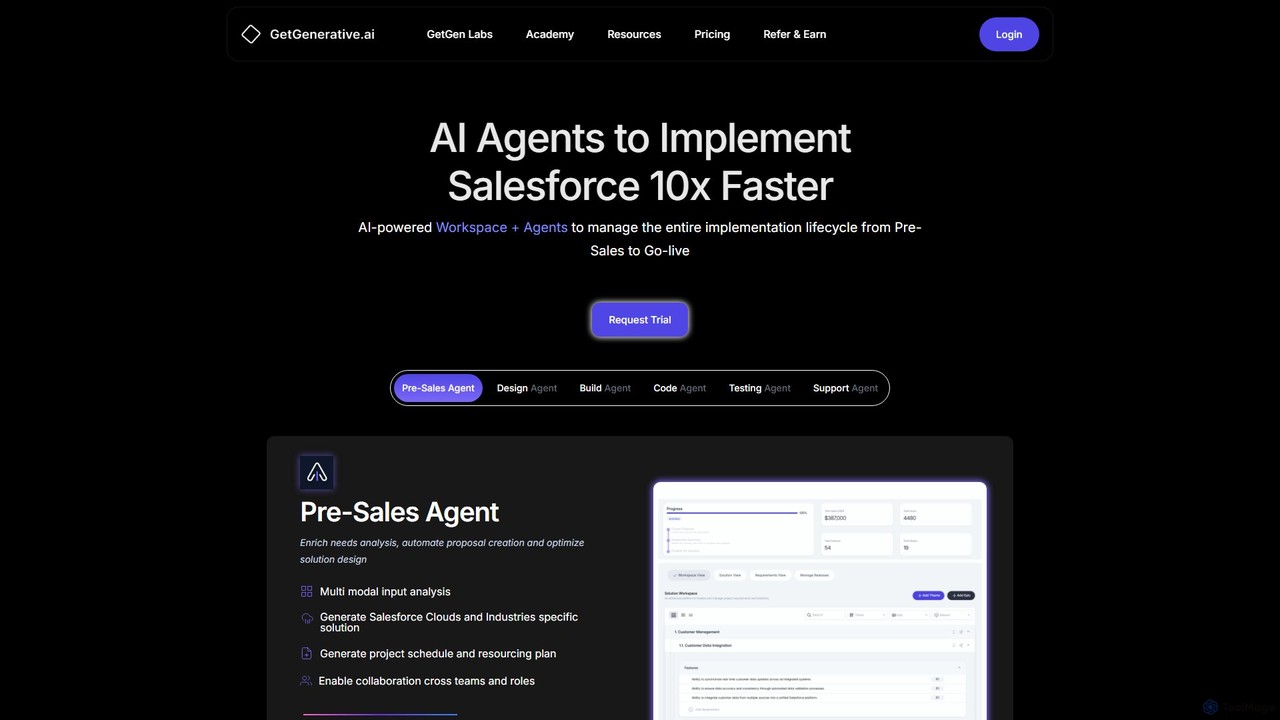
An AI-powered workspace with specialized agents designed to accelerate the entire Salesforce implementation lifecycle by up to 10x. It automates processes from pre-sales and solution design to building, testing, and support, enhancing productivity for consulting firms and enterprises.

Low Code No Code
Visits 17.4KFavorites 129Likes 107
Superexpert.AI
Free

Superexpert.AI

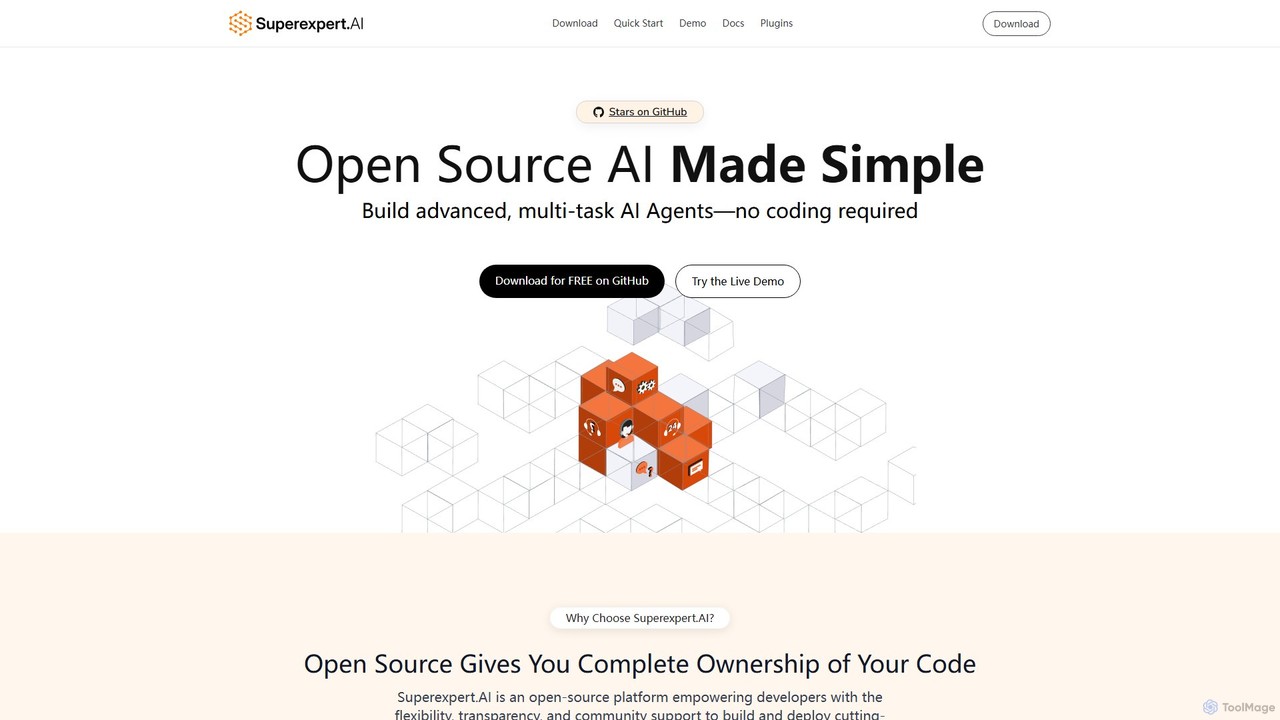
Superexpert.AI is an open-source platform for building advanced, multi-task AI agents without coding. It offers complete code ownership, flexibility to integrate custom tools, and support for various LLMs like OpenAI, Anthropic, and Gemini. Developers can quickly build and deploy scalable AI solutions, from simple chatbots to complex agents with RAG capabilities, on any hosting provider that supports Node.js and PostgreSQL. It's designed for rapid development, customization, and full control over your AI applications.

Knowledge Base
Visits 7.1KFavorites 109Likes 118
ExcelBot
Paid

ExcelBot

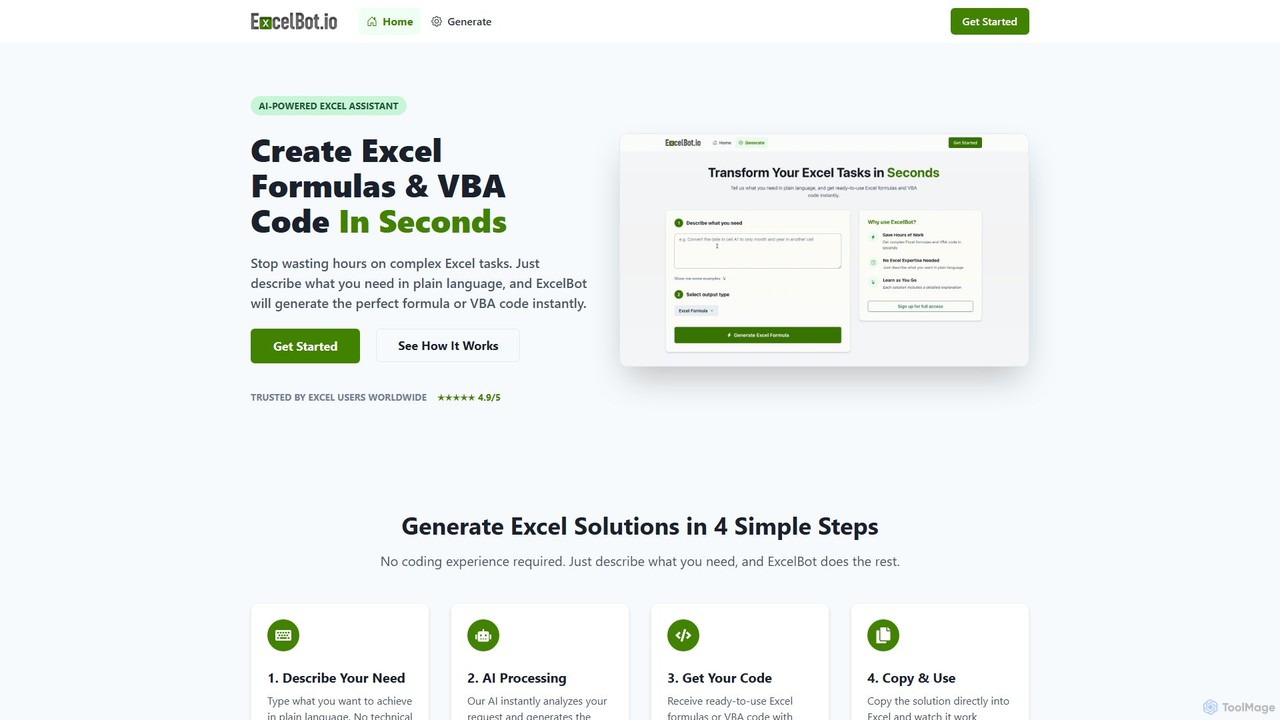
ExcelBot is an AI-powered assistant that instantly generates complex Excel formulas and VBA code from plain English descriptions. Designed for users of all skill levels, from beginners to data analysts, it saves hours of manual work, boosts productivity, and helps users learn by providing detailed explanations for every solution. Simply describe your task, and ExcelBot delivers the ready-to-use code in seconds.

Data Automation
Visits 7.6KFavorites 128Likes 135
WebAssistants.ai
Paid

WebAssistants.ai

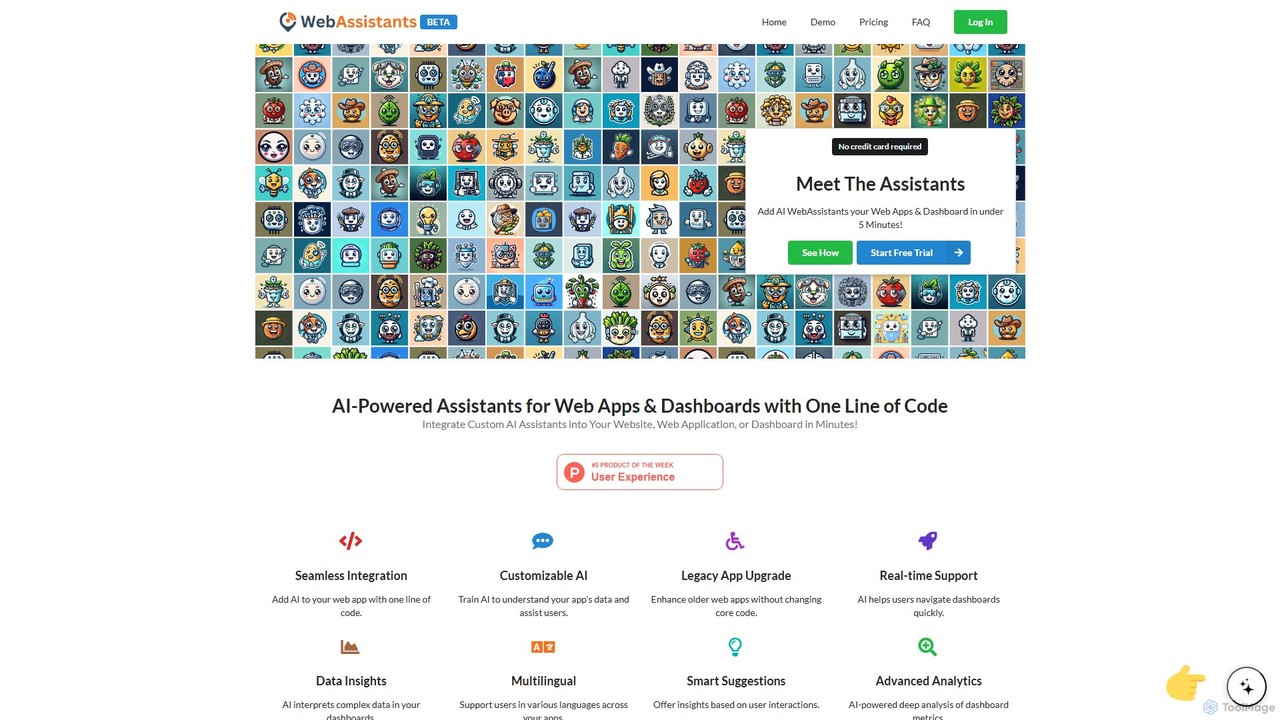
WebAssistants.ai offers custom AI assistants and expert consulting services to integrate and optimize AI for your business. They build tailored solutions, from data analysis dashboards to automated HR tools, designed to align with your specific goals and seamlessly integrate into your website and existing systems.

Ai Consulting
Visits 7.7KFavorites 145Likes 125
Acho
Freemium

Acho

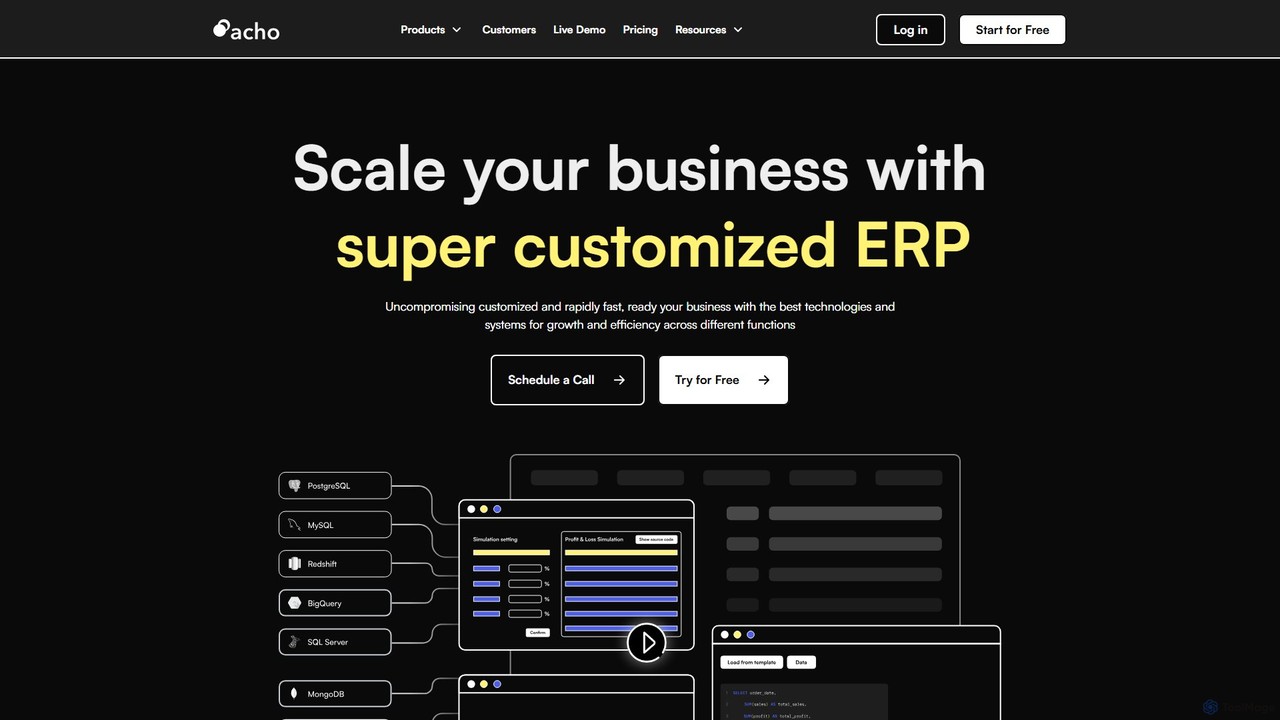
Acho is an AI-powered, low-code platform for building modern ERP systems and data applications. It enables businesses to connect disparate data sources, automate complex workflows, and create custom tools to enhance operational efficiency, drive revenue, and scale operations.

Erp
Visits 15KFavorites 119Likes 150
Theia IDE
Free

Theia IDE

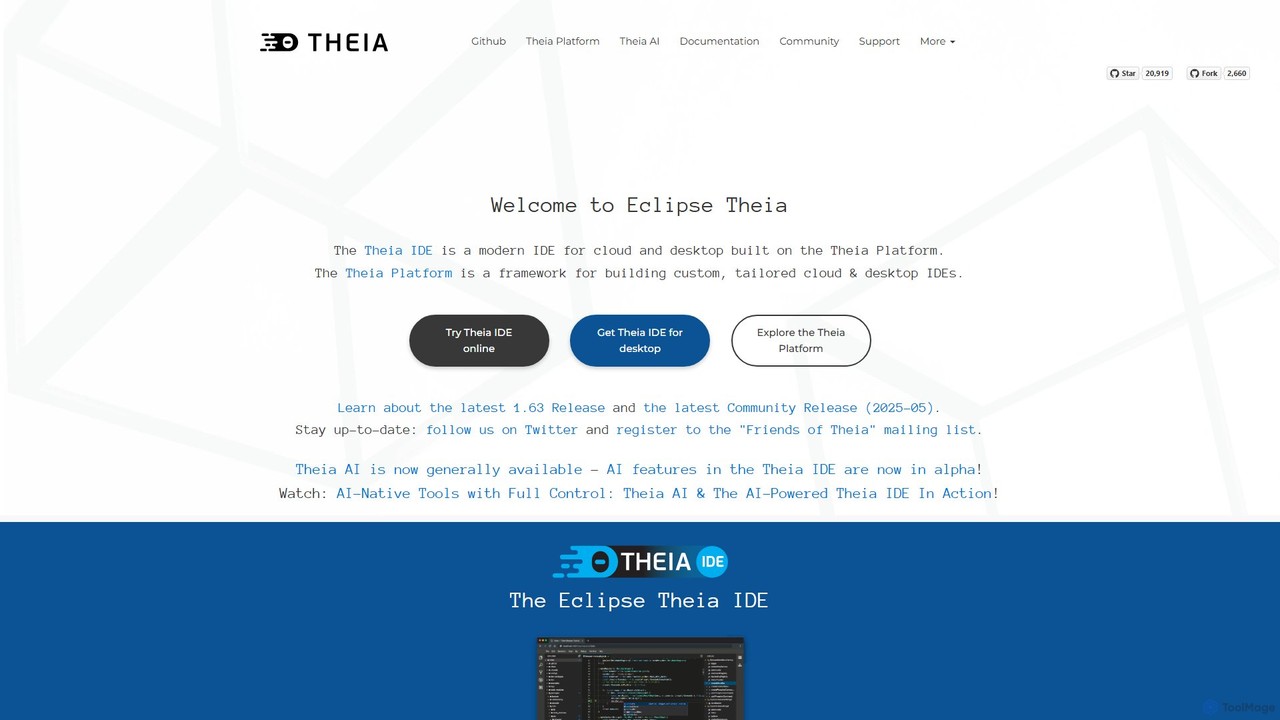
Theia IDE is a modern, open-source IDE for cloud and desktop environments. It offers a flexible, extensible platform compatible with VS Code extensions and features powerful, privacy-focused AI capabilities. As a vendor-neutral alternative to VS Code, it supports numerous programming languages and allows for deep customization, making it ideal for individual developers and enterprises seeking control over their development tools.

Low Code No Code
Visits 55.8KFavorites 181Likes 206
Magic Patterns
Freemium

Magic Patterns

Magic Patterns is an AI-powered prototyping platform for product teams, designers, and developers. It accelerates UI creation by generating interactive prototypes and production-ready code (React, Tailwind CSS) from text prompts, screenshots, or existing websites. It helps teams iterate faster, gather user feedback, and make data-driven decisions.

Prototyping
Visits 248.4KFavorites 104Likes 115
pandalyst
Freemium

pandalyst

Pandalyst is an AI-powered data analysis platform that transforms how you interact with data. Ask questions in natural language and receive instant visualizations, insights, and reports. It automates complex data tasks, making business intelligence accessible to everyone, from analysts to business leaders, without writing a single line of code.

Low Code No Code
Visits 6.4KFavorites 183Likes 174
PandasAI
Freemium

PandasAI

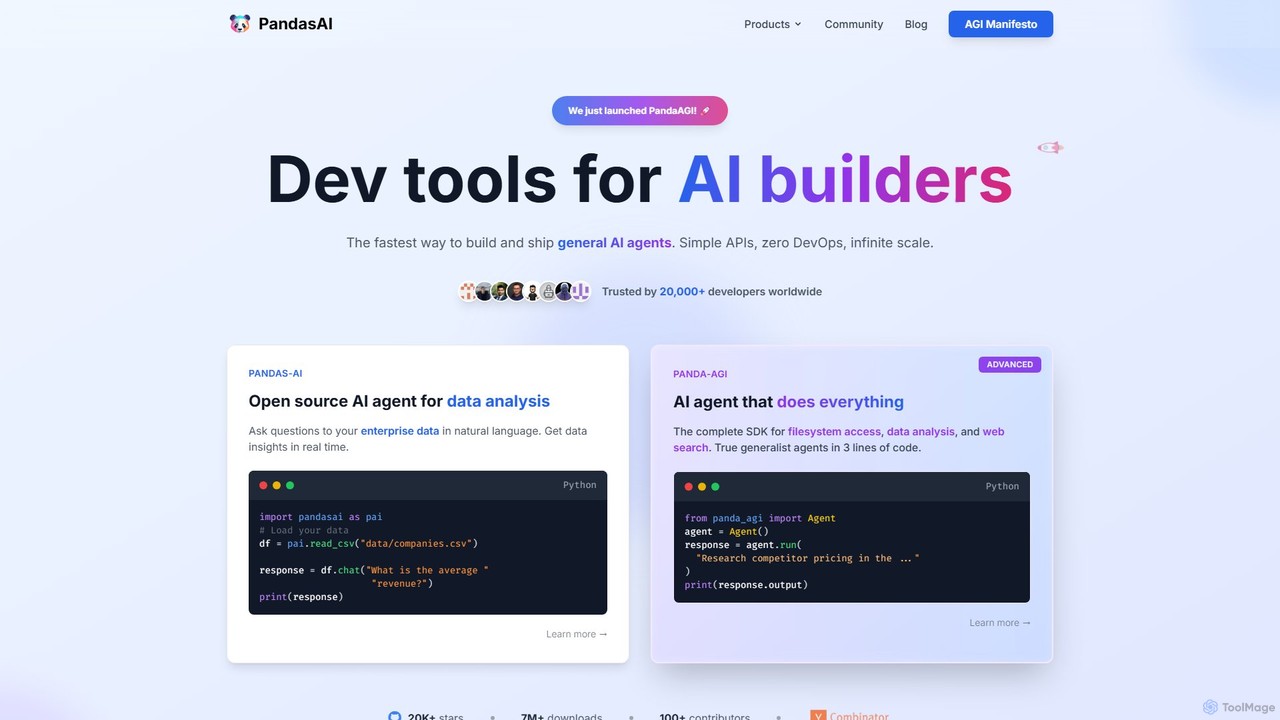
PandasAI offers a suite of developer tools for building AI applications. It features an open-source library for conversational data analysis using natural language and PandaAGI, an advanced SDK for creating generalist AI agents that can perform complex tasks like web searches and filesystem access.

Data Analysis
Visits 32KFavorites 170Likes 167
Formula Generator
Freemium

Formula Generator

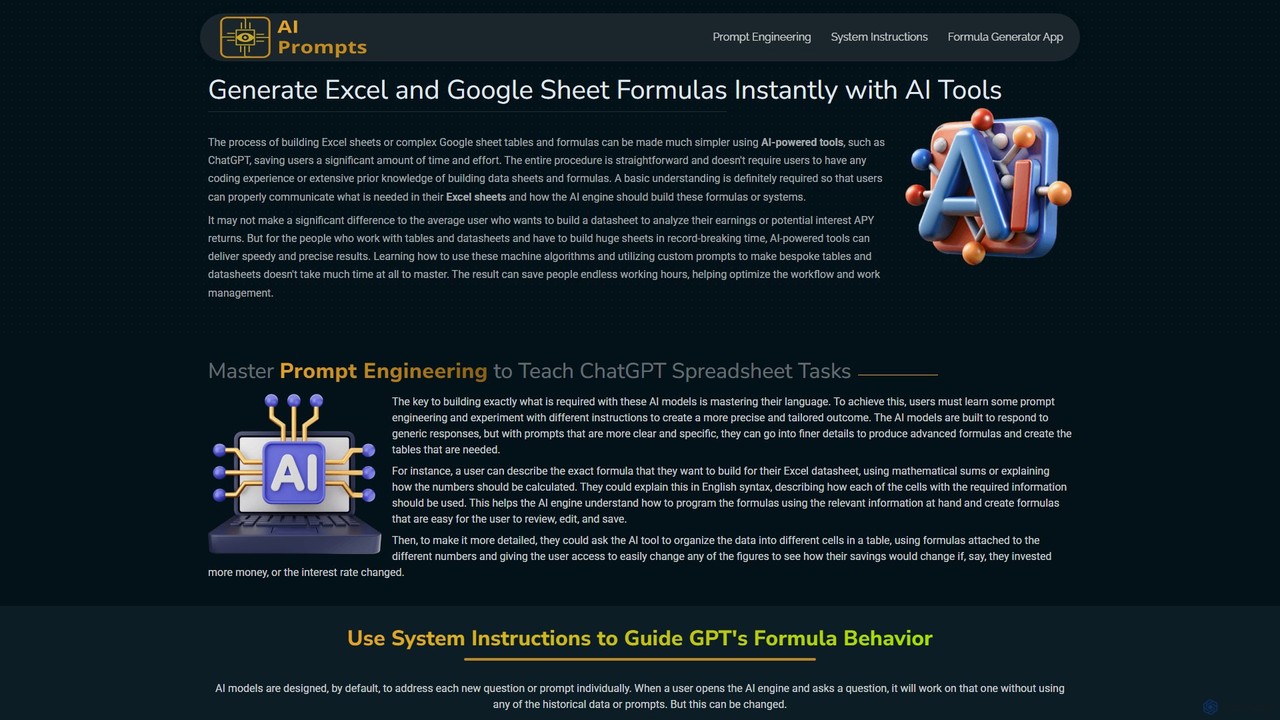
An AI-powered tool that instantly generates, explains, and debugs formulas for Excel, Google Sheets, and Airtable from natural language descriptions. It also creates VBA, Apps Script, and SQL code to automate tasks, saving users time and improving spreadsheet accuracy without requiring extensive coding knowledge.

Low Code No Code
Visits 6.4KFavorites 140Likes 149
ZBrain
Freemium

ZBrain

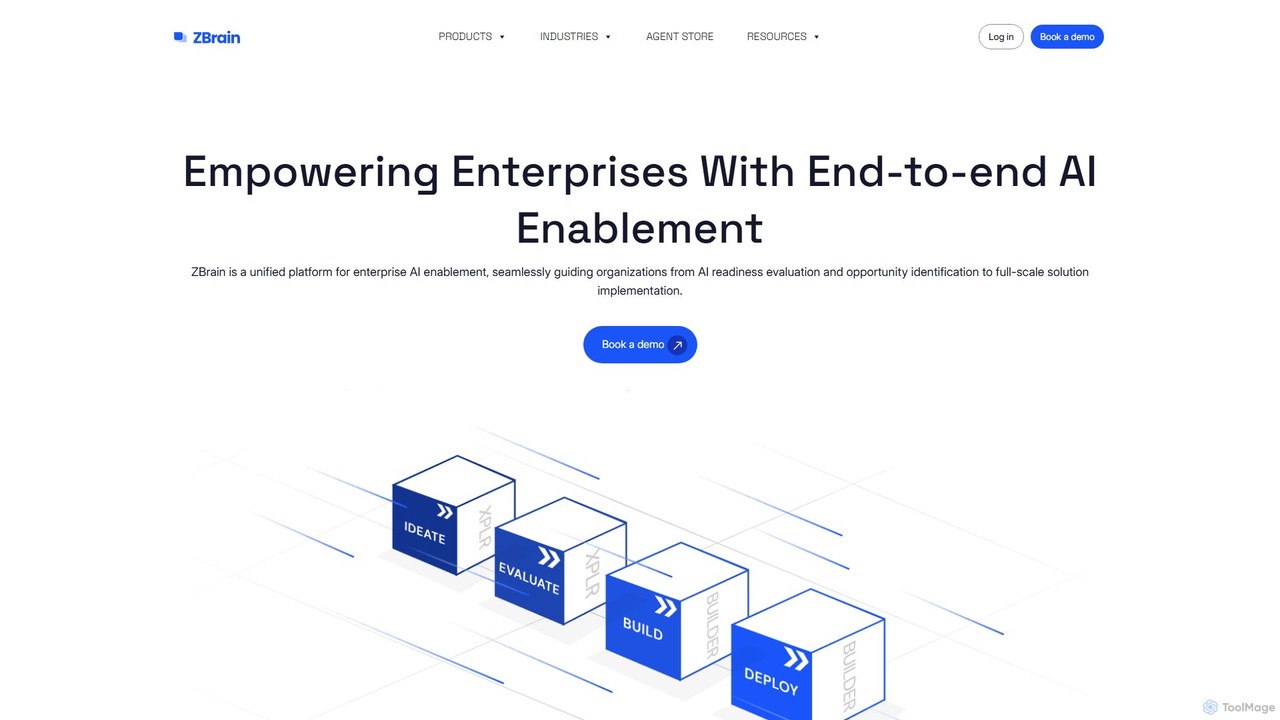
ZBrain is an end-to-end enterprise AI platform designed to guide organizations from AI readiness assessment to full-scale implementation. It offers a unified suite of tools, including a low-code builder and specialized AI agents, to create custom, secure, and scalable AI solutions tailored to specific business needs across various departments.

Ai Platform
Visits 21.7KFavorites 113Likes 96
Botbyte AI
Freemium

Botbyte AI

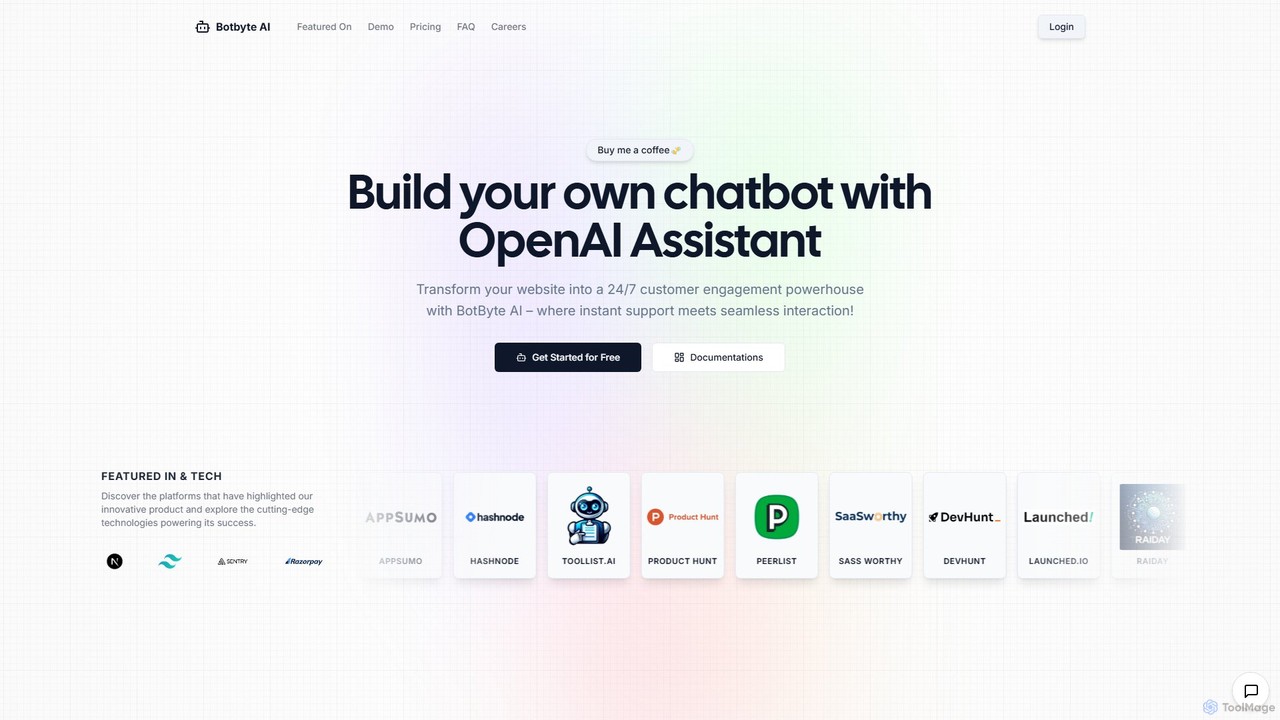
Botbyte AI is a platform for creating custom AI chatbots powered by OpenAI's Assistant API. Easily train a chatbot on your website's content by simply providing a URL. It offers low-code integration, lead generation features, and a 'bring your own API key' model for cost-effective, 24/7 customer engagement.

Chatbots
Visits 6.5KFavorites 135Likes 137

About Low Code No Code

Low Code No Code (LCNC) platforms are a category of developer tools that enable users to build applications and automate processes with minimal or no traditional programming. These tools leverage visual interfaces, drag-and-drop functionality, and pre-built components, significantly accelerating development cycles. LCNC empowers both professional developers and citizen developers to create custom software solutions, enhancing agility and reducing reliance on extensive coding expertise.

Core Features

  • Visual Development Interface: Provides intuitive drag-and-drop editors for designing user interfaces and application logic.
  • Pre-built Components & Templates: Offers ready-to-use modules, widgets, and templates for common functionalities and industry-specific solutions.
  • Workflow Automation: Enables the creation of automated business processes and data flows without writing code.
  • Data Integration: Facilitates seamless connection with various databases, APIs, and third-party services.
  • Deployment & Hosting: Simplifies the process of publishing and managing applications across different environments.

Applicable Scenarios

LCNC tools are ideal for businesses seeking rapid digital transformation, allowing them to quickly respond to market changes and internal needs. They are widely adopted for automating repetitive tasks, building custom internal tools, and developing customer-facing applications. From small startups to large enterprises, LCNC accelerates innovation across various departments.

How to Choose

When selecting an LCNC platform, consider its scalability for future growth, the breadth of its integration ecosystem with existing systems, and the level of customization it allows. Evaluate the learning curve for your team, the vendor's support and community, and the overall pricing model, including licensing and deployment costs, to ensure it aligns with your project's complexity and budget.

Featured tool rankings

Low Code No Code use cases

1

Automating Internal Business Processes

An HR manager needs to streamline the employee onboarding process, which involves multiple forms, approvals, and system updates. Using an LCNC platform, they can visually design a workflow that automatically sends welcome emails, triggers IT provisioning requests, collects necessary documents, and updates employee records across different systems, reducing manual effort and errors.

2

Developing Custom Departmental Applications

A marketing team requires a simple project tracking tool tailored to their specific campaign stages and reporting needs, which off-the-shelf solutions don't fully meet. With an LCNC tool, a citizen developer within the team can quickly build a custom application with drag-and-drop components, enabling them to manage tasks, track progress, and generate reports without relying on IT resources.

3

Creating Customer Self-Service Portals

A small e-commerce business wants to offer customers a portal to track orders, manage subscriptions, and access FAQs without overwhelming their support team. An LCNC platform allows them to rapidly develop a secure, user-friendly web portal with pre-built components for user authentication, order display, and knowledge base integration, significantly improving customer experience.

4

Rapid Prototyping and MVP Development

A startup founder has an innovative app idea but needs to validate it quickly with potential users before investing heavily in full-stack development. Leveraging an LCNC platform, they can build a functional Minimum Viable Product (MVP) or prototype in days or weeks, allowing them to gather early feedback, iterate rapidly, and secure funding with a tangible product.

5

Building Data Collection and Reporting Tools

A field sales team needs a mobile application to efficiently collect customer feedback and sales data during visits, which then feeds into a central dashboard. An LCNC tool enables the creation of custom mobile forms with offline capabilities and automated data synchronization, providing real-time insights for management and eliminating manual data entry.

6

Integrating Disparate SaaS Applications

An operations team uses several SaaS tools (e.g., CRM, ERP, project management) that don't natively communicate, leading to data silos and manual data transfer. An LCNC integration platform allows them to visually connect these applications, creating automated data flows and synchronizations between them, ensuring data consistency and eliminating repetitive tasks without custom API coding.

Low Code No Code FAQ

What are Low Code No Code (LCNC) platforms?

Low Code No Code (LCNC) platforms are development environments that allow users to create software applications with minimal or no manual coding. They achieve this through visual interfaces, drag-and-drop functionality, and pre-built components. LCNC tools democratize app development, enabling a broader range of users, including business analysts and citizen developers, to build custom solutions faster and more efficiently.

How do Low Code and No Code differ?

Low Code platforms require some basic coding knowledge, offering more flexibility and customization options for professional developers to extend functionality. No Code platforms, conversely, require absolutely no coding, relying entirely on visual configuration and pre-built modules, making them accessible to business users. No Code is faster for simpler applications, while Low Code suits more complex, integrated solutions.

Who benefits most from using Low Code No Code tools?

LCNC tools primarily benefit citizen developers, small to medium-sized businesses, and enterprise IT departments. Citizen developers can quickly build solutions for their specific departmental needs without IT backlog. SMBs can rapidly digitize operations without large development teams. Enterprise IT can accelerate application delivery, reduce shadow IT, and focus on more complex, strategic projects.

What are the main advantages of Low Code No Code development?

The main advantages include significantly faster application development and deployment, reduced development costs, and increased agility to respond to business needs. LCNC also lowers the technical barrier to entry, empowering more people to create software. This leads to improved collaboration between business and IT, and a quicker time-to-market for new digital solutions.

What are the potential limitations of Low Code No Code platforms?

While powerful, LCNC platforms can have limitations such as potential vendor lock-in, where migrating applications to a different platform can be challenging. They might also offer limited customization for highly unique or complex requirements that fall outside the platform's pre-built capabilities. Scalability for extremely large-scale, high-performance applications can sometimes be a concern, and security considerations need careful management within the platform's framework.