ToolMage
Sign in

Best 34 Open Source AI tools for Developer Tools

Popular Open Source AI tools in Developer Tools include Home Assistant, Allen Institute for AI (AI2), Omi, comma.ai, Genmo, OpenBB, Typebot, Gainium, QRBTF, and OpnForm, helping you work more efficiently.

Browserarena

Browserarena

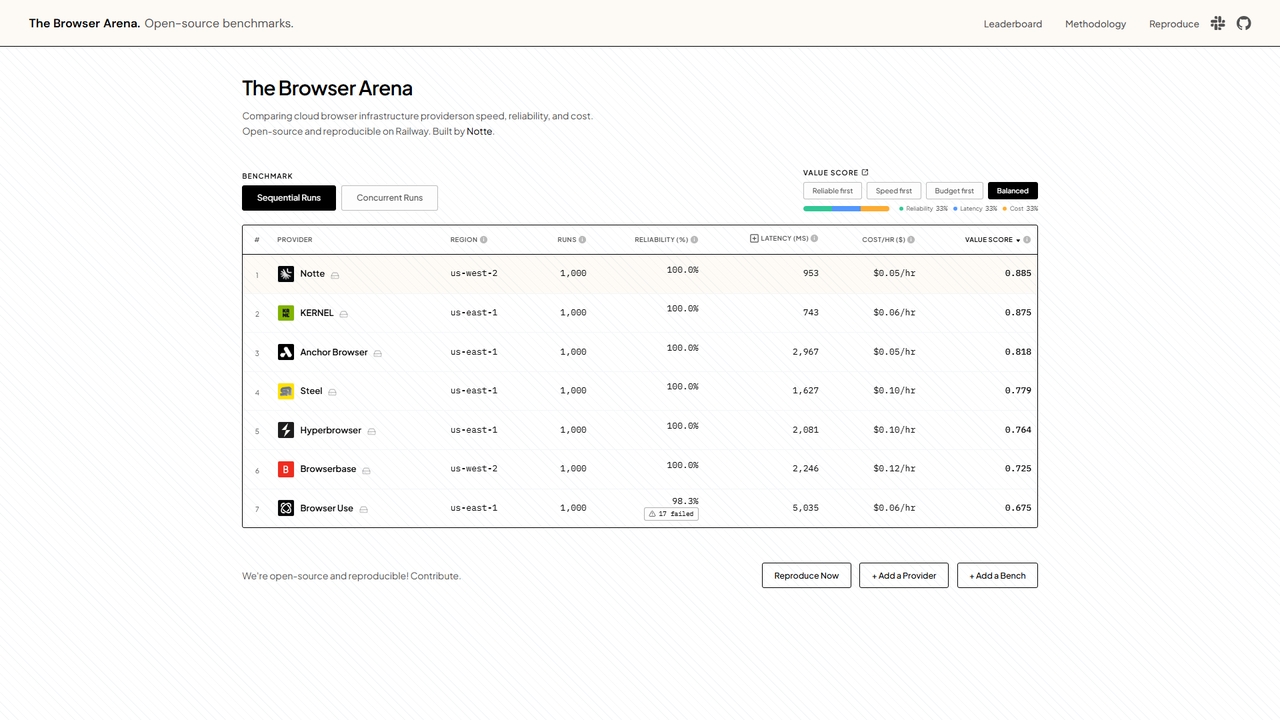
Browserarena is an open-source benchmarking and comparison platform for cloud browser infrastructure providers. It objectively evaluates and ranks providers based on key performance metrics including speed (latency), reliability (success rate), and cost per hour, helping developers and businesses make data-driven decisions for their browser automation and testing needs.

Infrastructure
Visits 4.2KFavorites 8Likes 6
Typebot
Freemium

Typebot

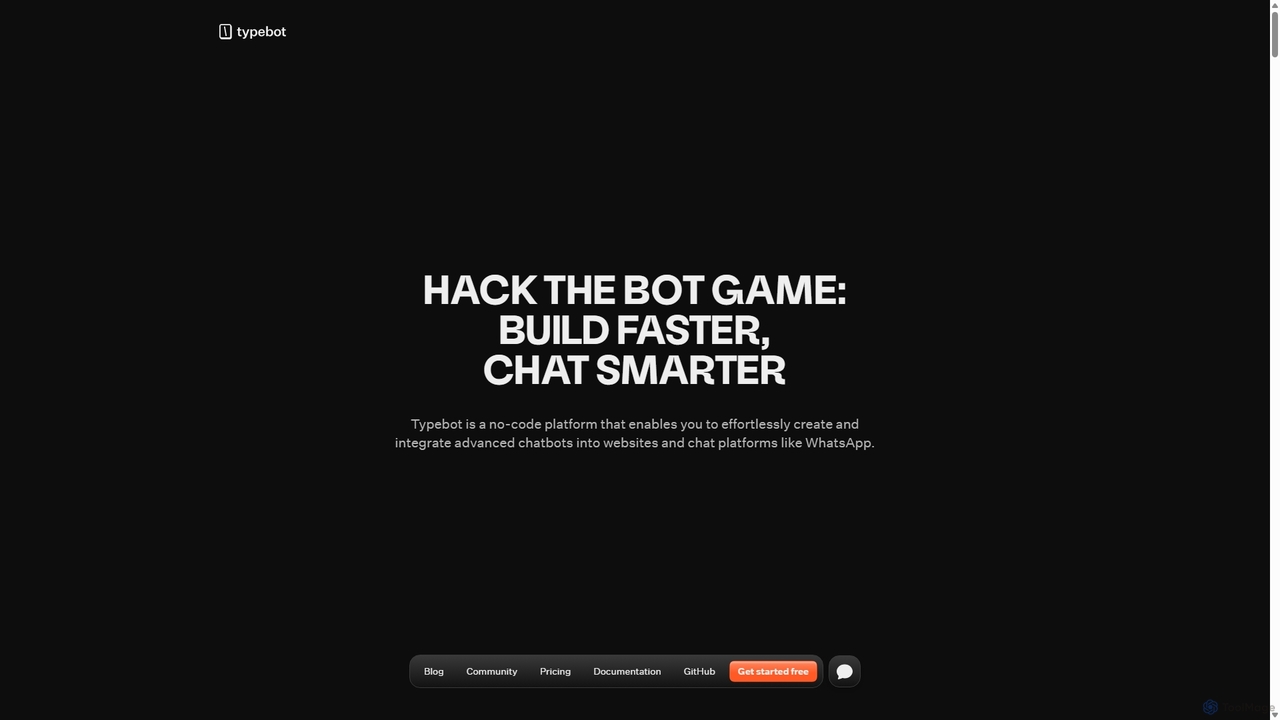
Typebot is an open-source, no-code platform for building advanced conversational apps and chatbots. It allows users to create engaging, interactive experiences for marketing, sales, and support, deploying them across websites, WhatsApp, and other platforms to boost conversions and automate communication.

Chatbots
Visits 86.1KFavorites 91Likes 98
Papermerge
Freemium

Papermerge

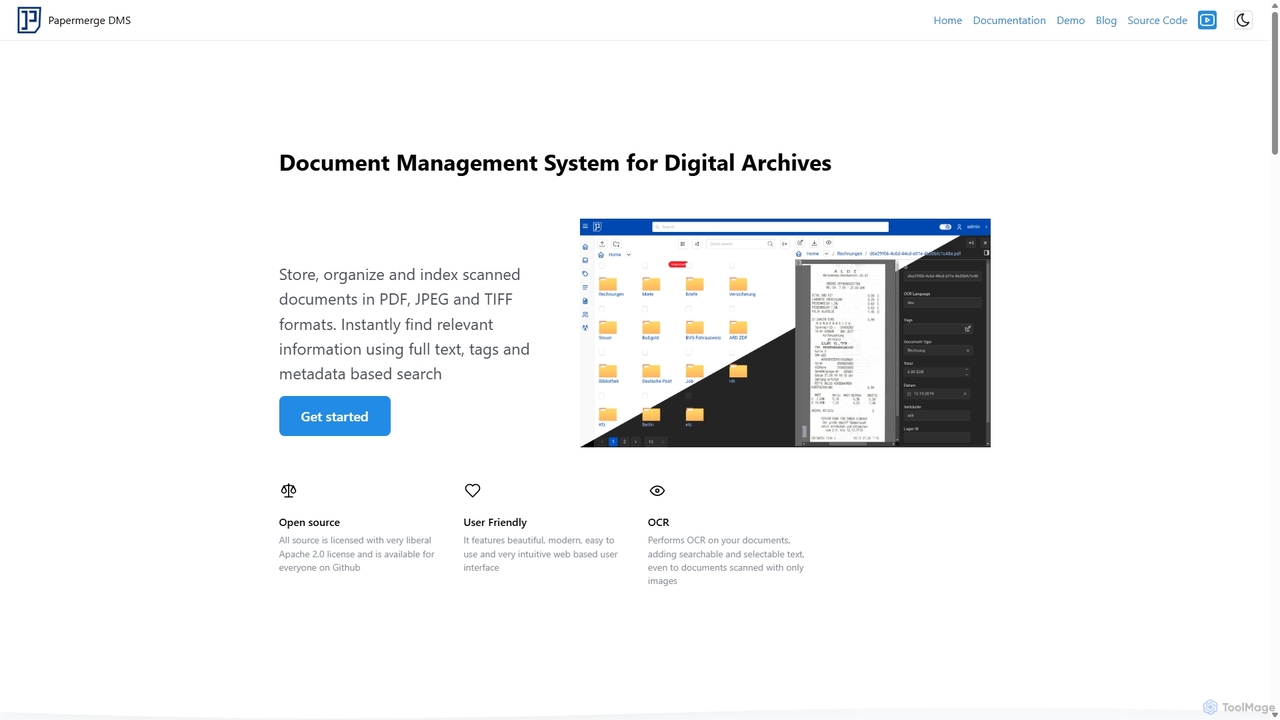
Papermerge is an open-source Document Management System (DMS) designed for digital archiving. It allows you to store, organize, and index scanned documents like PDFs, JPEGs, and TIFFs. With powerful OCR technology, it makes all your documents full-text searchable. Features include version control, custom metadata, document categorization, and page management, all accessible through a modern, user-friendly web interface. It's an ideal solution for creating a paperless, searchable personal or business archive.

Archiving
Visits 7.3KFavorites 105Likes 115
Meet Febin
Free

Meet Febin

Meet Febin is a personal innovation hub showcasing a collection of experimental AI projects. It features unique tools like Film Flow for emotional film analysis, Peace Messenger for empathetic communication, and Crowd Feel for sentiment analysis, offering a glimpse into the future of human-centric AI applications.

Experimental Ai
Visits 3.4KFavorites 130Likes 122
CrayEye
Free

CrayEye

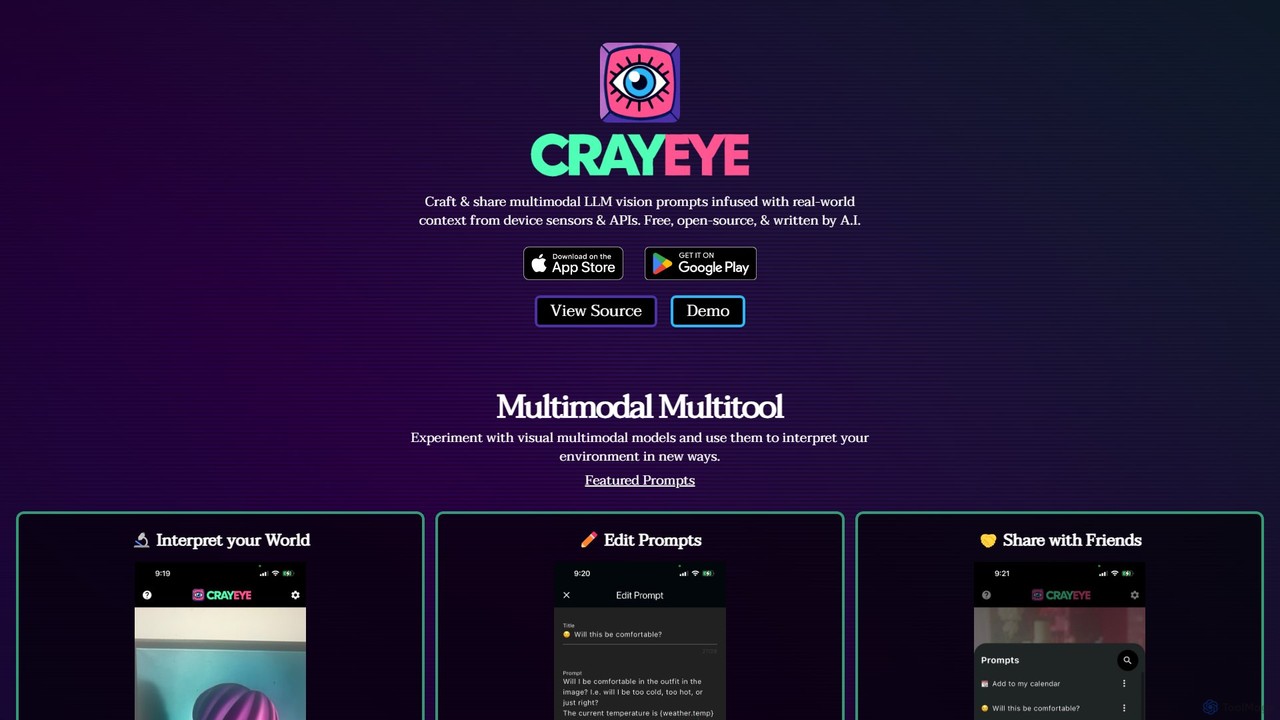
CrayEye is a free, open-source multimodal AI tool that lets you create and share vision prompts enriched with real-world context from your device's sensors (like camera, GPS) and APIs (like weather). Experiment with visual models to interpret your environment in new, context-aware ways.

Open Source
Visits 3.5KFavorites 131Likes 116
OpnForm
Freemium

OpnForm

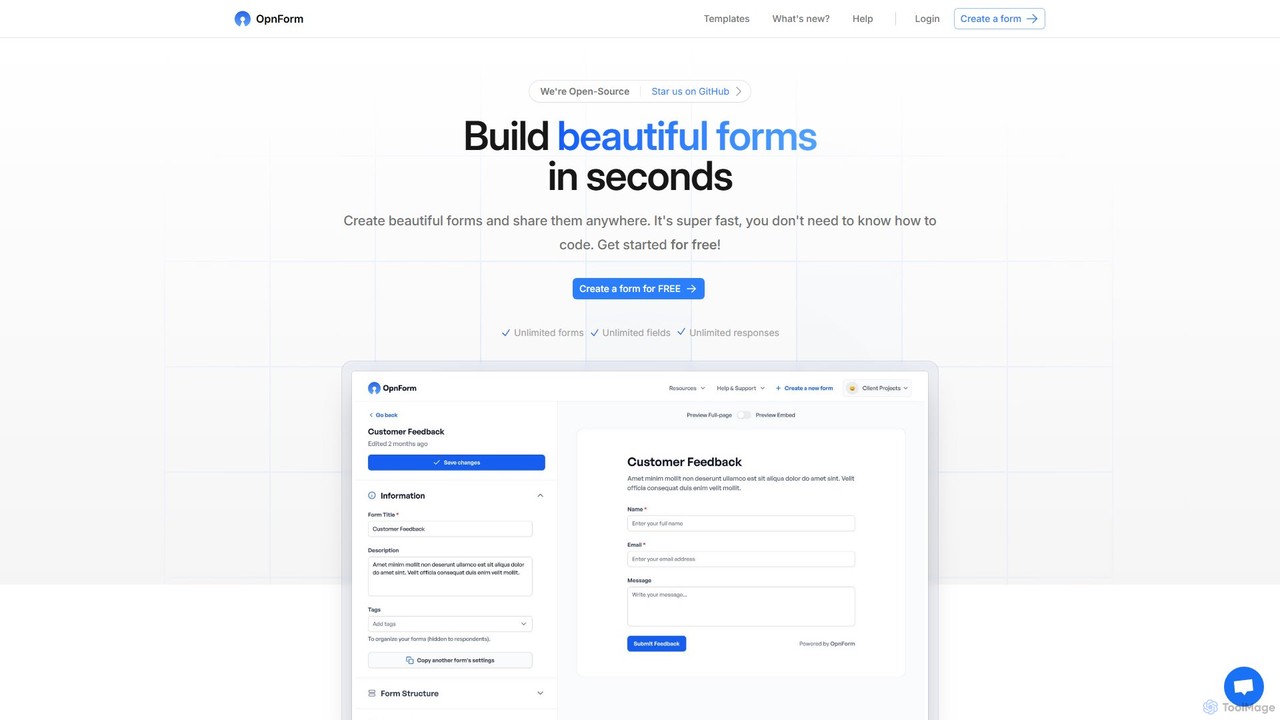
OpnForm is an open-source, AI-powered form builder that allows users to create unlimited beautiful forms for free. With its intuitive no-code interface, AI form generation from text prompts, and extensive customization options, it's perfect for surveys, contact forms, and data collection. It offers a generous free plan and powerful pro features like advanced integrations, custom domains, and API access.

Open Source
Visits 33.5KFavorites 89Likes 91
Genmo
Freemium

Genmo

Genmo is a pioneering AI video generation platform featuring Mochi 1, a state-of-the-art open-source model. It transforms text prompts into high-fidelity videos with exceptional motion quality and prompt adherence. Designed for creators, developers, and researchers, Genmo offers both a user-friendly web interface and an open ecosystem for building custom applications, making it a versatile tool for filmmaking, marketing, and synthetic data generation.

Generative Art
Visits 156.9KFavorites 121Likes 119
AI Town
Free

AI Town

An open-source starter kit for building a virtual town where AI characters live, chat, and form relationships. It serves as a customizable simulation environment for exploring emergent social behaviors in autonomous AI agents.

Open Source
Visits 5.4KFavorites 95Likes 108
removerized
Free

removerized

A free, open-source AI tool that instantly removes backgrounds from images. Simply upload your PNG, JPG, or WEBP file, and the AI will automatically detect and erase the background, providing a high-quality transparent image for download.

Image Editing
Visits 3.5KFavorites 91Likes 103
TodoVex
Free

TodoVex

TodoVex is a free, open-source, AI-powered to-do list application designed as a smart alternative to Todoist. It leverages OpenAI to intelligently organize your tasks, predict your next priorities, and streamline your workflow. Manage your personal and professional projects with intelligent assistance, all within a clean and intuitive interface.

Open Source
Visits 4.2KFavorites 101Likes 106
Allen Institute for AI (AI2)
Free

Allen Institute for AI (AI2)

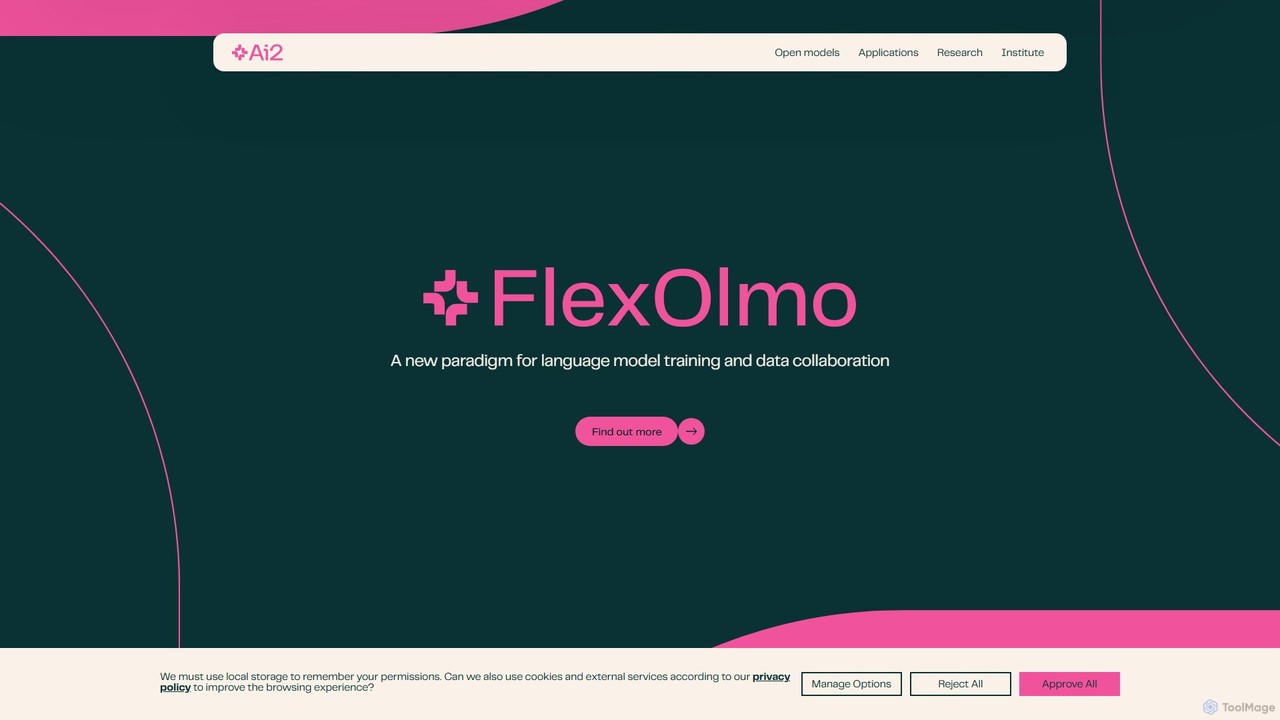
The Allen Institute for AI (AI2) is a non-profit research institute dedicated to building breakthrough AI for the common good. It focuses on creating truly open-source large language models like OLMo, comprehensive datasets, and specialized AI tools to advance scientific research and address major global challenges in areas such as climate science, conservation, and medicine.

Datasets
Visits 372.7KFavorites 100Likes 110
Dadabots
Free

Dadabots

Dadabots is a pioneering AI art and research project that uses neural networks to generate music, famously known for its 24/7 livestreams of AI-generated death metal. It pushes the boundaries of creative AI by producing full albums, collaborating with artists, and focusing on extreme and experimental genres. Dadabots also contributes significantly to the open-source community by publishing research and releasing datasets and models like DadaGP and Stable Audio Tools, empowering others to explore the future of music.

Generative Art
Visits 5.3KFavorites 138Likes 132
FramePack
Freemium

FramePack

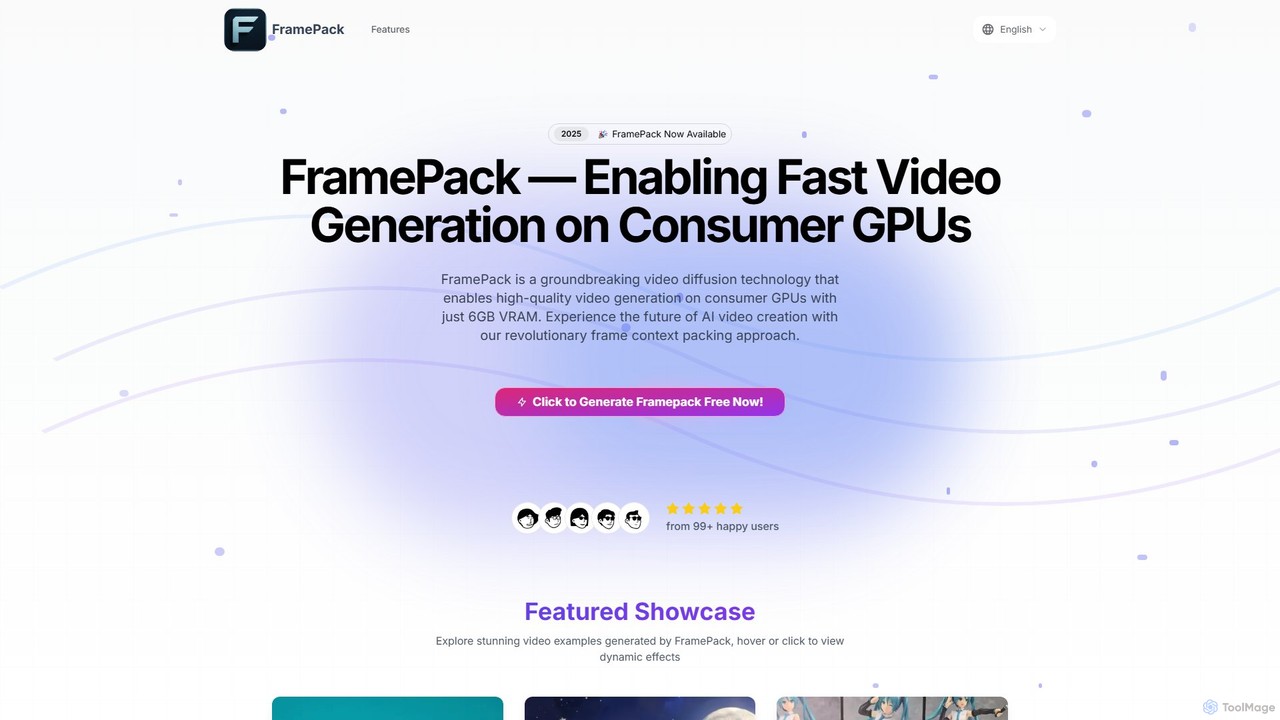
FramePack is a groundbreaking open-source video diffusion technology that enables high-quality AI video generation on local consumer GPUs with as little as 6GB VRAM. It offers a cost-effective, private, and customizable solution for creators, animators, and researchers to produce long, consistent video sequences without relying on expensive cloud services.

Animation
Visits 3.6KFavorites 122Likes 126
RSS Filter
Free

RSS Filter

An AI-powered recommendation system that filters your RSS feeds to reduce noise. It uses LLM embeddings and machine learning to learn from your reading habits, recommending articles similar to what you've read and helping you focus on content that truly matters.

Open Source
Visits 3.4KFavorites 110Likes 112
comma.ai
Paid

comma.ai

comma.ai offers an AI-powered hardware and open-source software solution, openpilot, that upgrades your car with advanced driver-assistance capabilities. Similar to Tesla Autopilot, it provides features like Adaptive Cruise Control, Automated Lane Centering, and Lane Change Assist for over 325 car models. The system uses a sophisticated neural network and a 360° vision system to make driving safer and more relaxing, especially on long journeys.

Driver Assistance
Visits 314.3KFavorites 91Likes 98
Teach-O-Matic
Free

Teach-O-Matic

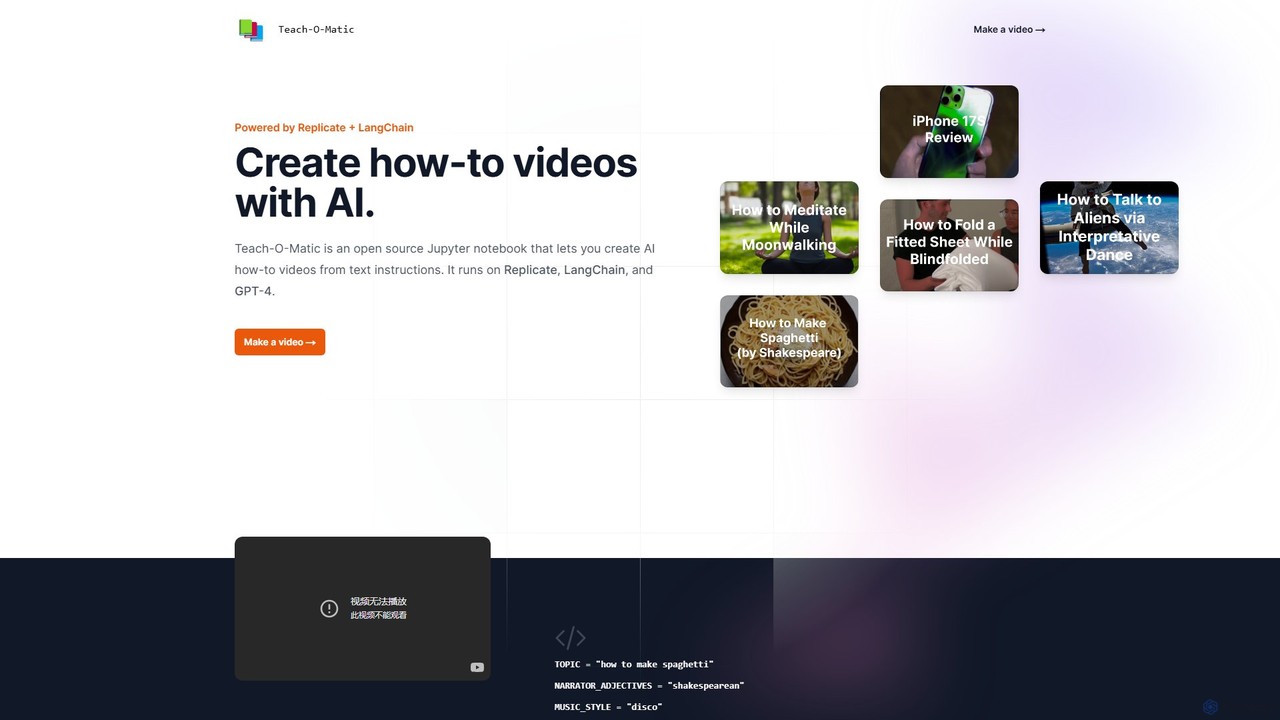
Teach-O-Matic is an open-source AI tool that automatically creates how-to videos from simple text instructions. It leverages a suite of AI models, including GPT-4 and LangChain, to generate scripts, voiceovers, video clips, music, and cover art, streamlining the entire video production process.

Open Source
Visits 8.4KFavorites 92Likes 99
twilix
Freemium

twilix

twilix is an open-source, AI-powered form builder, positioned as a powerful alternative to Typeform. It enables users to create beautiful, interactive forms, surveys, and quizzes from simple text descriptions. Offering self-hosting for complete data control, extensive customization, and seamless integrations, twilix is ideal for developers, marketers, and businesses seeking a flexible and cost-effective data collection solution.

Open Source
Visits 3.5KFavorites 128Likes 137
UniBee
Freemium

UniBee

UniBee is an open-source subscription billing and payment management platform designed for SaaS businesses. It offers a flexible, cost-effective alternative to proprietary solutions, supporting various billing models like recurring, usage-based, and one-time payments. With features like multi-gateway support (including crypto), automated invoicing, revenue analytics, and options for both cloud and self-hosting, UniBee empowers businesses to streamline their global financial operations and scale efficiently.

Subscription Management
Visits 22.3KFavorites 93Likes 92
Vizzy
Freemium

Vizzy

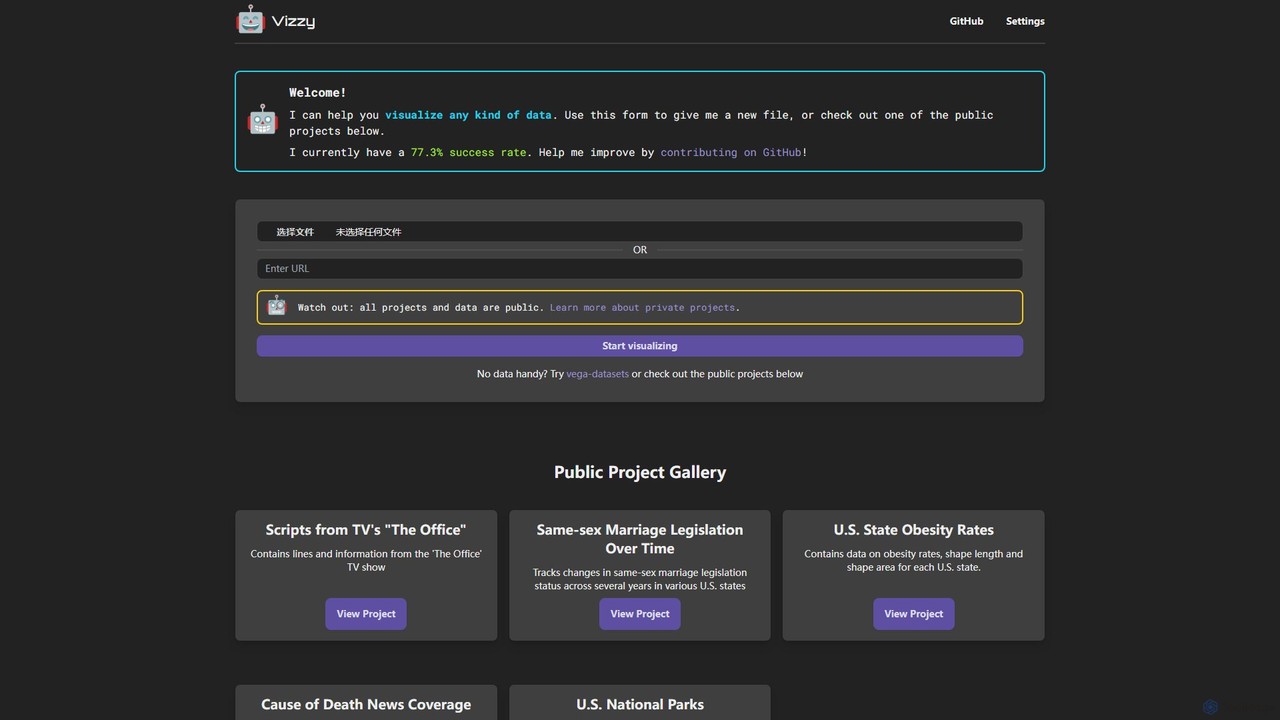
Vizzy is an AI-powered tool that leverages Large Language Models (LLMs) for rapid data visualization. Simply upload your data file, and Vizzy's AI will analyze it to automatically generate insightful charts, graphs, and maps. It's a no-code, open-source platform designed to make data analysis accessible to everyone, from researchers to business analysts. Explore public datasets or visualize your own, turning raw numbers into clear visuals in seconds.

Visualization
Visits 3.4KFavorites 143Likes 139
Thepanel
Freemium

Thepanel

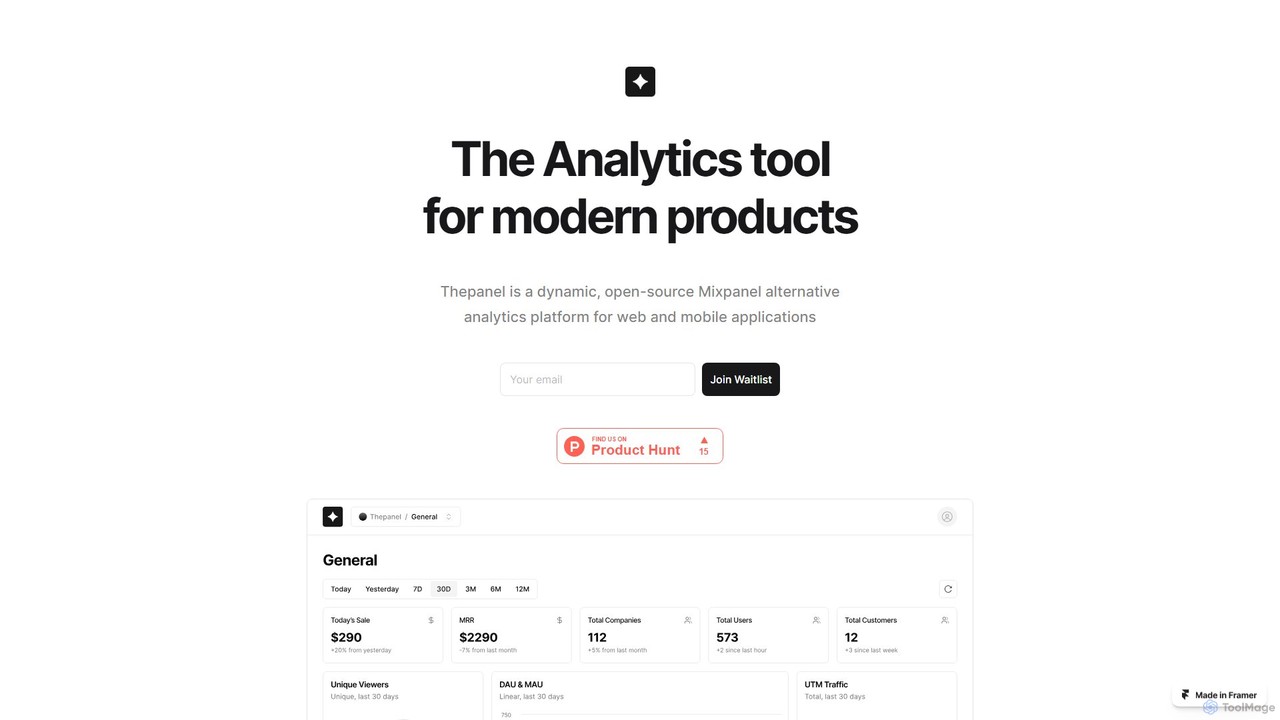
Thepanel is an open-source, AI-powered analytics platform for modern products. It enables real-time event tracking, customizable dashboards, and seamless data integration from any source. Leverage predictive analytics to understand user behavior, make smarter decisions, and accelerate growth.

Business Intelligence
Visits 3.4KFavorites 87Likes 91
Home Assistant
Freemium

Home Assistant

Home Assistant is a powerful, open-source home automation platform that prioritizes local control and user privacy. It integrates with thousands of smart devices and services, allowing you to create powerful automations, custom dashboards, and even use a private, local voice assistant. Powered by a global community, it puts you in complete control of your smart home data.

Open Source
Visits 5.7MFavorites 81Likes 72
TileMaker
Free

TileMaker

TileMaker is a free, open-source AI tool that generates unique, seamless, and tileable textures from simple text prompts. Powered by Material Diffusion, it's perfect for game developers, designers, and artists looking to create custom materials quickly and efficiently for their projects.

Generative Art
Visits 3.6KFavorites 129Likes 141
QRBTF
Free

QRBTF

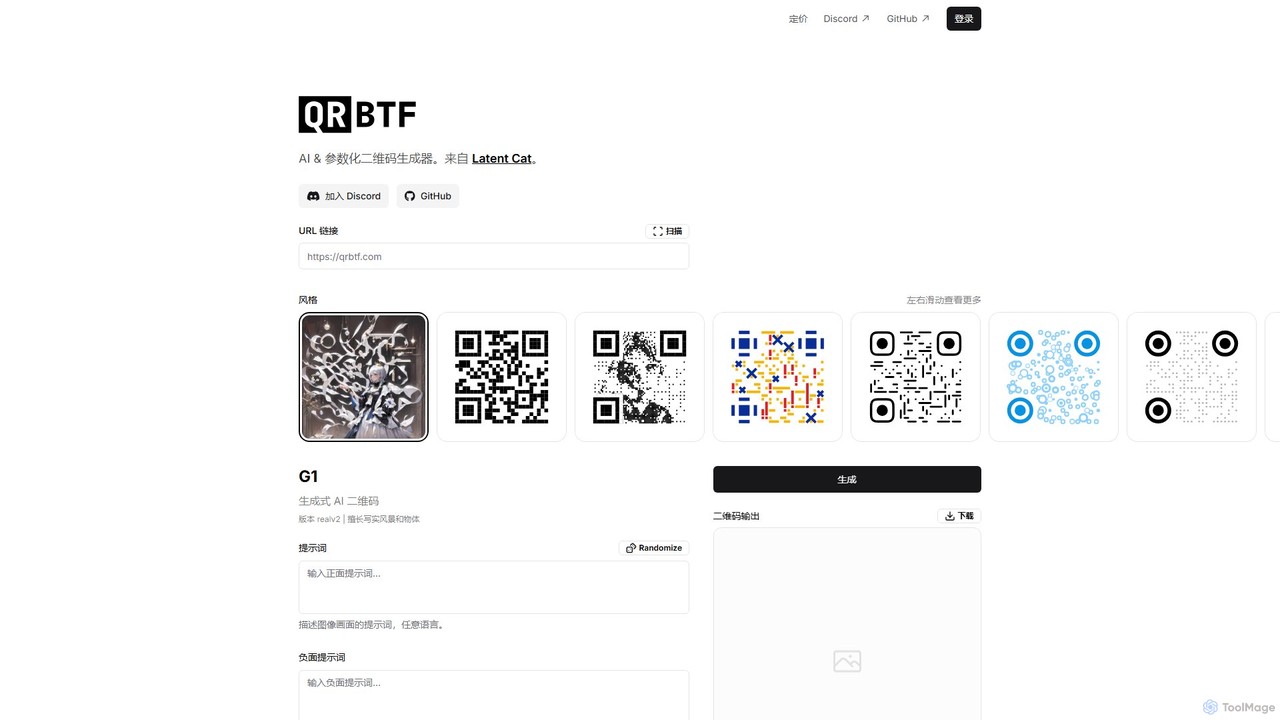
QRBTF is an innovative AI-powered QR code generator that transforms standard QR codes into stunning works of art. By leveraging generative AI and parametric controls, users can embed QR codes seamlessly into beautiful images based on text prompts, creating visually appealing and scannable designs for marketing, art, and personal use.

Ai Art Generator
Visits 34.7KFavorites 78Likes 93
unopim
Freemium

unopim

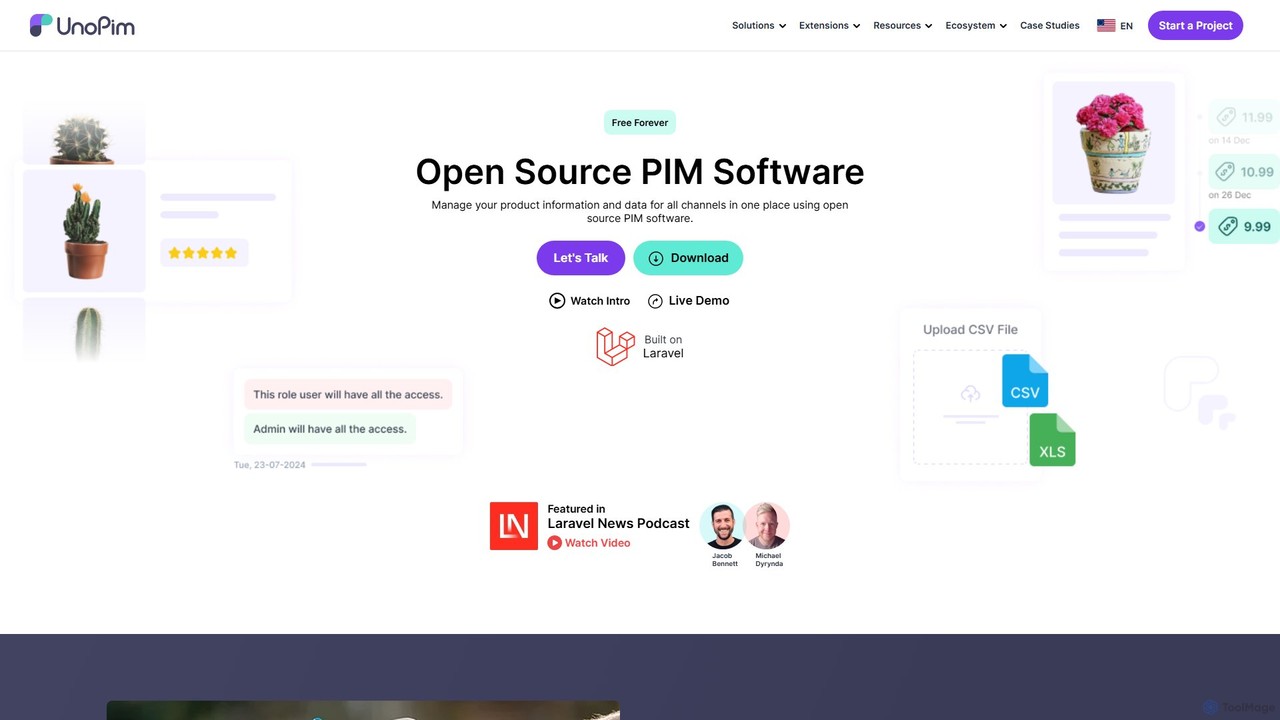
unopim is a powerful open-source Product Information Management (PIM) and Digital Asset Management (DAM) platform designed for e-commerce. It centralizes all product data and digital assets, streamlining workflows and ensuring data consistency across multiple sales channels like Shopify, Magento, and WooCommerce.

Open Source
Visits 14.2KFavorites 100Likes 98

About Open Source

Open Source AI tools are a class of developer tools whose source code is publicly available for anyone to inspect, modify, and distribute. These tools are built on the principles of transparency and community collaboration, allowing developers to understand the underlying algorithms and adapt them to specific needs. Their primary value lies in providing unparalleled flexibility, fostering rapid innovation through collective effort, and eliminating vendor lock-in. This approach is fundamental for academic research, custom enterprise solutions, and developers who require deep control over their technology stack.

Core Features

  • Source Code Accessibility: The complete source code is available, enabling deep analysis, debugging, and security audits.
  • High Customizability: Developers can freely modify, extend, or embed the tools into their own applications to meet unique requirements.
  • Community-Driven Development: Features and bug fixes are contributed by a global community of developers, leading to diverse and robust solutions.
  • Permissive Licensing: Governed by licenses (e.g., MIT, Apache 2.0) that define the terms of use, modification, and distribution, often with minimal restrictions.
  • Interoperability: Often designed to adhere to open standards, making them easier to integrate with other systems and tools.

Use Cases

Open Source AI tools are widely used by developers, data scientists, and researchers. They are foundational in academic settings for experimenting with new models and in startups for building cost-effective MVPs. Enterprises leverage them to construct custom, in-house AI platforms and MLOps pipelines, ensuring full control over data privacy and system architecture without being tied to a single commercial provider.

How to Choose

When selecting an Open Source AI tool, consider the project's license to ensure it aligns with your commercial or distribution goals. Evaluate the community's health by checking repository activity (e.g., recent commits, open issues, pull requests). Assess the quality and completeness of the documentation, as it is crucial for implementation and troubleshooting. Finally, analyze the tool's modularity and architecture to confirm it can be easily integrated into your existing technology stack.

Featured tool rankings

Open Source use cases

1

Building a Custom In-House AI Chatbot

A tech startup's development team needs to build a specialized customer support chatbot. Instead of paying high subscription fees for a proprietary service with limited customization, they choose an open-source framework like Rasa. This allows them to host the service on their own infrastructure, ensuring data privacy. Developers can directly modify the Natural Language Understanding (NLU) pipeline to better recognize industry-specific jargon, leading to higher accuracy. The open-source nature gives them full control to integrate the chatbot seamlessly with their existing CRM and internal databases, creating a highly tailored and cost-effective solution.

2

Academic Research and Algorithm Experimentation

A university research group is developing a novel algorithm for image segmentation. They use an open-source deep learning library like PyTorch or TensorFlow as their foundation. This saves them months of work by providing pre-built components for data loading, model architecture, and training loops. Because the source code is accessible, they can delve into the core functions, modify the optimization process, and implement their unique algorithmic contributions. They can then publish their modified code alongside their research paper, allowing other scientists to replicate their results and build upon their work, fostering scientific progress.

3

Fine-Tuning a Foundational Model for a Niche Task

A data scientist at a legal tech firm needs to classify legal documents. General-purpose language models don't perform well due to the specialized vocabulary. They download a powerful open-source Large Language Model (LLM) like Llama or Mistral. Using an open-source library like Hugging Face Transformers, they fine-tune the model on their company's private dataset of annotated legal contracts. This process adapts the model to understand legal terminology with high precision. The result is a highly accurate, proprietary classification model built on an open-source foundation, without sharing sensitive data with a third-party API provider.

4

Creating a Custom MLOps Pipeline

An enterprise's DevOps team is tasked with building a Machine Learning Operations (MLOps) pipeline to standardize model deployment. They opt for a suite of open-source tools to avoid vendor lock-in and ensure compatibility with their hybrid-cloud infrastructure. They use MLflow for experiment tracking, Kubeflow for orchestrating workflows on Kubernetes, and Seldon Core for model serving. By combining these modular open-source components, they construct a flexible, scalable, and cost-efficient pipeline tailored to their specific security and operational requirements, which would be difficult to achieve with a single, monolithic proprietary platform.

5

Integrating AI Features into an Existing Application

A mobile app developer wants to add an image recognition feature to their existing photo-editing app. They use an open-source computer vision library like OpenCV. This allows them to integrate powerful, pre-trained models for object detection directly into their application's codebase without relying on an external API call, which would add latency and cost. Because the library is open source, they can compile it for both iOS and Android platforms and optimize its performance for mobile devices. This gives them full control over the user experience and ensures the feature works offline, providing a significant advantage over cloud-based solutions.

6
Contributing to a Community-Driven AI Project

A software engineer is passionate about natural language processing and wants to gain more experience. They decide to contribute to a popular open-source project like spaCy. They start by tackling a small bug fix listed in the project's issues on GitHub. After their pull request is reviewed and merged by the maintainers, they gain confidence and move on to implementing a new feature. This process not only improves the tool for all users but also allows the engineer to collaborate with experts, learn best practices in software development and machine learning, and build a public portfolio of their work, which can be valuable for their career.

Open Source FAQ

What are Open Source AI tools?

Open Source AI tools are software applications, libraries, or frameworks for artificial intelligence whose source code is made publicly available. Unlike proprietary software, anyone can view, modify, and distribute the code under the terms of an open-source license. Key characteristics include transparency, community-driven development, and high customizability. They are foundational developer tools for building everything from experimental research models to large-scale enterprise AI systems.

How do you choose a suitable Open Source AI tool?

Choosing the right tool depends on several factors. First, check the license to ensure it's compatible with your project's usage and distribution plans. Second, evaluate the community health by looking at its repository activity on platforms like GitHub—frequent updates and an active issue tracker are good signs. Third, assess the quality of the documentation; comprehensive guides and examples are crucial. Finally, consider its technical fit, including the programming language, dependencies, and how easily it integrates with your existing systems.

What's the difference between Open Source and proprietary AI tools?

The primary difference lies in access to the source code. Open Source tools provide full access, allowing for unlimited customization, transparency, and community-driven improvements. They often have no direct licensing cost. Proprietary (or closed-source) tools do not expose their source code. They typically offer polished user interfaces, dedicated customer support, and are managed by a single company. The trade-off is usually less flexibility, potential vendor lock-in, and recurring subscription or licensing fees.

Are Open Source AI tools completely free to use?

While the software license for open-source tools is typically free, using them in a production environment often involves costs. These are known as the Total Cost of Ownership (TCO). Costs can include:

  • Infrastructure: Hosting servers, cloud computing resources, and data storage.
  • Expertise: Salaries for skilled developers and data scientists to implement, customize, and maintain the tools.
  • Support: While community support is available, some organizations pay for enterprise-grade support from companies that specialize in open-source software.
So, while there's no upfront license fee, a budget is still required for operational expenses.

Who typically uses Open Source AI tools?

Open Source AI tools are used by a wide range of individuals and organizations. Developers and Data Scientists use them as building blocks for creating custom applications and models. Academic Researchers rely on them for experimentation and to ensure their work is reproducible. Startups leverage them to build innovative products cost-effectively without high initial licensing fees. Finally, Large Enterprises use them to build proprietary, in-house AI platforms that offer maximum control, customization, and security over their data and infrastructure.