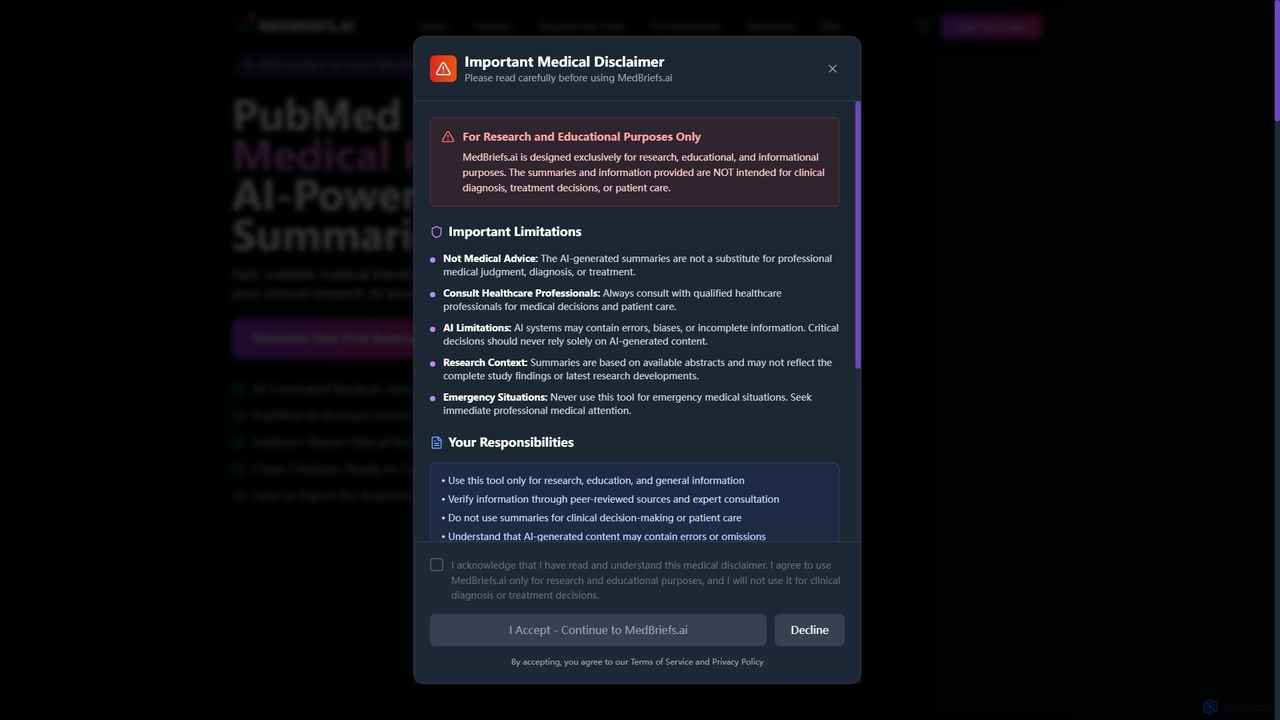
Medbriefs
Medbriefs is an AI-powered research assistant that generates fast, credible summaries of medical literature from PubMed abstracts. It …
Medbriefs is an AI-powered research assistant that generates fast, credible summaries of medical literature from PubMed abstracts. It streamlines the research process for clinicians, academics, and students by providing clear insights and formatted citations in seconds.
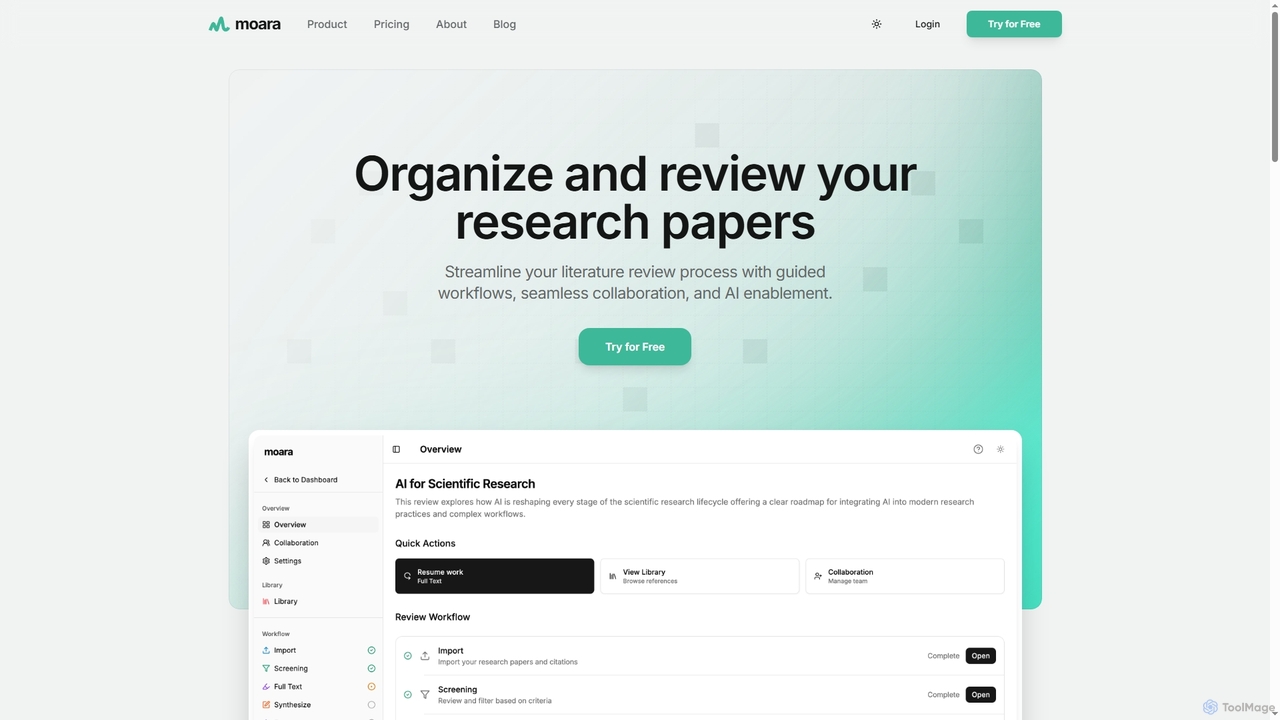
Moara
Moara is an AI-powered research platform designed to streamline the entire literature review process, from discovery and organization …
Moara is an AI-powered research platform designed to streamline the entire literature review process, from discovery and organization to analysis and synthesis. It empowers researchers, students, librarians, and R&D teams to conduct rigorous and transparent academic work with enhanced speed and structure.
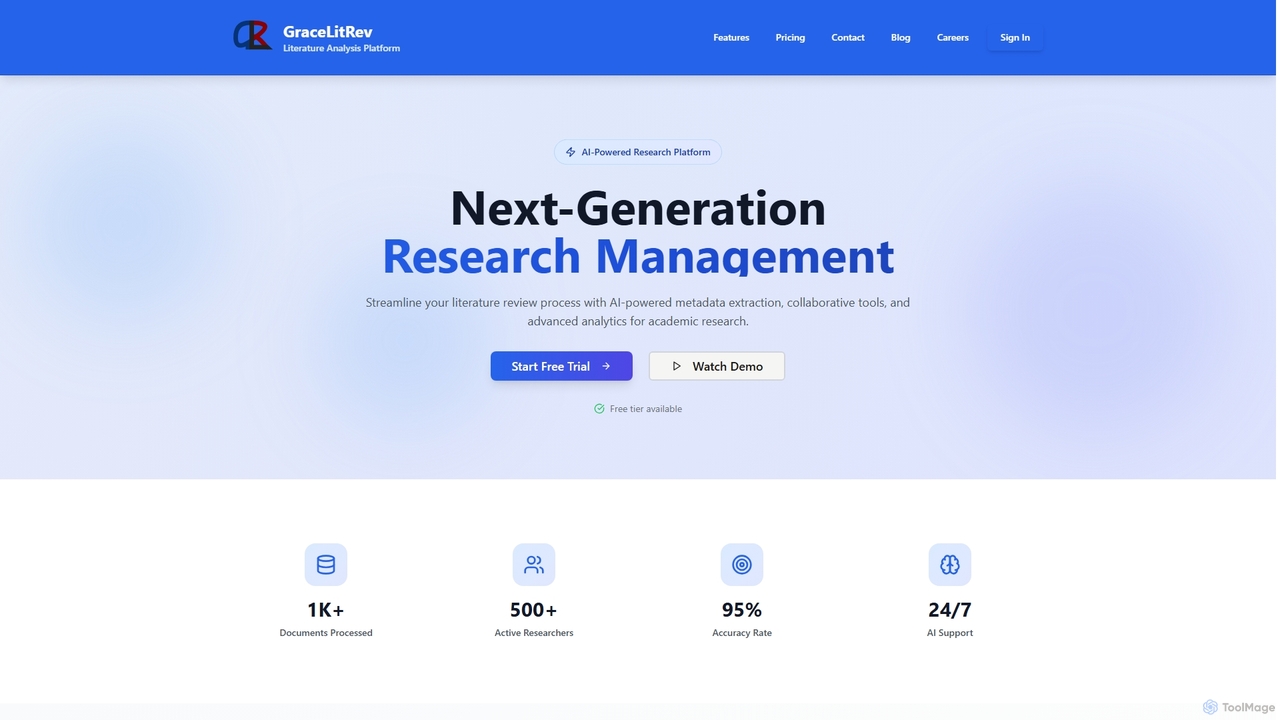
GraceLitRev
GraceLitRev is an AI-powered platform designed to revolutionize academic literature review. It streamlines research management through intelligent metadata …
GraceLitRev is an AI-powered platform designed to revolutionize academic literature review. It streamlines research management through intelligent metadata extraction, advanced analytics, and collaborative tools, helping researchers, academics, and students accelerate discovery and innovation. With features like AI-powered analysis and an AI research assistant, it transforms how users interact with scholarly literature.

Epsilon
Epsilon is an advanced AI search engine designed for scientific research. It scans over 200 million academic papers …
Epsilon is an advanced AI search engine designed for scientific research. It scans over 200 million academic papers and patents to deliver synthesized, evidence-based answers with inline citations. It dramatically accelerates literature reviews, evidence gathering, and data synthesis, helping researchers, students, and professionals save countless hours of work.
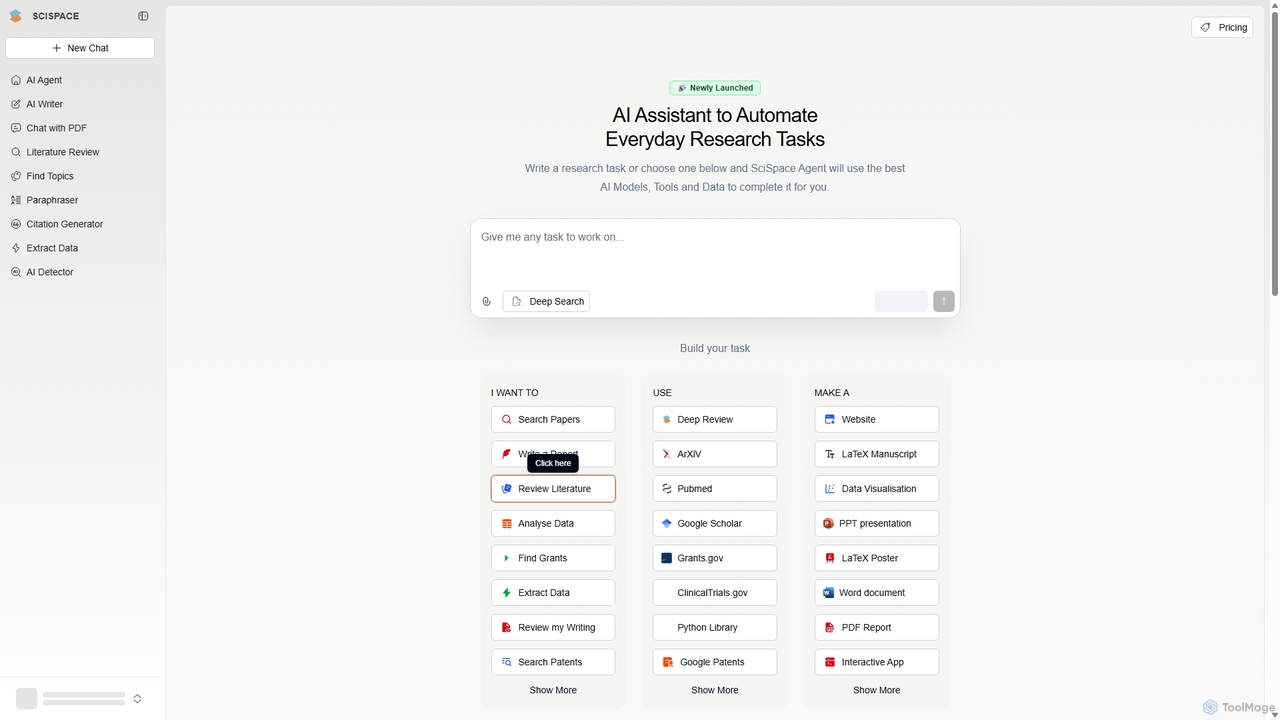
SciSpace
SciSpace (formerly Typeset) is an AI-powered platform designed to streamline the entire academic research workflow. It offers a …
SciSpace (formerly Typeset) is an AI-powered platform designed to streamline the entire academic research workflow. It offers a suite of tools for literature discovery, analysis, and writing, leveraging a database of over 280 million papers. Key features include an AI research agent, PDF summarization, literature review automation, an AI writer with citation generation, and data extraction, making it an indispensable assistant for researchers, academics, and students.
ArXiv Pulse
ArXiv Pulse is an AI-powered service that helps researchers and innovators stay updated with the latest scientific papers …
ArXiv Pulse is an AI-powered service that helps researchers and innovators stay updated with the latest scientific papers from arXiv. It delivers personalized, easy-to-read summaries of relevant preprints directly to your inbox, saving you time and preventing information overload.
Ontosight
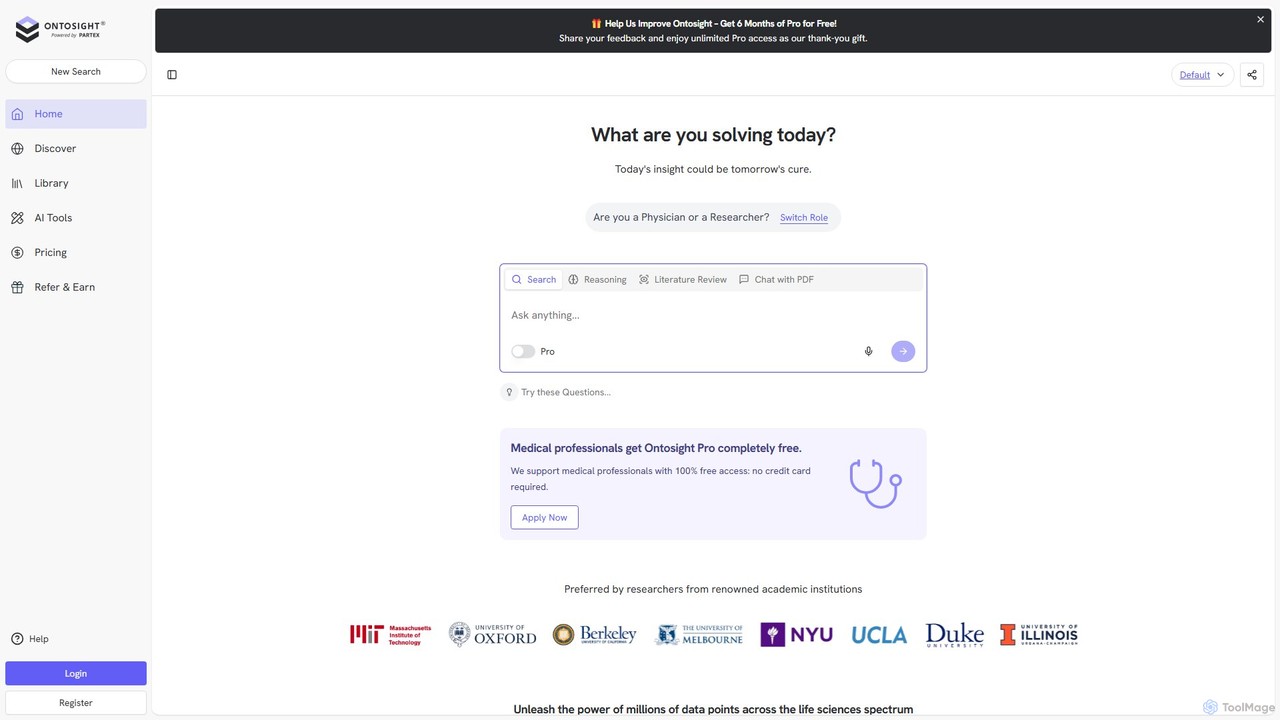
Ontosight is an AI-powered research assistant designed for physicians, scientists, and students in the life sciences and medical …
Ontosight is an AI-powered research assistant designed for physicians, scientists, and students in the life sciences and medical fields. It accelerates research by providing direct, cited answers from millions of scientific papers. Features include advanced search, literature review automation, PDF interaction, and a paraphrasing tool to enhance writing and collaboration.
StudyRecon
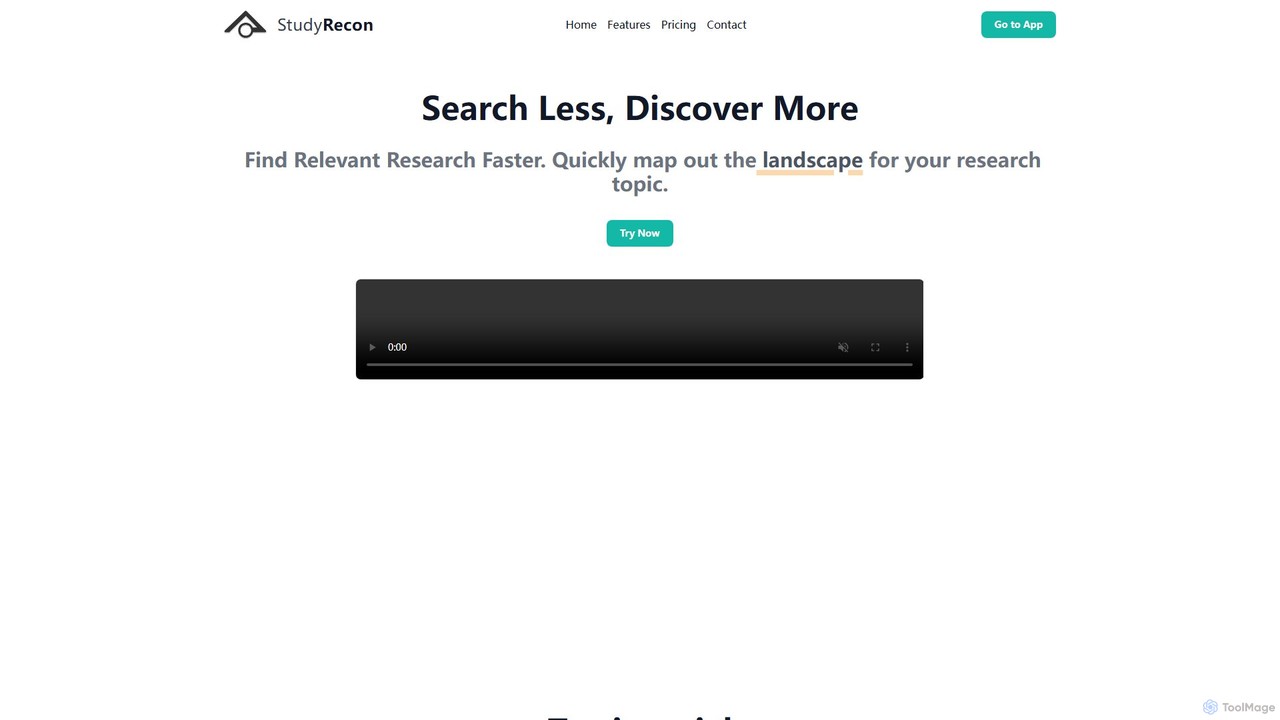
StudyRecon is an AI-powered literature review tool designed to help researchers and academics accelerate their work. It streamlines …
StudyRecon is an AI-powered literature review tool designed to help researchers and academics accelerate their work. It streamlines the process of finding, analyzing, and summarizing relevant scientific papers. By providing a visual landscape of research topics, suggesting relevant queries, and offering concise summaries, it enables users to conduct comprehensive literature reviews in a fraction of the time.

papertalk.io
papertalk.io is an AI-powered research assistant that allows you to chat with your documents. Upload research papers, articles, …
papertalk.io is an AI-powered research assistant that allows you to chat with your documents. Upload research papers, articles, or any PDF, and instantly get summaries, explanations, and answers to your questions, accelerating your literature review and comprehension.
ChatDOC
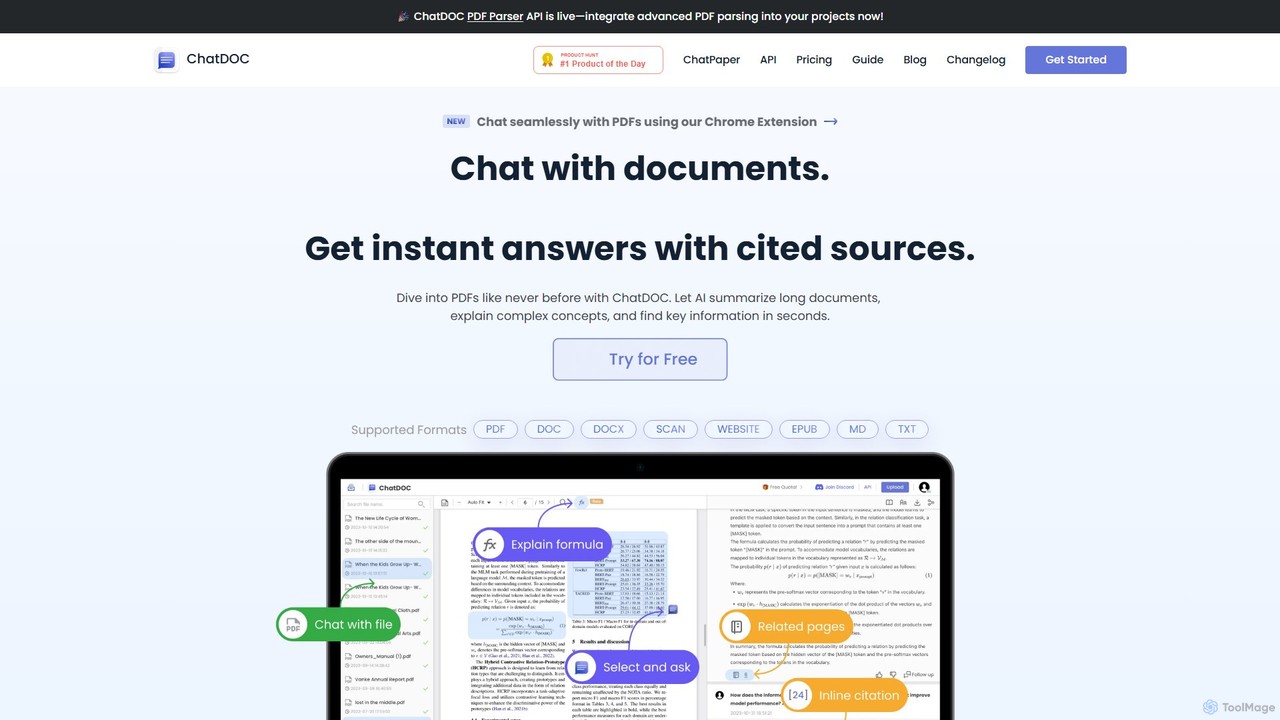
ChatDOC is an AI-powered document reading assistant that lets you chat with your files. Instantly extract, summarize, and …
ChatDOC is an AI-powered document reading assistant that lets you chat with your files. Instantly extract, summarize, and analyze information from PDFs, DOCs, websites, and more. Get answers with cited sources, making it ideal for researchers, students, and professionals to quickly understand complex documents.
scite
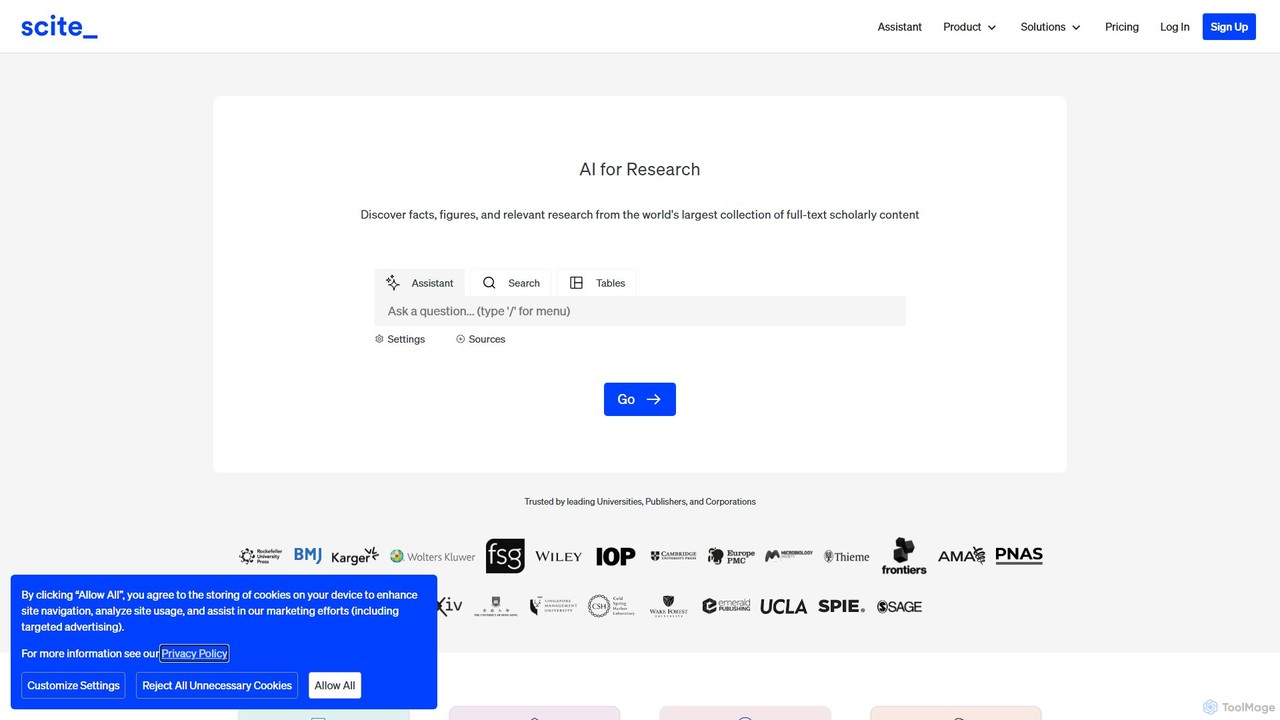
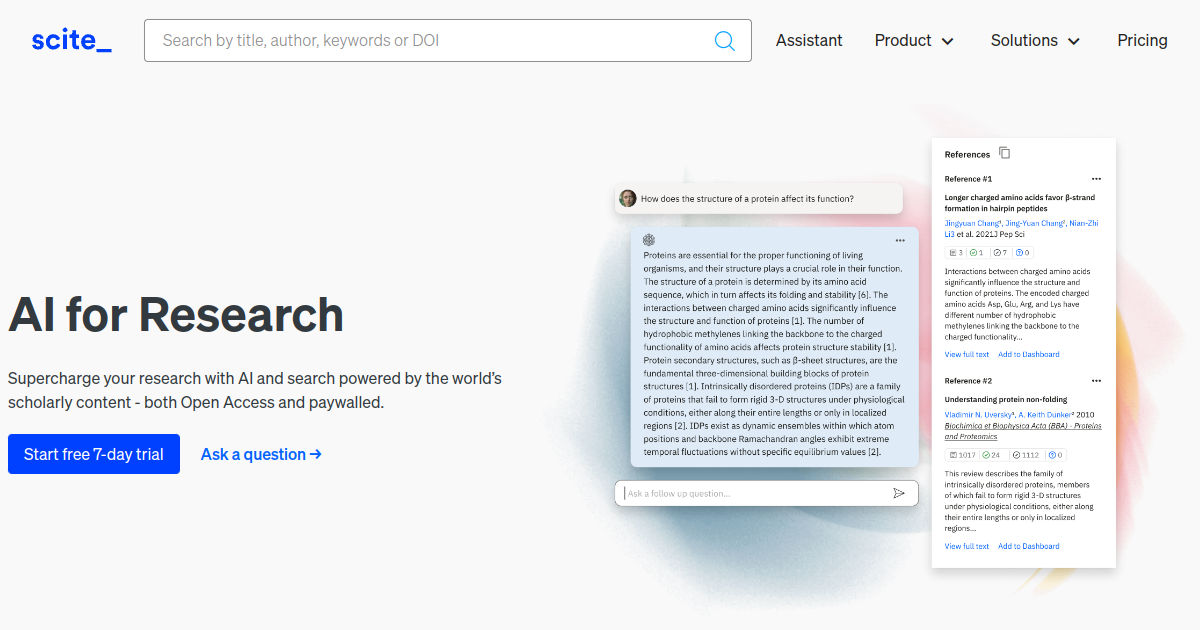
scite is an AI-powered research platform that helps users discover and evaluate scientific literature. Its core feature, Smart …
scite is an AI-powered research platform that helps users discover and evaluate scientific literature. Its core feature, Smart Citations, shows how research papers have been cited by others, classifying citations as supporting, contrasting, or mentioning, thus providing deeper context beyond simple citation counts.
VortiX
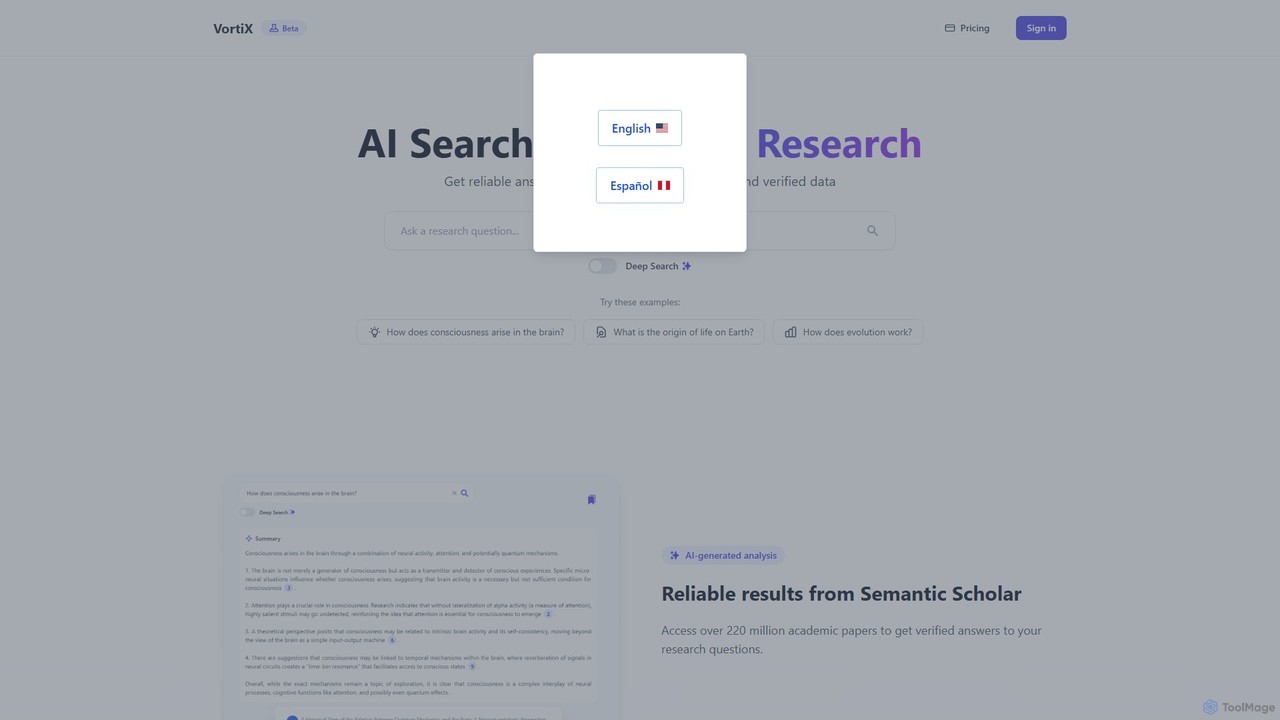
VortiX is an AI-powered search engine designed for scientific research. It provides reliable, evidence-based answers by searching a …
VortiX is an AI-powered search engine designed for scientific research. It provides reliable, evidence-based answers by searching a massive database of over 220 million academic papers from Semantic Scholar. Users can conduct deep searches, get AI-generated analyses, and interact directly with research papers through a chat interface to efficiently extract key information and accelerate their research workflow.
scienceOS
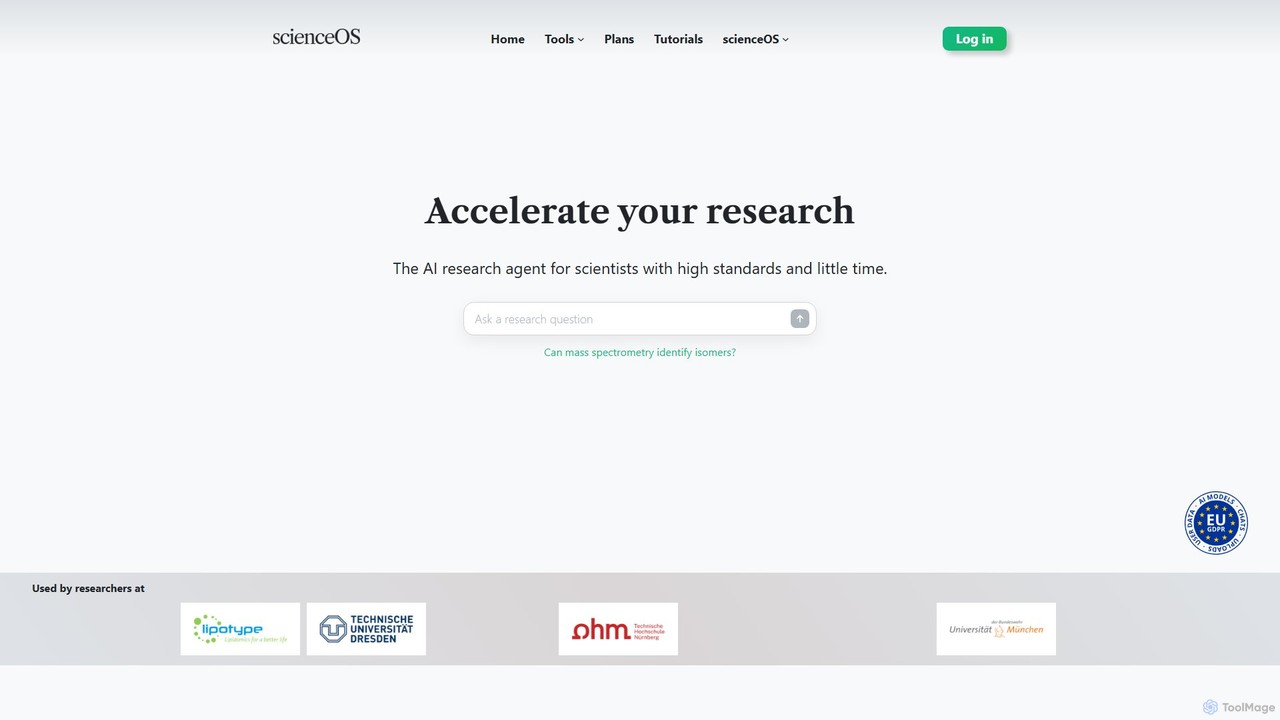
scienceOS is an AI-powered research agent designed for scientists and researchers. It accelerates scientific discovery by allowing users …
scienceOS is an AI-powered research agent designed for scientists and researchers. It accelerates scientific discovery by allowing users to chat with a database of over 225 million papers, analyze multiple PDF documents simultaneously, and manage references with an integrated AI library. The platform helps generate overviews, create diagrams, discover related papers, and perform citation analysis, streamlining the entire research workflow.
Emergent Mind
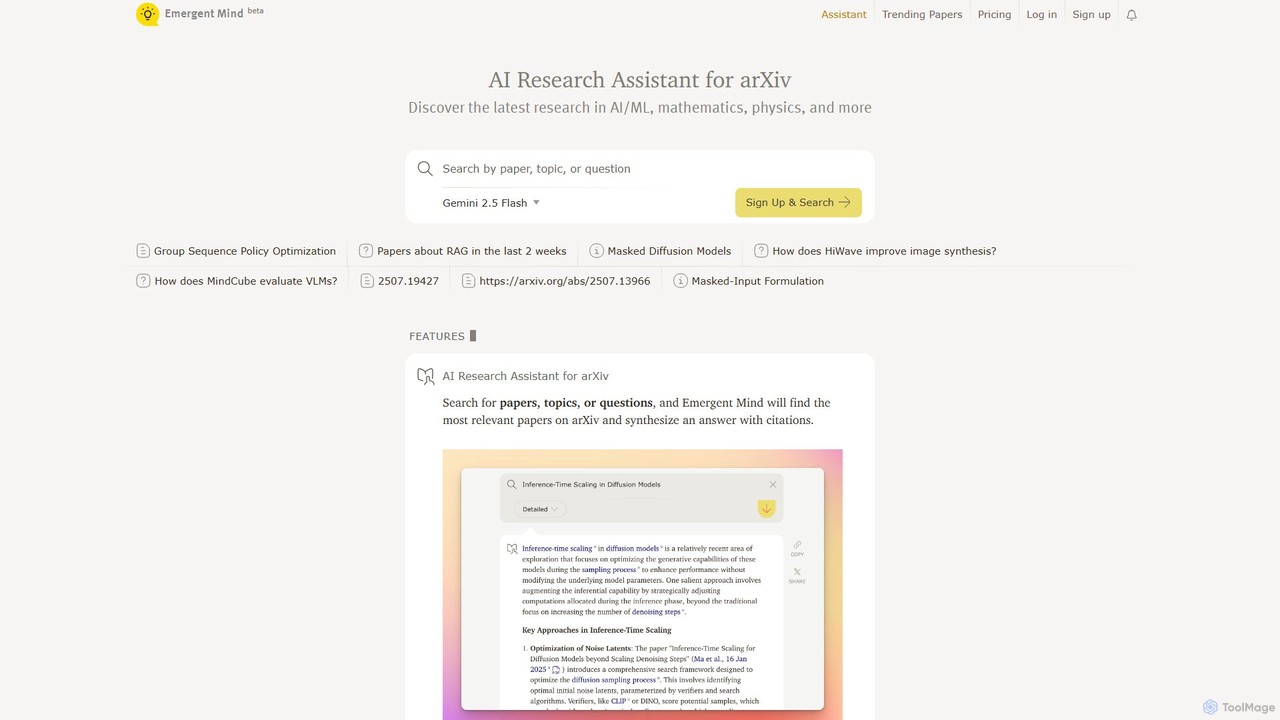
Emergent Mind is an AI research assistant for arXiv that helps users discover, understand, and discuss the latest …
Emergent Mind is an AI research assistant for arXiv that helps users discover, understand, and discuss the latest scientific papers. It synthesizes answers from multiple papers, tracks trending research, and aggregates social media discussions, streamlining the research process for academics, students, and professionals.

OpenRead
OpenRead is an AI-powered research platform designed to streamline the entire research workflow. It integrates paper discovery, reading, …
OpenRead is an AI-powered research platform designed to streamline the entire research workflow. It integrates paper discovery, reading, note-taking, and analysis into a single, seamless experience. Users can interact with documents via AI chat, compare multiple papers, generate summaries, and visualize research connections, significantly boosting research efficiency and depth.
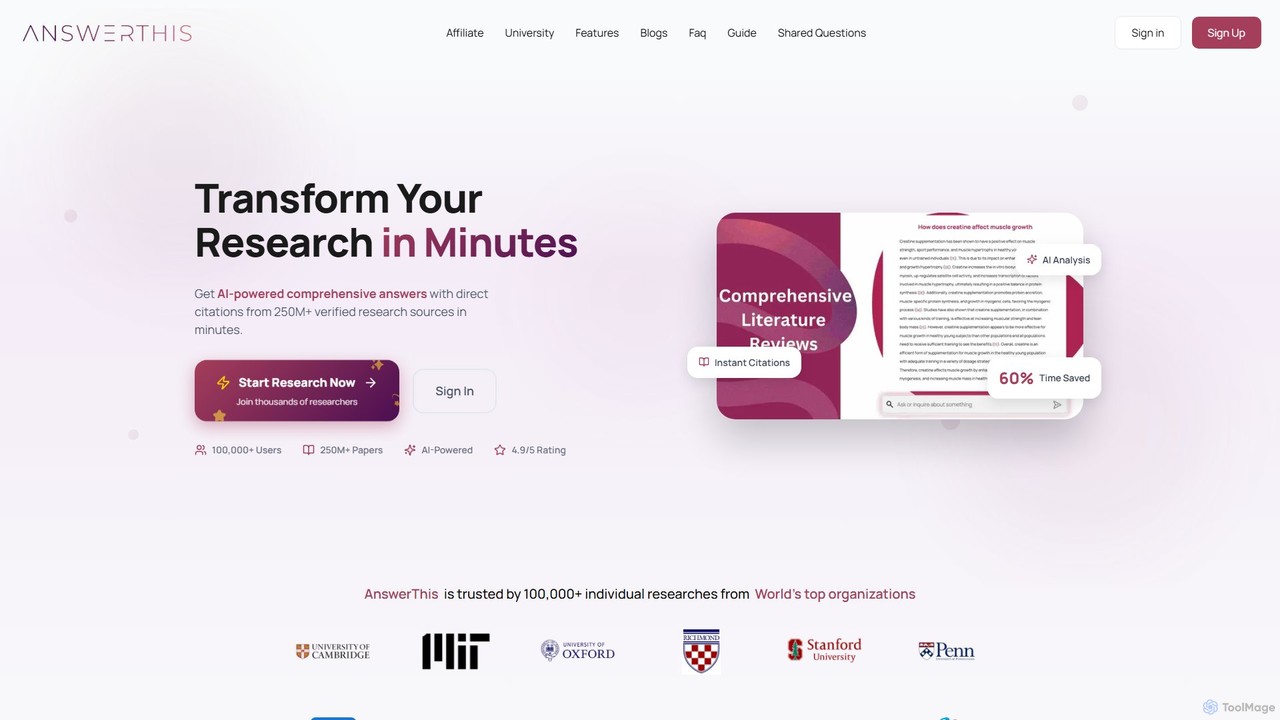
AnswerThis
AnswerThis is an AI-powered research assistant designed to accelerate academic and professional research. It searches a vast database …
AnswerThis is an AI-powered research assistant designed to accelerate academic and professional research. It searches a vast database of over 250 million verified research papers to provide comprehensive, synthesized answers with direct, line-by-line citations. The platform offers a suite of tools for literature reviews, data analysis, and academic writing, saving users up to 60% of their research time while maintaining academic integrity.
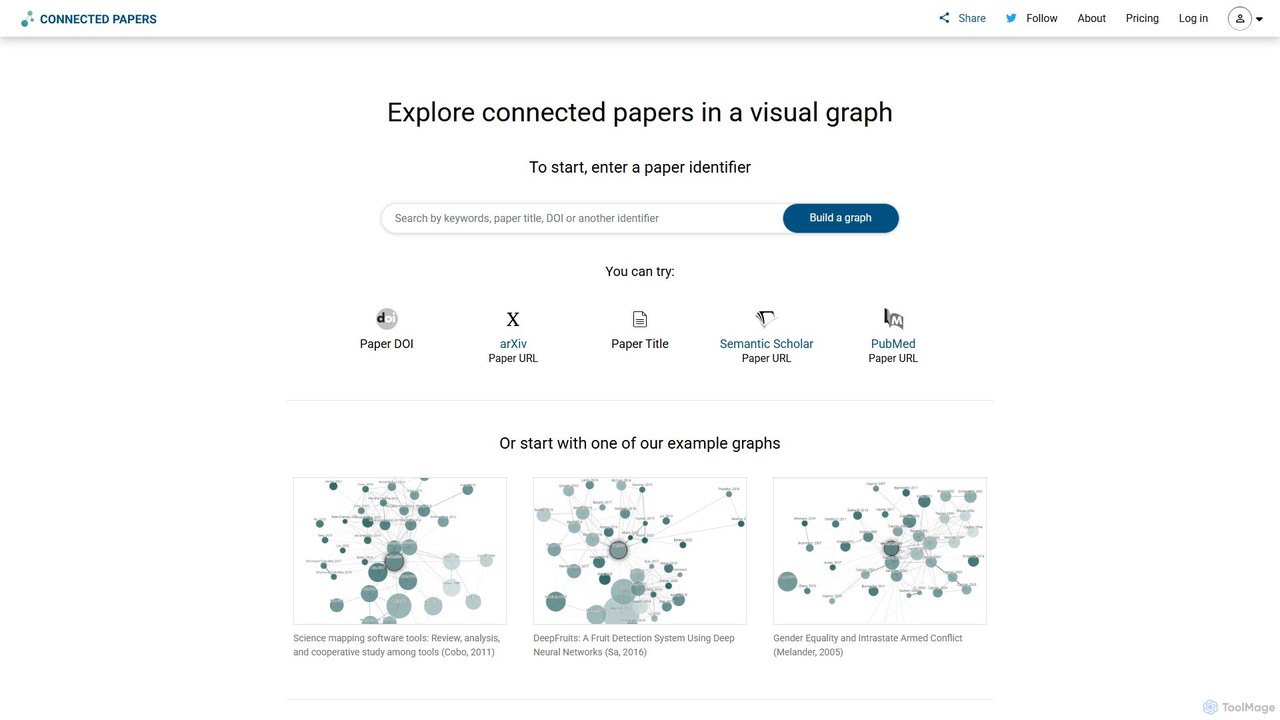
Connected Papers
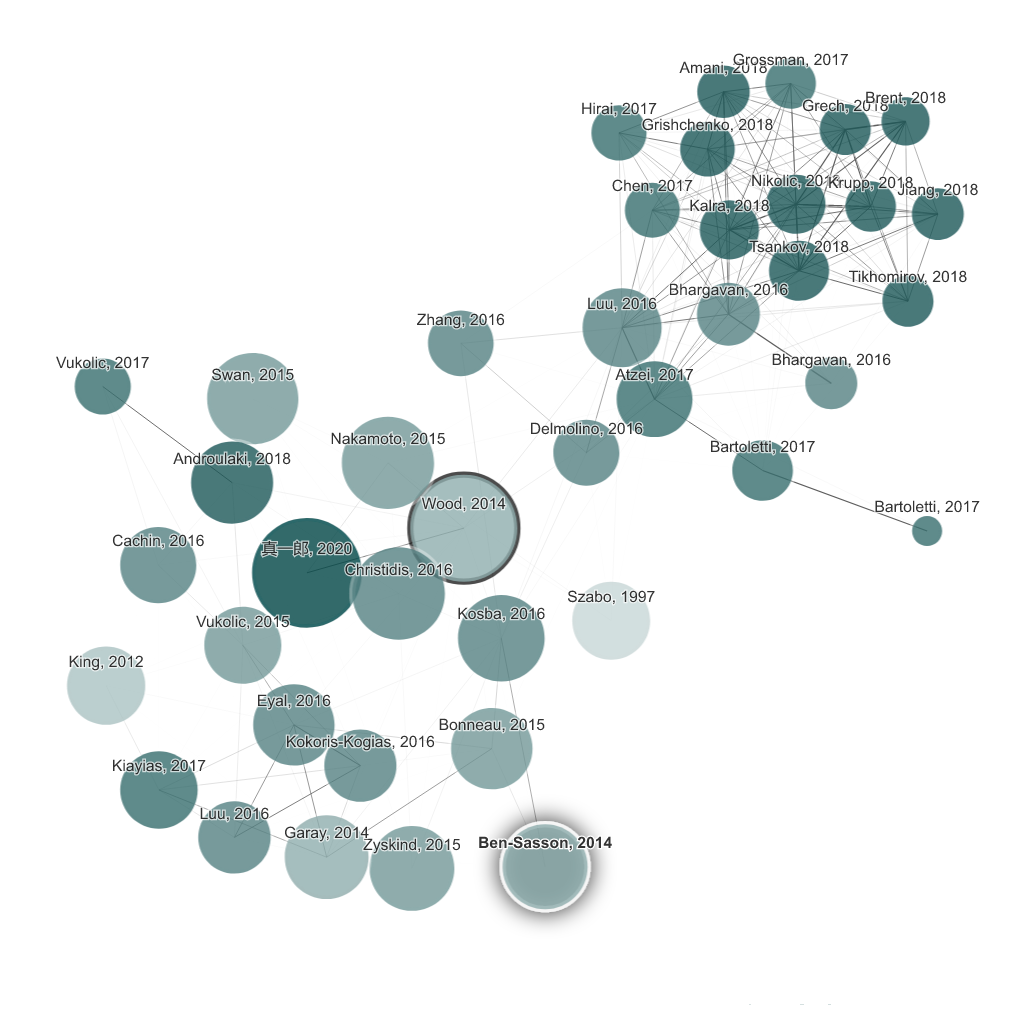
Connected Papers is a unique visual tool designed for researchers, students, and scientists. It helps you find and …
Connected Papers is a unique visual tool designed for researchers, students, and scientists. It helps you find and explore academic papers relevant to your work by generating interactive graphs. Instead of traditional lists, you get a visual map of a research field, allowing you to quickly discover trends, important prior works, and derivative studies, significantly speeding up your literature review process.
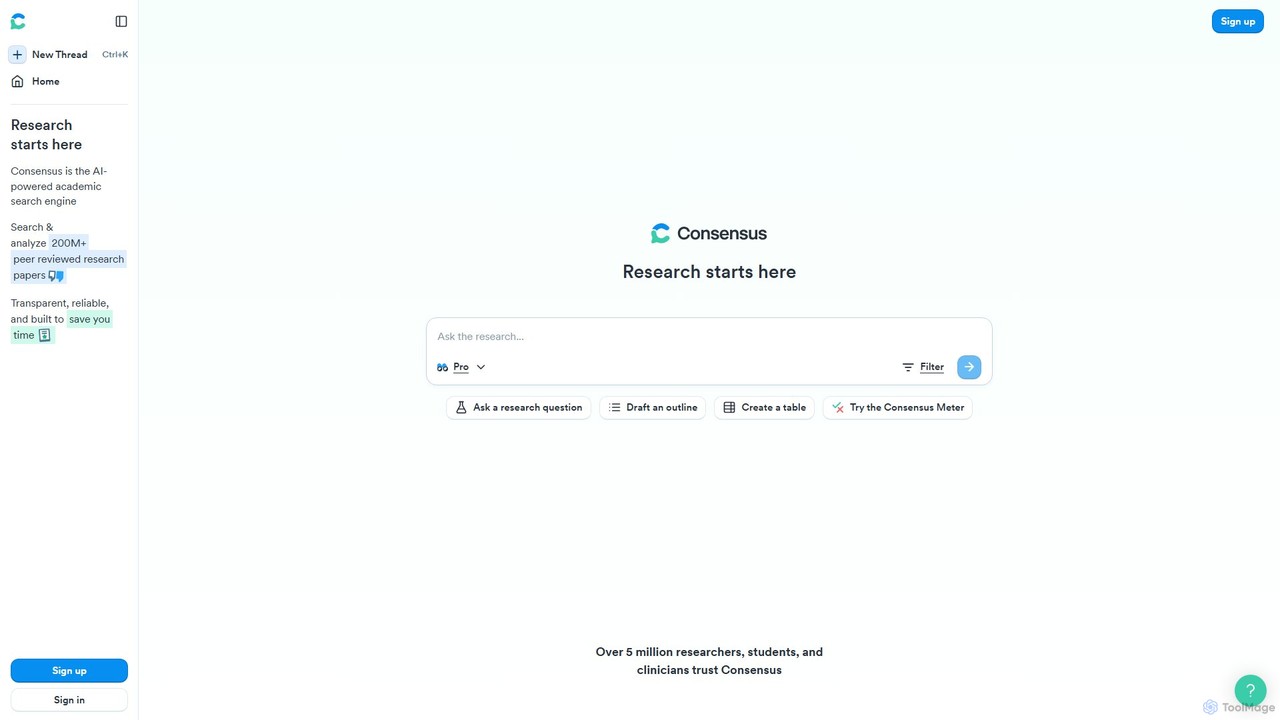
Consensus
Consensus is an AI-powered search engine designed for scientific research. It searches over 200 million peer-reviewed papers to …
Consensus is an AI-powered search engine designed for scientific research. It searches over 200 million peer-reviewed papers to provide evidence-based, synthesized answers to user questions, saving time for researchers, students, and professionals by extracting key findings directly from scientific literature.
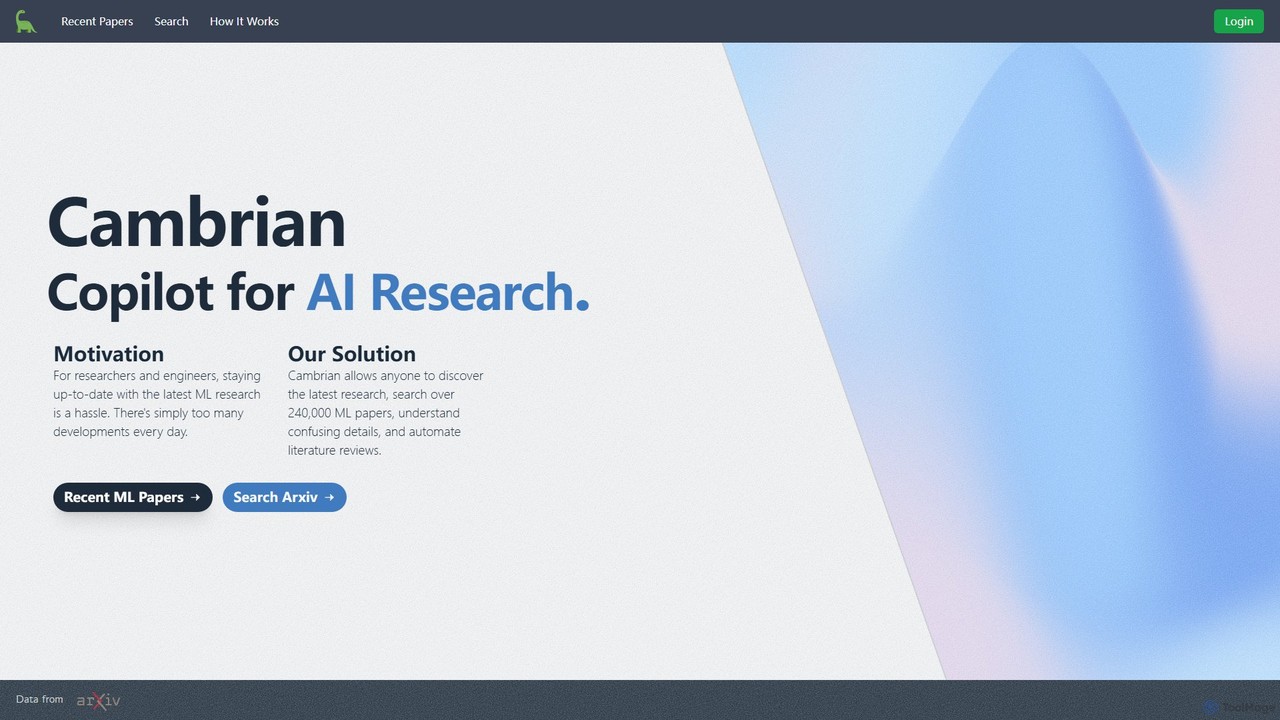
cambrianml
Cambrian is an AI copilot for machine learning research, enabling users to discover the latest papers, perform semantic …
Cambrian is an AI copilot for machine learning research, enabling users to discover the latest papers, perform semantic searches across over 240,000 ML articles, and interactively chat with PDFs to understand complex concepts. It streamlines literature reviews and helps researchers stay current in the rapidly evolving field of AI.
Pubcompare
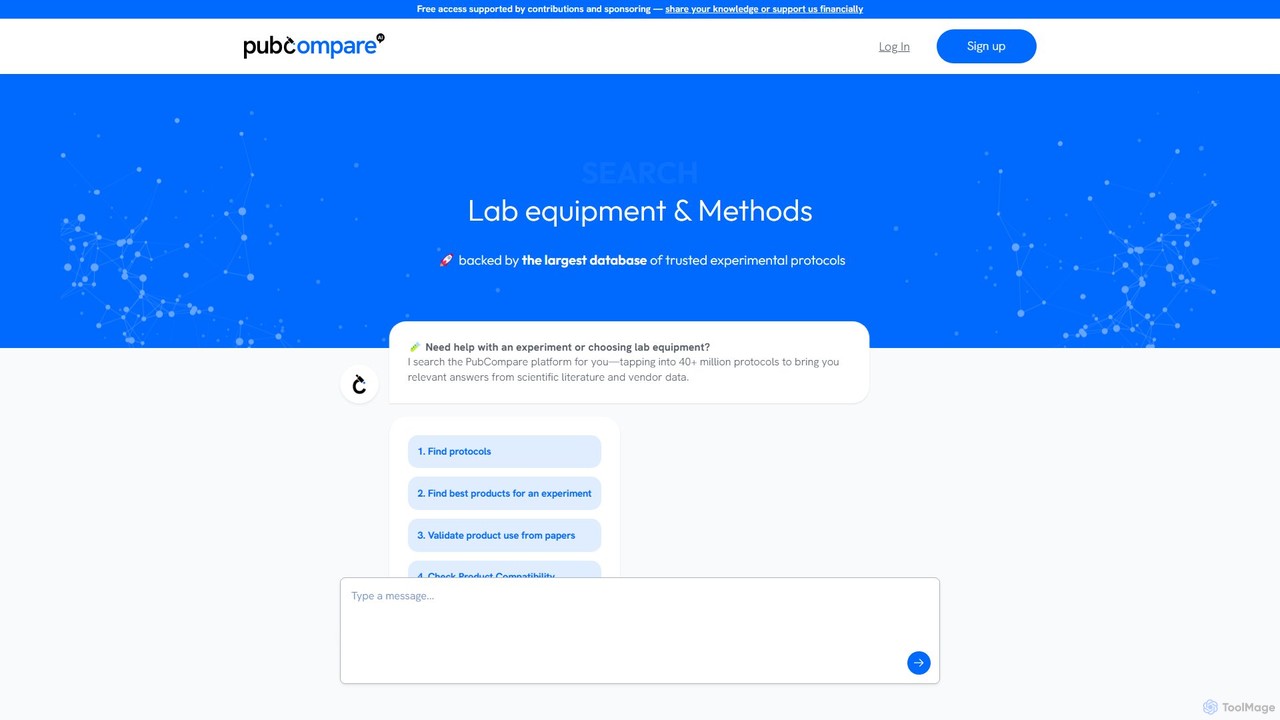
Pubcompare is an AI-powered search engine with the largest database of trusted experimental protocols. It helps scientists and …
Pubcompare is an AI-powered search engine with the largest database of trusted experimental protocols. It helps scientists and researchers discover, compare, and optimize methodologies from over 40 million protocols, saving significant time, reducing errors, and enhancing research reproducibility.
textero
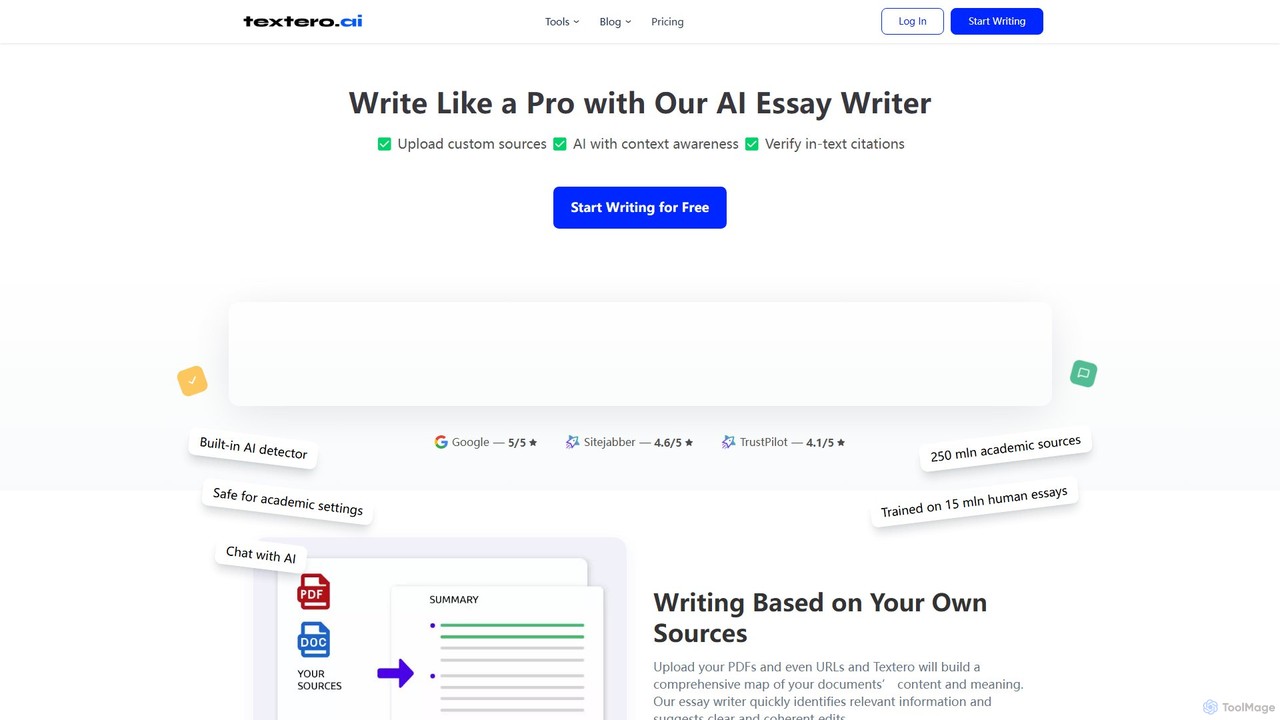
Textero is an AI-powered essay writer designed for students, researchers, and professionals. It streamlines academic writing by allowing …
Textero is an AI-powered essay writer designed for students, researchers, and professionals. It streamlines academic writing by allowing users to upload their own sources, generating context-aware text with verifiable in-text citations in MLA and APA styles. Key features include an AI detector, a research assistant, and the ability to produce long-form content up to 20,000 words, making it a powerful alternative to general-purpose AI tools.

txyz
txyz is an all-in-one AI-powered research platform designed to streamline the entire knowledge workflow for academics, researchers, and …
txyz is an all-in-one AI-powered research platform designed to streamline the entire knowledge workflow for academics, researchers, and professionals. It integrates advanced semantic search, AI-assisted reading and analysis, and intelligent writing tools to accelerate knowledge discovery, comprehension, and creation. Trusted by over 500,000 users, txyz helps you find relevant papers, gain deep insights from documents, and manage your research library efficiently.
Cure AI
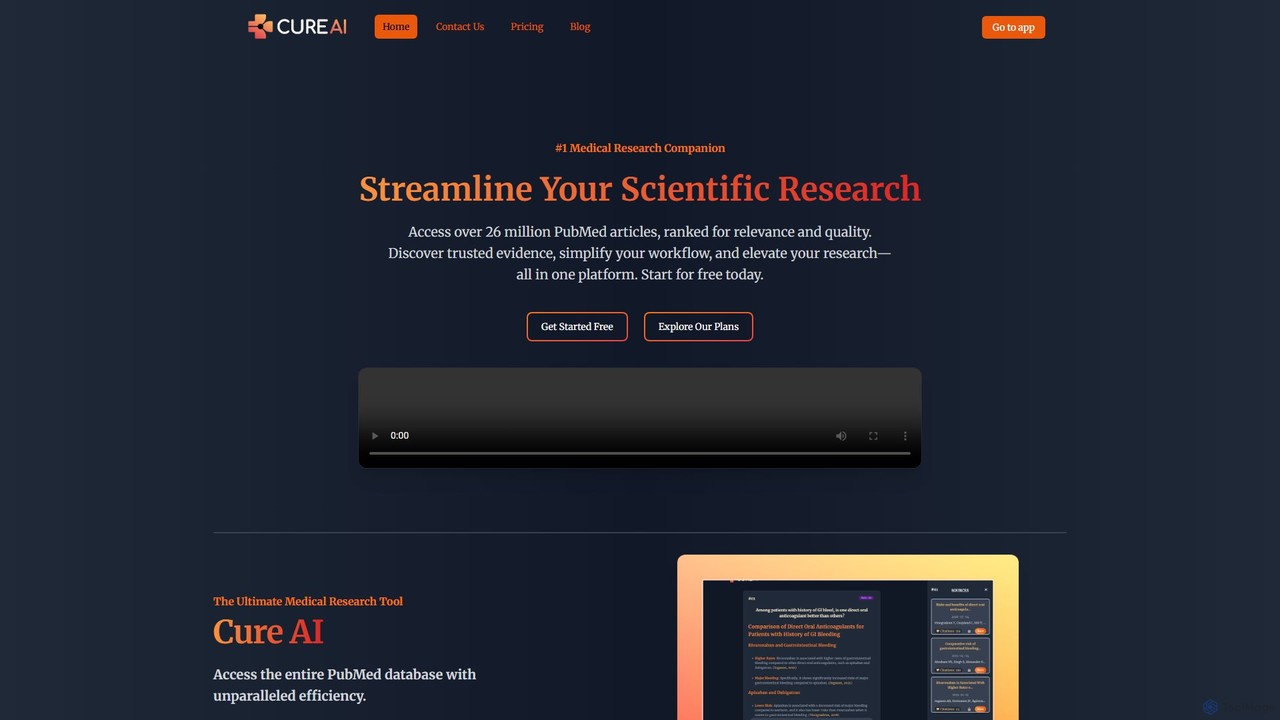
Cure AI is an AI-powered medical research companion that streamlines scientific literature review. It provides access to over …
Cure AI is an AI-powered medical research companion that streamlines scientific literature review. It provides access to over 26 million PubMed articles, using AI to rank evidence, generate insights, and simplify the research workflow from query to citation.
The Science App
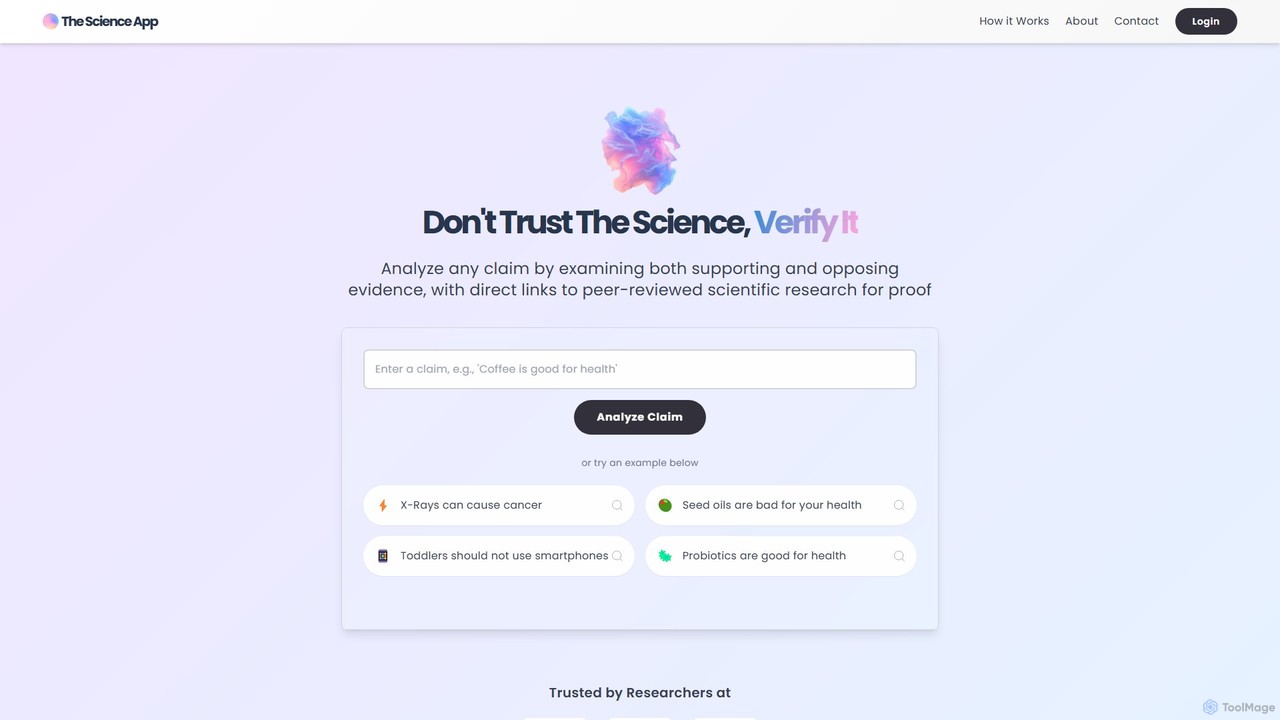
The Science App is an AI-powered tool that analyzes any scientific claim by examining both supporting and opposing …
The Science App is an AI-powered tool that analyzes any scientific claim by examining both supporting and opposing evidence. It searches peer-reviewed research to provide a balanced perspective, with direct links to the original scientific papers for verification. Ideal for researchers, students, and curious minds, it makes complex scientific information accessible and promotes evidence-based decision-making.
Doclime
Doclime is an AI-powered document assistant that lets you chat with your PDFs. Upload any document, ask questions …
Doclime is an AI-powered document assistant that lets you chat with your PDFs. Upload any document, ask questions in plain English, and get instant, accurate answers with citations. It's designed to help students, researchers, and professionals quickly extract information and insights from dense materials.
thepaperlens
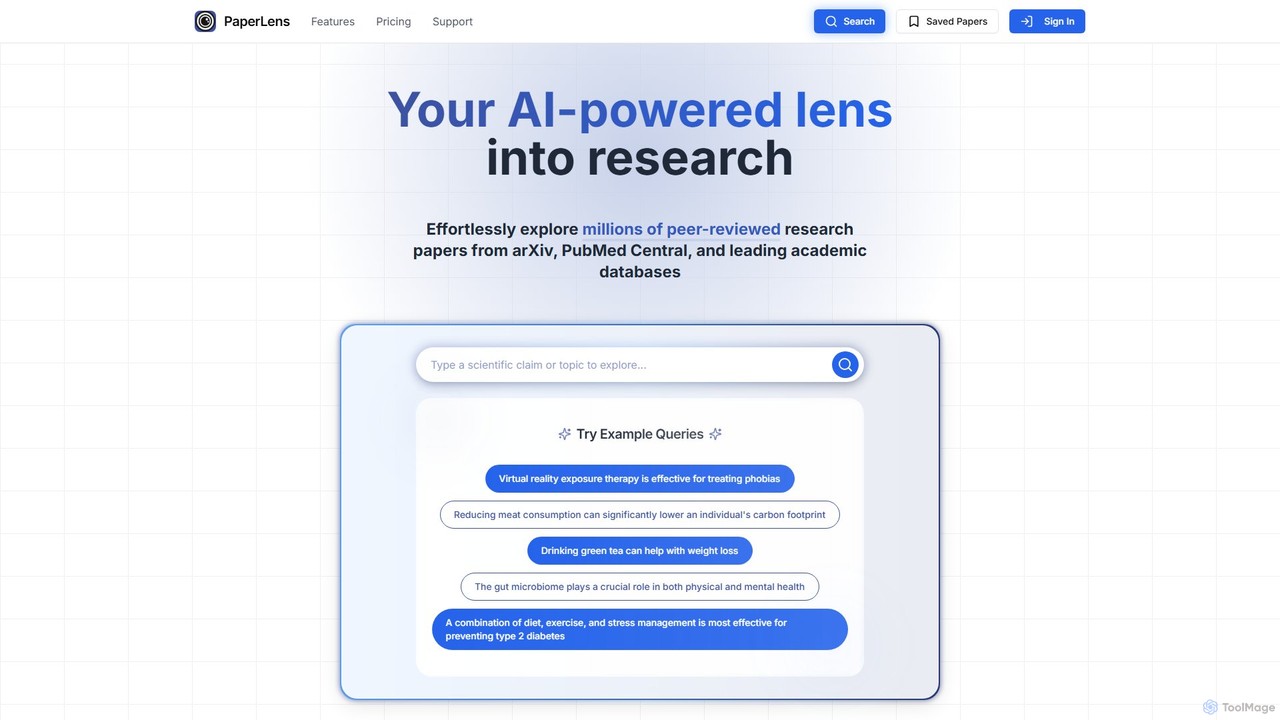
ThePaperLens is an AI-powered research platform that simplifies literature reviews. Using advanced RAG technology, it provides precise semantic …
ThePaperLens is an AI-powered research platform that simplifies literature reviews. Using advanced RAG technology, it provides precise semantic search across millions of papers from databases like arXiv and PubMed Central. Features include an interactive AI research assistant chatbot for summaries and insights, smart filtering, and paper-saving capabilities. It's designed for students, academics, and professionals to accelerate their research process and uncover key information efficiently.
About Literature Review
Literature Review tools are specialized AI platforms that automate the process of finding, analyzing, and synthesizing scholarly articles. They use Natural Language Processing (NLP) to screen papers, extract key data, and identify thematic patterns across vast datasets. This allows researchers to quickly understand the current state of a field, pinpoint research gaps, and build a comprehensive theoretical framework. Unlike simple search engines, these tools provide deep analytical capabilities, transforming raw information into structured knowledge.
Core Features
- Automated Screening: Uses AI to filter thousands of articles based on predefined inclusion and exclusion criteria, saving significant manual effort.
- Thematic Synthesis: Identifies and clusters recurring concepts, themes, and arguments from a collection of papers.
- Citation Network Analysis: Visualizes the relationships between studies, authors, and key ideas to identify influential works and research trajectories.
- AI-Powered Summarization: Generates concise, structured summaries of individual articles or groups of related documents.
- Data Extraction: Automatically pulls specific information, such as methodologies, sample sizes, or outcomes, from papers into a structured format.
Use Cases
These tools are primarily used by academics, PhD students, medical researchers, and R&D professionals in corporate settings. They are essential for conducting systematic reviews, meta-analyses, scoping reviews, or simply staying current with the latest advancements in a specific domain. For example, a medical researcher can use them to synthesize evidence for clinical guidelines, while a doctoral student can map the intellectual landscape of their topic.
How to Choose
When selecting a Literature Review tool, consider the following: the breadth of supported academic databases, the sophistication of its analytical features (e.g., thematic analysis vs. simple keyword search), compatibility with reference managers like Zotero or EndNote, and collaborative features for team-based projects. Also, evaluate the user interface's intuitiveness and whether the pricing model aligns with your project's duration and scale.
Featured Tool Leaderboard
Most Popular
Sorted by highest monthly traffic







Most Interactive
Sorted by lowest bounce rate







Highest User Engagement
Sorted by Average Visit Duration


Top Free Tools
Free and sorted by traffic
Literature ReviewUse Cases
Accelerating Systematic Reviews for Medical Research
A medical research team is conducting a systematic review to evaluate the efficacy of a new treatment protocol. They face the challenge of screening over 5,000 abstracts from databases like PubMed and Scopus. By using an AI literature review tool, they can set up automated screening filters based on PICO (Population, Intervention, Comparison, Outcome) criteria. The AI processes the abstracts, flags relevant studies, and excludes irrelevant ones with high accuracy, reducing the manual screening workload by over 80%. This allows the team to focus their expertise on full-text analysis and evidence synthesis, significantly shortening the project timeline from months to weeks.
Mapping the Intellectual Landscape for a PhD Thesis
A PhD student in social sciences needs to establish the theoretical foundation for their dissertation. Instead of manually reading hundreds of papers to understand the key debates, they use an AI tool to analyze a curated list of 200 seminal articles. The tool generates a citation network map, visualizing which authors and papers are most influential. It also performs thematic analysis, clustering the articles into major schools of thought and identifying emerging trends. This provides the student with a clear, data-driven overview of the field, helping them to position their own research and identify a unique contribution more effectively.
Identifying Research Gaps for Corporate R&D
An R&D department at a pharmaceutical company needs to identify promising new areas for drug development. They use an AI literature review tool to analyze thousands of recent publications and clinical trial reports. The tool's thematic analysis feature identifies well-researched pathways but also highlights areas with conflicting results or a lack of studies. By visualizing research clusters, the R&D team can spot 'white spaces' in the literature—unexplored molecular targets or patient populations. This data-driven approach helps them prioritize their research efforts and allocate budget to projects with a higher potential for novel discoveries.
Creating Annotated Bibliographies for Coursework
An undergraduate student is tasked with creating an annotated bibliography for a history course. They gather 30 relevant sources but find the process of summarizing each one time-consuming. Using an AI literature review tool, they upload the PDFs of the articles. The tool's summarization feature generates a concise overview for each source, highlighting the main argument, methodology, and key findings. The student then reviews and refines these AI-generated summaries, adding their own critical analysis. This approach streamlines the initial summarization step, allowing the student to spend more time on the critical evaluation required for the assignment.
Conducting a Scoping Review for Policy Making
A government policy advisor needs to conduct a scoping review to understand the breadth of research on urban green spaces and public health. The goal is not to synthesize findings but to map the existing literature. They use an AI tool to search across multiple disciplines (public health, urban planning, sociology) and identify relevant studies. The tool helps categorize the literature by study type, geographic location, and specific health outcomes measured. This provides a comprehensive map of what has been studied, how, and where, enabling the advisor to quickly identify key themes and gaps to inform future policy and research directions.
Collaborative Literature Review for Interdisciplinary Teams
An interdisciplinary team of engineers and biologists is working on a bio-inspired robotics project. They need to review literature from both fields, which use different terminologies. They use a collaborative AI literature review platform where all team members can upload and share papers. The platform standardizes the screening process with shared tags and criteria. Its AI can also suggest connections between papers from different fields that a single researcher might miss. This shared workspace ensures everyone is on the same page and accelerates the synthesis of knowledge from disparate domains, fostering true interdisciplinary innovation.