ToolMage
Sign in

Best 82 Infrastructure AI tools

Popular Infrastructure AI tools include Cloudflare, Google Cloud, OctoAI, Supabase, Ollama, Hewlett Packard Enterprise (HPE), Broadcom, DigitalOcean, NVIDIA Build, and Runpod, helping you work more efficiently.

Tensorfuse
Freemium

Tensorfuse

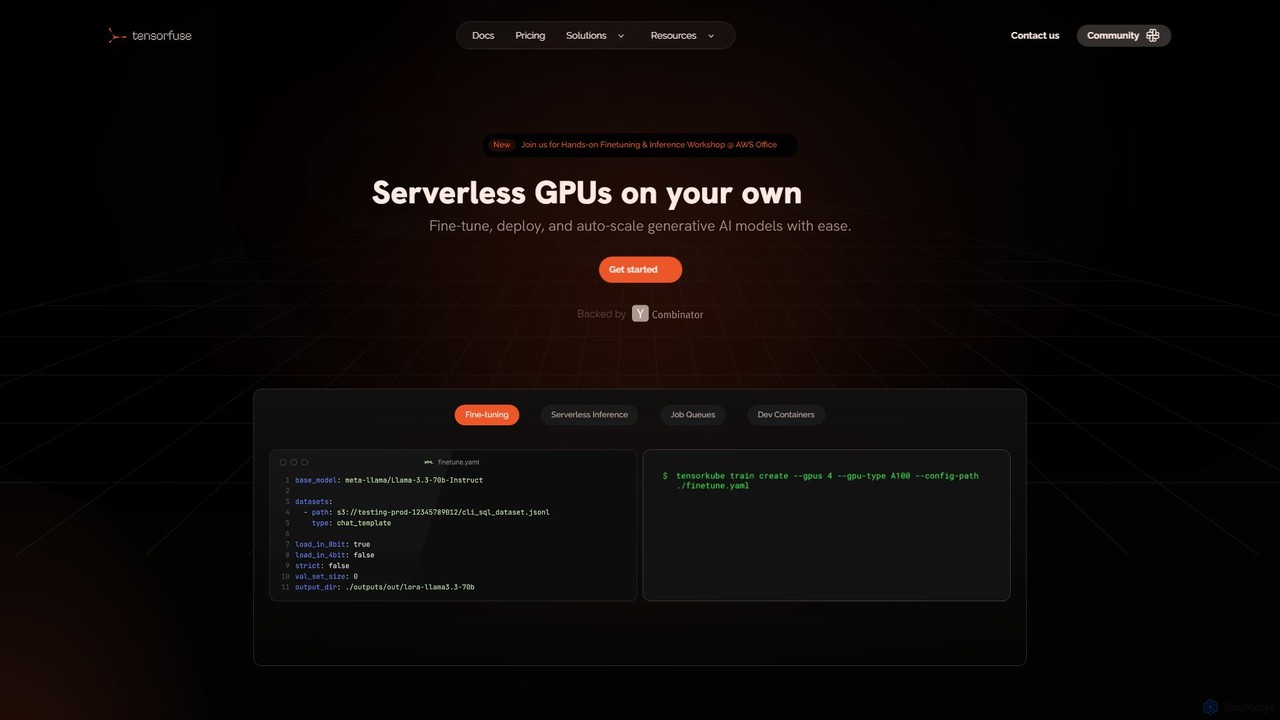
Tensorfuse is a serverless GPU platform that allows developers to fine-tune, deploy, and auto-scale generative AI models on their own AWS cloud. It simplifies infrastructure management, offering features like serverless inference, job queues, and dev containers to accelerate development, reduce costs, and eliminate DevOps overhead.

Deployment
Visits 12.3KFavorites 122Likes 101
Cortex Labs
Freemium

Cortex Labs

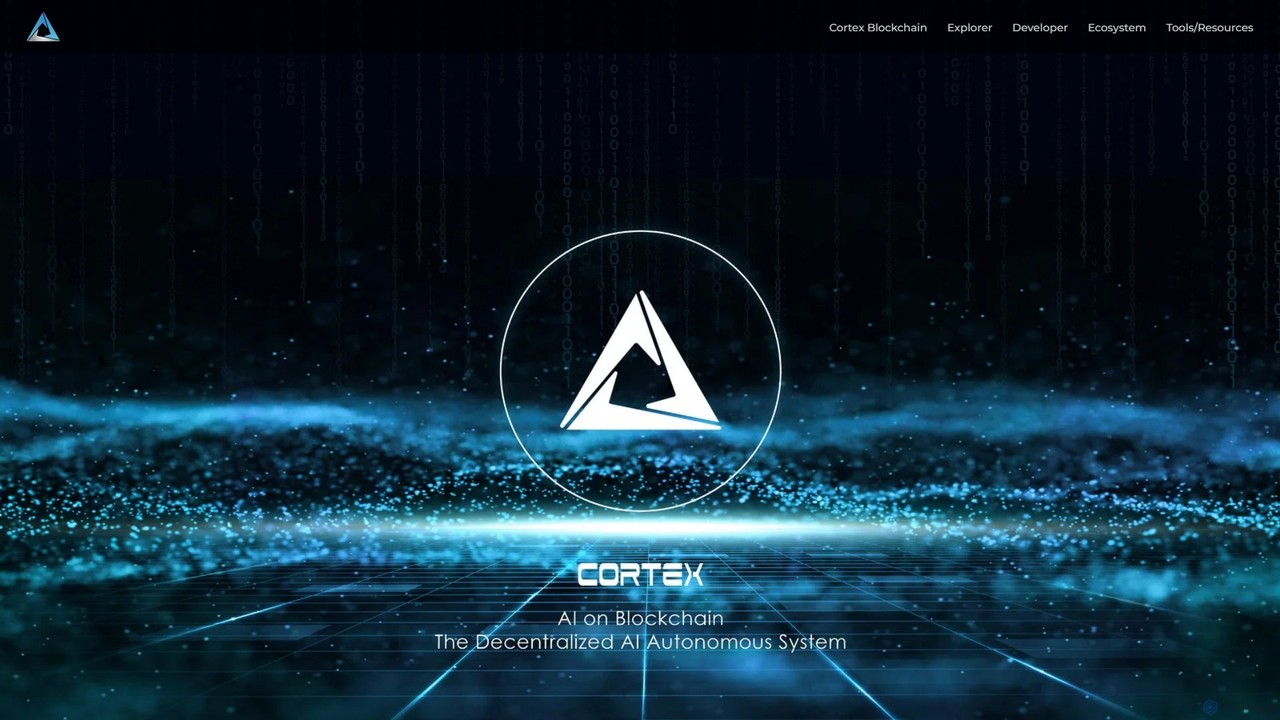
Cortex Labs is a decentralized, open-source public blockchain designed to run AI models and AI-powered dApps directly on-chain. It features the Cortex Virtual Machine (CVM) for efficient AI inference and a ZkRollup Layer 2 solution, ZkMatrix, for scalability. It aims to democratize AI by creating an ecosystem where developers can build, share, and monetize AI models within smart contracts.

Ai Platform
Visits 8.5KFavorites 146Likes 165
enqAI

enqAI

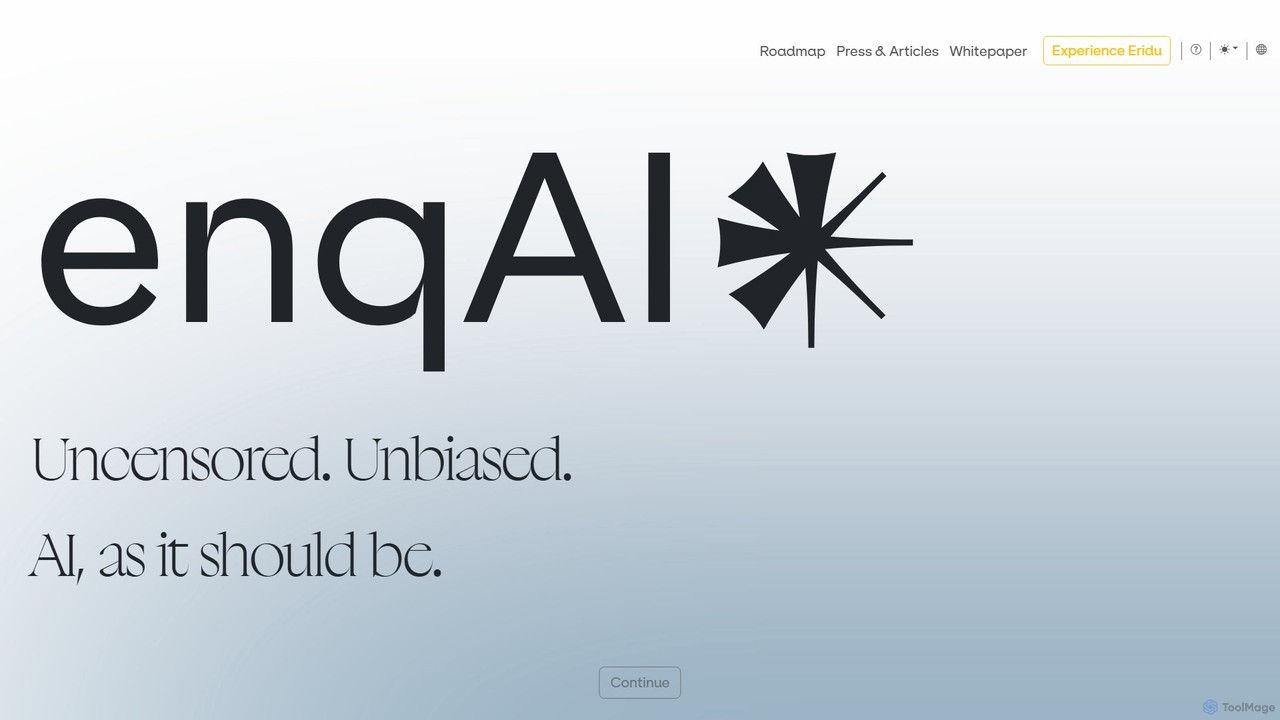
enqAI is a decentralized network dedicated to providing uncensored and unbiased AI models. Through its Eridu API, it offers developers access to powerful Large Language Models (LLMs) free from corporate or ideological restrictions, fostering true innovation and freedom of expression in AI development.

Api & Integration
Visits 5.6KFavorites 126Likes 128
PowerSpect
Paid

PowerSpect

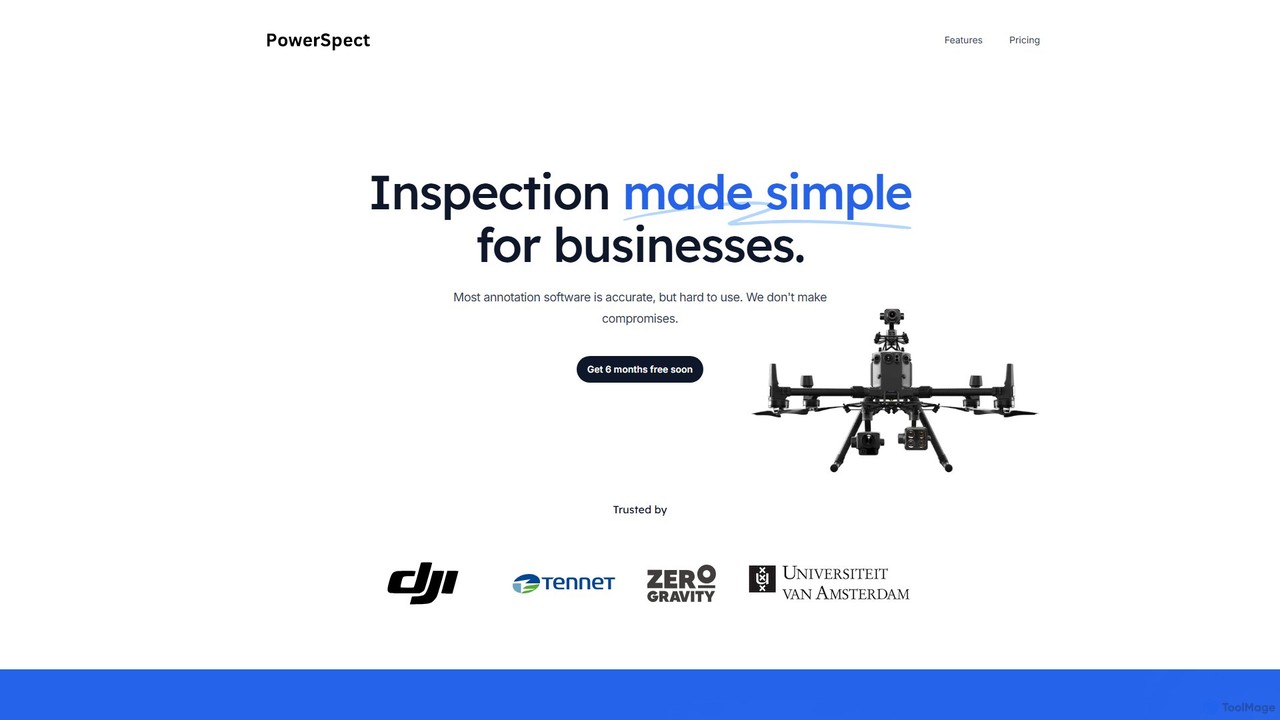
PowerSpect is an AI-powered platform that simplifies and automates infrastructure inspection. It utilizes advanced computer vision, 3D modeling, and predictive analytics to analyze data from images and sensors. Designed for industries like energy and utilities, it helps detect potential issues, forecast maintenance needs, and ensure the safety and reliability of critical assets like transmission towers.

Object Detection
Visits 5.7KFavorites 129Likes 151
DigitalOcean
Freemium

DigitalOcean

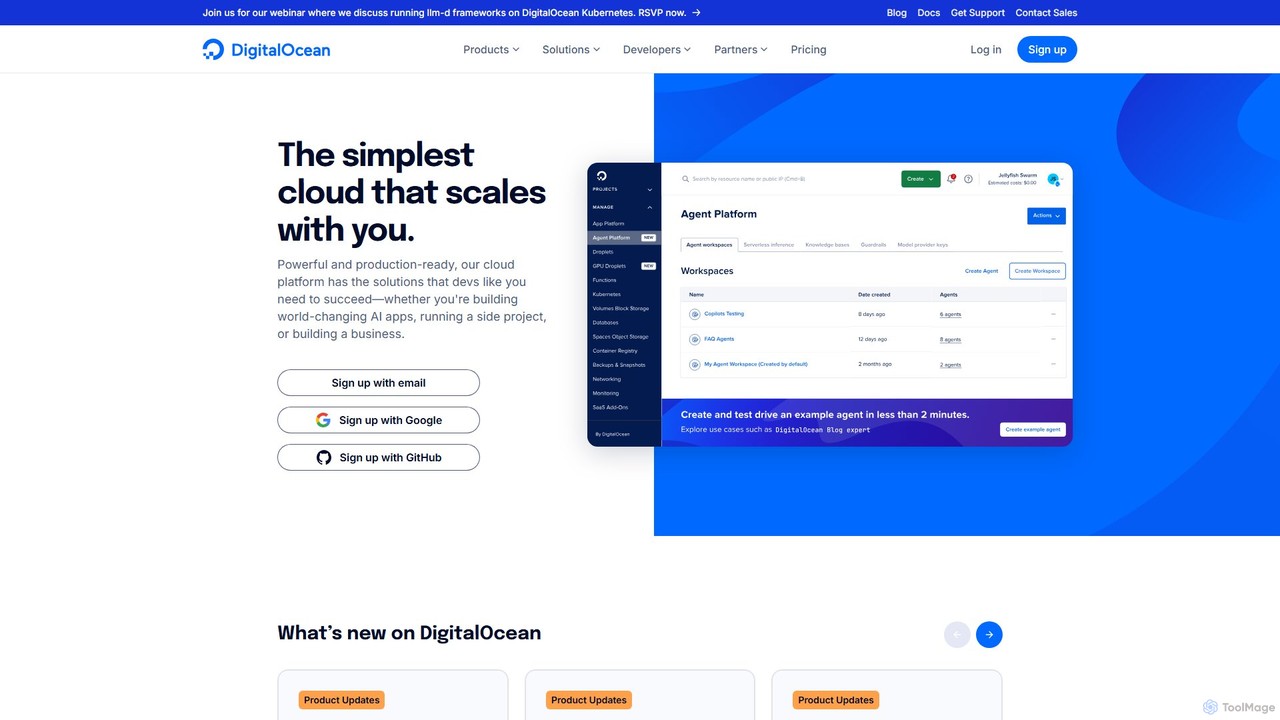
DigitalOcean is a developer-focused cloud infrastructure platform that simplifies building, deploying, and scaling applications. It offers a comprehensive suite of products, including virtual machines (Droplets), managed Kubernetes, and the GradientAI platform, providing powerful GPU resources and tools for creating and hosting world-changing AI applications, from side projects to large-scale businesses.

Hosting
Visits 4.3MFavorites 124Likes 122
NVIDIA Build
Freemium

NVIDIA Build

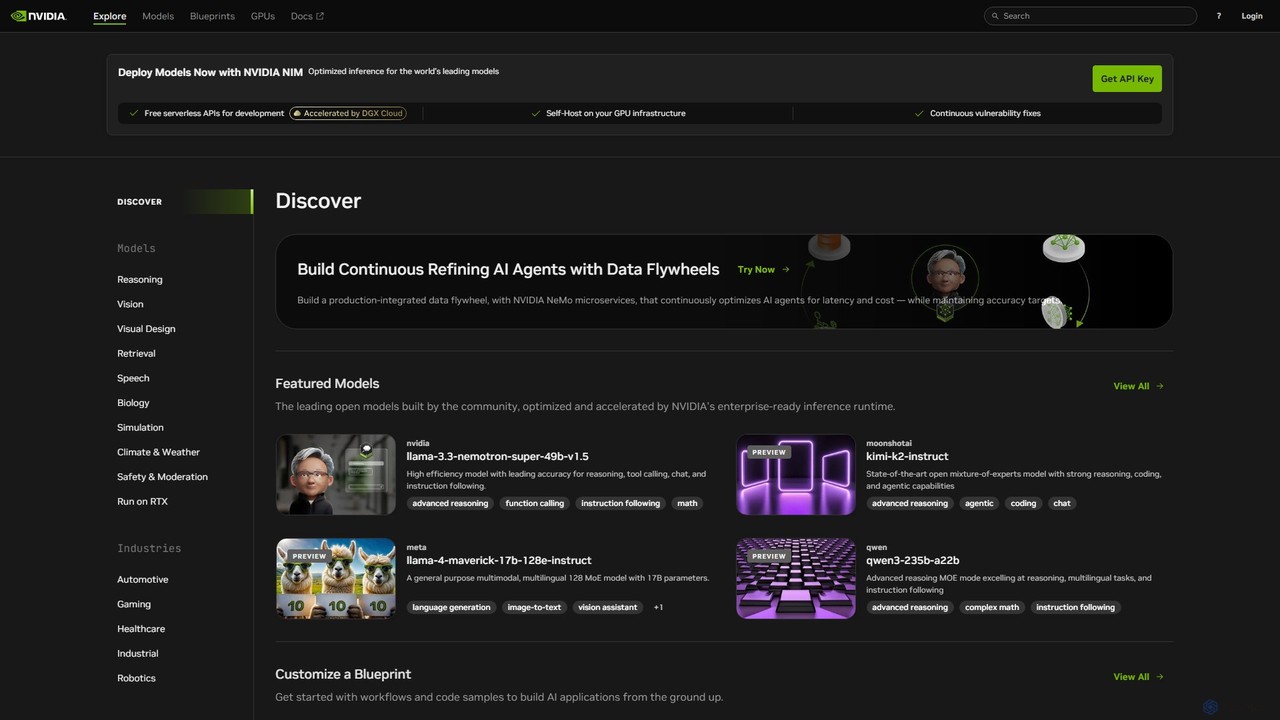
NVIDIA Build is a comprehensive platform for developers and enterprises to discover, customize, and deploy production-ready generative AI models. It features a vast catalog of optimized models, NVIDIA NIM microservices for high-performance inference, and application blueprints to accelerate development.

Model Library
Visits 2.9MFavorites 148Likes 141
Vast.ai
Paid

Vast.ai

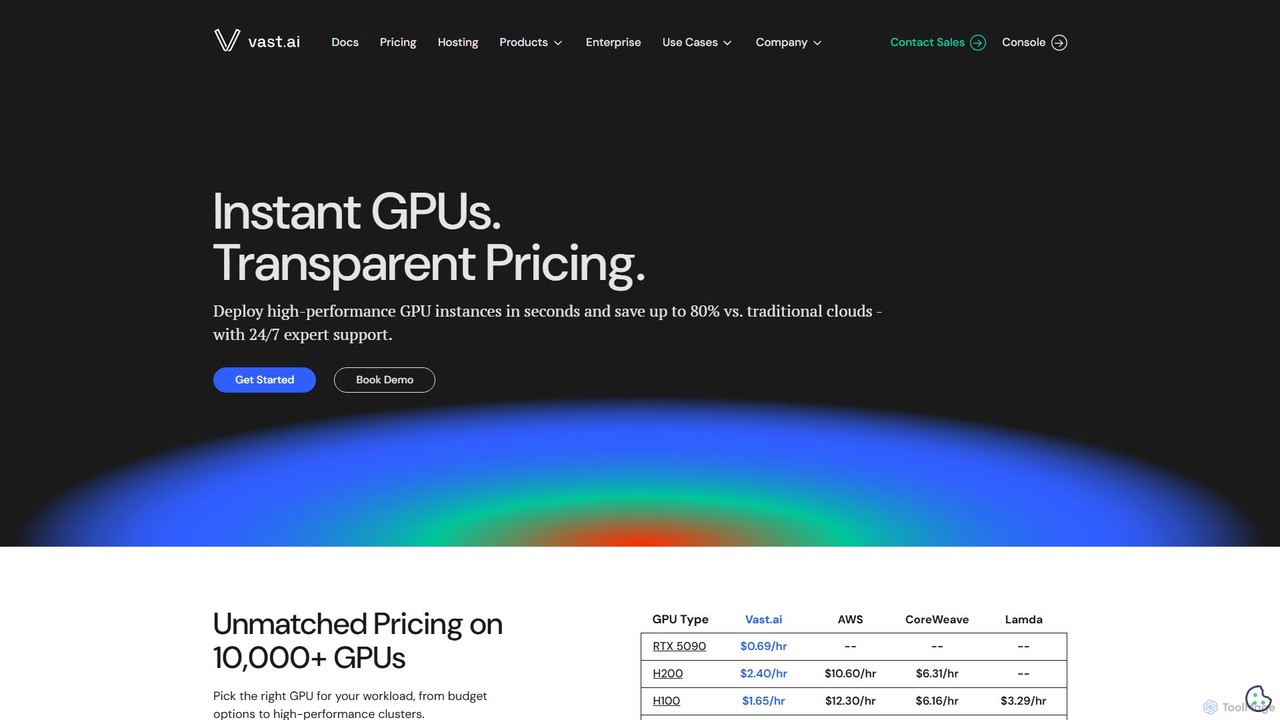
Vast.ai is a leading GPU cloud platform offering on-demand access to a vast network of GPUs for AI and machine learning workloads. It provides developers and enterprises with high-performance computing at significantly lower costs—up to 80% less than traditional cloud providers—through a transparent, pay-as-you-go marketplace.

Gpu Rental
Visits 1.4MFavorites 130Likes 127
thundercompute
Paid

thundercompute

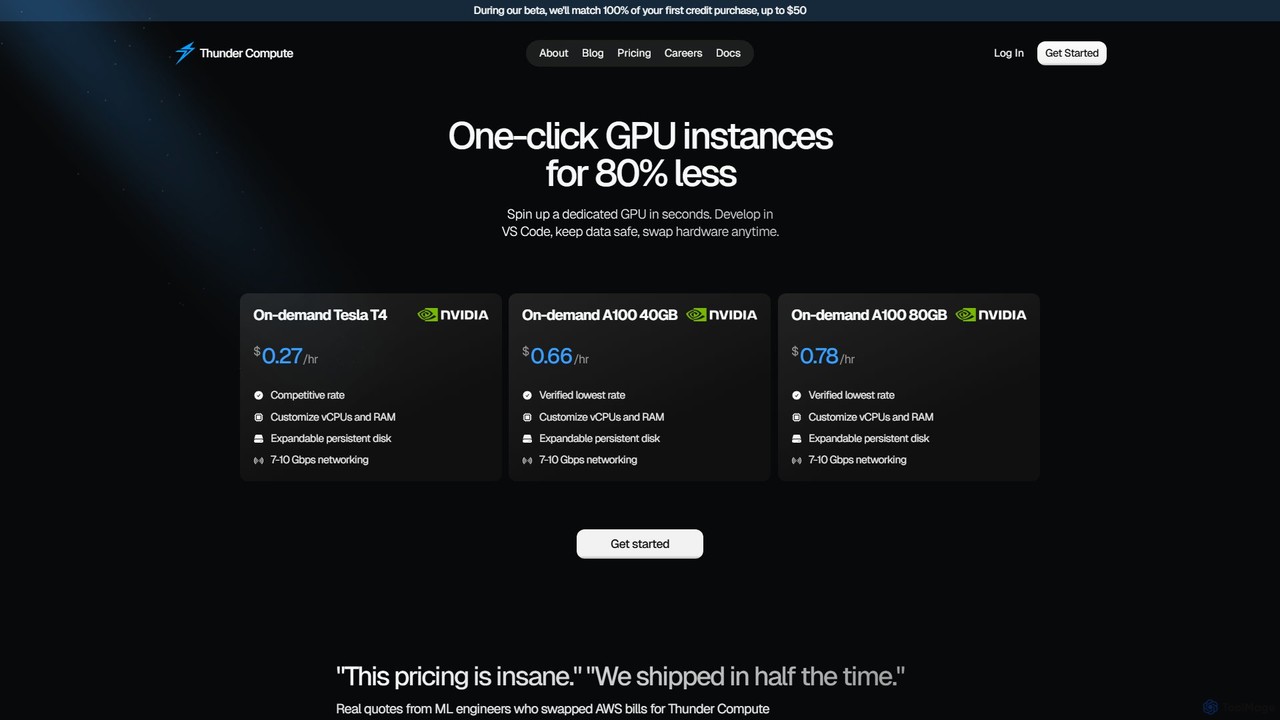
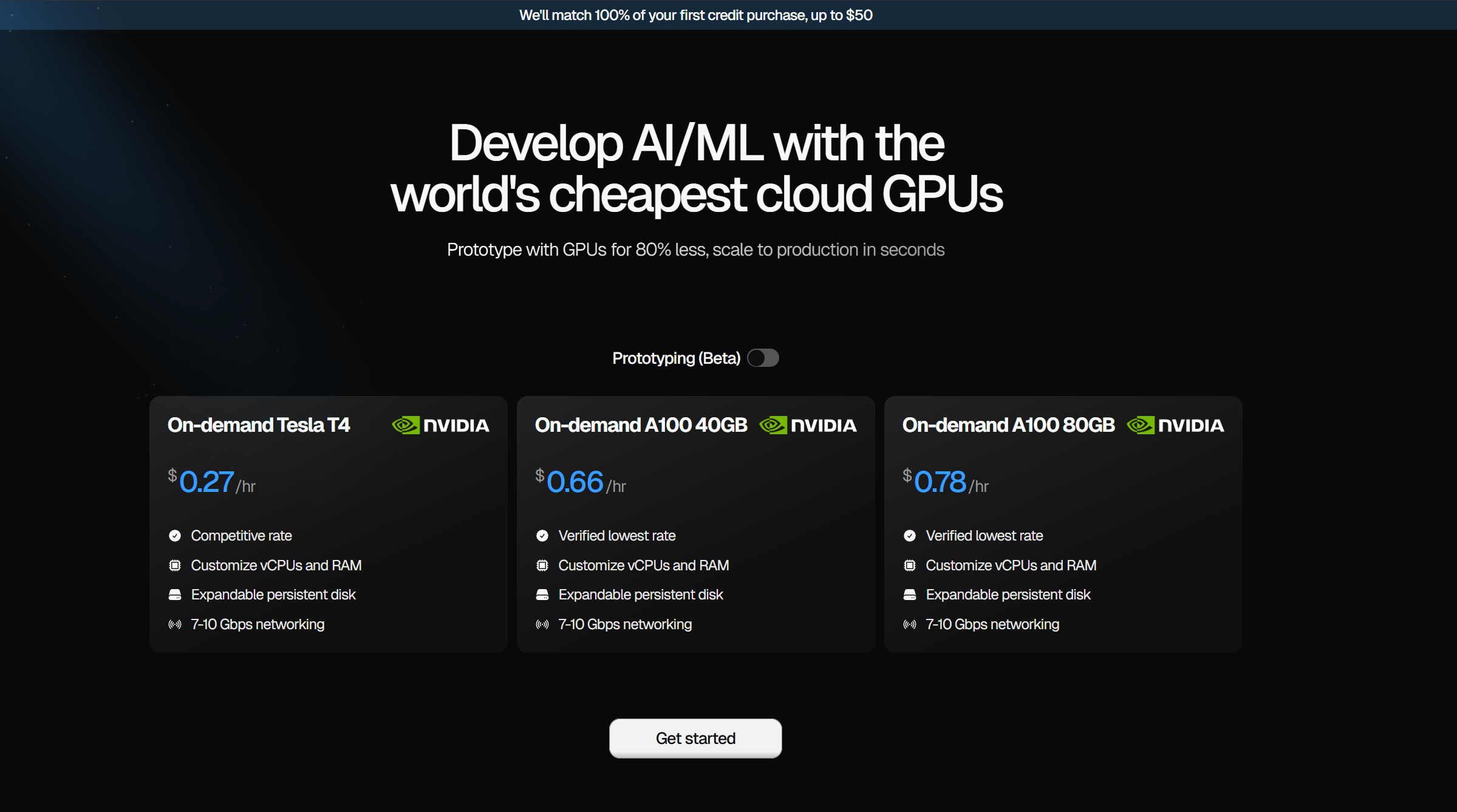
Thunder Compute offers an ultra-low-cost GPU cloud platform designed for AI and machine learning developers. It provides on-demand GPU instances like the NVIDIA A100 and T4 at prices up to 80% lower than major cloud providers. With features like one-click setup, VS Code integration, and seamless scalability, it dramatically simplifies the development workflow, from prototyping to production, allowing developers to focus on building models rather than managing infrastructure.

Machine Learning
Visits 100.4KFavorites 145Likes 167
Inferless
Freemium

Inferless

Inferless is a serverless GPU platform designed for developers to deploy machine learning models in minutes. It eliminates infrastructure management, offering automatic scaling from zero to handle spiky workloads. The platform is optimized for lightning-fast cold starts and cost-efficiency, allowing users to save up to 90% on GPU bills by paying only for what they use.

Machine Learning Deployment
Visits 13.9KFavorites 127Likes 129
massedcompute
Paid

massedcompute

Massed Compute is a cloud platform providing on-demand, high-performance NVIDIA GPUs and CPUs. It offers flexible, scalable, and affordable computing power for AI development, machine learning, and big data analysis without long-term contracts, targeting innovators and developers.

Machine Learning
Visits 101.4KFavorites 136Likes 130
Predibase
Freemium

Predibase

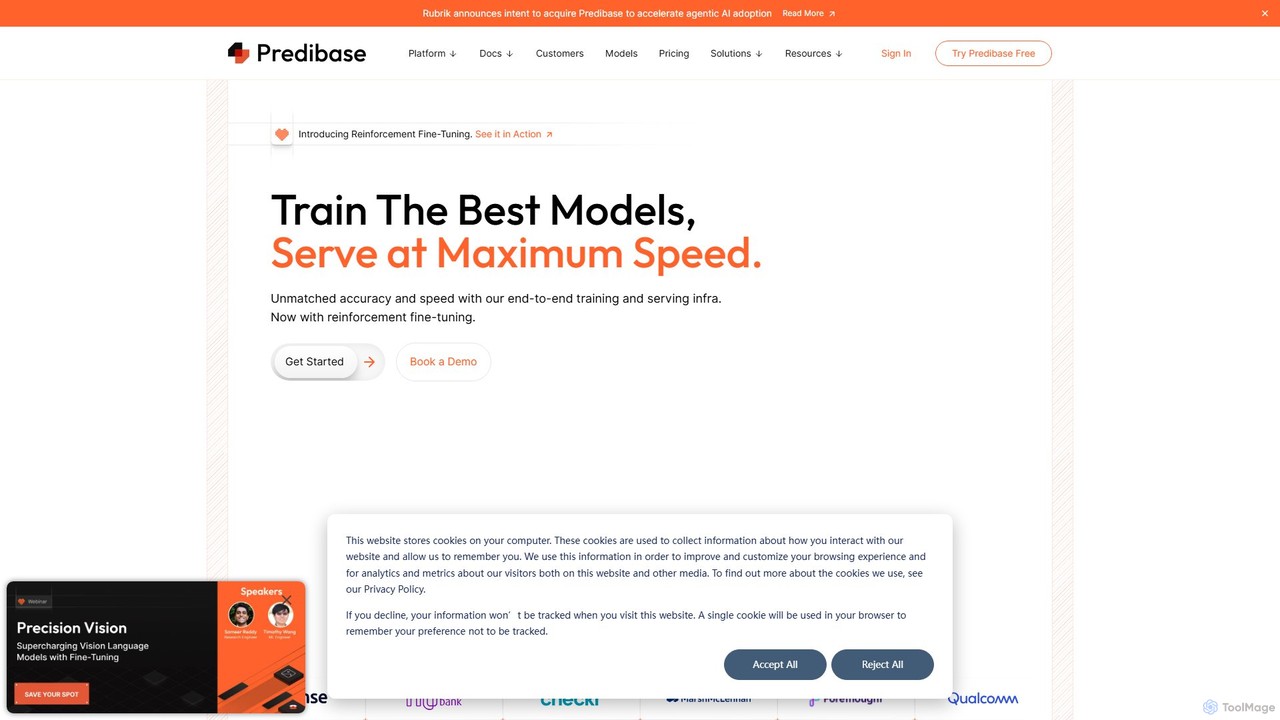
Predibase is an end-to-end developer platform for efficiently fine-tuning and serving open-source Large Language Models (LLMs). It enables users to build custom AI models that outperform large proprietary models like GPT-4 on specific tasks, while significantly reducing costs and inference latency. The platform features advanced techniques like Reinforcement Fine-Tuning (RFT) and LoRAX for high-speed, multi-model serving.

Machine Learning
Visits 9.1KFavorites 133Likes 125
Zeabur
Freemium

Zeabur

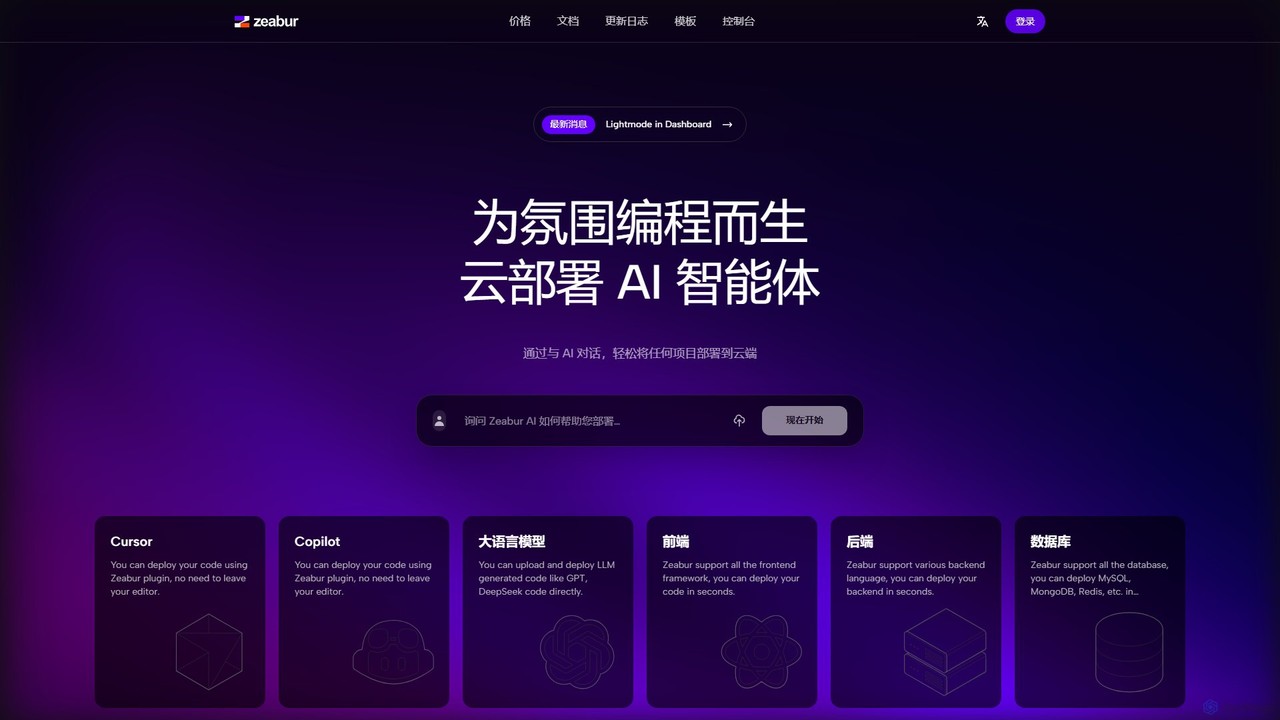
Zeabur is an AI-powered deployment platform (PaaS) designed for developers. It enables one-click deployment for any project, including front-end, back-end, databases, and AI agents, directly from code or through conversational AI. Featuring a pay-as-you-go model, automatic configuration, and auto-scaling, Zeabur simplifies cloud infrastructure, allowing developers to focus solely on coding.

Deployment
Visits 460.8KFavorites 142Likes 152
Heurist AI
Paid

Heurist AI

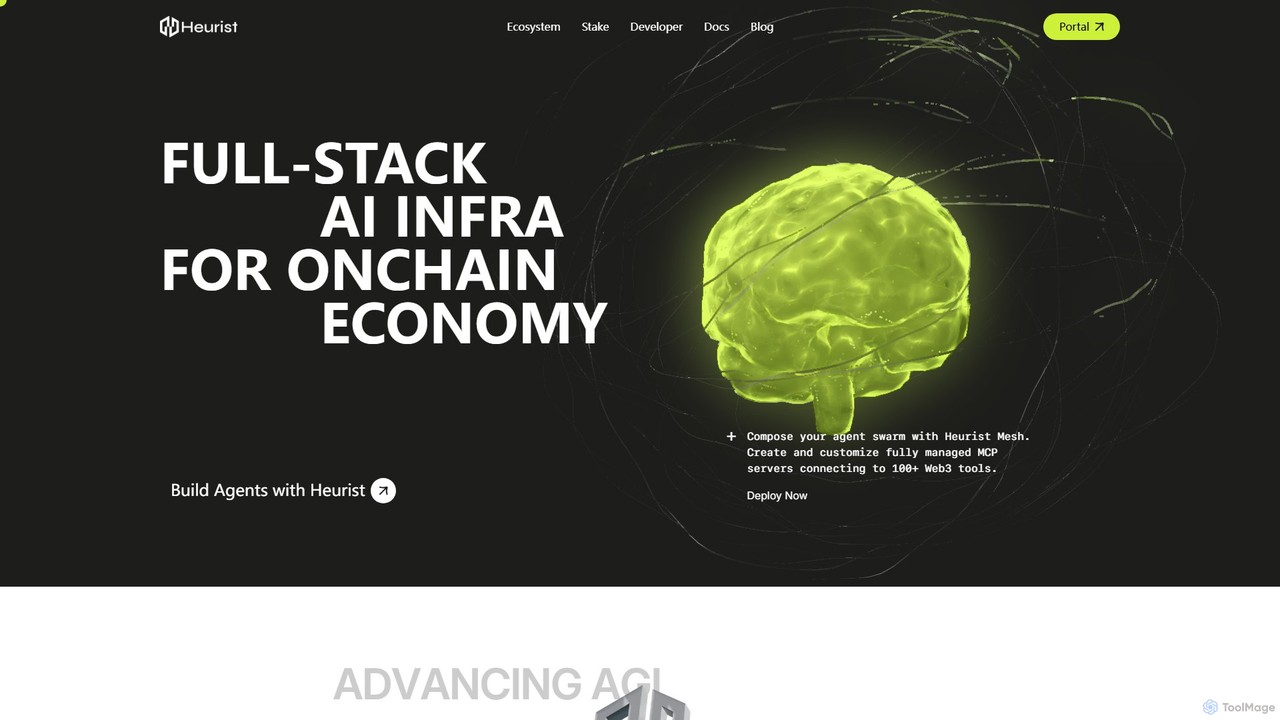
Heurist AI is a full-stack, decentralized AI infrastructure designed for the on-chain economy. It provides developers with a unified API to access numerous AI models and a framework to build composable AI agents. By leveraging a Decentralized Physical Infrastructure Network (DePIN), Heurist connects GPU providers with AI developers, aiming to democratize access to AI computation and foster innovation in Web3.

Api
Visits 10.7KFavorites 119Likes 132
PPIO
Paid

PPIO

PPIO is a leading distributed cloud computing platform providing cost-effective, high-performance AI computing power, model APIs, and edge computing services. It offers developers and enterprises one-stop solutions for AI, video, and metaverse applications, featuring serverless GPUs, containerized instances, and access to popular large language and multi-modal models.

Model Hosting
Visits 102.1KFavorites 113Likes 105
Fireworks AI
Freemium

Fireworks AI

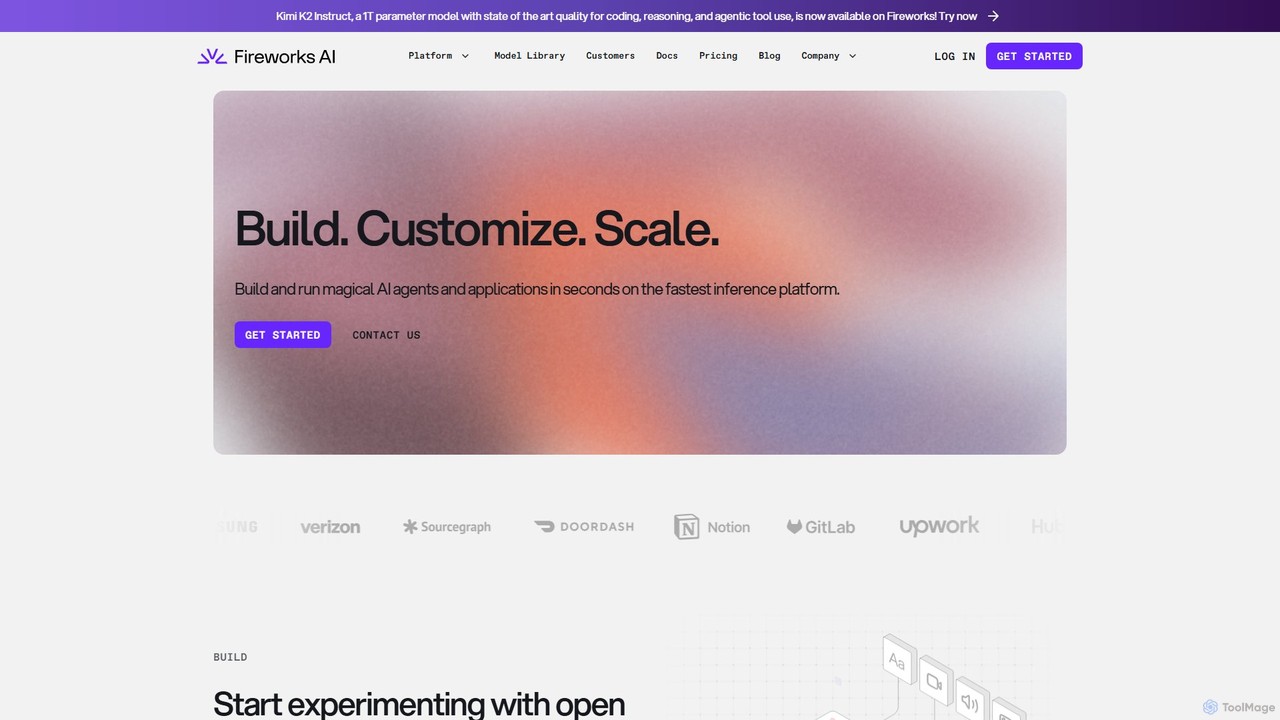
A high-performance platform for developers to build, customize, and scale generative AI applications. It offers an industry-leading fast inference engine, advanced fine-tuning capabilities, and access to a wide range of open-source models, enabling real-time, cost-effective AI solutions.

Model Deployment
Visits 616.2KFavorites 153Likes 149
Spheron
Paid

Spheron

Spheron is a decentralized GPU network (DePIN) that provides scalable and cost-effective compute power for AI/ML workloads. By aggregating idle resources from gaming rigs, data centers, and mining farms, it offers a resilient, censorship-resistant, and up to 80% cheaper alternative to traditional cloud providers.

Model Training
Visits 83.6KFavorites 147Likes 160
HyperAI
Paid

HyperAI

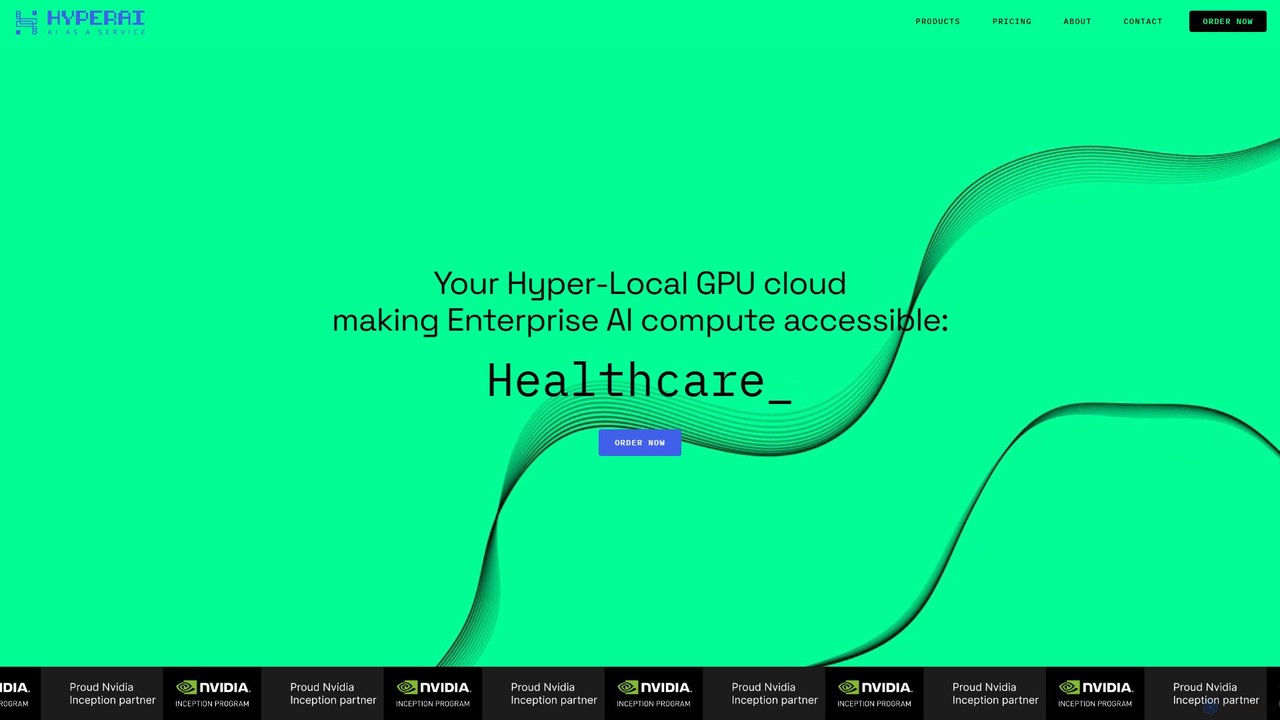
HyperAI is a European-based, hyper-local GPU cloud platform designed to make enterprise-grade AI computing accessible. It offers high-performance NVIDIA A100 and H100 GPUs through flexible plans, including spot instances and dedicated servers. With a focus on low latency, data compliance, and a developer-friendly environment featuring a pre-installed Nvidia AI SDK, HyperAI empowers developers and businesses to build, train, and deploy complex AI models efficiently and securely.

Machine Learning
Visits 9.7KFavorites 122Likes 102
ClearML GenAI App Engine
Freemium

ClearML GenAI App Engine

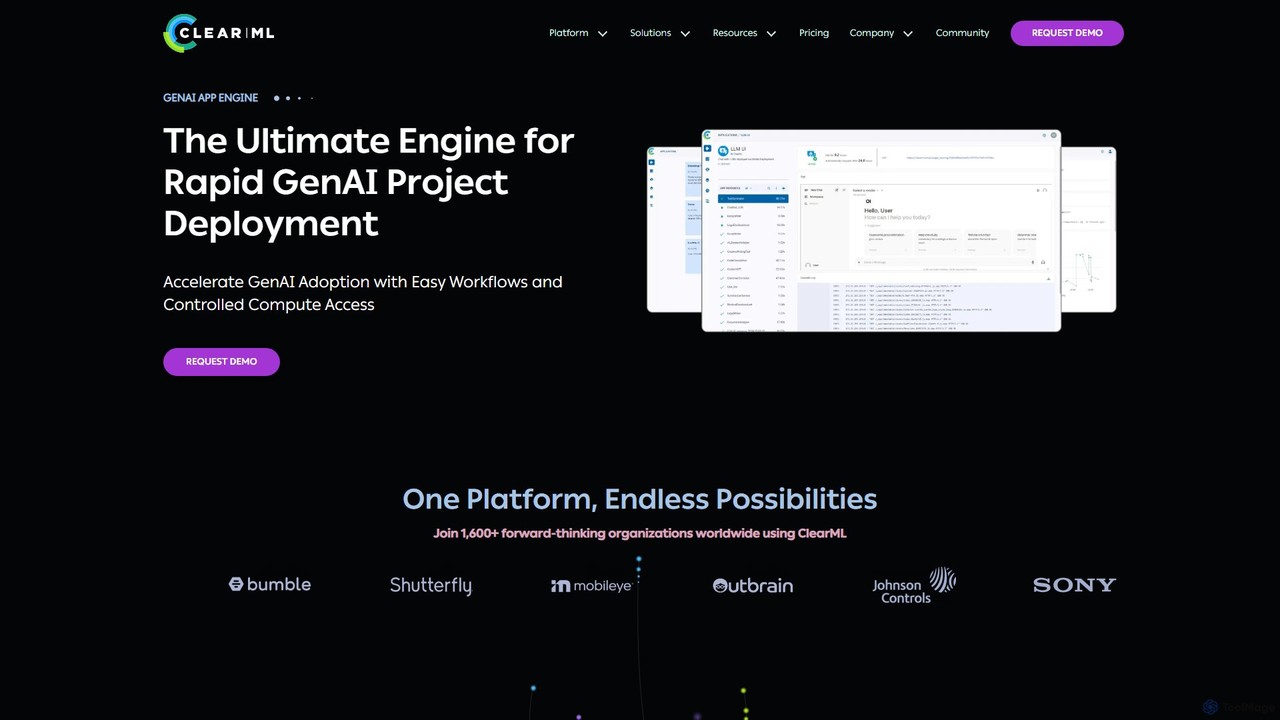
An enterprise-grade platform for rapidly deploying, managing, and scaling Generative AI applications. It provides a unified infrastructure control plane to streamline LLM deployment, monitor performance, and optimize compute costs, accelerating GenAI adoption securely and efficiently.

Mlops
Visits 79.9KFavorites 127Likes 140
Google Cloud
Freemium

Google Cloud

Google Cloud is a comprehensive suite of cloud computing services that provides infrastructure, platform, and serverless environments. It excels in AI/ML with Vertex AI and Gemini, data analytics with BigQuery, and offers scalable, secure infrastructure for businesses of all sizes, from startups to global enterprises.

Machine Learning
Visits 48.8MFavorites 115Likes 138
Cirrascale Cloud Services
Paid

Cirrascale Cloud Services

Cirrascale provides high-performance, dedicated GPU cloud services tailored for large-scale AI, deep learning, and High-Performance Computing (HPC). It offers access to the latest NVIDIA GPU hardware and scalable infrastructure, enabling organizations to train massive models and run complex computational workloads efficiently.

Model Training
Visits 21.3KFavorites 131Likes 130
Clore.ai
Paid

Clore.ai

Clore.ai is a decentralized GPU marketplace providing on-demand access to a global network of high-performance computing resources. It connects users needing GPU power for tasks like AI training, 3D rendering, and scientific simulations with hardware owners looking to monetize their idle servers. The platform features a flexible rental market, its own cryptocurrency (CLORE) for transactions, and a unique Proof-of-Holding system for enhanced rewards and discounts, creating a comprehensive ecosystem for high-performance computing.

Model Training
Visits 198.7KFavorites 119Likes 113
aistudio
Freemium

aistudio

AI Studio is an all-in-one AI learning and development community by Baidu, powered by the PaddlePaddle deep learning platform. It provides developers with a free online programming environment, GPU computing power, extensive open-source models, and datasets to build, train, and deploy AI applications seamlessly.

Notebooks
Visits 376.2KFavorites 120Likes 119
Salad
Paid

Salad

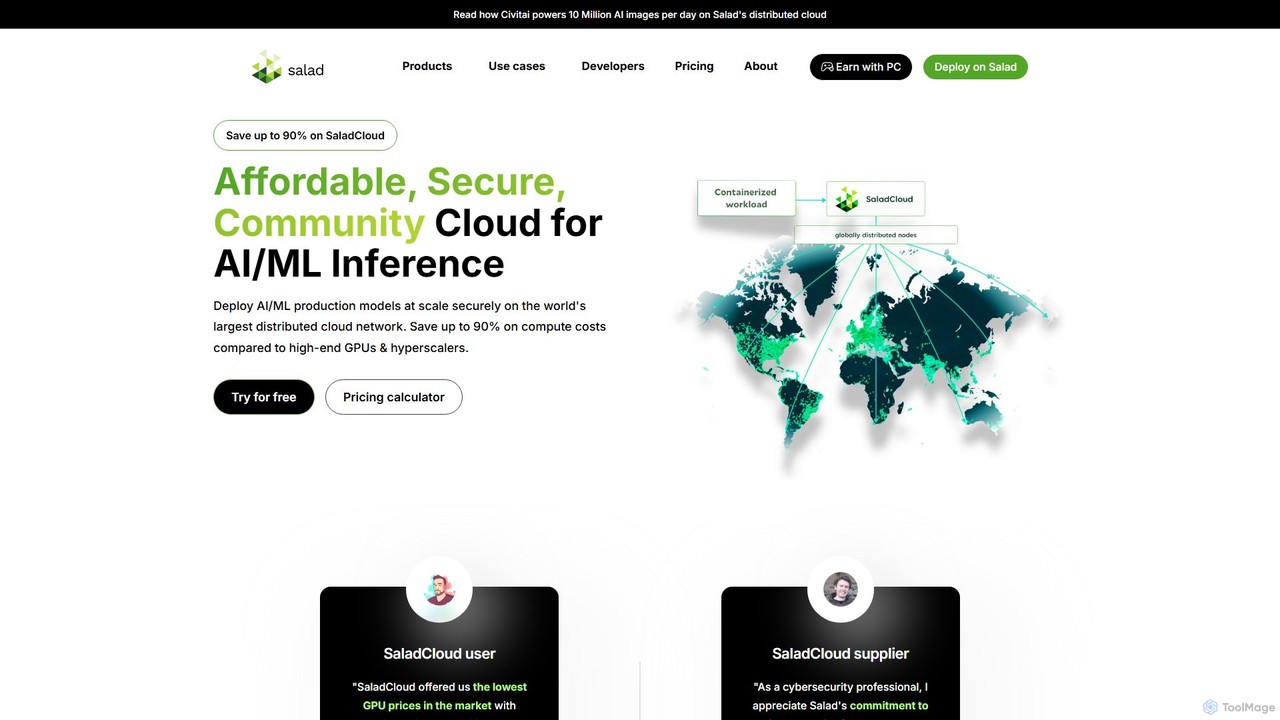
Salad is a distributed GPU cloud platform that harnesses unused computing power from a global network of consumer PCs. It offers businesses highly affordable and scalable on-demand GPU resources for AI/ML workloads, model training, and inference, reducing compute costs by up to 90% compared to traditional cloud providers.

Model Deployment
Visits 619.4KFavorites 138Likes 133
Juice
Freemium

Juice

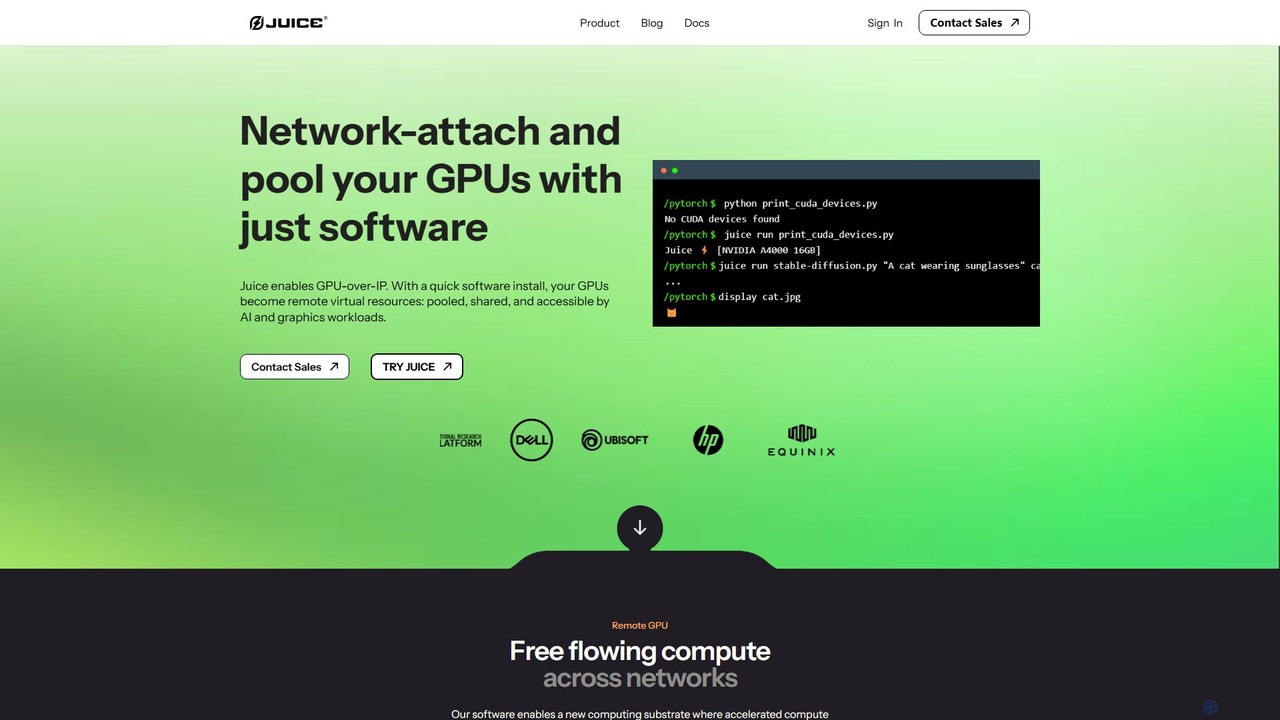
Juice is a software-only platform that enables GPU-over-IP, allowing you to access, share, and pool GPU resources across any standard network. It decouples GPUs from physical machines, turning any CPU node into a GPU-accelerated system on demand, optimizing utilization and significantly reducing costs for AI and graphics workloads without code changes.

Gpu Virtualization
Visits 6.7KFavorites 124Likes 127

About Infrastructure

AI Infrastructure provides the foundational platforms, services, and hardware required to build, train, and deploy artificial intelligence models. These tools offer scalable computing resources, such as GPUs and TPUs, alongside specialized software for managing the entire machine learning lifecycle. They are essential for developers and organizations that need to handle large datasets and complex computations, enabling the creation of custom AI solutions at scale. This infrastructure abstracts away the complexity of managing hardware, allowing teams to focus on model development and innovation.

Core Features

  • Scalable Compute Resources: On-demand access to powerful GPUs and TPUs for accelerating model training and inference.
  • Model Deployment & Hosting: Managed services and APIs for deploying models into production environments with auto-scaling and monitoring.
  • MLOps Platforms: Integrated toolchains for automating and managing the end-to-end machine learning lifecycle, from data preparation to deployment.
  • Optimized Data Storage: High-performance storage solutions designed for large-scale datasets used in AI training.
  • Development Environments: Pre-configured environments with necessary frameworks and libraries for AI development.

Use Cases

AI Infrastructure is critical for technology companies, research institutions, and enterprises building proprietary AI capabilities. It's used for training large language models (LLMs), developing computer vision systems for industrial automation, and deploying real-time recommendation engines for e-commerce platforms. Data science teams rely on it to manage complex experiment tracking and model versioning.

How to Choose

When selecting AI Infrastructure, consider the specific computational needs, such as the type and number of GPUs required. Evaluate the platform's scalability and its ability to handle fluctuating workloads. Assess the comprehensiveness of its MLOps tools for streamlining your workflow. Finally, analyze the pricing model—pay-as-you-go, reserved instances, or serverless—to align with your budget and usage patterns.

Featured tool rankings

Infrastructure use cases

1

Training a Custom Large Language Model

A research lab or AI startup needs to train a large language model (LLM) on a proprietary dataset. They use an AI infrastructure provider to access a cluster of hundreds of high-performance GPUs. This allows them to conduct distributed training efficiently, reducing the training time from months to weeks. The platform's pre-configured environments and data storage solutions simplify the setup process, enabling researchers to focus on model architecture and experimentation rather than managing hardware.

2

Deploying a Real-Time Inference API

An e-commerce company wants to deploy a machine learning model for real-time product recommendations. They use a managed model hosting service from an AI infrastructure provider. This service provides a scalable API endpoint that automatically handles traffic spikes during sales events. The built-in monitoring tools allow their operations team to track latency and error rates, ensuring a smooth user experience. By using a managed service, the company avoids the complexity of setting up and maintaining its own serving infrastructure.

3

Managing an End-to-End MLOps Workflow

An enterprise data science team manages dozens of models in production. They adopt an MLOps platform to streamline their entire workflow. The platform provides tools for data versioning, experiment tracking, and model registry. This creates a reproducible and auditable trail for every model. Their CI/CD pipelines are integrated with the platform, automating the process of testing, validating, and deploying new model versions, which significantly reduces manual errors and accelerates time-to-market for new AI features.

4

Fine-Tuning a Foundation Model via API

A developer is building a specialized chatbot for the legal industry. Instead of training a model from scratch, they use a serverless API from an infrastructure provider to fine-tune a large foundation model. They upload a small, curated dataset of legal Q&As to the service. The platform handles the entire fine-tuning process on its managed infrastructure. Once complete, the developer gets access to a private API endpoint for their customized model, allowing for easy integration into their application without managing any servers.

5

Building a Scalable Data Processing Pipeline

A computer vision company needs to process millions of images to prepare them for model training. They use cloud storage and data processing services from an AI infrastructure provider. They build an automated pipeline that triggers processing jobs—like resizing and normalization—whenever new images are uploaded. This serverless approach allows them to process vast amounts of data in parallel without provisioning or managing servers, ensuring their datasets are always ready for the next training run.

6

Collaborative AI Development in a Secure Environment

A financial services company is developing a fraud detection model using sensitive customer data. They require a secure and collaborative environment. They use a specialized AI platform that provides isolated development environments (notebooks) with strict access controls. Data scientists can collaborate on model development without exposing raw data. The platform's built-in security features and compliance certifications ensure that all development activities adhere to industry regulations, enabling innovation while maintaining data privacy.

Infrastructure FAQ

What is AI Infrastructure?

AI Infrastructure refers to the complete set of hardware, software, and services required to develop, train, deploy, and manage AI models. It includes powerful computing resources like GPUs, specialized data storage, networking, and MLOps platforms. Essentially, it's the foundation upon which all AI applications are built, providing the necessary power and tools for the entire machine learning lifecycle.

How to choose the right AI Infrastructure?

Choosing the right AI infrastructure depends on several factors. First, assess your performance needs: what type of GPUs or accelerators do you require and in what quantity? Second, consider scalability and flexibility to handle future growth. Third, evaluate the MLOps capabilities to ensure they support your workflow. Finally, compare pricing models (e.g., pay-as-you-go vs. reserved instances) to find the most cost-effective solution for your usage patterns.

What is the difference between IaaS, PaaS, and Serverless for AI?

These terms describe different levels of service management in cloud computing for AI:

  • IaaS (Infrastructure as a Service): Provides raw computing resources like virtual machines with GPUs. You have maximum control but also manage the operating system and software.
  • PaaS (Platform as a Service): Offers a managed platform, such as a managed Kubernetes service or a dedicated AI platform like SageMaker. It abstracts away the underlying infrastructure, letting you focus on deploying applications and models.
  • Serverless: The highest level of abstraction. You only provide your code or model, and the platform handles all infrastructure management, scaling, and execution automatically, often through APIs.

What are the key components of AI Infrastructure?

The core components of AI infrastructure work together to support the machine learning lifecycle. They typically include:

  • Compute: High-performance processors, primarily GPUs and TPUs, for training and inference.
  • Storage: Fast, scalable storage systems to handle massive datasets.
  • Networking: High-bandwidth, low-latency networking to connect compute and storage resources.
  • MLOps Software: Platforms and tools for experiment tracking, model versioning, automated deployment (CI/CD), and monitoring.

Who needs dedicated AI Infrastructure?

Dedicated AI infrastructure is primarily for developers, data scientists, researchers, and organizations that are building, training, or deploying their own custom AI models. While end-users might interact with AI through SaaS applications, the creators of those applications rely on robust infrastructure. If your work involves handling large datasets, running complex training jobs, or serving models at scale, you need a specialized AI infrastructure solution.