ToolMage
Sign in

Best 82 Infrastructure AI tools

Popular Infrastructure AI tools include Cloudflare, Google Cloud, OctoAI, Supabase, Ollama, Hewlett Packard Enterprise (HPE), Broadcom, DigitalOcean, NVIDIA Build, and Runpod, helping you work more efficiently.

Oneinfer
Freemium

Oneinfer

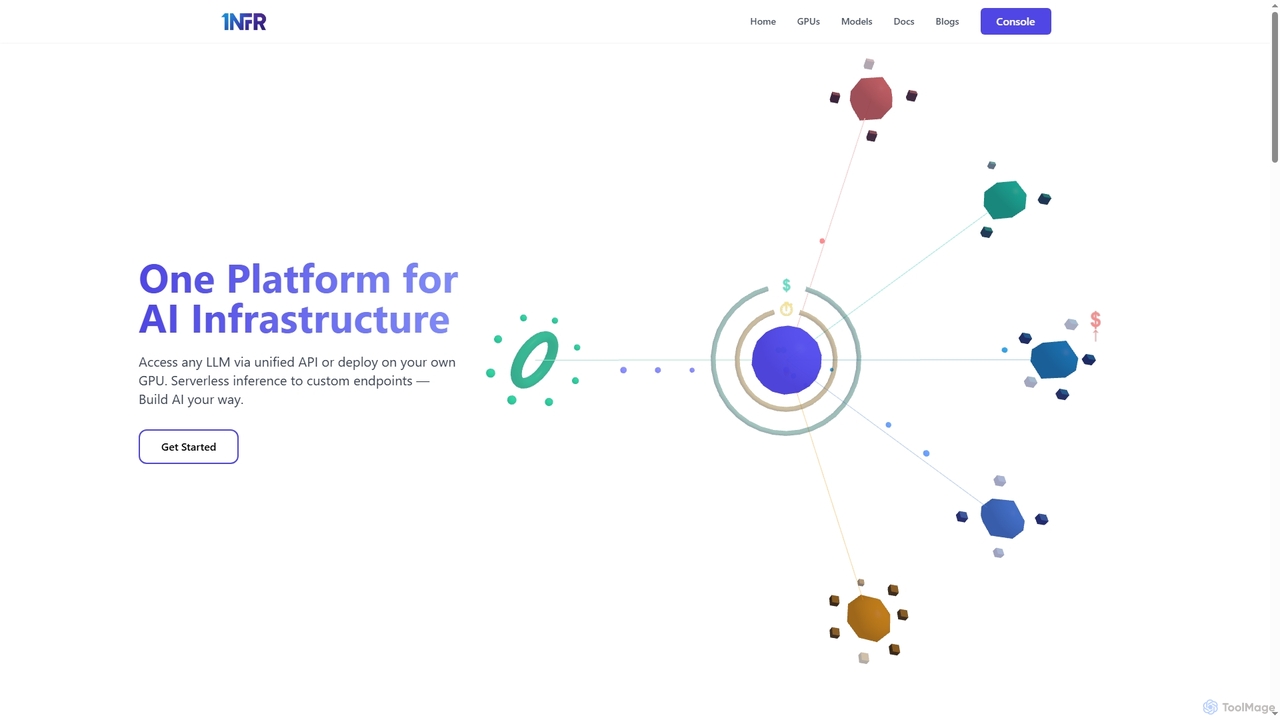
Oneinfer is a high-performance AI inference platform for developers. It offers a unified API to access over 15 LLMs like GPT-4 and Claude, simplifying AI integration. The platform features serverless deployment, automatic scaling, enterprise-grade security, and pay-as-you-go pricing. It also provides a marketplace for renting GPU instances for custom AI workloads.

Inference
Visits 7.2KFavorites 127Likes 121
Gmi Cloud
Paid

Gmi Cloud

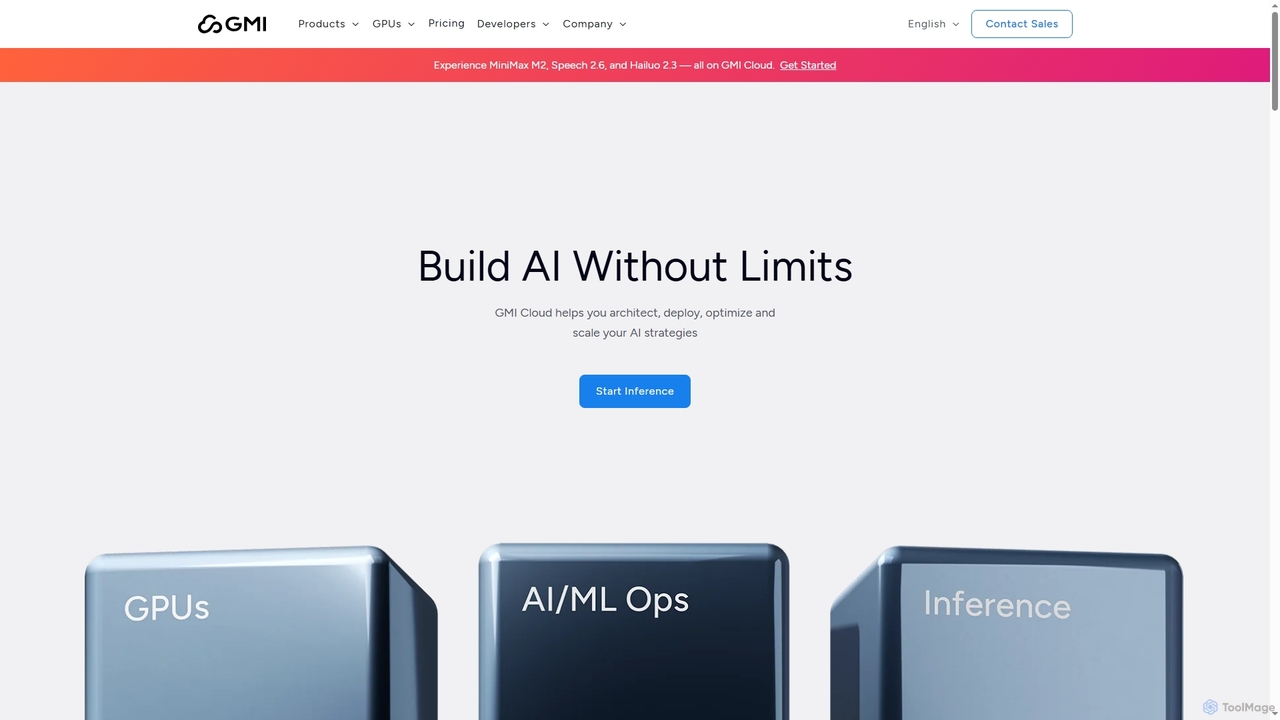
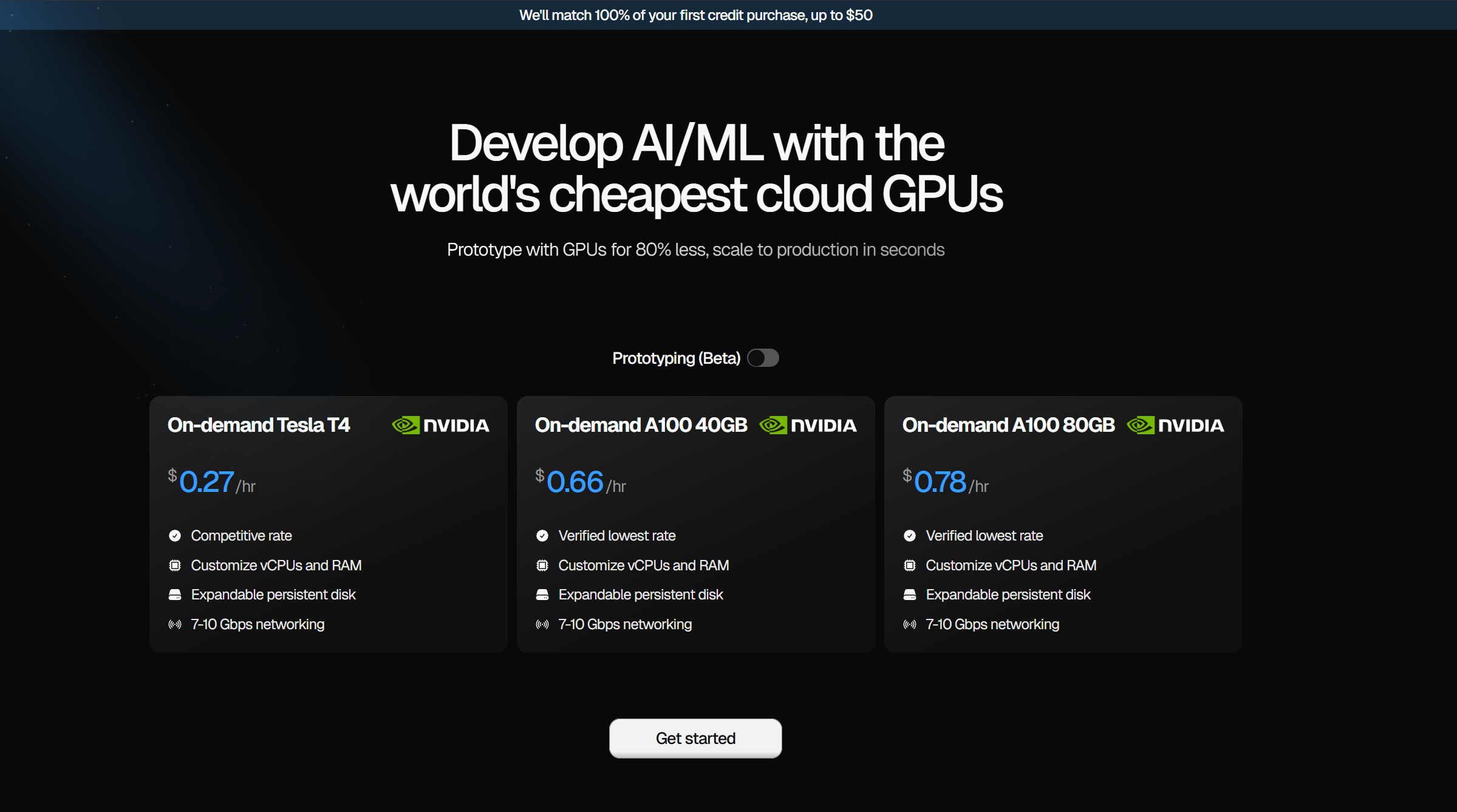
Gmi Cloud is a high-performance GPU cloud platform designed for scalable AI training and inference. It provides on-demand access to top-tier NVIDIA GPUs, an optimized inference engine for low latency, and a cluster engine for streamlined MLOps, enabling developers and enterprises to build, deploy, and scale AI applications efficiently and cost-effectively.

Mlops
Visits 96.9KFavorites 152Likes 157
Baseten
Freemium

Baseten

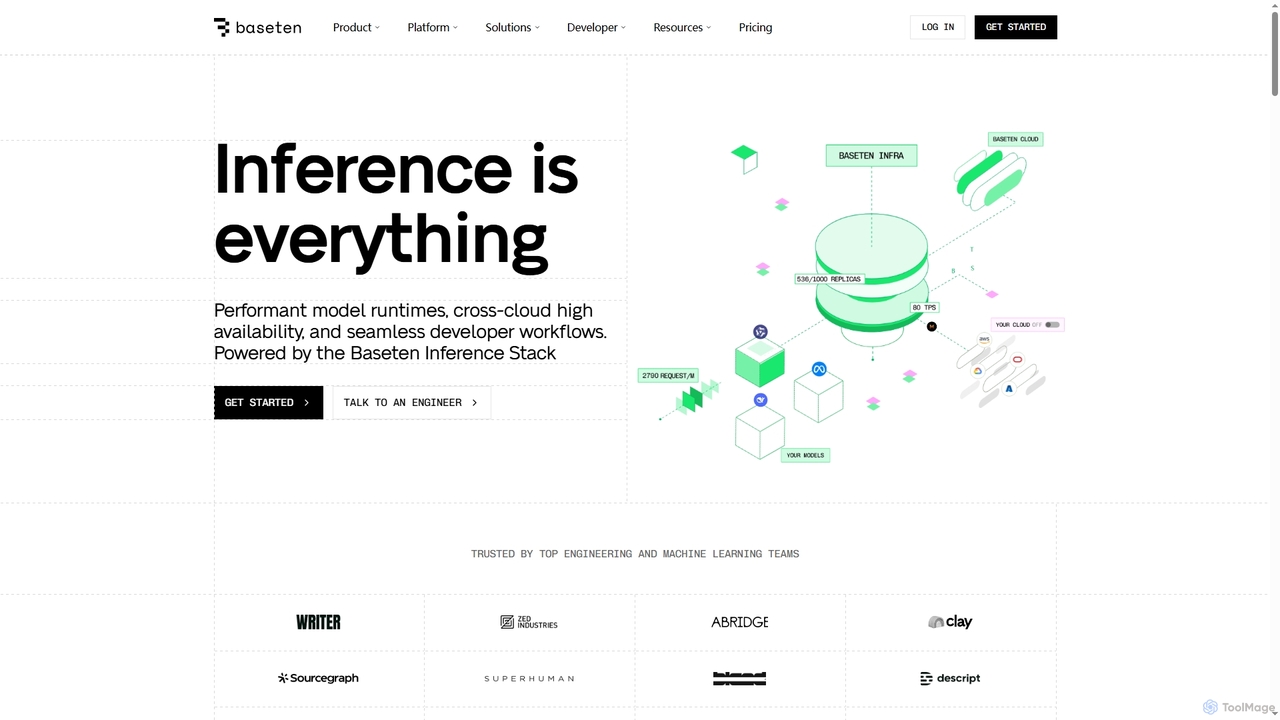
Baseten is a production-grade inference platform for deploying, scaling, and managing AI models. It offers high-performance runtimes, seamless developer workflows, and flexible deployment options (cloud, self-hosted, hybrid). Ideal for engineering and ML teams building mission-critical AI applications.

Deployment
Visits 272.6KFavorites 142Likes 117
BrainHost
Paid

BrainHost

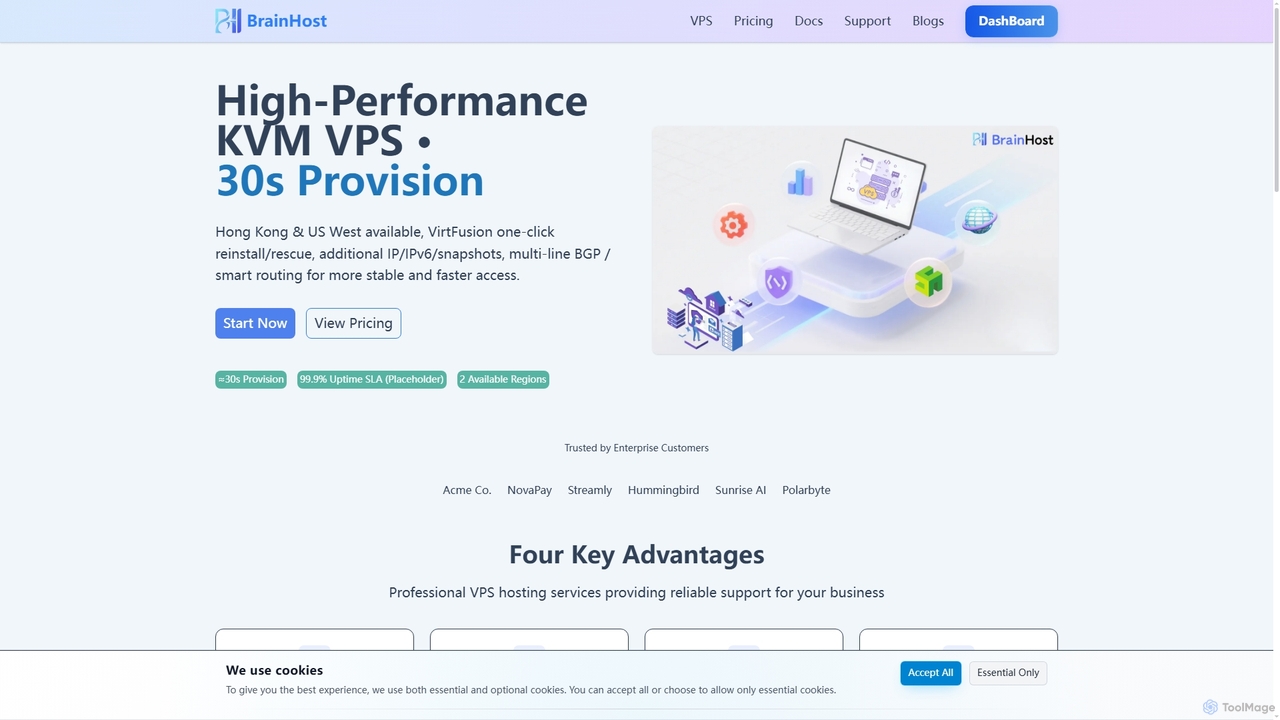
BrainHost offers high-performance KVM VPS hosting with NVMe storage, designed for speed and reliability. Featuring 30-second provisioning, global data centers in Hong Kong and US West, and the intuitive VirtFusion control panel, it provides a robust infrastructure for websites, e-commerce, AI inference, and gaming applications. Flexible scaling and advanced network routing ensure stable and fast access worldwide.

Vps Hosting
Visits 10KFavorites 134Likes 146
UltiHash
Freemium

UltiHash

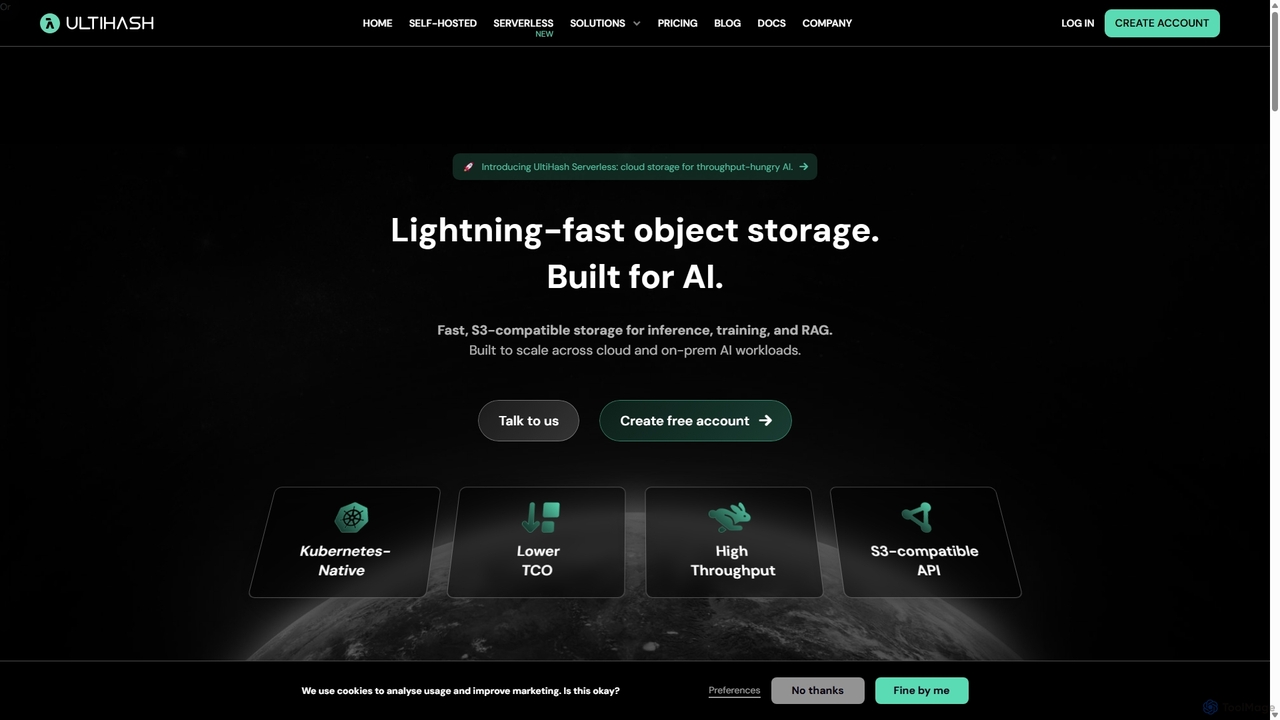
UltiHash is a high-performance, Kubernetes-native object storage platform specifically built for AI and big data workloads. It offers lightning-fast data access, significant cost savings through advanced byte-level deduplication, and flexible deployment across cloud, on-premises, or hybrid environments. Its S3-compatible API ensures seamless integration with existing data stacks and AI workflows.

Machine Learning Operations
Visits 8.4KFavorites 127Likes 163
Irisradgroup

Irisradgroup

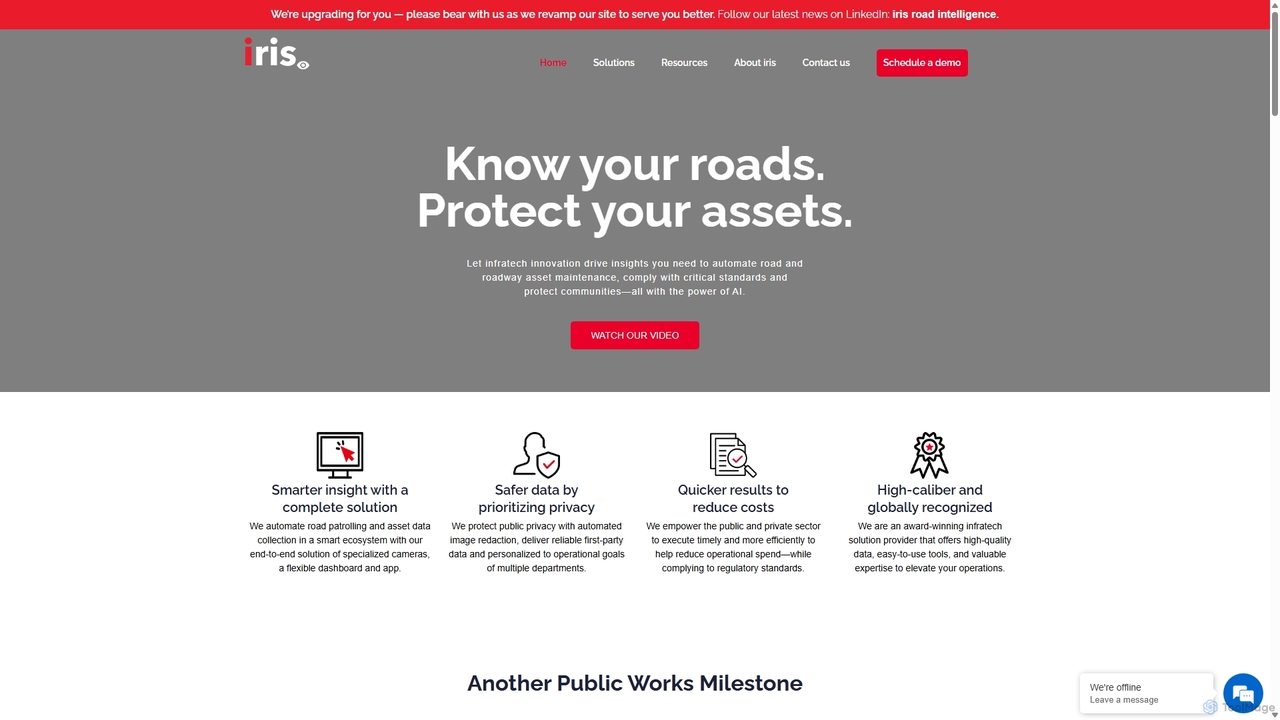
Irisradgroup is an AI-powered infratech solution that automates road and roadway asset maintenance. Using specialized cameras and an intelligent dashboard, it helps municipalities and infrastructure managers monitor road conditions, inventory assets, ensure compliance, and improve public safety efficiently.

Public Sector
Visits 8.4KFavorites 163Likes 152
Hewlett Packard Enterprise (HPE)
Paid

Hewlett Packard Enterprise (HPE)

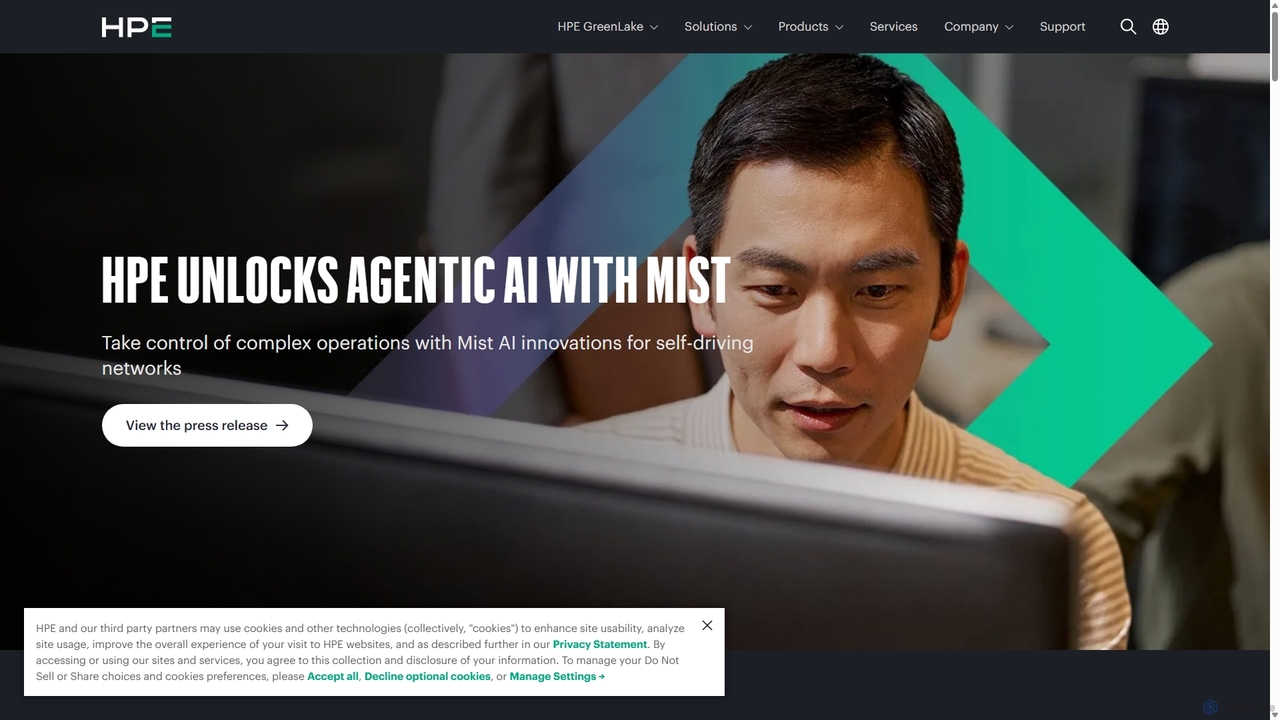
Hewlett Packard Enterprise (HPE) is a global edge-to-cloud company providing comprehensive AI, hybrid cloud, networking, and data solutions for enterprises. Through its HPE GreenLake platform, strategic partnerships with leaders like NVIDIA, and a robust portfolio of hardware and services, HPE empowers organizations to accelerate innovation, optimize operations, and transform data into actionable insights.

Enterprisesolutions
Visits 6.2MFavorites 150Likes 164
Ollama
Freemium

Ollama

Ollama is a powerful open-source framework for running large language models (LLMs) like Llama 3, Mistral, and Gemma locally on your own hardware. Available for macOS, Windows, and Linux, it simplifies the setup and management of open-source models, enabling private, offline, and cost-effective AI development and usage.

Machine Learning
Visits 11.1MFavorites 149Likes 154
HIVE Digital Technologies

HIVE Digital Technologies

HIVE Digital Technologies is a global leader in sustainable data center infrastructure, specializing in both large-scale Bitcoin mining and providing High-Performance Computing (HPC) for AI applications. Leveraging a fleet of NVIDIA GPUs, HIVE powers transformative technologies with efficient, green energy from its geographically diversified data centers in Canada, Sweden, and Paraguay.

Machine Learning Infrastructure
Visits 6.5KFavorites 124Likes 117
Exa Laboratories

Exa Laboratories

Exa Laboratories (now Zettascale) is a YC-backed Silicon Valley startup developing state-of-the-art, energy-efficient reconfigurable chips (XPUs) for AI. Their polymorphic computing architecture aims to solve the AI energy crisis by offering superior performance, versatility, and efficiency compared to traditional GPUs and TPUs for both training and inference.

Ai Development
Visits 6.5KFavorites 129Likes 134
Arbius
Paid

Arbius

Arbius is a decentralized peer-to-peer network for machine learning, creating a global marketplace for AI compute. It enables model creators to monetize their work and users to access AI models in a censorship-resistant environment, powered by its native token, AIUS, and a Proof-of-Useful-Work mechanism.

Api
Visits 6.9KFavorites 135Likes 146
O.systems

O.systems

O.systems is a foundational organization dedicated to shaping the decentralized AI era. It spearheads governance, research, and innovation for the O.XYZ ecosystem, aiming to build the world's first Sovereign Super Intelligence through a community-driven, transparent, and ethically-guided approach.

Dao
Visits 6.5KFavorites 152Likes 136
Prediction Guard
Paid

Prediction Guard

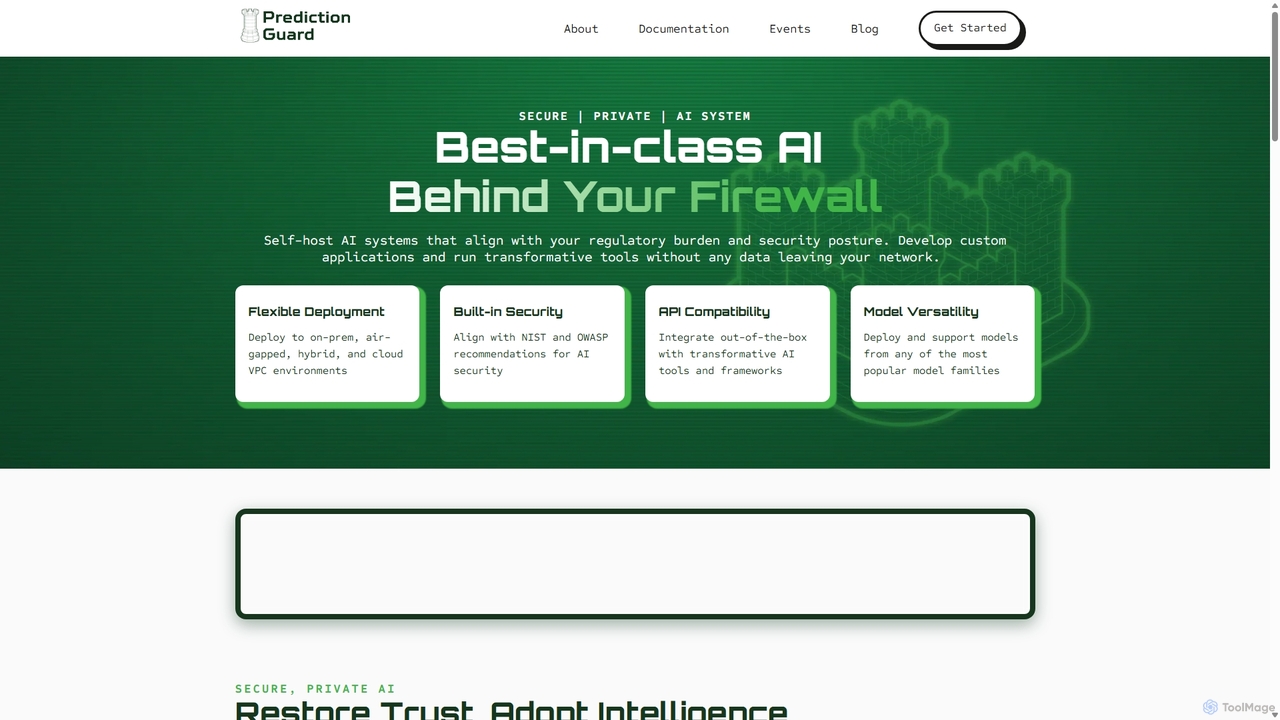
Prediction Guard is an enterprise-grade AI platform that allows organizations to deploy, manage, and scale large language models (LLMs) securely behind their own firewall. It offers flexible deployment options, including on-premise, air-gapped, and private cloud, ensuring complete data privacy and control. With an OpenAI-compatible API, it enables seamless integration with existing tools and frameworks like LangChain and LlamaIndex, making it ideal for regulated industries such as healthcare, defense, and finance.

Platform As A Service (Paas)
Visits 9.5KFavorites 121Likes 132
Protocol Labs

Protocol Labs

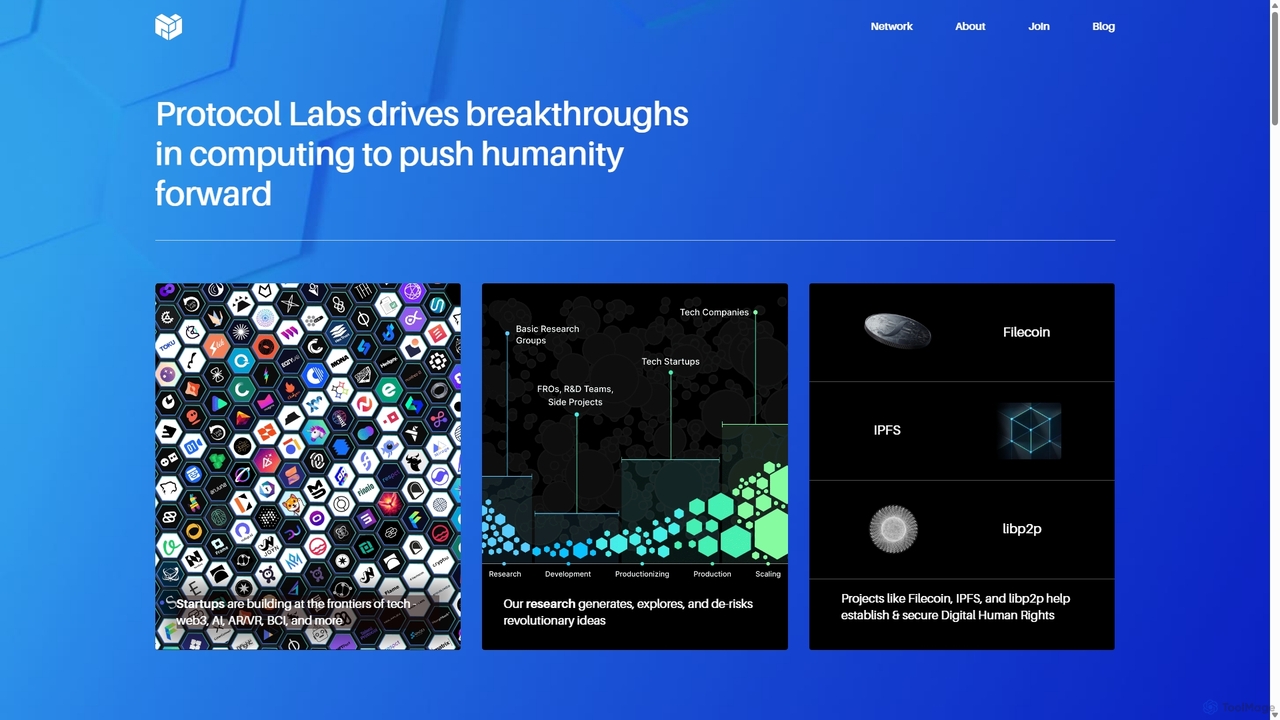
Protocol Labs is a research, development, and deployment lab for network protocols. It drives breakthroughs in computing, focusing on Web3, AI, and decentralized infrastructure. It's the creator of foundational technologies like IPFS and Filecoin, fostering a global innovation network of over 600 startups and organizations to build a more resilient and open internet.

Blockchain
Visits 28.1KFavorites 169Likes 155
Nebius
Paid

Nebius

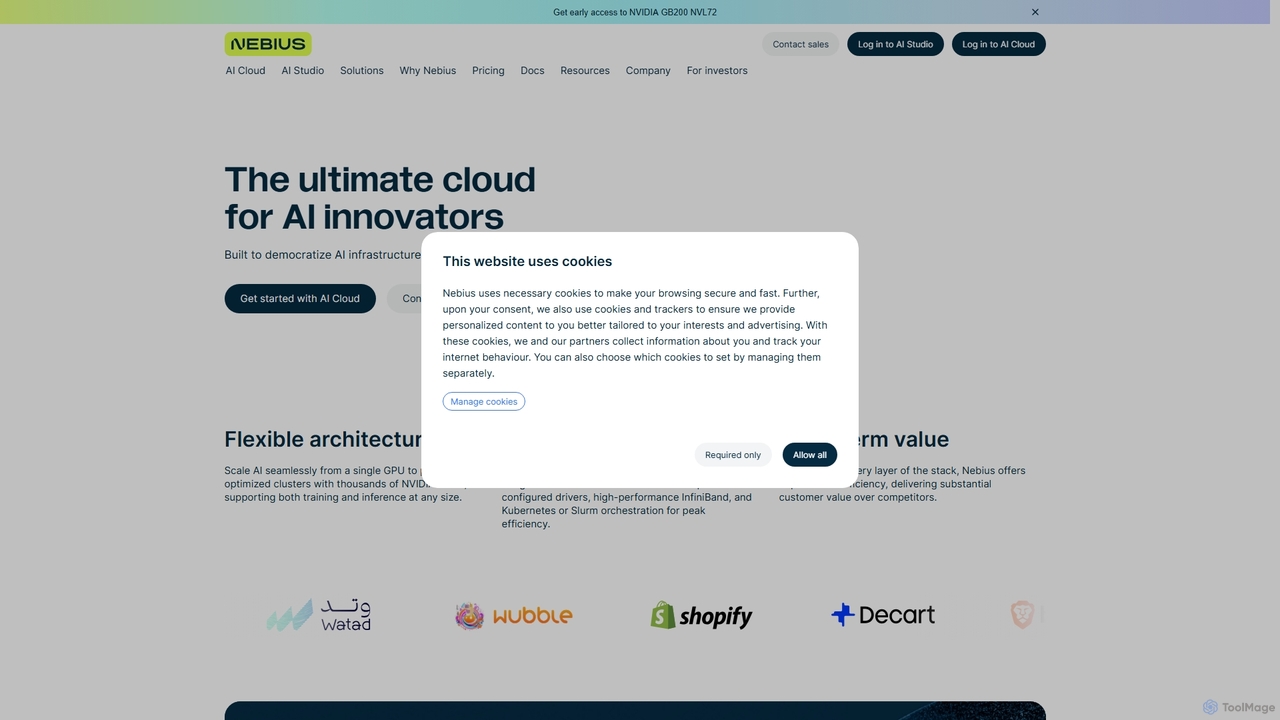
Nebius is a high-performance cloud platform specifically engineered for demanding AI and Machine Learning workloads. It provides scalable access to the latest NVIDIA GPUs, from single instances to massive clusters, complemented by a suite of managed services and an integrated AI Studio to streamline the entire ML lifecycle from training to inference.

Gpu Cloud
Visits 8.8KFavorites 139Likes 145
StackSpaces
Freemium

StackSpaces

StackSpaces is an integrated development platform designed to help developers build, deploy, and scale full-stack AI applications with ease. It provides a unified environment with backend, frontend, and infrastructure components, streamlining the entire development lifecycle from idea to production.

Backend
Visits 6.5KFavorites 148Likes 131
Replicate
Paid

Replicate

Replicate is a cloud platform for developers to run, fine-tune, and deploy AI models via a simple API. It eliminates the need for managing complex infrastructure, offering access to thousands of models with pay-per-use pricing and automatic scaling.

Machine Learning
Visits 1.3MFavorites 124Likes 110
Substrate
Freemium

Substrate

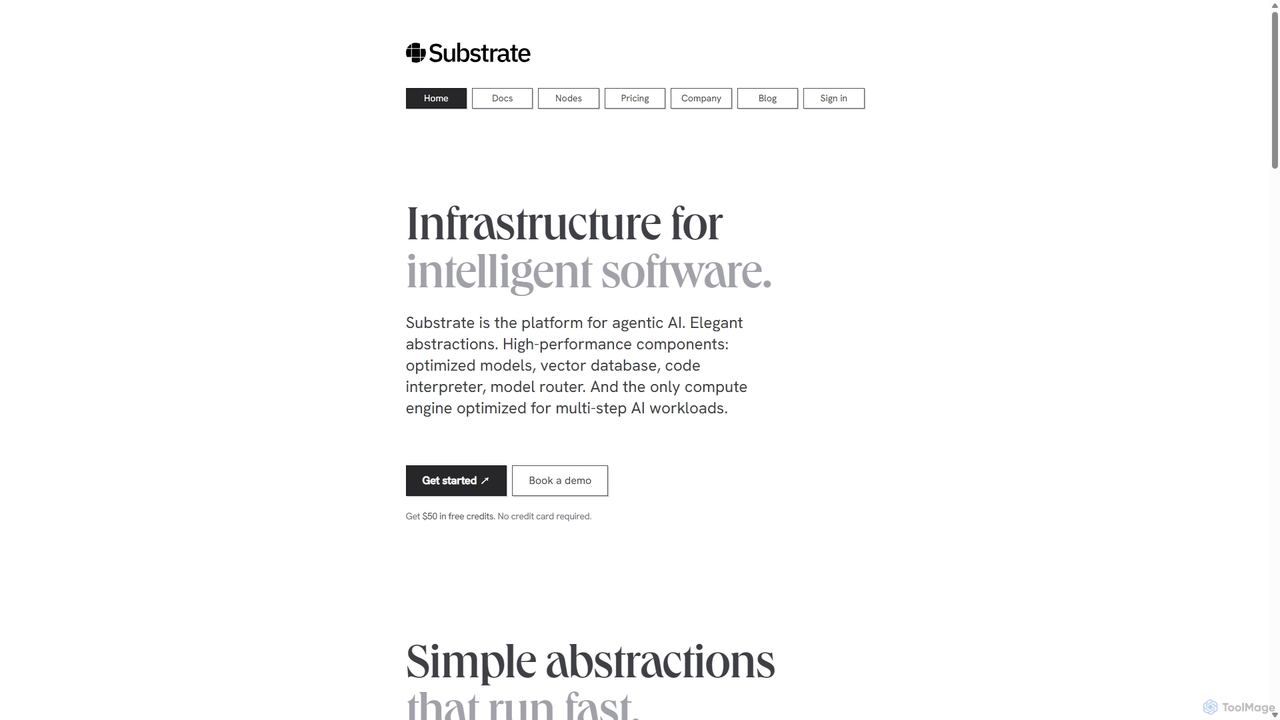
Substrate is a developer platform for building high-performance, agentic AI applications. It provides elegant SDKs, a comprehensive library of optimized models, and a unique compute engine that orchestrates complex, multi-step AI workflows for maximum speed and efficiency.

Api & Sdk
Visits 9.3KFavorites 137Likes 127
ClawCloud Run
Freemium

ClawCloud Run

ClawCloud Run is a cloud-native development platform designed to simplify the application lifecycle. It enables developers to build, deploy, manage, and run applications in a unified cloud environment without writing complex YAML files. Featuring a visual canvas, one-click templates, and integrated database management, it accelerates the go-to-market process.

Platform As A Service
Visits 113KFavorites 121Likes 105
DistributeAI
Paid

DistributeAI

DistributeAI is a decentralized AI supercomputer platform that provides developers with scalable, low-cost access to a vast library of open-source AI models. It enables building and deploying AI applications through a developer-friendly API and SDK, while also allowing users to monetize their idle computing power by contributing to the global network.

Inference
Visits 14.6KFavorites 154Likes 146
Fastly
Freemium

Fastly

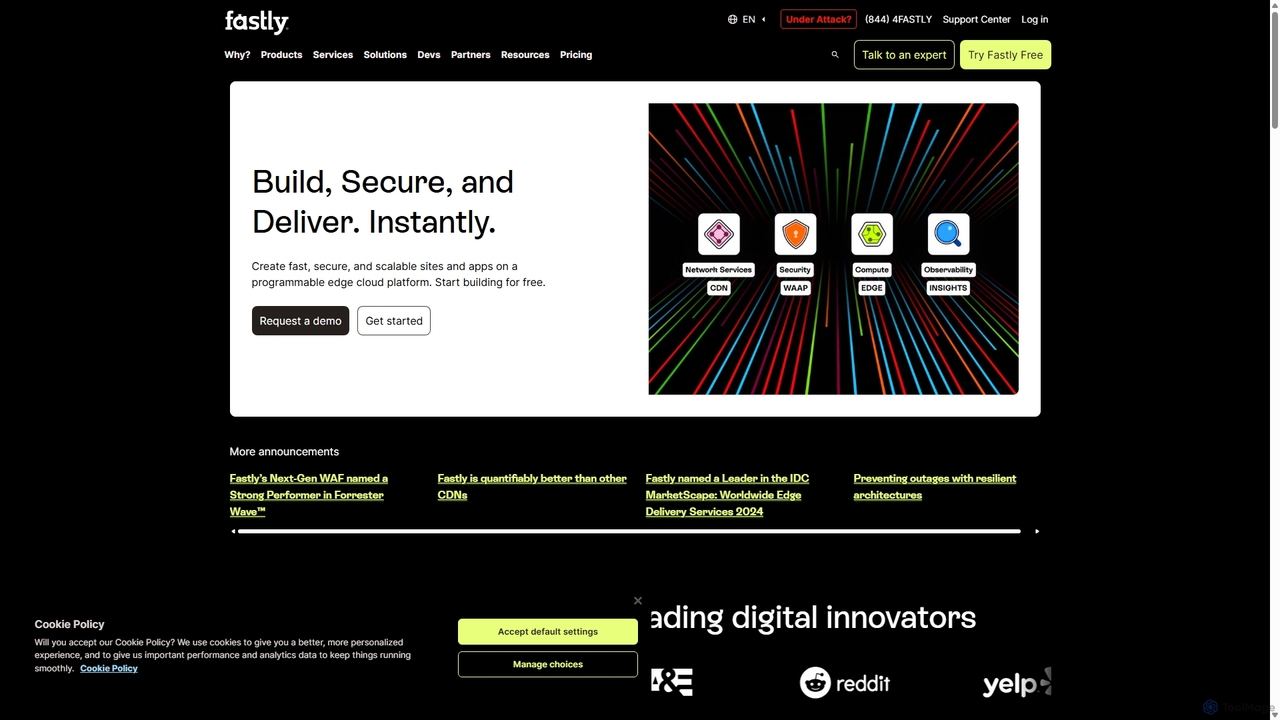
Fastly is a leading edge cloud platform designed to build, secure, and deliver fast, scalable digital experiences. It combines a modern CDN, robust security features like a Next-Gen WAF, and a powerful serverless compute environment. Fastly helps businesses improve performance, enhance security, and innovate closer to their users, with specific solutions for e-commerce, streaming, and AI-powered applications.

Cdn
Visits 355.4KFavorites 141Likes 135
Forefront
Freemium

Forefront

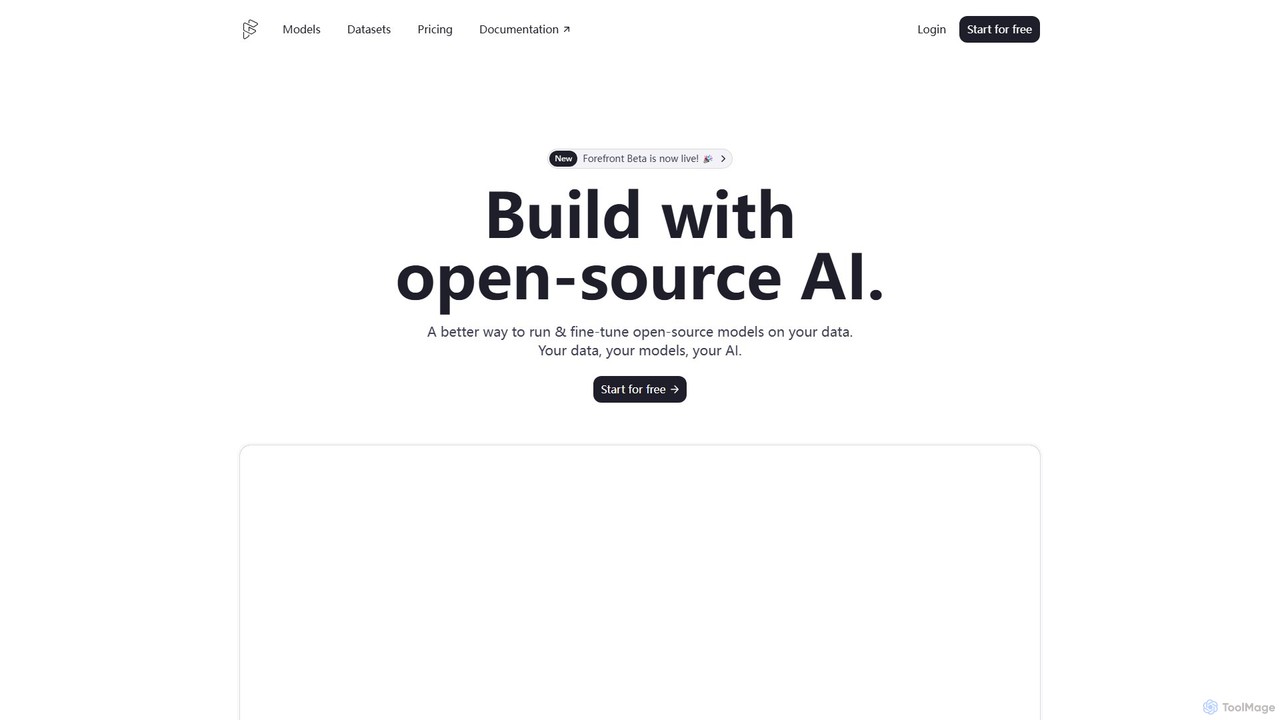
Forefront is a developer platform for building with open-source AI. It simplifies running, fine-tuning, and deploying large language models (LLMs) on your private data, providing a scalable, secure, and cost-effective alternative to closed-source platforms. Own your data, your models, and your AI.

Large Language Models
Visits 50.2KFavorites 161Likes 149
Currux Vision
Paid

Currux Vision

Currux Vision provides autonomous AI systems for smart infrastructure, specializing in intelligent transportation systems (ITS). It leverages existing CCTV cameras to perform real-time traffic monitoring, violation detection, and data analytics. The platform helps cities and government agencies improve traffic flow, enhance safety, and optimize infrastructure management through advanced computer vision and edge computing.

Smart City
Visits 7.8KFavorites 126Likes 121
Permit.io
Freemium

Permit.io

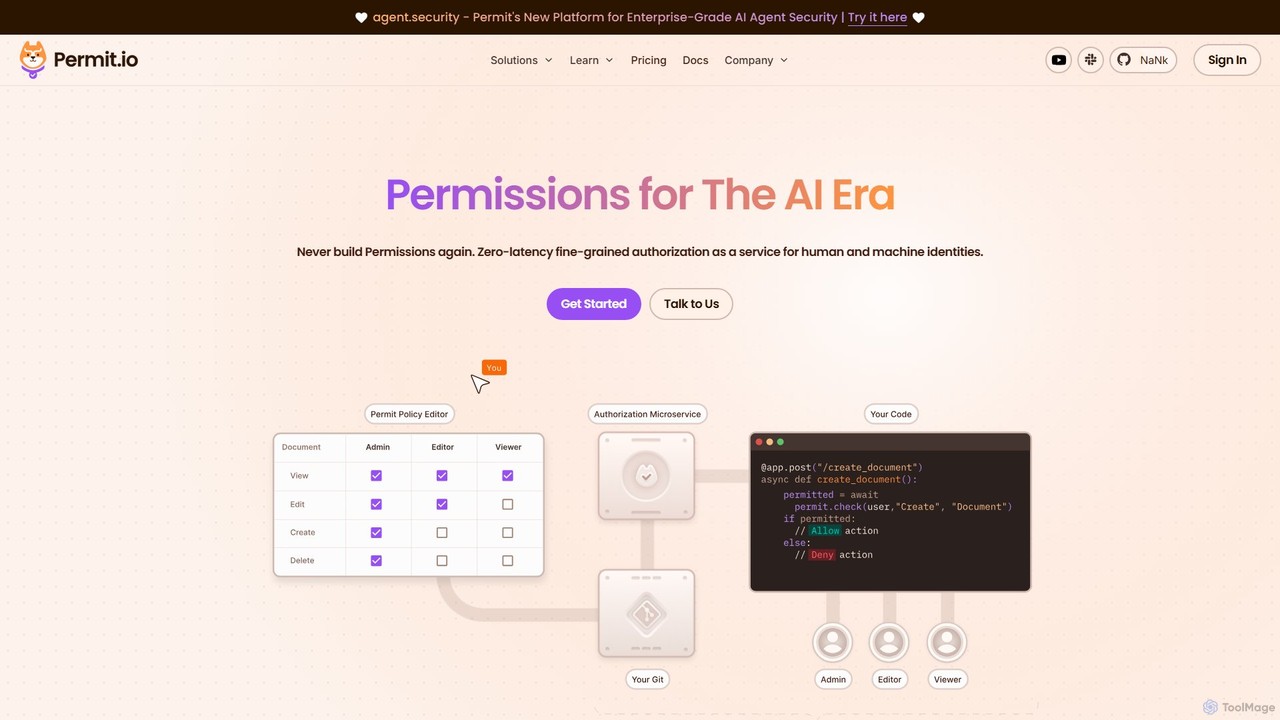
Permit.io is a full-stack authorization platform designed for the AI era. It simplifies the implementation of complex access controls like RBAC, ABAC, and ReBAC for developers. With a no-code policy editor, GitOps integration, and embeddable UI components, it allows entire teams to manage permissions securely and efficiently. The platform ensures low-latency decisions by running in a hybrid model, keeping sensitive data within your network while offering robust compliance and scalability for modern applications, including those powered by AI agents.

Security
Visits 64.3KFavorites 131Likes 118

About Infrastructure

AI Infrastructure provides the foundational platforms, services, and hardware required to build, train, and deploy artificial intelligence models. These tools offer scalable computing resources, such as GPUs and TPUs, alongside specialized software for managing the entire machine learning lifecycle. They are essential for developers and organizations that need to handle large datasets and complex computations, enabling the creation of custom AI solutions at scale. This infrastructure abstracts away the complexity of managing hardware, allowing teams to focus on model development and innovation.

Core Features

  • Scalable Compute Resources: On-demand access to powerful GPUs and TPUs for accelerating model training and inference.
  • Model Deployment & Hosting: Managed services and APIs for deploying models into production environments with auto-scaling and monitoring.
  • MLOps Platforms: Integrated toolchains for automating and managing the end-to-end machine learning lifecycle, from data preparation to deployment.
  • Optimized Data Storage: High-performance storage solutions designed for large-scale datasets used in AI training.
  • Development Environments: Pre-configured environments with necessary frameworks and libraries for AI development.

Use Cases

AI Infrastructure is critical for technology companies, research institutions, and enterprises building proprietary AI capabilities. It's used for training large language models (LLMs), developing computer vision systems for industrial automation, and deploying real-time recommendation engines for e-commerce platforms. Data science teams rely on it to manage complex experiment tracking and model versioning.

How to Choose

When selecting AI Infrastructure, consider the specific computational needs, such as the type and number of GPUs required. Evaluate the platform's scalability and its ability to handle fluctuating workloads. Assess the comprehensiveness of its MLOps tools for streamlining your workflow. Finally, analyze the pricing model—pay-as-you-go, reserved instances, or serverless—to align with your budget and usage patterns.

Featured tool rankings

Infrastructure use cases

1

Training a Custom Large Language Model

A research lab or AI startup needs to train a large language model (LLM) on a proprietary dataset. They use an AI infrastructure provider to access a cluster of hundreds of high-performance GPUs. This allows them to conduct distributed training efficiently, reducing the training time from months to weeks. The platform's pre-configured environments and data storage solutions simplify the setup process, enabling researchers to focus on model architecture and experimentation rather than managing hardware.

2

Deploying a Real-Time Inference API

An e-commerce company wants to deploy a machine learning model for real-time product recommendations. They use a managed model hosting service from an AI infrastructure provider. This service provides a scalable API endpoint that automatically handles traffic spikes during sales events. The built-in monitoring tools allow their operations team to track latency and error rates, ensuring a smooth user experience. By using a managed service, the company avoids the complexity of setting up and maintaining its own serving infrastructure.

3

Managing an End-to-End MLOps Workflow

An enterprise data science team manages dozens of models in production. They adopt an MLOps platform to streamline their entire workflow. The platform provides tools for data versioning, experiment tracking, and model registry. This creates a reproducible and auditable trail for every model. Their CI/CD pipelines are integrated with the platform, automating the process of testing, validating, and deploying new model versions, which significantly reduces manual errors and accelerates time-to-market for new AI features.

4

Fine-Tuning a Foundation Model via API

A developer is building a specialized chatbot for the legal industry. Instead of training a model from scratch, they use a serverless API from an infrastructure provider to fine-tune a large foundation model. They upload a small, curated dataset of legal Q&As to the service. The platform handles the entire fine-tuning process on its managed infrastructure. Once complete, the developer gets access to a private API endpoint for their customized model, allowing for easy integration into their application without managing any servers.

5

Building a Scalable Data Processing Pipeline

A computer vision company needs to process millions of images to prepare them for model training. They use cloud storage and data processing services from an AI infrastructure provider. They build an automated pipeline that triggers processing jobs—like resizing and normalization—whenever new images are uploaded. This serverless approach allows them to process vast amounts of data in parallel without provisioning or managing servers, ensuring their datasets are always ready for the next training run.

6

Collaborative AI Development in a Secure Environment

A financial services company is developing a fraud detection model using sensitive customer data. They require a secure and collaborative environment. They use a specialized AI platform that provides isolated development environments (notebooks) with strict access controls. Data scientists can collaborate on model development without exposing raw data. The platform's built-in security features and compliance certifications ensure that all development activities adhere to industry regulations, enabling innovation while maintaining data privacy.

Infrastructure FAQ

What is AI Infrastructure?

AI Infrastructure refers to the complete set of hardware, software, and services required to develop, train, deploy, and manage AI models. It includes powerful computing resources like GPUs, specialized data storage, networking, and MLOps platforms. Essentially, it's the foundation upon which all AI applications are built, providing the necessary power and tools for the entire machine learning lifecycle.

How to choose the right AI Infrastructure?

Choosing the right AI infrastructure depends on several factors. First, assess your performance needs: what type of GPUs or accelerators do you require and in what quantity? Second, consider scalability and flexibility to handle future growth. Third, evaluate the MLOps capabilities to ensure they support your workflow. Finally, compare pricing models (e.g., pay-as-you-go vs. reserved instances) to find the most cost-effective solution for your usage patterns.

What is the difference between IaaS, PaaS, and Serverless for AI?

These terms describe different levels of service management in cloud computing for AI:

  • IaaS (Infrastructure as a Service): Provides raw computing resources like virtual machines with GPUs. You have maximum control but also manage the operating system and software.
  • PaaS (Platform as a Service): Offers a managed platform, such as a managed Kubernetes service or a dedicated AI platform like SageMaker. It abstracts away the underlying infrastructure, letting you focus on deploying applications and models.
  • Serverless: The highest level of abstraction. You only provide your code or model, and the platform handles all infrastructure management, scaling, and execution automatically, often through APIs.

What are the key components of AI Infrastructure?

The core components of AI infrastructure work together to support the machine learning lifecycle. They typically include:

  • Compute: High-performance processors, primarily GPUs and TPUs, for training and inference.
  • Storage: Fast, scalable storage systems to handle massive datasets.
  • Networking: High-bandwidth, low-latency networking to connect compute and storage resources.
  • MLOps Software: Platforms and tools for experiment tracking, model versioning, automated deployment (CI/CD), and monitoring.

Who needs dedicated AI Infrastructure?

Dedicated AI infrastructure is primarily for developers, data scientists, researchers, and organizations that are building, training, or deploying their own custom AI models. While end-users might interact with AI through SaaS applications, the creators of those applications rely on robust infrastructure. If your work involves handling large datasets, running complex training jobs, or serving models at scale, you need a specialized AI infrastructure solution.