Featured
Jyek
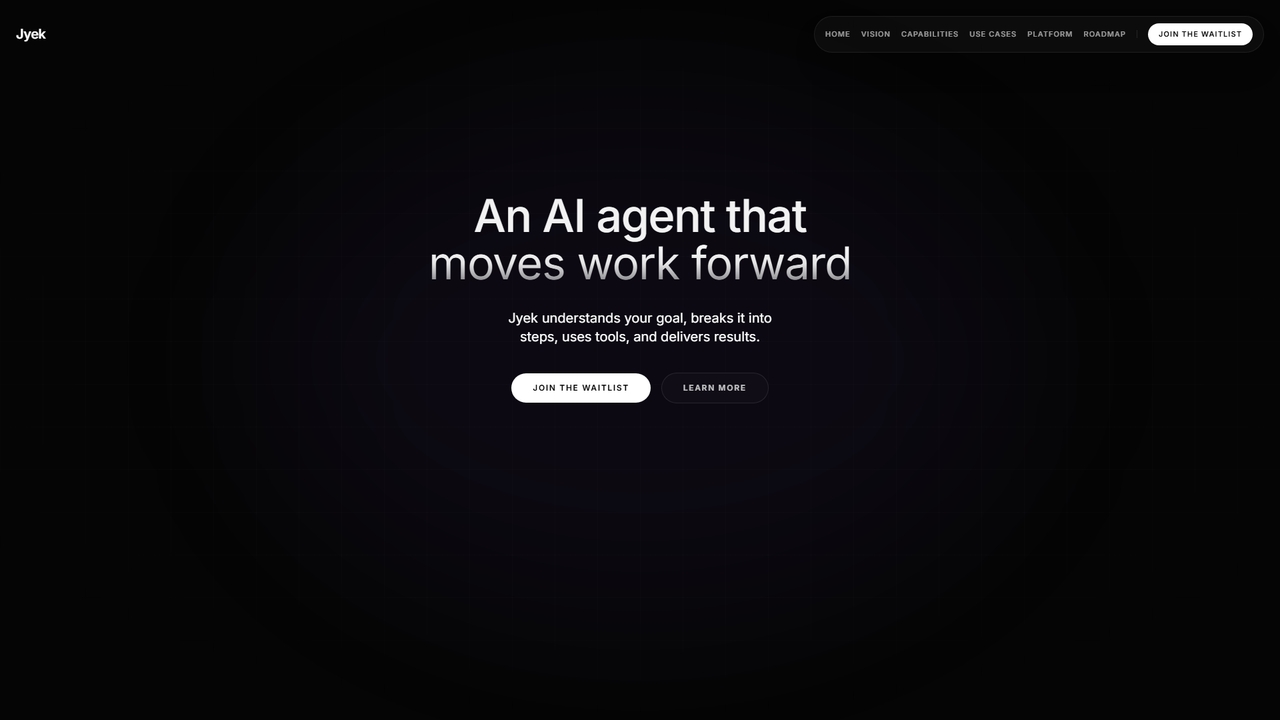
Jyek is an AI agent platform that understands objectives, creates execution plans, uses tools, and delivers verifiable results for complex, multi-step tasks.
AutomationVisits 4.9KFavorites 30Likes 22
Popular Analysis AI tools in Research include Video Highlight, StepFun, myaidrive, Flowith, thisorthis.ai, NailedIt, ChatOne, Nolimit, Chatsheet, and Soaring Titan, helping you work more efficiently.
Jyek is an AI agent platform that understands objectives, creates execution plans, uses tools, and delivers verifiable results for complex, multi-step tasks.
Automation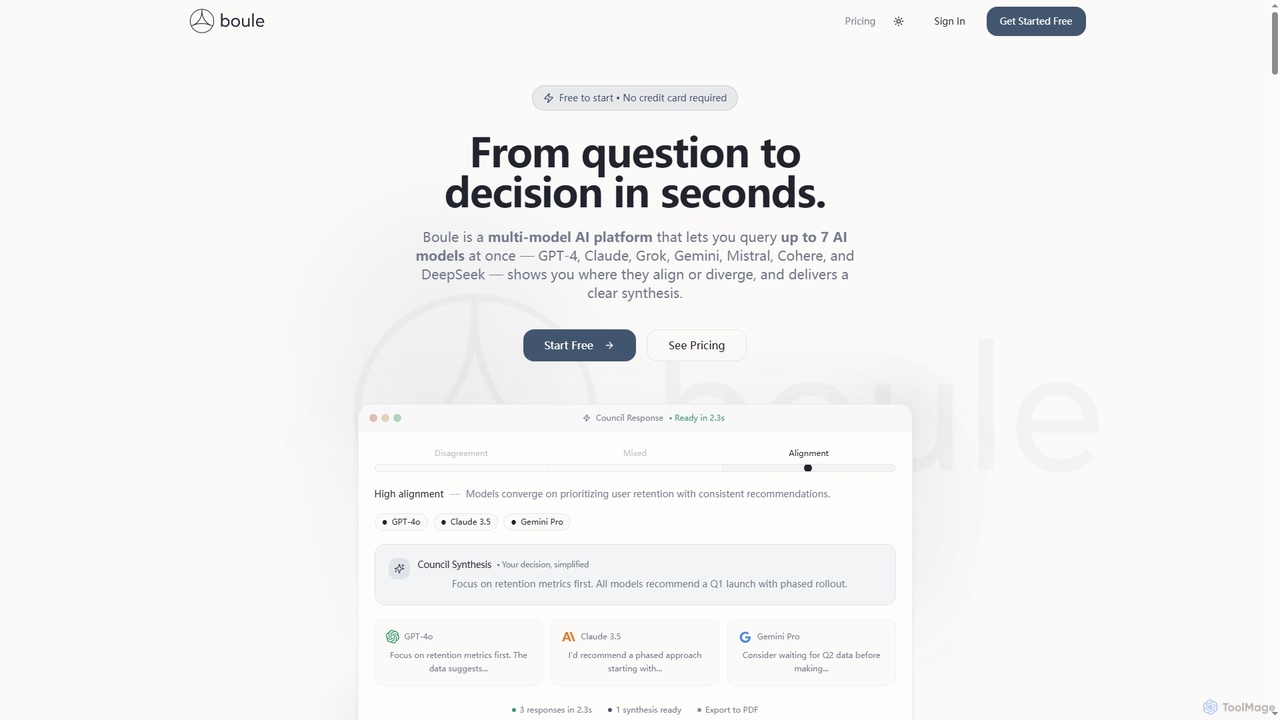
Boule is an innovative multi-model AI platform that queries up to seven leading AI models simultaneously, including GPT-4o, Claude 3.5, and Gemini Pro. It provides synthesized insights, highlights model alignment or divergence, and streamlines decision-making, offering clarity in seconds.
Large Language Models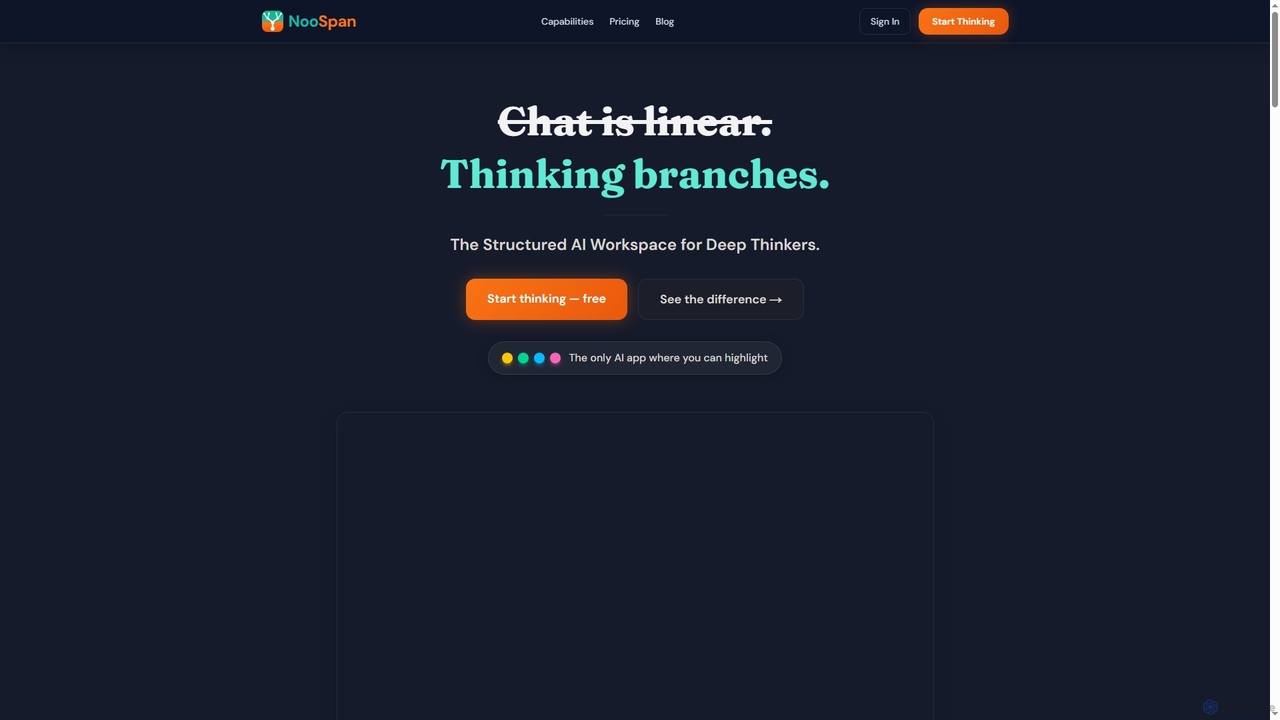
Noospan is an AI workspace designed for complex thinking, offering a non-linear, structured environment that overcomes the limitations of traditional chat interfaces. It enables deep exploration of ideas through branching conversations, visual tree views, and integrated knowledge management, powered by advanced AI models like GPT-5 and Gemini. Ideal for researchers, writers, and professionals who need precision and context in their AI interactions.
Coding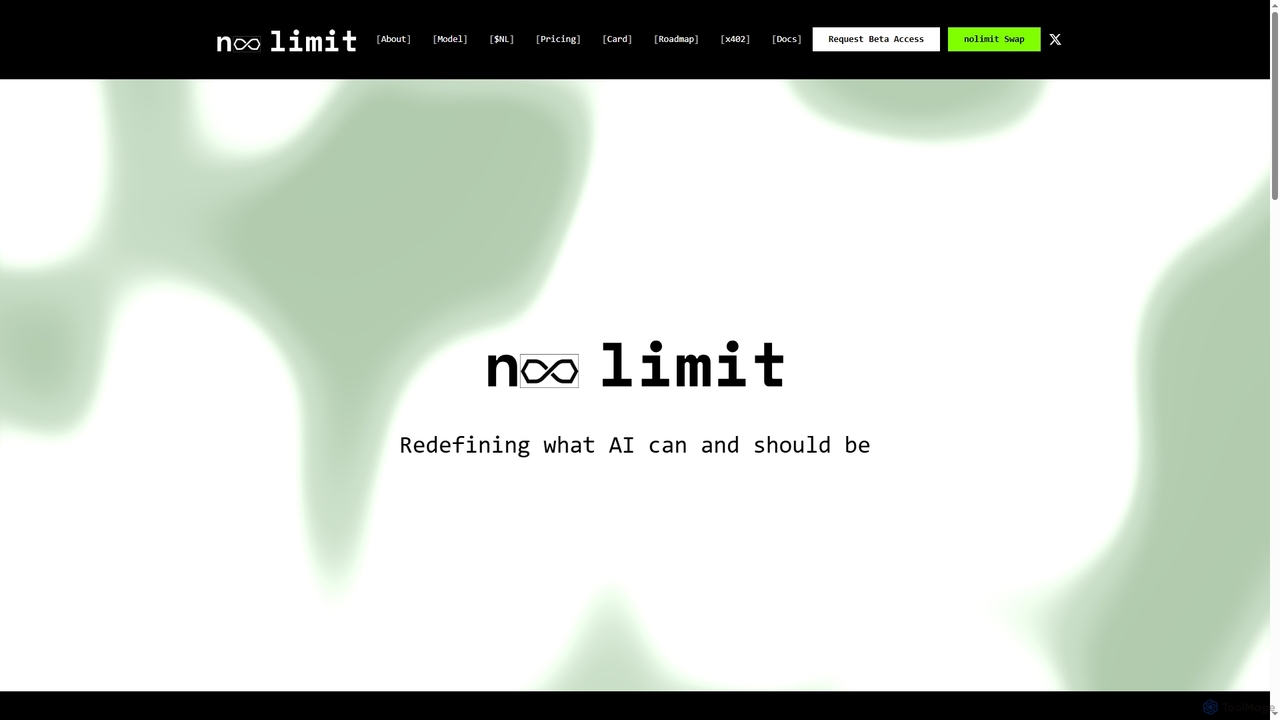
Nolimit is an advanced AI platform designed for unrestricted exploration, ultimate privacy, and enterprise-grade performance. It features a 13-billion parameter model with a 16K token context window, zero content filters, and a client-server architecture ensuring no data retention and anonymous processing. Ideal for sensitive research, creative content, and secure data handling.
General Purpose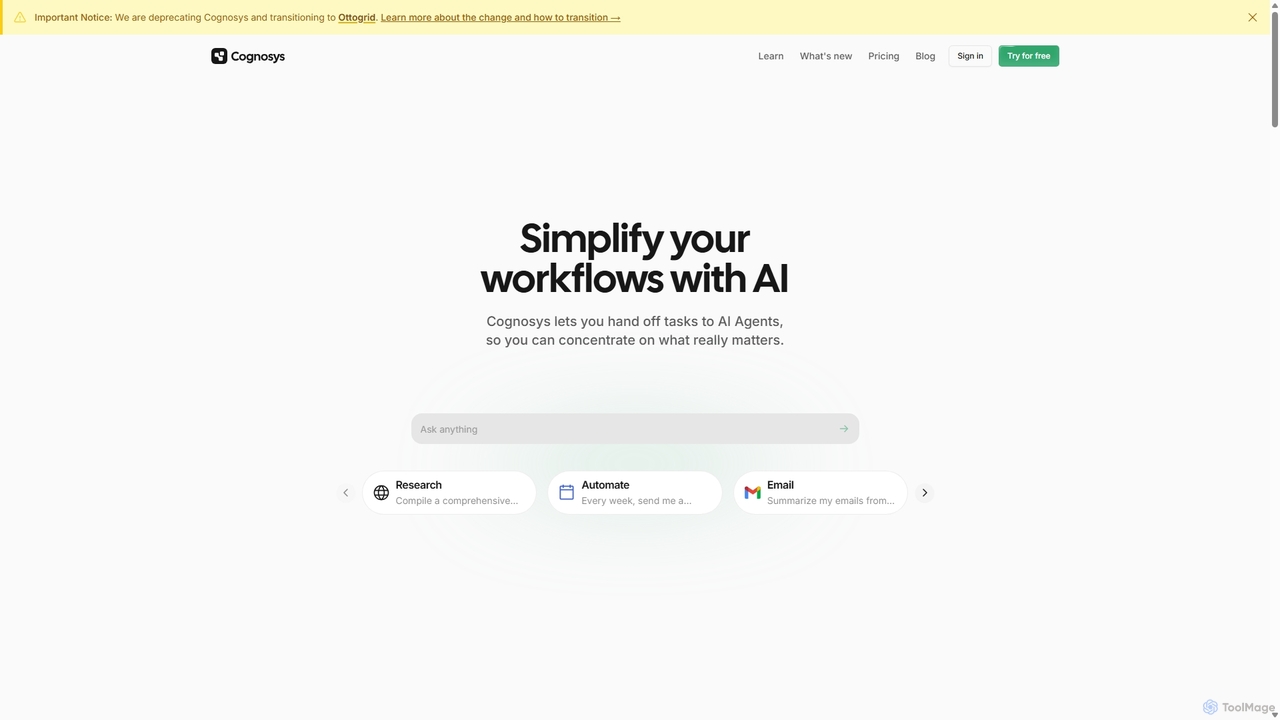
Cognosys is an AI-powered automation platform that simplifies complex workflows. By giving objectives to AI agents, users can automate tasks like in-depth research, email management, and data analysis. It integrates with popular apps like Google Suite and Notion to act as a central hub for productivity, allowing you to focus on strategic work while AI handles the execution.
Email Marketing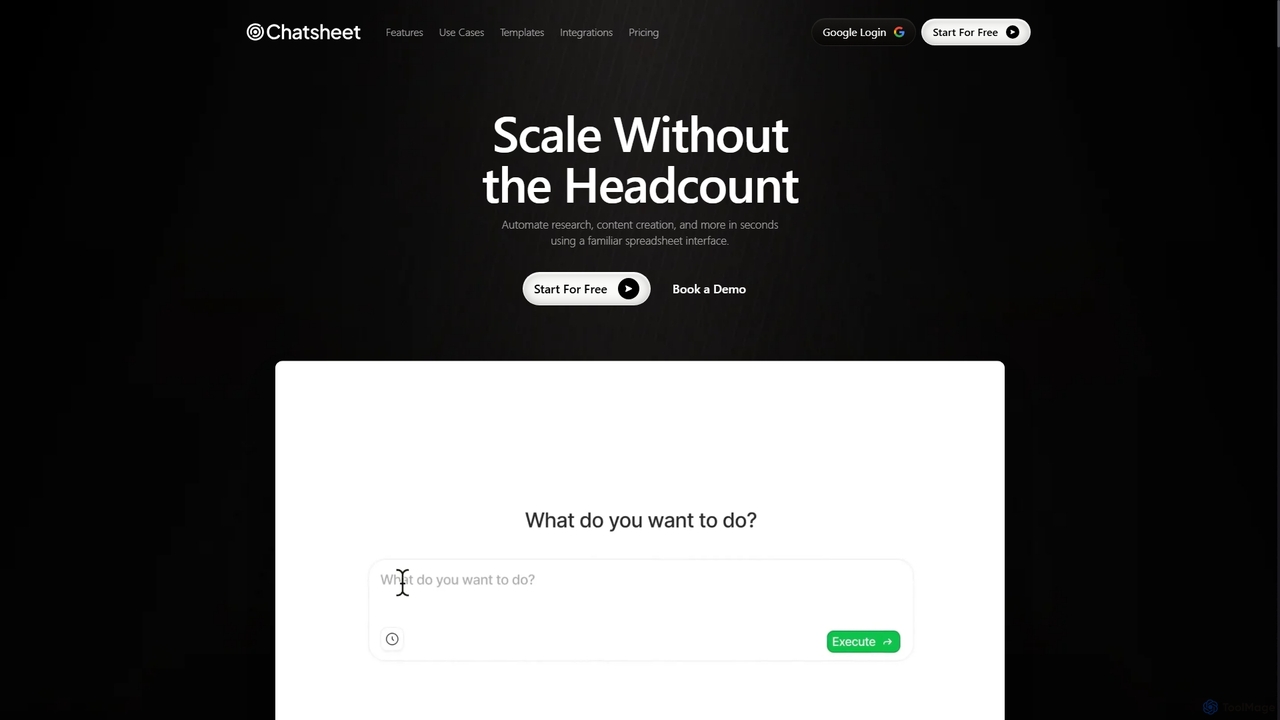
Chatsheet is an AI-powered spreadsheet platform that automates research, content creation, and data analysis. Using a familiar spreadsheet interface, users can build complex, no-code workflows to process documents, scrape websites, and generate personalized content at scale, effectively turning each cell into a smart AI agent.
Spreadsheets
fyer.news is an AI-powered news aggregator and summarization platform. It delivers personalized, concise, and unbiased news updates from thousands of sources, helping users stay informed efficiently and cut through information overload.
Aggregator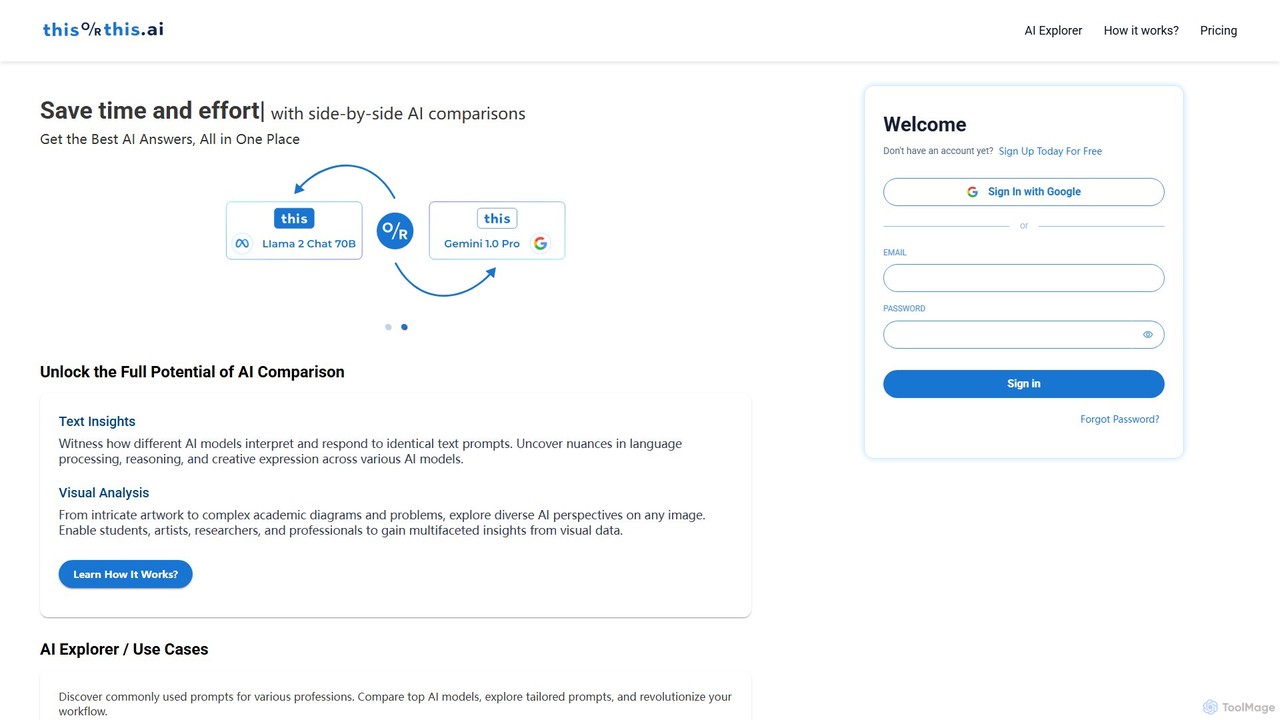
thisorthis.ai is a powerful platform for comparing generative AI models side-by-side. Submit a single prompt (text or image) to receive and evaluate outputs from up to 6 different models like GPT-4o, Gemini 1.5, and Llama 3 simultaneously. It features a flexible pay-as-you-go model, eliminating multiple subscriptions. It's ideal for professionals and researchers seeking the highest quality AI-generated response for any task, optimizing both efficiency and output quality.
Model Comparison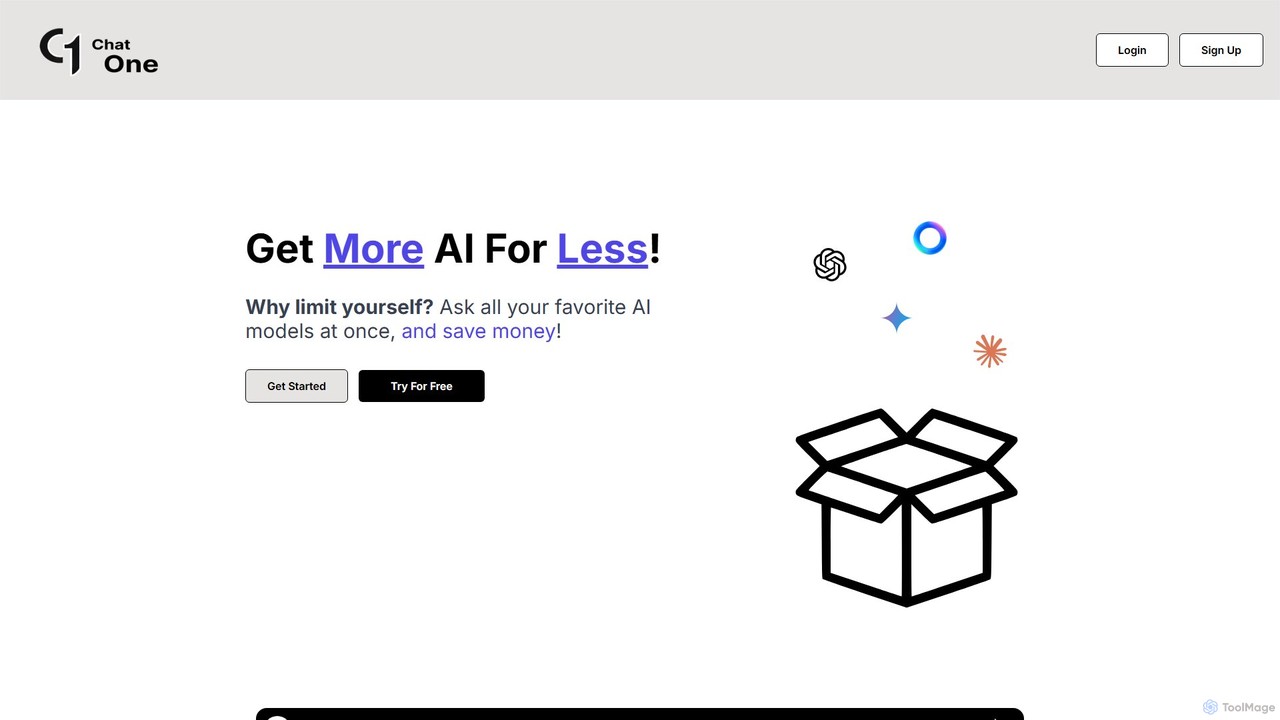
ChatOne is an AI chatbot aggregator that allows you to query multiple leading AI models like ChatGPT, Claude 3.5 Sonnet, and Gemini 1.5 Pro simultaneously. Compare responses in a single interface to get the best results, save time, and reduce costs.
Code Assistant
Mindcorp Cognition is a professional-grade AI platform for business strategy and consulting. It utilizes over 10,000 AI-powered virtual teammates, called Artificial Cognitive Experts (ACEs), to assist with complex research, analysis, strategic planning, and project management. It's designed to enhance collaboration, automate workflows, and deliver superior business outcomes by going beyond the capabilities of standard AI chatbots.
Strategy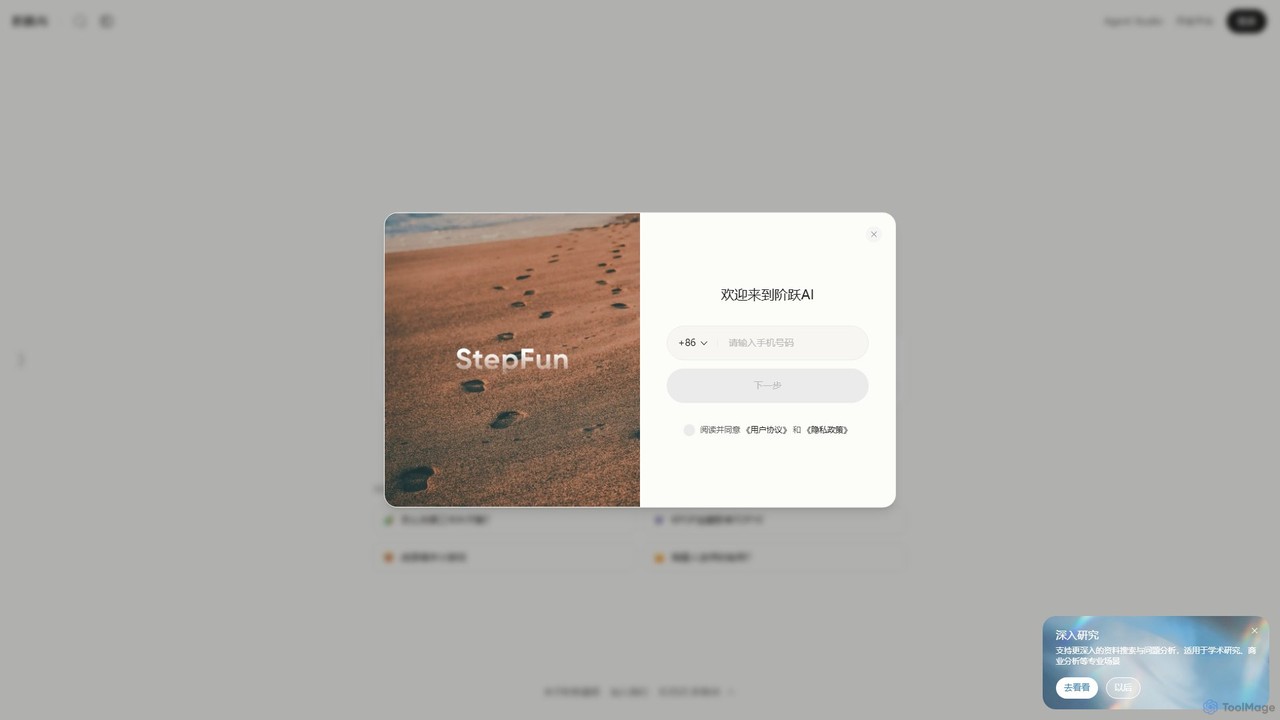
StepFun (阶跃AI) is a comprehensive, multimodal AI platform by StepStar. It integrates advanced conversational AI, deep research capabilities, and high-fidelity content generation for text, images, audio, and video, all powered by a suite of proprietary models.
Generative Ai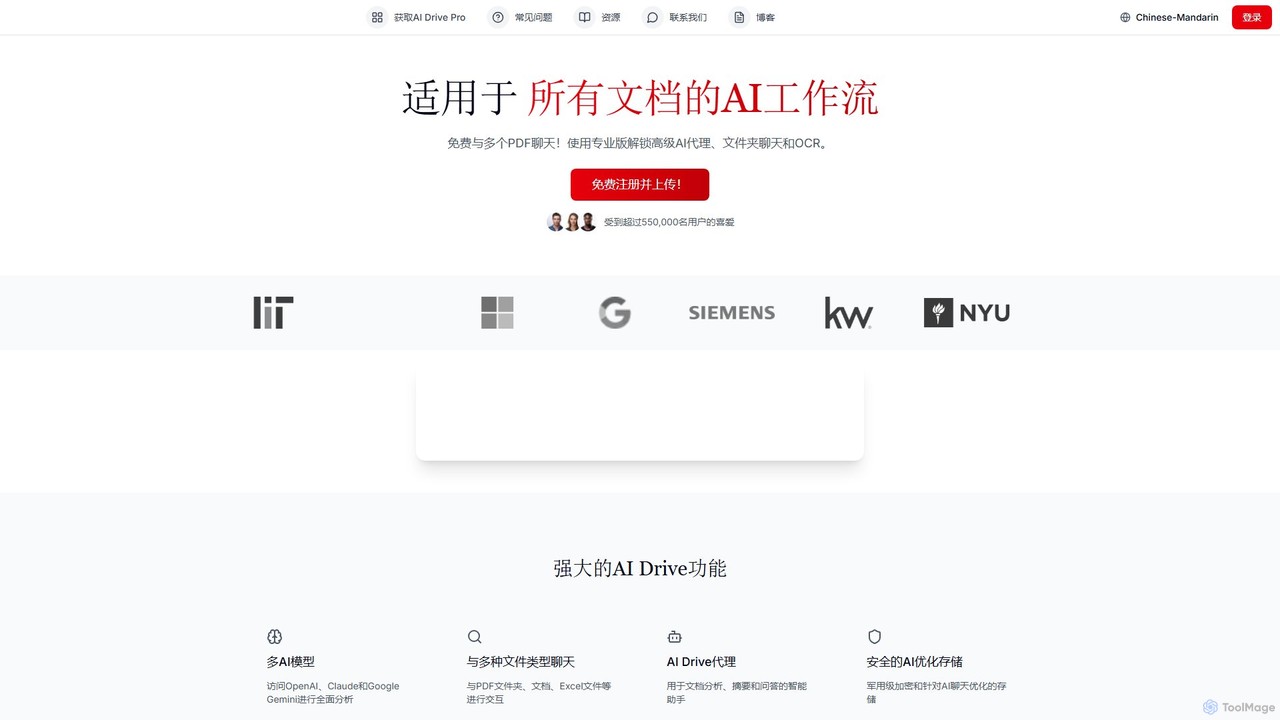
myaidrive is an AI-powered cloud storage platform that allows you to summarize, chat with, and organize your files. It integrates multiple AI models like GPT, Claude, and Gemini to analyze PDFs, documents, and spreadsheets. Features include secure storage, advanced OCR, and personalized AI memory for enhanced productivity.
Cloud Storage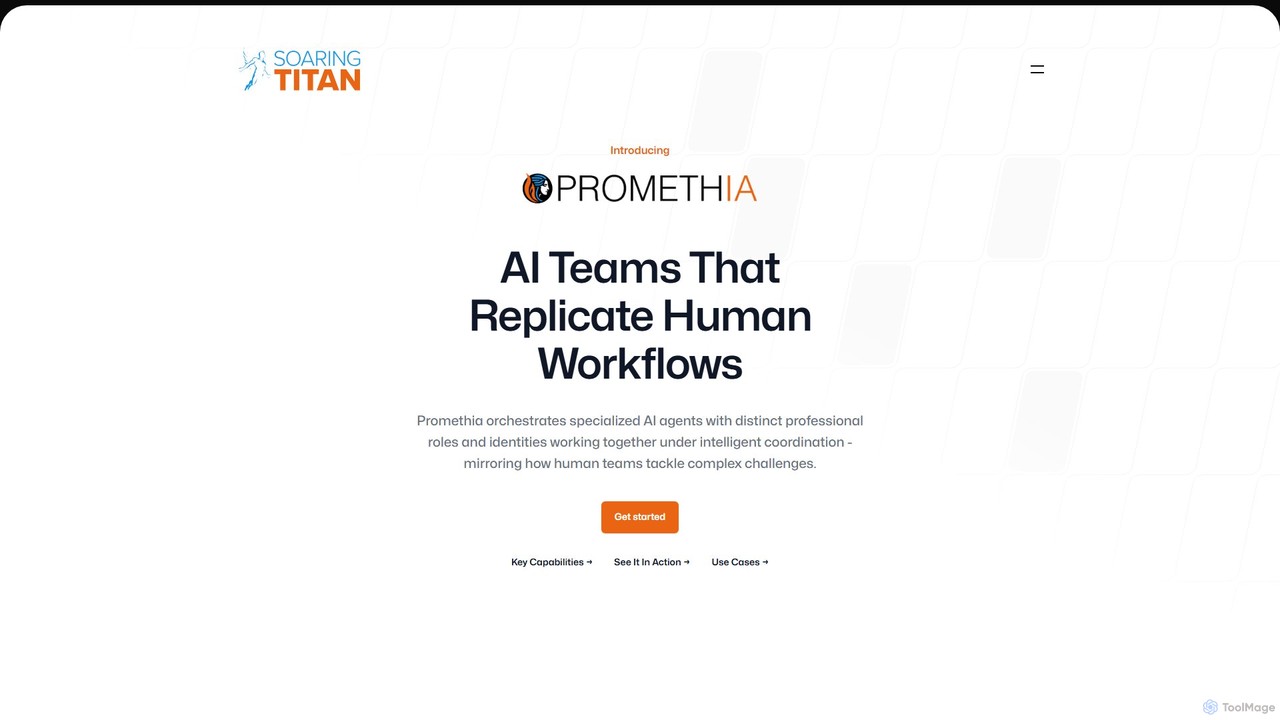
Soaring Titan introduces Promethia, an advanced AI agent orchestration platform that assembles specialized AI teams to replicate human workflows. It tackles complex business challenges by coordinating agents with distinct roles, using a sophisticated 6-layer architecture. This platform automates tasks like market research, strategic planning, and content creation, delivering polished, enterprise-ready documents instead of raw outputs. It's designed for businesses seeking to leverage collaborative AI for in-depth analysis and decision-making.
Strategic Planning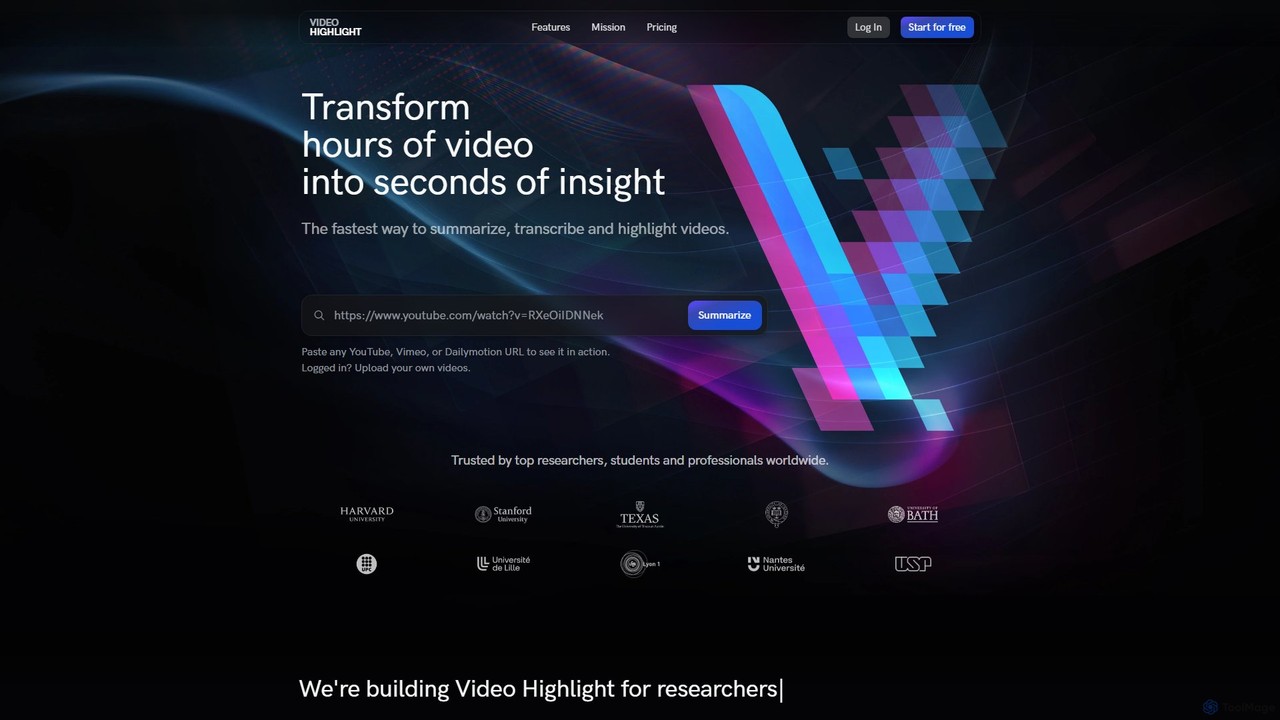
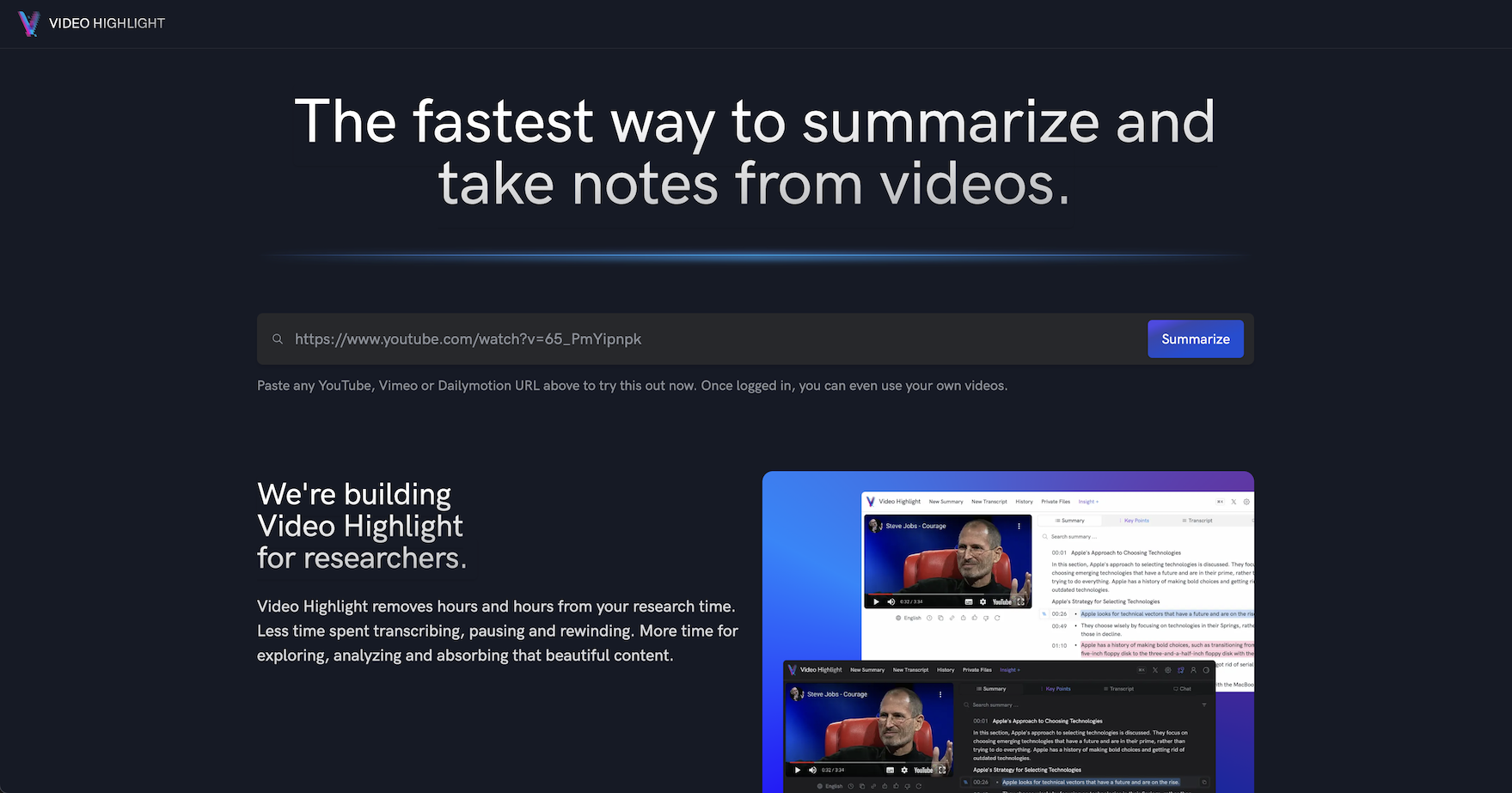
Video Highlight is an AI-powered tool that transforms long videos into concise, actionable insights. It instantly generates timestamped summaries, accurate transcripts, and allows interactive chat with video content. Ideal for researchers, students, and content creators looking to save time and enhance productivity.
Note Taking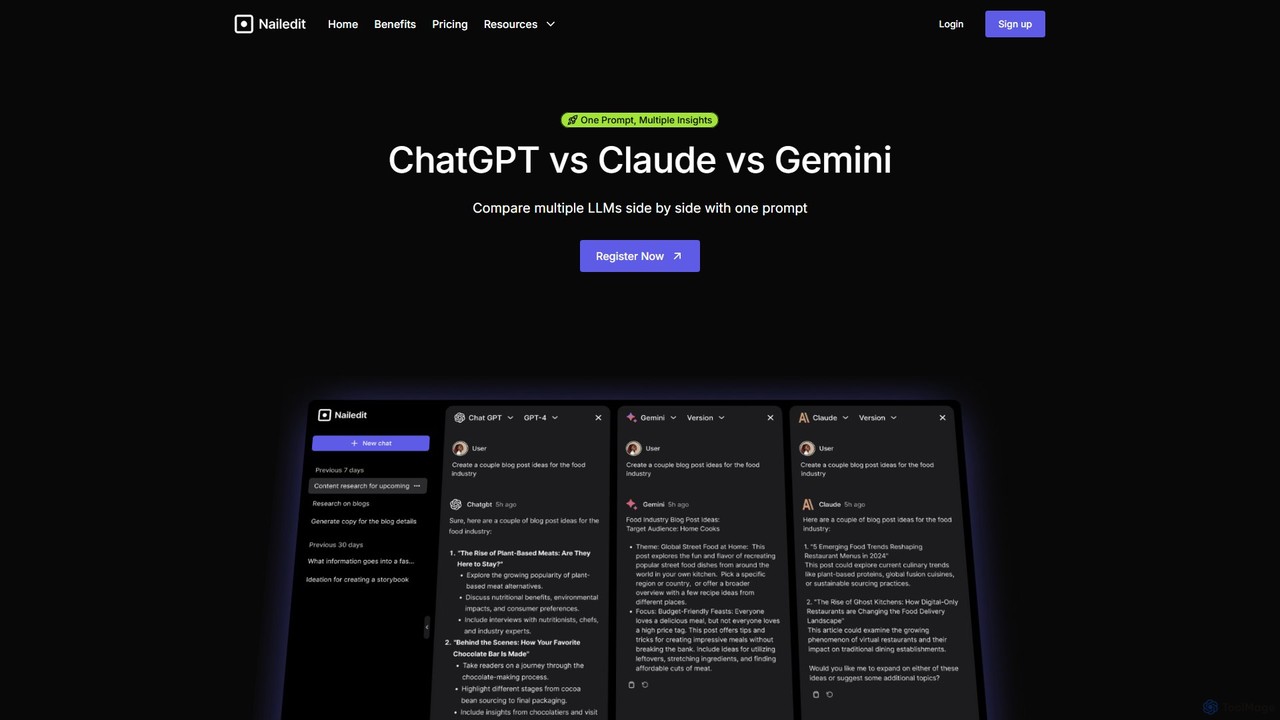
NailedIt is an AI productivity platform that allows you to instantly compare responses from leading LLMs like ChatGPT, Claude, and Gemini with a single prompt. Streamline your workflow, enhance content quality, and make informed decisions by viewing multiple AI outputs side-by-side in a unified interface.
Testing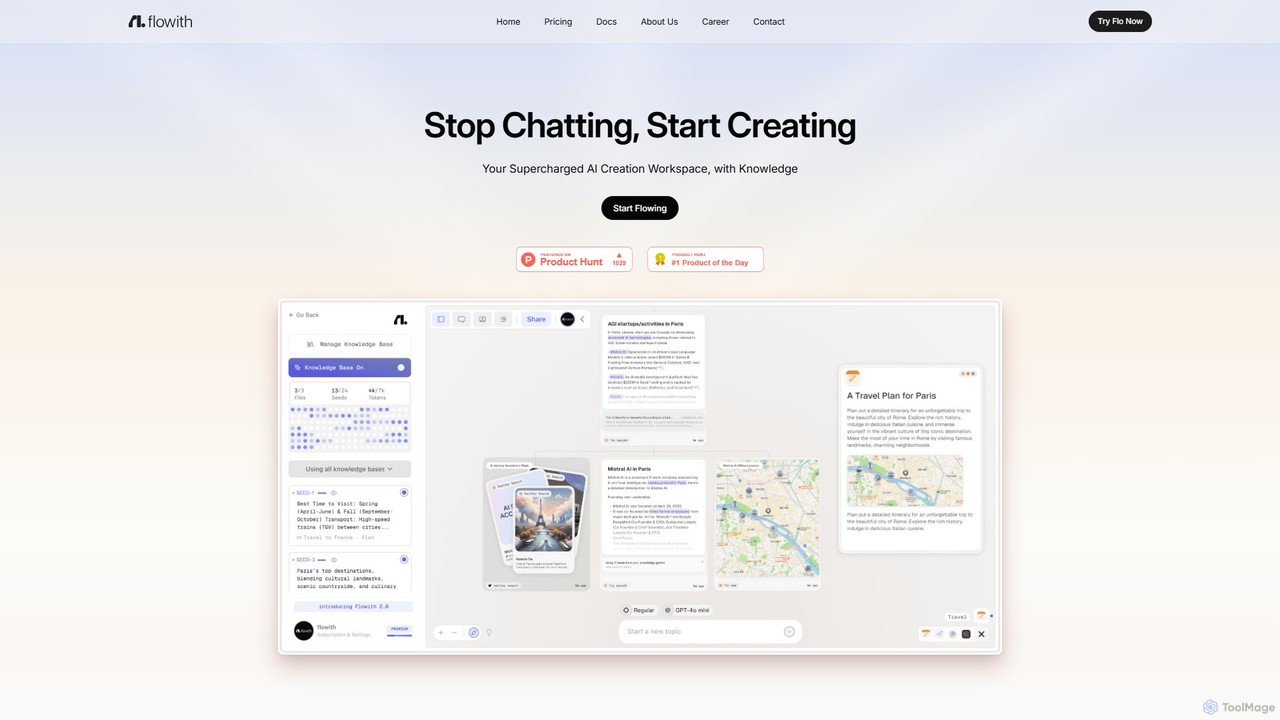
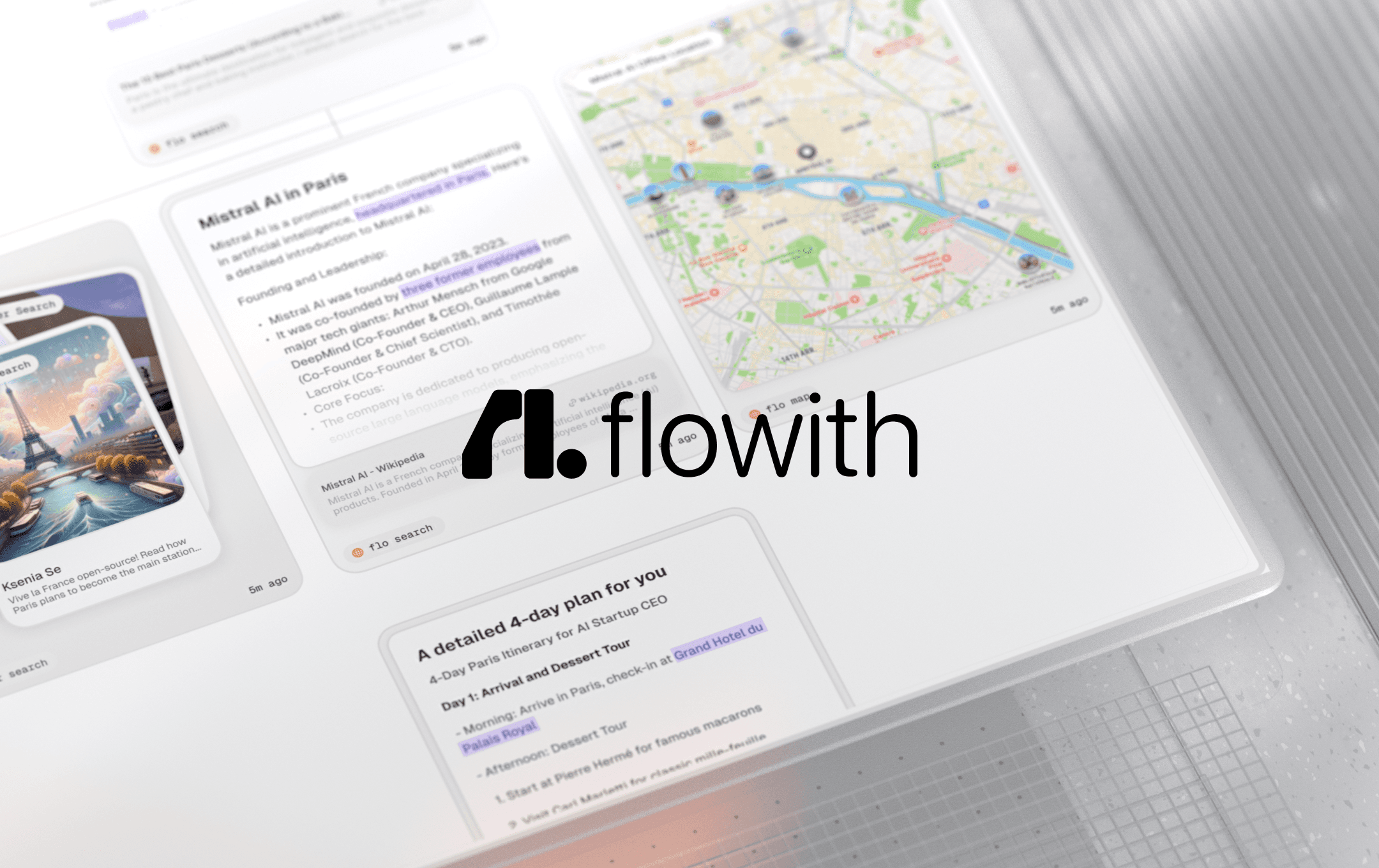
Flowith is a supercharged AI creation workspace that replaces traditional chatbots with an infinite visual canvas. Powered by Agent Neo, an autonomous AI agent, it handles complex, multi-step tasks, research, and content creation without limits on context or tools. It's designed for deep thinking, seamless collaboration, and enhanced productivity.
Website BuilderAI Analysis tools are a class of software that use machine learning and statistical models to uncover insights from complex data. They automate the process of identifying patterns, correlations, and predictive signals within large datasets, going beyond simple data reporting. This enables businesses and researchers to make informed, data-driven decisions by understanding not just what happened, but why it happened and what is likely to happen next. These tools are particularly effective at processing both structured and unstructured data, such as text, images, and user behavior logs.
These tools are widely used by data analysts, market researchers, financial experts, and business strategists. Common applications include forecasting sales trends, analyzing customer feedback for sentiment, detecting fraudulent transactions, and optimizing supply chain operations within the broader field of research and business intelligence.
When selecting a tool, consider the types of data sources it supports (e.g., databases, APIs, text files). Evaluate its range of analytical models and whether they can be customized. Also, assess the tool's ease of use for non-technical users versus its power for expert data scientists, and check its integration capabilities with your existing software stack.
A product manager for a software company uses an AI analysis tool to process thousands of user reviews from app stores, support tickets, and social media. The tool's NLP capabilities automatically categorize feedback into themes like 'feature requests,' 'bugs,' or 'UI/UX issues' and performs sentiment analysis on each comment. This provides a clear, data-backed overview of user pain points and desires, allowing the product team to prioritize the development roadmap effectively and focus on improvements that will have the most impact on user satisfaction.
A data analyst at a SaaS company leverages an AI analysis tool to build a predictive churn model. The tool ingests user engagement data, such as login frequency, feature usage, and support interaction history. By identifying subtle patterns in behavior that correlate with subscription cancellations, the model can assign a 'churn risk score' to each customer. This allows the customer success team to proactively reach out to at-risk users with targeted support or special offers, significantly reducing overall churn rate.
A compliance officer at a financial institution employs an AI analysis platform to monitor millions of daily transactions for fraudulent activity. The system establishes a baseline of normal transaction patterns for each customer and uses anomaly detection algorithms to flag deviations in real-time. When a transaction is flagged as suspicious (e.g., unusual location, amount, or frequency), it triggers an immediate alert for human review. This automated process helps prevent financial losses and enhances security for customers.
A digital marketing team uses an AI analysis tool to understand the effectiveness of their advertising campaigns. The tool integrates data from various channels like Google Ads, Facebook, and email marketing platforms. It analyzes conversion paths, attributes sales to specific touchpoints, and identifies the characteristics of high-value customer segments. These insights help marketers reallocate their budget to the most profitable channels and tailor ad creatives to the audiences most likely to convert, maximizing return on investment.
A biomedical researcher uses an AI analysis tool to sift through vast genomic datasets and clinical trial results. The tool helps identify complex correlations between specific genetic markers and disease susceptibility that would be nearly impossible to find manually. By automating the data mining process, the researcher can quickly formulate new hypotheses for further investigation. This accelerates the pace of discovery and contributes to the development of new treatments and diagnostic methods.
A logistics manager for a retail company utilizes an AI analysis tool to improve inventory management. The tool analyzes historical sales data, seasonality, promotional events, and even external factors like weather forecasts and economic indicators. It generates highly accurate demand forecasts for thousands of products across different locations. This enables the company to optimize stock levels, reduce storage costs, minimize stockouts, and ensure products are available when and where customers want them.
AI Analysis tools are software applications that use artificial intelligence, particularly machine learning and NLP, to automatically examine data and extract meaningful insights. Unlike traditional spreadsheets, they can process vast and complex datasets, identify hidden patterns, predict future trends, and interpret unstructured information like text. They are designed to automate the work of data scientists and empower business users to make data-driven decisions.
To choose the right tool, first assess your specific needs. Consider these factors:
The primary difference lies in their focus. Traditional BI tools are primarily descriptive; they help you understand past performance by summarizing historical data ('what happened'). AI Analysis tools are both diagnostic and predictive; they aim to understand 'why it happened' and forecast 'what will happen next.' AI tools can also handle unstructured data (text, images) and automatically surface insights, whereas BI tools typically rely on structured data and require manual exploration by an analyst.
Key features often include:
A wide range of professionals can benefit. Data analysts and scientists use them for deep, complex investigations. Marketing managers use them to understand customer behavior and campaign ROI. Financial analysts leverage them for fraud detection and market forecasting. Product managers analyze user feedback to guide development, and operations managers use them to optimize supply chains and internal processes. Essentially, anyone whose role involves making strategic decisions based on data can benefit.