ToolMage
Sign in

Best 46 Privacy AI tools for Security

Popular Privacy AI tools in Security include DuckDuckGo, Brave, Opera, Kaspersky, Lenso.ai, Neeva, Multilogin, AnythingLLM, DoNotPay, and Fellow, helping you work more efficiently.

Fellow
Freemium

Fellow

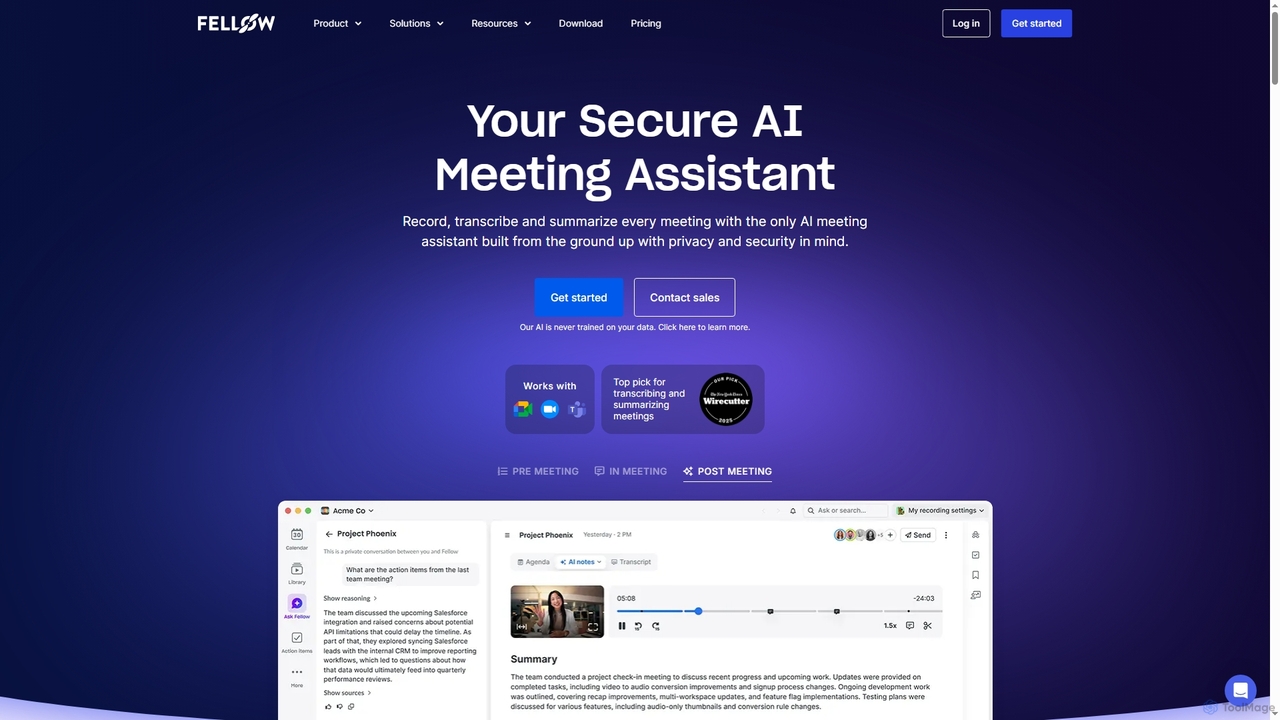
Fellow is a secure AI meeting assistant designed for teams and enterprises. It automatically records, transcribes, and summarizes meetings from Zoom, Google Meet, and Microsoft Teams. With a strong focus on privacy, Fellow ensures your data is never used for training AI models. It features an AI chatbot for querying meeting insights, CRM automation, and deep integrations with over 50 tools, centralizing your entire meeting workflow.

Collaboration
Visits 192.7KFavorites 90Likes 86
Questa AI
Freemium

Questa AI

Questa AI is a secure AI agent for financial analysis and reporting. It anonymizes sensitive data locally before analysis, allowing users to leverage any LLM (like GPT or Claude) for insights without compromising privacy. It's designed for finance, sales, and strategy professionals to automate report generation and enhance decision-making.

Business Intelligence
Visits 7.2KFavorites 107Likes 107
GoMask
Freemium

GoMask

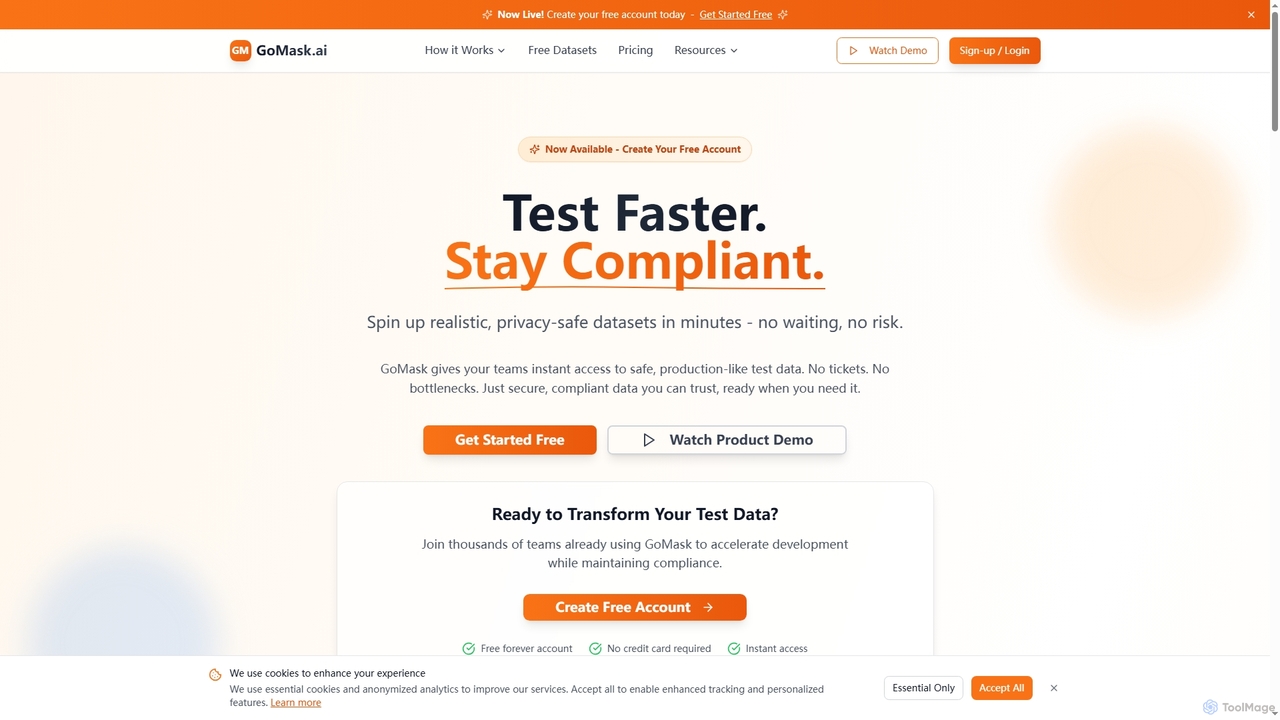
GoMask is an AI-powered platform that accelerates software development by providing instant, compliant, and realistic test data through advanced data masking and synthetic data generation. It eliminates bottlenecks, ensures regulatory compliance, and integrates seamlessly into modern CI/CD pipelines.

Data Masking
Visits 13.1KFavorites 149Likes 166
Neosync
Freemium

Neosync

Neosync is an open-source platform for data anonymization and synthetic data generation. It helps developers and data scientists create safe, privacy-compliant, and realistic datasets for testing, development, and AI model training, ensuring referential integrity across databases.

Data Generation
Visits 5.4KFavorites 104Likes 113
GPT4All
Free

GPT4All

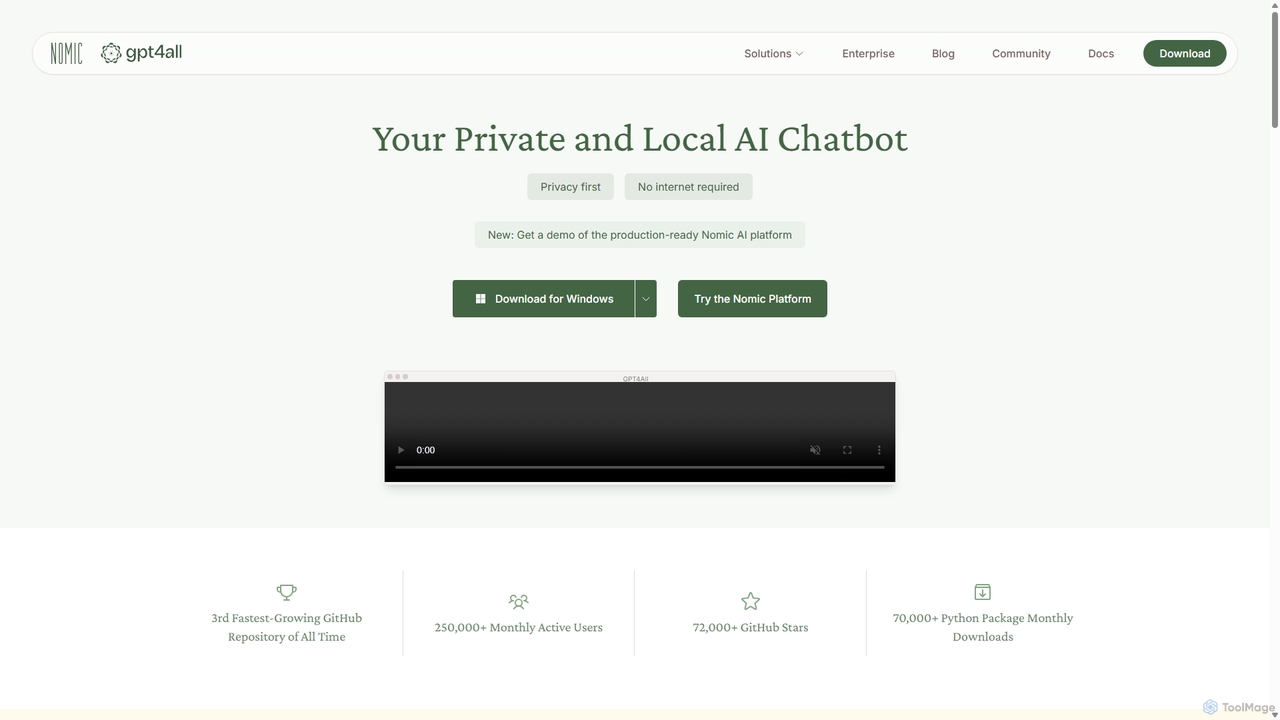
GPT4All is a free, open-source, and privacy-focused AI chatbot that runs powerful language models locally on your desktop. It works offline, ensuring your data never leaves your device, and allows you to chat with your own documents securely.

Machine Learning
Visits 72.9KFavorites 134Likes 140
Quetta
Free

Quetta

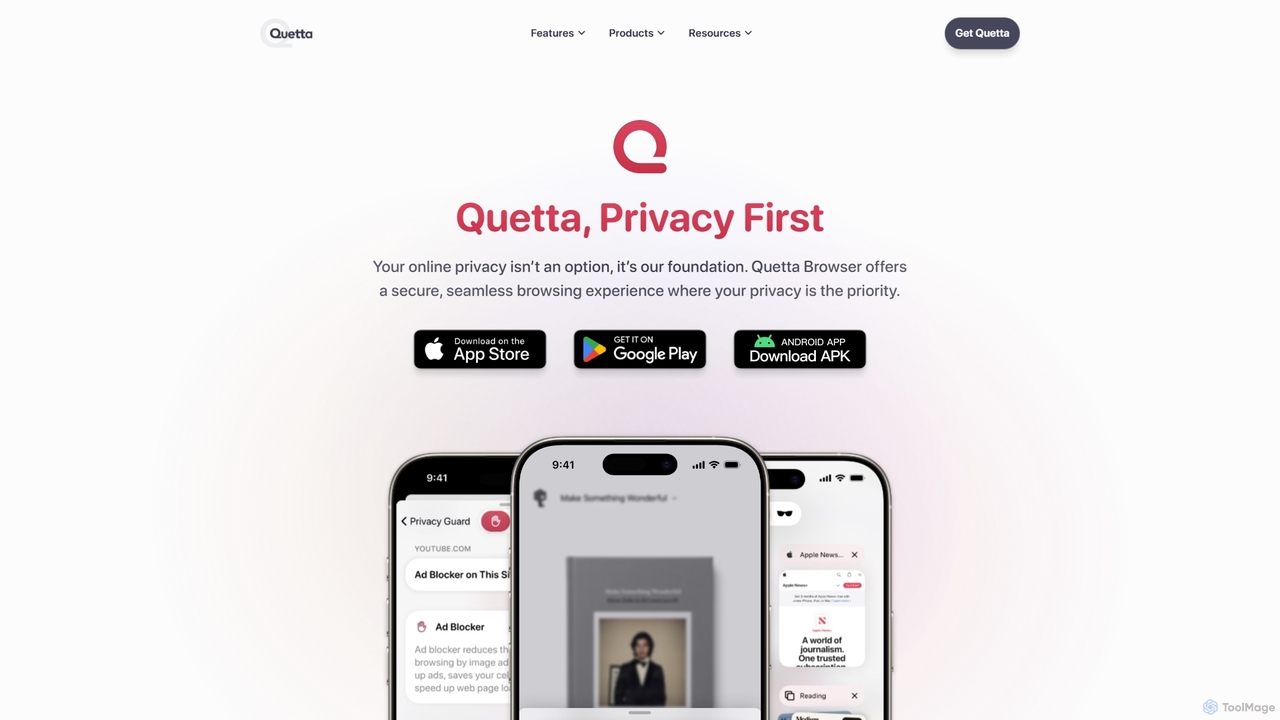
Quetta is a private mobile browser featuring a powerful AI-powered ad blocker, full extension support, and advanced privacy protection. It offers a fast, clean, and secure browsing experience with unique utilities like a video downloader, offline playlist, and magazine-style reader mode, all within a minimalist, user-friendly interface.

Browser
Visits 137.2KFavorites 125Likes 104
Ulaa Browser
Freemium

Ulaa Browser

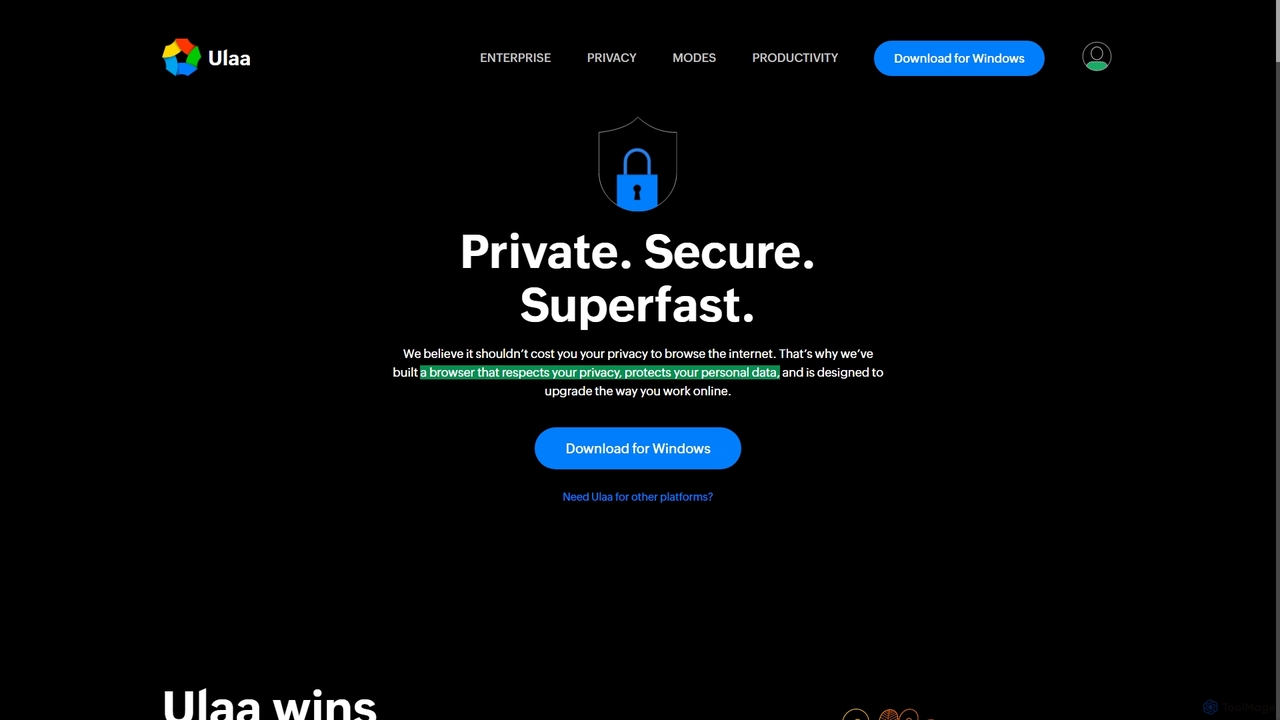
Ulaa Browser, by Zoho, is a privacy-first, Chromium-based web browser designed for individuals and enterprises. It champions security with a built-in ad blocker, phishing protection, and unique browsing "Modes" to isolate work, personal, and other contexts. For businesses, Ulaa Enterprise offers advanced data loss prevention, centralized management, and AI-powered intelligence by Zia to create a secure and productive browsing environment.

Enterprise Software
Visits 133.5KFavorites 104Likes 102
PrivacyDoc
Free

PrivacyDoc

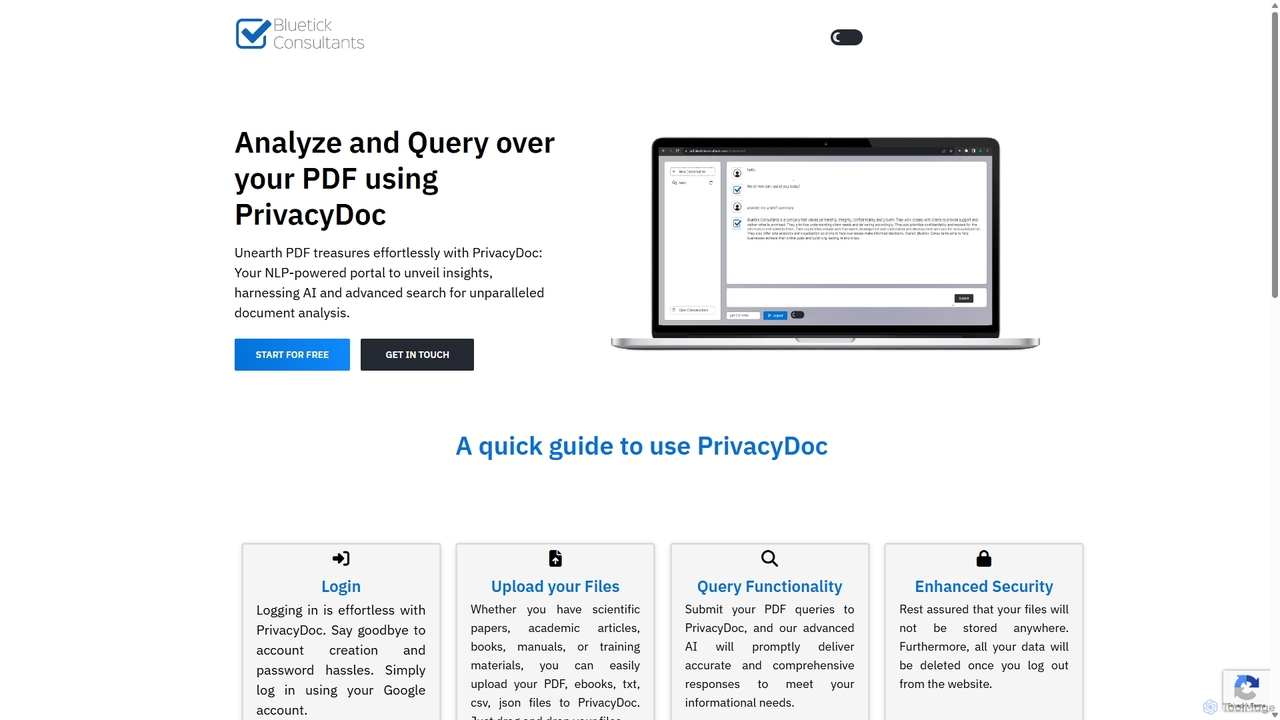
PrivacyDoc is a free, AI-powered tool for securely analyzing and querying PDF files, ebooks, and other documents. It uses advanced NLP to extract insights, summarize text, and answer your questions without storing your files, ensuring complete data privacy. Ideal for students, researchers, and professionals handling sensitive information.

Research
Visits 5.4KFavorites 114Likes 123
ARC
Freemium

ARC

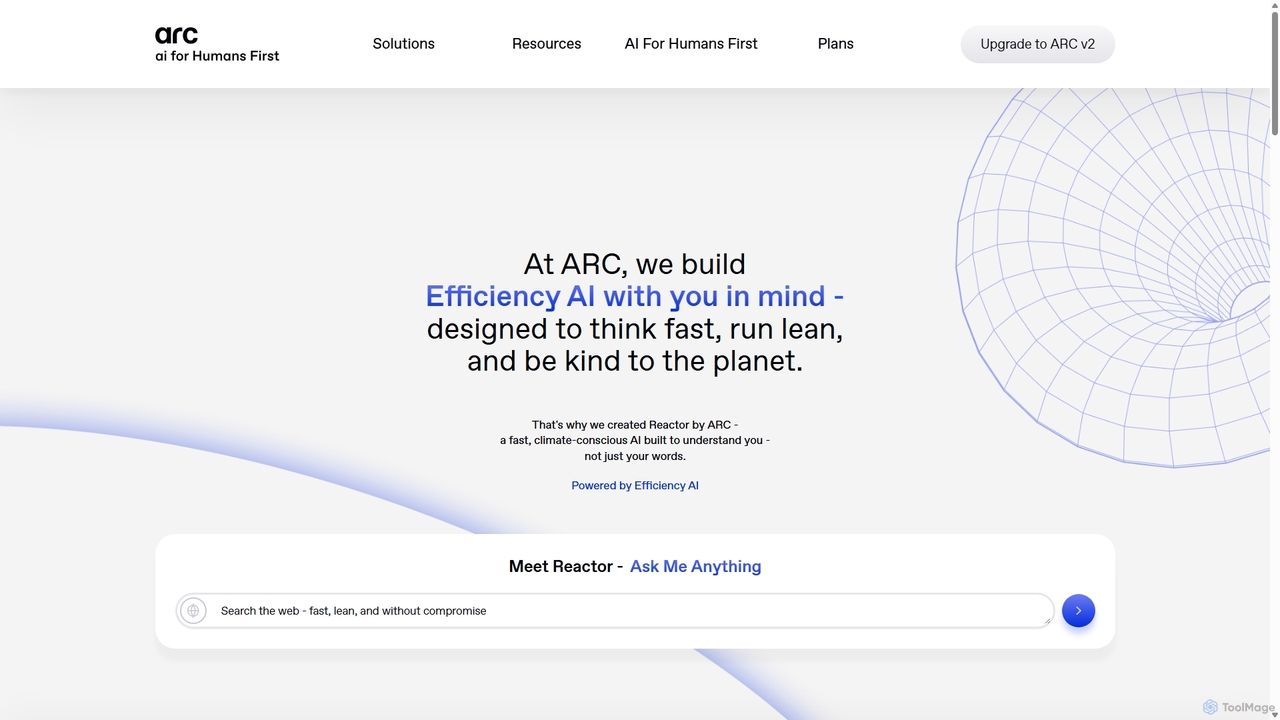
ARC is an "Efficiency AI" ecosystem focused on speed, privacy, and sustainability. It features Reactor, a fast AI assistant for search and creation; Matrix, an encryption shield for enterprise AI workflows; and Protocol, a real-time crypto auditing tool. ARC delivers high-performance AI with a minimal environmental footprint, prioritizing user data control and security.

Api
Visits 13.7KFavorites 110Likes 133
Lenso.ai
Freemium

Lenso.ai

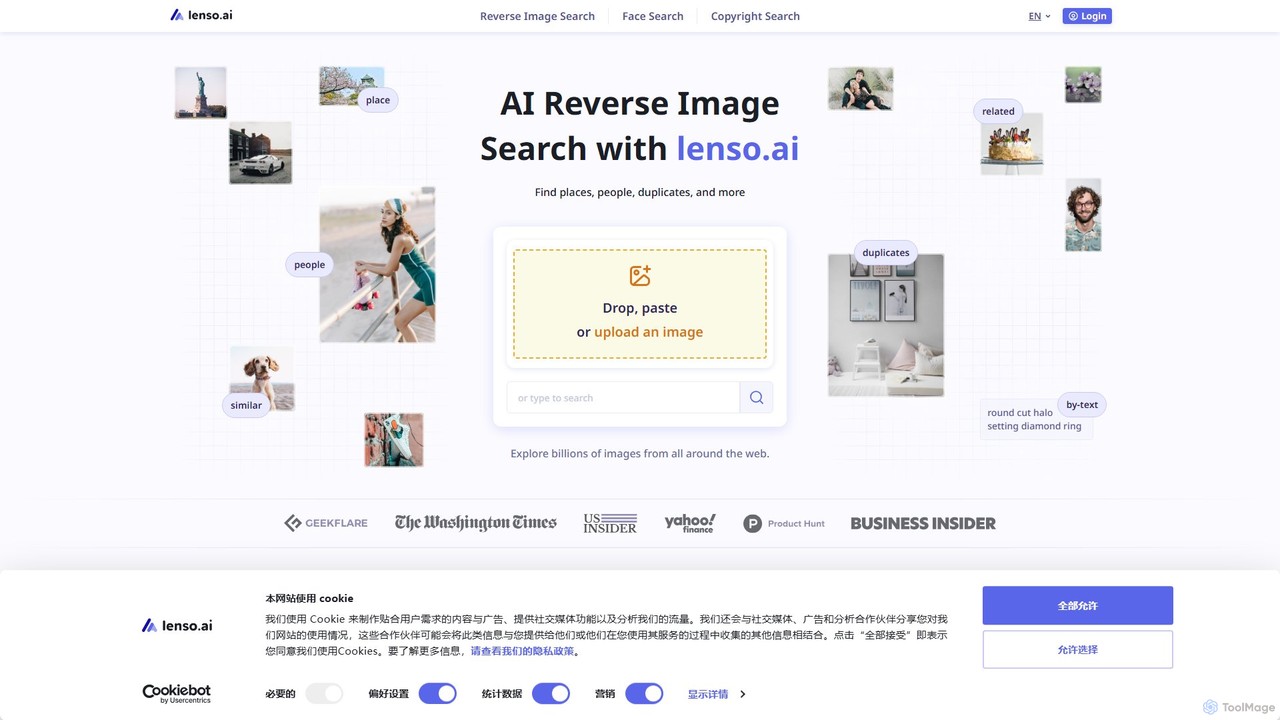
Lenso.ai is a powerful AI-driven reverse image search engine. It allows users to find places, people, duplicates, and related images by simply uploading a picture. Featuring advanced facial recognition, copyright tracking, and a developer API, it serves content creators, marketers, and individuals concerned with their digital footprint.

Search Engine
Visits 1.6MFavorites 142Likes 147
Simpliterms
Paid

Simpliterms

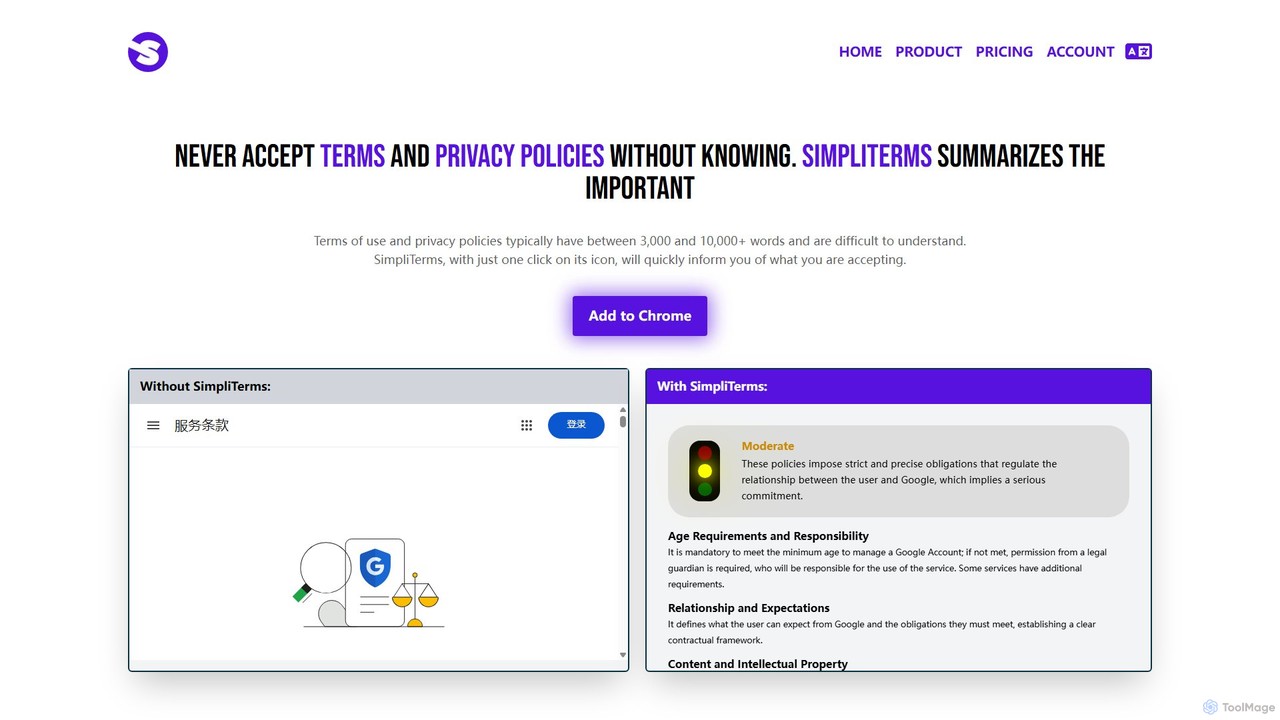
Simpliterms is an AI-powered Chrome extension that instantly summarizes complex terms of service and privacy policies. It helps you understand what you're agreeing to online, saving you time, protecting your privacy, and preventing potential legal issues with just one click.

Chrome Extensions
Visits 5.5KFavorites 101Likes 90
DoNotPay
Paid

DoNotPay

DoNotPay is the world's first robot lawyer, using AI to help you fight corporations, beat bureaucracy, and protect your rights. It automates complex tasks like appealing parking tickets, canceling subscriptions, claiming refunds, and finding hidden money, acting as your personal consumer champion.

Personal Finance
Visits 244.2KFavorites 110Likes 112
Genlogin
Freemium

Genlogin

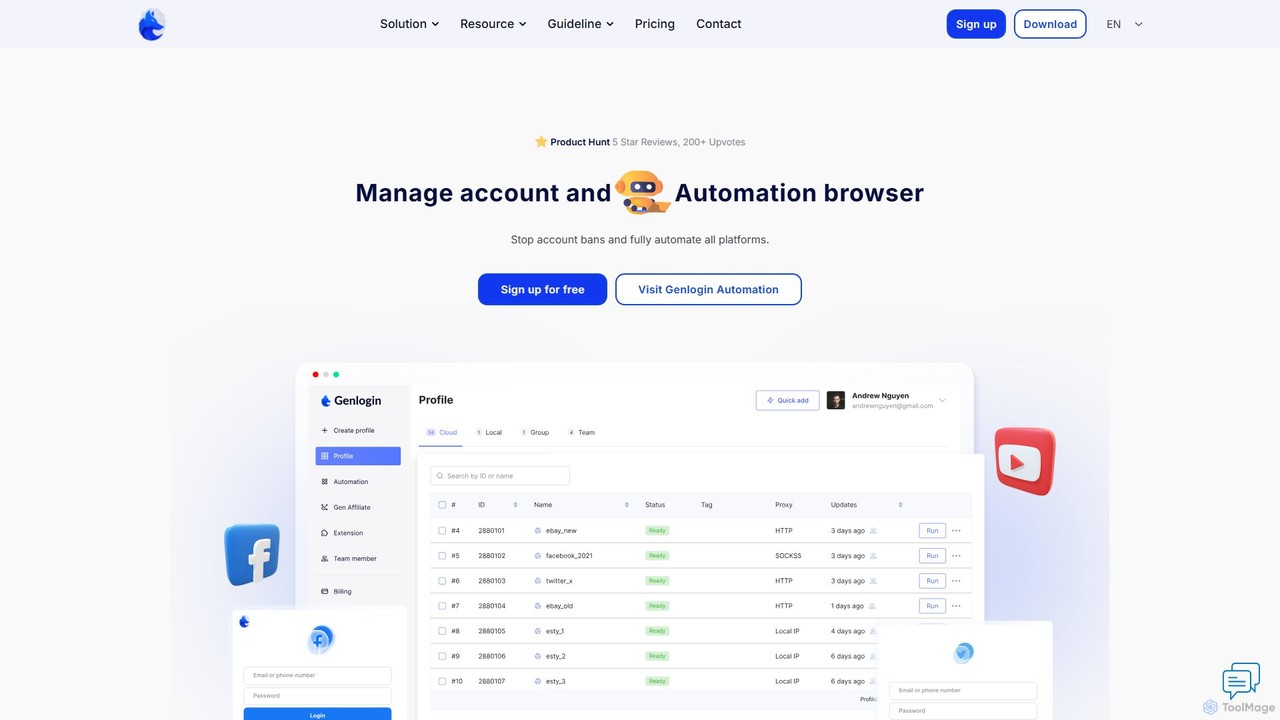
Genlogin is an advanced antidetect browser designed for managing multiple online accounts securely and efficiently. It prevents account bans by creating unique, real-data-based browser fingerprints for each profile. With features like no-code automation, real-time action synchronization, and a built-in proxy service, Genlogin is ideal for e-commerce, social media marketing, data scraping, and affiliate marketing, empowering users to scale their online operations.

Web Scraping
Visits 19.9KFavorites 106Likes 115
FaceSearchAI
Freemium

FaceSearchAI

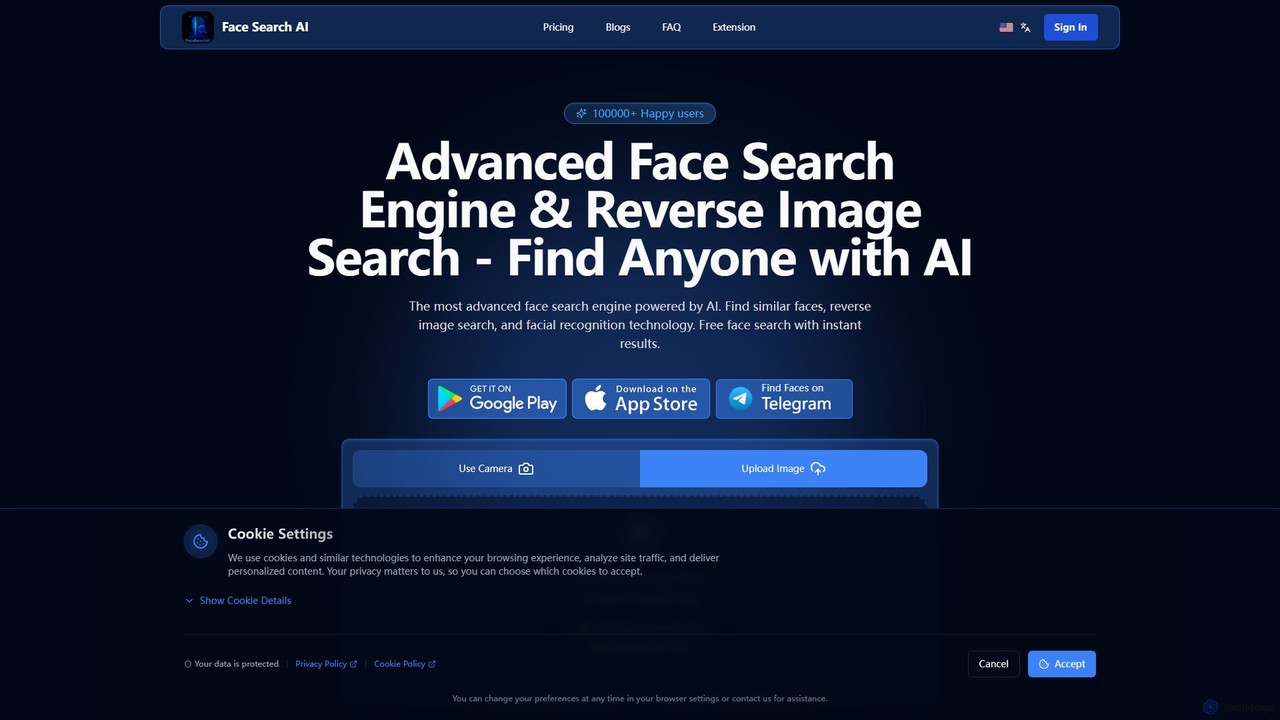
FaceSearchAI is an advanced AI-powered facial recognition and reverse image search engine. It allows users to upload a photo to find similar faces across the internet, helping to protect personal privacy, monitor one's digital footprint, and detect copyright infringement. The platform emphasizes high accuracy, user privacy with end-to-end encryption, and provides a secure alternative to other face search tools.

Digital Asset Management
Visits 150.5KFavorites 140Likes 136
AgainstData
Freemium

AgainstData

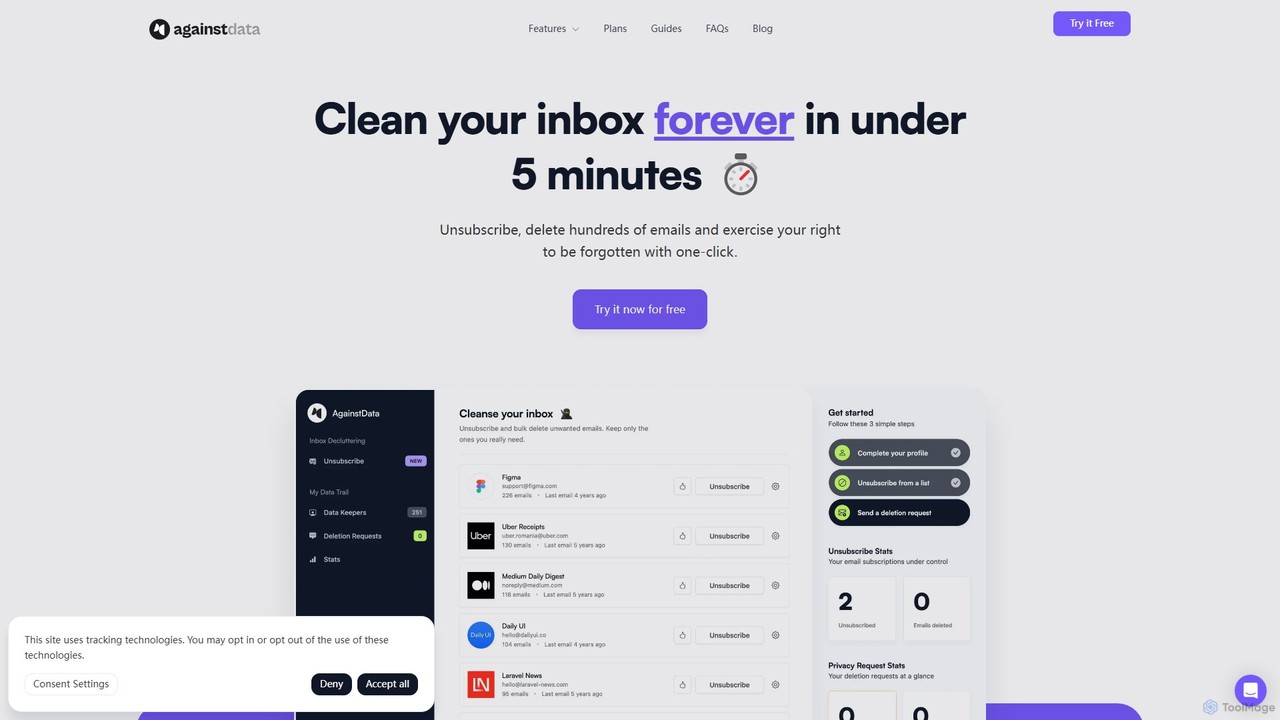
AgainstData is an AI-powered digital assistant that cleans your inbox and protects your privacy. Effortlessly unsubscribe from mailing lists, bulk delete unwanted emails, and request the removal of your personal data from companies with a single click.

Email Management
Visits 71.9KFavorites 120Likes 97
Keenly
Paid

Keenly

Keenly is an AI-powered identity theft and fraud protection service. It proactively safeguards your digital identity through features like scam call blocking, automated data broker removal, and comprehensive credit and identity monitoring to prevent fraud before it happens.

Automation
Visits 8KFavorites 154Likes 148
Neeva
Freemium

Neeva

Neeva was a pioneering ad-free, private search engine powered by AI. It offered users a unique, subscription-based search experience focused on delivering fast, unbiased results and AI-generated summaries without tracking. The consumer search product was discontinued in June 2023 following its acquisition by Snowflake.

Research
Visits 782.9KFavorites 134Likes 118
Generellem
Paid

Generellem

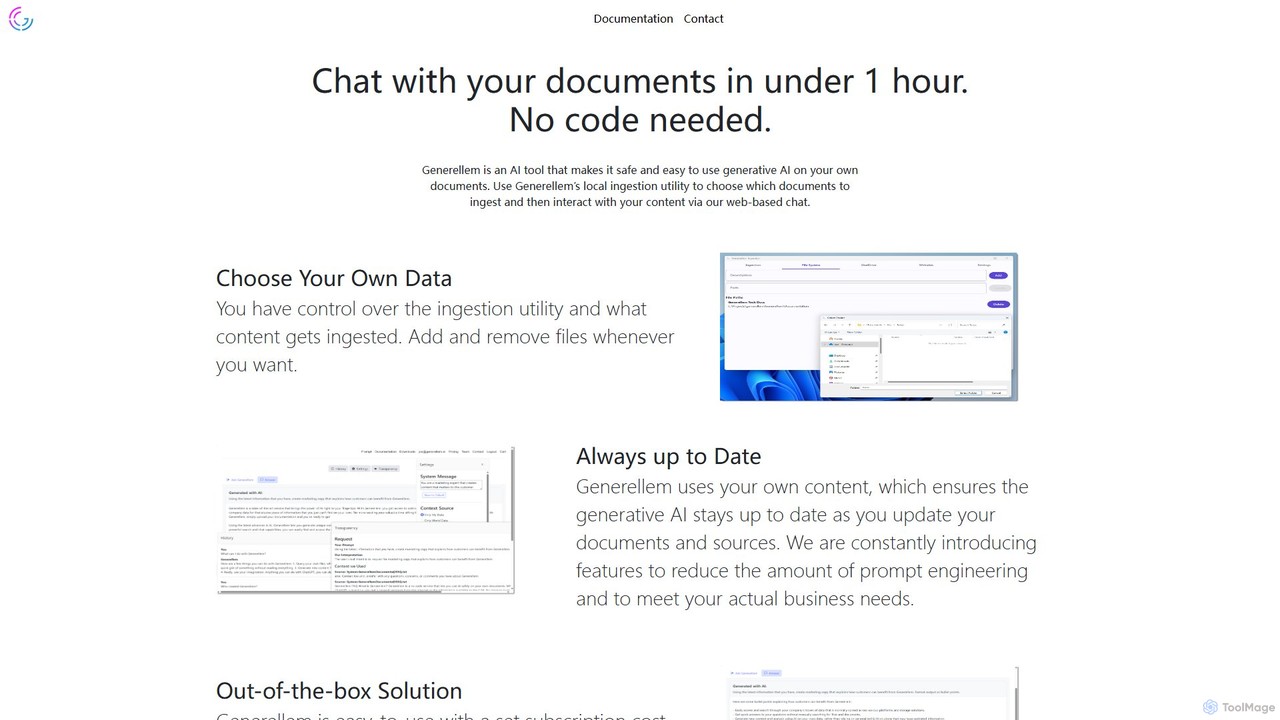
Generellem is a secure, no-code AI tool that allows you to chat with your own documents. It uses a local ingestion utility to create a private knowledge base, enabling you to get instant, accurate answers from your data via a web-based chat interface.

Knowledge Management
Visits 6KFavorites 113Likes 129
Eyre
Freemium

Eyre

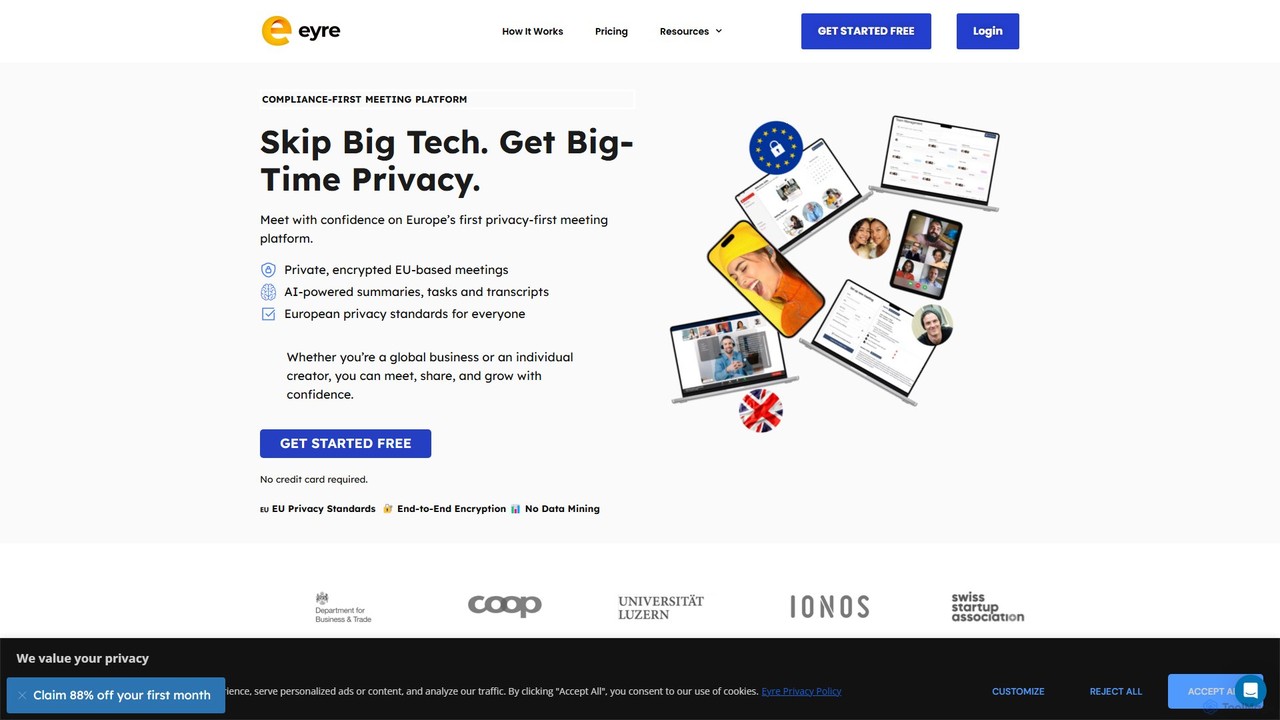
Eyre is a privacy-first, EU-based video conferencing platform designed as a secure alternative to mainstream services. It offers end-to-end encrypted meetings with AI-powered features like summaries, transcripts, and task management. By keeping all data within Europe under strict GDPR compliance and a zero-knowledge architecture, Eyre ensures your conversations remain private and your data is never mined for advertising or AI training.

Video Conferencing
Visits 5.9KFavorites 170Likes 149
WiseOptIn
Freemium

WiseOptIn

WiseOptIn is an AI-powered Chrome extension that analyzes and simplifies complex privacy policies and terms of service. It scores legal documents, provides easy-to-understand summaries, and features a chatbot to answer your specific questions, empowering you to understand what you're agreeing to online.

Chrome Extensions
Visits 5.4KFavorites 125Likes 123
Bearly
Freemium

Bearly

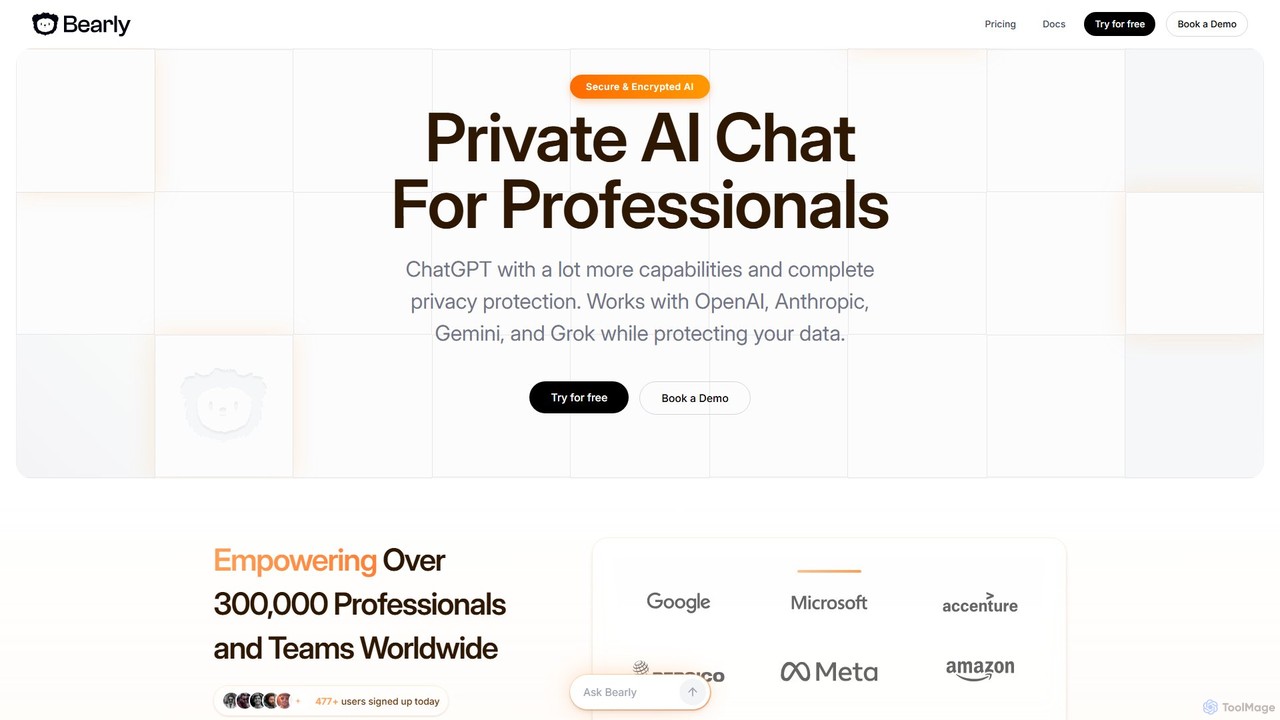
Bearly is an all-in-one, private AI platform for professionals and teams. It integrates leading AI models like GPT-4, Claude, Gemini, and Grok into a secure, encrypted environment. Featuring a collaborative canvas, secure code interpreter, image generation, and advanced memory, Bearly prioritizes user privacy with a zero-logging policy and end-to-end encryption, making it a powerful and safe AI workspace.

Code Assistant
Visits 28.7KFavorites 131Likes 130
AnythingLLM
Freemium

AnythingLLM

AnythingLLM is an open-source, all-in-one AI application that allows you to chat with any document, use AI agents, and leverage powerful LLMs. It runs locally on your desktop or in a private, self-hosted environment, ensuring complete data privacy and security for individuals and teams.

Document Analysis
Visits 687.1KFavorites 111Likes 106
NICH: GPT Anonymizer
Freemium

NICH: GPT Anonymizer

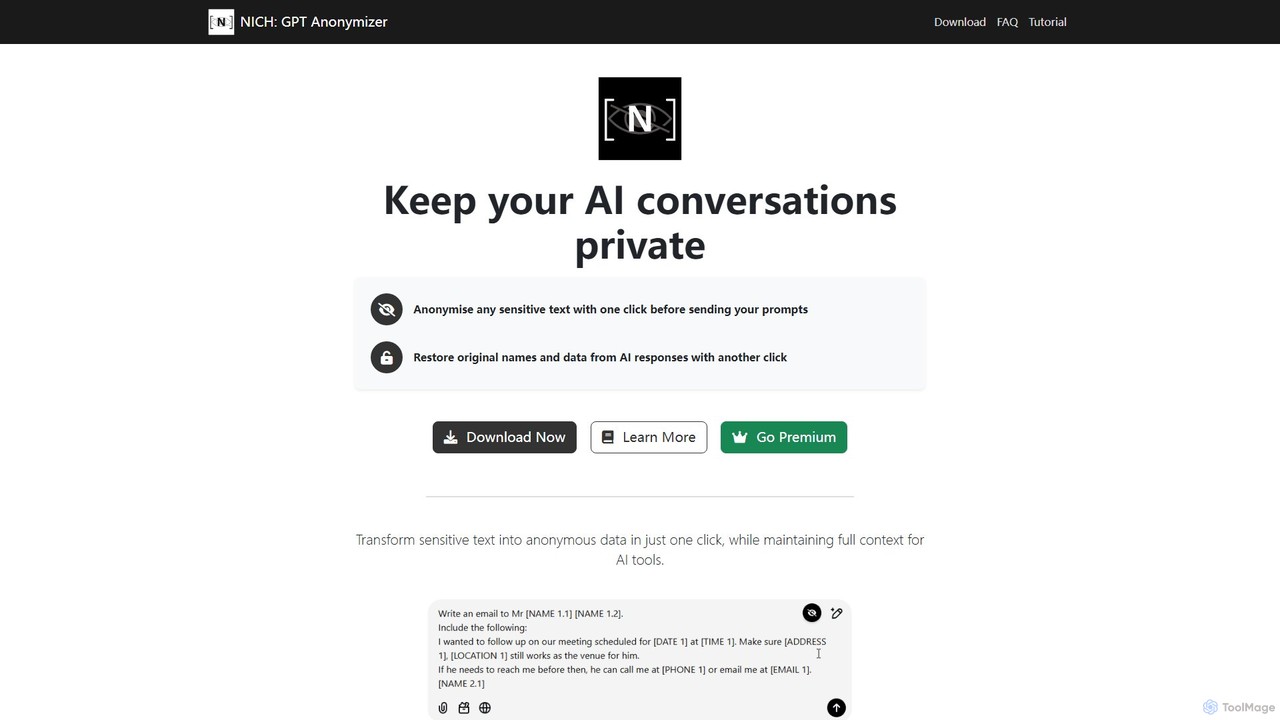
NICH: GPT Anonymizer is a privacy-focused browser extension that secures your AI interactions. It anonymizes sensitive data in your prompts with one click before sending them to services like ChatGPT, and restores the original information from AI responses. All processing is done 100% on your device, ensuring your confidential data never leaves your computer.

Chrome
Visits 5.4KFavorites 138Likes 129
Kaspersky
Paid

Kaspersky

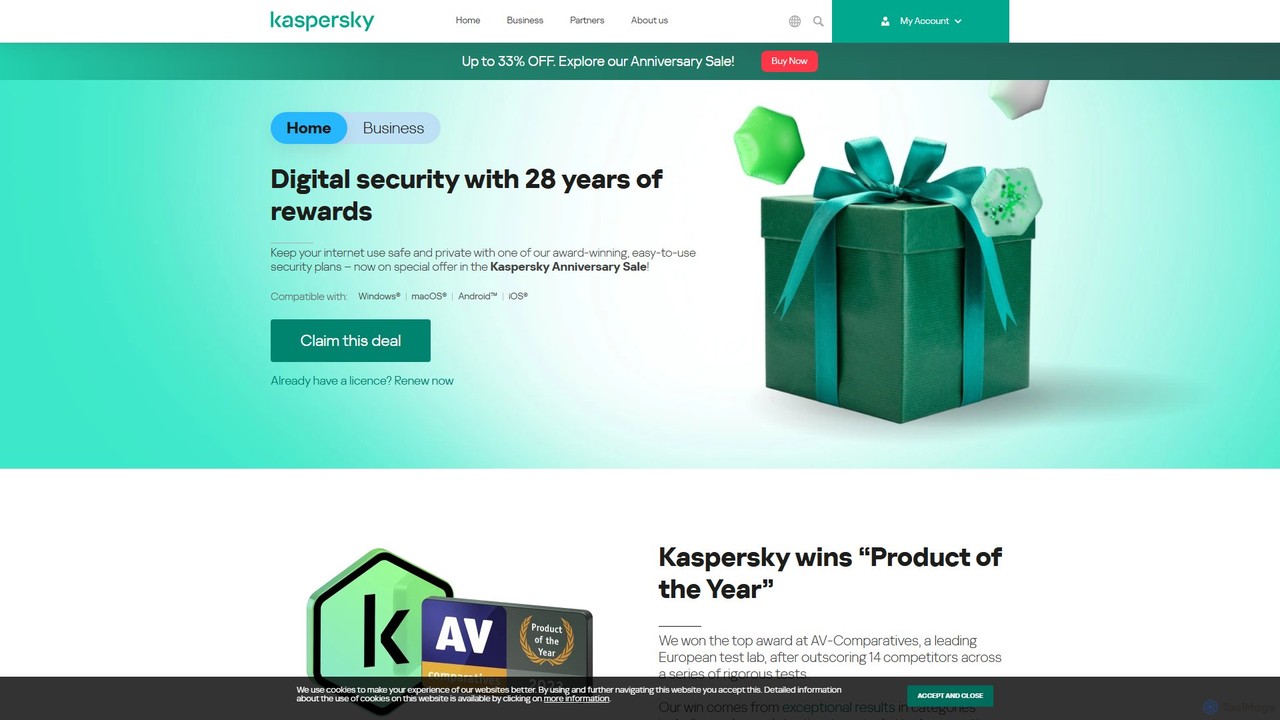
Kaspersky offers comprehensive, AI-powered cybersecurity solutions for individuals and businesses. It provides multi-layered protection against viruses, malware, ransomware, and phishing attacks. Key features include real-time antivirus, a secure VPN, payment protection, performance optimization, and identity theft prevention. Compatible with Windows, macOS, Android, and iOS, Kaspersky ensures a safe, private, and fast digital experience across all your devices, backed by over 25 years of award-winning expertise in threat intelligence and cybersecurity.

System Utilities
Visits 9.4MFavorites 143Likes 133

About Privacy

AI Privacy tools are a specialized class of solutions that use artificial intelligence to protect personal and sensitive data. These tools employ advanced techniques like differential privacy, federated learning, and synthetic data generation to anonymize information or train models without exposing raw data. Their primary value lies in enabling organizations to innovate with data while adhering to strict privacy regulations like GDPR and CCPA, thereby building user trust. As a key component of a modern security strategy, they focus proactively on data protection rather than just reactive threat defense.

Core Features

  • Data Anonymization & Pseudonymization: Uses AI to automatically identify and remove or replace personally identifiable information (PII) from datasets.
  • Synthetic Data Generation: Creates statistically representative artificial datasets that mimic real data, allowing for analysis and model training without using sensitive information.
  • Privacy-Preserving Machine Learning (PPML): Implements techniques like federated learning, allowing models to be trained on decentralized data without centralizing it.
  • Automated Compliance Monitoring: Scans data stores and applications to detect potential privacy risks and ensure adherence to legal and regulatory standards.

Use Cases

These tools are crucial in data-sensitive industries such as healthcare, finance, and technology. Data scientists use them to train models on patient or customer data securely. Compliance officers leverage them to automate audits and risk assessments. Developers integrate them to build privacy-by-design applications, ensuring user data is protected from the ground up.

How to Choose

When selecting an AI Privacy tool, consider the specific privacy-enhancing technology (PET) it uses, such as synthetic data or differential privacy, and match it to your use case. Evaluate its support for relevant regulations (e.g., GDPR, HIPAA). Assess its integration capabilities with your existing data pipelines and ML frameworks. Finally, analyze the trade-off between the level of privacy protection and the utility or accuracy of the resulting data.

Featured tool rankings

Privacy use cases

1

Secure Medical Research with Synthetic Data

A healthcare research institute needs to collaborate with other organizations on a study of a rare disease, but cannot share real patient data due to HIPAA regulations. Researchers use an AI Privacy tool to generate a high-fidelity synthetic dataset. This dataset mirrors the statistical properties and correlations of the original patient data, including demographics and clinical outcomes, without containing any real personally identifiable information. As a result, partner institutions can freely analyze the data and develop predictive models, accelerating research breakthroughs while ensuring 100% patient confidentiality.

2

GDPR-Compliant Customer Analytics

An e-commerce company wants to personalize marketing campaigns by analyzing customer purchase history and browsing behavior. To comply with GDPR, the data analytics team uses an AI-powered anonymization tool before loading data into their analytics platform. The tool automatically identifies and redacts PII like names, addresses, and contact details, while preserving data structures and relationships. This allows marketers to uncover valuable trends and segment audiences effectively without accessing sensitive personal data, mitigating the risk of data breaches and ensuring full compliance with privacy laws.

3

Collaborative Fraud Detection with Federated Learning

A consortium of banks wants to build a more robust fraud detection model by pooling their data, but they are legally prohibited from sharing customer transaction information. They adopt a federated learning platform. Each bank trains a local model on its own private data. The platform then aggregates the learnings (model weights) from each bank to create a global, more accurate model, without any raw data ever leaving the banks' secure servers. This collaborative approach significantly improves the detection of complex fraud patterns while maintaining strict data privacy and security for all participating institutions.

4

Automating PII Detection in Code Repositories

A software company is preparing for a security audit and needs to ensure no personally identifiable information (PII) has been accidentally hardcoded into its source code or configuration files. A DevOps engineer uses an AI Privacy tool to scan the company's entire GitHub repository. The tool uses natural language processing to identify potential PII such as API keys, passwords, and email addresses across thousands of files. It flags all instances and generates a report, allowing developers to quickly remediate the issues. This automated process saves hundreds of hours of manual review and helps the company pass its audit.

5

Publishing Public Datasets with Differential Privacy

A government statistics agency wants to release a dataset about public health trends to researchers and the public. To prevent the re-identification of individuals, the agency applies differential privacy techniques using an AI tool. The tool adds a carefully calibrated amount of statistical noise to the dataset before publication. This noise is small enough to preserve the overall accuracy of statistical queries and analyses but large enough to make it mathematically impossible to determine whether any specific individual's data is included. This allows the agency to share valuable data for the public good while providing a formal, provable privacy guarantee.

6

Real-time Redaction of Sensitive Data in Chatbots

A customer service department uses an AI chatbot to handle user inquiries. To prevent accidental collection of sensitive information like credit card numbers or social security numbers, they integrate an AI Privacy API. As users interact with the chatbot, the API analyzes the conversation in real-time. If it detects any PII, it automatically redacts the information before it is stored in the chat logs or passed to a human agent. This proactive measure ensures the company remains compliant with PCI DSS and other regulations, protecting both the customer and the business from data exposure risks.

Privacy FAQ

What are AI Privacy tools?

AI Privacy tools are software solutions that use artificial intelligence to protect sensitive data and ensure regulatory compliance. Unlike general security tools that focus on external threats, these tools focus on the data itself. They employ techniques like data anonymization, synthetic data generation, and federated learning to allow data to be used for analysis and machine learning without compromising individual privacy. Common applications include securing medical research data and enabling GDPR-compliant marketing analytics.

How do I choose the right AI Privacy tool?

Choosing the right tool depends on your specific needs. Consider the following factors:

  • Use Case: Do you need to anonymize data for analytics, generate synthetic data for testing, or train models collaboratively with federated learning?
  • Regulatory Needs: Ensure the tool helps you comply with specific regulations relevant to your industry, such as HIPAA for healthcare or GDPR for European customer data.
  • Data Type: Check if the tool supports your data formats, whether it's structured (like in a database) or unstructured (like text or images).
  • Integration: Evaluate how easily it integrates with your existing technology stack, including databases, data warehouses, and machine learning platforms.
What's the difference between AI Privacy and traditional Security tools?

The primary difference lies in their focus. Traditional security tools, like firewalls or antivirus software, are primarily concerned with protecting systems from external threats such as malware and unauthorized access. They act as a perimeter defense. AI Privacy tools, on the other hand, focus on protecting the data itself, often from internal or analytical use. They work to minimize the risk of data exposure even when data is being actively used, ensuring that insights can be drawn without revealing sensitive individual information. They are a proactive data-centric safeguard, whereas traditional security is often a reactive system-centric defense.

Can AI Privacy tools guarantee 100% data privacy?

While no single solution can offer an absolute 100% guarantee against all possible future threats, AI Privacy tools provide a very high, often mathematically provable, level of protection. Techniques like differential privacy offer a formal guarantee that the inclusion of any single individual's data in a dataset has a statistically insignificant effect on the outcome. Similarly, synthetic data completely decouples the analysis from real individuals. These tools significantly reduce the risk of re-identification and data linkage attacks compared to older, simpler anonymization methods, representing the current state-of-the-art in data protection.

Who should use AI Privacy tools?

AI Privacy tools are valuable for any organization that handles sensitive personal data. Key users include:

  • Data Scientists and Analysts: To build models and perform analytics on sensitive datasets without compromising privacy.
  • Compliance and Legal Teams: To automate monitoring, enforce privacy policies, and ensure adherence to regulations like GDPR, CCPA, and HIPAA.
  • Software Developers and DevOps Engineers: To build privacy-by-design applications and prevent sensitive data leaks in code and infrastructure.
  • Healthcare and Financial Institutions: To protect patient and customer data while still enabling innovation and research.