ToolMage
Sign in
OpenSilver
Framework · 9.8K monthly visits

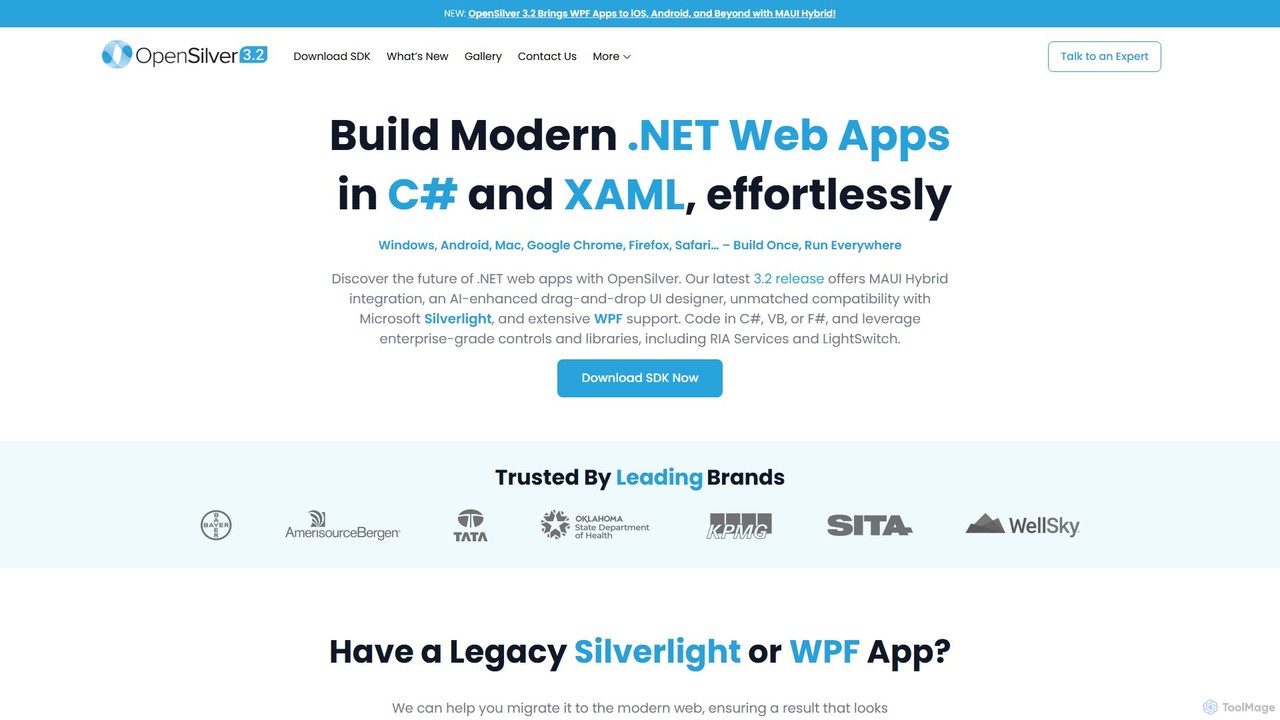
OpenSilver is an open-source framework for modernizing legacy Microsoft Silverlight and WPF applications. It enables developers to build cross-platform web apps using C#, XAML, and .NET, ensuring 100% code reusability. It features an AI-enhanced UI designer and MAUI Hybrid integration for extending apps to web, desktop, and mobile, significantly reducing migration time and costs.
VS
PyTorch
Deep Learning · 1.5M monthly visits

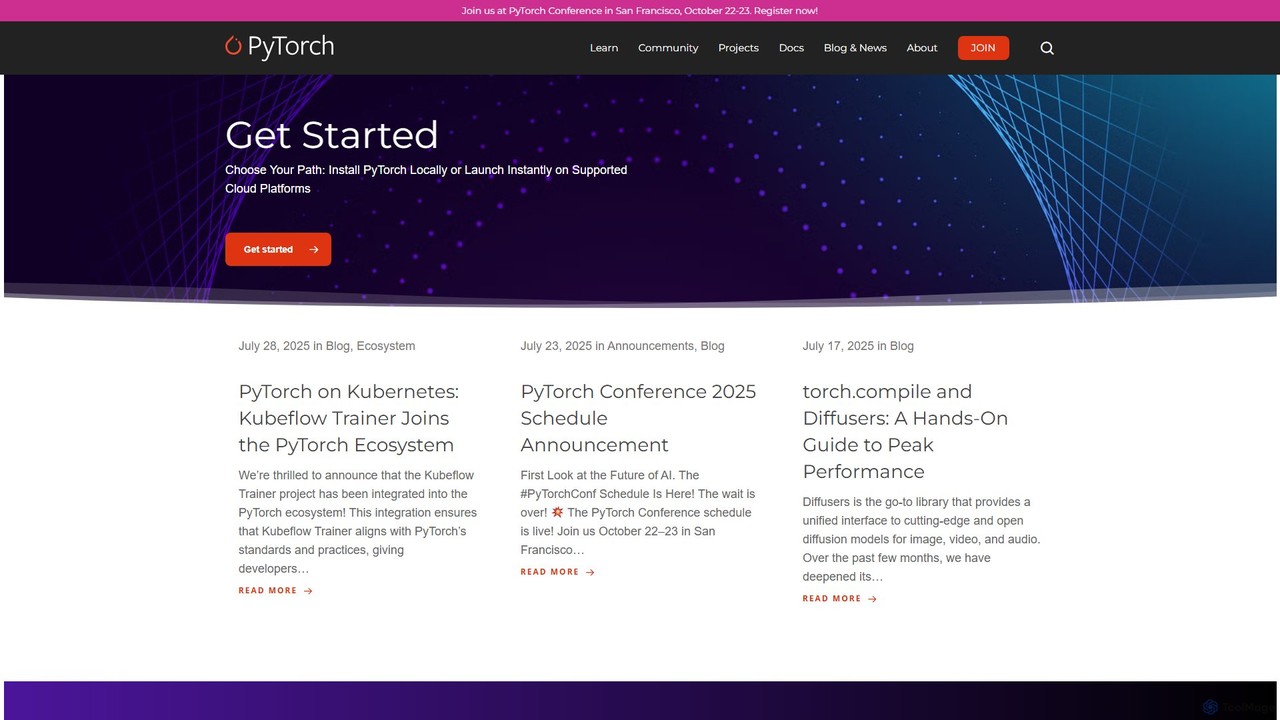
PyTorch is an open-source machine learning framework based on the Torch library, used for applications such as computer vision and natural language processing. It offers a flexible, Python-first environment that accelerates the path from research prototyping to production deployment.

OpenSilver vs PyTorch: pricing, features, traffic, and use cases

Compare OpenSilver and PyTorch across positioning, pricing, traffic, and user feedback using structured factual data.

Updated Aug 5, 2026

Product overview

OpenSilver Product overview

OpenSilver is an open-source framework for modernizing legacy Microsoft Silverlight and WPF applications. It enables developers to build cross-platform web apps using C#, XAML, and .NET, ensuring 100% code reusability. It features an AI-enhanced UI designer and MAUI Hybrid integration for extending apps to web, desktop, and mobile, significantly reducing migration time and costs.
Preview

PyTorch Product overview

PyTorch is an open-source machine learning framework based on the Torch library, used for applications such as computer vision and natural language processing. It offers a flexible, Python-first environment that accelerates the path from research prototyping to production deployment.

Preview

Detailed feature comparison

FeatureOpenSilverPyTorch
Primary categoryFrameworkDeep Learning
Added2025-08-132025-08-17
PricingPaidFree
Official websiteopensilver.netpytorch.org
Product typeWebsiteWebsite
Performance data
User ratingNot verifiedNot verified
Comments00
Monthly visits9.8K1.5M
Monthly growth75.8%-16.5%
Favorites114157
DetailsView detailsView details

OpenSilver vs PyTorch monthly traffic

Compare OpenSilver and PyTorch by monthly reach, traffic trend, visit depth, top regions, and acquisition sources.

How to interpret the traffic data

In the OpenSilver vs PyTorch monthly traffic comparison, OpenSilver currently shows 9.8K visits and PyTorch shows 1.5M; PyTorch has about 150.2 times the visible traffic of OpenSilver, an absolute difference of about 1.5M visits. This reflects visible reach, not feature quality or paid users.

Both tools provide verified traffic details, so monthly trends, visit depth, regions, and acquisition sources can be compared on the same basis.

OpenSilver monthly traffic:

Latest traffic

Monthly visits
9.8K
Avg. visit duration
0:03
Pages per visit
1.51
Bounce rate
38.22%
Data updated 2026-06-15

Monthly traffic trend

  • 2025/9: 10.2K Monthly visits
  • 2026/1: 6.4K Monthly visits
  • 2026/2: 5K Monthly visits
  • 2026/3: 6.6K Monthly visits
  • 2026/4: 5.6K Monthly visits
  • 2026/5: 9.8K Monthly visits

Top regions

Top 5 countries/regions
Country/regionPercentageTraffic
🇺🇸United States29.34%2.9K
🇧🇷Brazil20.95%2K
🇷🇺Russia19.22%1.9K
🇩🇪Germany17.44%1.7K
🇸🇦Saudi Arabia13.05%1.3K

Search keywords

opensilveropensilver documentaionsilverlight showcasetriggerdisplayactionwebclient silverlight opensivler

PyTorch monthly traffic:

Latest traffic

Monthly visits
1.5M
Avg. visit duration
2:20
Pages per visit
2.64
Bounce rate
43.95%
Data updated 2026-06-15

Monthly traffic trend

  • 2025/9: 2.1M Monthly visits
  • 2026/1: 1.9M Monthly visits
  • 2026/2: 1.7M Monthly visits
  • 2026/3: 1.9M Monthly visits
  • 2026/4: 1.8M Monthly visits
  • 2026/5: 1.5M Monthly visits

Top regions

Top 5 countries/regions
Country/regionPercentageTraffic
🇺🇸United States48.01%703.7K
🇨🇳China18.96%277.9K
🇮🇳India15.53%227.6K
🇬🇧United Kingdom9.81%143.8K
🇷🇺Russia7.69%112.7K

Traffic sources

Source typePercentageTraffic
Direct73.42%1.1M
Referral24.55%359.8K
Email2.03%29.8K

Search keywords

py torchpytorchpytorch installtorchtorch install
Traffic-based selection guidance: If public market visibility is an important first-pass criterion, investigate PyTorch first. The final choice should still follow taxonomy, use case, and a real trial because higher traffic does not prove broader capabilities or better workflow fit.

Usage comparison

Compare the core capabilities of OpenSilver and PyTorch

OpenSilver Core features

Framework
Low Code No Code
Migration

PyTorch Core features

Framework
Deep Learning
Machine Learning

Use cases

OpenSilver Use cases

open source
application migration
c++
cross-platform development
legacy modernization
MAUI
.NET
Silverlight
UI designer
WebAssembly
WPF
XAML

PyTorch Use cases

open source
computer vision
deep learning
framework
GPU
machine learning
neural networks
NLP
python
tensor

OpenSilver vs PyTorch:In-depth comparison and selection guidance

First decide whether the products solve the same kind of need

This in-depth OpenSilver vs PyTorch comparison uses only the product records, taxonomy, audience, traffic, and community signals available on this page. OpenSilver is primarily listed under “Framework”, while PyTorch is primarily listed under “Deep Learning”, so the first decision is whether your actual task matches their recorded scope.

The structured fields currently show these decision-relevant differences: Primary category (OpenSilver: Framework; PyTorch: Deep Learning); Pricing (OpenSilver: Paid; PyTorch: Free); Monthly visits (OpenSilver: 9.8K; PyTorch: 1.5M); Monthly growth (OpenSilver: 75.8%; PyTorch: -16.5%); Favorites (OpenSilver: 114; PyTorch: 157). These facts are more useful for selection than brand visibility alone.

What market visibility and monthly traffic mean

In the OpenSilver vs PyTorch monthly traffic comparison, OpenSilver currently shows 9.8K visits and PyTorch shows 1.5M; PyTorch has about 150.2 times the visible traffic of OpenSilver, an absolute difference of about 1.5M visits. This reflects visible reach, not feature quality or paid users.

Both tools provide verified traffic details, so monthly trends, visit depth, regions, and acquisition sources can be compared on the same basis.

If public market visibility is an important first-pass criterion, investigate PyTorch first. The final choice should still follow taxonomy, use case, and a real trial because higher traffic does not prove broader capabilities or better workflow fit.

Product positioning, use cases, and roles

OpenSilver and PyTorch currently overlap in shared categories: Framework; shared tags: open source. This can place both on the same shortlist, but it does not prove equal implementation, depth, or cost.

OpenSilver's unique categories/tags are Low Code No Code, Migration, application migration, c++, cross-platform development, legacy modernization, MAUI, and .NET; PyTorch's are Deep Learning, Machine Learning, computer vision, deep learning, framework, GPU, machine learning, and neural networks. These unique fields are the strongest differentiators: validate the product whose recorded scope matches the task instead of following traffic alone.

What ratings, comments, and favorites can tell you

OpenSilver has no verified rating, 0 comments, 114 favorites, and 103 likes;PyTorch has no verified rating, 0 comments, 157 favorites, and 167 likes。

Neither product has enough rating or comment samples for a credible reputation ranking.

Selection guidance by actual need

When to evaluate OpenSilver first

Put OpenSilver on the priority trial list when the task aligns with “Framework” and especially Low Code No Code, Migration, application migration, c++, cross-platform development, and legacy modernization. This follows recorded positioning and does not imply unlisted capabilities are absent.

OpenSilver also currently records: pricing is paid, product type is website, 9.8K verified monthly visits, no verified user rating. Verify any hard requirement around price, platform, or reach before trial, and do not let sparse review data substitute for testing.

When to evaluate PyTorch first

Put PyTorch on the priority trial list when the task aligns with “Deep Learning” and especially Deep Learning, Machine Learning, computer vision, deep learning, framework, and GPU. This follows recorded positioning and does not imply unlisted capabilities are absent.

PyTorch also currently records: pricing is free, product type is website, 1.5M verified monthly visits, no verified user rating. Verify any hard requirement around price, platform, or reach before trial, and do not let sparse review data substitute for testing.

How to validate the recommendation before deciding

The available data describes positioning, public visibility, and community signals, but it cannot prove output quality, speed, integration effort, privacy, or long-term cost in your workflow. Before deciding, run the same representative tasks in OpenSilver and PyTorch, then record completion time, accuracy, manual corrections, and the real paid threshold. A like-for-like trial turns this comparison into a defensible adoption decision.

Comparison FAQ

How should I choose between OpenSilver and PyTorch?
Compare positioning, pricing, taxonomy, and traffic maturity, then verify the latest details on each official website.
Where does this comparison data come from?
The factual baseline is derived from product, taxonomy, traffic, and community data. Reviewed editorial conclusions show their source and verification date.
What do unknown fields mean?
Unknown means there is not enough reliable evidence; the page does not fill gaps with assumptions.

Related AI tools

TensorFlow
Free

TensorFlow

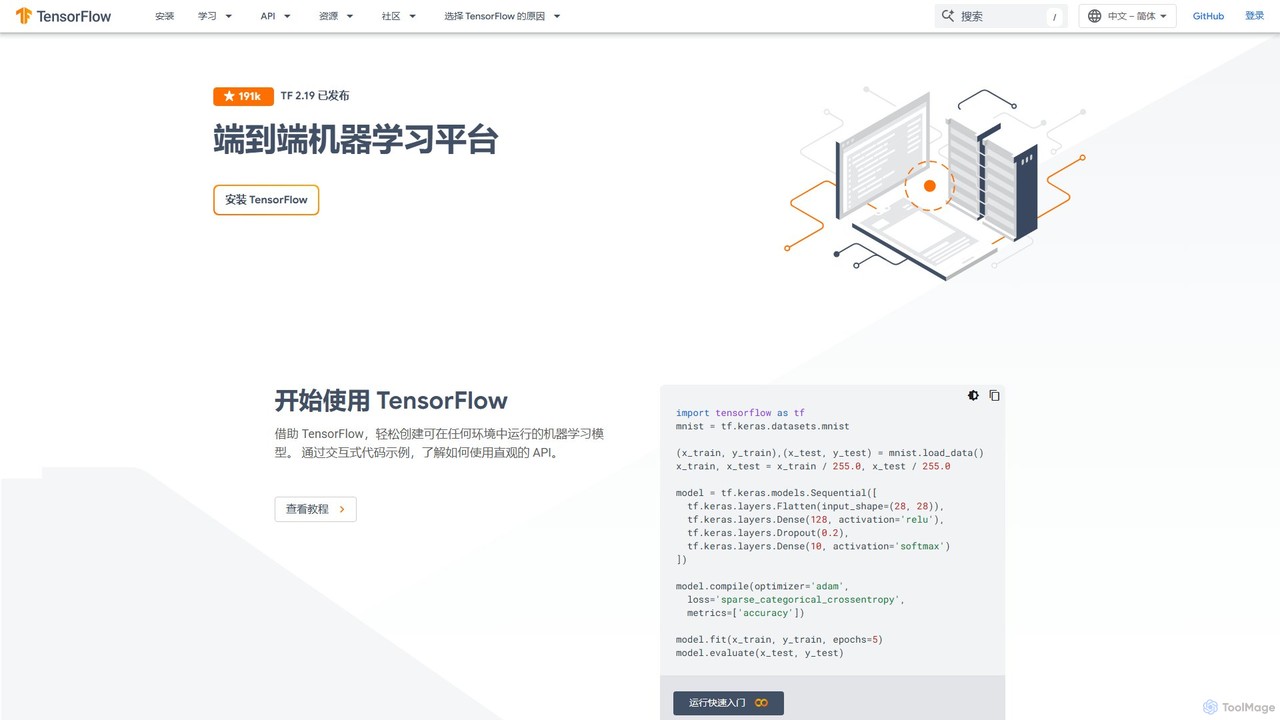
TensorFlow is an end-to-end open-source platform for machine learning developed by Google. It provides a comprehensive, flexible ecosystem of tools, libraries, and community resources that lets researchers and developers build and deploy ML-powered applications. From beginners to experts, TensorFlow offers intuitive high-level APIs for easy model building and powerful low-level APIs for advanced research, enabling deployment across servers, edge devices, and browsers.

Frameworks
Visits 692.2KFavorites 74Likes 68
Fast.ai
Free

Fast.ai

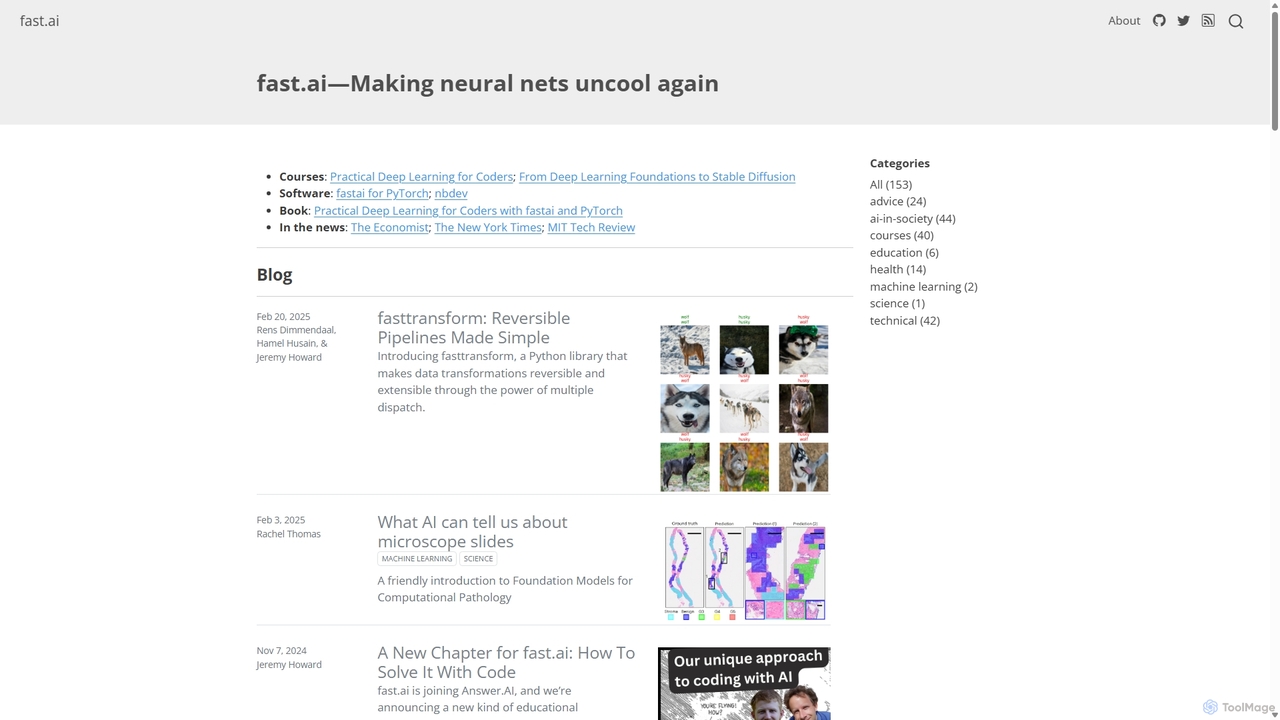
Fast.ai is a research institute dedicated to making deep learning accessible to everyone. It offers free courses, an open-source software library (fastai), cutting-edge research, and a vibrant community, empowering coders of all backgrounds to become deep learning practitioners.

Machine Learning
Visits 418.5KFavorites 148Likes 130
MindSpore
Free

MindSpore

MindSpore is an open-source, all-scenario AI computing framework designed for developers and data scientists. It provides a developer-friendly experience with flexible deployment across cloud, edge, and device environments. It excels in distributed training for large models and offers specialized toolkits for scientific computing (AI4S), ensuring high performance and efficiency, especially on Ascend hardware.

Scientific Computing
Visits 65.1KFavorites 102Likes 103
Google Research
Free

Google Research

Google Research is a premier hub for exploring groundbreaking advancements in science and AI. It provides open access to a vast repository of research papers, project showcases, and open-source resources across diverse fields like machine learning, quantum computing, and healthcare. It's an essential platform for researchers, developers, and enthusiasts to stay at the forefront of technological innovation and understand its real-world impact.

Learning Platform
Visits 1.5MFavorites 127Likes 122
Rerun
Freemium

Rerun

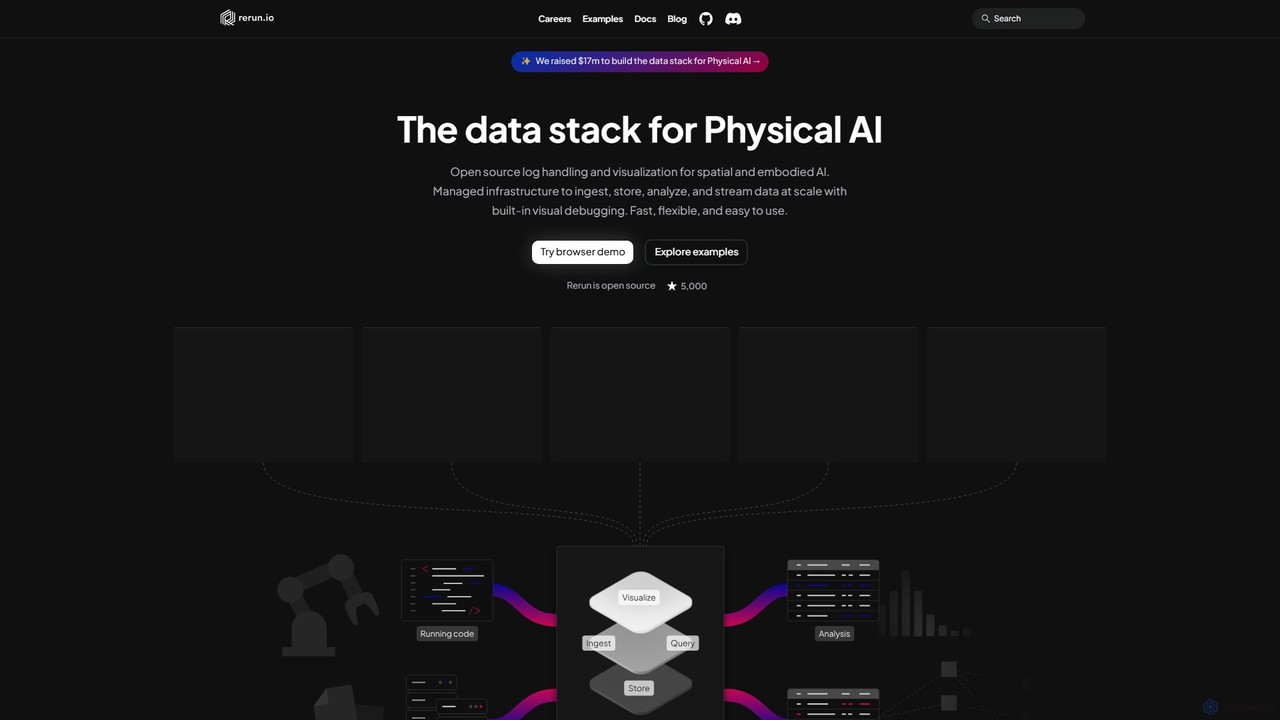
Rerun is an open-source data stack for Physical AI, providing powerful logging and visualization tools for multimodal, time-series data. Designed for robotics, computer vision, and spatial computing, it helps developers understand and debug complex systems with SDKs for Python, Rust, and C++.

Machine Learning
Visits 91.2KFavorites 106Likes 129
Ludwig
Free

Ludwig

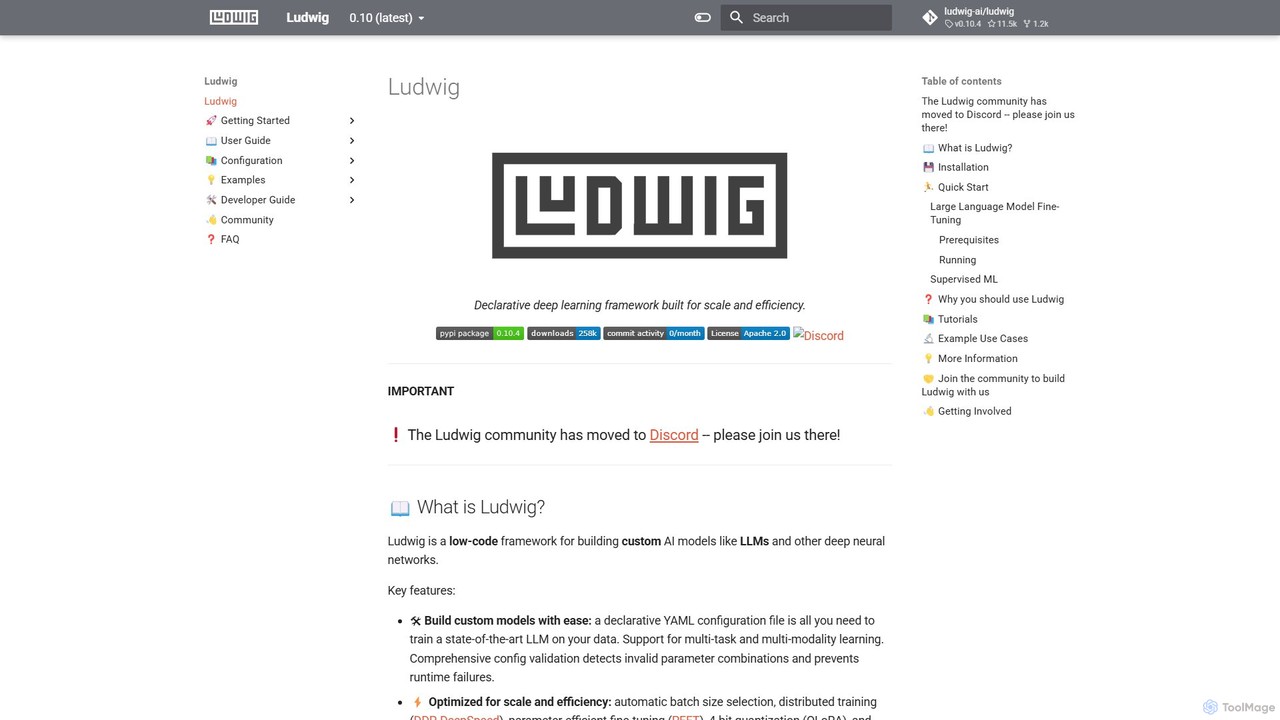
Ludwig is a low-code, open-source deep learning framework that simplifies building and training custom AI models. Using declarative YAML configurations, users can easily create complex models, including LLMs, for multi-modal and multi-task learning without extensive boilerplate code. It's designed for scalability, production-readiness, and integrates with popular tools like HuggingFace and MLFlow.

Model Training
Visits 10.5KFavorites 83Likes 87
MindMeld
Free

MindMeld

A powerful, open-source conversational AI platform from Cisco, designed for developers. It provides a comprehensive Python-based framework for building deep-domain voice interfaces and chatbots with advanced Natural Language Processing (NLP) capabilities, offering full control and on-premise deployment.

Chatbot Builder
Visits 4.5KFavorites 111Likes 108
PyBrain
Free

PyBrain

PyBrain is a modular and flexible open-source Machine Learning Library for Python. It provides powerful, easy-to-use algorithms for machine learning tasks, with a particular focus on neural networks, reinforcement learning, and unsupervised learning. It is designed to be accessible for beginners while remaining powerful enough for research purposes.

Libraries & Frameworks
Visits 3.4KFavorites 110Likes 109
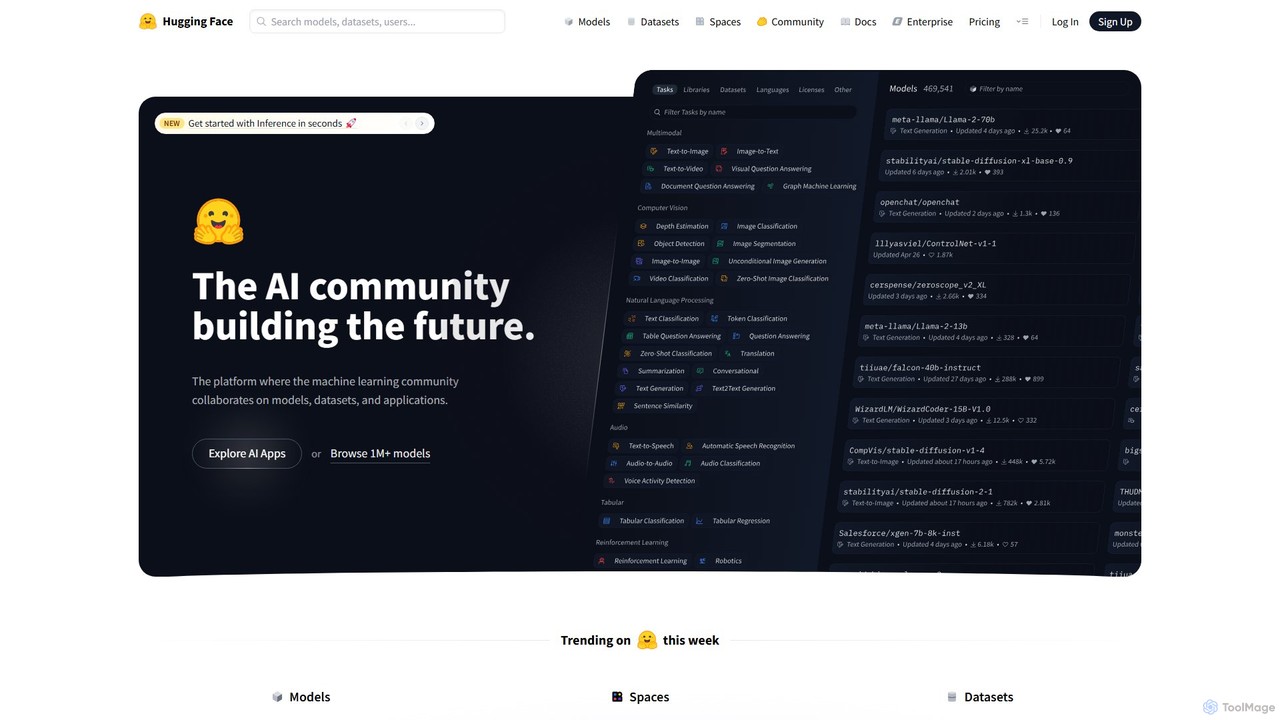
Hugging Face
Freemium

Hugging Face

Hugging Face is the leading open-source platform and community for machine learning. It provides tools for developers and researchers to build, train, and deploy state-of-the-art models, offering a vast hub of pre-trained models, datasets, and demo applications.

Dataset
Visits 27.4MFavorites 117Likes 126
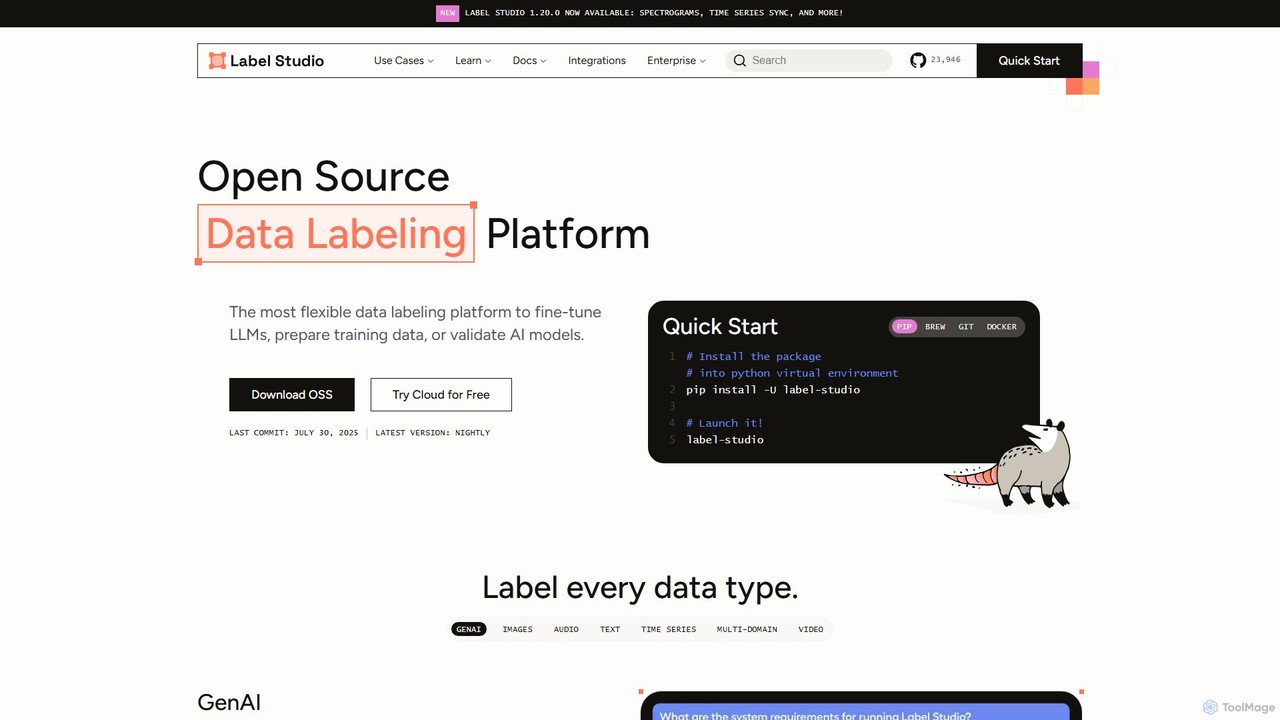
Label Studio
Freemium

Label Studio

Label Studio is a versatile open-source data labeling platform designed for a wide range of data types. It enables users to annotate images, text, audio, video, and time-series data to fine-tune LLMs, prepare training data for machine learning, and validate AI models with human-in-the-loop feedback.

Training Data
Visits 265KFavorites 137Likes 143
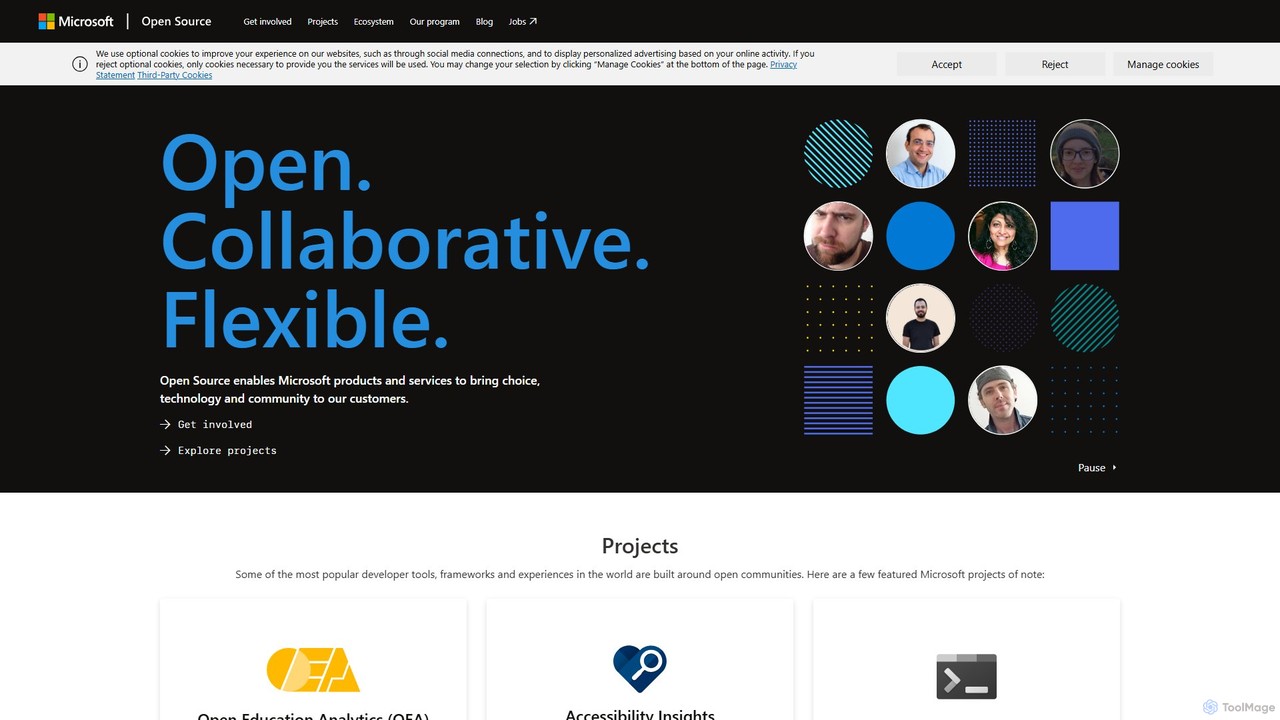
Microsoft Open Source
Free

Microsoft Open Source

Microsoft's central hub for discovering, using, and contributing to a vast portfolio of open-source projects. It offers developers access to powerful tools, frameworks, and AI/ML libraries, fostering collaboration and innovation within a global community.

Platform
Visits 213.5KFavorites 106Likes 102
Darknet
Free

Darknet

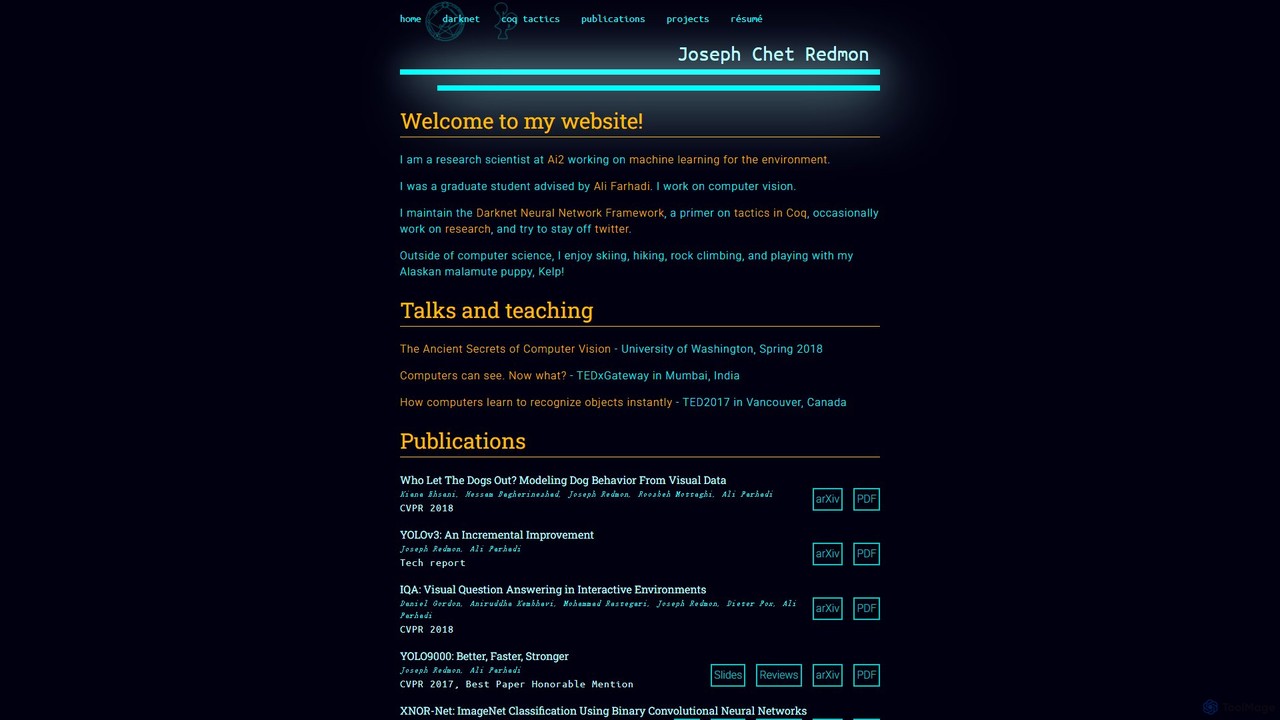
Darknet is a high-performance, open-source neural network framework written in C and CUDA. Created by Joseph Redmon, it is renowned for its speed and efficiency, famously powering the YOLO (You Only Look Once) real-time object detection system. It's designed to be small, easy to install, and supports both CPU and GPU computations, making it a popular choice for researchers and developers in computer vision.

Object Detection
Visits 57KFavorites 94Likes 76
Captum
Free

Captum

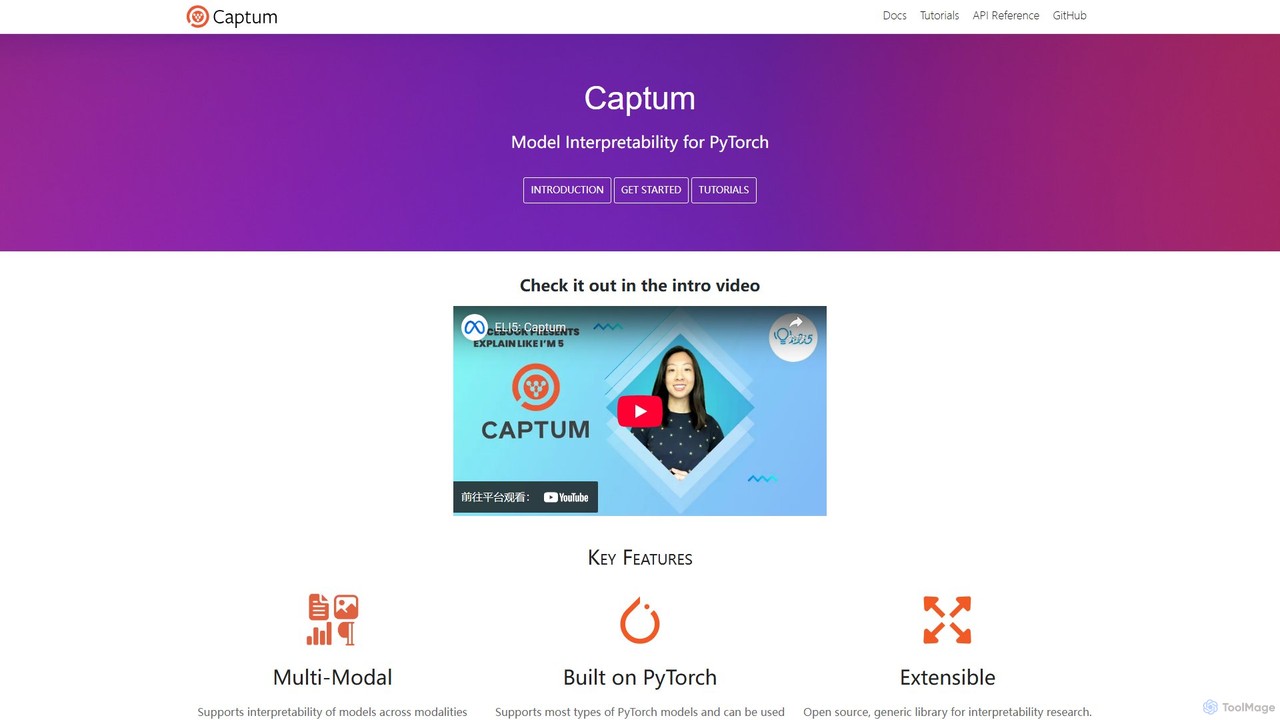
Captum is an open-source model interpretability and explainability library for PyTorch. It provides state-of-the-art algorithms to help developers and researchers understand which features influence a model's predictions. Supporting multi-modal data like text, vision, and more, Captum makes it easy to debug models, improve transparency, and benchmark new interpretability techniques within the PyTorch ecosystem.

Model Explainability
Visits 18.4KFavorites 69Likes 65
ImageBind
Free

ImageBind

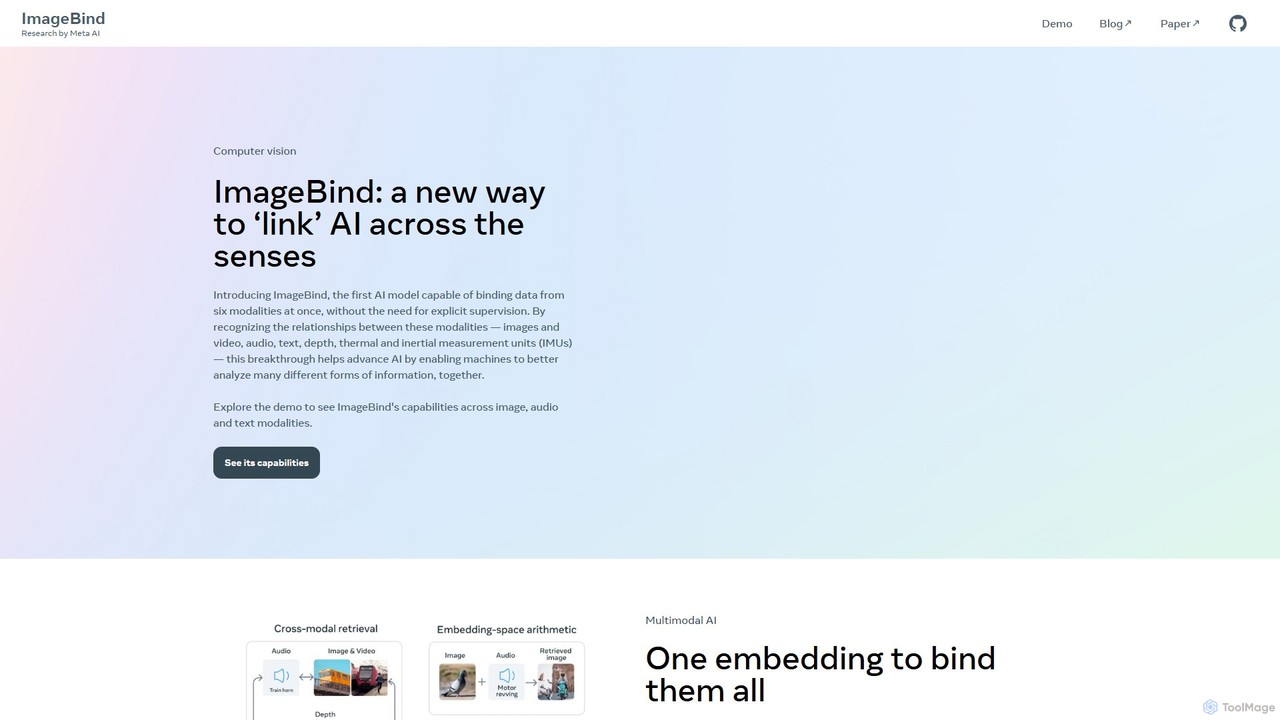
ImageBind is a pioneering AI model from Meta AI that creates a unified embedding space for six different data modalities: images, video, audio, text, depth, and thermal. This breakthrough enables machines to understand relationships between senses, facilitating advanced cross-modal search, generation, and analysis without explicit supervision. It's an open-source model designed to push the boundaries of multimodal AI.

Multimodal Models
Visits 4.5KFavorites 106Likes 118
PostgresML
Freemium

PostgresML

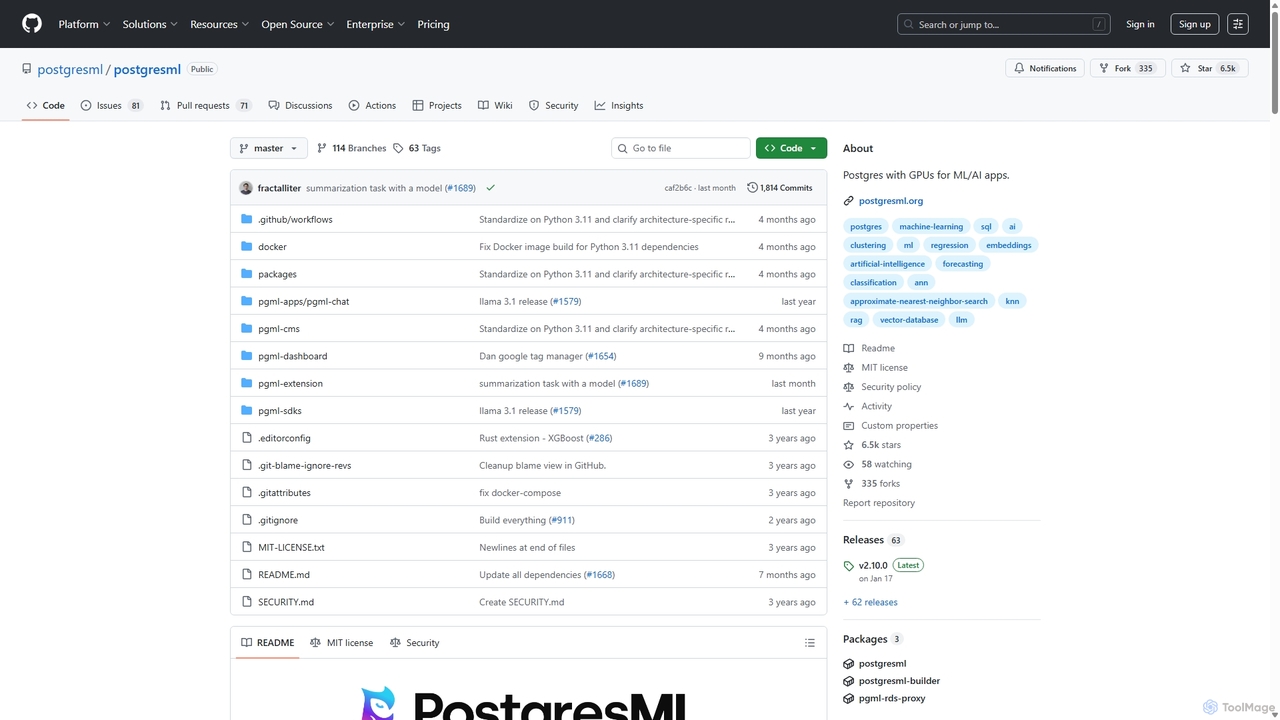
PostgresML is a powerful open-source extension that integrates machine learning and AI directly into your PostgreSQL database. It enables GPU-accelerated inference, vector search, and complete RAG pipelines using simple SQL commands, eliminating data movement and simplifying the MLOps stack for high-performance, scalable AI applications.

Mlops
Visits 3.5KFavorites 117Likes 110