ToolMage
Sign in

Best 72 Code Assistant for Code

Popular Code Assistant in Code include Cursor, Kiro, GitLab, GlobalGPT, Llama, Vondy, Zemith, myninja.ai, Waveterm, and Bezi, helping you work more efficiently.

Neurahub
Freemium

Neurahub

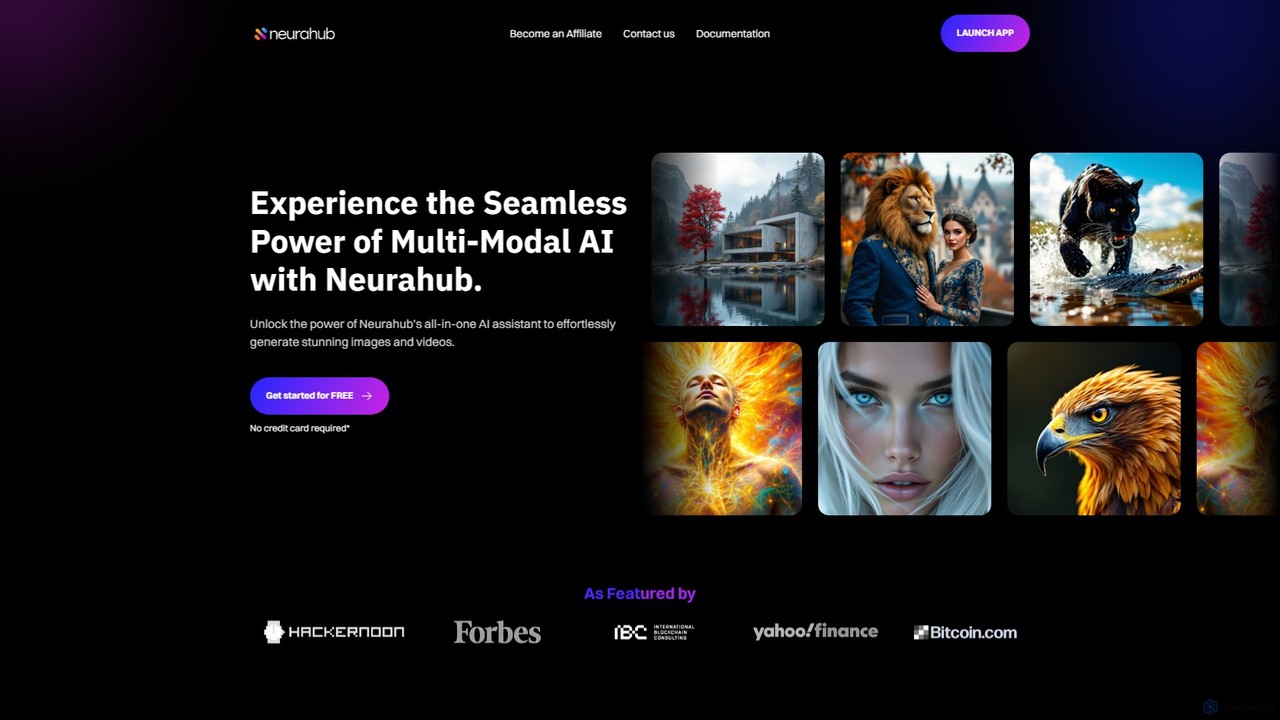
Neurahub is an all-in-one, agentic AI platform designed for multi-modal content creation. It empowers users to effortlessly generate high-quality images, dynamic videos, and code in multiple languages. The platform also features advanced document creation tools and real-time cryptocurrency price tracking, making it a versatile assistant for creators, developers, and enthusiasts.

Code Assistant
Visits 3.4KFavorites 96Likes 106
ShellMate
Free

ShellMate

ShellMate is an open-source, AI-powered command-line productivity tool designed for developers and system administrators. Powered by OpenAI, it acts as your terminal's best friend, allowing you to use natural language to find commands, get predictive suggestions based on your history, and receive context-aware help without ever leaving your console. Simply use the `sm` shortcut to boost your command-line efficiency and reduce time spent searching for syntax.

Code Assistant
Visits 3.8KFavorites 153Likes 137
Komandi
Paid

Komandi

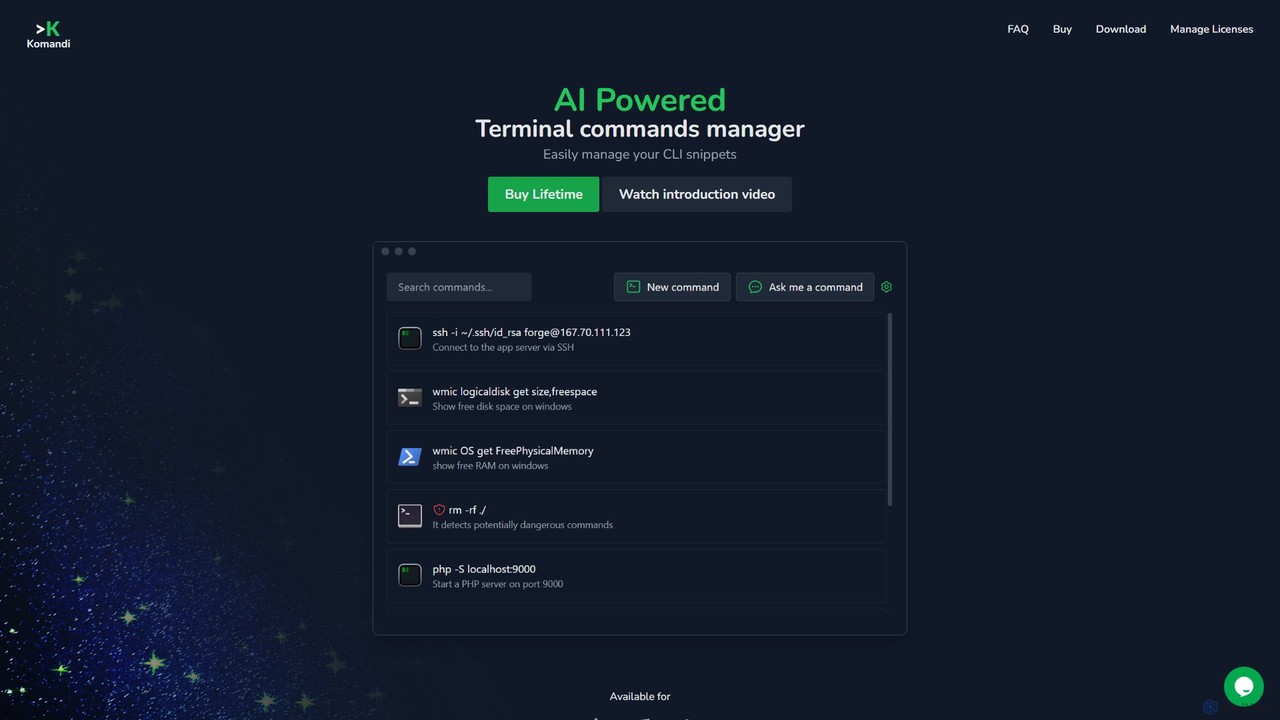
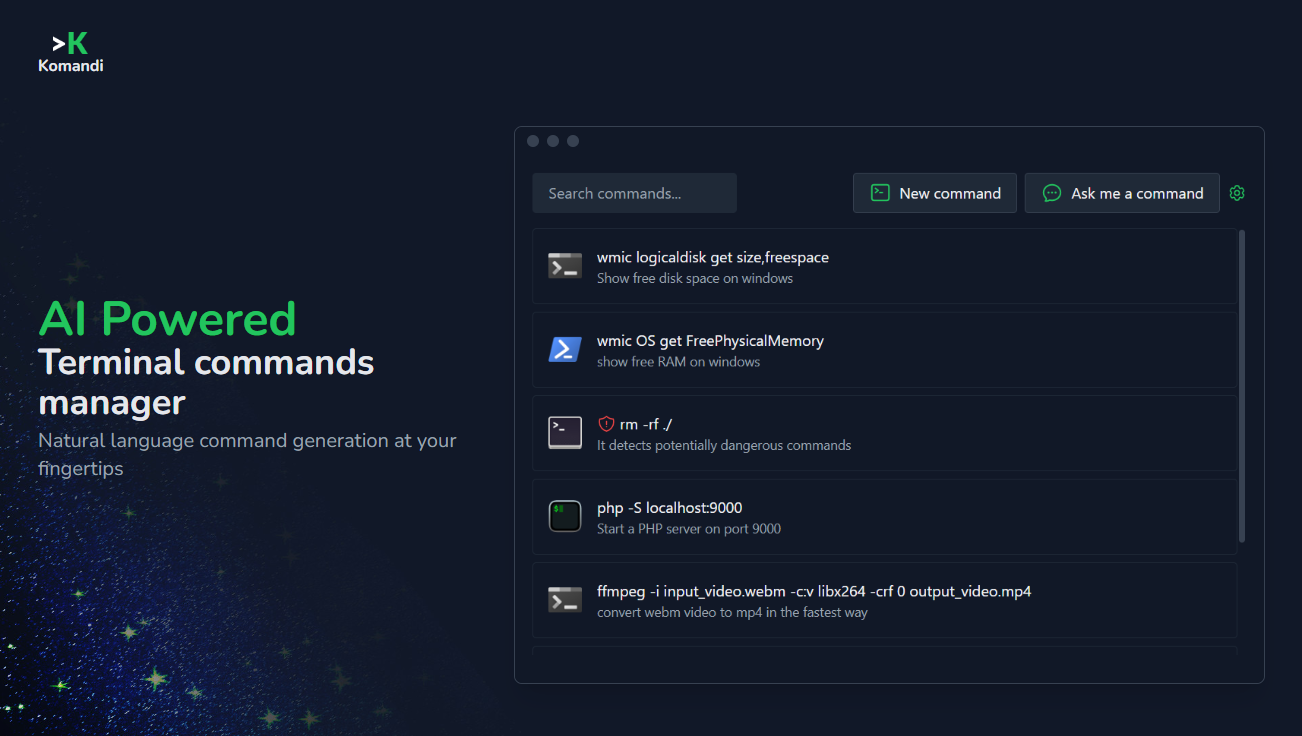
Komandi is an AI-powered CLI/terminal command manager for developers and sysadmins. It simplifies command-line operations by allowing you to manage snippets, generate complex commands from natural language, and execute them safely. It supports macOS, Windows, and Linux, streamlining your workflow by organizing frequently used commands and detecting potentially dangerous ones before execution.

Code Assistant
Visits 3.8KFavorites 153Likes 143
Sublayer
Freemium

Sublayer

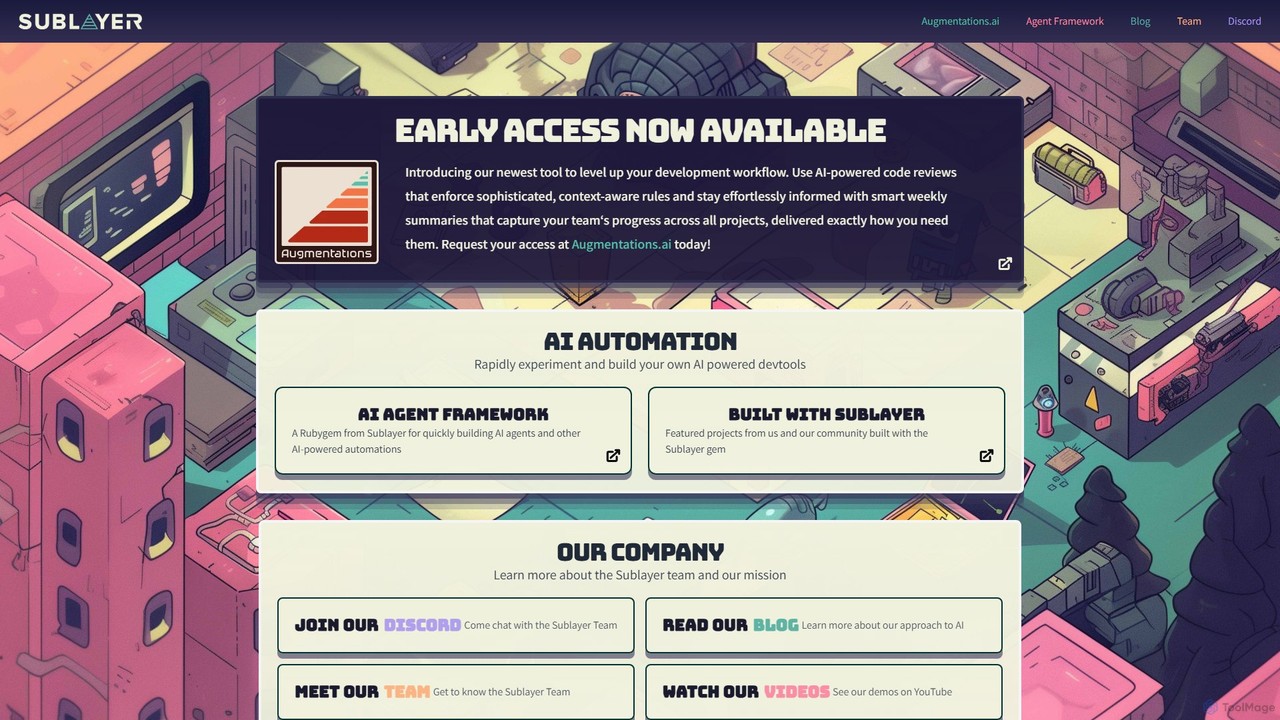
Sublayer is a model-agnostic AI agent framework for Ruby developers. It provides a powerful Rubygem to rapidly build, experiment with, and deploy AI agents and custom developer tools, enabling personalized and context-aware automation for software development workflows.

Code Assistant
Visits 3.9KFavorites 105Likes 97
Kiro
Free

Kiro

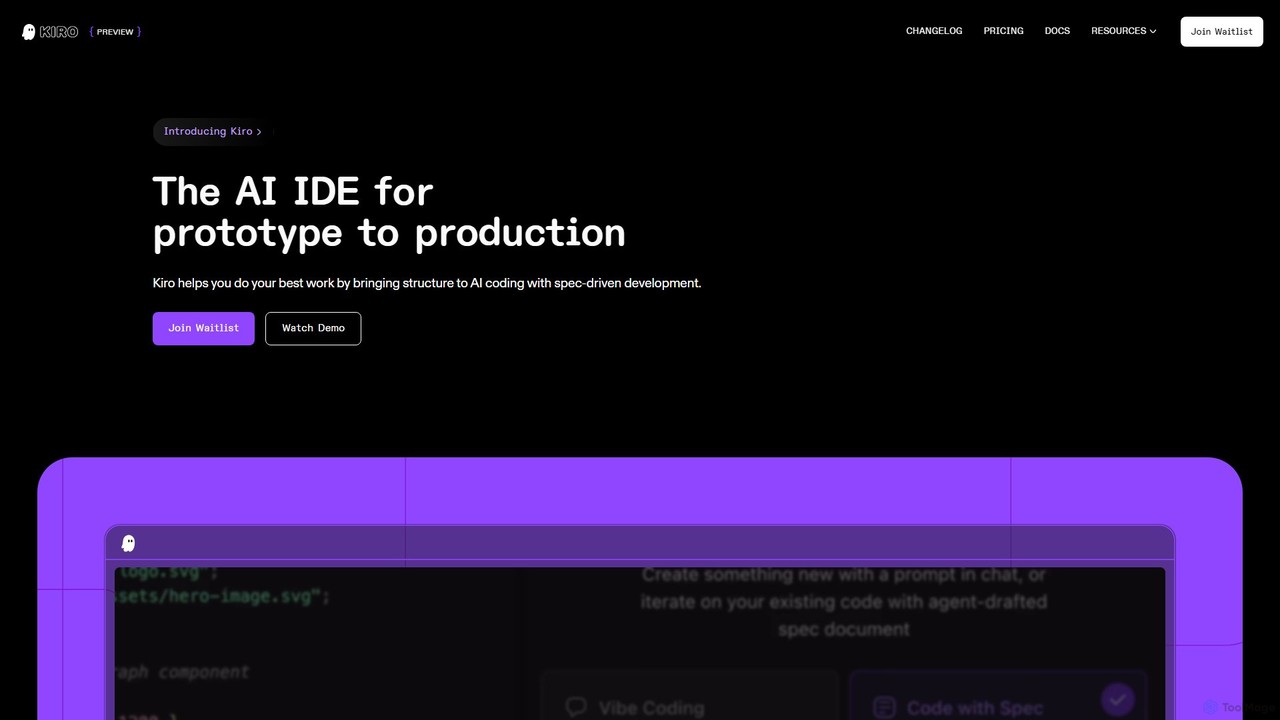
Kiro is an AI-powered Integrated Development Environment (IDE) designed to streamline the entire software development lifecycle, from prototype to production. It introduces a structured, spec-driven development approach, transforming natural language prompts into clear requirements, system designs, and executable tasks. By leveraging AI agents, Kiro automates coding, testing, and documentation, helping developers build complex applications faster and with higher quality.

Code Assistant
Visits 3.8MFavorites 109Likes 102
SQLPilot
Freemium

SQLPilot

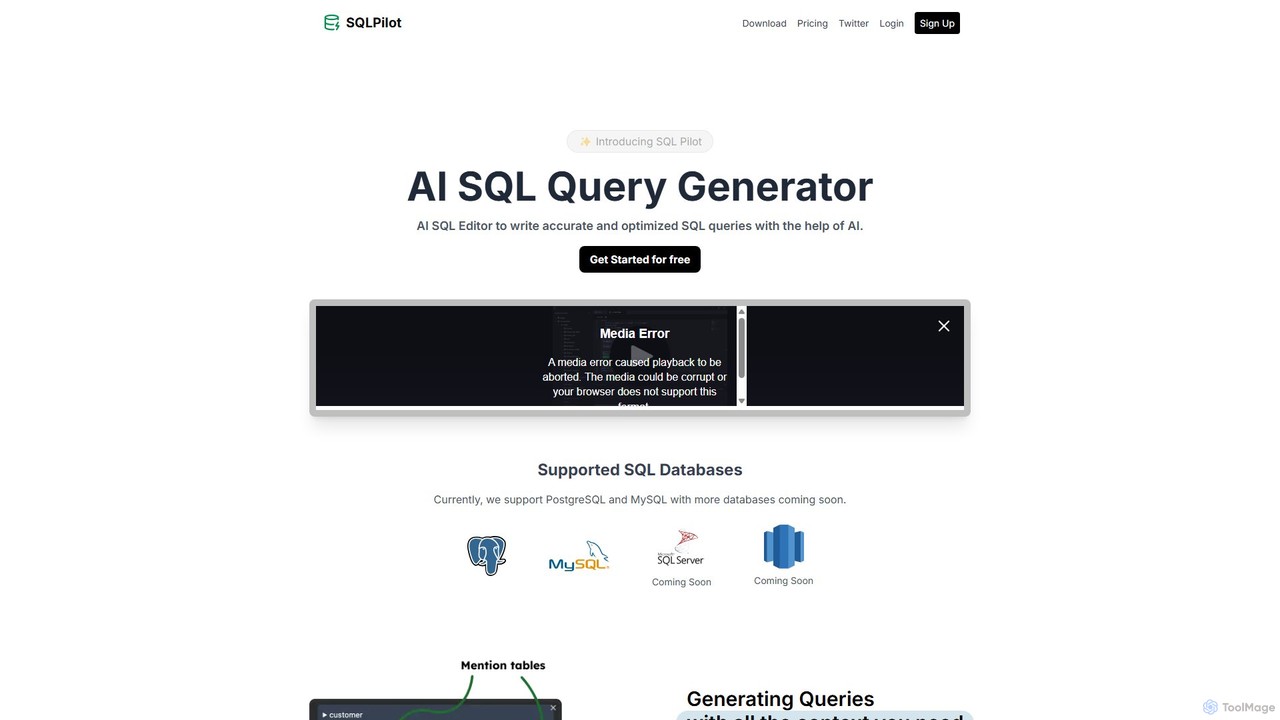
SQLPilot is an AI-powered SQL query generator and editor that transforms natural language prompts into accurate, optimized SQL queries. It supports multiple databases like PostgreSQL and MySQL, various GPT models, and ensures data privacy by not storing your credentials or schemas.

Code Assistant
Visits 4.4KFavorites 117Likes 138
WikeAI
Freemium

WikeAI

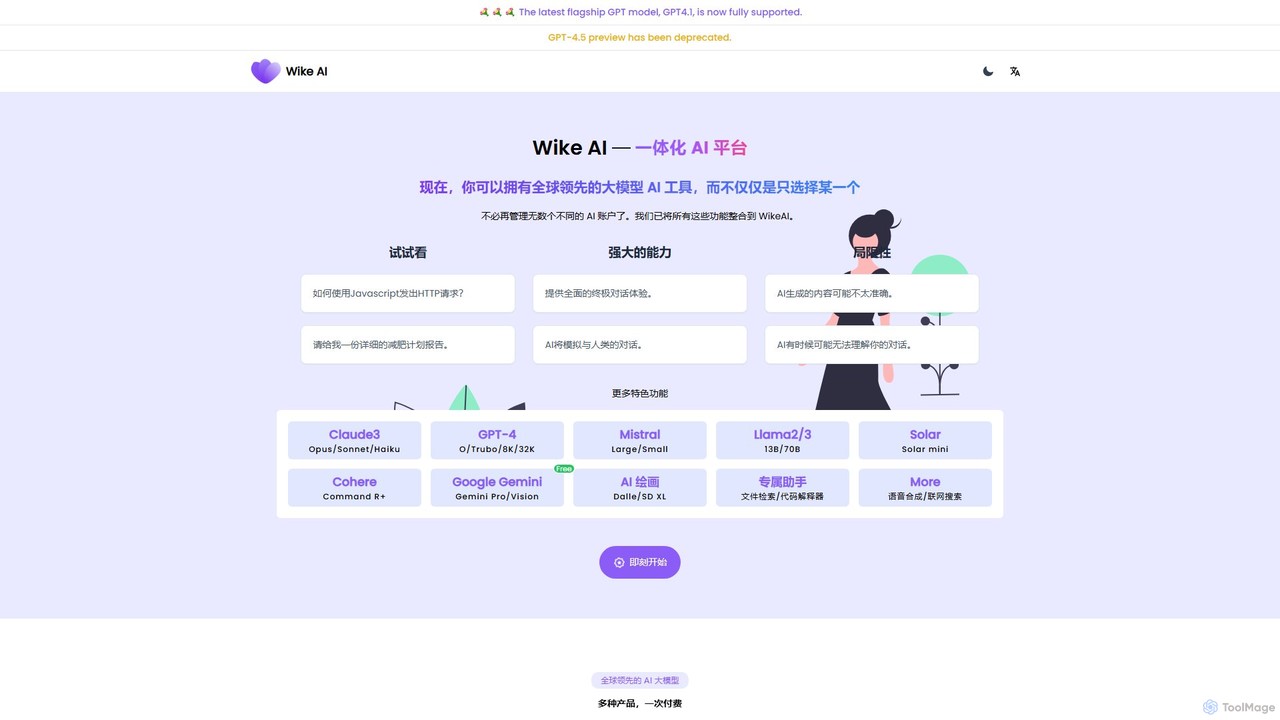
WikeAI is an all-in-one AI platform integrating leading models like GPT-4, Claude 3, Mistral, and Llama into a single interface. It offers AI chat, content generation, image creation with DALL-E 3 and Stable Diffusion, code interpretation, and web search. With a unified, token-based payment system, users can access a wide range of advanced AI capabilities without managing multiple subscriptions, making it a cost-effective and powerful solution for writers, developers, and creators.

Code Assistant
Visits 4.1KFavorites 121Likes 101
how2terminal
Freemium

how2terminal

how2terminal is an AI-powered command-line tool that translates natural language queries into shell commands. It works directly in your Unix or PowerShell terminal, suggesting commands for Bash, Zsh, and more, helping developers and sysadmins boost productivity and learn new commands without leaving their workflow.

Code Assistant
Visits 4.6KFavorites 105Likes 116
llmwizard
Freemium

llmwizard

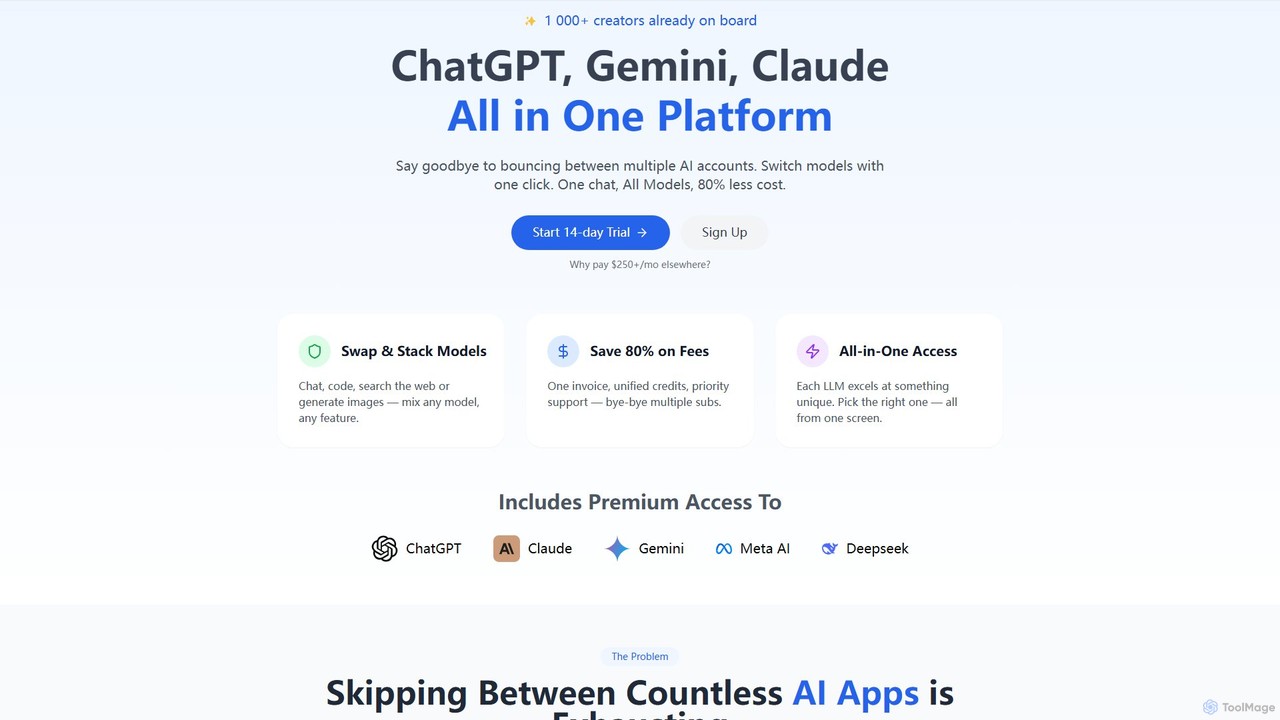
llmwizard is an all-in-one AI platform that consolidates leading AI models like ChatGPT, Gemini, and Claude into a single subscription. It allows users to seamlessly switch between models for text, image, and video generation, offering significant cost savings and enhanced productivity by eliminating the need for multiple accounts.

Code Assistant
Visits 5KFavorites 108Likes 106

GitBrain
Freemium

GitBrain

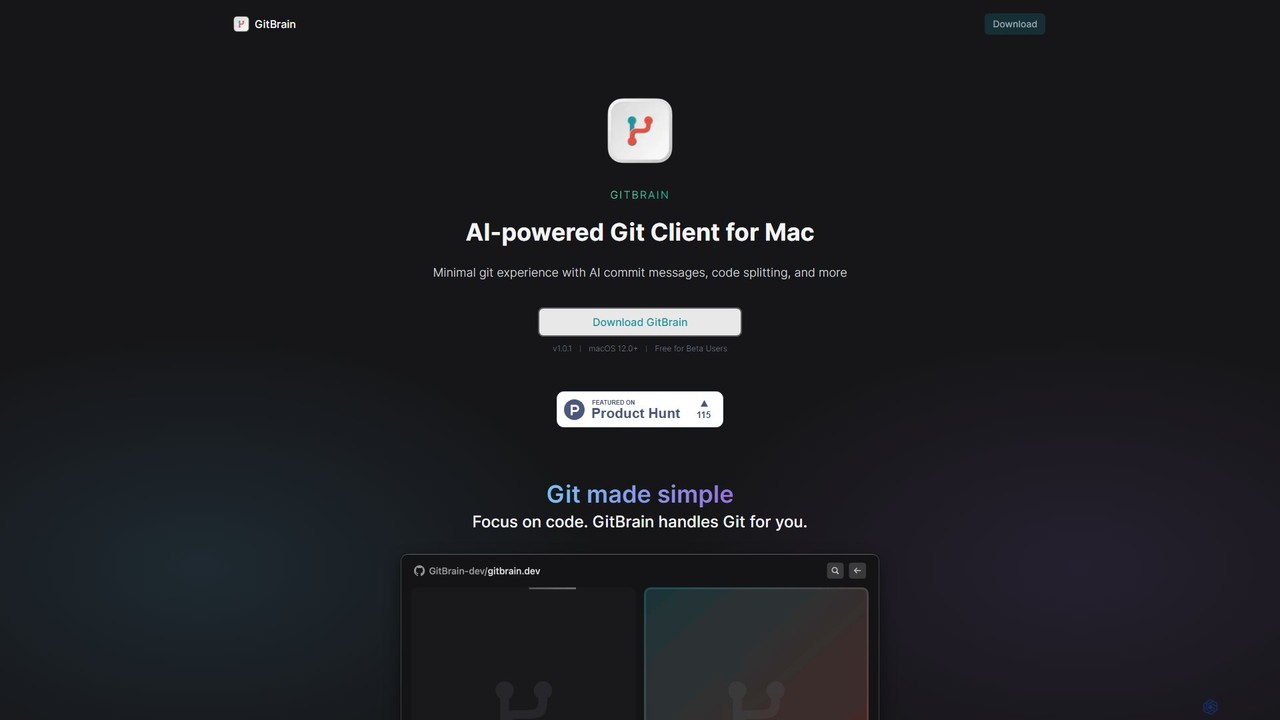
GitBrain is an AI-powered Git client for Mac designed to streamline your workflow. It automatically splits code changes into logical commits, generates clear commit messages, and provides AI-powered code summaries for self-review. With a native macOS interface, IDE integration, and a keyboard-first design, GitBrain simplifies Git management, allowing developers to focus on coding.

Code Assistant
Visits 3.4KFavorites 134Likes 149
Shortest
Free

Shortest

Shortest is an AI-powered testing framework that allows developers and QA engineers to write end-to-end tests in plain English. Built on Playwright, it translates natural language commands into executable test scripts, simplifying and accelerating the QA process with seamless GitHub integration.

Code Assistant
Visits 5.4KFavorites 137Likes 127
xxxais
Paid

xxxais

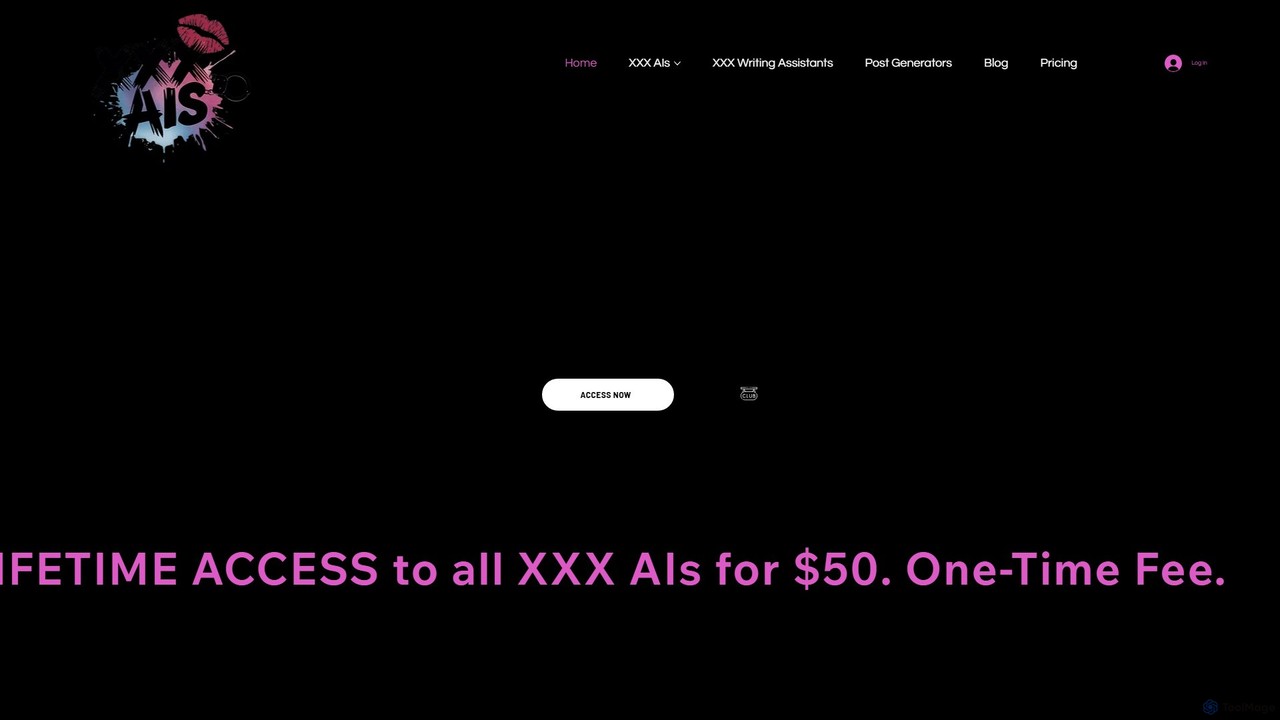
xxxais offers a comprehensive suite of diverse AI tools with a single, one-time payment. For just $50, get lifetime access to a powerful collection of utilities for writing, image generation, marketing, coding, and productivity. This all-in-one platform is designed to replace multiple expensive subscriptions, providing a cost-effective solution for creators, marketers, and developers.

Code Assistant
Visits 8.2KFavorites 104Likes 102
GiteAI
Freemium

GiteAI

GiteAI is an AI-powered tool designed for developers to automate and enhance Git commit messages. It analyzes code changes to generate detailed, standardized commits, saving time and improving repository consistency, allowing you to focus more on coding.

Code Assistant
Visits 4.6KFavorites 138Likes 133
korbit
Freemium

korbit

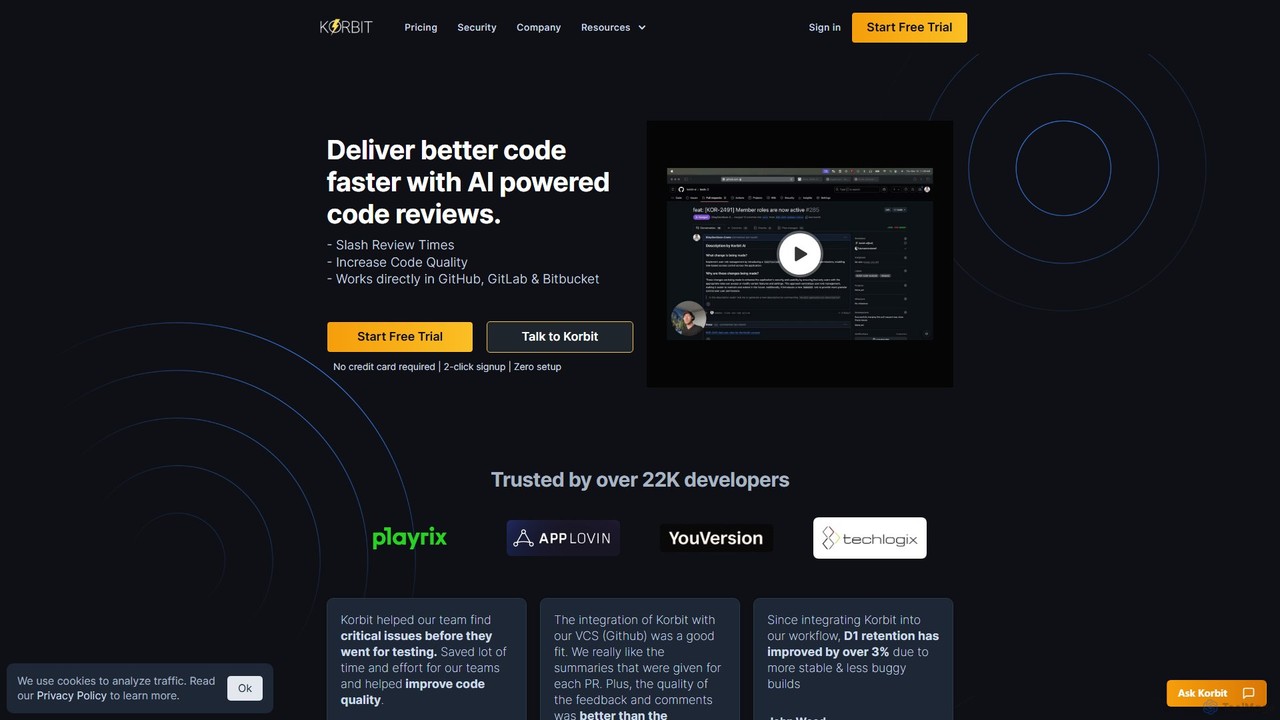
Korbit is an AI-powered code review tool that integrates with GitHub, GitLab, and Bitbucket. It helps development teams deliver better code faster by automatically detecting bugs, security vulnerabilities, and design issues, providing instant, actionable feedback directly within pull requests.

Code Assistant
Visits 5.7KFavorites 97Likes 105
hoji
Freemium

hoji

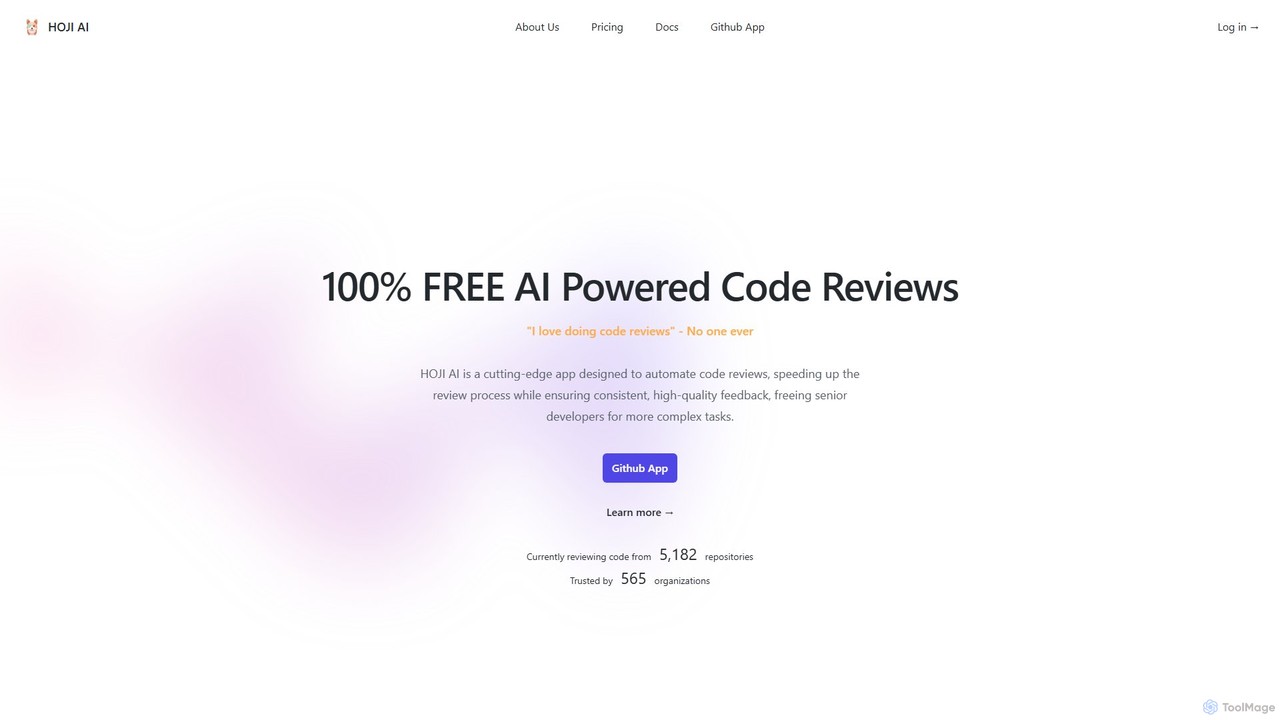
hoji is a free, AI-powered code review assistant that integrates directly with GitHub. It automates the code review process, providing instant, consistent, and unbiased feedback on pull requests. This helps development teams increase productivity, improve code quality, and reduce friction, freeing up senior developers for more complex tasks.

Code Assistant
Visits 3.3KFavorites 70Likes 61
GlobalGPT
Freemium

GlobalGPT

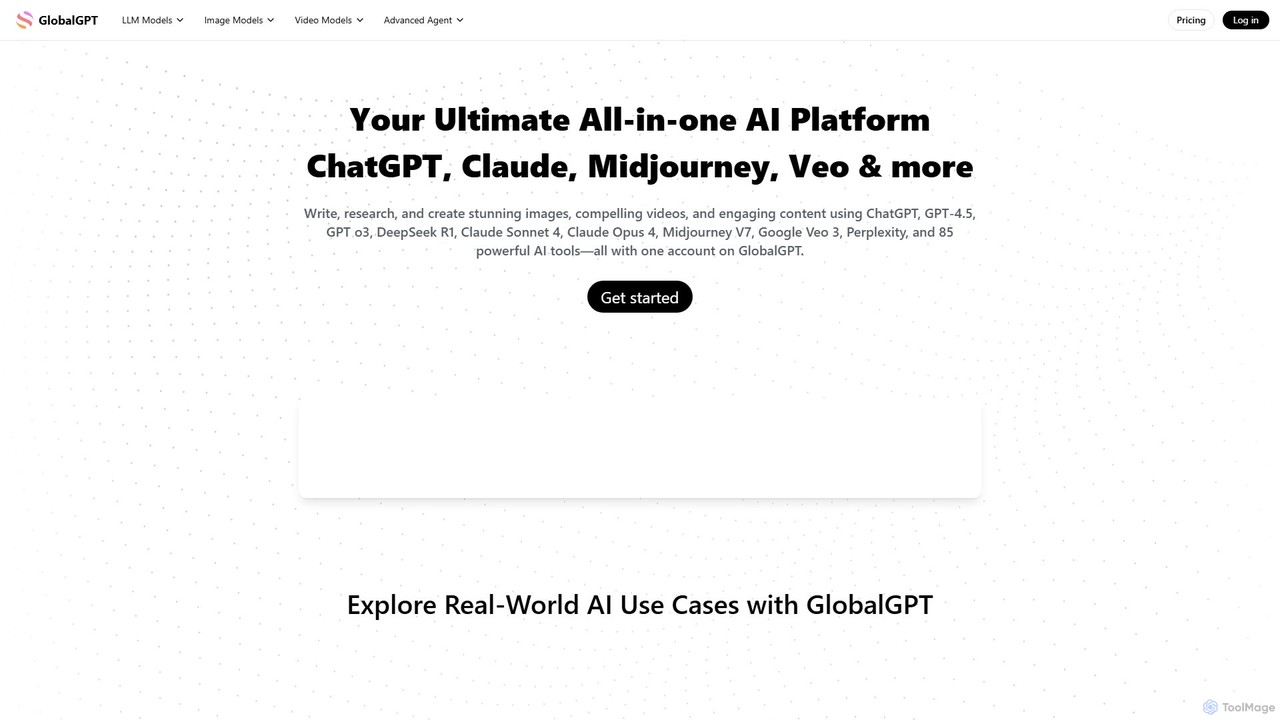
GlobalGPT is an all-in-one AI platform providing unified access to leading models like GPT-4o, Claude 4, Midjourney V7, and Google Veo. With a single subscription, users can write, research, code, and create stunning images and videos. It integrates over 85 powerful AI tools, offering unparalleled flexibility and cost-effectiveness for individuals and businesses.

Code Assistant
Visits 737.2KFavorites 108Likes 106
AmigoChat
Freemium

AmigoChat

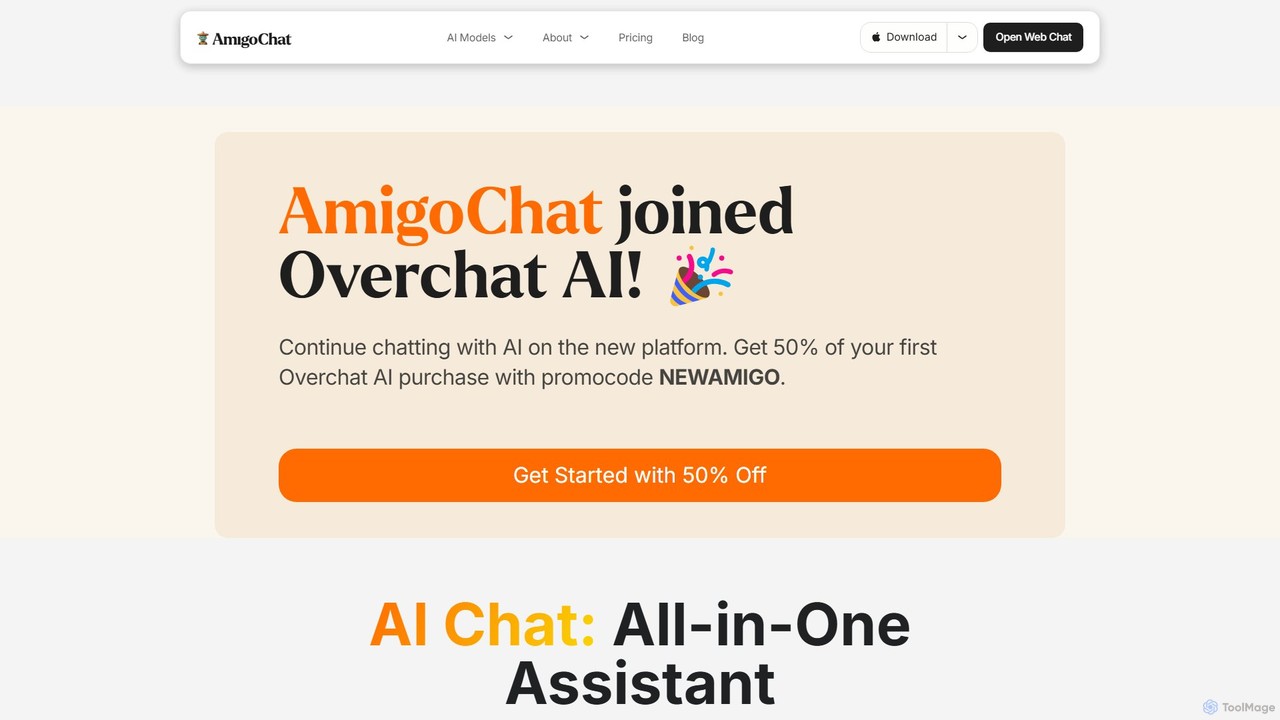
AmigoChat is an all-in-one AI chat platform that integrates dozens of leading AI models like ChatGPT, Claude, Grok, and DeepSeek into a single interface. It offers a comprehensive suite of tools for text, image, video, music, and code generation, designed for professionals, creators, and students. Now part of Overchat AI, it emphasizes versatility, privacy, and cross-platform accessibility.

Code Assistant
Visits 7.7KFavorites 96Likes 98
WhatsUpDoc.dev
Paid

WhatsUpDoc.dev

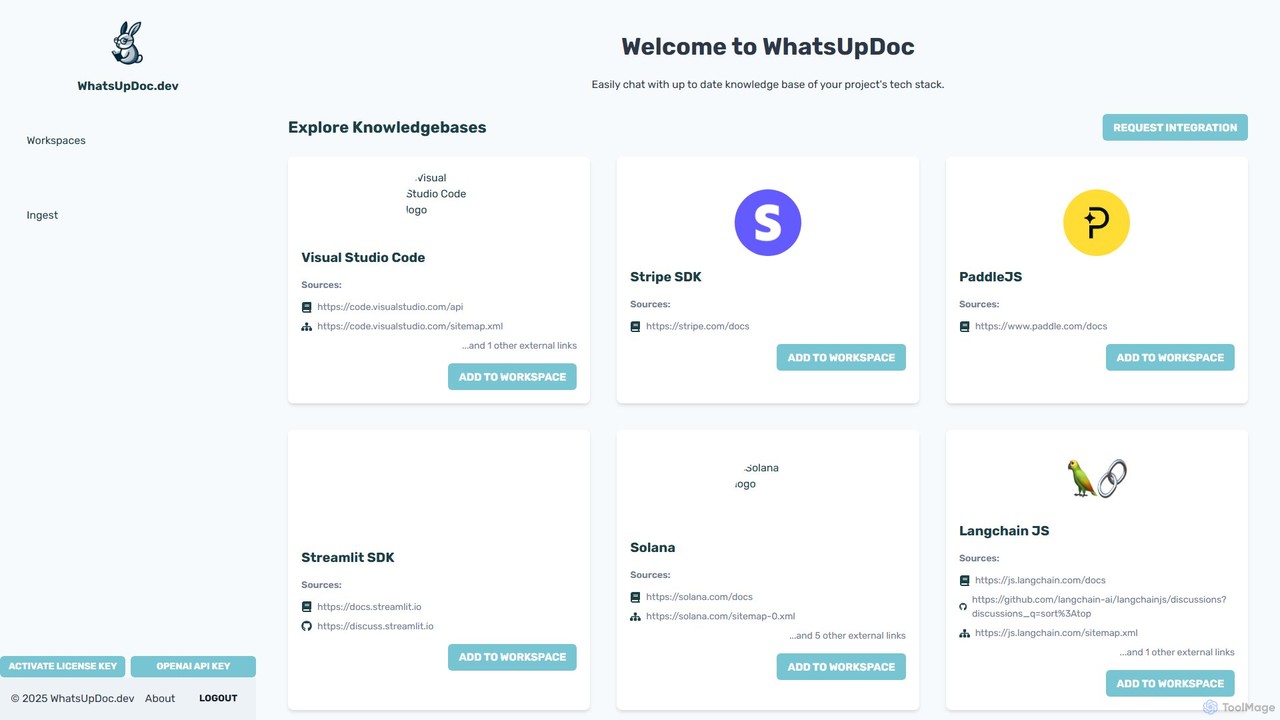
An AI-powered tool for developers to chat directly with up-to-date technical documentation and knowledge bases. It uses a RAG model to provide instant, accurate answers from sources like official docs, GitHub discussions, and blogs, enhancing productivity and learning.

Code Assistant
Visits 3.5KFavorites 118Likes 105
Vondy
Freemium

Vondy

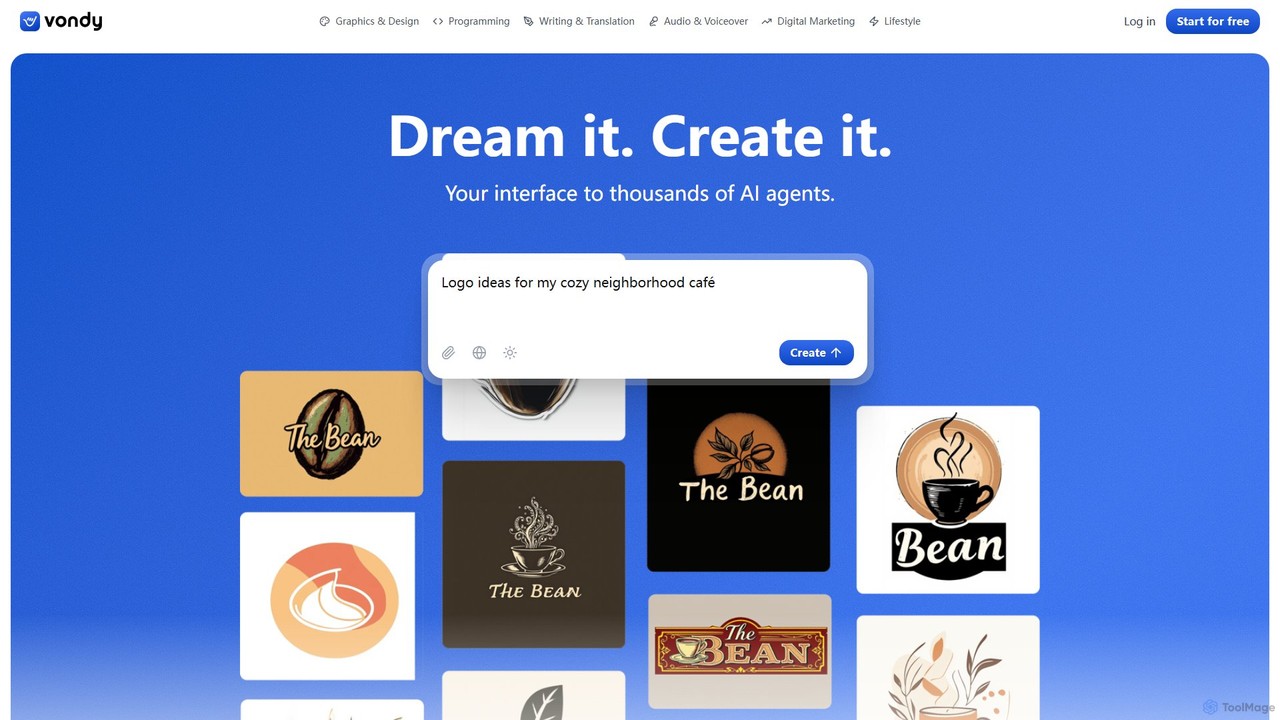
Vondy is an all-in-one AI creation platform, offering a massive library of over 40,000 specialized generators. It empowers users to instantly create visuals, audio, text, and code, streamlining the creative process from idea to finished asset without needing complex prompt engineering.

Voiceover
Visits 493.1KFavorites 88Likes 89
cubic
Freemium

cubic

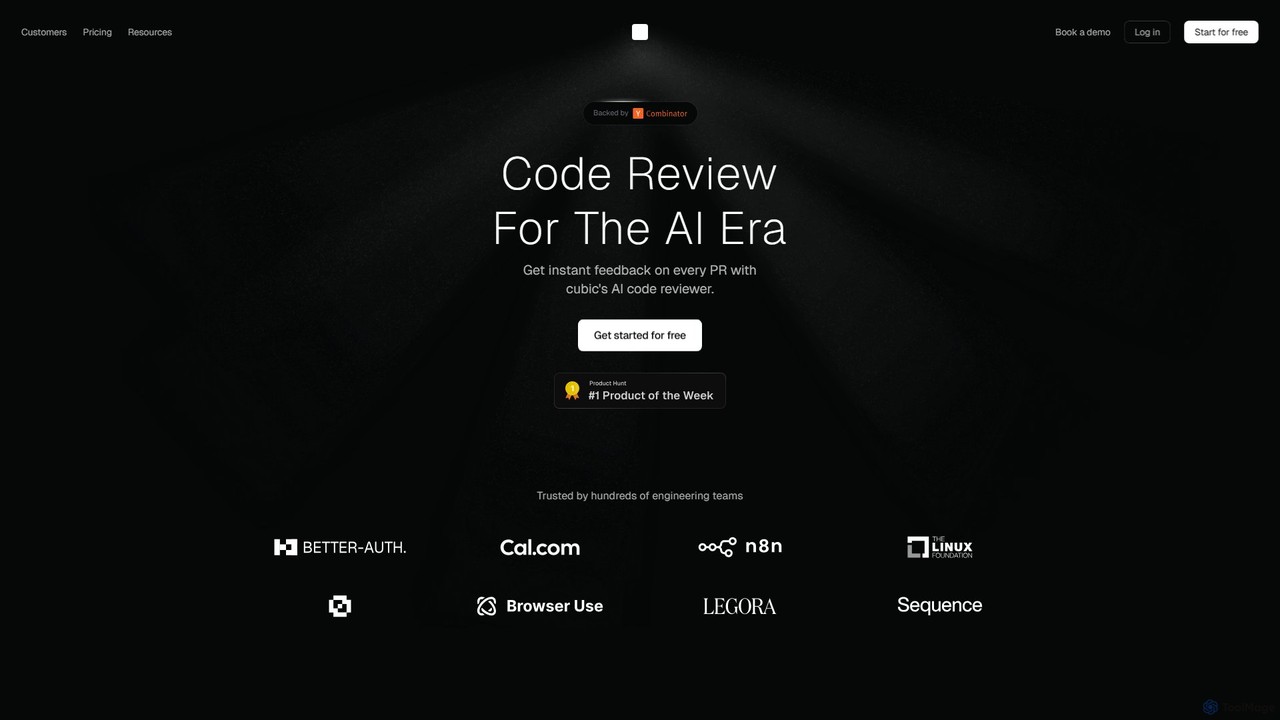
cubic is an AI-powered code review platform that helps software teams ship higher-quality code up to 3x faster. It automatically reviews pull requests in GitHub, catches bugs, enforces custom style guides, and provides one-click fixes, significantly reducing review bottlenecks and improving developer productivity.

Code Assistant
Visits 71.1KFavorites 129Likes 112
Office Kube
Freemium

Office Kube

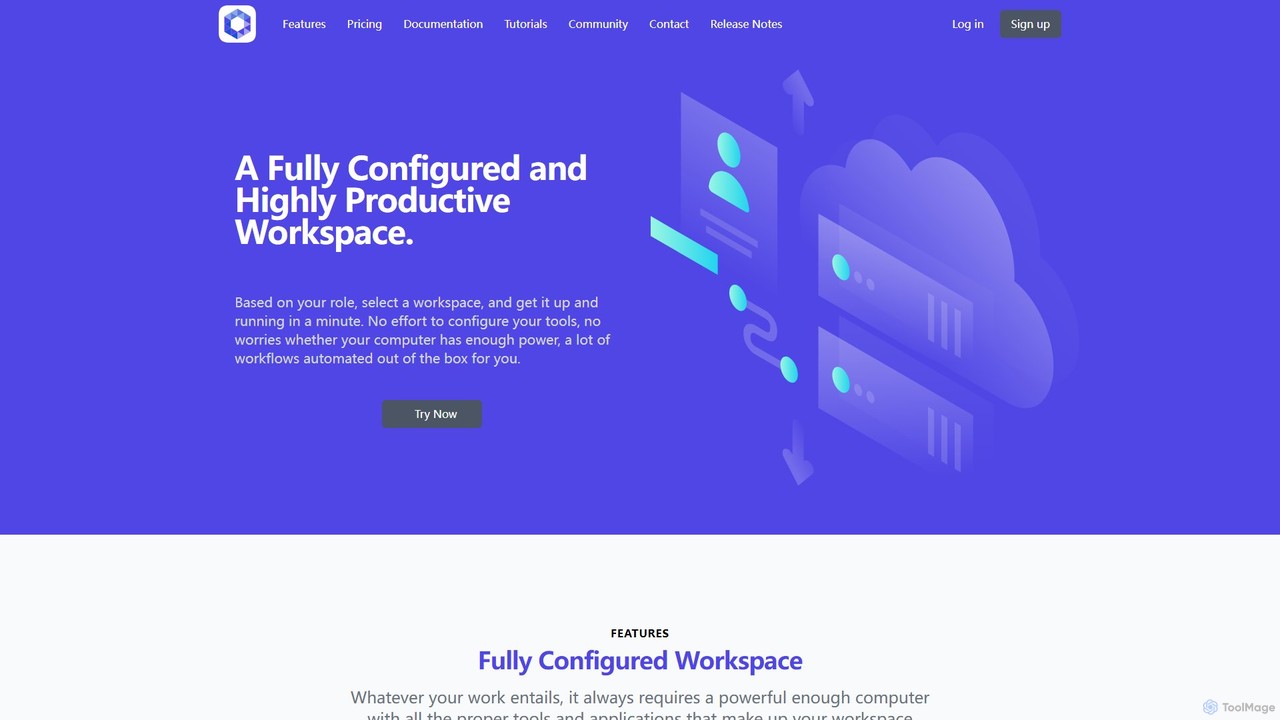
Office Kube is a cloud-native platform that provides fully configured, AI-powered workspaces accessible via a web browser. It eliminates local setup and hardware constraints by offering role-based development environments with automated workflows. Ideal for developers and teams seeking to boost productivity, streamline collaboration, and leverage enterprise-grade tools on demand.

Code Assistant
Visits 3.4KFavorites 117Likes 130
myninja.ai
Freemium

myninja.ai

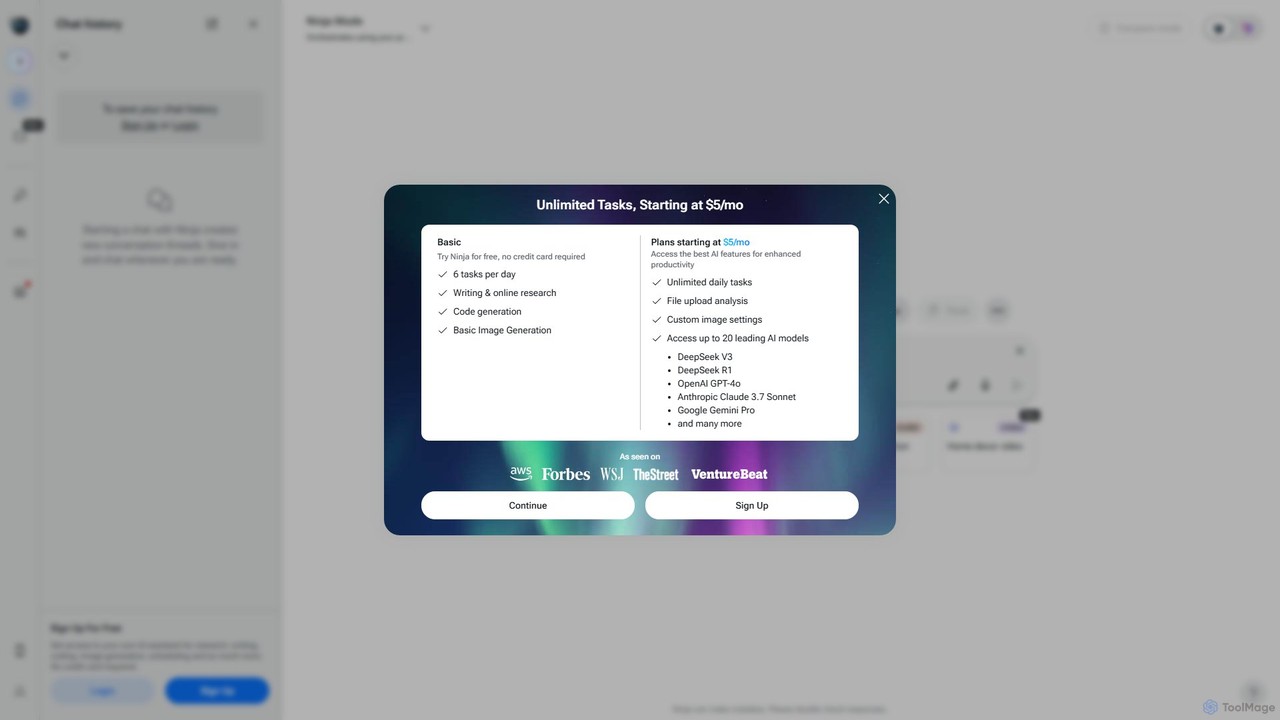
myninja.ai is an all-in-one AI agent designed to boost productivity. It integrates over 20 leading AI models like GPT-4o, Claude 3.7, and Gemini Pro into a single platform. Users can perform deep research, write code, generate images, analyze files, and schedule meetings, all from one intuitive chat interface. It offers a free plan and affordable premium options starting at $5/mo.

Code Assistant
Visits 230.4KFavorites 101Likes 94
GitButler
Freemium

GitButler

GitButler is a next-generation version control client that allows developers to organize their work into multiple virtual branches simultaneously. It automates the process of managing changes, enabling parallel work on different features and bug fixes without the overhead of traditional Git branches, streamlining the entire development workflow.

Code Assistant
Visits 111.4KFavorites 136Likes 137
AutoKT
Freemium

AutoKT

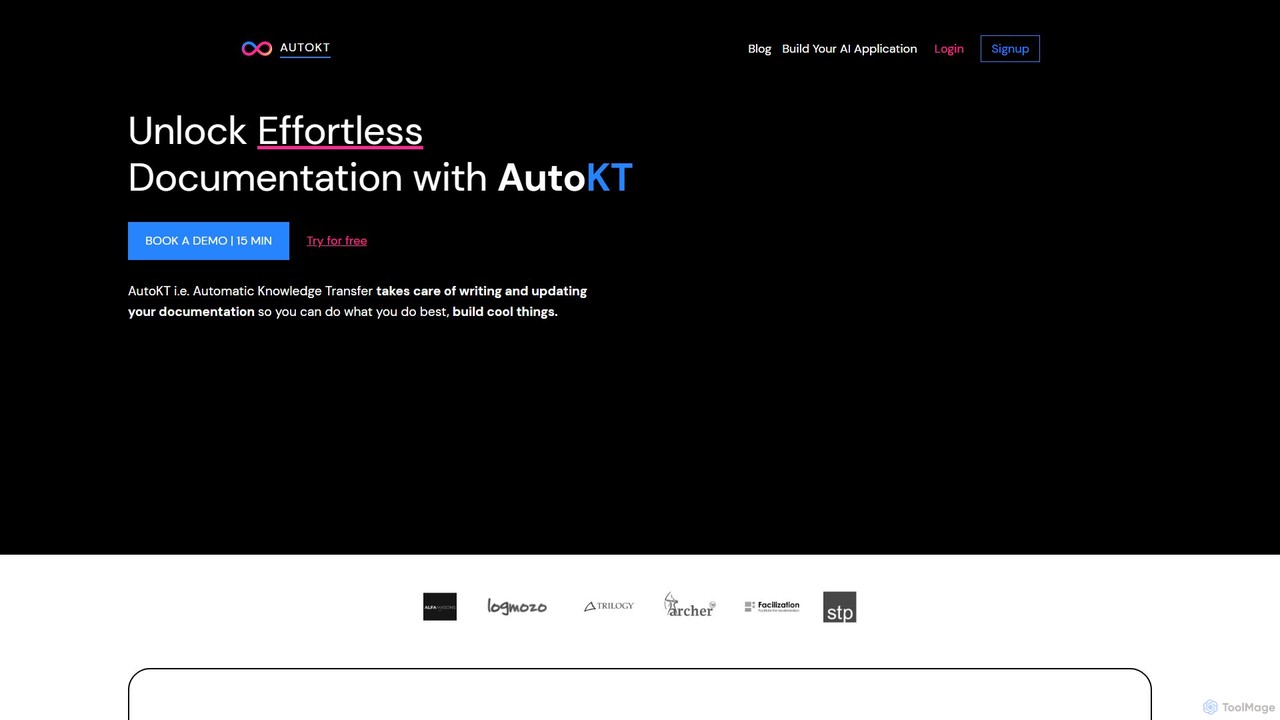
AutoKT (Automatic Knowledge Transfer) is an AI-powered platform that automates the creation and maintenance of internal documentation for software development teams. It frees up developer time, accelerates onboarding, and ensures your knowledge base is always up-to-date, breaking the cycle of outdated docs.

Code Assistant
Visits 4KFavorites 156Likes 152

About Code Assistant

Code Assistants are AI-powered tools that integrate directly into a developer's environment to provide intelligent, real-time coding support. They leverage large language models trained on vast code repositories to offer features like contextual autocompletion, bug detection, and code explanation. This significantly enhances developer productivity by accelerating routine tasks, reducing errors, and improving overall code quality. Unlike standalone code generators, these assistants act as interactive partners within the existing coding workflow.

Core Features

  • Intelligent Code Completion: Suggests entire lines or blocks of code based on the current context and project files.
  • Real-time Bug Detection: Identifies potential errors, vulnerabilities, and anti-patterns as you type, suggesting immediate fixes.
  • Code Refactoring & Optimization: Recommends improvements for code clarity, performance, and maintainability.
  • Natural Language to Code: Translates plain language comments or descriptions into functional code snippets.
  • In-line Documentation & Explanation: Generates comments or explains complex code blocks on demand, clarifying logic and purpose.

Use Cases

Code Assistants are utilized by software developers, data scientists, and students across all programming languages. They are essential for rapid prototyping, learning new frameworks, maintaining legacy codebases, and accelerating daily development cycles. For instance, a developer can scaffold a new API endpoint in minutes or a data scientist can quickly generate Python code for data visualization.

How to Choose

When selecting a Code Assistant, first consider its integration support for your preferred IDE (e.g., VS Code, JetBrains) and its proficiency in your primary programming languages. Evaluate the performance and accuracy of its suggestions, as models can vary. For enterprise use, scrutinize security and privacy policies, especially regarding how your code is handled. Finally, compare advanced features like test generation and refactoring capabilities to match your specific workflow needs.

Featured tool rankings

Code Assistant use cases

1

Accelerating API Endpoint Development

A backend developer is tasked with creating a new REST API endpoint for a user profile service. Instead of writing boilerplate code from scratch, they type a comment like 'function to fetch user by id from database'. The Code Assistant instantly generates a complete function stub, including asynchronous handling, database query structure, and error handling blocks. This allows the developer to focus on the specific business logic, reducing development time for the new feature by over 50%.

2

Debugging and Understanding Legacy Code

A maintenance engineer is assigned a bug in a large, unfamiliar legacy codebase written in C++. They highlight a complex function they don't understand and ask the Code Assistant to 'explain this code'. The tool provides a natural language summary of the function's purpose, its inputs, and its outputs. It also flags a potentially unsafe memory operation within the function, which turns out to be the source of the bug. This process transforms hours of manual code tracing into a few minutes of guided analysis.

3

Automating Unit Test Generation

A software developer has just finished implementing a complex business logic function in Python. To ensure its correctness and adhere to Test-Driven Development (TDD) principles, they need to write comprehensive unit tests. Instead of manually writing each test case, they right-click the function and select 'Generate Unit Tests'. The Code Assistant analyzes the function's logic, identifies edge cases (e.g., null inputs, empty lists, zero values), and generates a complete test file using a popular framework like PyTest, including assertions for expected outcomes.

4

Learning a New Programming Language

A developer experienced in Python is learning Rust for a new project. While working, they encounter a concept like 'ownership' that is unique to Rust. They write a comment: 'create a function that takes ownership of a string and returns its length'. The Code Assistant provides the correct Rust syntax, including type annotations and the proper way to handle borrowing. This interactive, in-context learning is far more effective than switching between the editor and documentation, accelerating their proficiency in the new language.

5

Refactoring Code for Better Readability

A developer identifies a long and convoluted method in a Java application that is difficult to maintain. They highlight the entire method and use the Code Assistant's refactoring feature. The tool suggests breaking it down into several smaller, single-purpose private methods with descriptive names. It also identifies a loop that could be replaced with a more efficient and readable Stream API call. With a few clicks, the developer applies these suggestions, instantly improving the code's maintainability and clarity for the rest of the team.

6

Generating Code from Natural Language

A data analyst, proficient in SQL but less so in Python, needs to perform a complex data transformation using the Pandas library. Instead of searching for syntax, they write a comment in their script: 'group the dataframe by 'category', calculate the mean of 'sales' and sum of 'quantity', and sort descending by sales'. The Code Assistant translates this instruction directly into the corresponding Pandas code, complete with the correct function chaining (`.groupby()`, `.agg()`, `.sort_values()`). This empowers users to leverage powerful libraries without needing to memorize their specific API.

Code Assistant FAQ

What is an AI Code Assistant?

An AI Code Assistant is a tool that integrates into a programmer's Integrated Development Environment (IDE) to provide real-time, intelligent help with coding. It functions like an expert pair programmer, analyzing the context of your code to suggest completions, identify bugs, generate documentation, and even write entire functions based on plain language descriptions. Unlike a simple autocomplete, it understands the broader project structure and programming logic to offer highly relevant and useful suggestions.

How to choose the right AI Code Assistant?

Choosing the right assistant depends on your specific needs. Consider these factors:

  • IDE and Language Support: Ensure it has a robust plugin for your editor (e.g., VS Code, JetBrains, Neovim) and excels in the languages you use daily.
  • Performance and Accuracy: Look for an assistant that provides fast, relevant suggestions without slowing down your IDE. The quality of suggestions is paramount.
  • Security and Privacy: If you work with proprietary code, check their data policy. Does it train on your code? Are there options for local or on-premise models?
  • Feature Set: Do you just need code completion, or do you also want features like unit test generation, code refactoring, and in-line chat? Compare the advanced capabilities.
Do AI Code Assistants replace developers?

No, AI Code Assistants are tools designed to augment, not replace, human developers. They excel at automating repetitive tasks, catching common errors, and providing quick solutions to standard problems. This frees up developers to focus on higher-level tasks like system architecture, complex problem-solving, and creative solutions. The final code's quality, security, and correctness still rely on the developer's expertise and critical review. They are powerful partners that enhance productivity and code quality.

What's the difference between a Code Assistant and a static code analyzer?

A static code analyzer (like SonarQube or ESLint) scans your entire codebase against a predefined set of rules to find bugs, vulnerabilities, and code smells. It's a verification step. An AI Code Assistant, on the other hand, is an interactive tool that works with you in real-time as you write code. It uses AI to understand context and intent, offering creative suggestions, generating new code, and explaining logic. In short, a static analyzer checks existing code for problems, while a code assistant helps you write better code from the start.

Can AI Code Assistants work with any programming language?

Most modern AI Code Assistants support a wide range of popular programming languages like Python, JavaScript, TypeScript, Java, C++, and Go. However, their proficiency can vary. They tend to perform best with languages that have vast amounts of public code available for training their models. For more niche or newer languages, the quality of suggestions might be lower. It's always best to check the specific language support list and user reviews for the assistant you are considering to ensure it meets your needs for your primary tech stack.