ToolMage
Sign in

Best 18 User Research AI tools for Productivity

Popular User Research AI tools in Productivity include UserTesting, Hotjar, Pulse Labs, Sprig, UXArmy, Wynde, Entropik, Hubble, User Persona, and Featurely, helping you work more efficiently.

RowebAI
Freemium

RowebAI

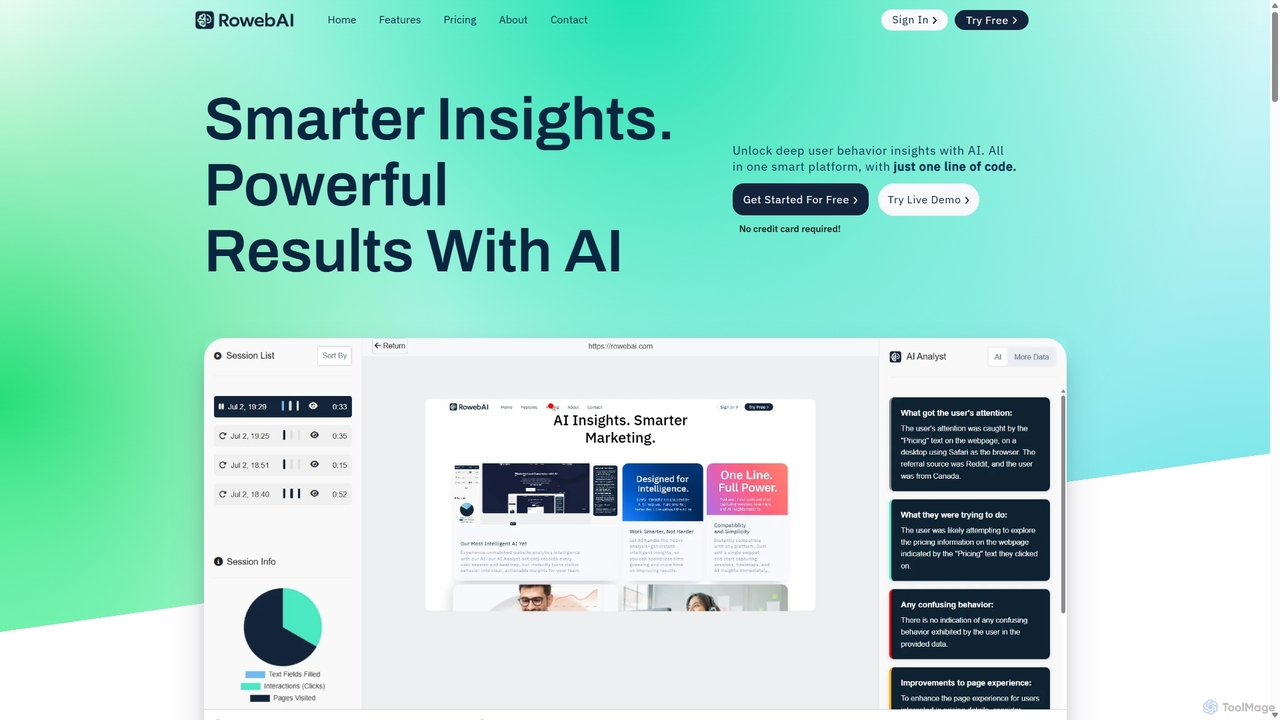
RowebAI is an AI-powered platform that provides deep insights into user behavior through website heatmaps and session recordings. It automatically analyzes visitor interactions, identifies patterns, and generates actionable summaries to help businesses optimize user experience, improve conversion rates, and make data-driven decisions without slowing down their website.

Website Analytics
Visits 5.4KFavorites 135Likes 113
UXArmy
Freemium

UXArmy

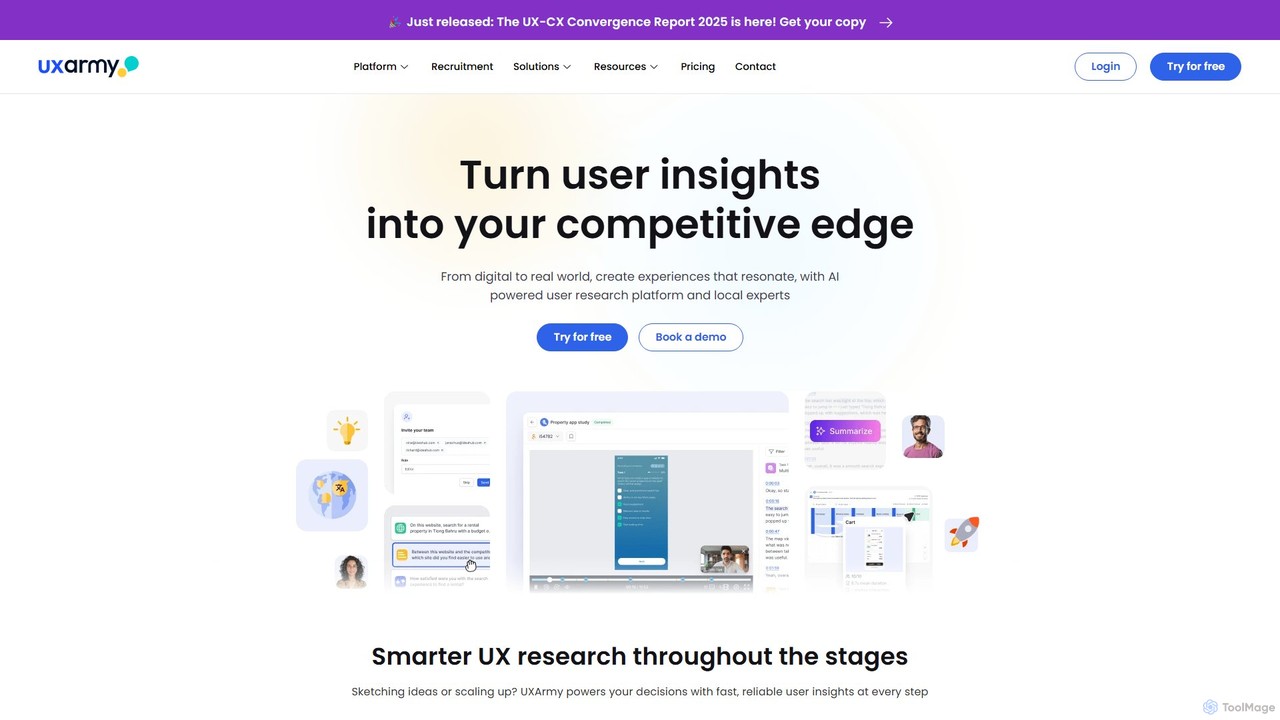
UXArmy is an AI-powered, all-in-one user research platform for remote usability testing and user insights. It enables teams to conduct unmoderated tests, moderated interviews, card sorting, and tree testing. With a global participant panel and AI-driven analysis, it helps businesses turn user feedback into a competitive advantage by creating better digital experiences.

Testing
Visits 63.5KFavorites 143Likes 145
Entropik
Freemium

Entropik

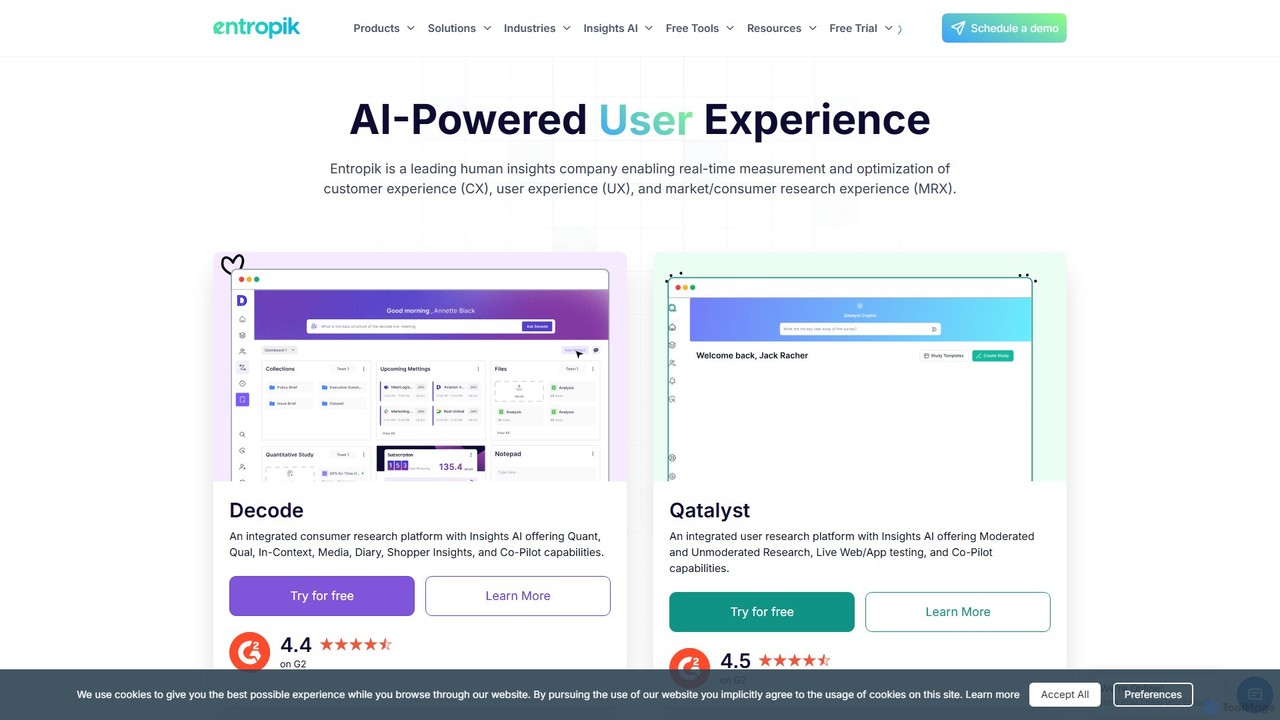
Entropik is an AI-powered human insights platform for consumer and user research. It uses Emotion AI, Behavior AI, and Generative AI to analyze customer feedback, facial expressions, and eye-tracking, delivering deep insights 4x faster than traditional methods. Ideal for market, user, and customer experience research.

Customer Feedback
Visits 18.4KFavorites 133Likes 118
Featurely

Featurely

Featurely is a cutting-edge AI platform that simulates human behavior to help businesses anticipate user needs and desires. It allows product managers, designers, and marketers to test ideas, features, and user flows with AI-driven personas, providing rapid, data-driven insights to optimize user experience and accelerate product development before writing a single line of code.

Product Management
Visits 7.9KFavorites 160Likes 154
Pulse Labs
Freemium

Pulse Labs

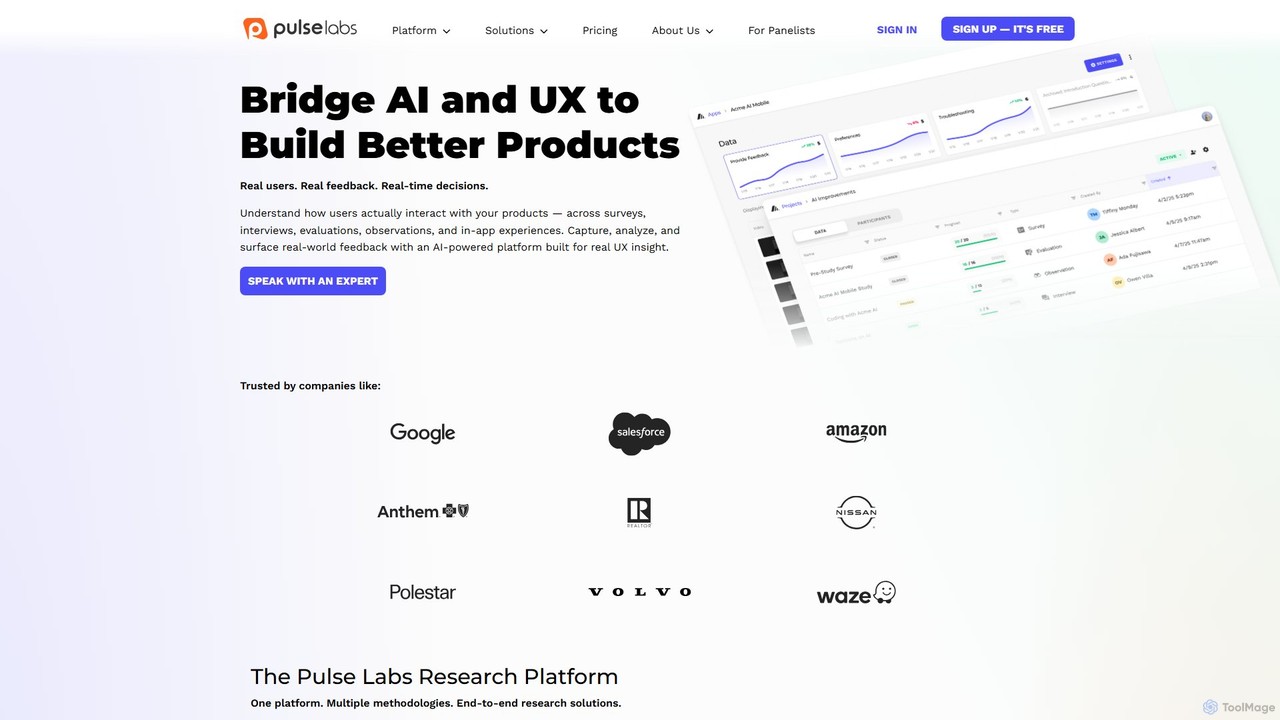
Pulse Labs is an AI-powered user research platform that helps businesses build better products by capturing and analyzing real-world user feedback. It offers a suite of tools for surveys, interviews, usability testing, and in-app feedback to provide actionable insights.

Customer Feedback
Visits 368KFavorites 117Likes 108
Hotjar
Freemium

Hotjar

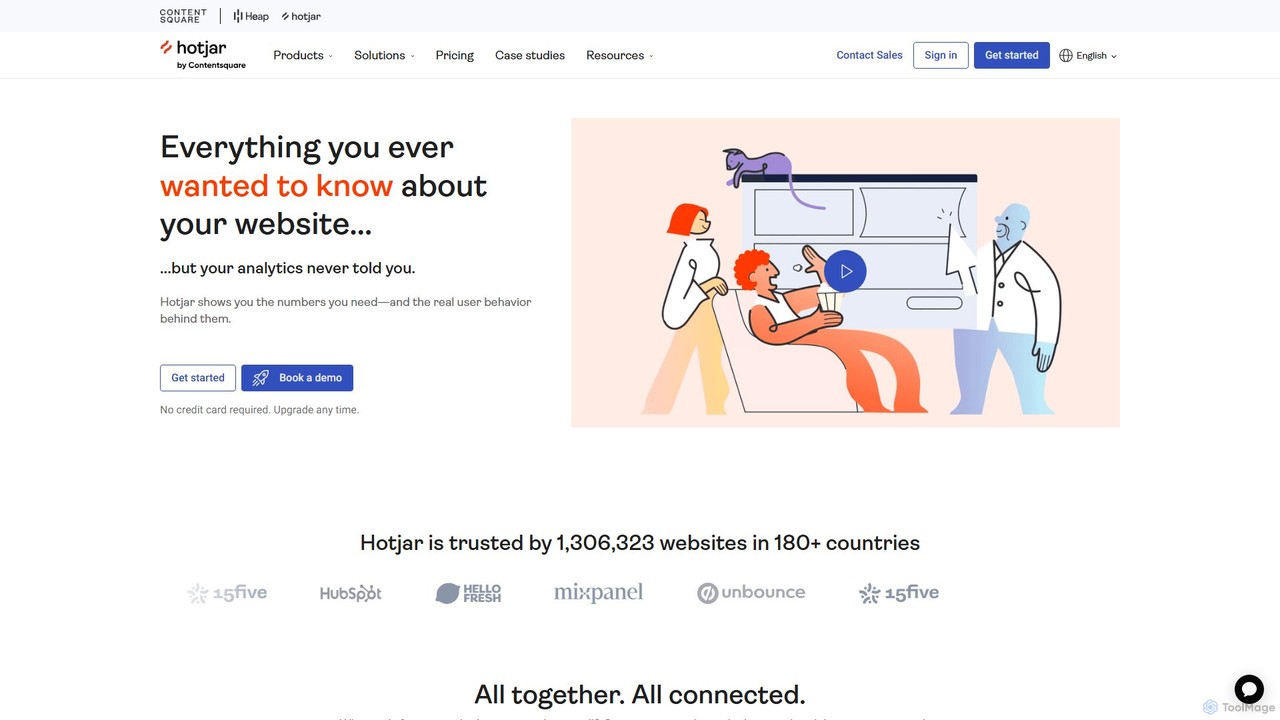
Hotjar is an all-in-one product experience insights platform that reveals the online behavior and voice of your users. Through tools like Heatmaps, Session Recordings, Surveys, and Feedback, it helps you understand what users do on your site and why, enabling you to improve user experience and conversion rates.

User Behavior Analytics
Visits 768KFavorites 111Likes 116
1Flow
Freemium

1Flow

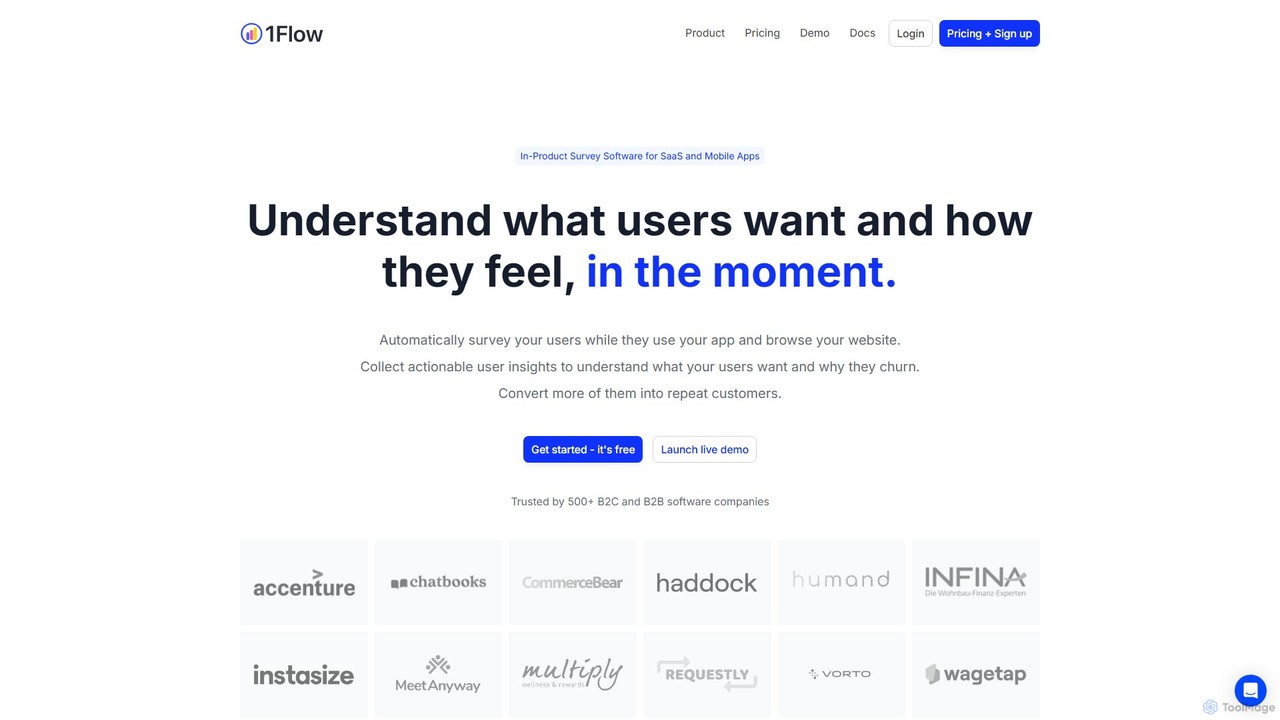
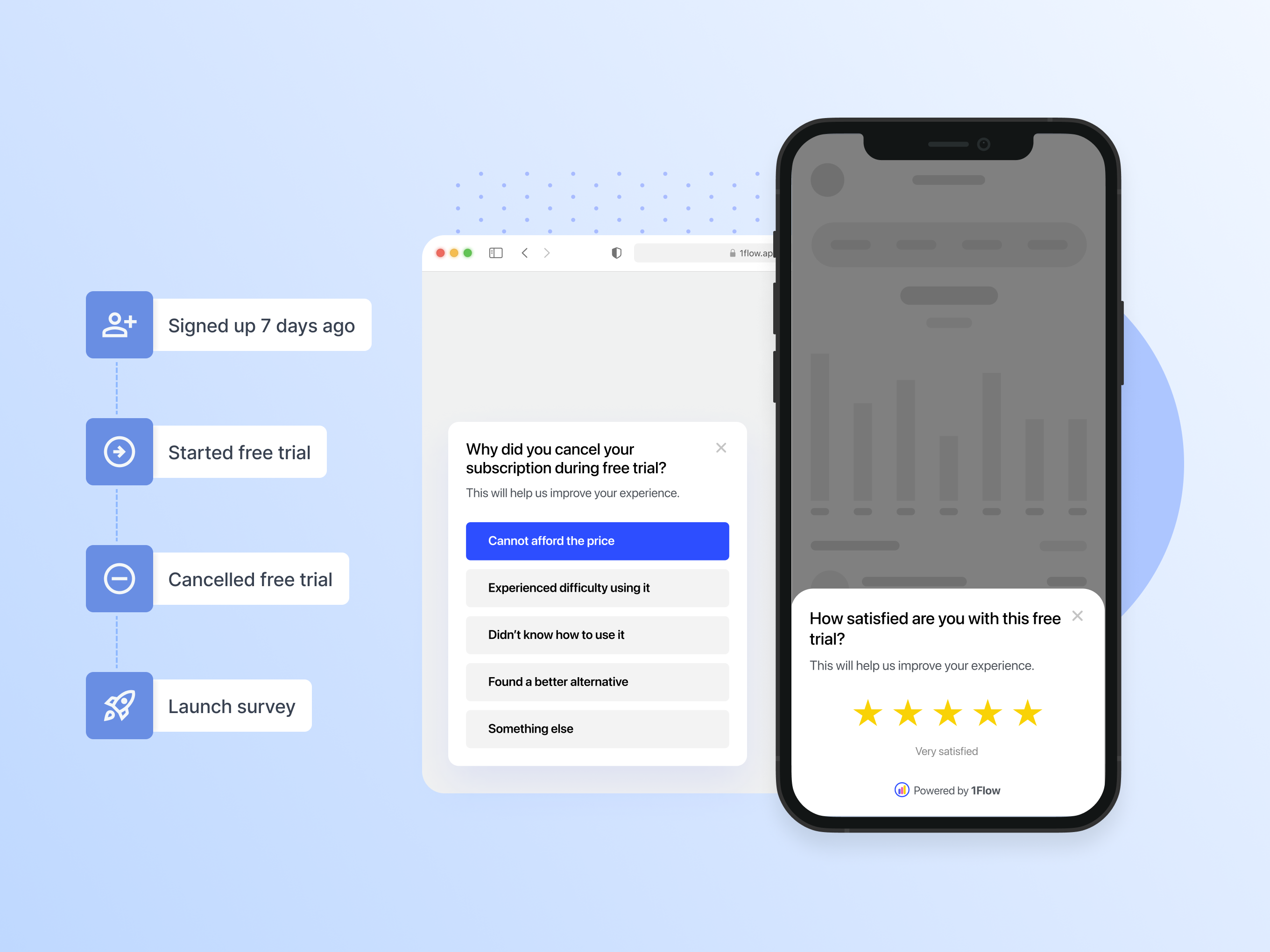
1Flow is an AI-powered, in-product microsurvey platform for SaaS and mobile apps. It enables teams to create targeted, contextual surveys to understand user needs, collect real-time feedback, and ultimately reduce churn and improve retention.

User Behavior
Visits 6.8KFavorites 147Likes 144
UserTesting
Paid

UserTesting

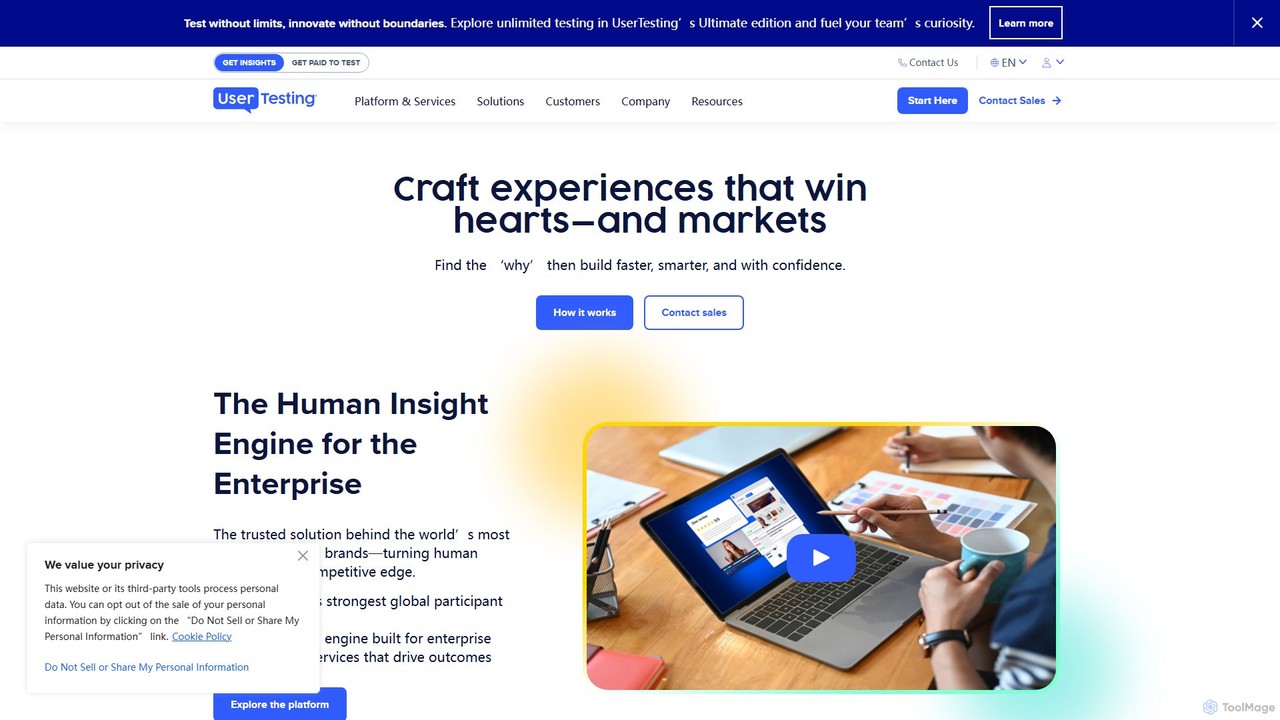
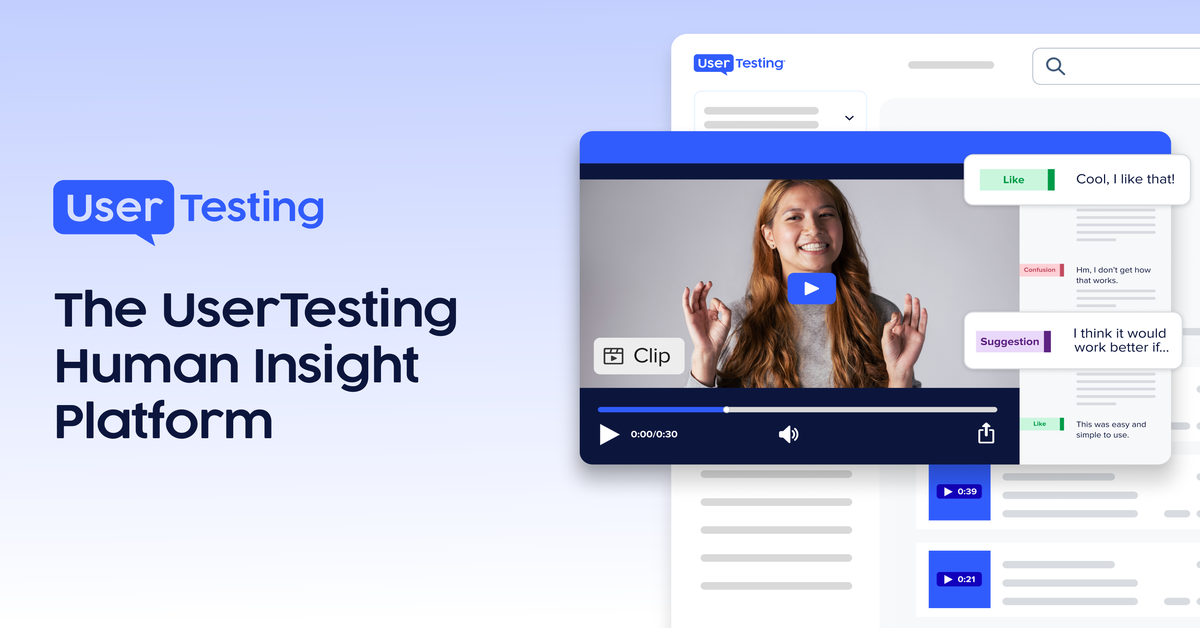
UserTesting is a leading human insight platform that enables organizations to see, hear, and understand real customer experiences. By leveraging a global network of participants and AI-powered analytics, it helps teams in product, marketing, and design gather video-first feedback to validate decisions, optimize experiences, and build customer-centric products with confidence.

Analytics
Visits 3.4MFavorites 112Likes 116
getdescriby
Freemium

getdescriby

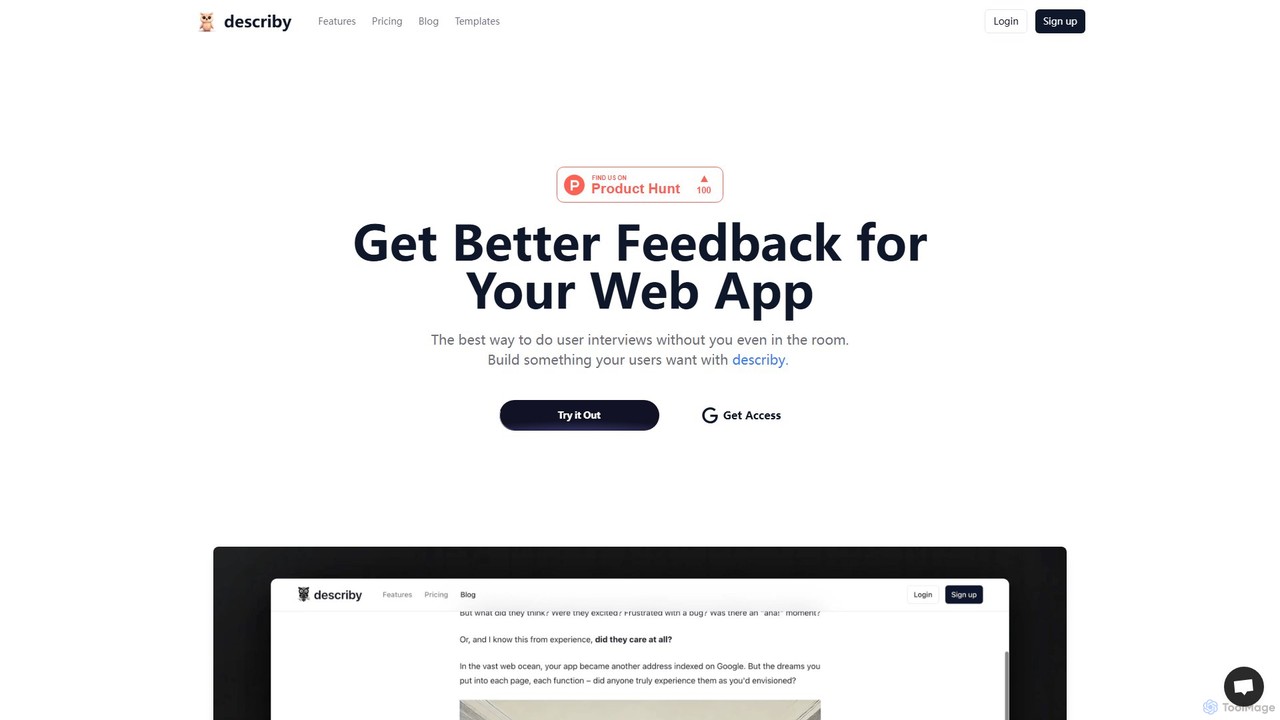
getdescriby is an AI-powered platform designed to automate user interviews and collect high-quality feedback for web applications. It uses a sophisticated AI voice agent to conduct natural, in-depth conversations with your users via a web page, an embeddable widget, or even phone calls. This allows product teams to gather crucial insights and build products that users truly want, without the time commitment of manual interviews.

Feedback Collection
Visits 4.6KFavorites 134Likes 135
User Persona
Free

User Persona

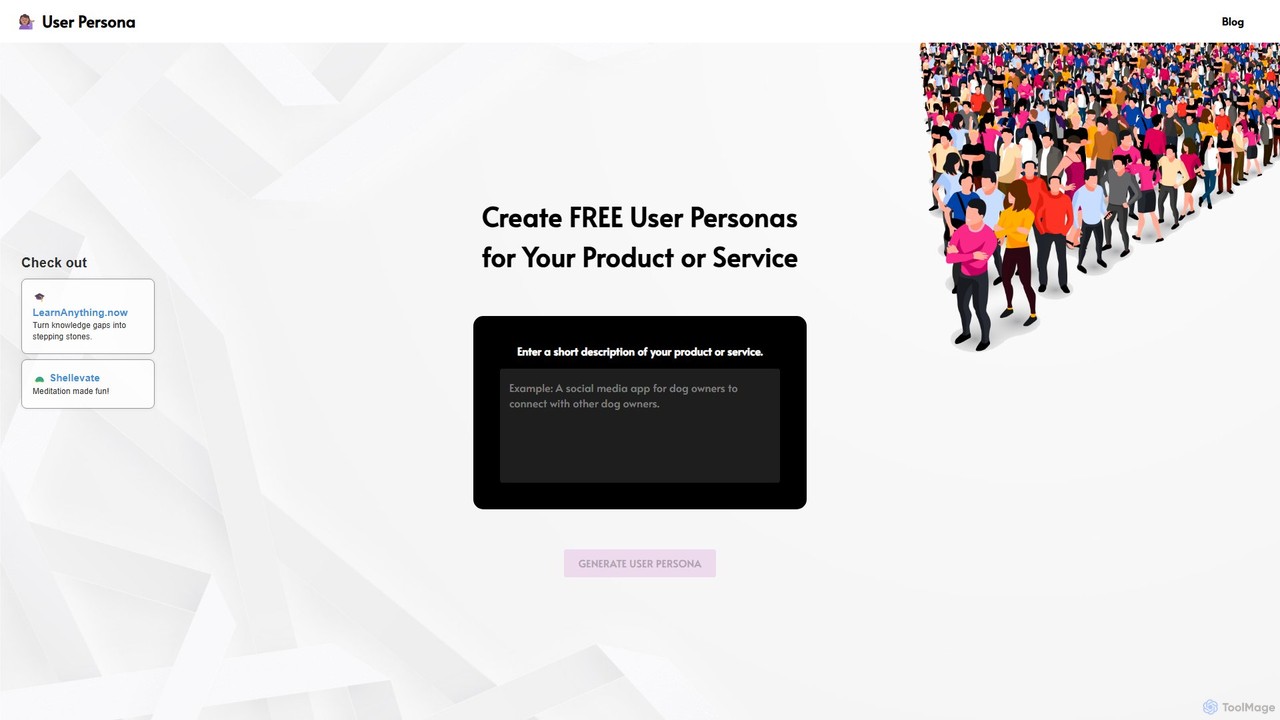
User Persona is a free AI-powered tool that generates detailed, data-backed user personas in seconds. Simply enter a description of your product or service, and the AI will create a comprehensive fictional profile, including demographics, behaviors, motivations, and goals. It's an essential tool for product managers, marketers, and UX designers to guide product development and marketing strategies, ensuring a user-centric approach.

Ux Design
Visits 12.4KFavorites 112Likes 111
Pansophic
Freemium

Pansophic

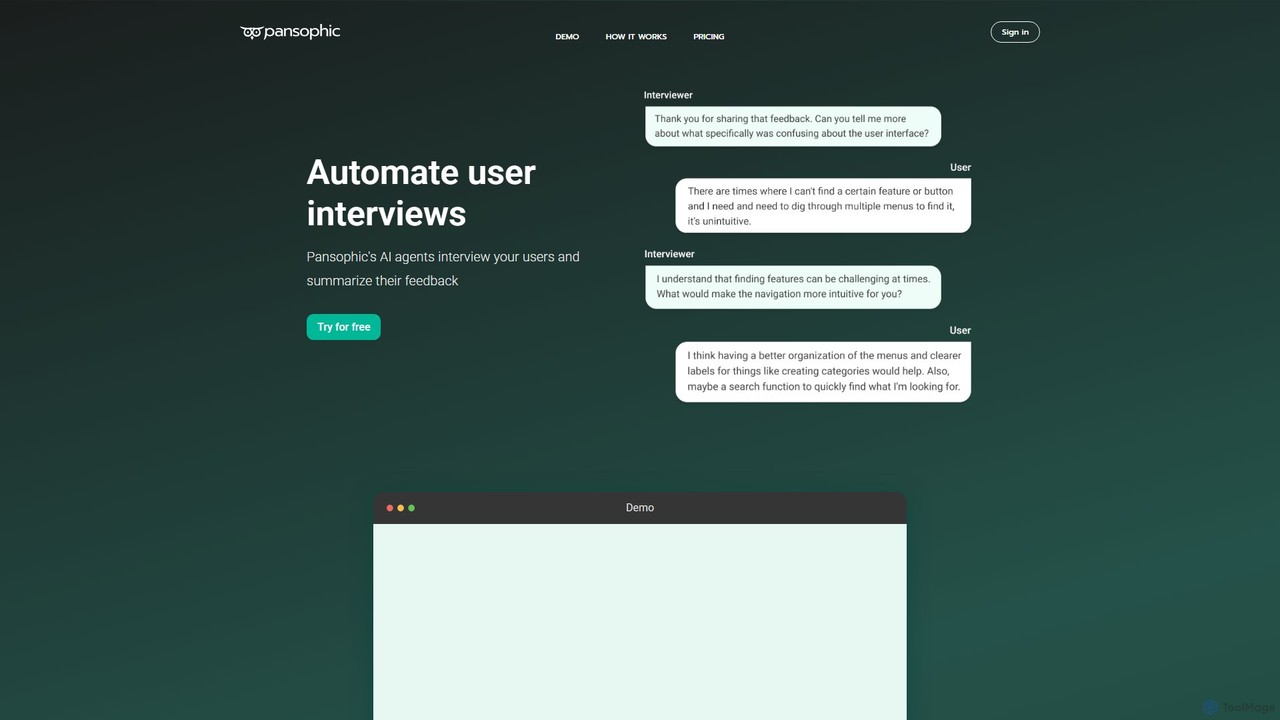
Pansophic is an AI-powered platform that automates user interviews. Its AI agents conduct 24/7, multilingual conversations with your users, then automatically analyze and summarize the feedback to provide actionable insights, sentiment analysis, and key themes, streamlining the entire user research process.

Data Analysis
Visits 5.9KFavorites 124Likes 126
EyeGestures
Freemium

EyeGestures

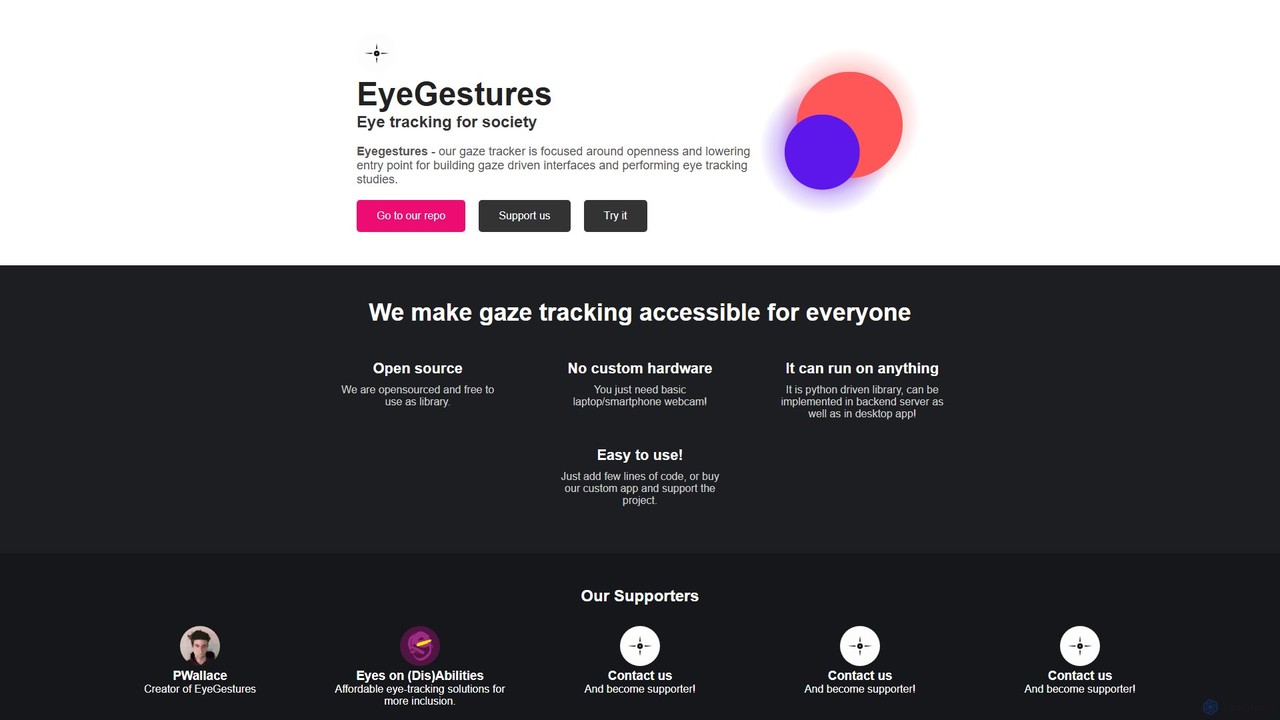
EyeGestures is an open-source gaze tracking library that makes eye control accessible to everyone. It uses a standard webcam on a laptop or smartphone, eliminating the need for specialized hardware. Built with Python and JavaScript, it allows developers to easily integrate hands-free control into web, desktop, and server-side applications.

Assistive Technology
Visits 6KFavorites 109Likes 117
Wynde
Freemium

Wynde

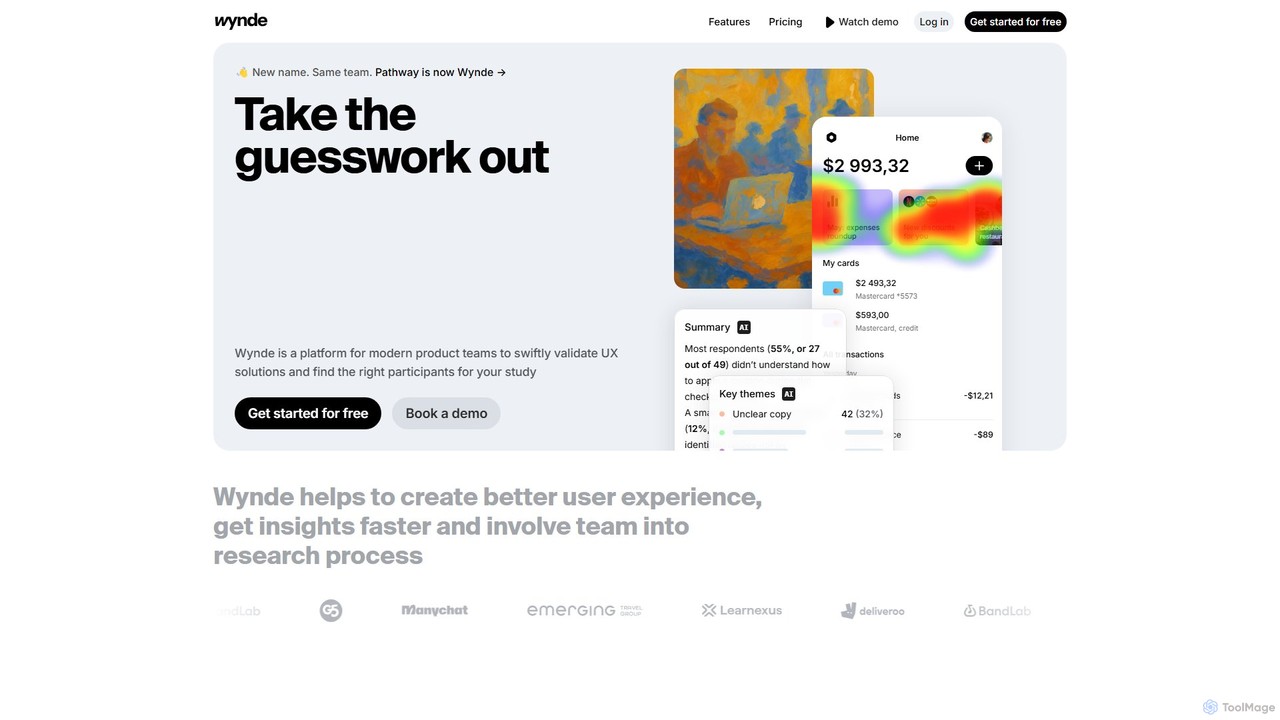
Wynde is an AI-powered user research platform for product teams to validate UX solutions. It enables rapid creation of usability tests, surveys, and interviews for Figma prototypes and websites. Key features include AI-driven contextual follow-up questions, automated theme analysis, A/B testing, and access to a global panel with over 400 filters. Wynde helps teams get deeper insights faster and more affordably.

Prototyping
Visits 31.1KFavorites 127Likes 141
Hubble
Freemium

Hubble

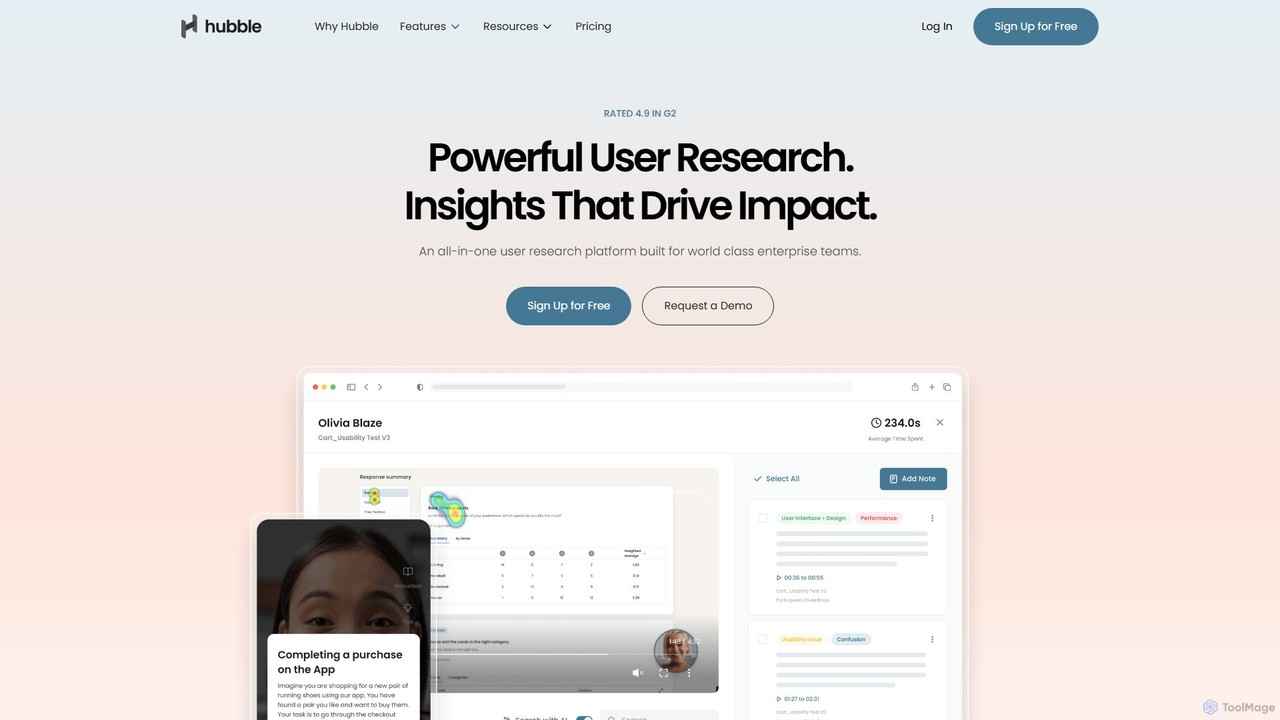
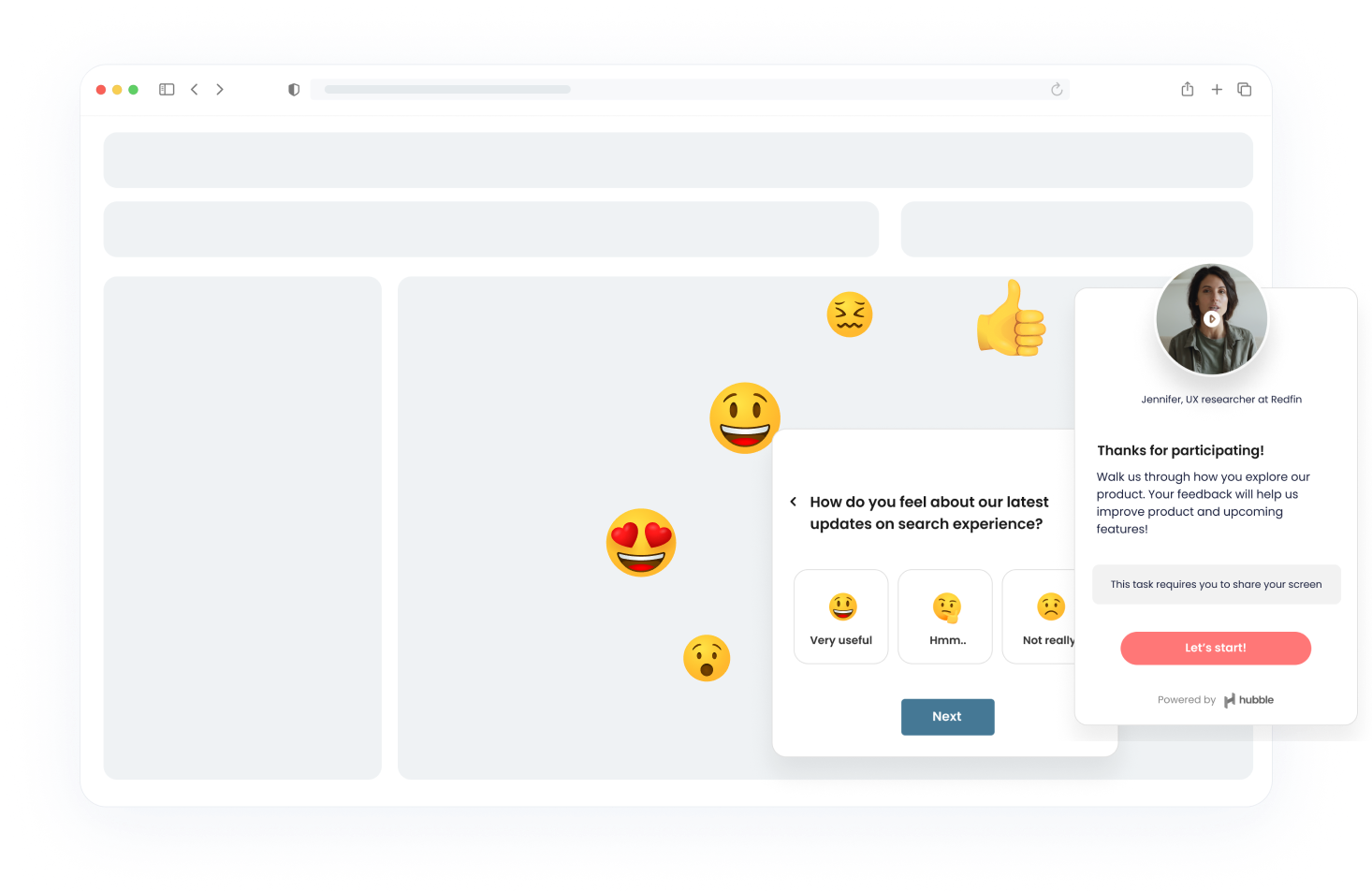
Hubble is an all-in-one, AI-powered user research platform designed for enterprise teams. It enables rapid insights by streamlining the entire research process, from creating studies and recruiting participants to analyzing feedback. The platform supports various methodologies like prototype testing, surveys, and card sorting, using AI to summarize findings and accelerate decision-making.

Analytics
Visits 16.5KFavorites 126Likes 144
Odaptos
Freemium

Odaptos

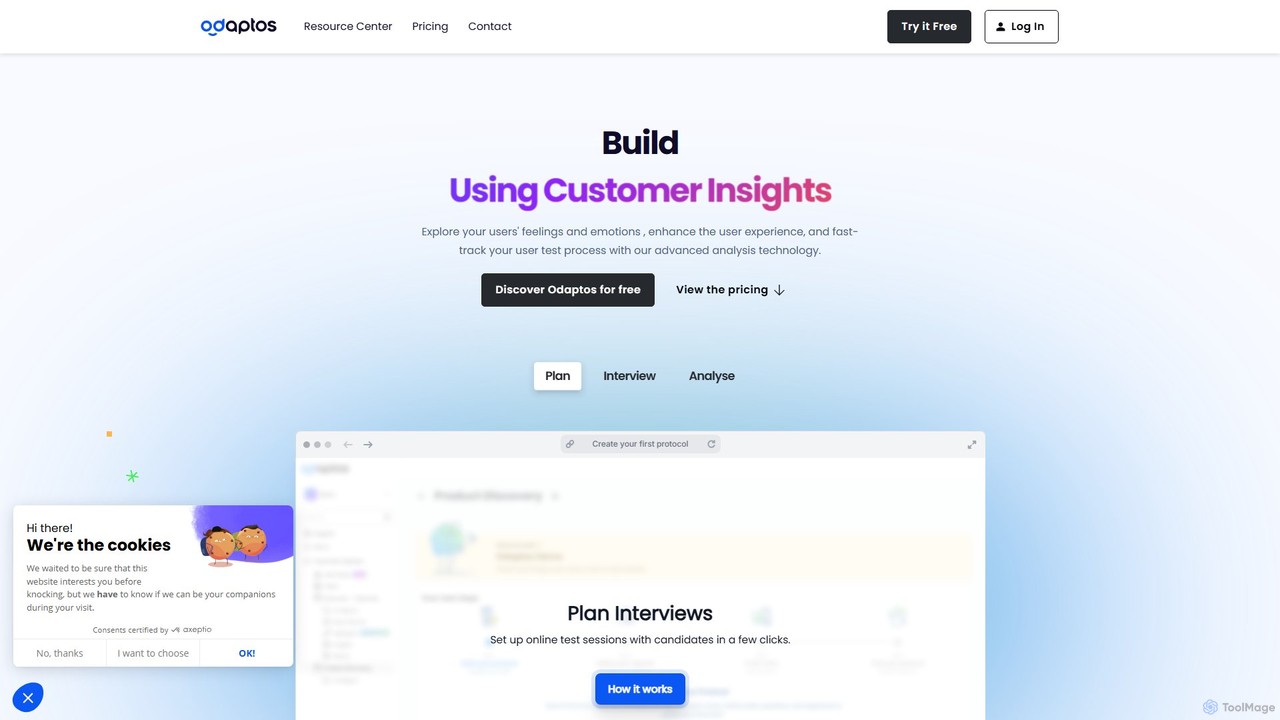
Odaptos is an AI-powered usability testing platform designed to accelerate product development by providing deep customer insights. It analyzes user emotions and feelings through facial recognition and sentiment analysis during user tests. The platform automates the analysis of user interviews, pinpoints friction points, and offers collaborative tools for UX teams. By translating user reactions into actionable data, Odaptos helps businesses build more user-centric products faster.

Testing
Visits 5.8KFavorites 118Likes 123
Sprig
Freemium

Sprig

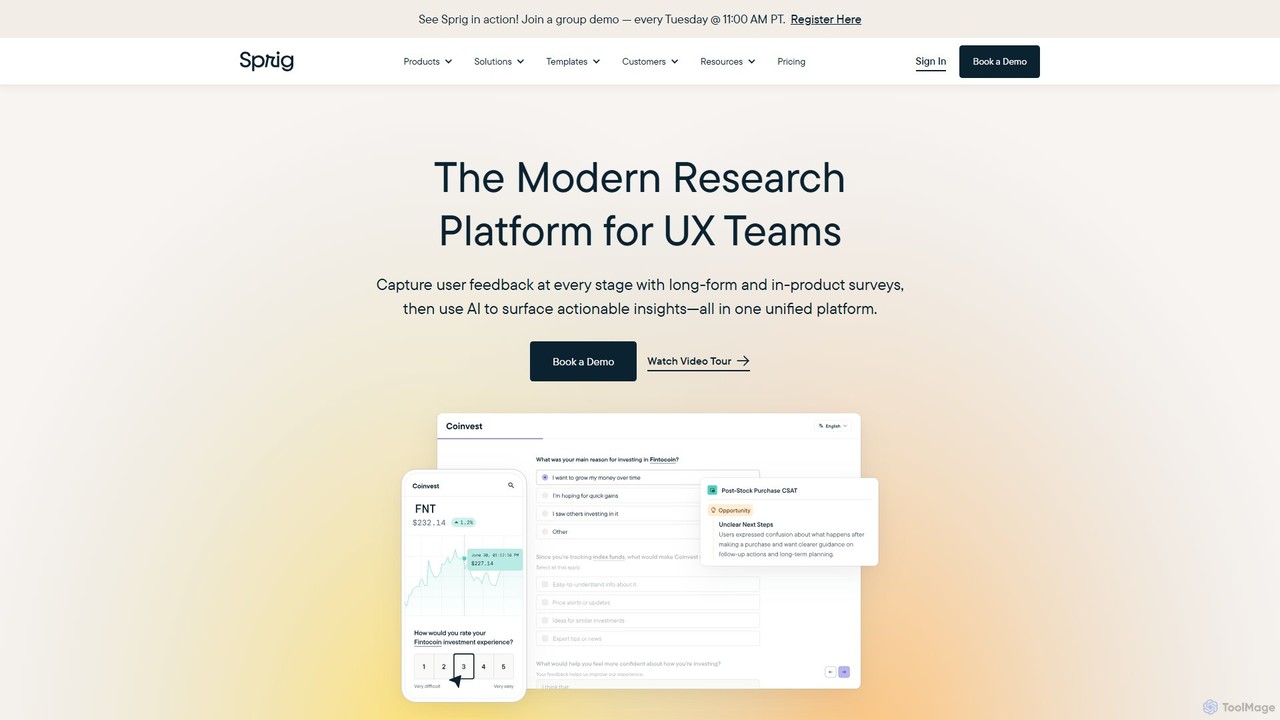
Sprig is a modern research platform for UX teams, using AI to capture user feedback through surveys, session replays, and heatmaps. It helps teams analyze user behavior, identify pain points, and make faster, data-backed product decisions.

Analytics
Visits 320.6KFavorites 141Likes 117
PersonaGen
Freemium

PersonaGen

PersonaGen is an AI-powered tool designed to create detailed and realistic user personas in minutes. It helps marketers, designers, and product managers gain a deep understanding of their target audience, enabling them to build more effective products and campaigns. Simply input basic data, and let the AI generate comprehensive persona profiles.

Ux
Visits 4.6KFavorites 127Likes 120
Feedbase
Freemium

Feedbase

Feedbase is an AI-powered customer feedback platform that helps businesses listen, learn, and grow. By integrating a simple, minimalistic widget onto your website, you can effortlessly collect user feedback and use an AI-powered dashboard to gain actionable insights and analytics.

Analytics
Visits 4.7KFavorites 118Likes 129

About User Research

User Research AI tools are specialized platforms that leverage artificial intelligence to streamline and enhance the process of understanding user needs, behaviors, and motivations. These tools utilize advanced NLP, machine learning, and data analytics to automate tasks like data collection, transcription, sentiment analysis, and pattern identification from various qualitative and quantitative sources. By accelerating the research cycle and uncovering deeper insights, they significantly boost productivity for product teams, UX designers, and marketers.

Core Features

  • Automated Transcription & Analysis: Converts audio/video interviews into text, then identifies themes, keywords, and sentiment.
  • Sentiment Analysis: Automatically detects emotional tone and opinions in user feedback, reviews, and survey responses.
  • Pattern Recognition: Identifies recurring trends, pain points, and opportunities within large datasets of user interactions or feedback.
  • Persona Generation: Creates data-driven user personas by synthesizing information from multiple research sources.
  • Usability Testing Insights: Analyzes user behavior during usability tests, highlighting areas of friction or confusion.

Applicable Scenarios

These tools are indispensable for product development teams seeking to build user-centric products, UX/UI designers aiming to optimize interfaces based on real user behavior, and marketing professionals looking to understand customer sentiment and preferences at scale. They are also valuable for customer support teams to identify common issues and improve service quality.

How to Choose

When selecting a User Research AI tool, consider its compatibility with your existing data sources (e.g., interview recordings, survey platforms, analytics tools), the depth and types of analysis it offers (e.g., thematic, sentiment, behavioral), its integration capabilities with other tools in your workflow, and its scalability to handle your research volume. Evaluate the accuracy of its AI models and the clarity of its reporting features.

Featured tool rankings

User Research use cases

1

Analyzing Customer Feedback at Scale

A product manager needs to understand common pain points and feature requests from thousands of customer support tickets and app store reviews. An AI user research tool can automatically ingest this unstructured text data, perform sentiment analysis, and identify recurring themes and urgent issues, providing a prioritized list of areas for product improvement without manual review.

2

Automating Interview Transcription and Thematic Analysis

A UX researcher conducts dozens of user interviews weekly. Instead of manually transcribing and coding, an AI tool can automatically transcribe interviews, identify key themes, extract quotes, and even summarize findings, drastically reducing post-interview processing time and allowing the researcher to focus on strategic insights.

3

Generating Data-Driven User Personas

A marketing team wants to refine their target audience personas. By feeding survey responses, website analytics, and social media data into an AI user research tool, it can synthesize demographic, psychographic, and behavioral patterns to generate detailed, evidence-based personas, ensuring marketing efforts are precisely targeted.

4

Identifying Friction Points in User Journeys

An e-commerce company observes high cart abandonment rates. An AI tool can analyze user session recordings, clickstream data, and exit surveys to pinpoint specific steps in the checkout process where users encounter difficulties or confusion, suggesting actionable design improvements to reduce abandonment.

5

Optimizing Product Features Based on User Behavior

A software development team is iterating on a new feature. An AI tool can analyze A/B test results, in-app usage data, and user feedback to determine which variations perform best, understand why, and recommend further optimizations, ensuring new features truly meet user needs and drive engagement.

6

Benchmarking User Experience Against Competitors

A startup wants to assess its product's UX against competitors. An AI user research tool can analyze public reviews, social media mentions, and comparative usability test data for both their product and competitors, providing a clear benchmark and highlighting areas where their UX can gain a competitive edge.

User Research FAQ

What are AI User Research tools?

AI User Research tools are software applications that use artificial intelligence, such as natural language processing (NLP) and machine learning, to automate and enhance various stages of user research. They help researchers, designers, and product teams gather, analyze, and synthesize qualitative and quantitative data more efficiently to gain deeper insights into user needs and behaviors.

How do AI User Research tools work?

These tools typically work by ingesting raw user data—like interview transcripts, survey responses, usability test recordings, or customer feedback—and applying AI algorithms. For example, NLP processes text for themes and sentiment, machine learning identifies patterns in behavior data, and computer vision can analyze facial expressions or eye movements during tests. The AI then extracts insights, generates summaries, or visualizes data for human interpretation.

What are the main benefits of using AI in User Research?

The primary benefits include significant time savings through automation of tedious tasks like transcription and coding, the ability to analyze vast amounts of data that would be impossible manually, uncovering hidden patterns and insights, reducing human bias in analysis, and accelerating the overall research cycle. This leads to faster, more data-driven product decisions and improved user experiences.

How do I choose the best AI User Research tool for my needs?

To choose the best tool, consider your specific research goals, the types of data you work with most often (e.g., interviews, surveys, analytics), and your budget. Look for features like robust data integration, advanced analytical capabilities (e.g., thematic analysis, sentiment analysis, journey mapping), intuitive reporting, and scalability. Also, assess the tool's accuracy and how well it fits into your existing workflow.

What's the difference between traditional and AI-powered user research?

Traditional user research relies heavily on manual processes for data collection, transcription, coding, and analysis, which can be time-consuming and prone to human bias, especially with large datasets. AI-powered user research automates many of these tasks, allowing for faster processing of larger data volumes, identification of more complex patterns, and often provides more objective, data-driven insights, freeing researchers to focus on strategic interpretation rather than manual labor.