
FastHTML Overview
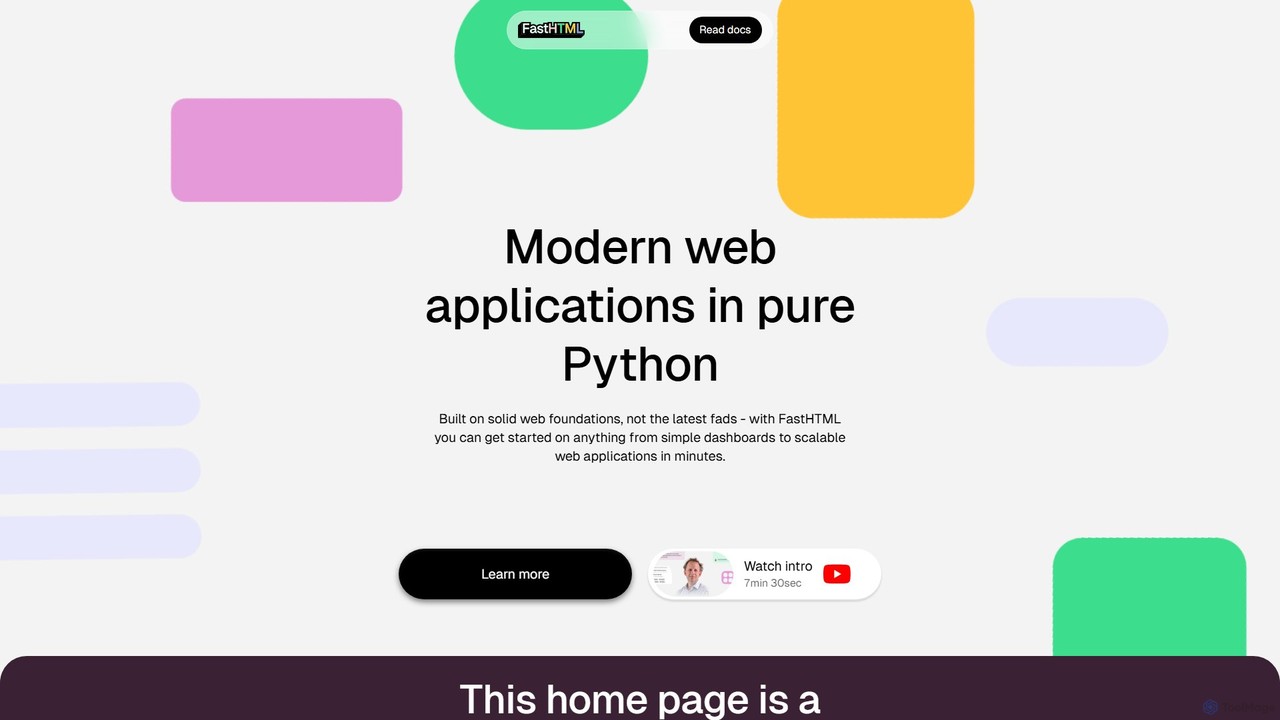
FastHTML is a revolutionary full-stack web framework designed to build modern, interactive, and high-performance web applications using pure Python. Created by Jeremy Howard at Answer.AI, it aims to simplify the web development process by returning to the solid foundations of the web—HTTP, HTML, CSS, and JavaScript—while leveraging modern technologies like ASGI and HTMX. This approach eliminates the need for complex build steps, separate frontend frameworks, and quirky template languages, making web development faster, more intuitive, and accessible to a broader range of developers, including AI practitioners, data scientists, and new coders.
The core philosophy of FastHTML is 'no compromise'. It is engineered to scale down for simple, single-file prototypes and scale up for sophisticated, production-grade applications. This removes the common dilemma of choosing between a simple tool for quick projects (like Streamlit or Gradio) and a complex framework for serious development (like Django or React). With FastHTML, you start simple and can grow your application's complexity organically without ever needing to switch frameworks.
How to use FastHTML
Getting started with FastHTML is incredibly straightforward. The entire framework is a Python library that can be installed with a single command:
pip install python-fasthtml
Once installed, you can create a complete, interactive web application in a single Python file. Here’s a minimal example:
from fasthtml.common import *
app,rt = fast_app()

@rt('/')
def get():
    return Div(P('Hello World!'), hx_get="/change")

@rt('/change')
def get():
    return P('Nice to be here!')

serve()
Running this file with python main.py starts a local server. The initial page displays 'Hello World!'. Clicking on it triggers an asynchronous request to the /change endpoint, which returns a new HTML snippet (a partial) that replaces the original text, all without a full page reload. This is the power of HTMX, integrated seamlessly into the Python workflow. For more complex projects, you can structure your code into multiple files and leverage the full Python ecosystem.
Core Features of FastHTML
- Pure Python Development: Write both frontend and backend logic in Python, creating a unified and streamlined development experience.
- HTMX Integration: Build modern, dynamic user interfaces with the power of HTMX, allowing for rich interactivity without writing custom JavaScript.
- Extreme Scalability: Effortlessly scales from a single-file script for a quick dashboard to a multi-module architecture for a complex production application.
- Solid Foundations: Built on top of robust and proven technologies like ASGI, Starlette, and Uvicorn, ensuring high performance and reliability.
- No Build Step or Template Language: Simplifies the development cycle by eliminating complex build configurations and the need to learn a separate templating syntax.
- Easy Deployment: Deploy applications with one-click solutions to platforms like Vercel, Railway, Hugging Face, and PythonAnywhere, or to any server that supports Python.
- Built-in Functionality: Comes with out-of-the-box support for authentication, database access (SQLite), caching, and styling with PicoCSS, all of which are extensible.
- AI-Assisted Development: Provides a special context file for LLMs like Claude and ChatGPT, enabling them to provide accurate and helpful guidance on using the framework.
Use Cases for FastHTML
FastHTML is a versatile, general-purpose framework suitable for a wide array of projects:
- General Web Applications: A powerful alternative to frameworks like Django, React, or Next.js for building full-featured web apps.
- AI and Data Science Projects: The perfect tool for AI engineers and data scientists to quickly build interactive UIs, dashboards, and prototypes for their models.
- Internal Tools and Dashboards: Rapidly create in-company applications and data visualization dashboards, replacing tools like Gradio or Streamlit when more customization is needed.
- Interactive Reports: Develop dynamic and interactive reports for analytics and business intelligence.
- Custom Content Sites: Build blogs and content-heavy websites that also require dynamic and interactive components.
Advantages of FastHTML
FastHTML offers a paradigm shift in web development, focusing on simplicity, power, and developer experience. Its main advantages include its python-centric approach, which is ideal for the vast community of Python developers, and its radical simplification of the web stack. This leads to significantly faster development cycles. Applications are often more performant than those built with heavy JavaScript libraries because they transfer lightweight HTML partials instead of large JSON payloads. Most importantly, it empowers a new generation of coders to turn their ideas into reality without the steep learning curve of traditional web development.
Pricing and Plans
FastHTML is a free and open-source project. As a Python library, it can be installed via pip at no cost. You are free to use it for personal, commercial, or any other type of project. The development is community-driven, and contributions are welcome on its GitHub repository.
Traffic
Latest traffic
Status
Monthly traffic trend
- 2025-9: 21.7K
- 2026-1: 19.8K
- 2026-2: 18.1K
- 2026-3: 18.9K
- 2026-4: 10.6K
- 2026-5: 12.7K
Geography
Top 5 countries / regions
- 🇮🇳India31.4%
- 🇺🇸United States19.3%
- 🇹🇭Thailand18.7%
- 🇲🇽Mexico17.2%
- 🇪🇸Spain13.5%
Top keywords
| Keyword | Cost per click |
|---|---|
| fasthtml | $4.44 |
| fasthtml/htmx | $0.00 |
| fasthtml sample form layout | $0.00 |
| pico css | $2.57 |
| python-fasthtml 0.12 | $0.00 |
FastHTML Alternatives
Ludwig
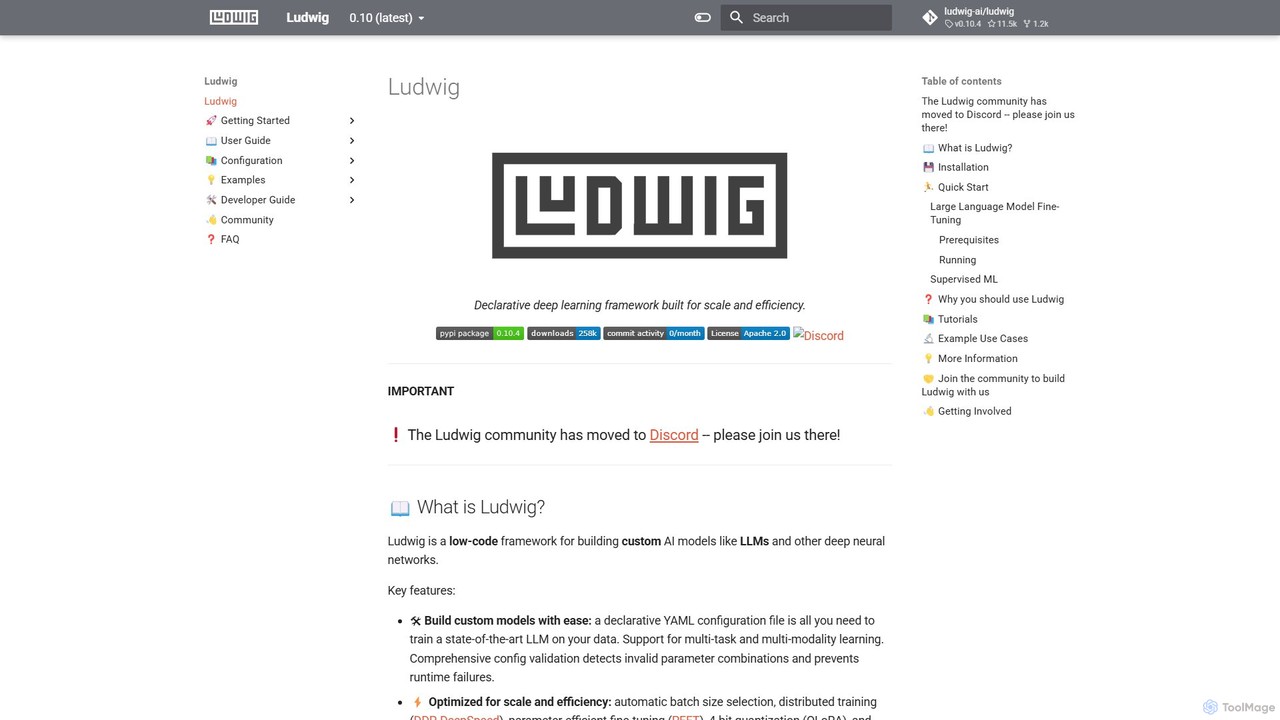
Ludwig is a low-code, open-source deep learning framework that simplifies building and training custom AI models. Using declarative YAML configurations, users can easily create complex models, including LLMs, for multi-modal and multi-task learning without extensive boilerplate code. It's designed for scalability, production-readiness, and integrates with popular tools like HuggingFace and MLFlow.
Model Training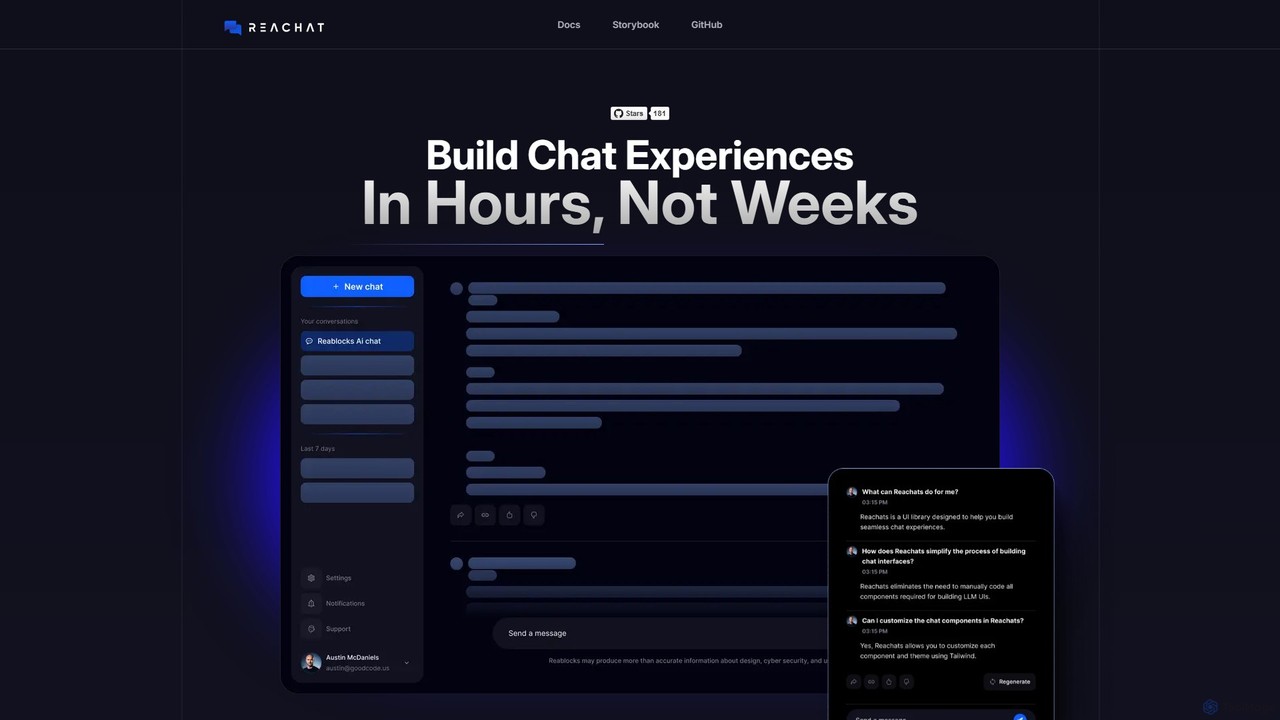
reachat
reachat is an open-source ReactJS component library designed for developers to rapidly build sophisticated AI chat interfaces. It provides highly customizable, backend-agnostic components, enabling the integration of any LLM and supporting rich media for enhanced user experiences. Build production-ready chat UIs in hours, not weeks.
Chatbot Development
ConnectOnion
ConnectOnion is a minimalist Python framework designed to build production-ready AI agents with significantly less code. It simplifies agent creation by combining Markdown prompts and Python functions, reducing boilerplate by up to 85% compared to other frameworks.
Libraries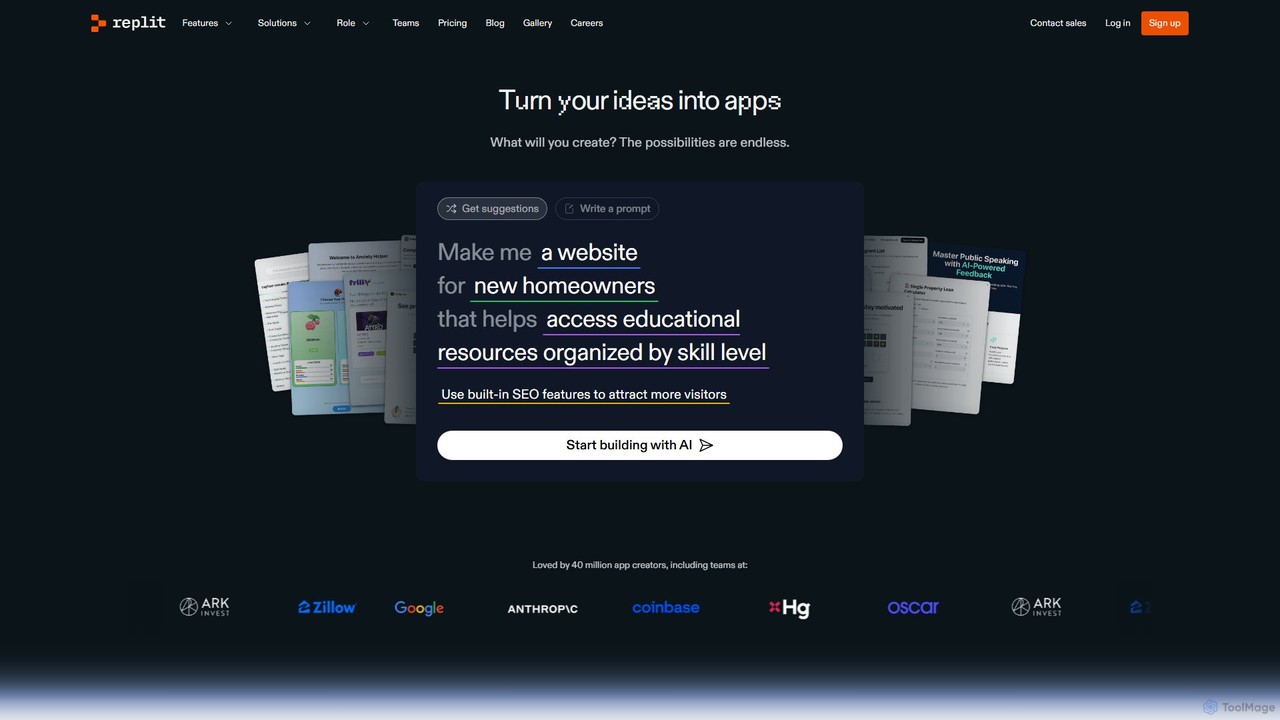
Replit
Replit is an AI-powered, collaborative, in-browser Integrated Development Environment (IDE) that allows users to build, deploy, and host applications, websites, and bots. Featuring the Replit Agent, it turns natural language prompts into functional software, making development faster and more accessible for everyone from beginners to enterprise teams.
Hosting
Emergent
Emergent is the world's first agentic vibe-coding platform, designed to build ambitious full-stack applications using AI. It translates natural language descriptions and intent into functional code, empowering developers and teams to prototype, build, and iterate on software faster than ever before.
DevelopmentFastHTML Categories
FastHTML Embed Widget
Copy this embed code to place the badge on your blog, article, or product site and send readers directly to this ToolMage detail page.

Related AI tools
React
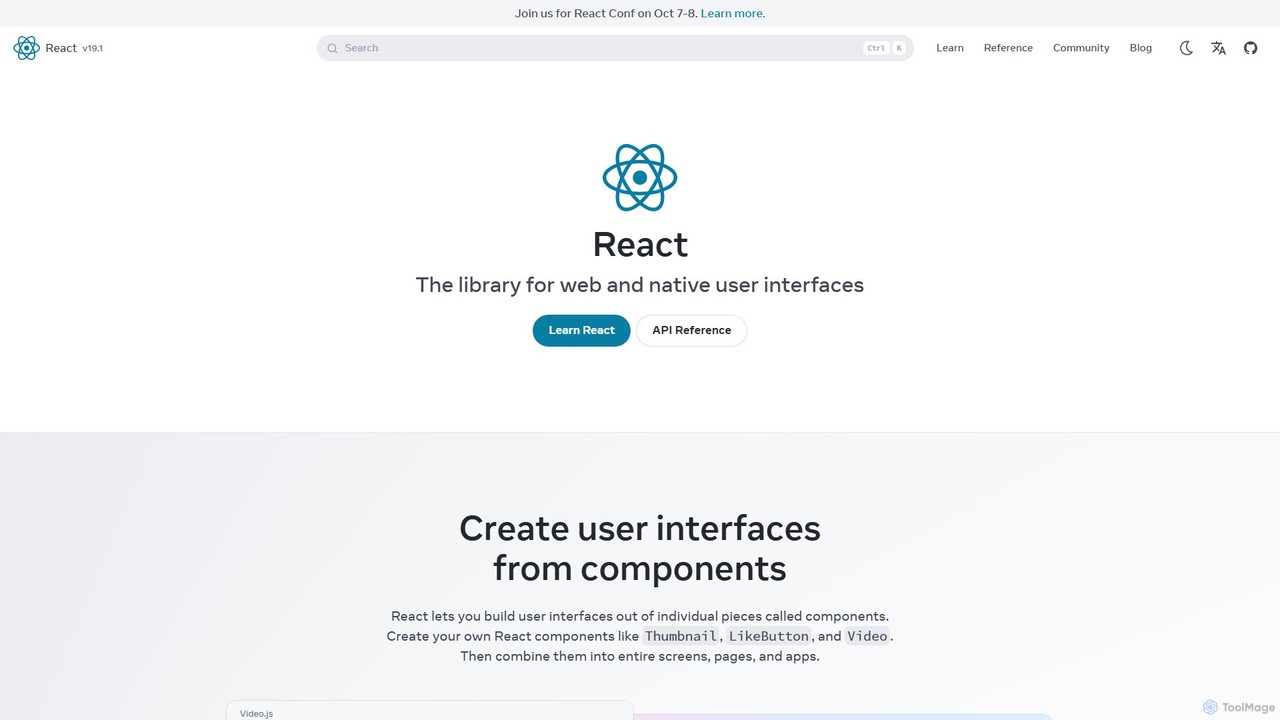
React is a free and open-source JavaScript library for building user interfaces based on components. Developed by Meta, it enables developers to create large-scale web and native applications with complex, interactive UIs efficiently. It uses a declarative approach and a component-based architecture to build encapsulated components that manage their own state.
Frameworks & Libraries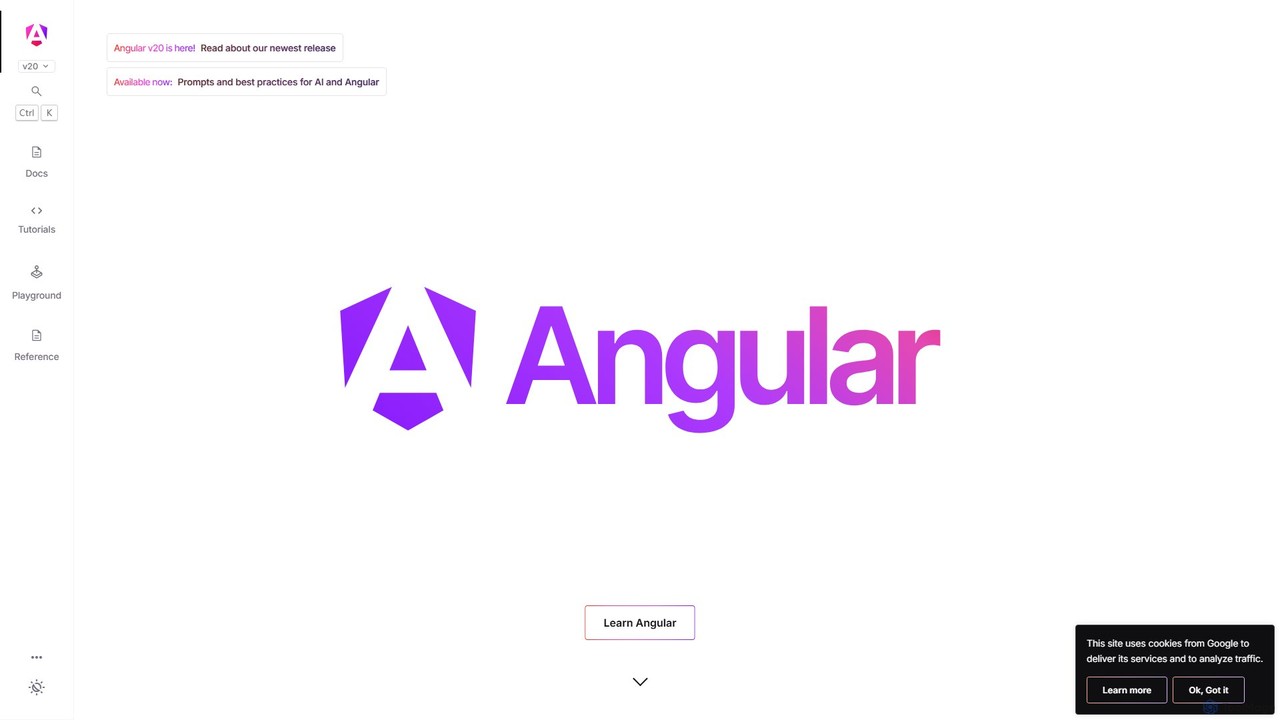
Angular
Angular is a powerful, open-source web application framework led by the Angular Team at Google. It empowers developers to build scalable, high-performance single-page applications (SPAs) using TypeScript and a component-based architecture. With a comprehensive ecosystem including a powerful CLI, built-in state management, and advanced tooling, Angular is ideal for creating complex enterprise-grade applications.
Framework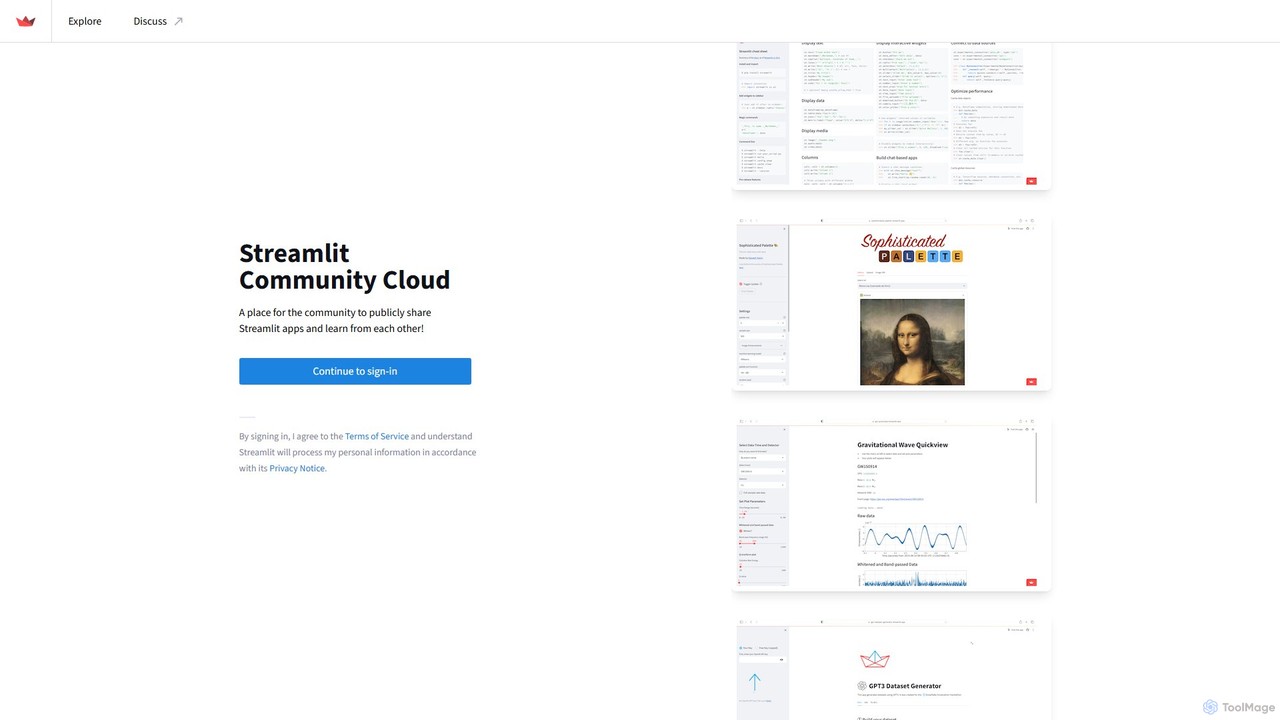
Streamlit
Streamlit is an open-source Python framework that enables developers and data scientists to build and share beautiful, custom web apps for machine learning and data science in minutes. The Streamlit Community Cloud provides a free platform to deploy, manage, and share these public applications with the world, fostering a collaborative environment for innovation.
Data Visualization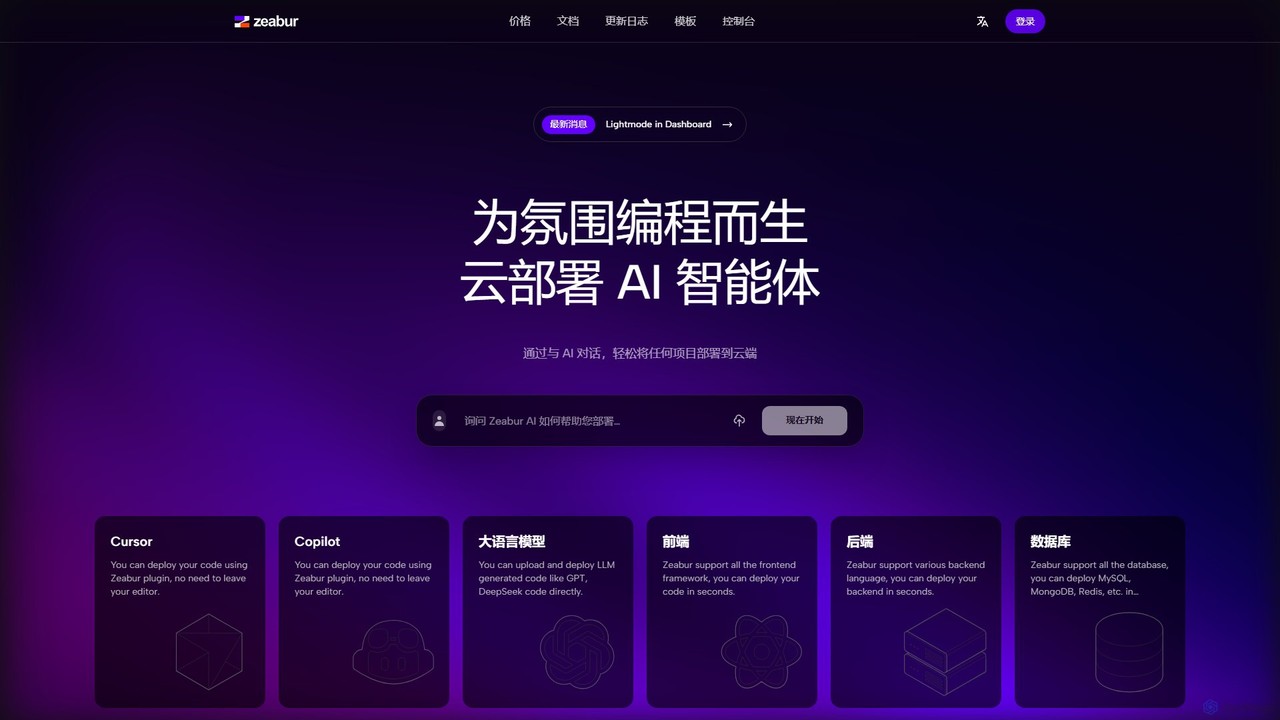
Zeabur
Zeabur is an AI-powered deployment platform (PaaS) designed for developers. It enables one-click deployment for any project, including front-end, back-end, databases, and AI agents, directly from code or through conversational AI. Featuring a pay-as-you-go model, automatic configuration, and auto-scaling, Zeabur simplifies cloud infrastructure, allowing developers to focus solely on coding.
Deployment
Jyek
Jyek is an AI agent platform that understands objectives, creates execution plans, uses tools, and delivers verifiable results for complex, multi-step tasks.
Automation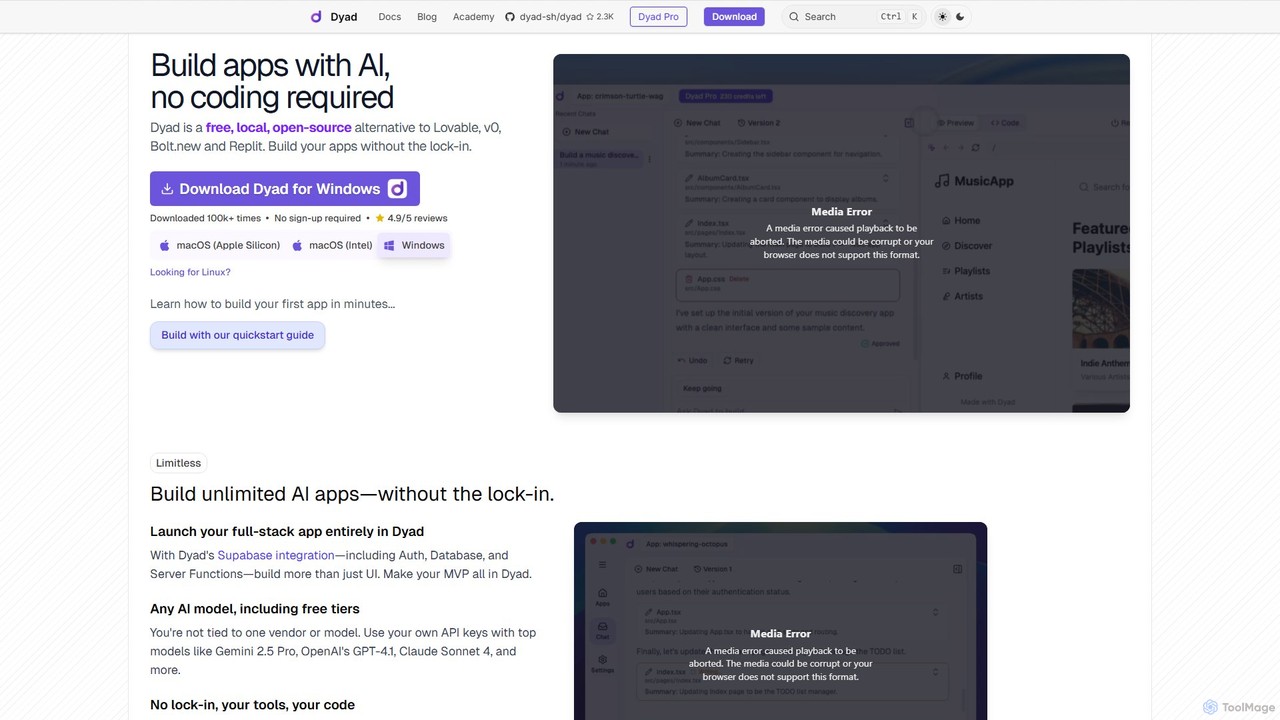
Dyad
Dyad is a free, local, and open-source AI app builder that allows you to create full-stack applications without coding. It runs directly on your machine, ensuring privacy and no vendor lock-in, while supporting various AI models like GPT-4, Gemini, and local models via Ollama.
Low Code No Code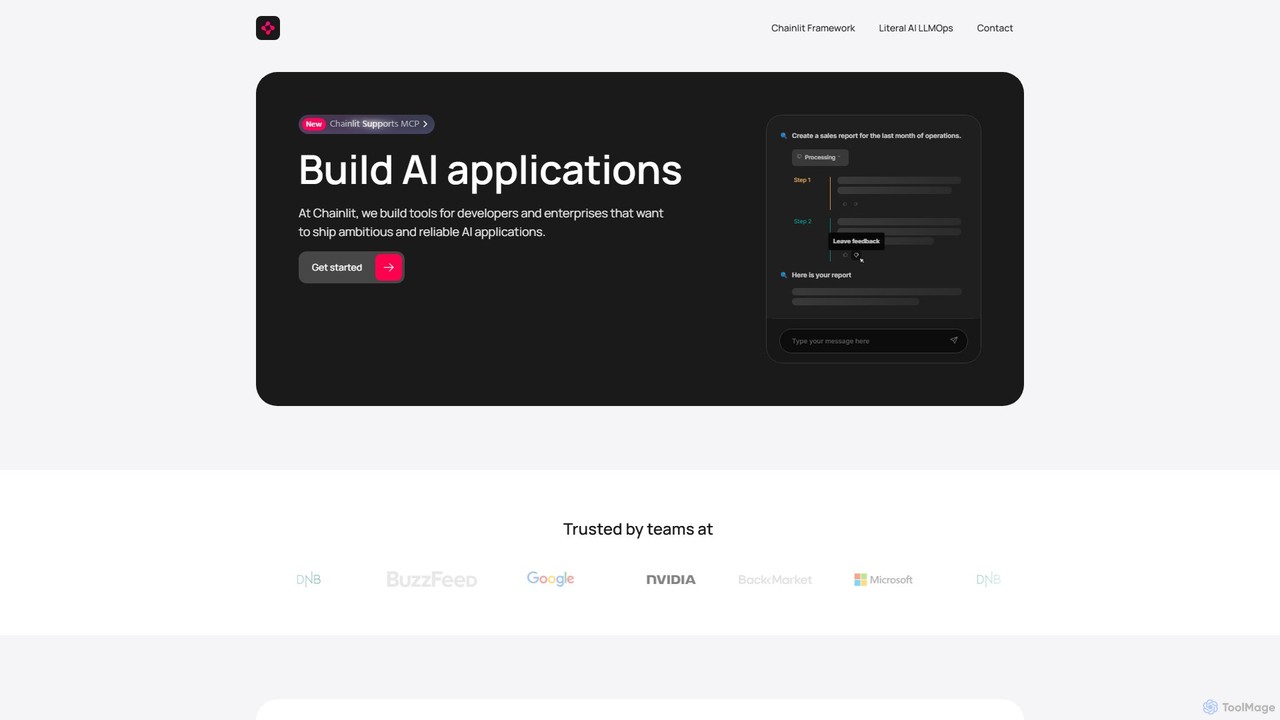
Chainlit
Chainlit is an open-source Python framework for developers to rapidly build and deploy production-ready conversational AI applications. It provides an instant, customizable chat interface, allowing you to focus on your backend logic and LLM interactions. With deep integrations for LangChain, LlamaIndex, and major LLM providers, Chainlit simplifies the creation of everything from simple chatbots to complex, data-driven copilots.
Framework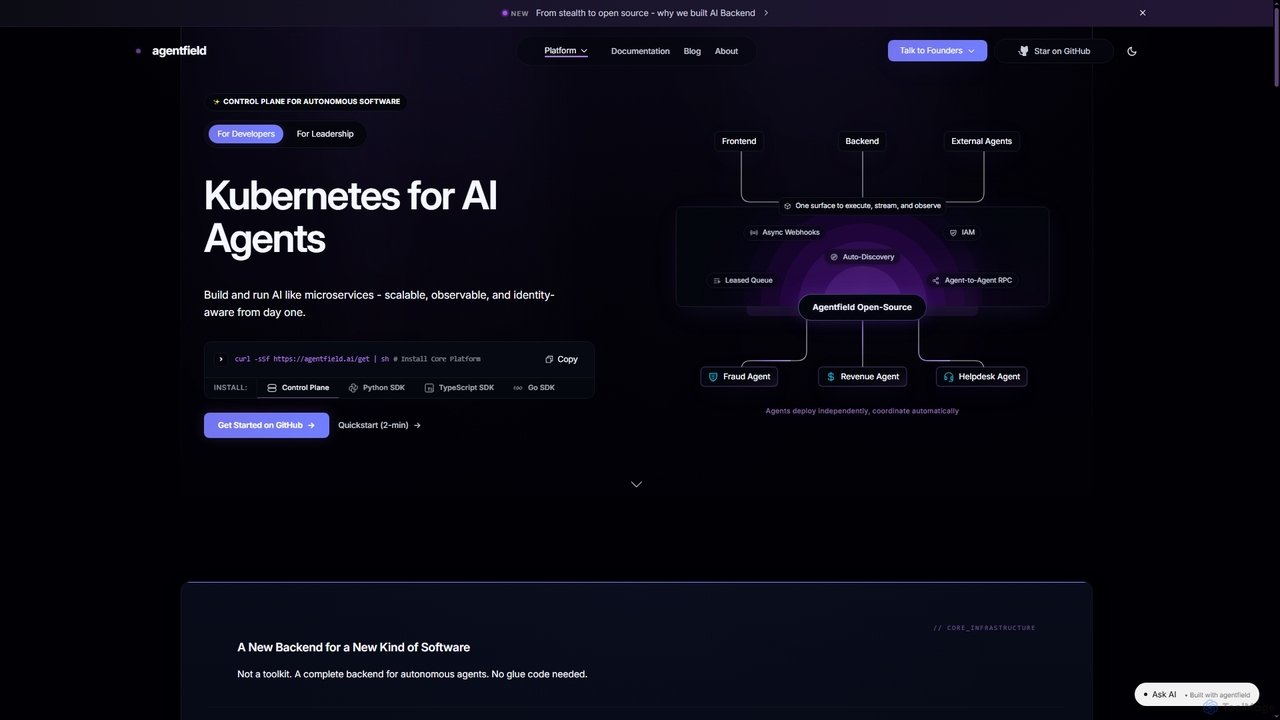
Agentfield
Agentfield is an open-source control plane designed for building and running autonomous AI agents as scalable, observable, and identity-aware microservices. It provides Kubernetes-like orchestration, cryptographic identity management, and production-ready infrastructure to bridge the gap between AI prototypes and robust, trustworthy production deployments.
Orchestration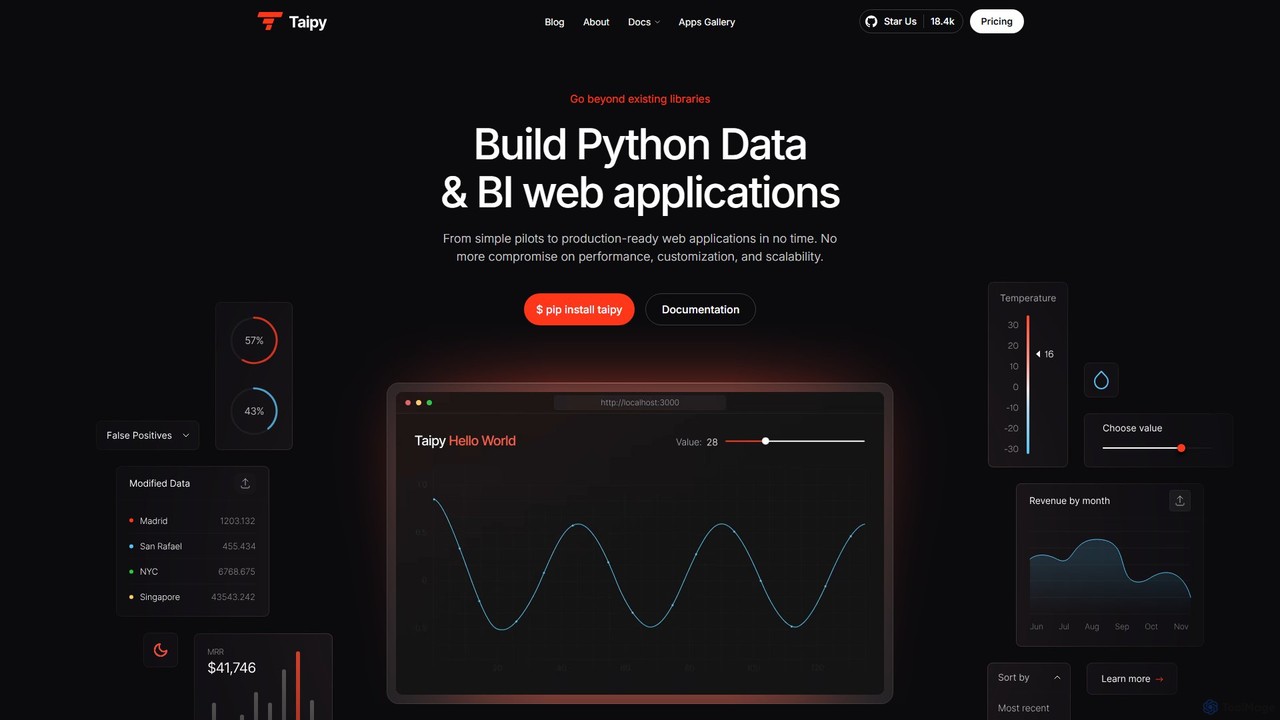
Taipy
Taipy is an open-source Python library for rapidly building powerful data and business intelligence web applications. It enables developers and data scientists to create everything from simple dashboards to complex, production-ready, multi-user applications with features like scenario management and performance optimization, all within Python.
Data Visualization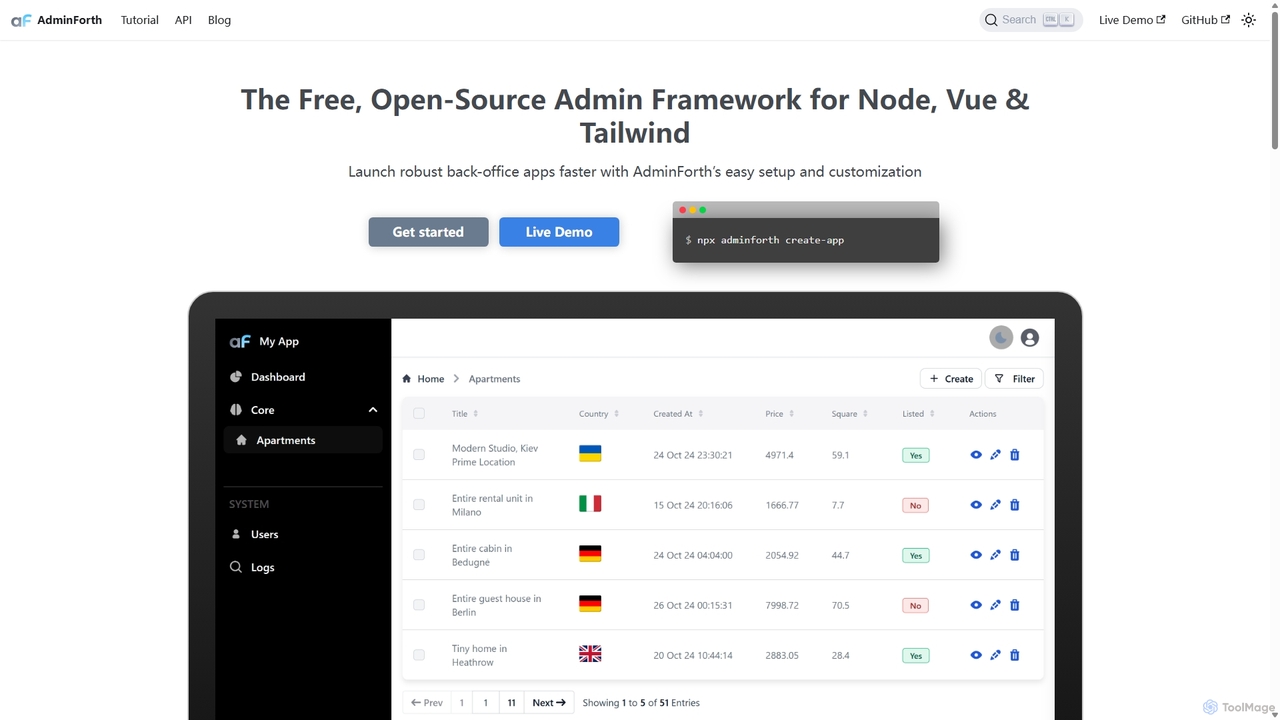
AdminForth
AdminForth is a powerful Vue & Node.js framework for rapidly building feature-rich admin panels. It accelerates development with out-of-the-box CRUD, authentication, and user management. Integrated AI plugins, powered by ChatGPT and other LLMs, provide intelligent content autocompletion and seamless multi-language translation, making it an essential tool for modern web developers.
Framework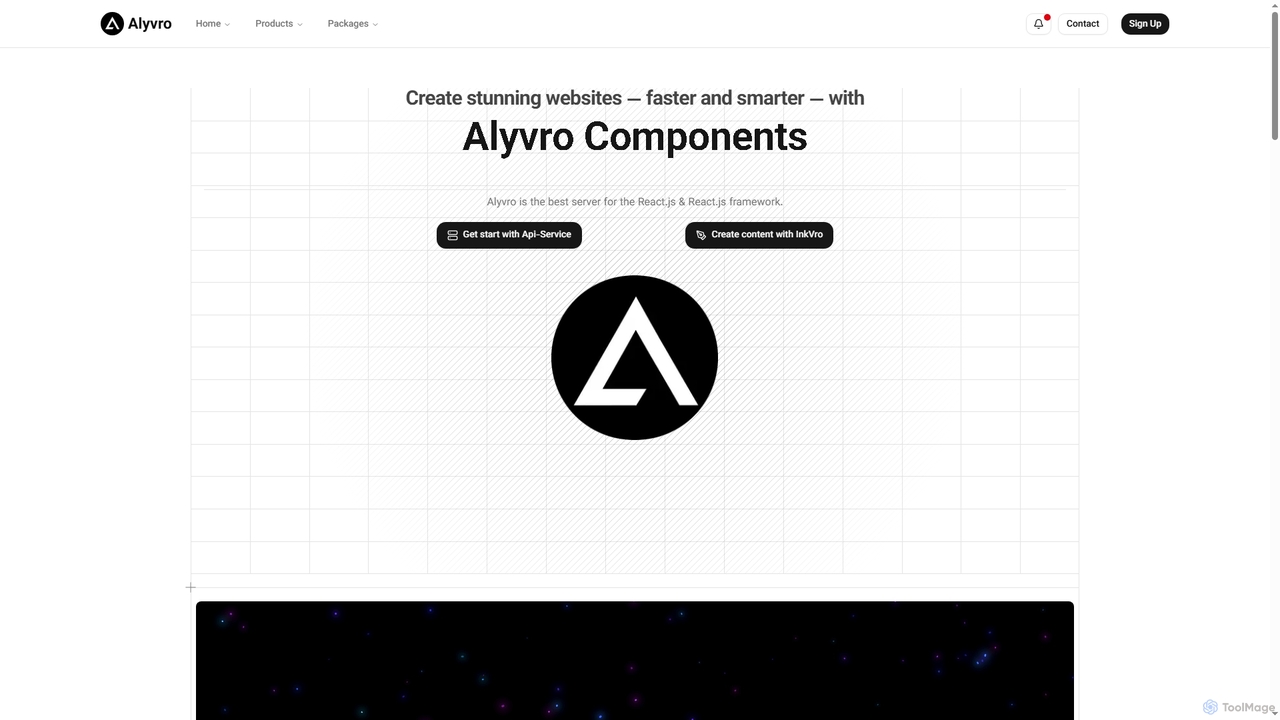
Alyvro
Alyvro is a technology platform specializing in modern web development with React.js and Next.js. It offers developer packages like API services and hooks for efficient application building, alongside InkVro AI, an intelligent content creation tool designed to generate powerful, well-crafted content quickly. Alyvro aims to simplify and accelerate the creation of stunning websites and digital experiences.
Api Management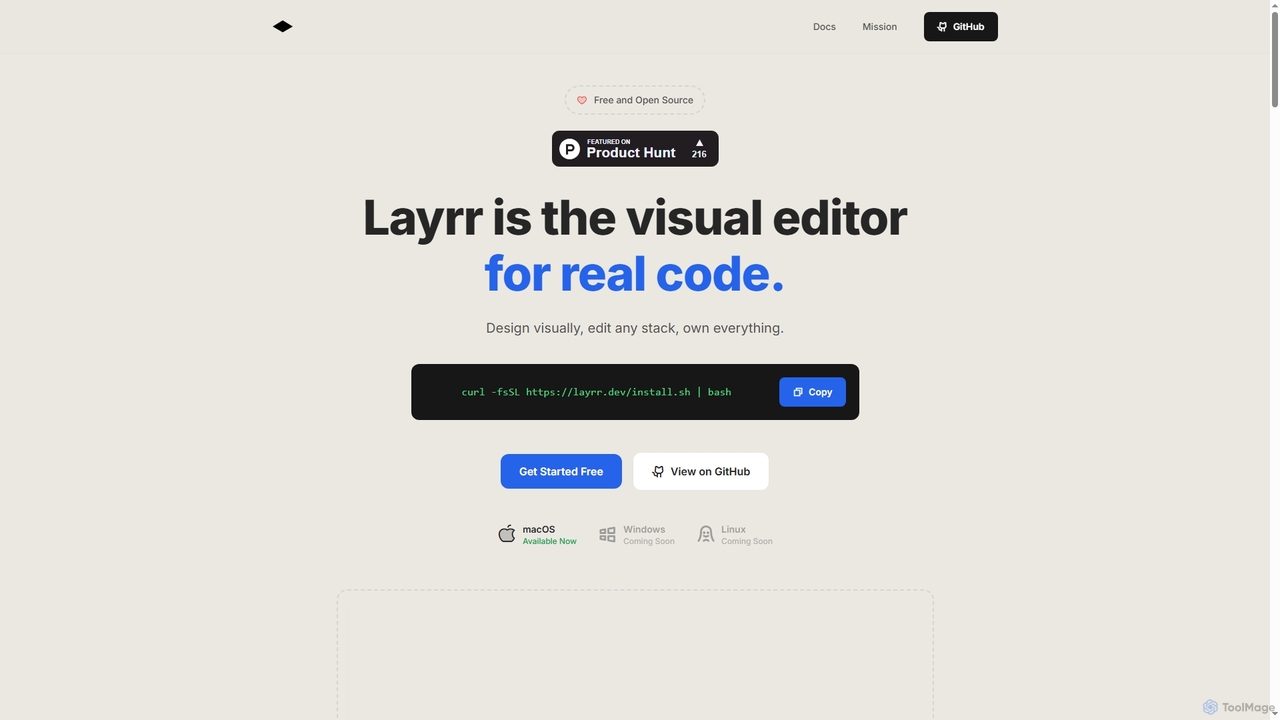
Layrr
Layrr is a free and open-source visual editor that allows developers and designers to create and edit real code directly. It combines the intuitive drag-and-drop interface of design tools like Figma with the flexibility and ownership of traditional coding, supporting any tech stack and leveraging AI for design-to-code conversion and natural language interface generation.
Code GenerationLudwig
Ludwig is a low-code, open-source deep learning framework that simplifies building and training custom AI models. Using declarative YAML configurations, users can easily create complex models, including LLMs, for multi-modal and multi-task learning without extensive boilerplate code. It's designed for scalability, production-readiness, and integrates with popular tools like HuggingFace and MLFlow.
Model Trainingreachat
reachat is an open-source ReactJS component library designed for developers to rapidly build sophisticated AI chat interfaces. It provides highly customizable, backend-agnostic components, enabling the integration of any LLM and supporting rich media for enhanced user experiences. Build production-ready chat UIs in hours, not weeks.
Chatbot DevelopmentConnectOnion
ConnectOnion is a minimalist Python framework designed to build production-ready AI agents with significantly less code. It simplifies agent creation by combining Markdown prompts and Python functions, reducing boilerplate by up to 85% compared to other frameworks.
Libraries
FastHTML Comments (0)
Sign in to comment.
Sign inNo comments yet.