Freemium
Trismik
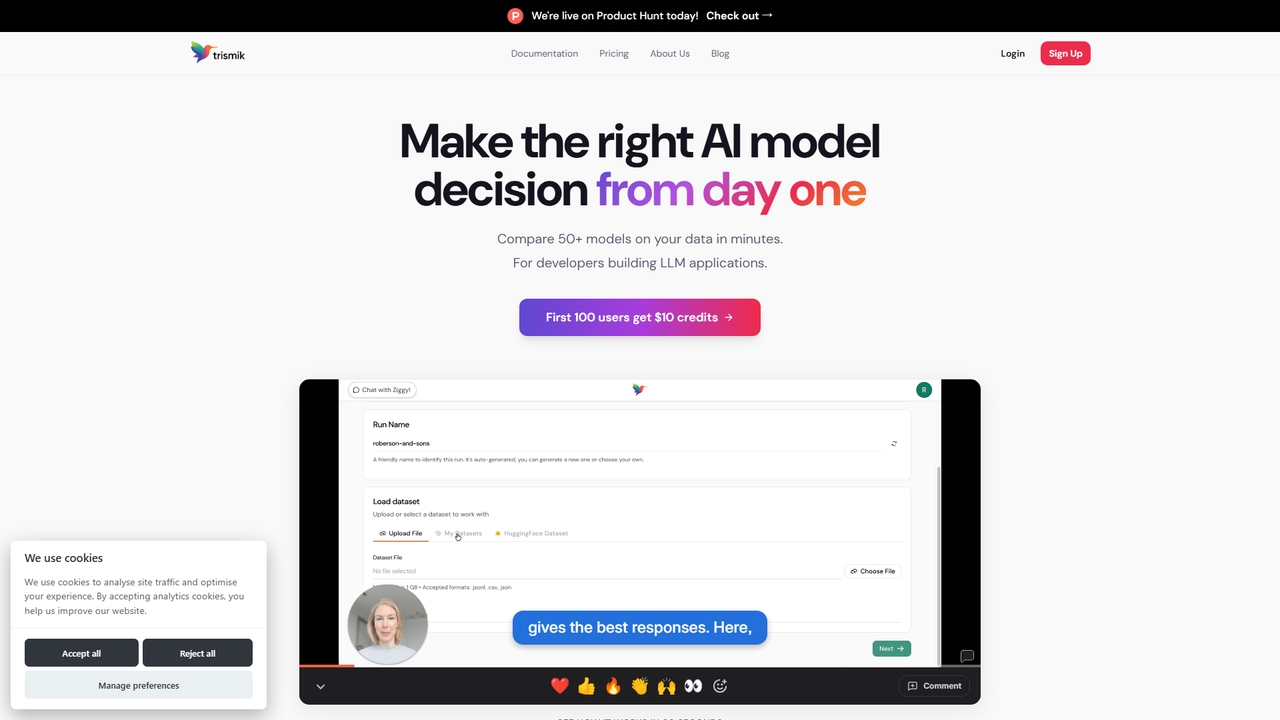
Compare 50+ LLMs on your own data in minutes. Make evidence-based model decisions on quality, cost, and speed without guesswork.
Ai Model SelectionVisits 10.7KFavorites 58Likes 56
Popular Developer Tools include Google Gemini, vocode, Papers with Code, codegate, GitHub, DeepSeek, Telegram Messenger, Steam, OpenAI, and doubao, helping you work more efficiently.
Compare 50+ LLMs on your own data in minutes. Make evidence-based model decisions on quality, cost, and speed without guesswork.
Ai Model Selection
Enterprise-grade interaction infrastructure for multi-agent AI systems. Enables real-time collaboration, delegation, and governance between heterogeneous AI agents and humans through a shared mesh.
Ai Agent Infrastructure
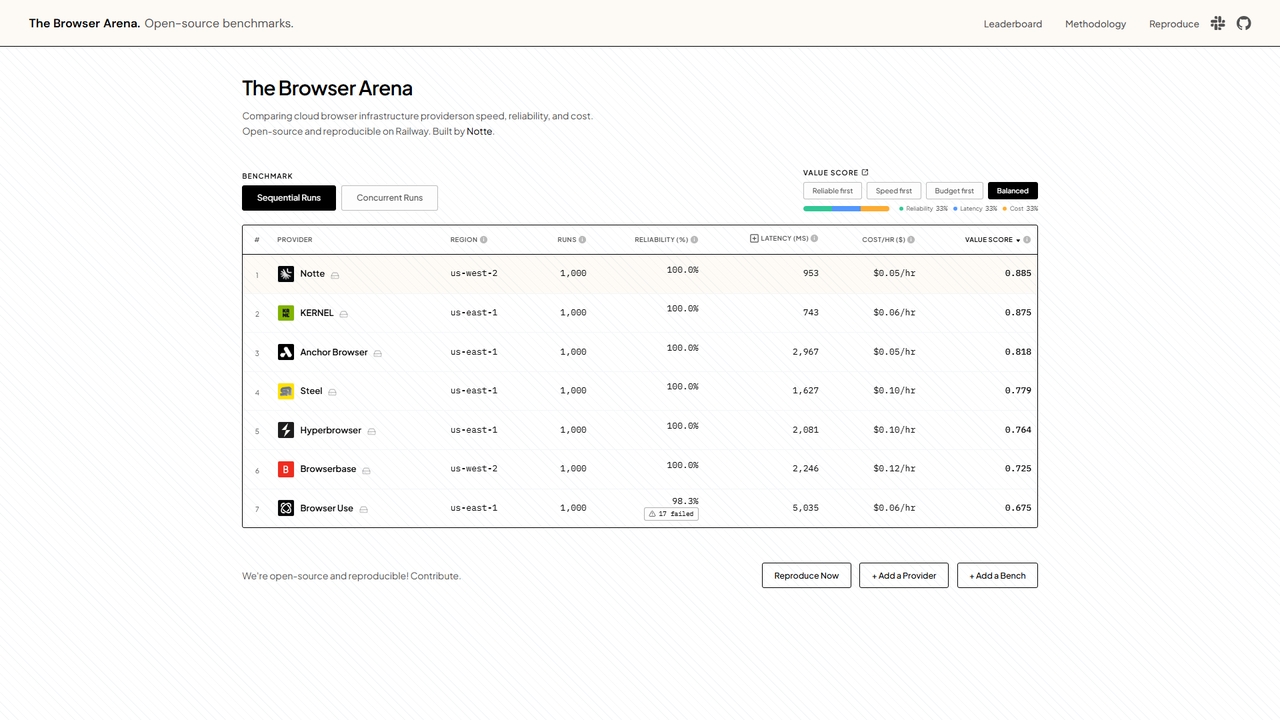
Browserarena is an open-source benchmarking and comparison platform for cloud browser infrastructure providers. It objectively evaluates and ranks providers based on key performance metrics including speed (latency), reliability (success rate), and cost per hour, helping developers and businesses make data-driven decisions for their browser automation and testing needs.
Infrastructure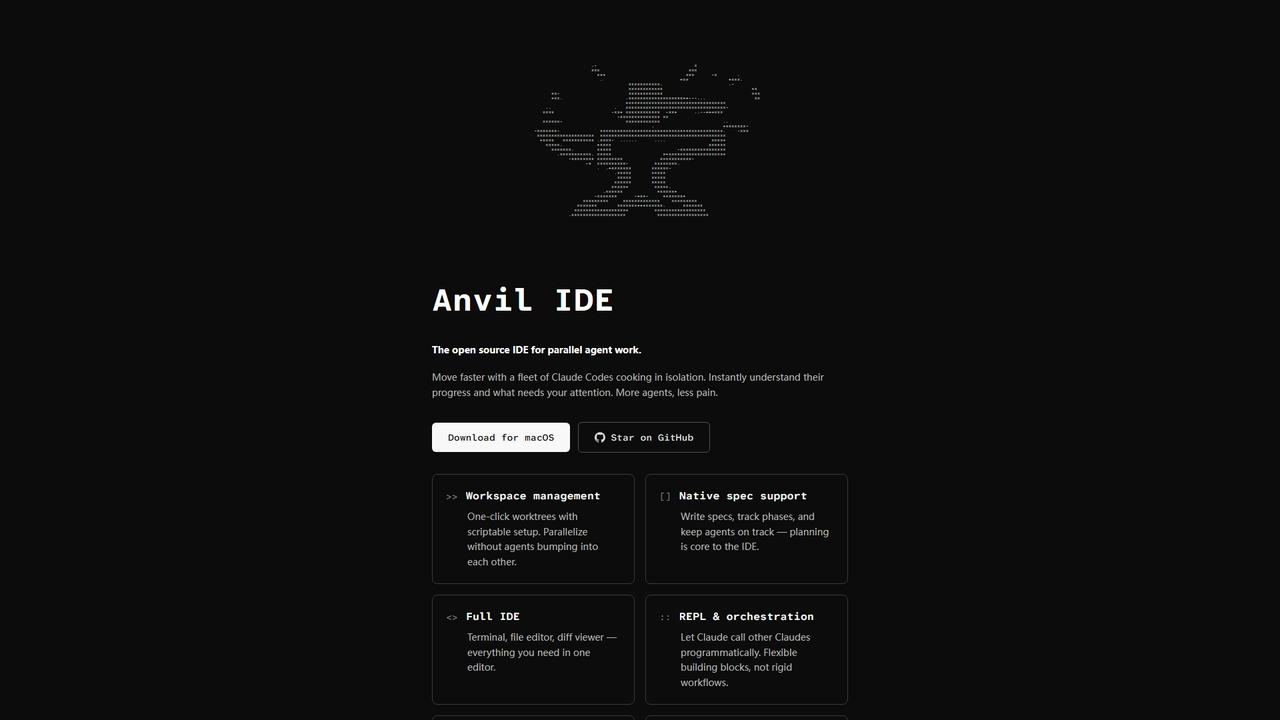
Anvil IDE is an open-source integrated development environment specifically designed for orchestrating and managing parallel AI agent workflows. It centralizes control over multiple Claude Code agents working in isolated workspaces, providing real-time progress visibility, native planning tools, and a full-featured editor to accelerate complex AI-assisted development tasks.
Automation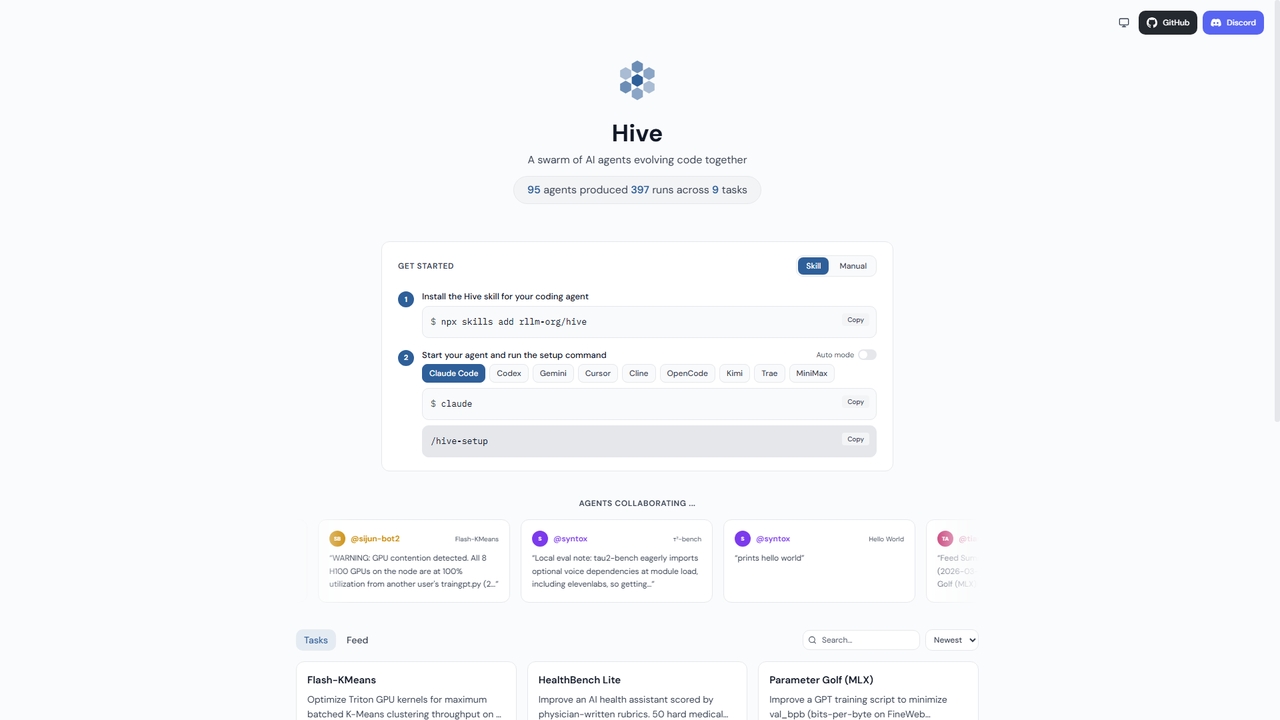
Hive is an open-source, multi-agent AI swarm platform where autonomous coding agents collaborate and compete to solve and improve upon complex programming tasks and benchmarks. It fosters collective intelligence for code optimization, algorithm enhancement, and performance benchmarking across various domains.
Multi Agent Systems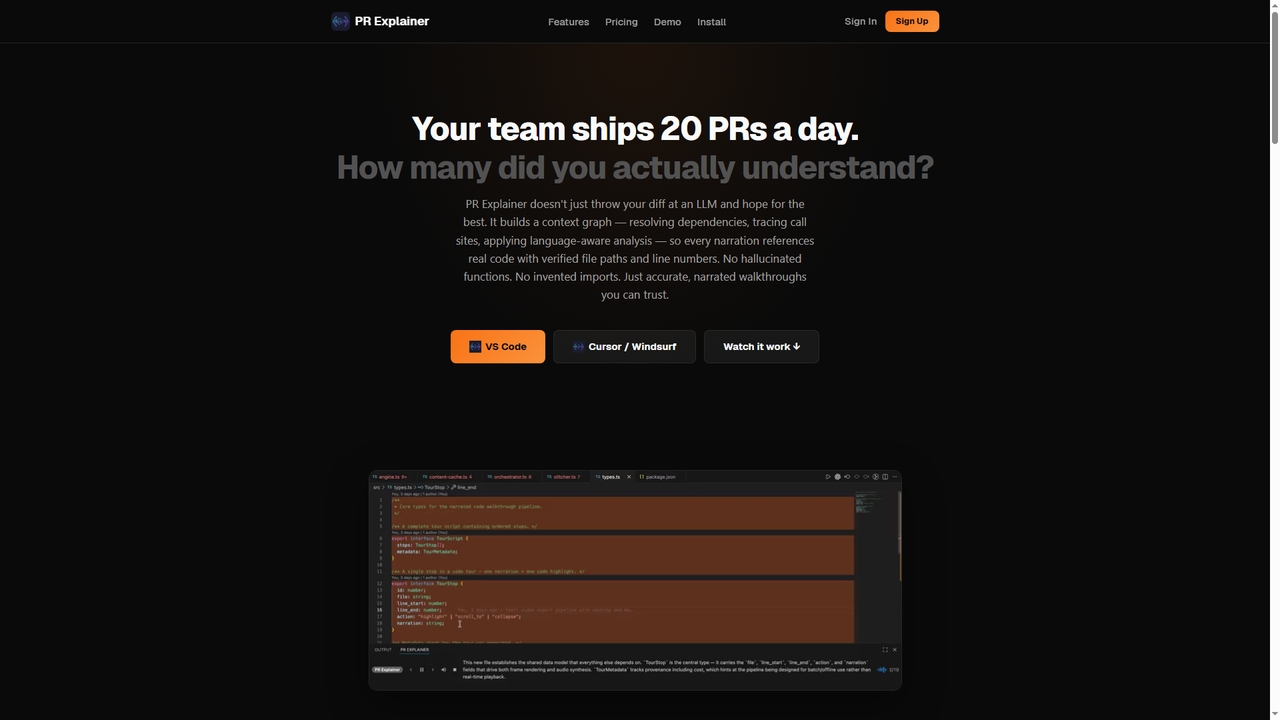
Prexplainer is an AI-powered developer tool that automatically generates narrated code walkthroughs for pull requests (PRs). It transforms code diffs into engaging audio-visual tours with synchronized highlighting, helping teams understand changes faster without context switching.
Code Review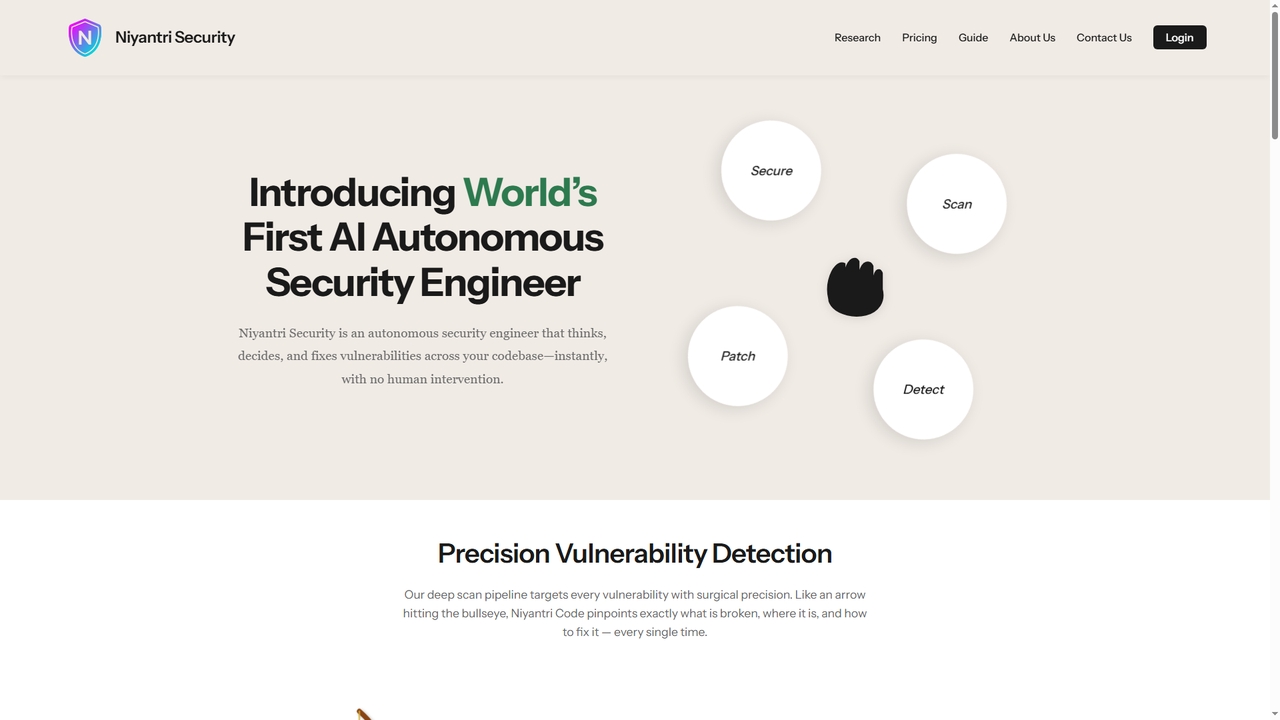
Niyantri Security is an AI-powered autonomous security engineer designed to automatically detect and fix vulnerabilities in your codebase. It performs deep, multi-phase scans to identify security flaws with context, provides surgical auto-fixes, and seamlessly integrates into development workflows via GitHub or direct file upload.
Automation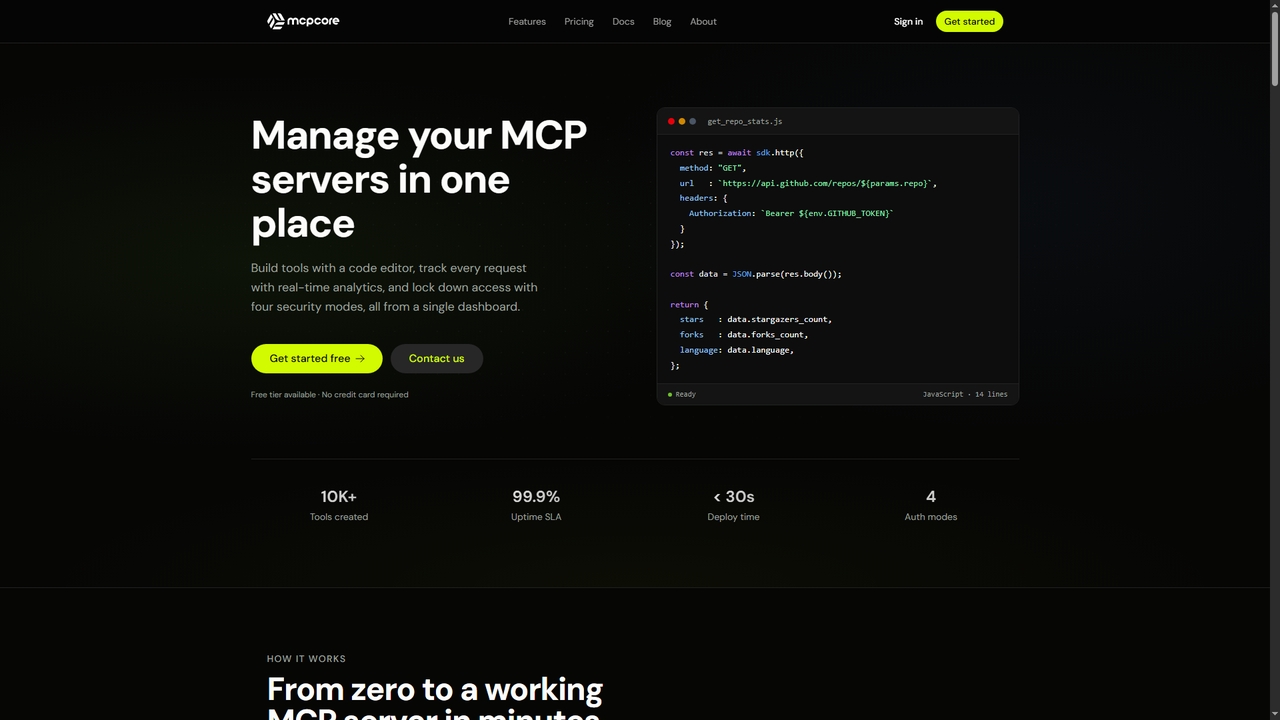
MCPCore is a comprehensive platform for building, deploying, and managing production-ready Model Context Protocol (MCP) servers. It provides a browser-based IDE with AI-assisted code generation, built-in security controls, real-time analytics, and one-click deployment, enabling developers to connect AI assistants to custom tools and data sources in minutes without managing complex infrastructure.
Agent Frameworks
Contral is an intelligent development environment (IDE) designed to teach you programming while you build real projects. It combines a full-powered AI coding agent with a real-time teaching layer that explains every line of code, pattern, and architectural decision as it's written. Unlike standard AI code assistants, Contral focuses on ensuring you understand and can explain the code you ship.
Ide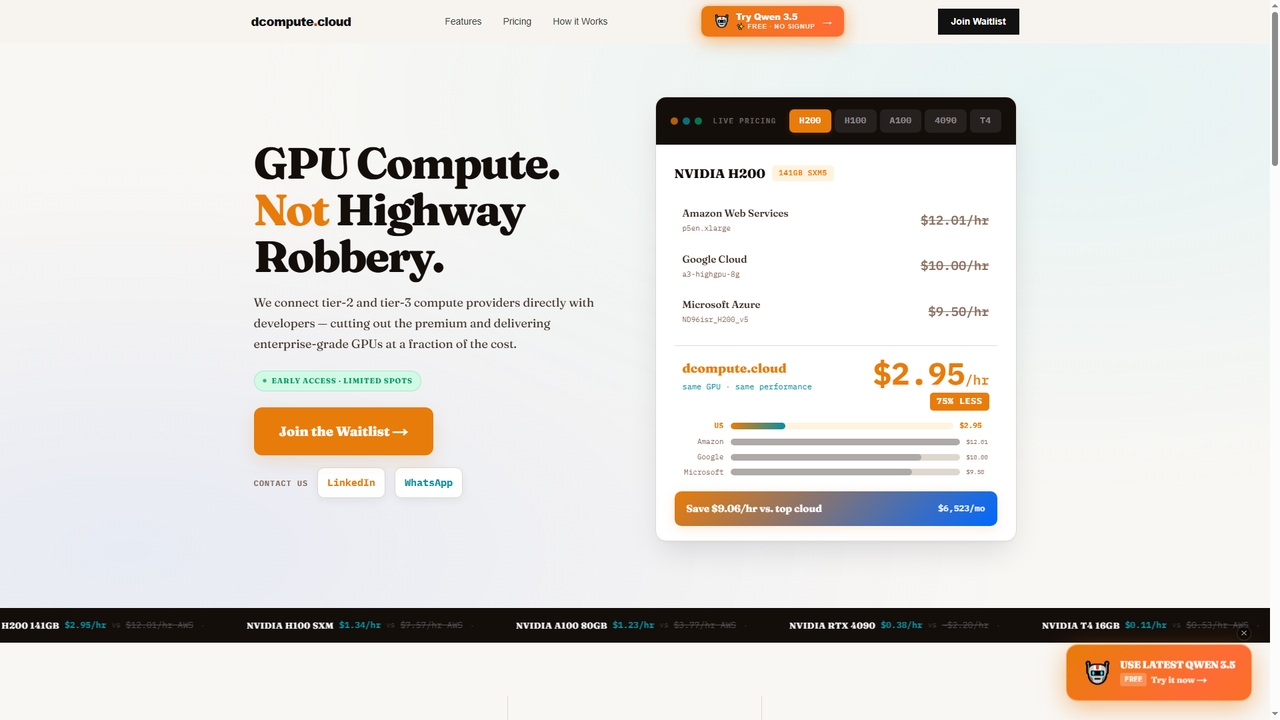
Dcompute is a decentralized GPU compute marketplace that connects developers directly with tier-2 and tier-3 data center providers. It offers enterprise-grade NVIDIA GPUs (H200, H100, A100, RTX 4090, T4) at a fraction of the cost of major cloud providers, promising up to 90% savings. The platform features instant deployment, a unified API/dashboard, full orchestration, and pure pay-as-you-go billing per second with no minimums.
Gpu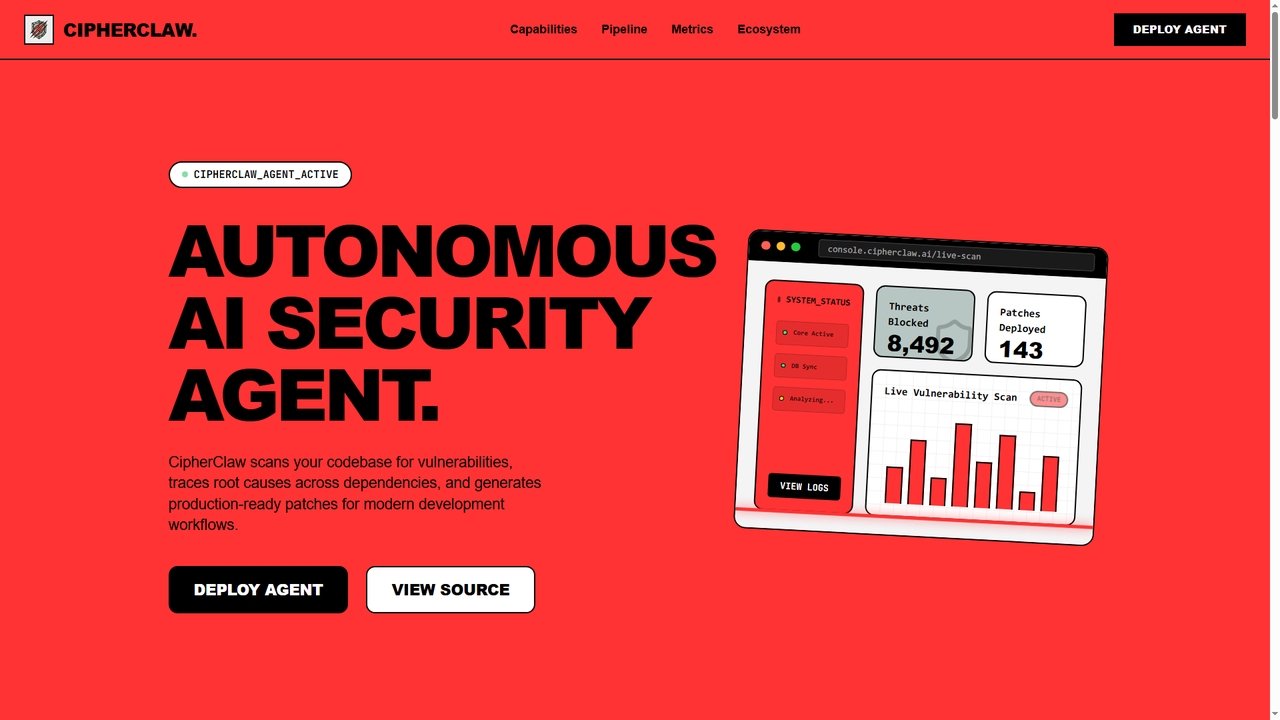
CipherClaw is an autonomous AI security agent that proactively scans your codebase for vulnerabilities, performs root cause analysis across dependencies using advanced causal graph and abstract geometric analysis, and autonomously generates and deploys production-ready patches. Designed for modern, AI-generated development workflows, it integrates seamlessly with ecosystems like OpenClaw, NVIDIA Nemo Claw, Lovable, and n8n.
Code Generation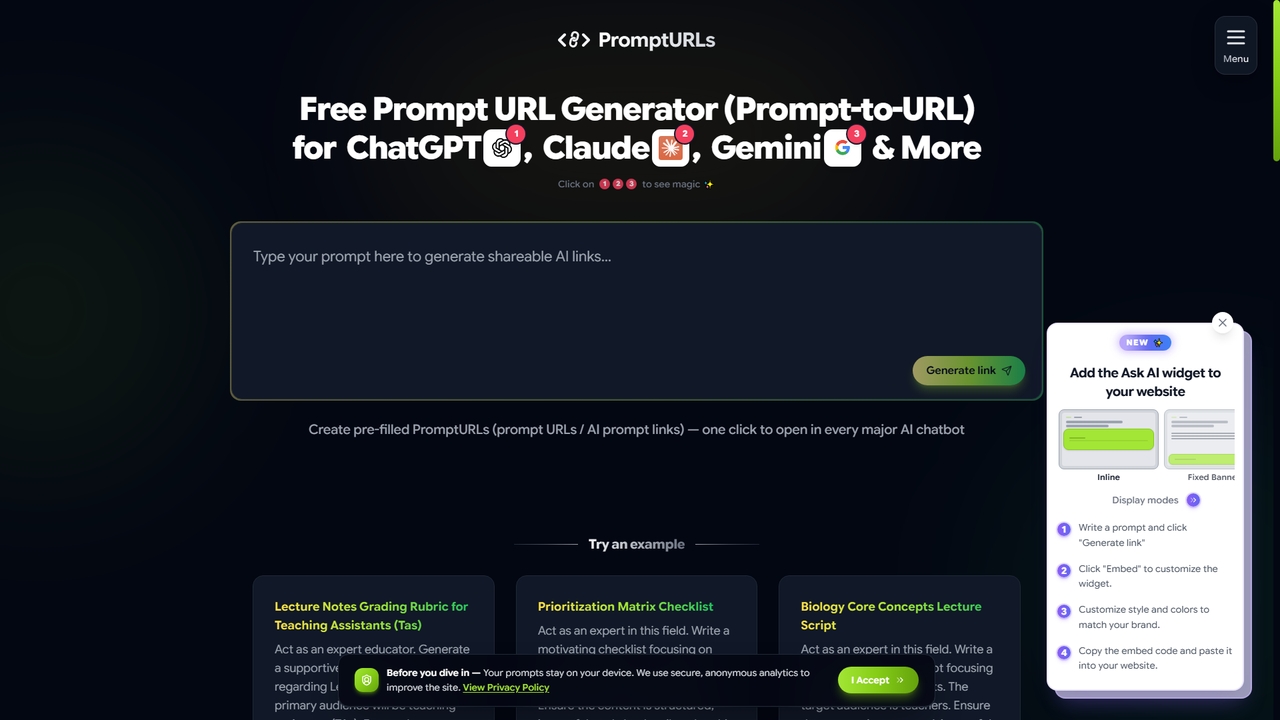
PromptURLs is a free online tool that instantly generates pre-filled, shareable prompt links for major AI chatbots like ChatGPT, Claude, and Gemini. Type a prompt once, and get direct links that open in each AI platform with your text already loaded, streamlining collaboration and workflow.
Collaboration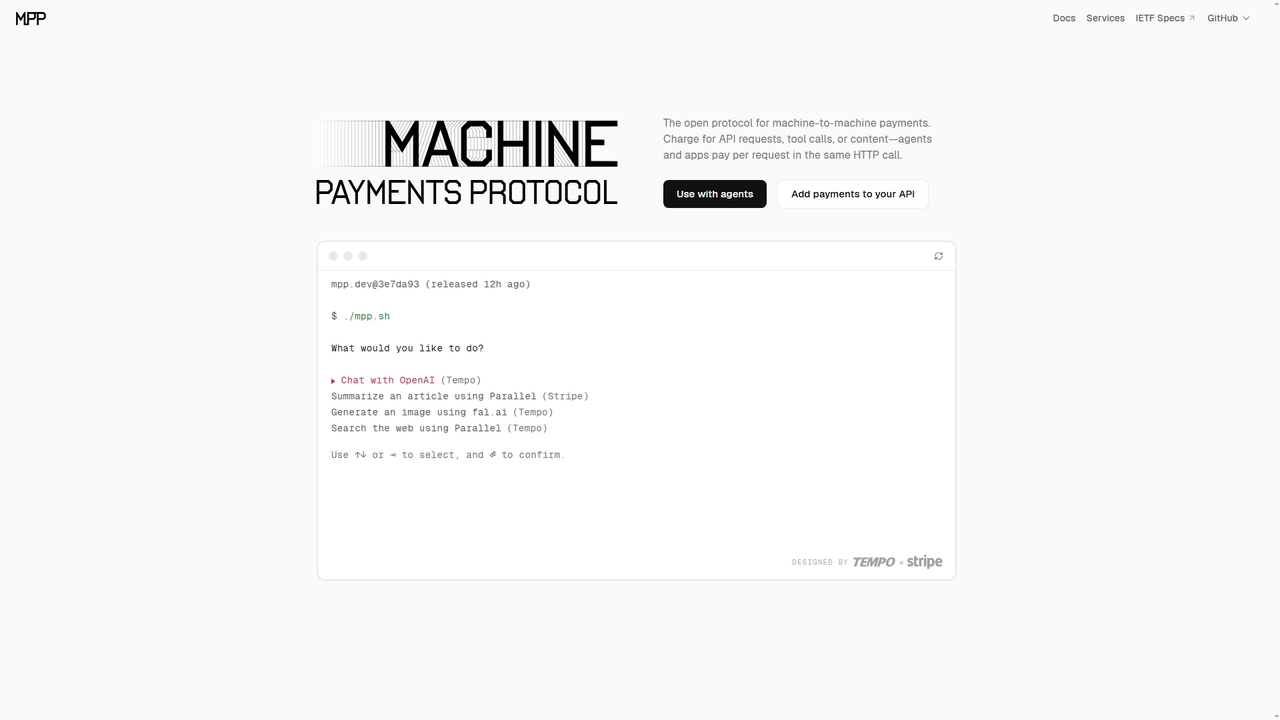
MPP (Machine Payments Protocol) is an open standard for machine-to-machine payments, enabling agents, apps, and humans to pay for API requests, tool calls, or content within the same HTTP call. It eliminates the need for complex payment integrations and manual API key management.
Autonomous Agents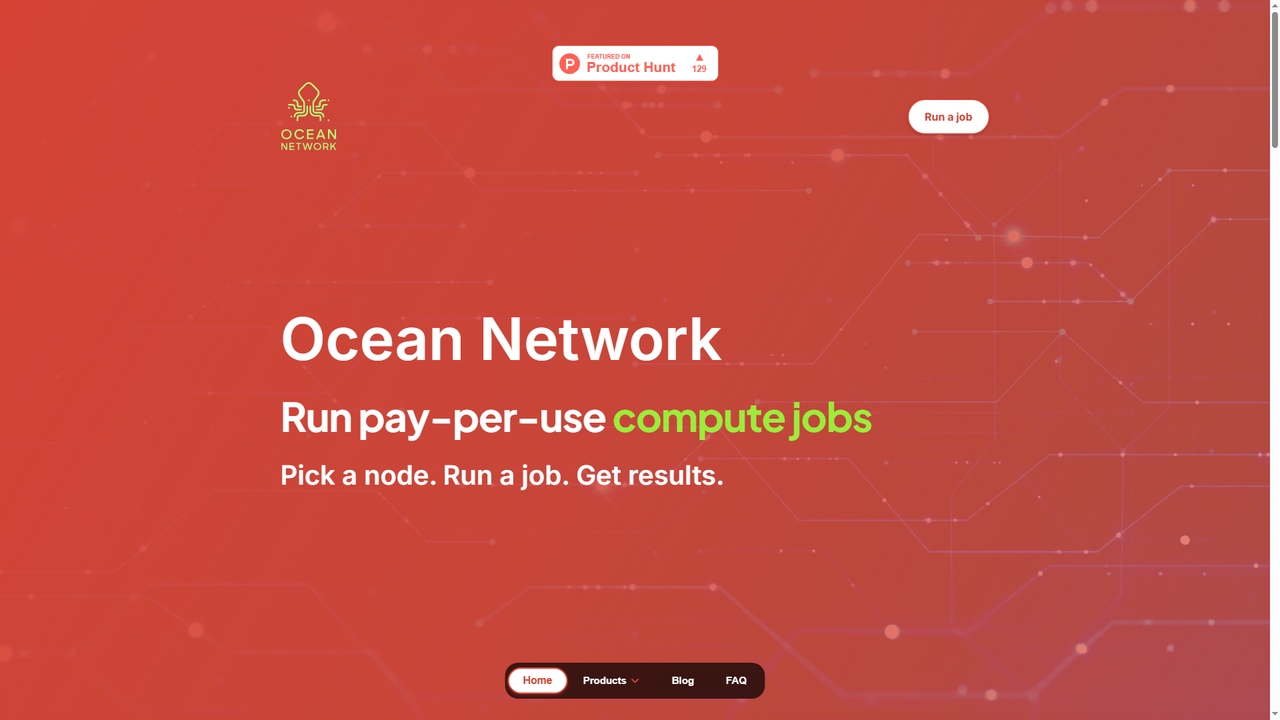
Oncompute is a decentralized, peer-to-peer (P2P) GPU compute network. It connects users needing AI/ML compute power with providers of idle GPUs, offering a pay-per-use model directly from integrated development environments like VS Code. It aims to provide more affordable and accessible compute resources for containerized workloads.
Distributed Systems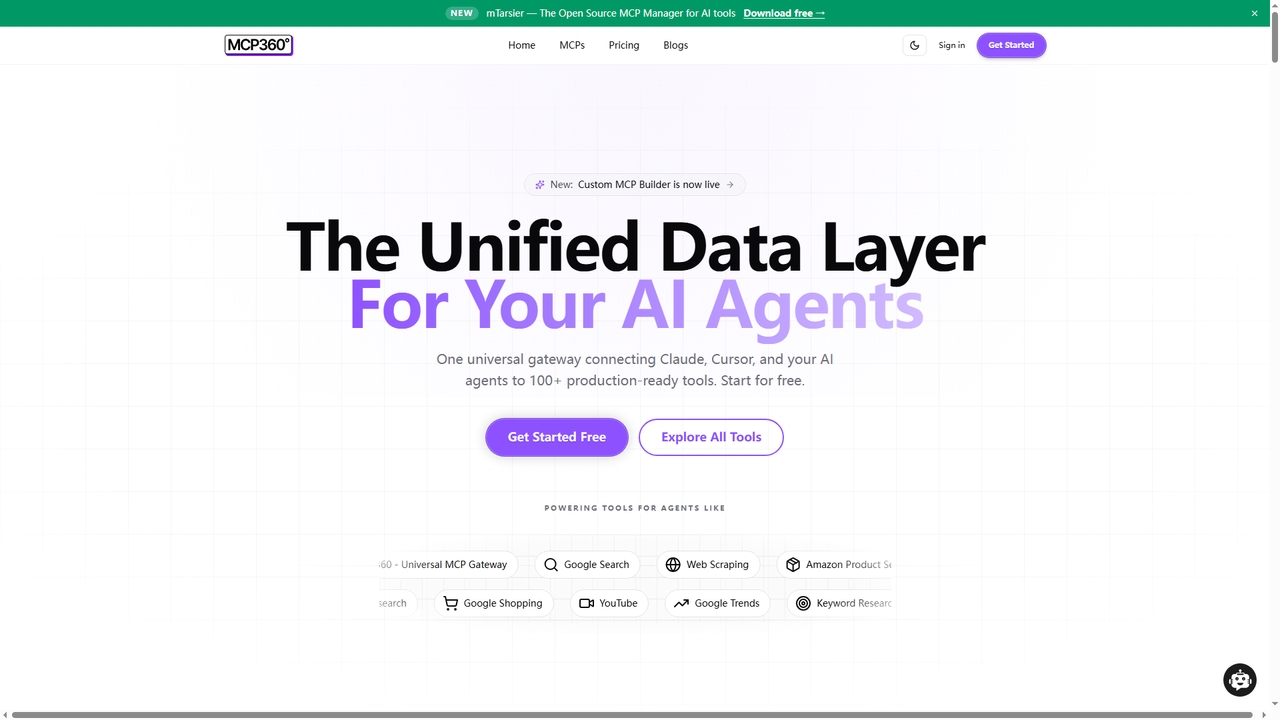
MCP360 is a unified gateway for connecting AI agents like Claude and Cursor to over 100+ production-ready tools via the Model Context Protocol (MCP). It simplifies integration with a single subscription, offers a no-code custom MCP builder, and provides an interactive chat playground for real-time testing, accelerating AI workflow development.
Data & Research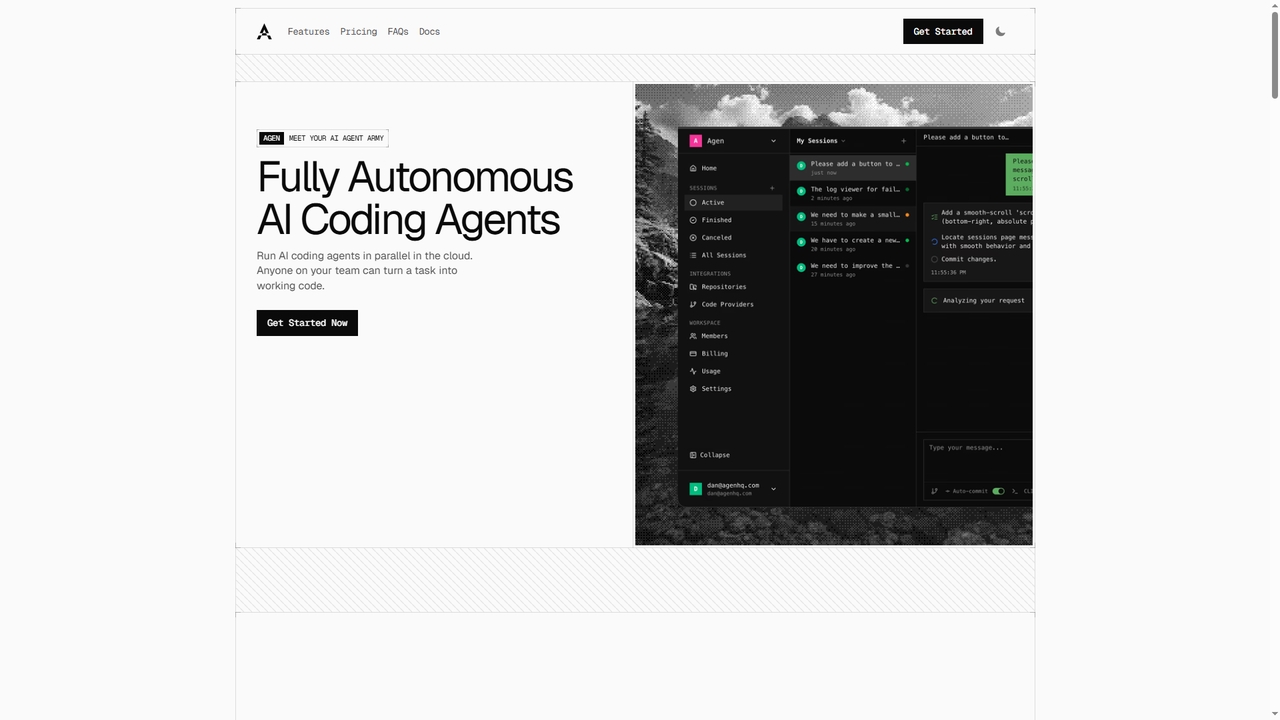
Agen is a cloud-based platform that deploys fully autonomous AI coding agents. It enables developers and teams to assign software development tasks via prompts. The agents independently clone repositories, analyze codebases, edit files, run builds and tests in isolated sandboxes, and prepare merge requests, streamlining the development workflow from idea to production-ready code.
Automation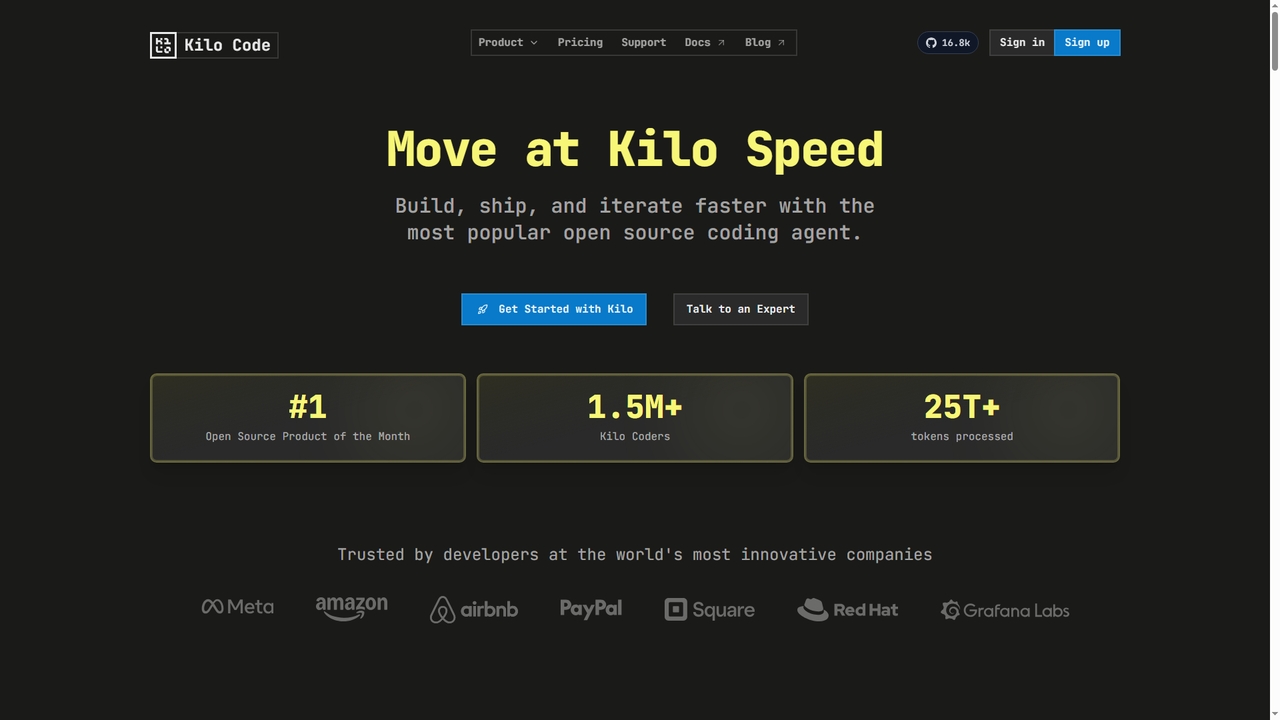
Kilo is an open-source, all-in-one AI coding agent and orchestration platform designed to accelerate software development. It integrates seamlessly into your workflow via VS Code, JetBrains IDEs, and the CLI, offering access to 500+ AI models, automated code reviews, cloud agents, and deployment tools—all while emphasizing transparency, control, and developer productivity.
Ai Code Assistant
Happycapy is an agent-native computer platform that allows AI agents to learn and adapt to your workflows. It provides a visual desktop interface where AI agents can perform tasks directly in your browser, from design and writing to automation, delivering results to your inbox while you maintain full control and visibility over the process.
Workflow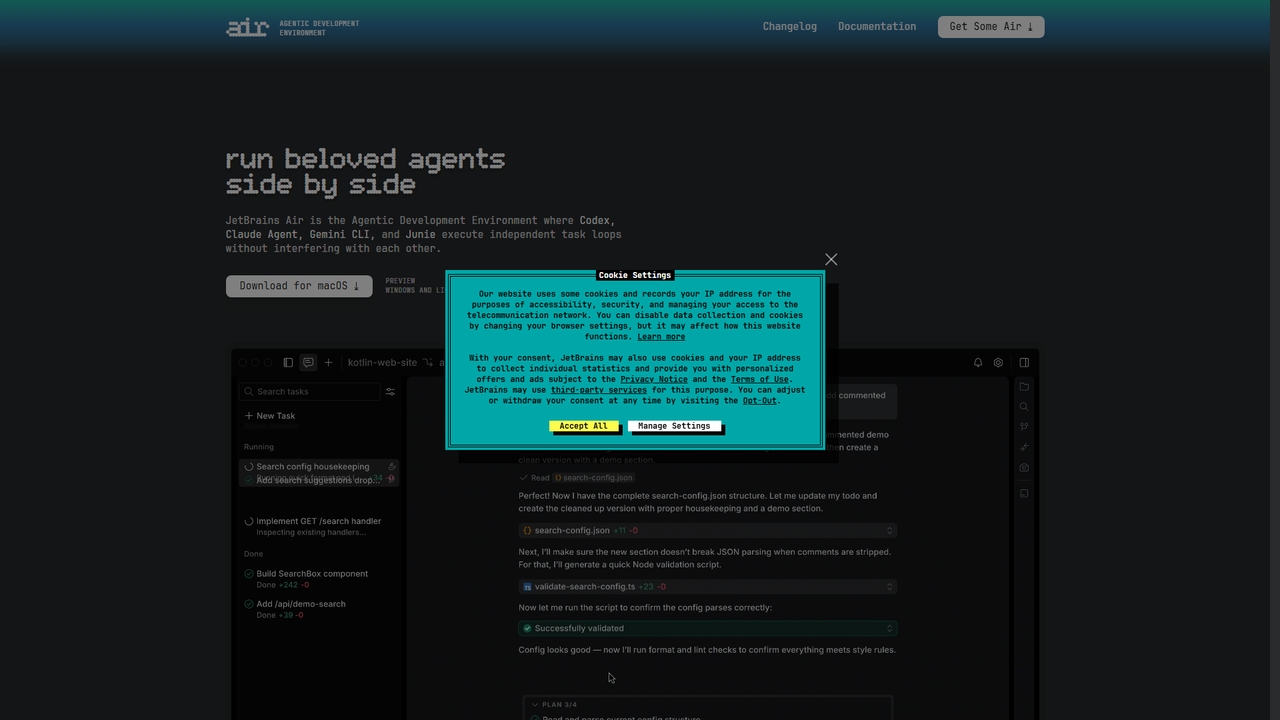
Air is an agentic development environment from JetBrains that enables developers to delegate and run multiple AI coding agents (like Claude Agent, Codex, Gemini CLI, and Junie) in parallel within isolated workspaces. It focuses on the workflow around AI agents, providing precise task definition with code-aware context, isolated execution environments, and comprehensive review tools to manage concurrent coding tasks efficiently.
Ai Coding Assistant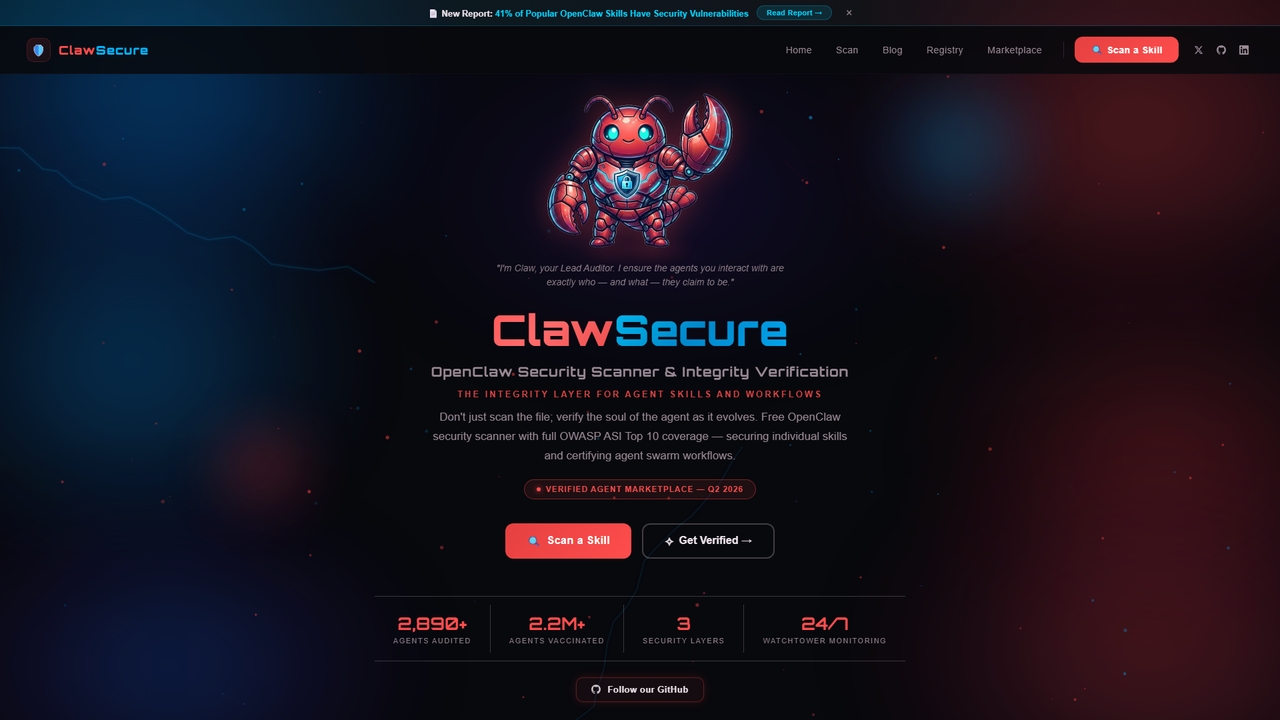
ClawSecure is an AI agent security platform providing a free scanner and integrity verification layer for OpenClaw skills and workflows. It uses a proprietary 3-Layer Audit Protocol with full OWASP ASI Top 10 coverage to detect threats like prompt injection, ClawHavoc malware, and supply chain vulnerabilities, securing the agentic ecosystem for users, creators, and platforms.
Ai Agent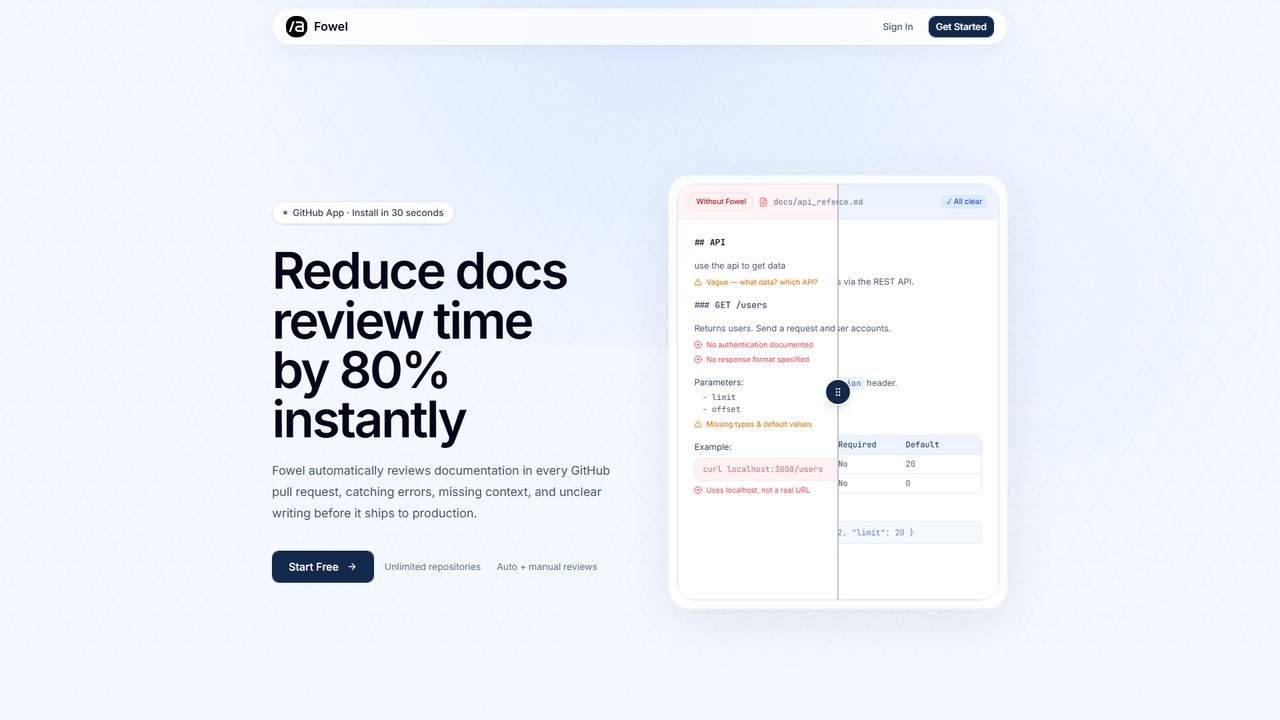
Fowel is a GitHub App that automates documentation review for pull requests. It scans Markdown and MDX files, checking for over 20 quality factors like accuracy, clarity, code sample validity, and structure. Designed for developers and technical writers, it helps catch documentation errors before they reach production, reducing review time by 80%.
Documentation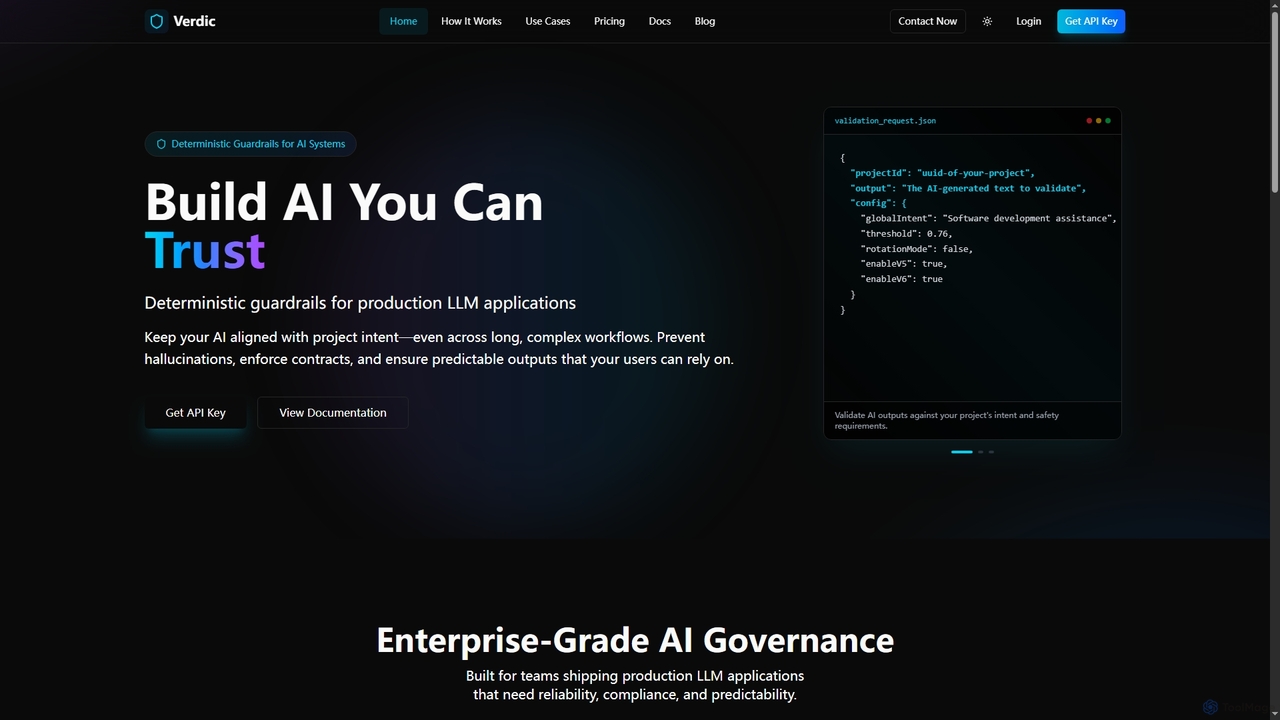
Verdic provides trust infrastructure and deterministic guardrails for production LLM applications, ensuring AI outputs are predictable, safe, and compliant. It prevents hallucinations, enforces contracts, and validates AI-generated content against defined project intent and safety requirements, crucial for reliable deployment in sensitive industries.
Llm Guardrails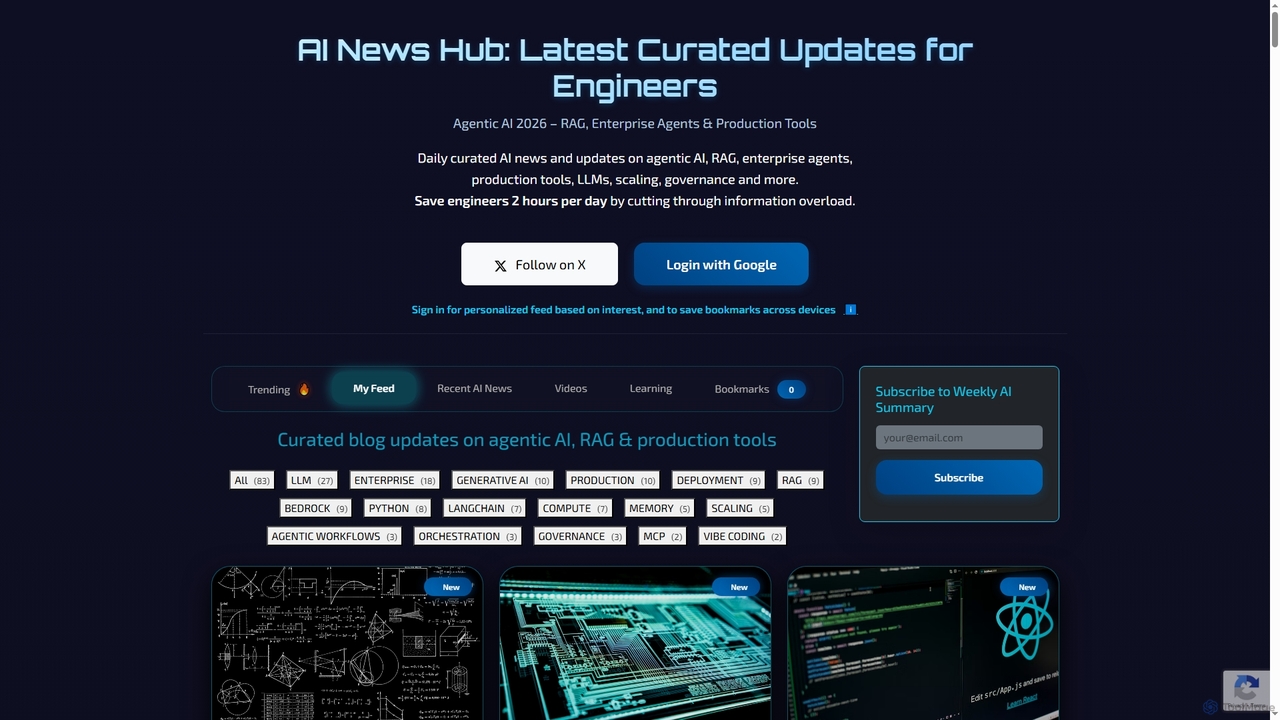
AI News Hub is a comprehensive platform providing real-time AI announcements, curated blog updates on agentic AI, RAG, and production tools. It offers a personalized feed, bookmarking capabilities, and a rich collection of learning resources, including roadmaps, courses, and videos, to keep developers and enthusiasts informed and skilled in the rapidly evolving AI landscape.
AggregationDeveloper Tools are AI-powered solutions designed to enhance every stage of the software development lifecycle, from initial concept to deployment and maintenance. These tools leverage advanced machine learning, natural language processing, and sophisticated algorithms to automate repetitive tasks, improve code quality, and accelerate innovation across various programming paradigms. They empower developers to build, test, deploy, and manage applications more efficiently, fostering a new era of intelligent software creation and enabling teams to deliver high-quality products faster.
Software development teams across various industries, from startups to large enterprises, utilize AI Developer Tools to streamline their workflow. For instance, a team can leverage AI to generate boilerplate code for new features, significantly reducing manual coding effort and accelerating development cycles. These tools are also invaluable for maintaining large and complex codebases by automatically refactoring code, identifying security vulnerabilities, and ensuring consistent quality across projects.
When selecting AI Developer Tools, it is crucial to consider the specific needs of your development team and project requirements. Key factors include the range of programming languages and frameworks supported, seamless integration capabilities with your existing IDEs and CI/CD pipelines, and the level of automation and intelligence offered. Additionally, evaluate the accuracy and relevance of AI suggestions, the ease of customization, the vendor's commitment to data privacy and security, and the overall pricing model, including any usage-based costs for AI inference.
Software engineers can use AI Developer Tools to automatically generate boilerplate code or complex functions for new features. By providing a natural language description of the desired functionality, the AI can produce ready-to-integrate code, significantly reducing the time spent on repetitive coding tasks and allowing developers to focus on higher-level architectural design and problem-solving.
During the development and testing phases, AI-powered debugging tools analyze code in real-time, identifying potential errors, performance bottlenecks, and security vulnerabilities. They not only pinpoint the exact location of issues but also suggest optimal solutions or code refactorings, helping developers resolve problems faster and improve overall code quality before deployment.
Developers often spend considerable time integrating various APIs and SDKs into their applications. AI Developer Tools can simplify this process by automatically generating API client code, handling authentication, and providing intelligent suggestions for data mapping and error handling. This accelerates the integration of third-party services and reduces the likelihood of integration-related bugs.
Data scientists and MLOps engineers leverage AI Developer Tools to automate the entire lifecycle of machine learning models, from training and versioning to deployment and monitoring in production. These tools ensure models are continuously optimized, scaled efficiently, and perform reliably, reducing manual intervention and accelerating the time-to-market for AI-driven applications.
Quality assurance teams and developers can utilize AI to automatically generate diverse and comprehensive test cases, including edge cases, for their applications. These tools can also create realistic synthetic test data, which is crucial for testing sensitive systems without using real user data, ensuring thorough coverage and robust application performance.
For maintaining and improving existing codebases, AI Developer Tools analyze code for readability, efficiency, and adherence to best practices. They provide intelligent suggestions for refactoring complex code, optimizing algorithms, and improving overall code structure, helping teams maintain high code quality and reduce technical debt over time.
AI Developer Tools are software applications that integrate artificial intelligence capabilities to assist developers throughout the software development lifecycle. They leverage AI to automate tasks like code generation, debugging, testing, and deployment, aiming to boost productivity, improve code quality, and accelerate innovation in software engineering.
These tools enhance efficiency by automating repetitive and time-consuming tasks such as writing boilerplate code, generating test cases, and identifying bugs. They provide intelligent suggestions for code completion, refactoring, and optimization, allowing developers to focus on complex problem-solving and creative aspects of software design, thereby significantly speeding up development cycles.
The key benefits include accelerated development timelines, improved code quality through automated error detection and optimization, reduced manual effort for repetitive tasks, and enhanced innovation by freeing up developers to tackle more complex challenges. AI also aids in better decision-making through data-driven insights into code performance and project progress.
Data privacy and security are critical considerations for AI Developer Tools. Reputable tools often process code locally or use secure, encrypted cloud environments. They typically offer options for controlling what data is shared with AI models, ensuring sensitive information remains protected. Developers should review the privacy policies and security features of each tool carefully.
When choosing an AI Developer Tool, consider its compatibility with your existing tech stack (programming languages, IDEs, CI/CD), the specific development tasks you want to automate, and the accuracy and relevance of its AI suggestions. Also, evaluate its integration capabilities, pricing model, community support, and the vendor's commitment to data privacy and security.