ToolMage
Sign in

Best 125 Database AI tools for Developer Tools

Popular Database AI tools in Developer Tools include MongoDB, Databricks, Elastic, Pinecone, Milvus, InfluxData, Chroma, Navicat, Vectorize, and MotherDuck, helping you work more efficiently.

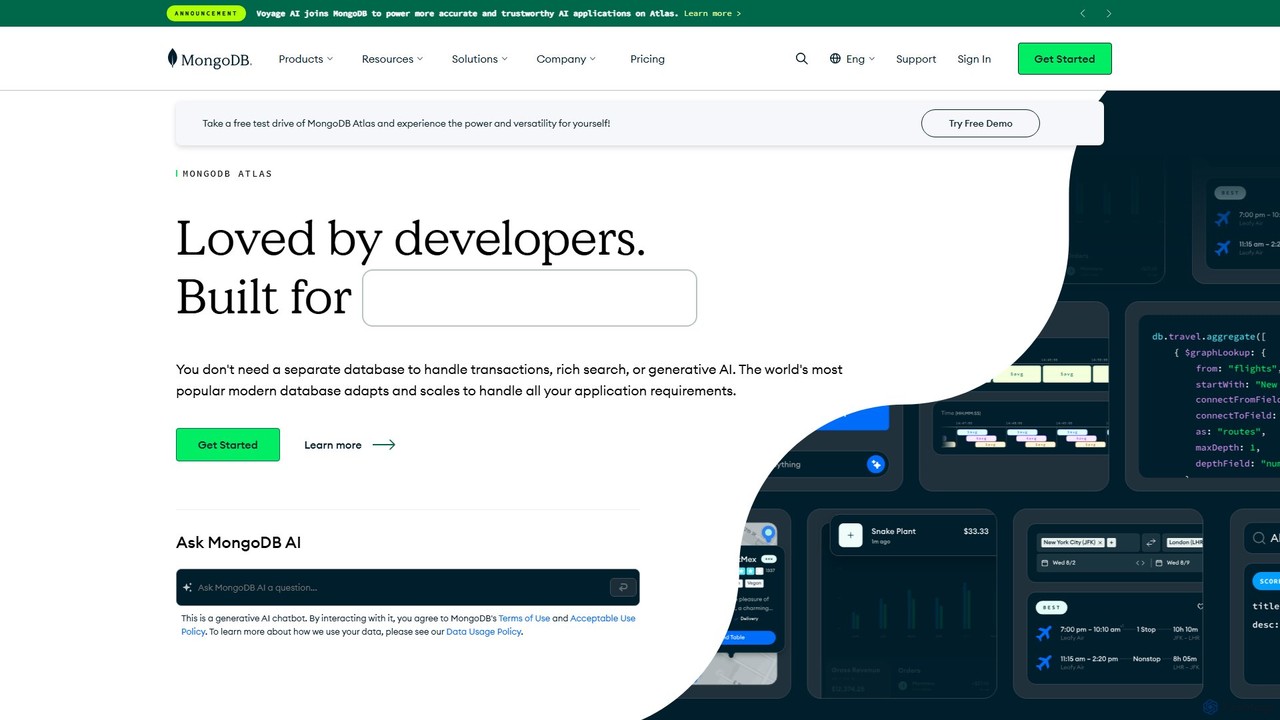
MongoDB
Freemium

MongoDB

MongoDB is a developer data platform built on a leading NoSQL document database. Its cloud offering, MongoDB Atlas, provides an integrated suite of services, including powerful Vector Search for generative AI, full-text search, and real-time analytics. It's designed for modern applications, offering flexibility, scalability, and a unified experience for developers to build faster and more efficiently across multiple clouds.

Vector Database
Visits 5.9MFavorites 154Likes 148
SQL Chat
Freemium

SQL Chat

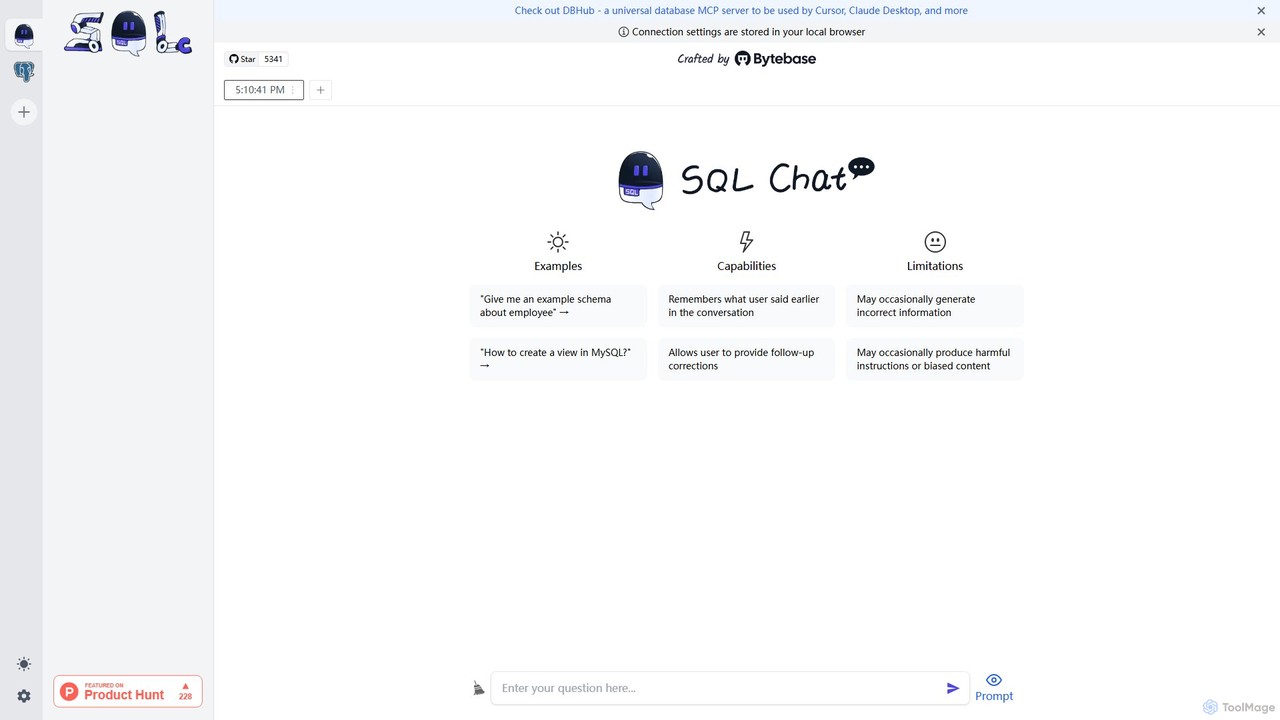
SQL Chat is an open-source, chat-based SQL client and editor that uses AI to translate natural language questions into SQL queries. Connect to your database, ask questions in plain English, and get results instantly, democratizing data access for both technical and non-technical users.

Code Assistant
Visits 6.6KFavorites 159Likes 148
AI Query
Paid

AI Query

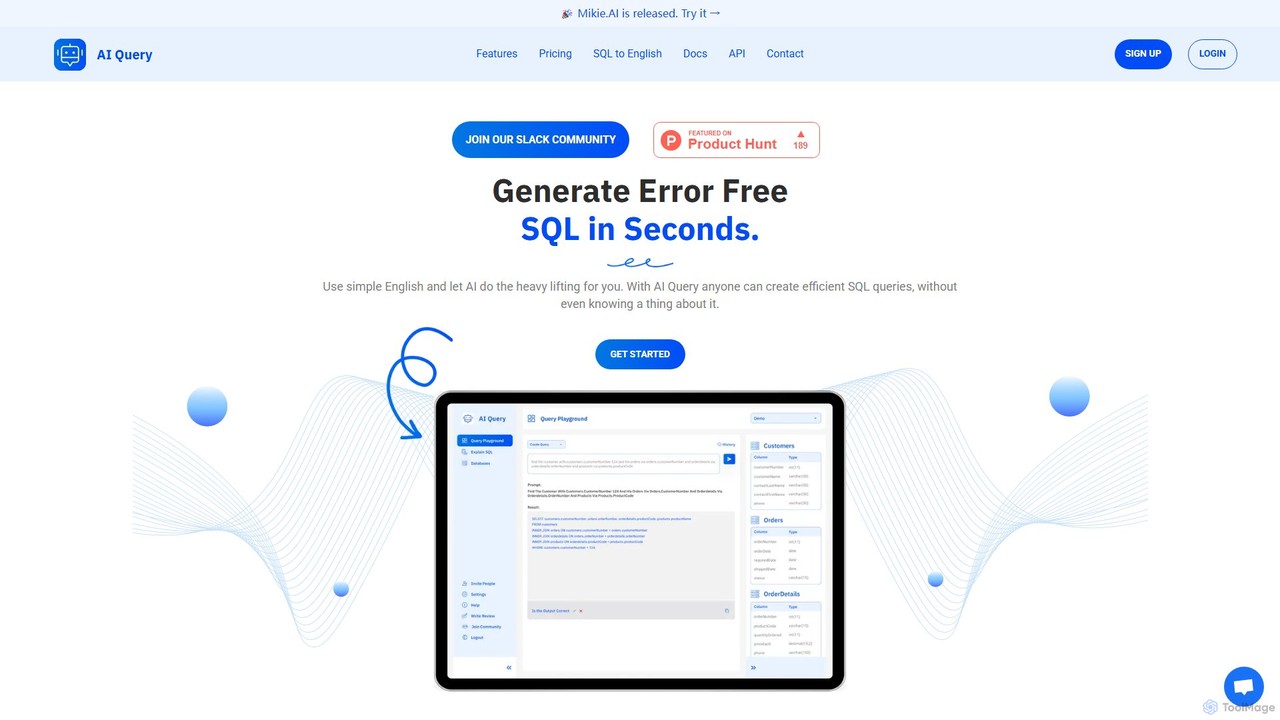
AI Query is an AI-powered tool that translates plain English into complex, error-free SQL queries in seconds. It's designed for developers, data analysts, and non-technical users to simplify database interactions, explain existing queries, and accelerate data retrieval workflows.

Querying
Visits 6.6KFavorites 147Likes 167
SQLPilot
Freemium

SQLPilot

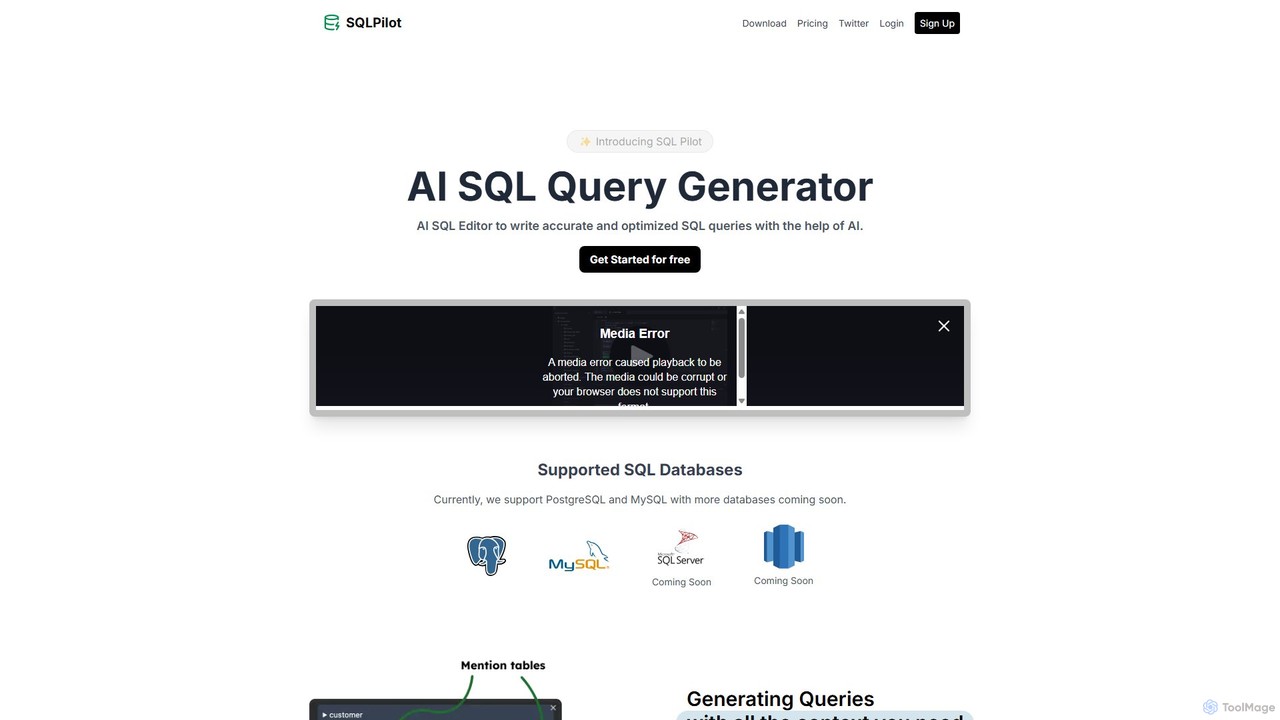
SQLPilot is an AI-powered SQL query generator and editor that transforms natural language prompts into accurate, optimized SQL queries. It supports multiple databases like PostgreSQL and MySQL, various GPT models, and ensures data privacy by not storing your credentials or schemas.

Code Assistant
Visits 7.4KFavorites 142Likes 159
Azimutt
Freemium

Azimutt

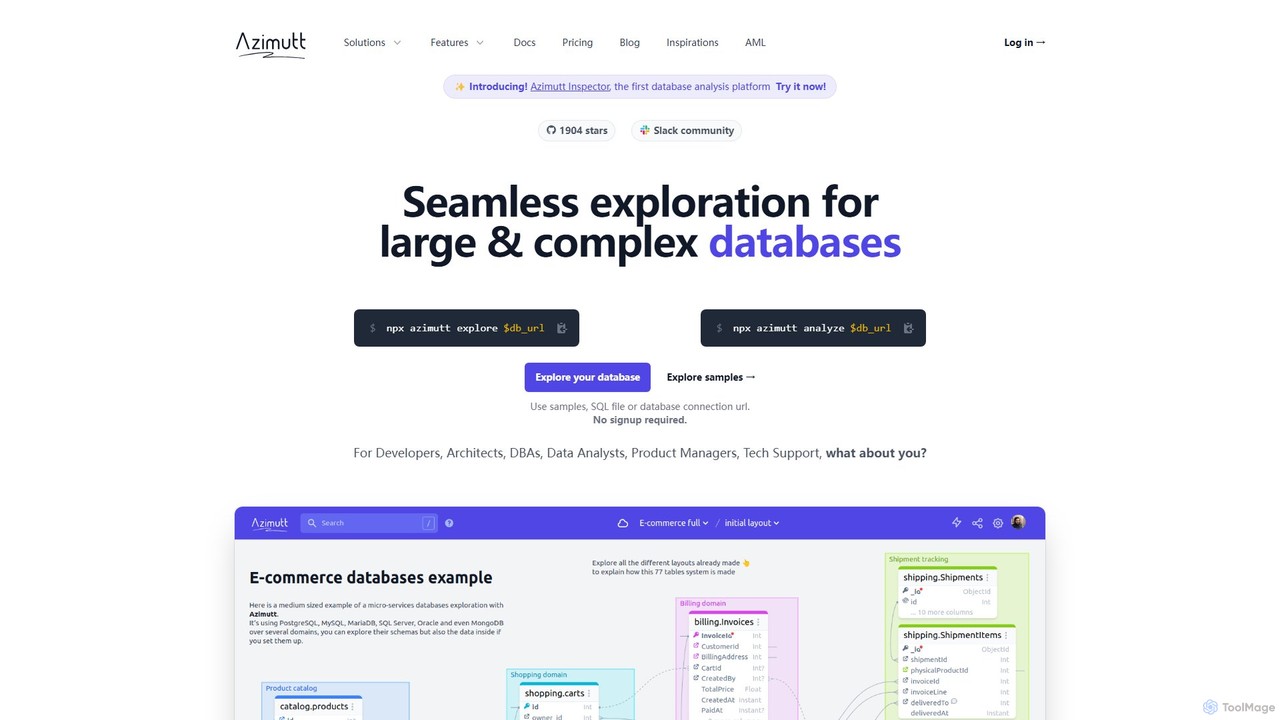
Azimutt is an advanced database explorer and analyzer designed for large, complex databases. It helps developers, DBAs, and data analysts visualize, document, and optimize their database schemas. With features like incremental layout building, AI-powered SQL generation, and collaborative documentation, Azimutt simplifies database exploration, improves team efficiency, and ensures database health.

Visualization
Visits 20.7KFavorites 128Likes 128
AskYourDatabase
Freemium

AskYourDatabase

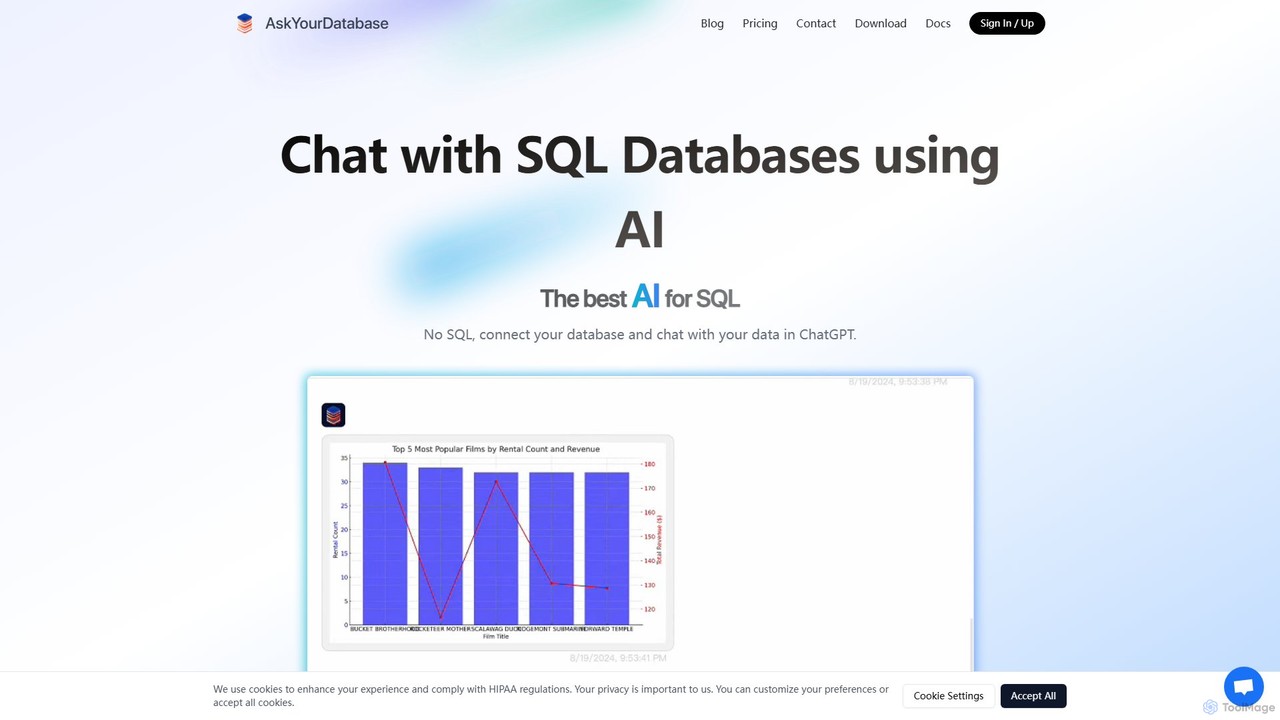
AskYourDatabase is a powerful AI SQL assistant that allows you to interact with your databases using natural language. Query data, create visualizations, and build interactive dashboards without writing a single line of SQL. It supports various databases, offers both desktop and embeddable chatbot versions, and prioritizes data security with on-premise deployment options.

Data Analysis
Visits 16.9KFavorites 153Likes 128
ParadeDB
Freemium

ParadeDB

ParadeDB is a modern Elasticsearch alternative built directly on Postgres. It enhances Postgres with powerful, real-time search and analytics capabilities, including full-text search, fuzzy matching, and faceting, eliminating the need for complex ETL processes and separate search engines.

Search
Visits 41.9KFavorites 162Likes 152
sql_creator
Freemium

sql_creator

sql_creator is an AI-powered tool that instantly converts natural language text into accurate and efficient SQL queries. It supports various SQL dialects, helps optimize queries, and enables both technical and non-technical users to interact with databases seamlessly, boosting productivity and democratizing data access.

Business Intelligence
Visits 6.5KFavorites 154Likes 166
nao
Freemium

nao

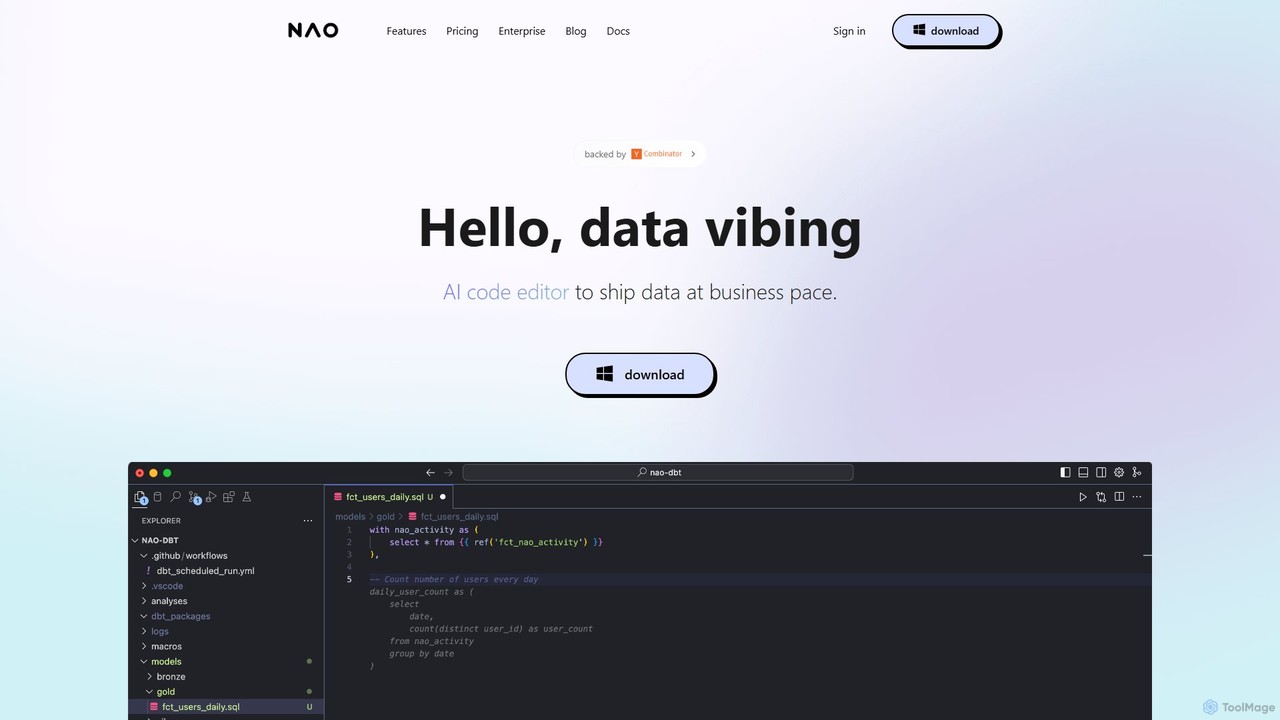
nao is an AI-powered code editor designed for data teams. It streamlines SQL and Python data pipeline creation, dbt workflows, and analytics by natively connecting to your data warehouse. Its intelligent agent provides data-aware code suggestions, quality checks, and instant diff previews to help you ship data faster and more safely.

Analytics
Visits 25.3KFavorites 125Likes 114
Zep
Freemium

Zep

Zep is a context engineering platform for developers building AI agents. It provides long-term memory and advanced Graph RAG capabilities, enabling agents to recall user preferences, conversation history, and dynamic business data. By automatically constructing temporal knowledge graphs, Zep delivers relevant, token-efficient context to LLMs, resulting in faster, more accurate, and highly personalized AI interactions.

Agent Builder
Visits 110.4KFavorites 165Likes 149
Dawiso
Paid

Dawiso

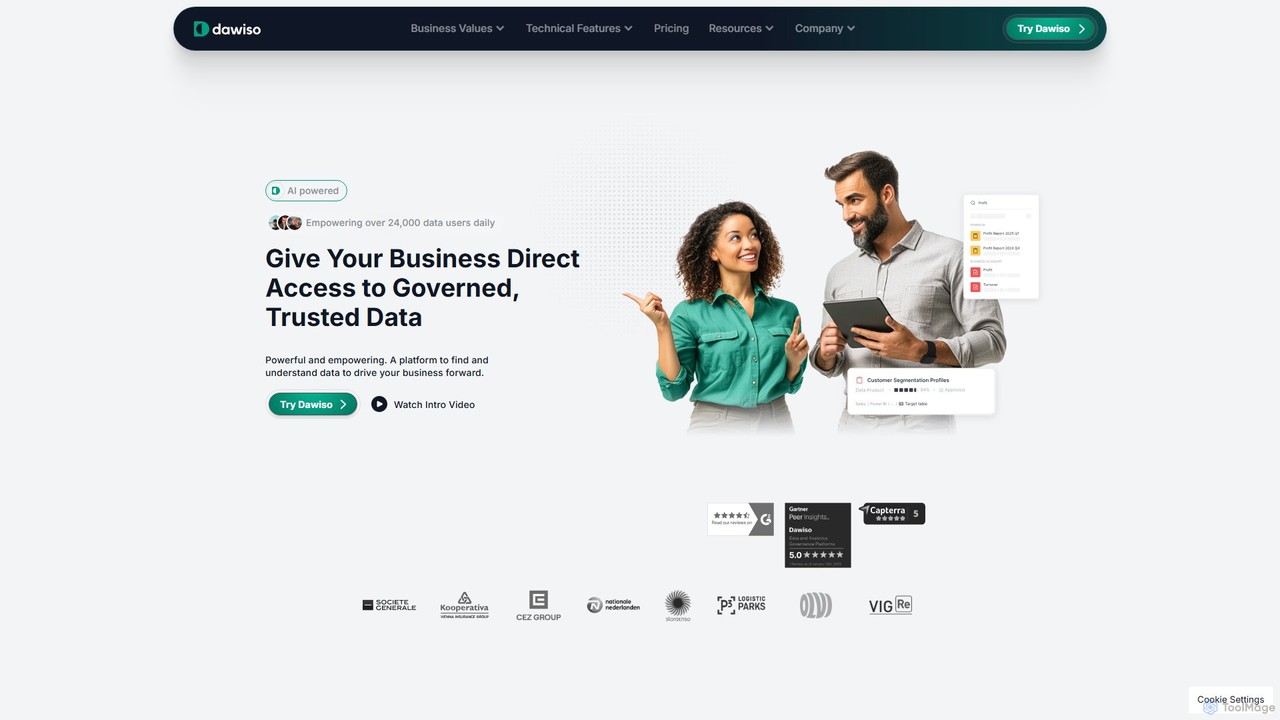
Dawiso is an AI-powered knowledge management and data governance platform. It helps organizations achieve data transparency, streamline compliance, and automate documentation. Using natural language search and AI-assisted writing, Dawiso makes complex data landscapes accessible and manageable for all users, from data engineers to business analysts.

Compliance
Visits 16.3KFavorites 132Likes 133
castordoc
Paid

castordoc

CastorDoc, now Coalesce Catalog, is an AI-powered data catalog and governance platform. It enables self-service analytics by allowing users to find, understand, and trust data through natural language search, automated documentation, and end-to-end data lineage. It's designed to increase team productivity and foster a data-driven culture.

Intelligence
Visits 19.6KFavorites 112Likes 102
InsightBase
Freemium

InsightBase

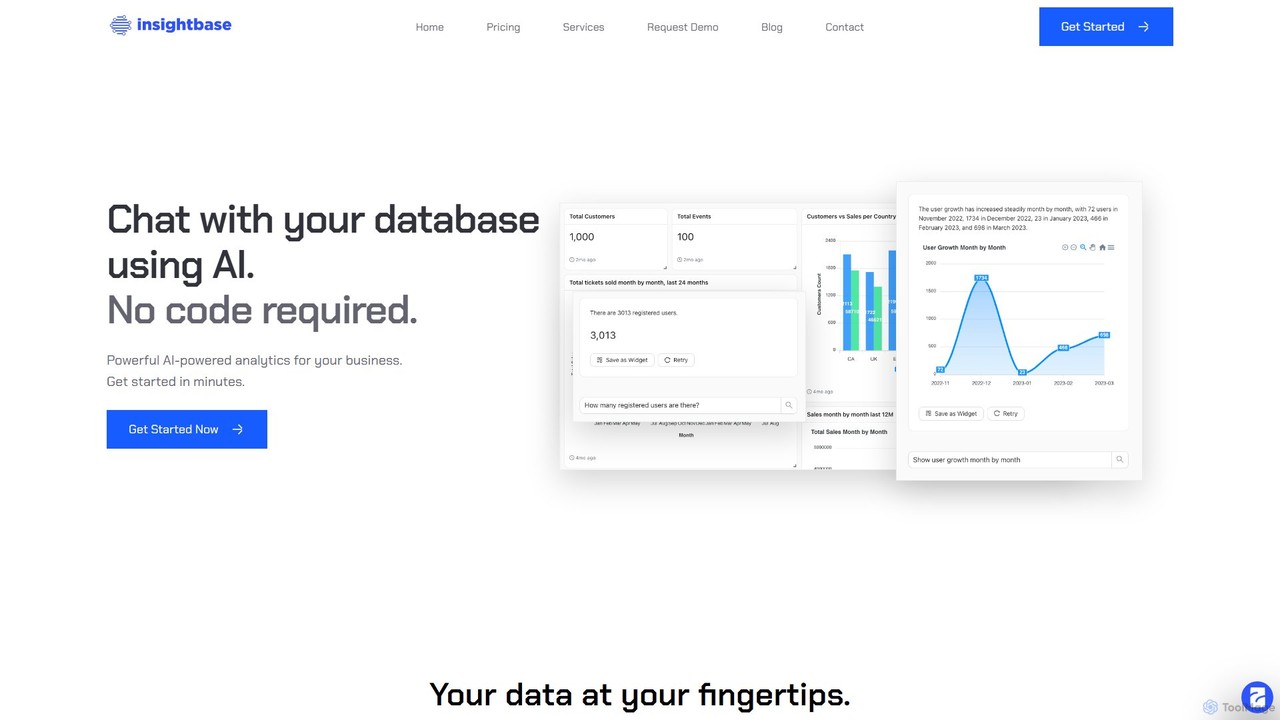
InsightBase is an AI-powered business intelligence platform that allows you to chat with your database using natural language. It empowers both non-technical and technical users to build dashboards, generate reports, and gain data-driven insights in minutes, without needing to write complex SQL queries.

Business Intelligence
Visits 6.5KFavorites 117Likes 114
iomete
Freemium

iomete

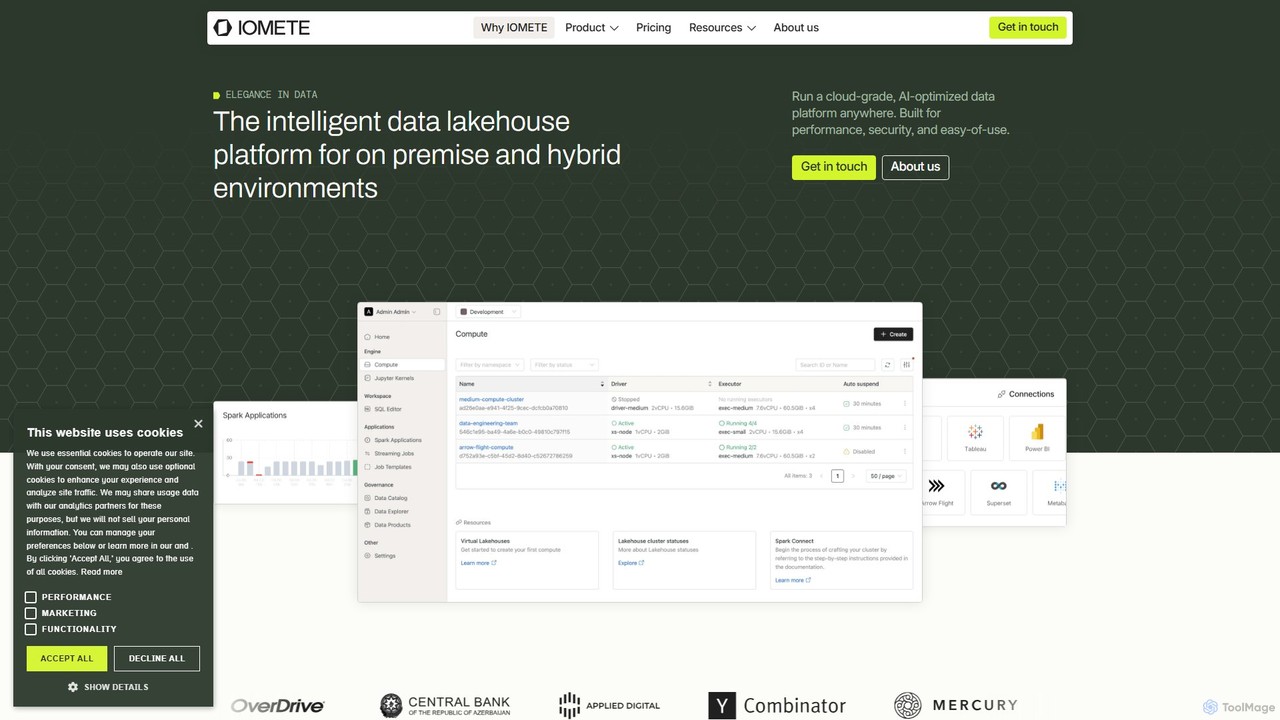
iomete is a self-hosted data lakehouse platform designed for enterprises. It combines the flexibility of data lakes with the performance of data warehouses, giving organizations full control over their data, security, and costs. By deploying on-premises or in your own cloud, iomete eliminates vendor lock-in and provides a cost-effective, scalable solution for managing petabyte-scale datasets, data engineering, and machine learning workflows.

Analytics
Visits 25.9KFavorites 150Likes 138
Fabi.ai
Freemium

Fabi.ai

Fabi.ai is an AI-powered business intelligence and data analysis platform designed for lean teams. It integrates SQL, Python, and AI to help users build dashboards, automate workflows, and explore data 10x faster. The platform offers an all-in-one collaborative environment, reducing context switching and enabling both technical and non-technical users to derive insights from their data sources like data warehouses, Google Sheets, and more.

Business Intelligence
Visits 24.1KFavorites 113Likes 144
VerbaGPT
Freemium

VerbaGPT

VerbaGPT is a privacy-focused data analysis tool that lets you query your data using natural language. It runs locally on your machine, converting your questions into Python and SQL to analyze databases and files without ever exposing your raw data to an external LLM. It supports advanced analytics, data visualization, and multiple data sources like SQL, CSV, and TXT files.

Business Intelligence
Visits 6.5KFavorites 150Likes 128
QueryHub
Freemium

QueryHub

QueryHub is an AI-powered business intelligence platform that allows users to query their data using natural language. Connect to various data sources, ask complex questions in plain English, and instantly receive answers, visualizations, and reports. It democratizes data analysis, making it accessible to non-technical team members.

Business Intelligence
Visits 6.3KFavorites 153Likes 155
Releem
Freemium

Releem

Releem is an AI-powered MySQL performance tuning tool designed to automate database management. It automatically detects performance bottlenecks, provides optimized server configurations, and suggests improvements for SQL queries and indexes. Ideal for developers, DBAs, and hosting providers, Releem simplifies complex database tasks, enhances application speed, and reduces infrastructure costs through a user-friendly dashboard and continuous health monitoring.

Database
Visits 28.6KFavorites 105Likes 111
Ask On Data
Freemium

Ask On Data

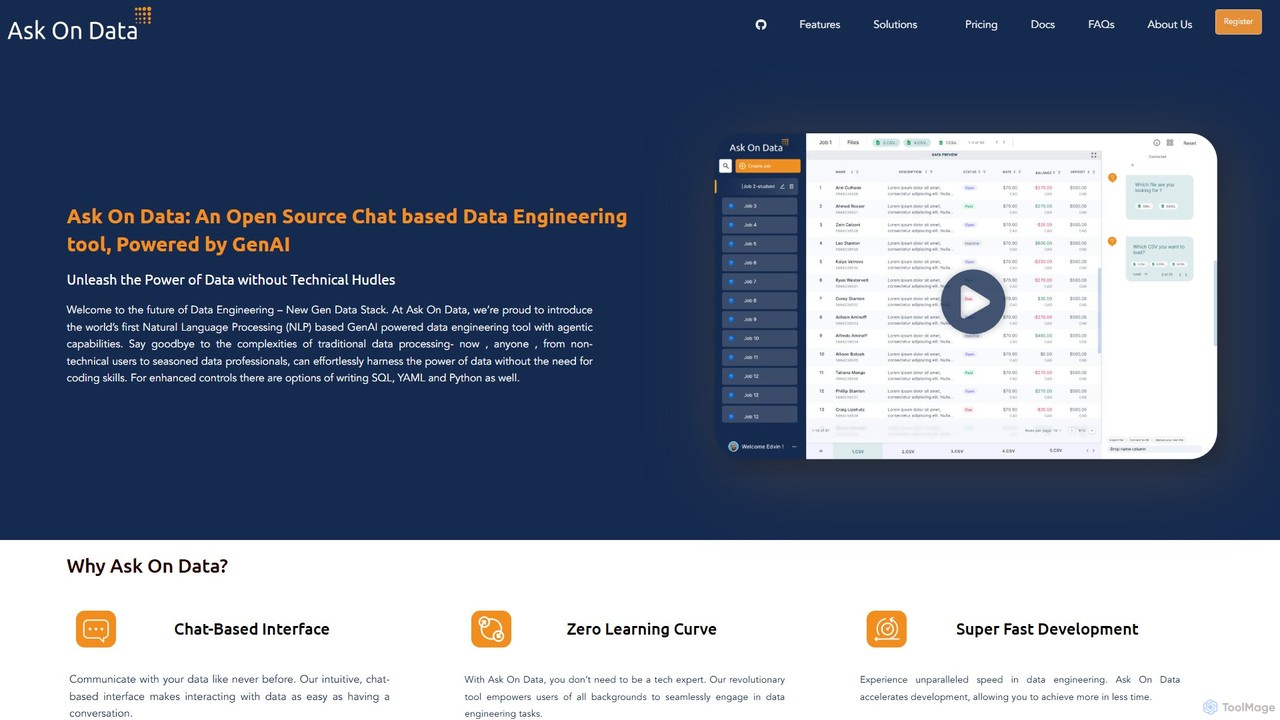
Ask On Data is an open-source, GenAI-powered data engineering tool that lets you build and manage data pipelines using a simple chat interface. By translating natural language commands into complex data operations, it eliminates the need for coding, making data engineering accessible to everyone. It supports various data sources, offers real-time previews, and provides both cloud-hosted and self-hosted options.

Etl
Visits 8.9KFavorites 147Likes 133
DataGPT
Paid

DataGPT

DataGPT is a conversational AI data analyst that empowers business users to get instant, in-depth answers from their data without any SQL expertise. It goes beyond simple queries to perform advanced analysis, identify key drivers, detect anomalies, and provide proactive insights. Connect your data warehouse, ask questions in natural language, and receive analyst-grade reports and visualizations in seconds.

Business Intelligence
Visits 6.4KFavorites 121Likes 119
Superlinked
Freemium

Superlinked

Superlinked is a Python framework and cloud infrastructure, known as The Vector Computer, designed for AI engineers. It enables the creation of high-performance search and recommendation applications by effectively combining structured and unstructured data into multi-modal vector embeddings.

Vector Search
Visits 38.3KFavorites 158Likes 153
OtterTune
Paid

OtterTune

OtterTune is an AI-powered database optimization service that uses machine learning to automatically tune and improve the performance of PostgreSQL and MySQL databases. It analyzes your database's workload to recommend optimal configuration settings, helping to increase throughput, reduce latency, and lower operational costs without manual intervention.

Database
Visits 8.7KFavorites 148Likes 158
BlazeSQL
Freemium

BlazeSQL

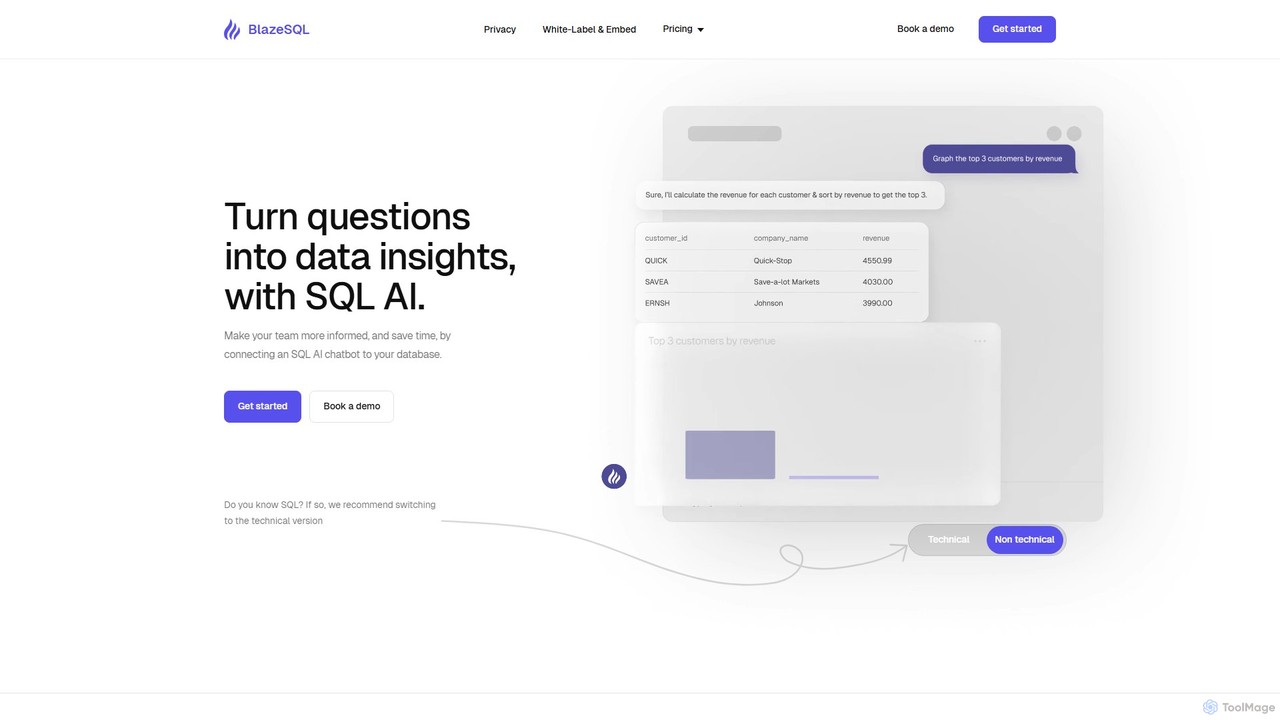
BlazeSQL is an AI-powered data analyst that connects to your database, allowing anyone on your team to ask questions in natural language and receive SQL queries, data insights, and visualizations in seconds. It streamlines data access, automates reporting, and empowers both technical and non-technical users to make data-driven decisions without needing to write code.

Analytics
Visits 29.8KFavorites 134Likes 126
QueryX
Freemium

QueryX

QueryX is an AI-powered platform that translates natural language conversations, including voice commands, into complex SQL queries. It enables both technical and non-technical users to interact with structured databases effortlessly, accelerating data analysis and decision-making while ensuring data confidentiality and high accuracy.

Business Intelligence
Visits 6.2KFavorites 119Likes 123

About Database

AI Databases are advanced data management systems that integrate artificial intelligence to automate and enhance data operations. They leverage machine learning for tasks like natural language querying, automated performance tuning, and vector search, enabling more intuitive and powerful data interaction. These tools are essential for building next-generation applications requiring semantic search, real-time analytics, and predictive modeling. Their primary value lies in reducing manual database administration and unlocking deeper insights from complex, unstructured datasets.

Core Features

  • Natural Language Querying: Interact with data using plain English questions instead of complex SQL code.
  • Automated Performance Tuning: The system self-optimizes indexes, caching, and query plans for maximum efficiency.
  • Integrated Vector Search: Natively store and search data based on semantic meaning and similarity, ideal for recommendation engines.
  • In-Database Machine Learning: Train and execute machine learning models directly on the data without moving it.

Use Cases

AI Databases are widely used by developers and data scientists building intelligent applications. Common scenarios include creating sophisticated recommendation engines for e-commerce, developing real-time fraud detection systems in finance, and enabling powerful semantic search capabilities for internal knowledge bases or customer-facing products.

How to Choose

When selecting an AI Database, consider the specific AI features you need, such as vector search or natural language processing. Evaluate its scalability and performance for your expected workload. Also, check its compatibility with your existing tech stack and machine learning frameworks, and consider the ease of use for both developers and data analysts.

Featured tool rankings

Database use cases

1

Building a Semantic Search Engine for E-commerce

An e-commerce developer needs to create a product search feature that understands user intent, not just keywords. Instead of matching 'red shoes', it should understand queries like 'footwear for a summer party'. Using an AI database with built-in vector search, the developer converts product descriptions and images into vector embeddings. When a user searches, their query is also converted into a vector, and the database finds the most semantically similar products. This results in more relevant search results, improved user experience, and higher conversion rates.

2

Developing a Real-time Fraud Detection System

A data scientist at a financial institution is tasked with preventing fraudulent transactions. They use an AI database with in-database machine learning capabilities. Transaction data streams directly into the database, where a pre-trained anomaly detection model runs in real-time. The model analyzes patterns, such as transaction amount, location, and frequency. If a transaction deviates significantly from a user's normal behavior, the database flags it instantly, allowing the institution to block the transaction and alert the customer, minimizing financial loss.

3

Natural Language Interface for Business Intelligence

A business analyst needs to quickly generate reports without relying on the IT department to write complex SQL queries. By connecting their BI tool to an AI database, they can ask questions in plain English, such as 'Compare sales of product X and product Y in the last quarter by region'. The AI database's natural language processing (NLP) engine translates this question into a formal query, executes it, and returns the data. This empowers non-technical users to perform self-service analytics, accelerating decision-making and freeing up developer resources.

4

Automated Performance Tuning for a High-Traffic App

A DevOps engineer manages the database for a rapidly growing social media application. As user traffic fluctuates, database performance can degrade. Instead of manually creating and dropping indexes or tuning query parameters, they use an AI database that performs automated tuning. The database's AI component continuously monitors workload patterns and predicts future query needs. It proactively creates optimal indexes, adjusts memory allocation, and rewrites inefficient queries on the fly. This ensures consistent high performance without constant manual intervention, reducing operational overhead.

5

Building a Personalized Content Recommendation Engine

A content creator for a streaming platform wants to increase user engagement by suggesting highly relevant videos. They use an AI database to store vector representations of their video content (based on titles, descriptions, and subtitles). When a user watches a video, the system queries the database to find other videos with the most similar vectors. This goes beyond simple tag-based matching, capturing the nuances and topics of the content. The result is a 'Recommended for You' section that feels genuinely personalized, leading to longer watch times and higher user retention.

6

Intelligent Log Analysis for Troubleshooting

A site reliability engineer (SRE) is investigating a production issue, facing millions of log entries. Instead of using complex grep commands or rigid log query languages, they ingest the logs into an AI database. They can then ask questions like, 'Show me all error logs related to payment failures in the last hour from the EU cluster'. The database uses NLP to understand the query and semantic search to find relevant log entries, even if they don't contain the exact keywords. This dramatically speeds up the root cause analysis process, reducing system downtime.

Database FAQ

What is an AI Database?

An AI Database is a data management system enhanced with artificial intelligence capabilities. Unlike traditional databases that simply store and retrieve data, AI databases can understand, analyze, and automate operations on the data. Key features often include natural language querying (asking questions in English), automated performance tuning, and integrated vector search for finding data based on semantic meaning. They are designed to power intelligent applications and simplify complex data analysis.

How do AI Databases differ from traditional SQL/NoSQL databases?

The primary difference lies in their core capabilities. Traditional databases focus on structured storage and efficient retrieval based on exact matches (SQL) or key-value lookups (NoSQL). AI Databases add a layer of intelligence on top of storage. Key differences include:

  • Querying: AI databases often support natural language or semantic search, while traditional ones rely on structured query languages like SQL.
  • Optimization: Many AI databases can self-tune their performance, whereas traditional databases require manual tuning by a database administrator (DBA).
  • Data Types: AI databases are built to handle complex, unstructured data like text and images through vector embeddings, a capability not native to most traditional systems.
What is vector search and why is it important for AI Databases?

Vector search is a method of finding data based on its semantic similarity rather than exact keyword matches. It works by converting data (like text, images, or audio) into numerical representations called vectors. The database then finds items whose vectors are closest in multi-dimensional space. This is crucial for AI databases because it enables applications like recommendation engines, image search, and question-answering systems that understand the context and meaning behind a user's query, providing far more relevant results than traditional search methods.

How do I choose the right AI Database for my project?

Choosing the right AI Database depends on your specific needs. Consider the following factors:

  • Primary Use Case: Are you building a search engine (needs strong vector search), a BI tool (needs good NLP), or a real-time analytics system (needs fast in-database ML)?
  • Data Model: Does your data fit a relational, document, or graph model? Ensure the AI database supports your data structure.
  • Scalability: Evaluate how the database handles growing data volumes and query loads. Look for distributed architecture and cloud-native options.
  • Ecosystem Integration: Check for compatibility with your programming languages, frameworks (like TensorFlow or PyTorch), and existing data infrastructure.
Can AI Databases work with both structured and unstructured data?

Yes, one of the key strengths of many AI databases is their ability to handle a mix of data types. They can manage traditional structured data (like user profiles in tables) while also excelling at processing unstructured data (like product reviews, images, or support tickets). They often achieve this by creating vector embeddings for unstructured content, allowing it to be queried and analyzed alongside structured data, providing a unified view of all information.