ToolMage
Sign in

Best 41 Cloud Computing AI tools for Infrastructure

Popular Cloud Computing AI tools in Infrastructure include Cloudflare, Google Cloud, OctoAI, DigitalOcean, Runpod, Vast.ai, Unsloth, Cerebras, Nebius, and Salad, helping you work more efficiently.

Oneinfer
Freemium

Oneinfer

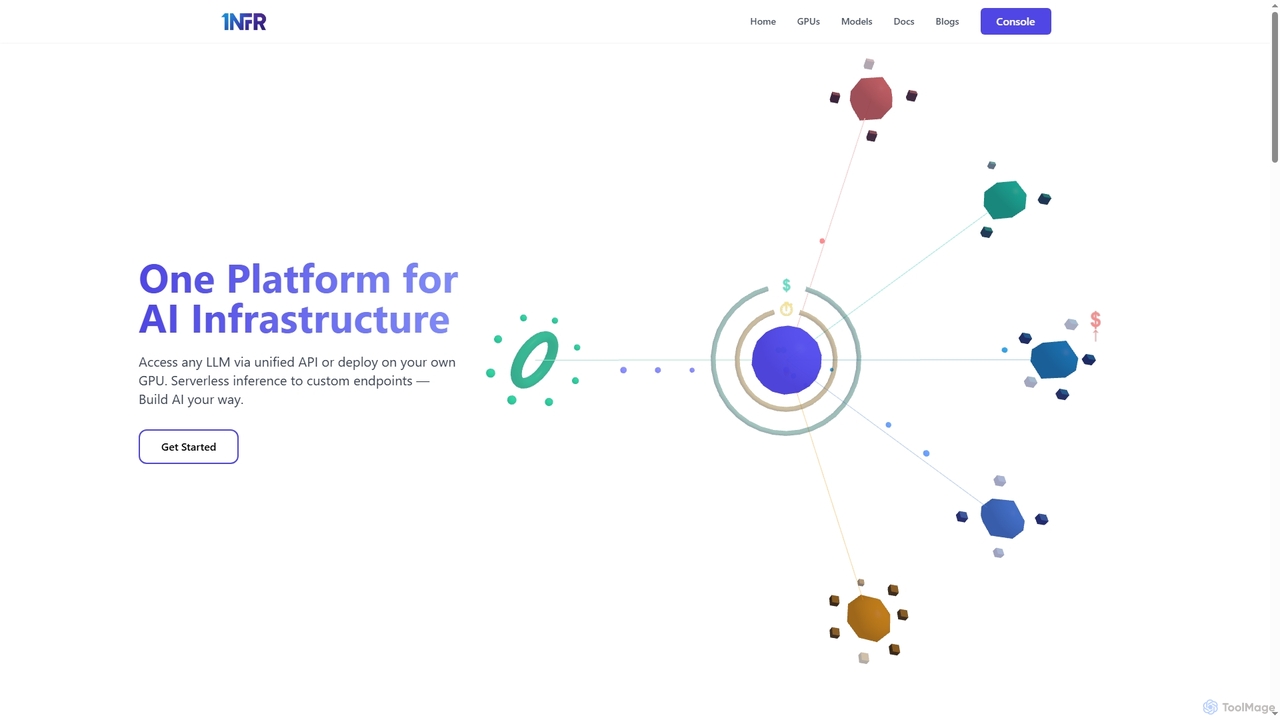
Oneinfer is a high-performance AI inference platform for developers. It offers a unified API to access over 15 LLMs like GPT-4 and Claude, simplifying AI integration. The platform features serverless deployment, automatic scaling, enterprise-grade security, and pay-as-you-go pricing. It also provides a marketplace for renting GPU instances for custom AI workloads.

Inference
Visits 4.2KFavorites 103Likes 90
Gmi Cloud
Paid

Gmi Cloud

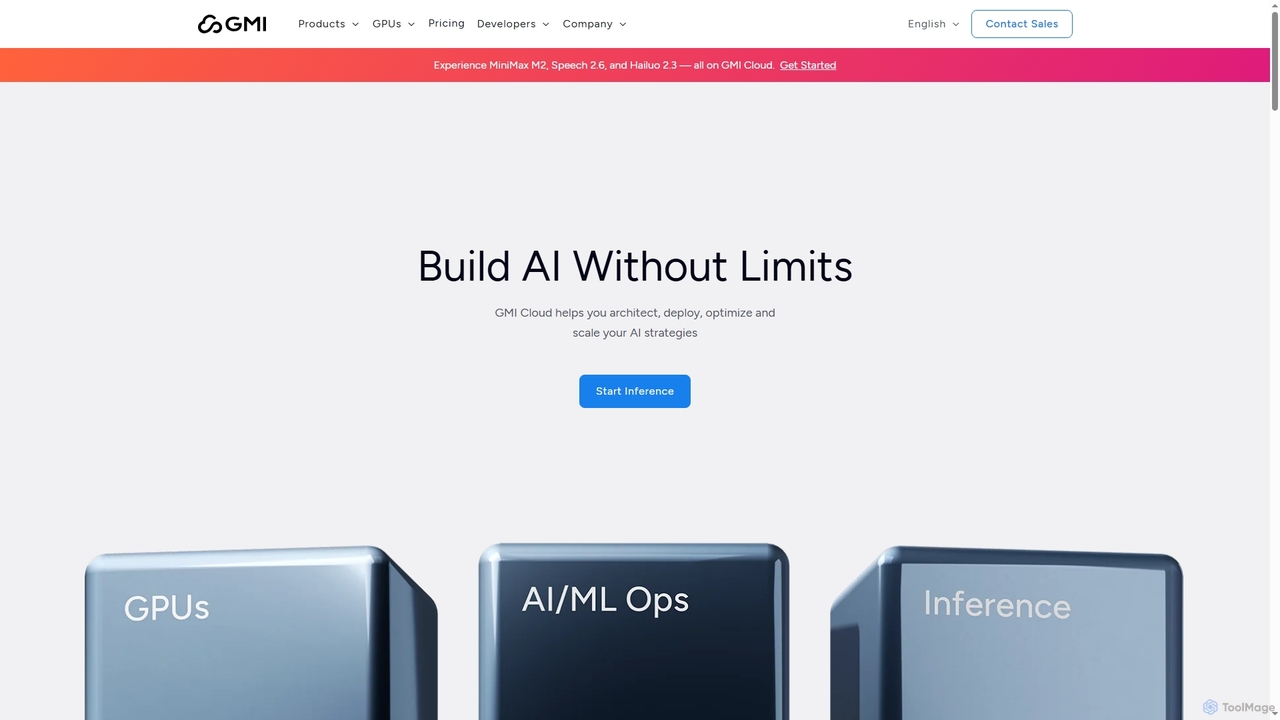
Gmi Cloud is a high-performance GPU cloud platform designed for scalable AI training and inference. It provides on-demand access to top-tier NVIDIA GPUs, an optimized inference engine for low latency, and a cluster engine for streamlined MLOps, enabling developers and enterprises to build, deploy, and scale AI applications efficiently and cost-effectively.

Mlops
Visits 93.8KFavorites 126Likes 137
Baseten
Freemium

Baseten

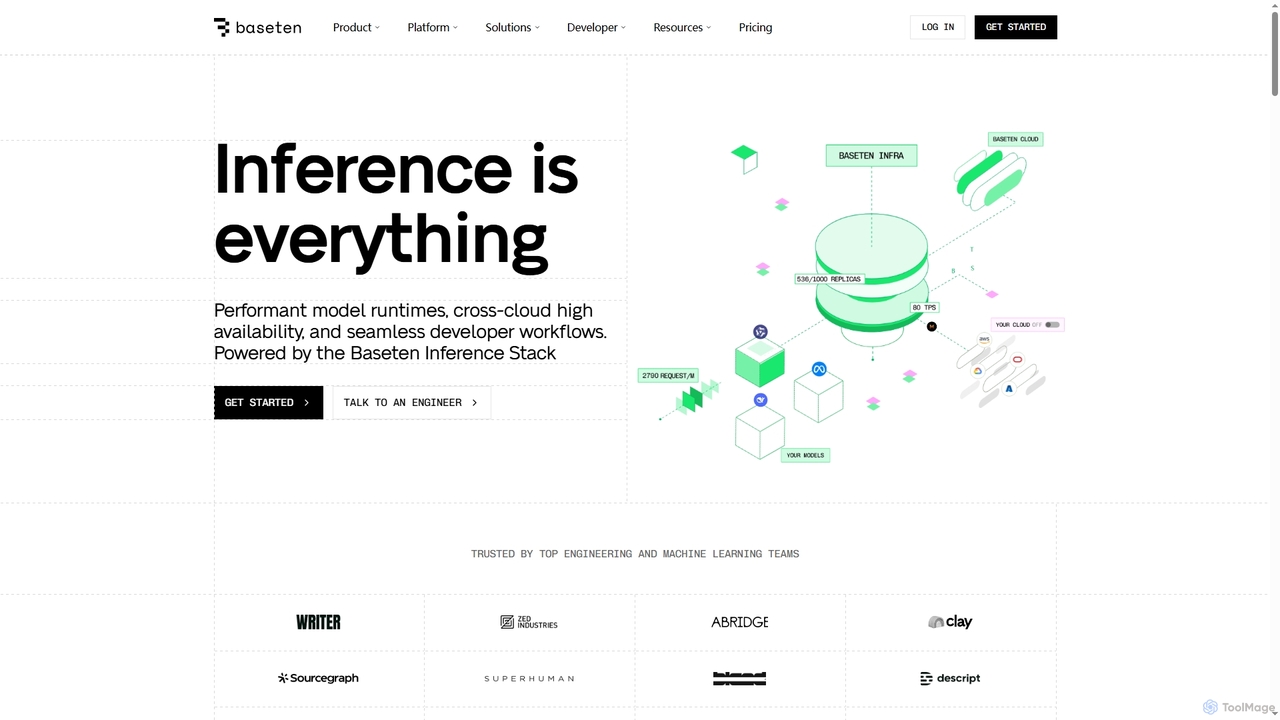
Baseten is a production-grade inference platform for deploying, scaling, and managing AI models. It offers high-performance runtimes, seamless developer workflows, and flexible deployment options (cloud, self-hosted, hybrid). Ideal for engineering and ML teams building mission-critical AI applications.

Deployment
Visits 269.5KFavorites 111Likes 94
HIVE Digital Technologies

HIVE Digital Technologies

HIVE Digital Technologies is a global leader in sustainable data center infrastructure, specializing in both large-scale Bitcoin mining and providing High-Performance Computing (HPC) for AI applications. Leveraging a fleet of NVIDIA GPUs, HIVE powers transformative technologies with efficient, green energy from its geographically diversified data centers in Canada, Sweden, and Paraguay.

Machine Learning Infrastructure
Visits 3.4KFavorites 96Likes 91
Exa Laboratories

Exa Laboratories

Exa Laboratories (now Zettascale) is a YC-backed Silicon Valley startup developing state-of-the-art, energy-efficient reconfigurable chips (XPUs) for AI. Their polymorphic computing architecture aims to solve the AI energy crisis by offering superior performance, versatility, and efficiency compared to traditional GPUs and TPUs for both training and inference.

Ai Development
Visits 3.5KFavorites 113Likes 111
Prediction Guard
Paid

Prediction Guard

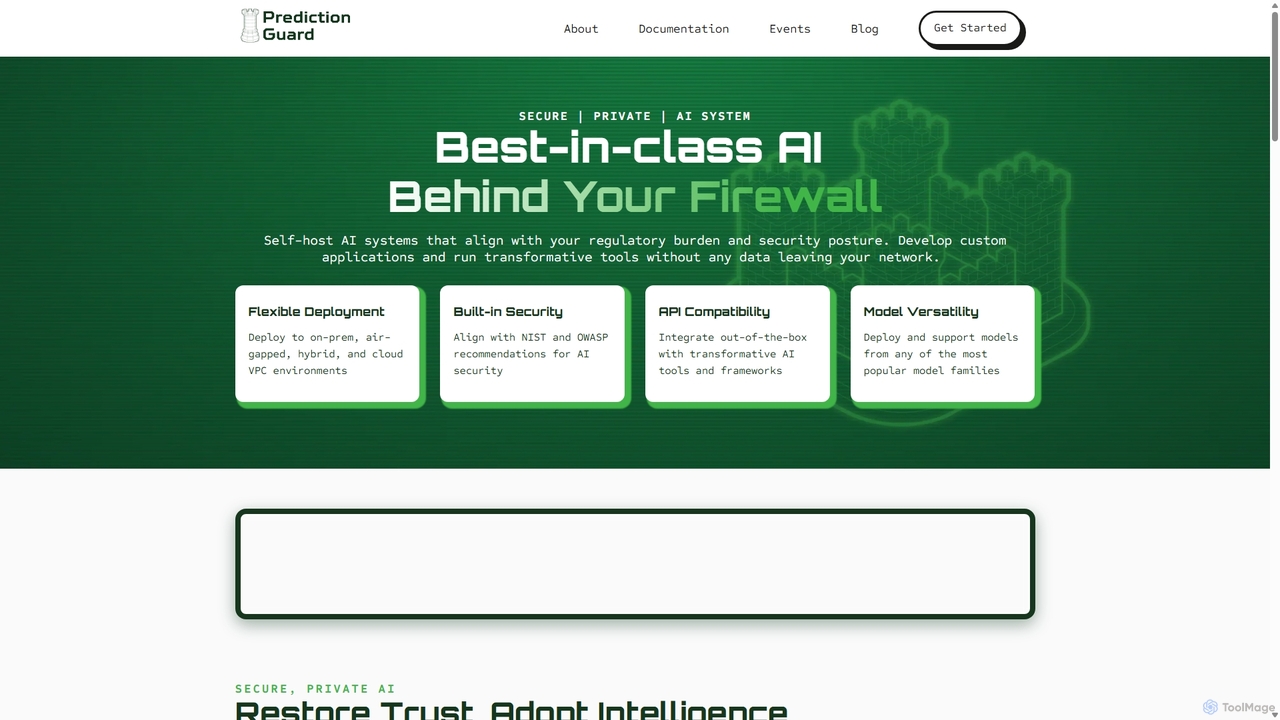
Prediction Guard is an enterprise-grade AI platform that allows organizations to deploy, manage, and scale large language models (LLMs) securely behind their own firewall. It offers flexible deployment options, including on-premise, air-gapped, and private cloud, ensuring complete data privacy and control. With an OpenAI-compatible API, it enables seamless integration with existing tools and frameworks like LangChain and LlamaIndex, making it ideal for regulated industries such as healthcare, defense, and finance.

Platform As A Service (Paas)
Visits 6.5KFavorites 96Likes 103
Nebius
Paid

Nebius

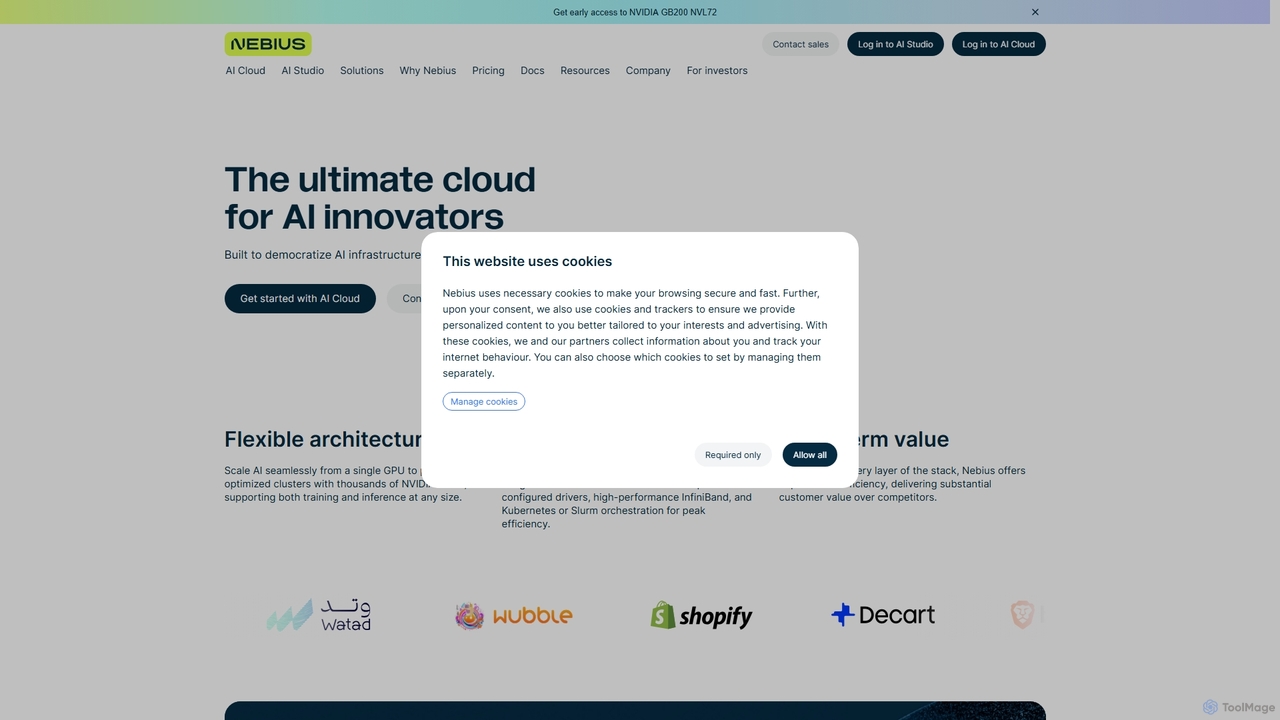
Nebius is a high-performance cloud platform specifically engineered for demanding AI and Machine Learning workloads. It provides scalable access to the latest NVIDIA GPUs, from single instances to massive clusters, complemented by a suite of managed services and an integrated AI Studio to streamline the entire ML lifecycle from training to inference.

Gpu Cloud
Visits 5.7KFavorites 105Likes 112
StackSpaces
Freemium

StackSpaces

StackSpaces is an integrated development platform designed to help developers build, deploy, and scale full-stack AI applications with ease. It provides a unified environment with backend, frontend, and infrastructure components, streamlining the entire development lifecycle from idea to production.

Backend
Visits 3.5KFavorites 114Likes 104
Fastly
Freemium

Fastly

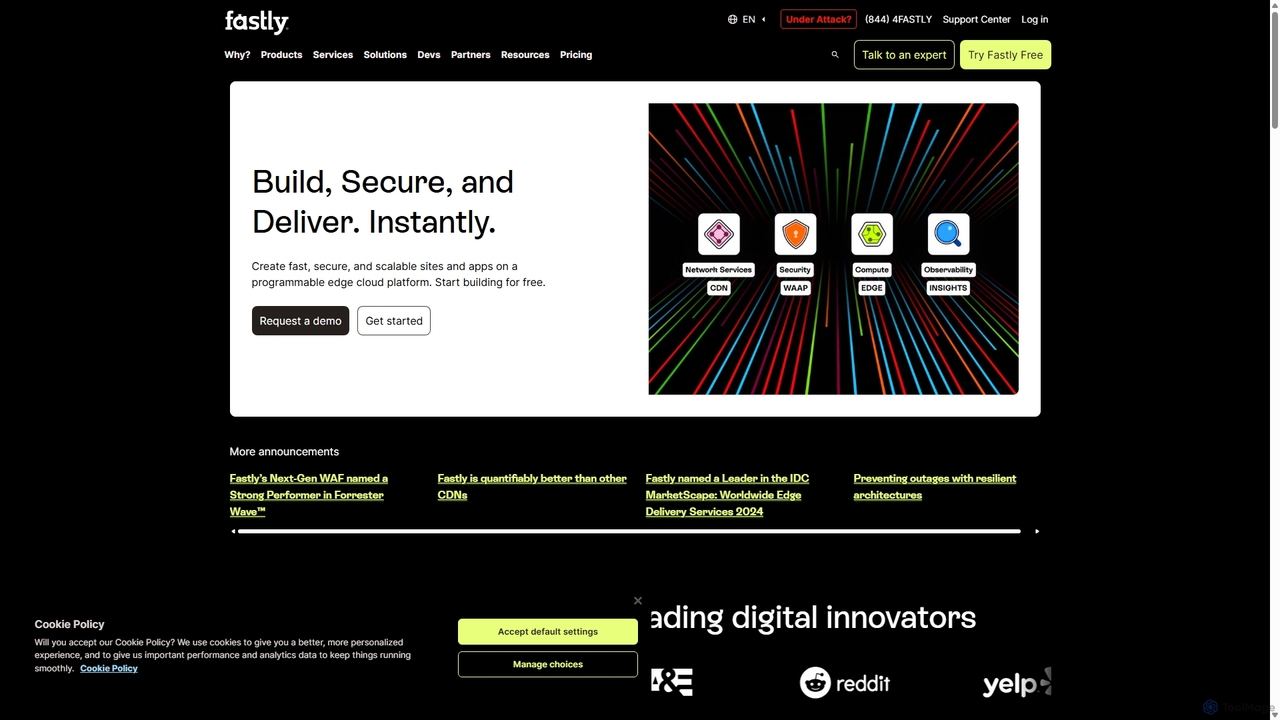
Fastly is a leading edge cloud platform designed to build, secure, and deliver fast, scalable digital experiences. It combines a modern CDN, robust security features like a Next-Gen WAF, and a powerful serverless compute environment. Fastly helps businesses improve performance, enhance security, and innovate closer to their users, with specific solutions for e-commerce, streaming, and AI-powered applications.

Cdn
Visits 352.3KFavorites 117Likes 101
Tensorfuse
Freemium

Tensorfuse

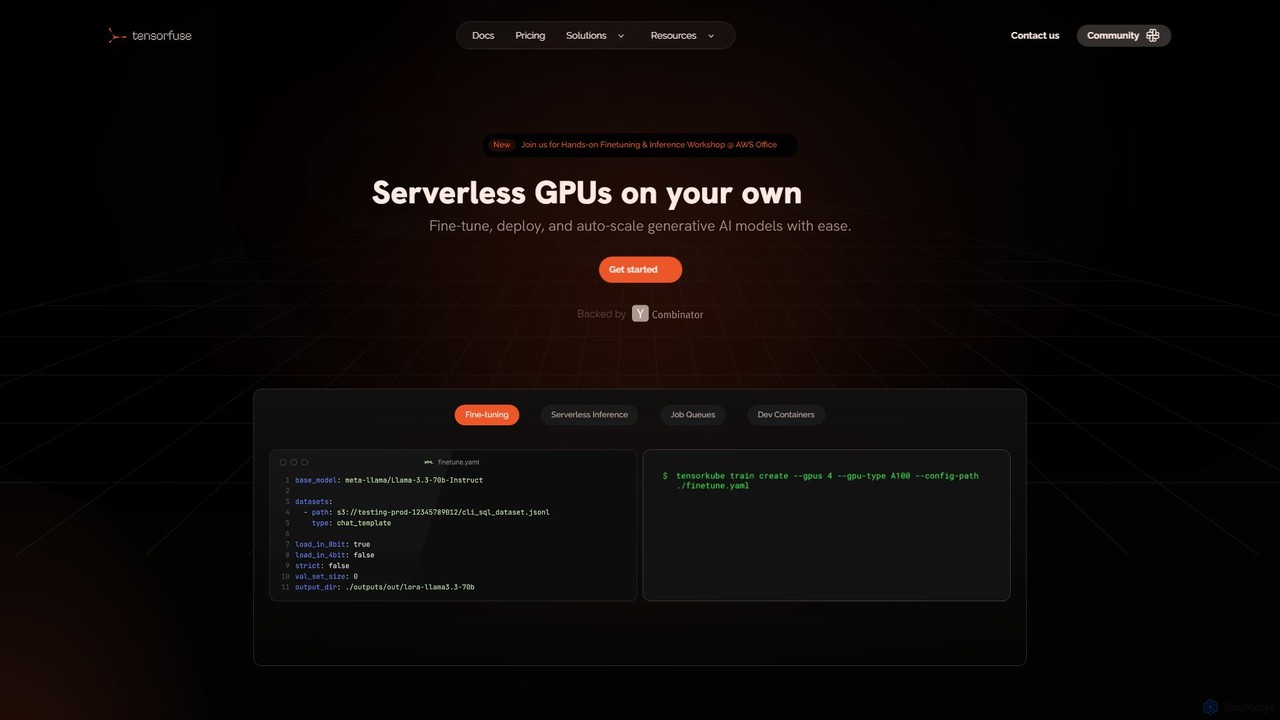
Tensorfuse is a serverless GPU platform that allows developers to fine-tune, deploy, and auto-scale generative AI models on their own AWS cloud. It simplifies infrastructure management, offering features like serverless inference, job queues, and dev containers to accelerate development, reduce costs, and eliminate DevOps overhead.

Deployment
Visits 10.2KFavorites 100Likes 77
DigitalOcean
Freemium

DigitalOcean

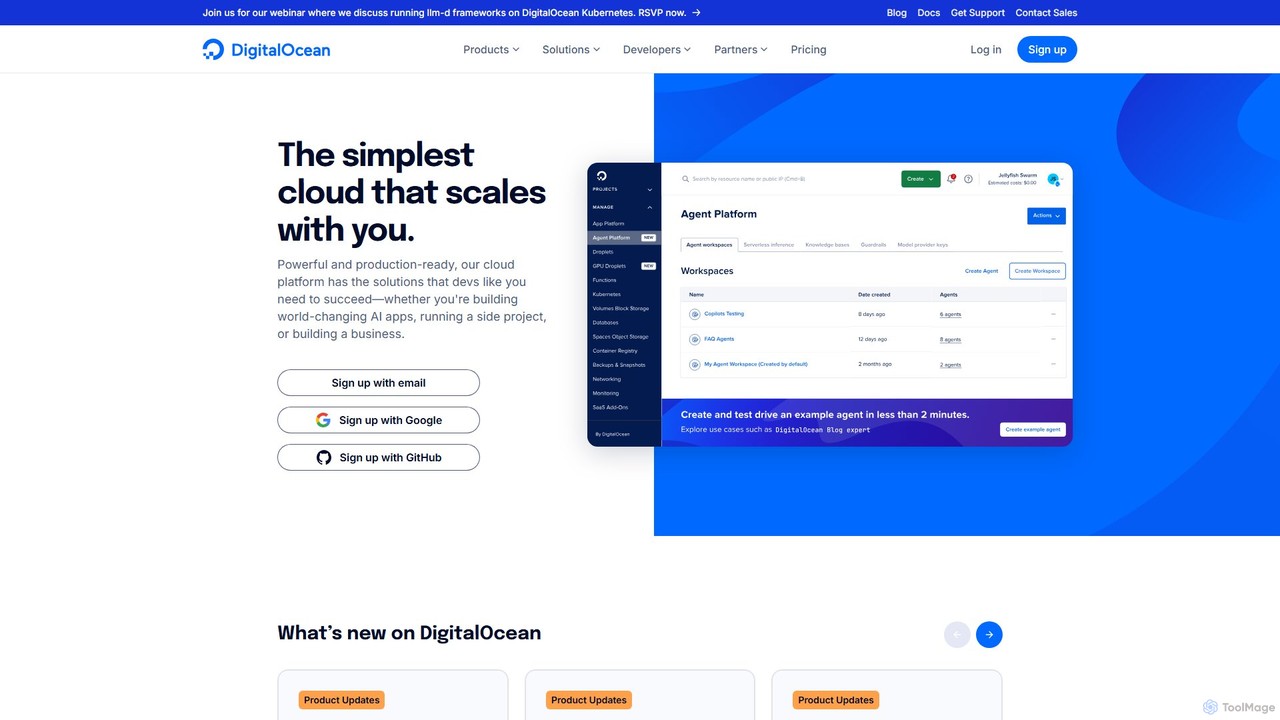
DigitalOcean is a developer-focused cloud infrastructure platform that simplifies building, deploying, and scaling applications. It offers a comprehensive suite of products, including virtual machines (Droplets), managed Kubernetes, and the GradientAI platform, providing powerful GPU resources and tools for creating and hosting world-changing AI applications, from side projects to large-scale businesses.

Hosting
Visits 4.3MFavorites 100Likes 107
Vast.ai
Paid

Vast.ai

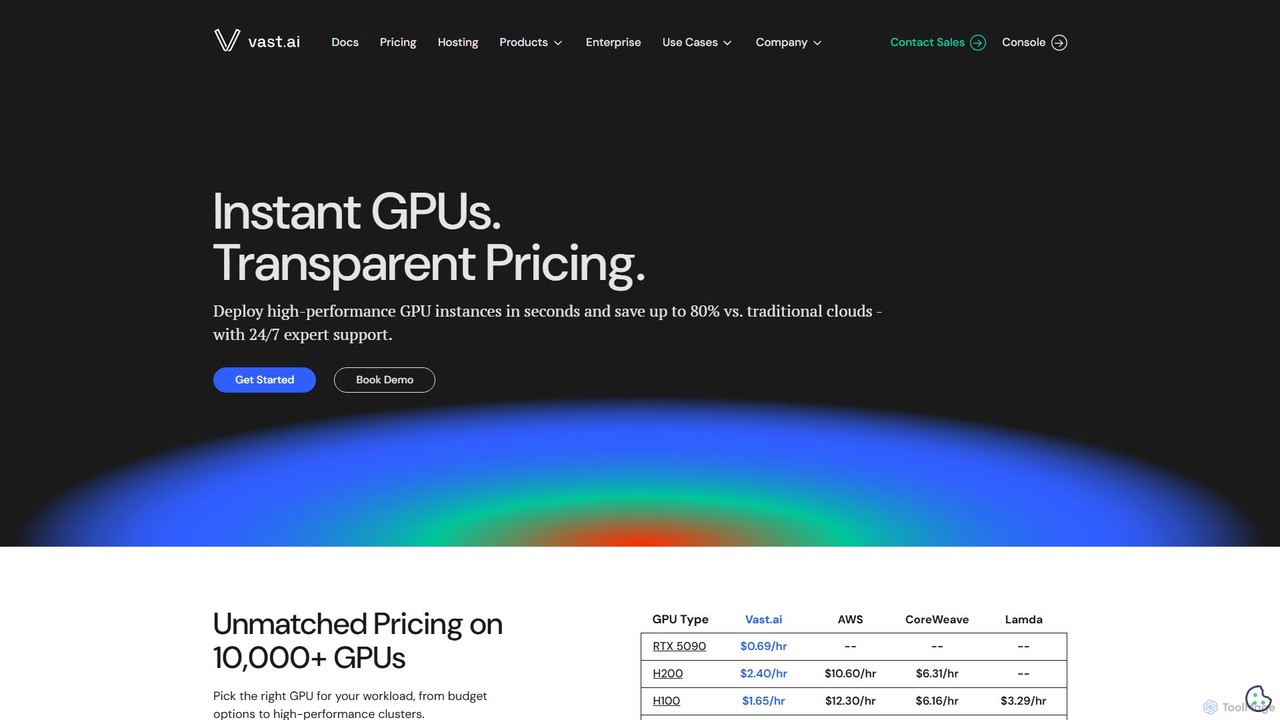
Vast.ai is a leading GPU cloud platform offering on-demand access to a vast network of GPUs for AI and machine learning workloads. It provides developers and enterprises with high-performance computing at significantly lower costs—up to 80% less than traditional cloud providers—through a transparent, pay-as-you-go marketplace.

Gpu Rental
Visits 1.4MFavorites 109Likes 106
thundercompute
Paid

thundercompute

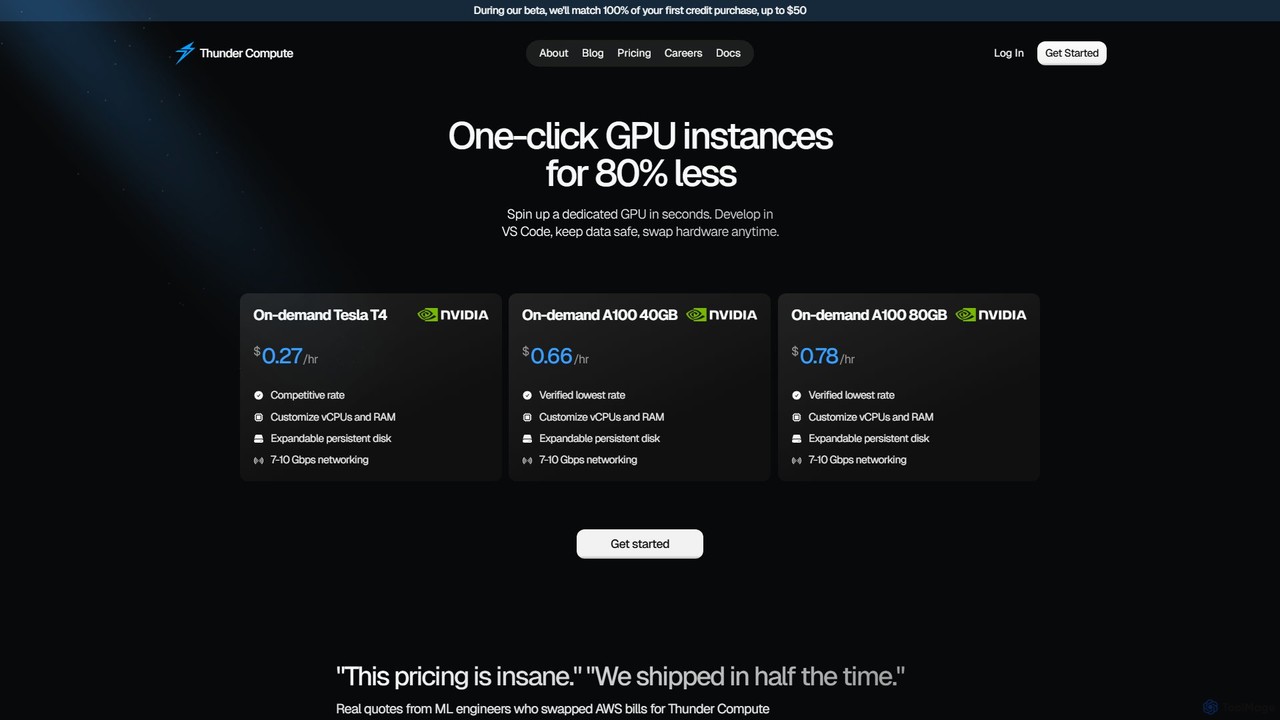
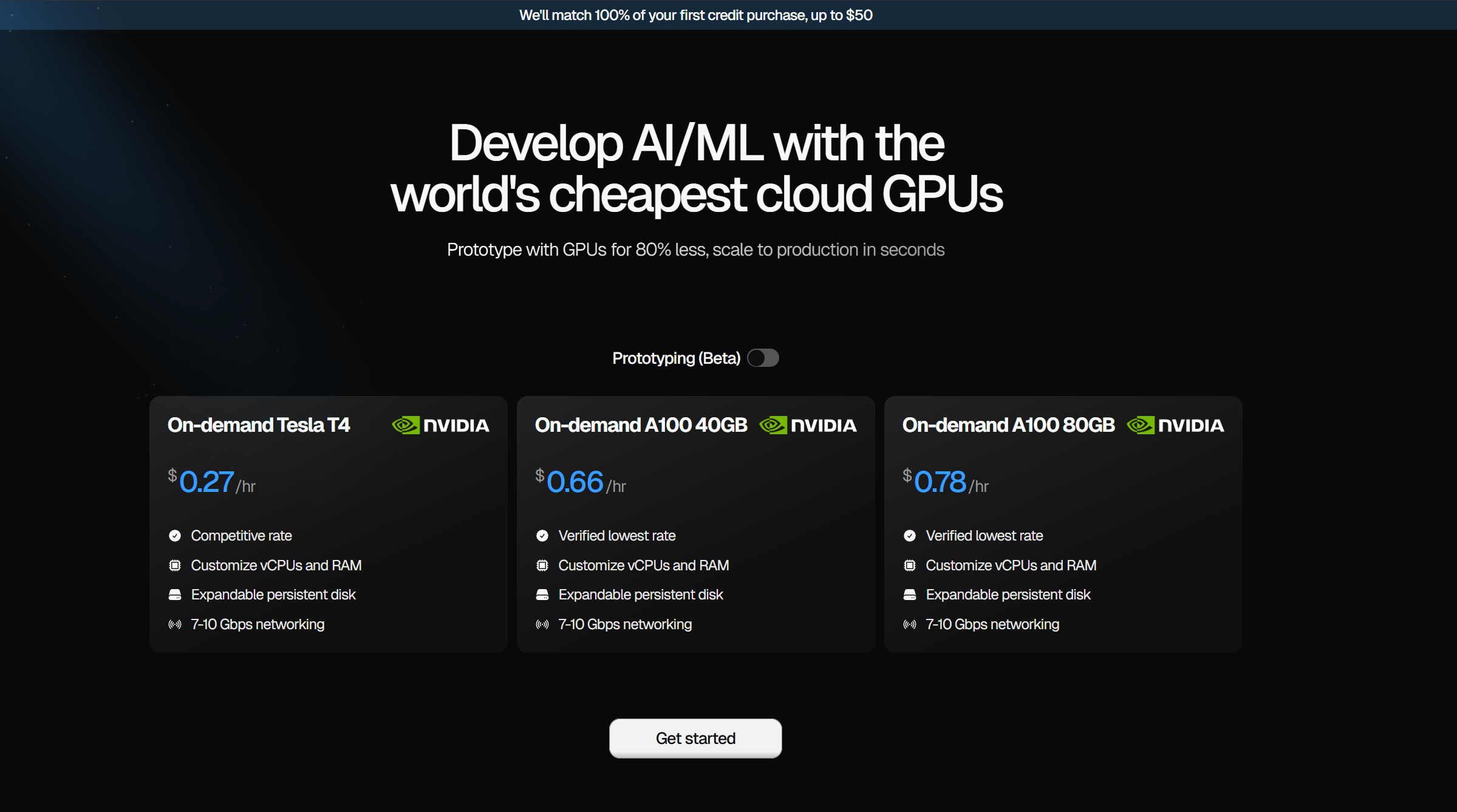
Thunder Compute offers an ultra-low-cost GPU cloud platform designed for AI and machine learning developers. It provides on-demand GPU instances like the NVIDIA A100 and T4 at prices up to 80% lower than major cloud providers. With features like one-click setup, VS Code integration, and seamless scalability, it dramatically simplifies the development workflow, from prototyping to production, allowing developers to focus on building models rather than managing infrastructure.

Machine Learning
Visits 98.3KFavorites 114Likes 146
massedcompute
Paid

massedcompute

Massed Compute is a cloud platform providing on-demand, high-performance NVIDIA GPUs and CPUs. It offers flexible, scalable, and affordable computing power for AI development, machine learning, and big data analysis without long-term contracts, targeting innovators and developers.

Machine Learning
Visits 99.2KFavorites 109Likes 109
Predibase
Freemium

Predibase

Predibase is an end-to-end developer platform for efficiently fine-tuning and serving open-source Large Language Models (LLMs). It enables users to build custom AI models that outperform large proprietary models like GPT-4 on specific tasks, while significantly reducing costs and inference latency. The platform features advanced techniques like Reinforcement Fine-Tuning (RFT) and LoRAX for high-speed, multi-model serving.

Machine Learning
Visits 7KFavorites 109Likes 106
PPIO
Paid

PPIO

PPIO is a leading distributed cloud computing platform providing cost-effective, high-performance AI computing power, model APIs, and edge computing services. It offers developers and enterprises one-stop solutions for AI, video, and metaverse applications, featuring serverless GPUs, containerized instances, and access to popular large language and multi-modal models.

Model Hosting
Visits 100KFavorites 98Likes 86
Fireworks AI
Freemium

Fireworks AI

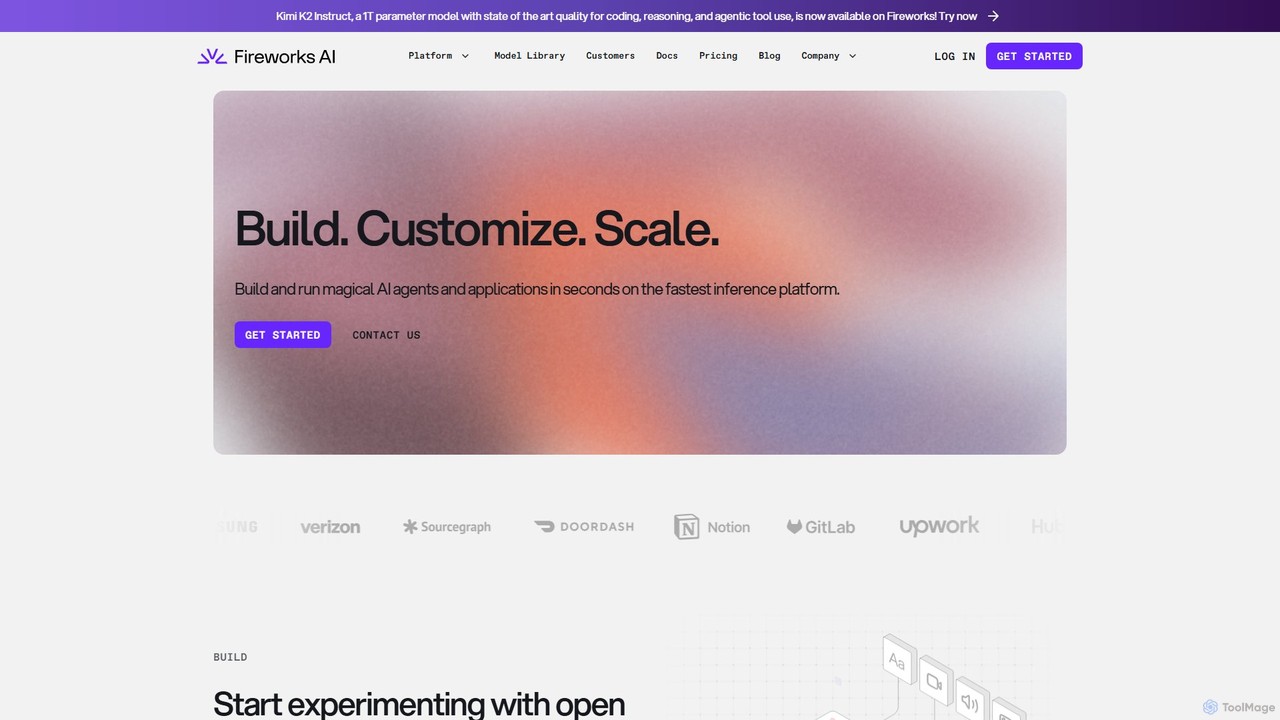
A high-performance platform for developers to build, customize, and scale generative AI applications. It offers an industry-leading fast inference engine, advanced fine-tuning capabilities, and access to a wide range of open-source models, enabling real-time, cost-effective AI solutions.

Model Deployment
Visits 614.2KFavorites 132Likes 131
HyperAI
Paid

HyperAI

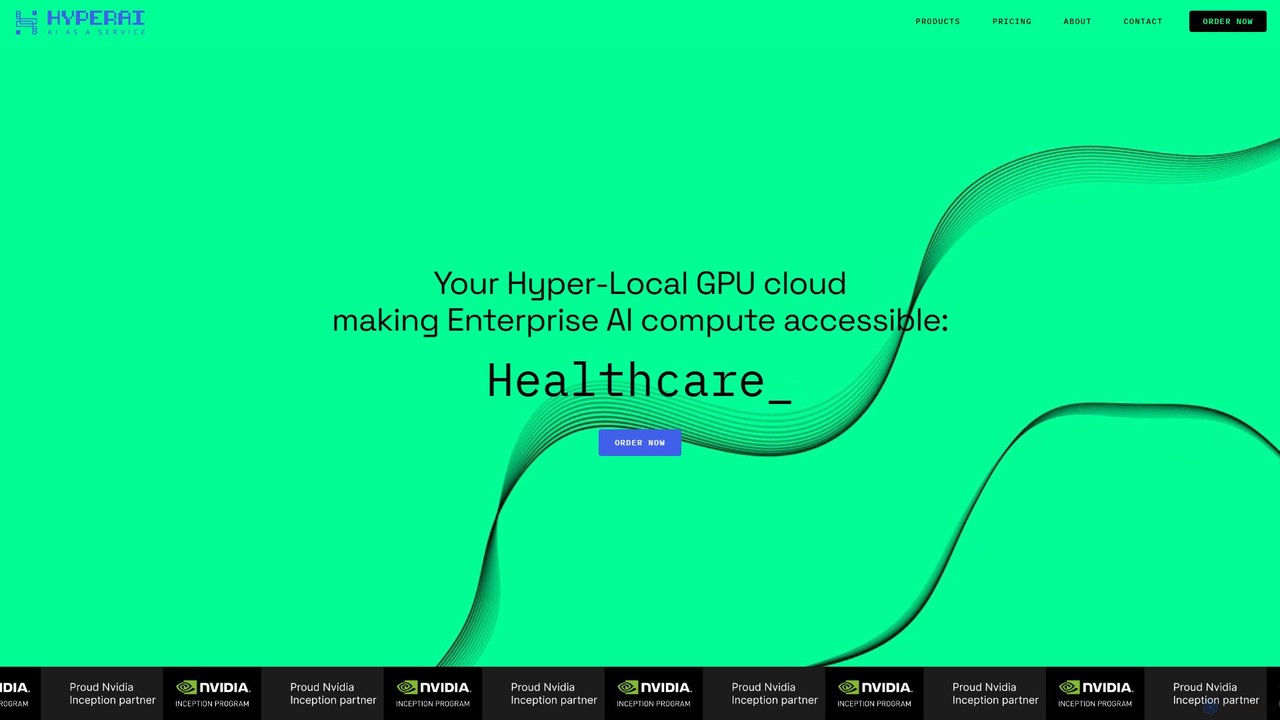
HyperAI is a European-based, hyper-local GPU cloud platform designed to make enterprise-grade AI computing accessible. It offers high-performance NVIDIA A100 and H100 GPUs through flexible plans, including spot instances and dedicated servers. With a focus on low latency, data compliance, and a developer-friendly environment featuring a pre-installed Nvidia AI SDK, HyperAI empowers developers and businesses to build, train, and deploy complex AI models efficiently and securely.

Machine Learning
Visits 7.7KFavorites 100Likes 83
Google Cloud
Freemium

Google Cloud

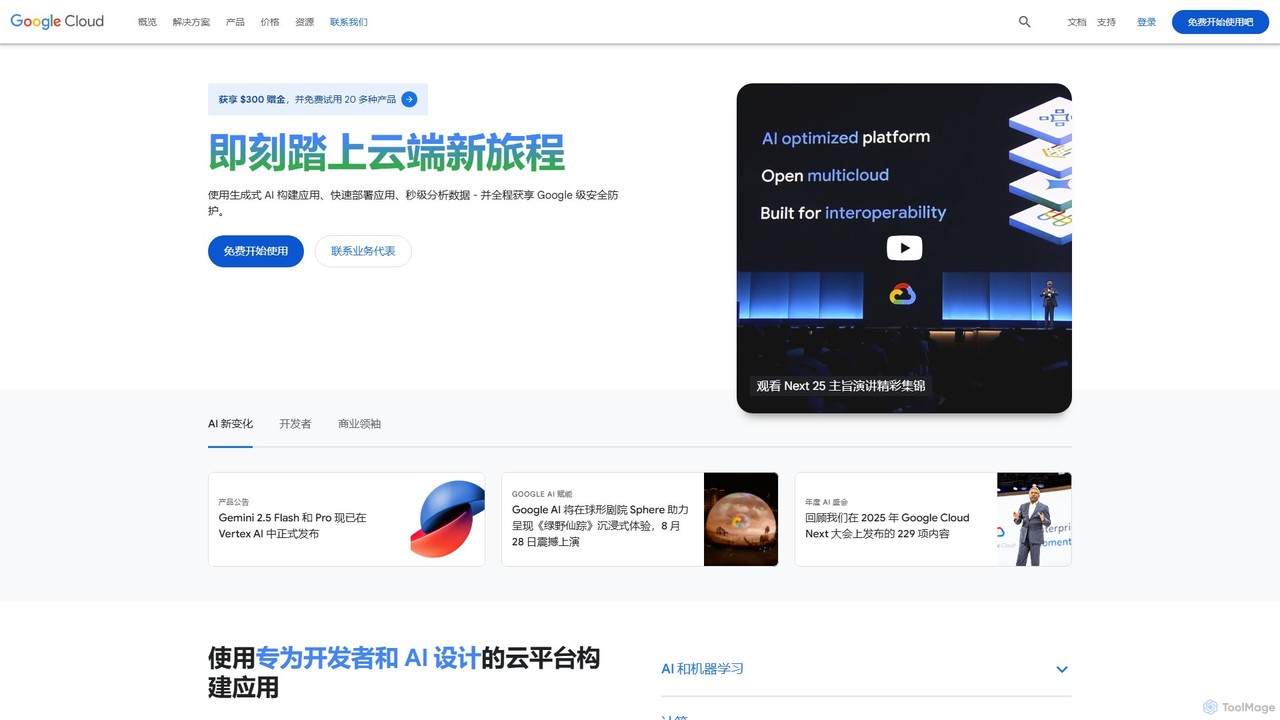
Google Cloud is a comprehensive suite of cloud computing services that provides infrastructure, platform, and serverless environments. It excels in AI/ML with Vertex AI and Gemini, data analytics with BigQuery, and offers scalable, secure infrastructure for businesses of all sizes, from startups to global enterprises.

Machine Learning
Visits 48.8MFavorites 102Likes 116
Cirrascale Cloud Services
Paid

Cirrascale Cloud Services

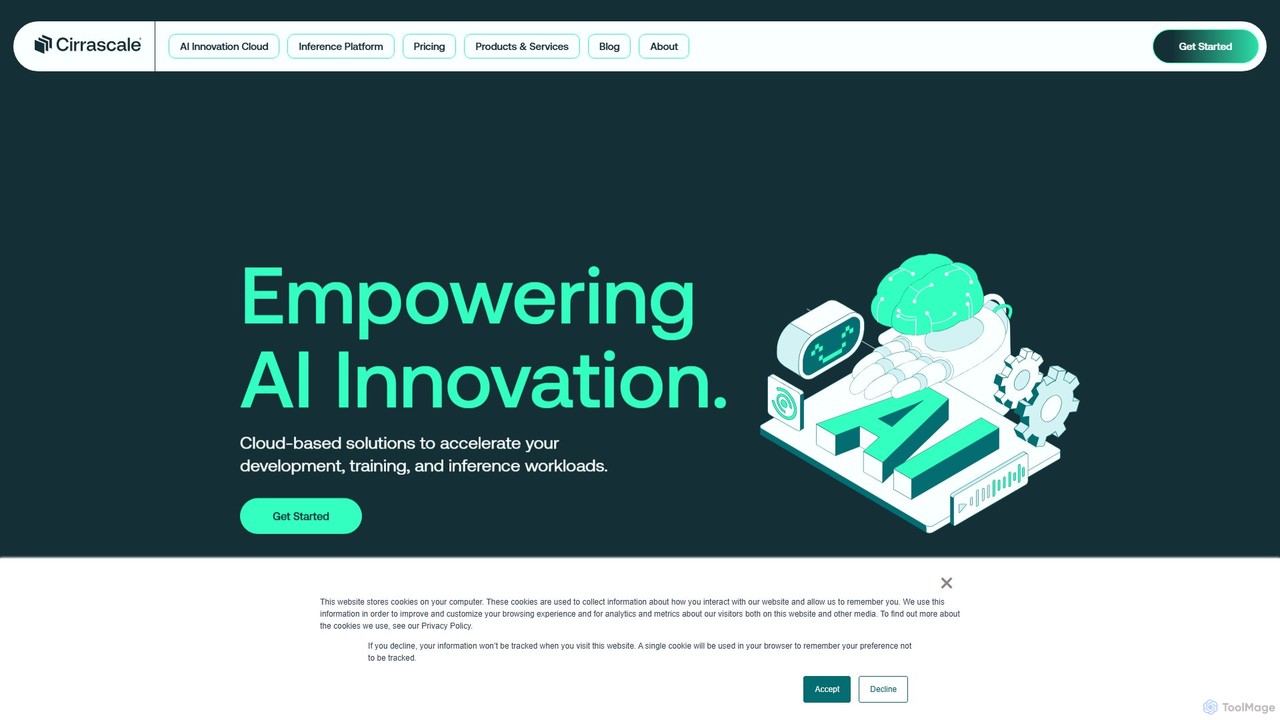
Cirrascale provides high-performance, dedicated GPU cloud services tailored for large-scale AI, deep learning, and High-Performance Computing (HPC). It offers access to the latest NVIDIA GPU hardware and scalable infrastructure, enabling organizations to train massive models and run complex computational workloads efficiently.

Model Training
Visits 19.2KFavorites 114Likes 107
Clore.ai
Paid

Clore.ai

Clore.ai is a decentralized GPU marketplace providing on-demand access to a global network of high-performance computing resources. It connects users needing GPU power for tasks like AI training, 3D rendering, and scientific simulations with hardware owners looking to monetize their idle servers. The platform features a flexible rental market, its own cryptocurrency (CLORE) for transactions, and a unique Proof-of-Holding system for enhanced rewards and discounts, creating a comprehensive ecosystem for high-performance computing.

Model Training
Visits 196.6KFavorites 98Likes 103
aistudio
Freemium

aistudio

AI Studio is an all-in-one AI learning and development community by Baidu, powered by the PaddlePaddle deep learning platform. It provides developers with a free online programming environment, GPU computing power, extensive open-source models, and datasets to build, train, and deploy AI applications seamlessly.

Notebooks
Visits 374KFavorites 96Likes 98
Salad
Paid

Salad

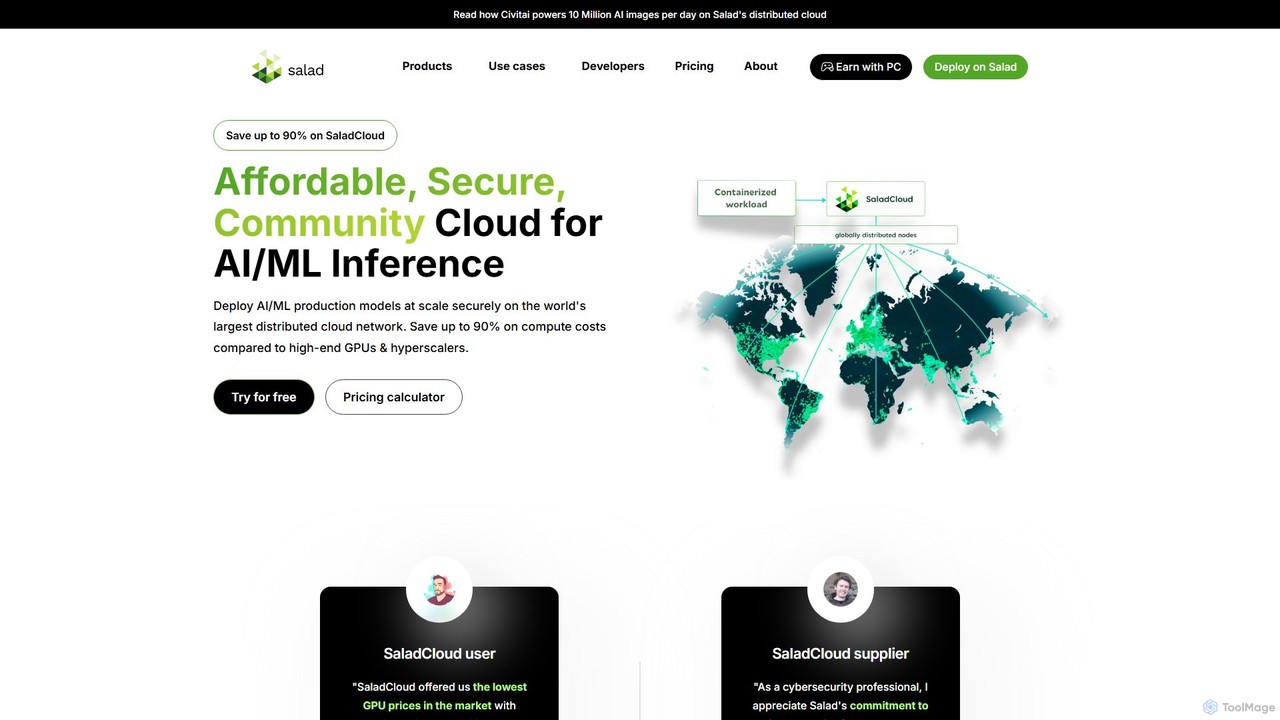
Salad is a distributed GPU cloud platform that harnesses unused computing power from a global network of consumer PCs. It offers businesses highly affordable and scalable on-demand GPU resources for AI/ML workloads, model training, and inference, reducing compute costs by up to 90% compared to traditional cloud providers.

Model Deployment
Visits 617.3KFavorites 116Likes 113
Juice
Freemium

Juice

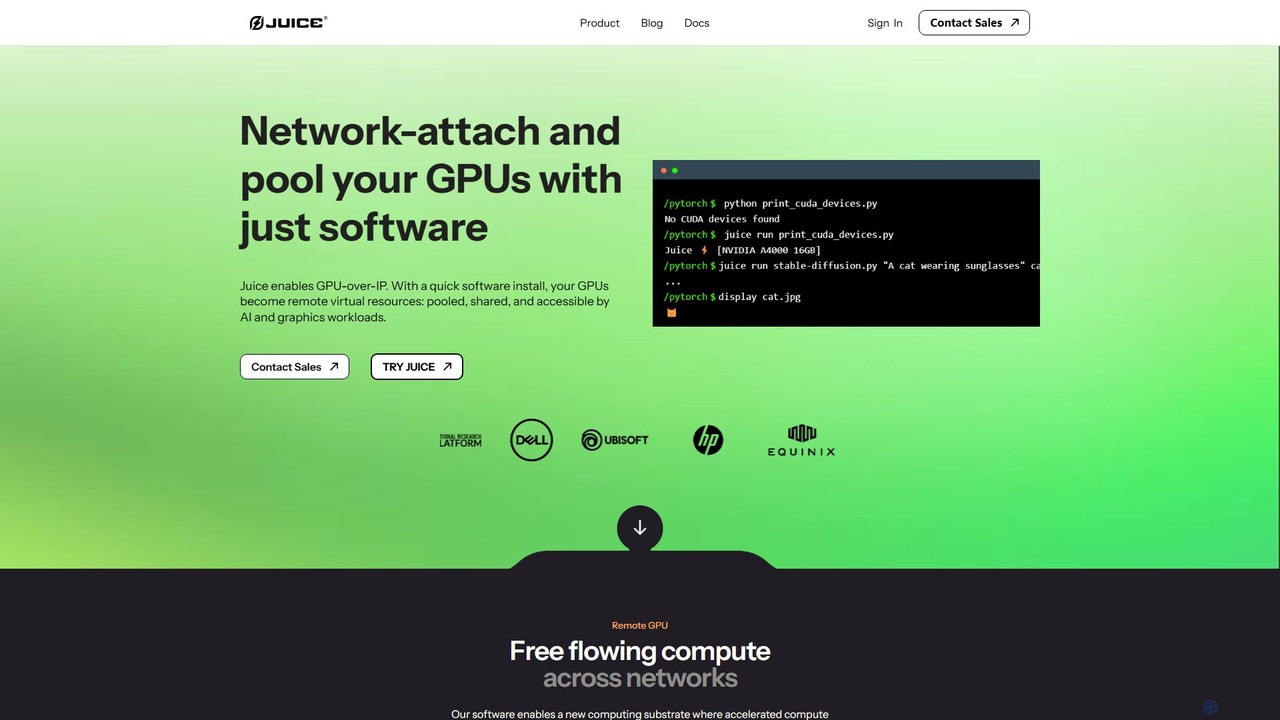
Juice is a software-only platform that enables GPU-over-IP, allowing you to access, share, and pool GPU resources across any standard network. It decouples GPUs from physical machines, turning any CPU node into a GPU-accelerated system on demand, optimizing utilization and significantly reducing costs for AI and graphics workloads without code changes.

Gpu Virtualization
Visits 4.6KFavorites 104Likes 115

About Cloud Computing

AI Cloud Computing tools are platforms that leverage machine learning to automate the management and optimization of cloud infrastructure. These tools analyze vast amounts of operational data, such as metrics, logs, and cost reports, to identify patterns and predict future needs. They provide intelligent recommendations for cost savings, performance improvements, and security enhancements, significantly reducing the manual effort required to maintain complex cloud environments. This proactive approach helps organizations improve reliability, control spending, and strengthen their security posture on platforms like AWS, Azure, and GCP.

Core Features

  • AI-Powered Cost Optimization: Automatically identifies idle resources, suggests instance right-sizing, and forecasts spending to optimize budgets.
  • Intelligent Performance Monitoring: Uses anomaly detection to proactively flag performance bottlenecks and potential failures before they impact users.
  • Automated Security & Compliance: Employs machine learning to detect unusual activity, identify vulnerabilities, and continuously check for compliance with standards like GDPR or SOC 2.
  • Predictive Autoscaling: Forecasts traffic patterns to scale resources up or down more efficiently than traditional rule-based methods, balancing performance and cost.
  • Intelligent Asset Management: Provides smart dashboards and recommendations for organizing, tagging, and managing cloud resources across multiple accounts or providers.

Use Cases

These tools are primarily used by DevOps engineers, Site Reliability Engineers (SREs), FinOps professionals, and IT administrators. They are particularly valuable for organizations with large-scale, dynamic, or multi-cloud deployments where manual oversight is impractical. Common scenarios include managing Kubernetes clusters, optimizing serverless function costs, and securing cloud-native applications.

How to Choose

When selecting an AI Cloud Computing tool, consider its compatibility with your cloud providers (e.g., AWS, Azure, Google Cloud). Evaluate the depth of its AI-driven analysis across cost, performance, and security. Assess its automation capabilities, integration with your existing toolchain (like Slack or Jira), and the clarity of its reporting and user interface. Finally, consider the pricing model and whether it aligns with your operational scale.

Featured tool rankings

Cloud Computing use cases

1

Automating Cloud Cost Control for Startups

A fast-growing SaaS startup's FinOps team is tasked with controlling a rapidly increasing AWS bill without slowing down development. They deploy an AI cloud computing tool that continuously scans their environment. The tool's AI model identifies underutilized EC2 instances and recommends downsizing them. It also automatically terminates untagged, orphaned resources left over from development tests. Within the first month, the tool's automated actions and actionable recommendations help the startup reduce its cloud spend by over 20%, providing crucial budget relief while maintaining performance.

2

Proactive Anomaly Detection for E-commerce Platforms

An e-commerce site's SRE team uses an AI monitoring tool to prevent outages during peak shopping seasons. The tool learns the normal performance baseline of their application, including CPU usage, memory, and API response times. During a flash sale, the AI detects an unusual memory leak pattern in a specific microservice that traditional threshold-based alerts would have missed. The team is notified immediately via Slack, allowing them to deploy a fix before the issue escalates into a site-wide crash, thus protecting revenue and customer experience.

3

Enhancing Cloud Security for Financial Services

A fintech company must maintain a stringent security posture to comply with regulations. They use an AI-powered cloud security tool that analyzes user activity logs and network traffic in real-time. The AI model identifies a developer's credentials being used from an unusual geographic location and attempting to access sensitive production data. This anomalous behavior triggers a high-priority alert. The security team is able to quickly investigate, confirm a compromised account, and revoke access, preventing a potential data breach before any sensitive information is exfiltrated.

4

Optimizing Kubernetes Cluster Resources

A software development team runs their microservices on a Google Kubernetes Engine (GKE) cluster, but struggles with resource allocation, leading to either wasted resources or performance issues. They integrate an AI cloud tool that analyzes workload patterns over time. The tool provides specific recommendations to adjust CPU and memory requests and limits for each pod. By applying these AI-driven suggestions, the team reduces their cluster's overall resource consumption by 30% while simultaneously eliminating CPU throttling issues that were impacting application latency.

5

Streamlining Multi-Cloud Compliance Audits

A global enterprise operates workloads on both Azure and GCP, making compliance audits for standards like SOC 2 a complex and time-consuming process. They adopt an AI cloud platform to automate compliance monitoring. The tool continuously scans configurations, access policies, and data storage settings against pre-built SOC 2 control frameworks. It uses AI to flag potential violations and generates detailed, audit-ready reports automatically. This reduces the manual effort for audit preparation from weeks to a few days and provides the security team with a continuous, real-time view of their compliance posture.

6

Predictive Scaling for Media Streaming Services

A video streaming service needs to handle unpredictable traffic spikes during live events without over-provisioning resources and incurring excessive costs. They implement an AI cloud tool with predictive autoscaling. The tool analyzes historical viewing data and real-time trends to forecast demand for an upcoming major sports final. Based on its prediction, it automatically begins scaling up server capacity an hour before the event starts, ensuring a smooth, buffer-free experience for all users. After the peak, it scales down resources more intelligently than rule-based scalers, saving costs.

Cloud Computing FAQ

What are AI Cloud Computing tools?

AI Cloud Computing tools are specialized software platforms that use machine learning and artificial intelligence to automate and optimize the management of cloud infrastructure. Instead of relying on manual configurations or static rules, they analyze real-time and historical data to make intelligent decisions. Key functions include proactively identifying cost-saving opportunities, detecting performance anomalies before they cause outages, and strengthening security by spotting unusual behavior. They act as an intelligent layer on top of cloud services like AWS, Azure, or GCP to improve efficiency, reliability, and security.

How do I choose the right AI Cloud Computing tool?

Choosing the right tool depends on your specific needs. Consider these factors:

  • Cloud Provider Support: Ensure the tool fully supports your primary cloud platforms (e.g., AWS, Azure, GCP, or multi-cloud).
  • Core Focus: Determine your main goal. Is it cost optimization (FinOps), performance monitoring (APM), or security and compliance (CSPM)? Some tools specialize, while others offer a broader platform.
  • Level of Automation: Decide if you need a tool for recommendations only, or one that can take automated actions like terminating idle resources.
  • Integration Capabilities: Check if it integrates with your existing DevOps toolchain, such as Slack for alerts, Jira for ticketing, or Terraform for infrastructure as code.
  • Usability and Reporting: Evaluate the clarity of the dashboard and the quality of the reports. The insights should be actionable and easy for your team to understand.
What's the difference between AI Cloud Computing tools and traditional cloud management platforms?

The primary difference lies in their approach. Traditional cloud management platforms are often reactive and rule-based. They rely on manually set thresholds (e.g., 'alert when CPU is over 80%') and provide dashboards for manual analysis. AI Cloud Computing tools are proactive and predictive. They use machine learning to learn the 'normal' behavior of a system and can detect subtle anomalies that don't cross a fixed threshold. Instead of just presenting data, they provide context-aware recommendations and can automate complex optimization tasks, effectively acting as an automated SRE or FinOps analyst for your team.

Who benefits most from using AI Cloud Computing tools?

While any organization using the cloud can benefit, these tools provide the most value to teams managing complex, large-scale, or dynamic environments. Key beneficiaries include:

  • DevOps and SRE Teams: They gain proactive insights into performance and reliability, helping them prevent outages and resolve issues faster.
  • FinOps Professionals: These tools automate the tedious work of finding cost savings, providing clear recommendations to control cloud spend without impacting performance.
  • Security Teams: They get an intelligent monitoring system that can detect subtle threats and compliance drifts that might be missed by human analysts.
  • Enterprises with Multi-Cloud Strategies: AI tools can provide a unified view of cost, performance, and security across different cloud providers, simplifying management complexity.
How do these tools optimize cloud costs?

AI tools optimize cloud costs through several intelligent methods rather than just simple reporting. They typically perform actions like:

  • Identifying Waste: They automatically detect idle or unattached resources like unused disks, old snapshots, and orphaned IP addresses that incur costs without providing value.
  • Right-Sizing Recommendations: By analyzing actual usage metrics over time, they recommend changing instance types to ones that better match the workload's real needs, preventing over-provisioning.
  • Optimizing Storage Tiers: They can analyze data access patterns and recommend moving infrequently accessed data to cheaper storage tiers (e.g., from S3 Standard to S3 Glacier).
  • Managing Reserved Instances/Savings Plans: AI models can forecast future usage to provide precise recommendations on purchasing or modifying commitments to maximize savings.