ToolMage
Sign in

Best 437 Security AI tools

Popular Security AI tools include DuckDuckGo, Brave, Opera, Cloudflare, Securly, Truecaller, Feedly, Kaspersky, AppSanctuary, and Broadcom, helping you work more efficiently.

WhyLabs
Freemium

WhyLabs

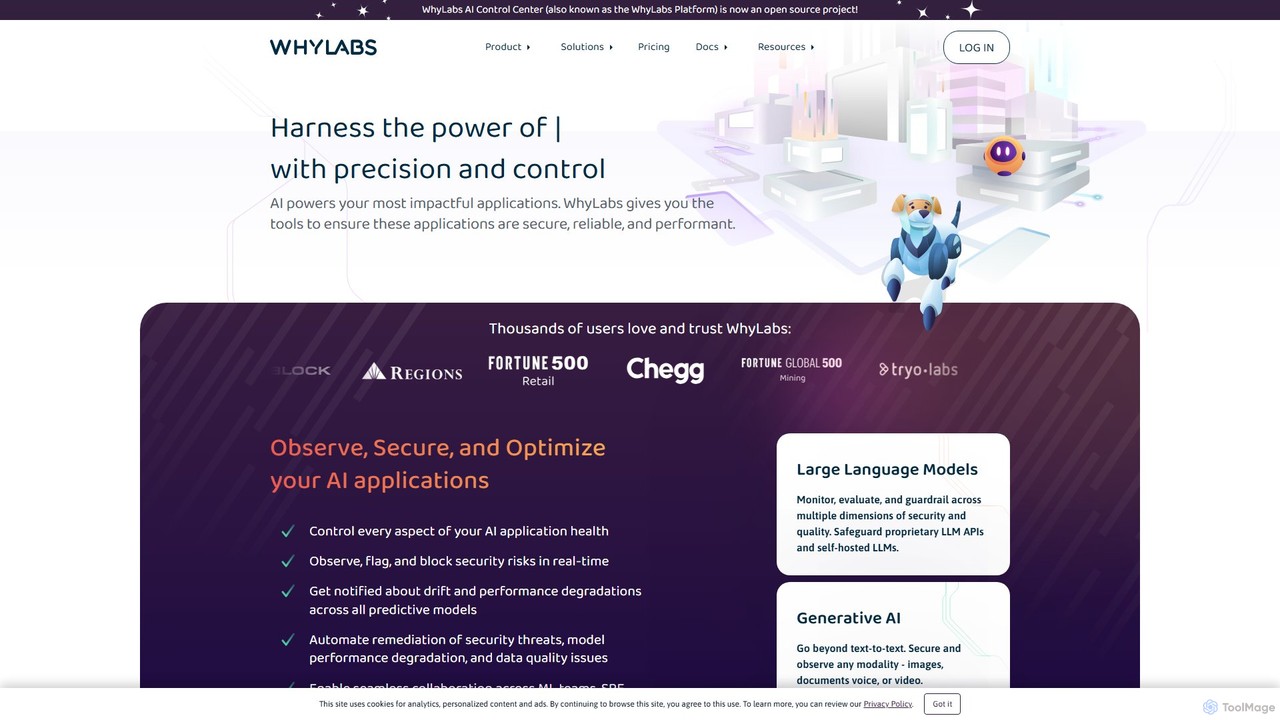
WhyLabs is an AI observability and security platform designed for MLOps, SRE, and security teams. It provides tools to monitor, secure, and optimize AI applications, including LLMs and predictive models. The platform detects data drift, performance degradation, and security threats like prompt injections in real-time, all while using a privacy-preserving architecture that never moves or duplicates raw data.

Mlops
Visits 10.6KFavorites 141Likes 140
AskCyph™ LITE
Free

AskCyph™ LITE

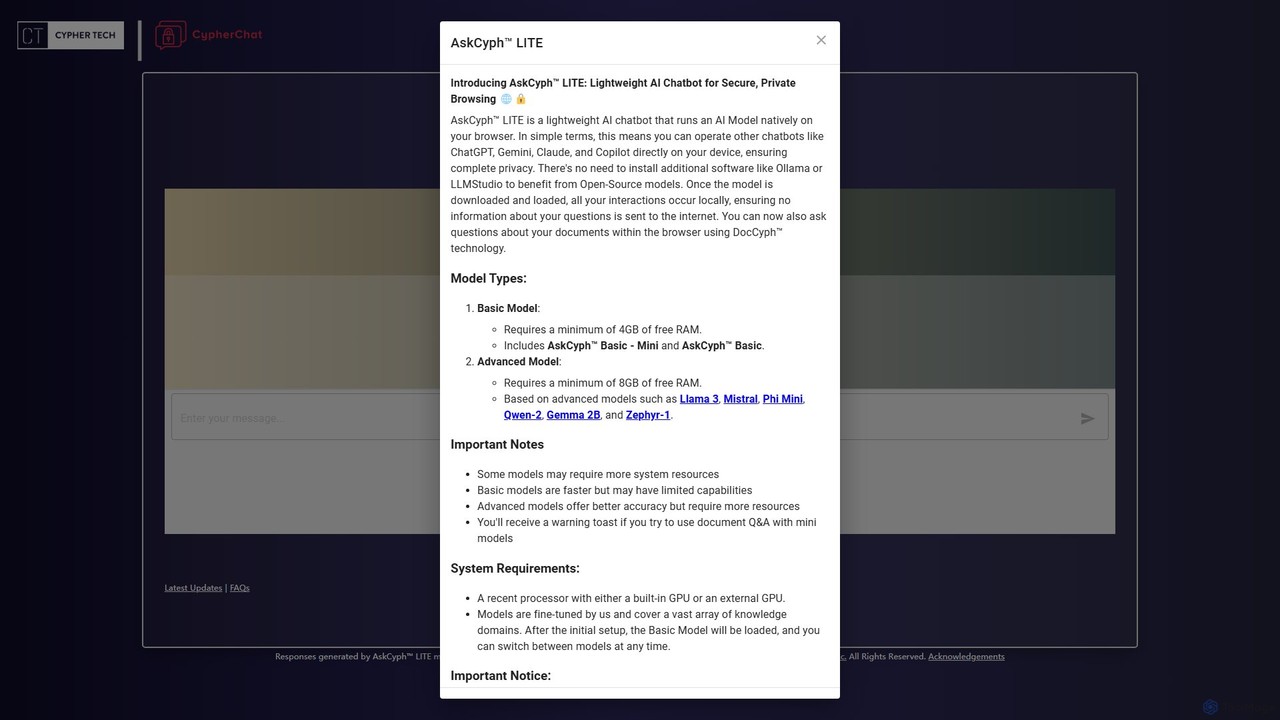
AskCyph™ LITE is a lightweight, private AI chatbot that runs powerful open-source AI models directly in your browser. It ensures absolute privacy by processing all data locally on your device, with no data sent to the internet. It also features document analysis capabilities.

Local Models
Visits 6.3KFavorites 148Likes 145
Bark
Paid

Bark

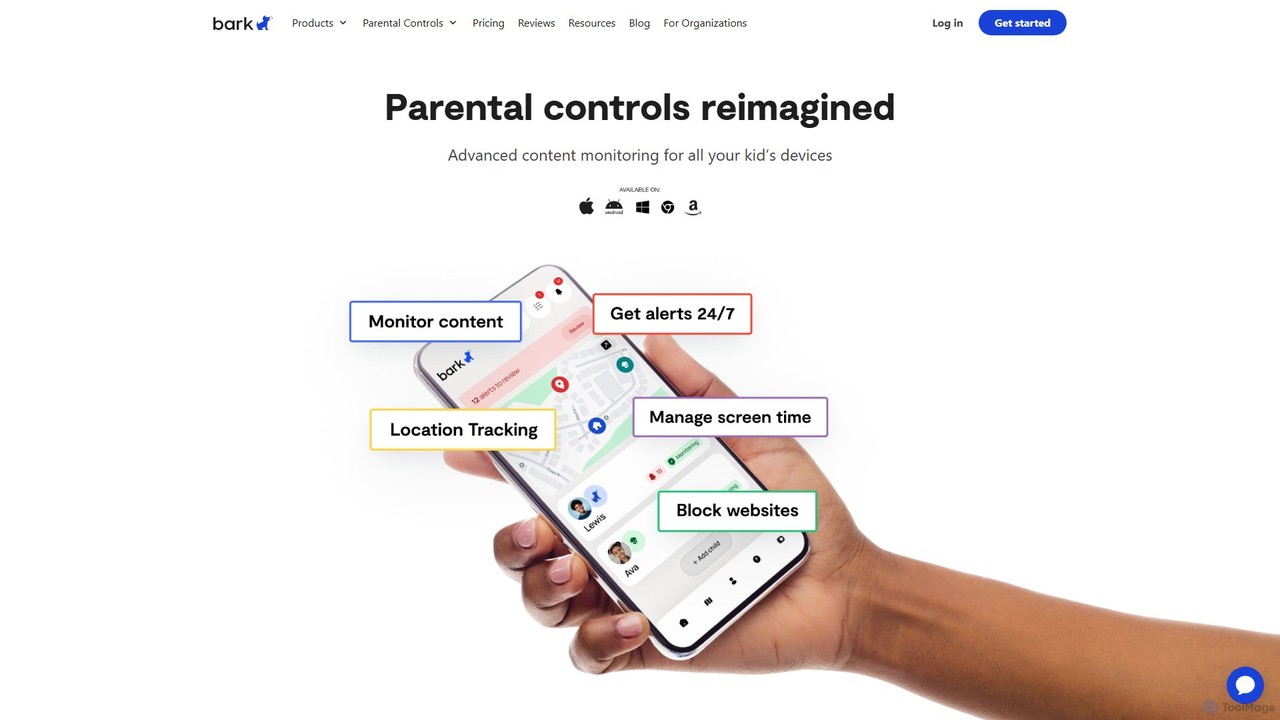
Bark is an AI-powered parental control service that helps families protect their children online. It monitors texts, social media, and emails for potential dangers like cyberbullying and self-harm, while also providing screen time management, web filtering, and location tracking to ensure comprehensive digital safety.

Family
Visits 1.6MFavorites 137Likes 139
TrustedClicks
Freemium

TrustedClicks

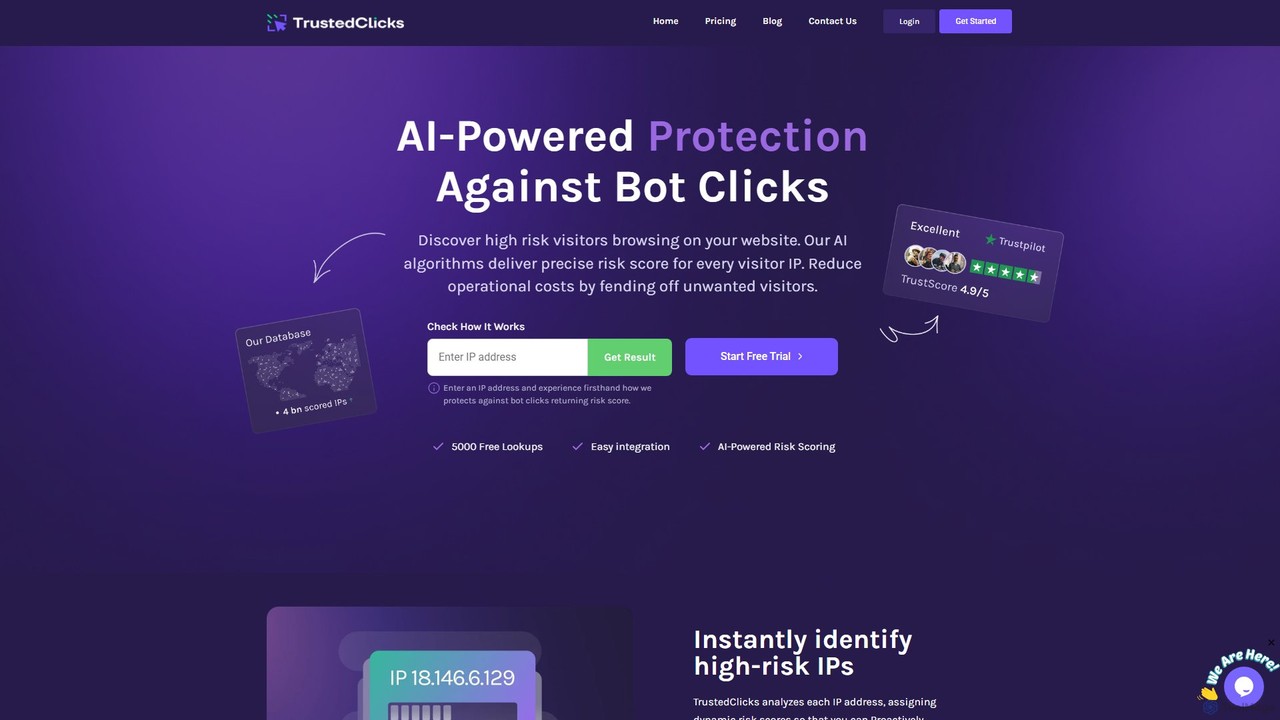
TrustedClicks is an AI-powered IP scoring and fraud detection platform. It protects businesses from online threats like click fraud, bot traffic, and malicious activities by analyzing visitor IPs in real-time. By assigning a dynamic risk score to each IP, it helps companies block unwanted visitors, reduce operational costs, and ensure only genuine traffic interacts with their digital assets.

Api
Visits 9.8KFavorites 155Likes 150
CyberUpgrade
Paid

CyberUpgrade

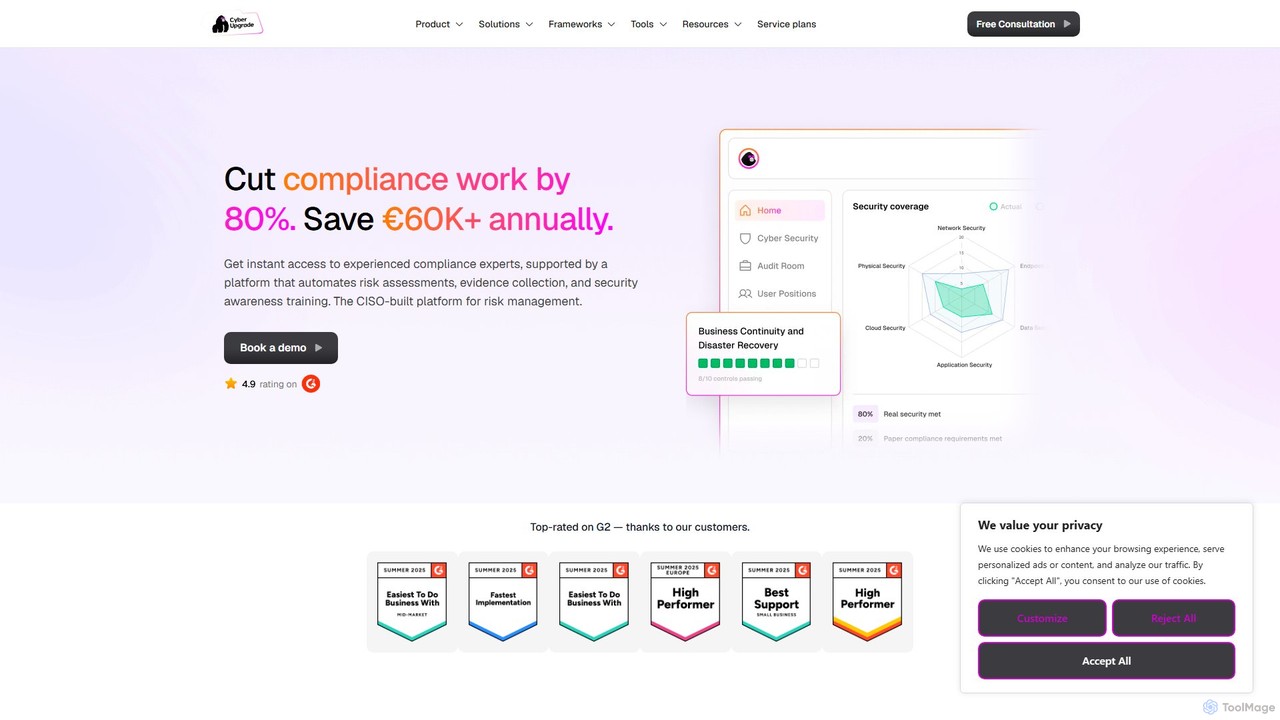
CyberUpgrade is an AI-powered compliance automation platform combined with expert CISO support. It helps businesses streamline security compliance, automate evidence collection, and manage risks to achieve certifications like ISO 27001, SOC 2, and GDPR efficiently and affordably.

Risk Management
Visits 6.2KFavorites 124Likes 113
LiarLiar.ai
Paid

LiarLiar.ai

LiarLiar.ai is an AI-powered lie detector and heart rate monitor that analyzes video feeds in real-time. It uses advanced technologies like Remote Photoplethysmography (rPPG), body language analysis, and emotion detection to assess truthfulness during video calls on platforms like Zoom, Google Meet, and Skype. It provides instant insights to foster transparency and trust in communication.

Communication
Visits 8.1KFavorites 115Likes 125
Tracecat
Freemium

Tracecat

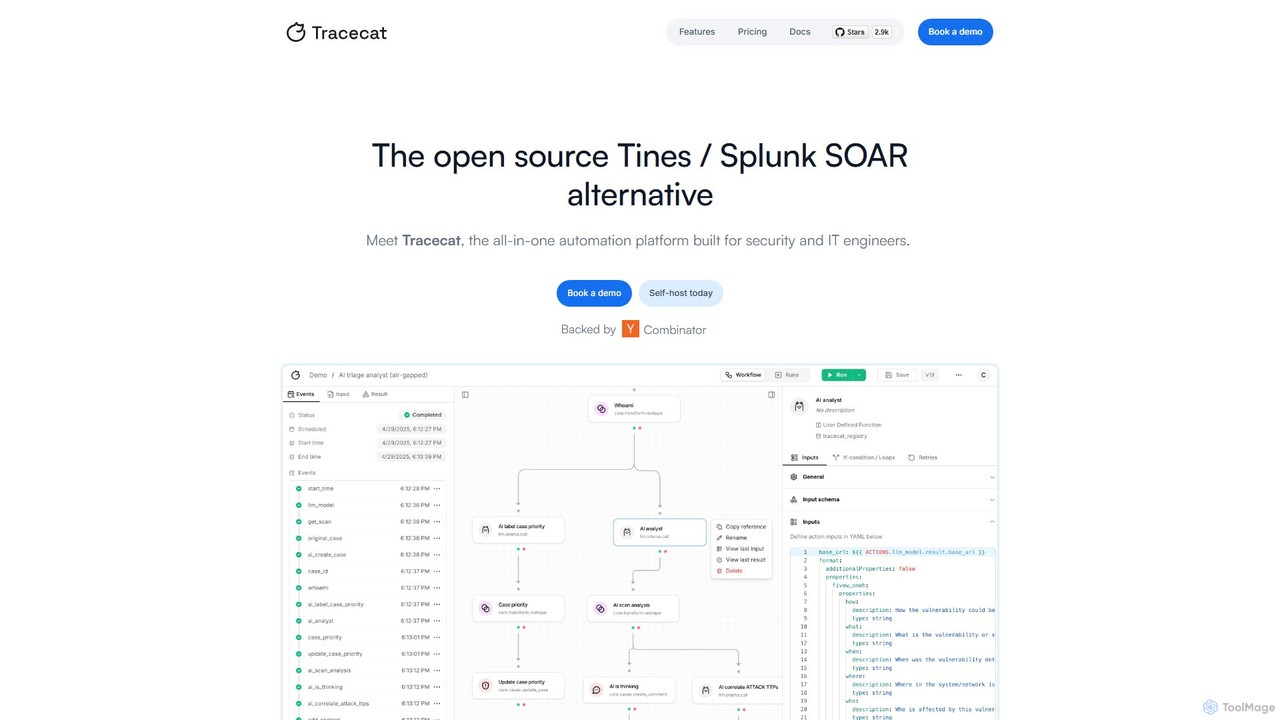
Tracecat is an open-source Security Orchestration, Automation, and Response (SOAR) platform designed for security and IT engineers. It serves as a powerful alternative to tools like Tines and Splunk SOAR, offering a unified solution for building automated workflows, managing cases, and utilizing lookup tables. It features a no-code visual builder alongside support for custom Python/YAML integrations, making it accessible and highly customizable.

Devops
Visits 9.4KFavorites 119Likes 122
Recognito
Paid

Recognito

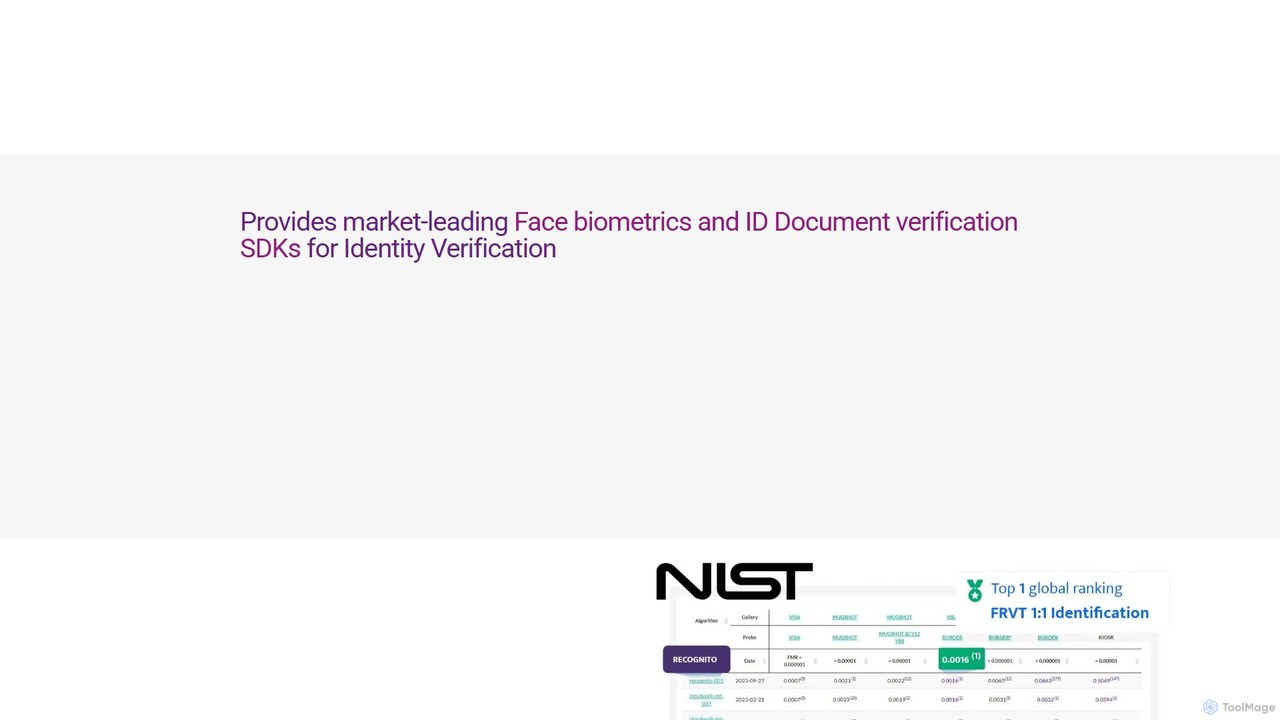
Recognito offers top-tier, NIST-certified face recognition and ID verification SDKs. It provides solutions for 1:1 and 1:N facial matching, 3D passive liveness detection, and deepfake prevention. Supporting over 14,000 document types, its SDKs are designed for easy integration into Windows, Linux, Android, and iOS applications, ensuring high accuracy and security for industries like banking, healthcare, and government. It offers on-premise and offline deployment for complete data privacy.

Api & Sdk
Visits 8.6KFavorites 134Likes 129
eighttoseven
Paid

eighttoseven

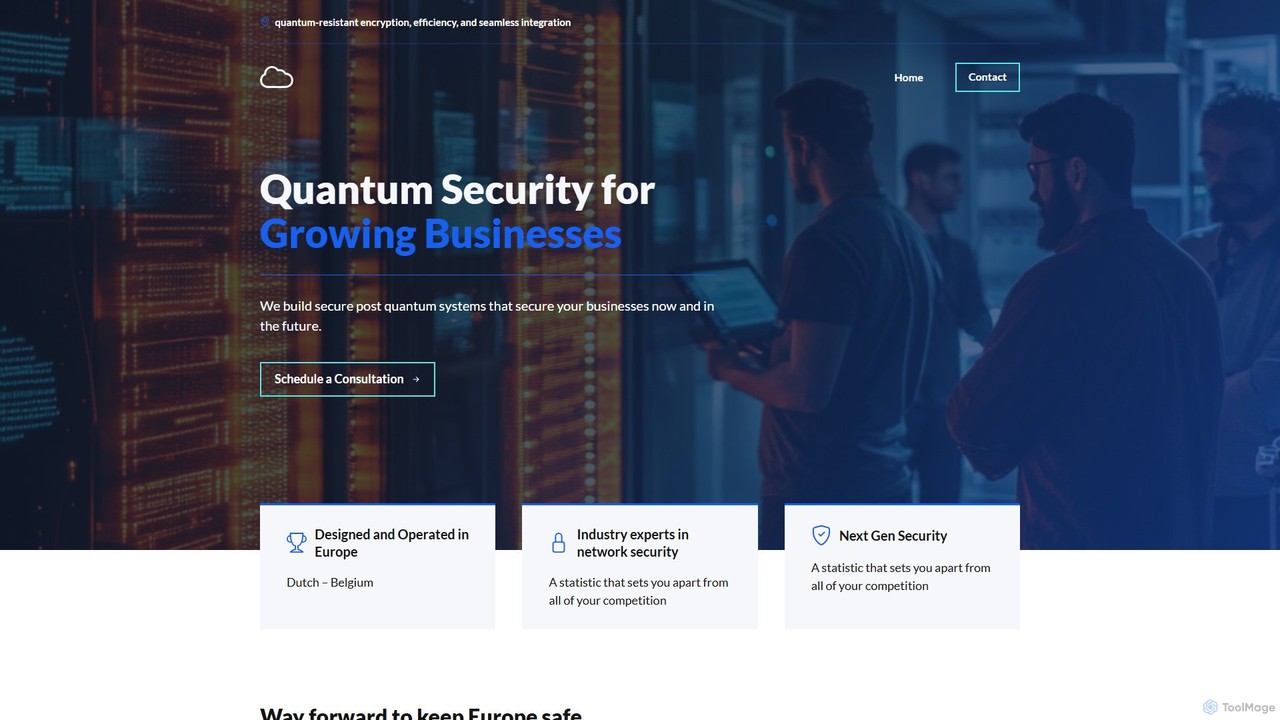
A specialized cybersecurity firm providing post-quantum cryptography (PQC) solutions for businesses. eighttoseven offers future-proof security through services like Encryption as a Service (EaaS), secure data storage, and custom communication platforms, all powered by their proprietary NaVeOl algorithm. Designed and operated in Europe, it helps organizations in sensitive sectors like healthcare, finance, and government protect their data against both current and emerging quantum threats, ensuring long-term confidentiality and regulatory compliance.

Data Security
Visits 5.4KFavorites 135Likes 146
Bourdain Onsite AI
Paid

Bourdain Onsite AI

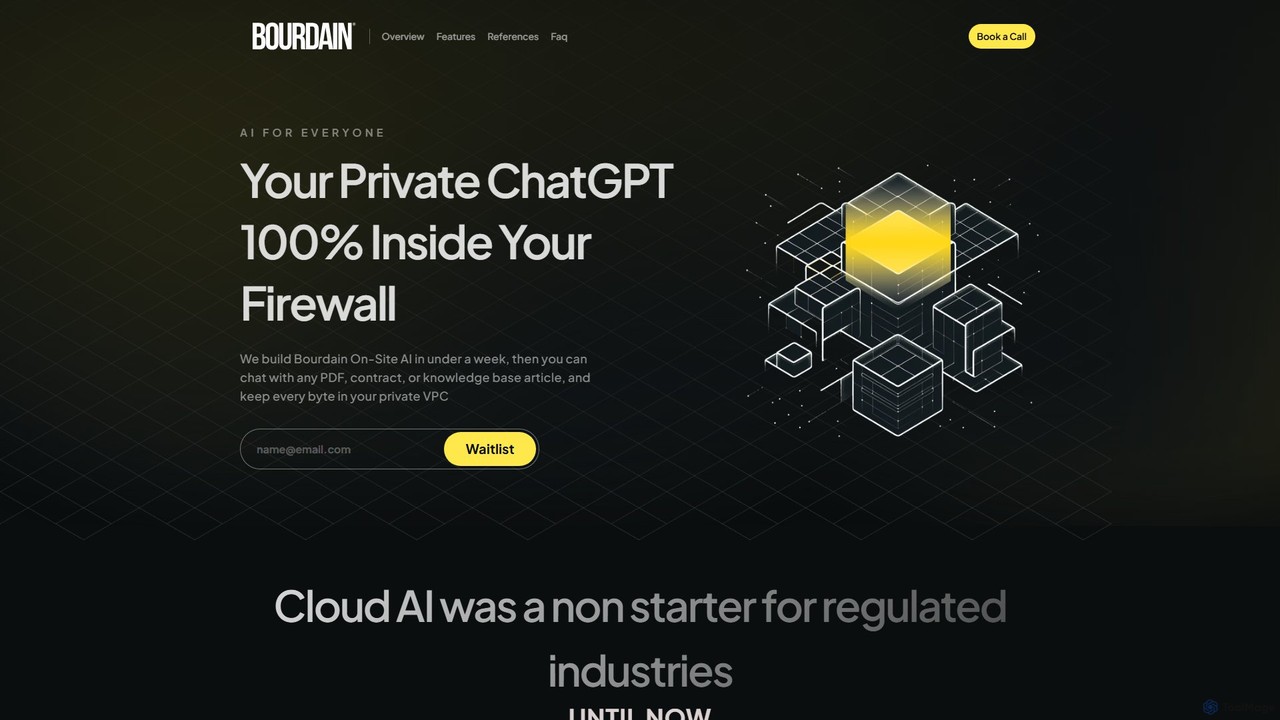
Bourdain Onsite AI is a private, on-premise AI chat solution designed for enterprises, especially in regulated industries. It functions like a private ChatGPT, operating 100% within your firewall to ensure complete data residency and security. Chat with any PDF, contract, or knowledge base article securely.

Enterprise Solutions
Visits 5.9KFavorites 106Likes 101
CaliberAI
Paid

CaliberAI

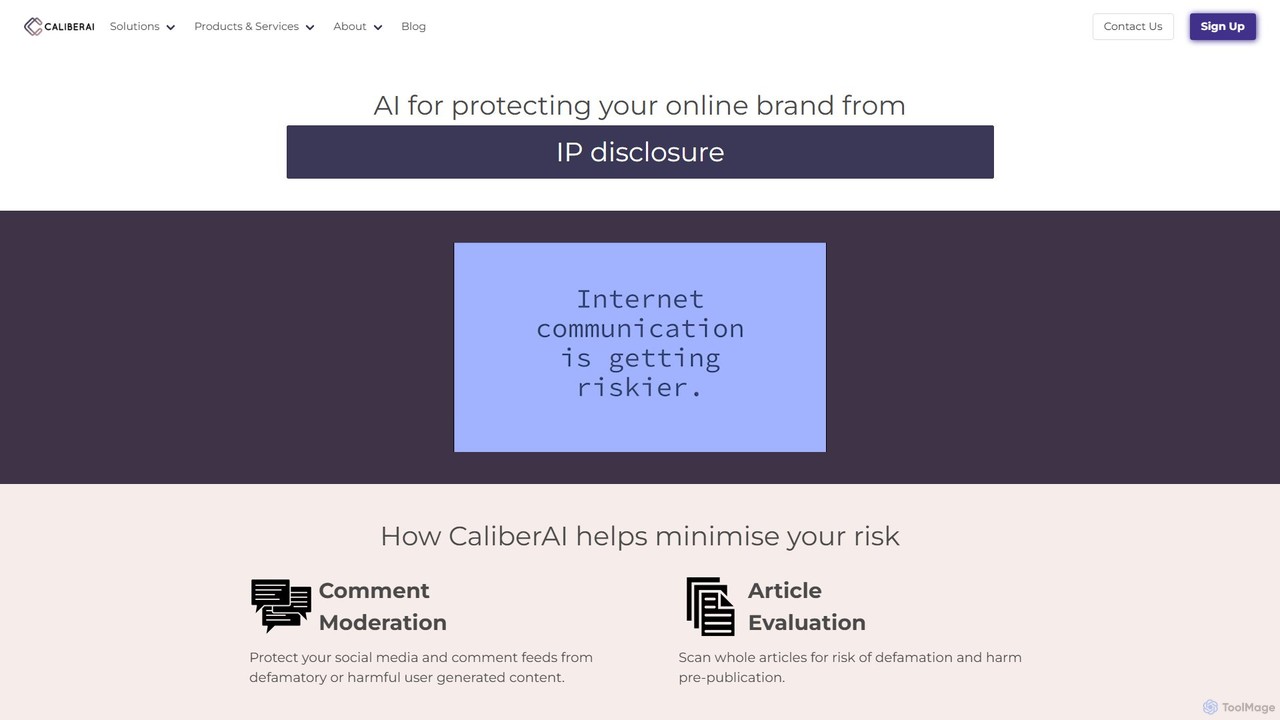
CaliberAI is an AI-powered platform designed for publishers, brands, and content creators to detect and mitigate risks from harmful online content. It specializes in identifying defamation, hate speech, doxxing, and other liabilities in real-time, protecting online reputation and reducing legal exposure.

Compliance
Visits 7.5KFavorites 156Likes 148
Copyseeker
Freemium

Copyseeker

Copyseeker is an advanced AI-powered reverse image search engine. It allows users to find the original source of an image, discover duplicates, and track where their photos are being used online. It's an essential tool for photographers, content creators, journalists, and marketers for copyright protection and content verification.

Reverse Image Search
Visits 119.1KFavorites 127Likes 137
Canopy
Freemium

Canopy

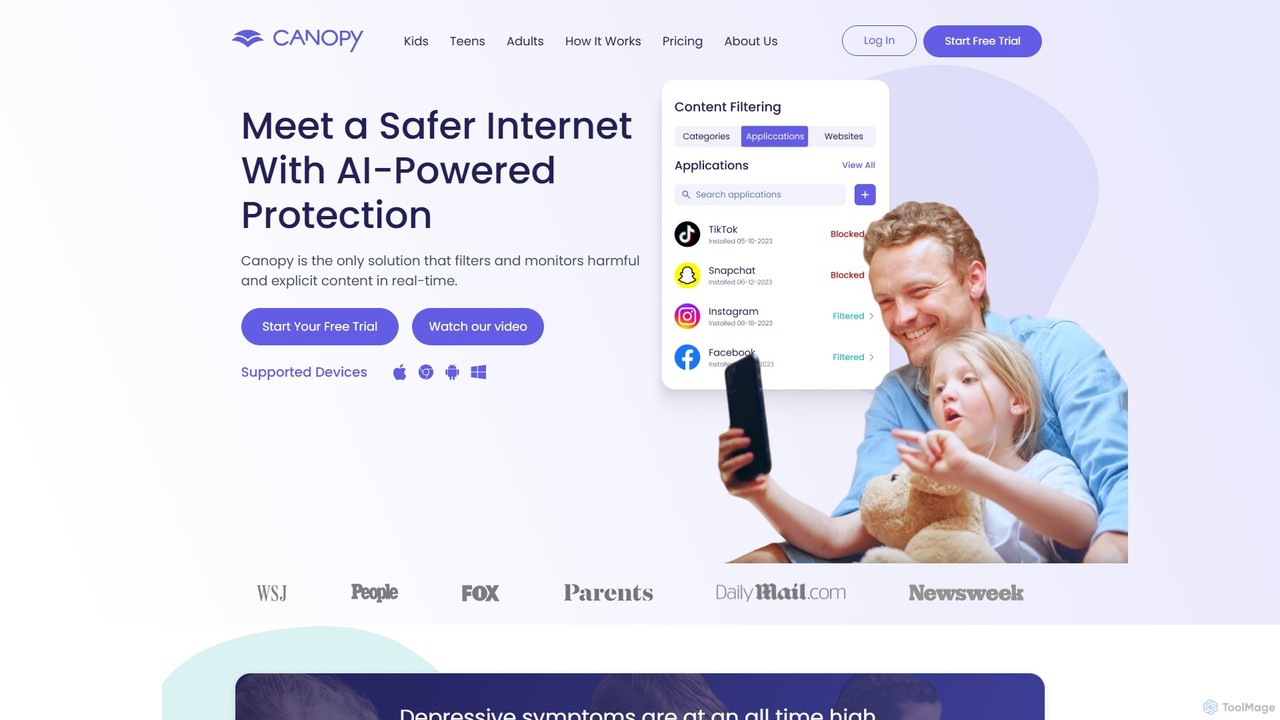
Canopy is an AI-powered digital parenting app designed to protect children online. It uses real-time AI technology to filter harmful and explicit content, including images and videos, within websites and social media apps. Key features include sexting prevention, screen time management, app blocking, and location alerts, providing a comprehensive solution for families to ensure a safer digital environment for their children across all devices.

Family
Visits 1.5MFavorites 122Likes 132
ChainAware.ai
Freemium

ChainAware.ai

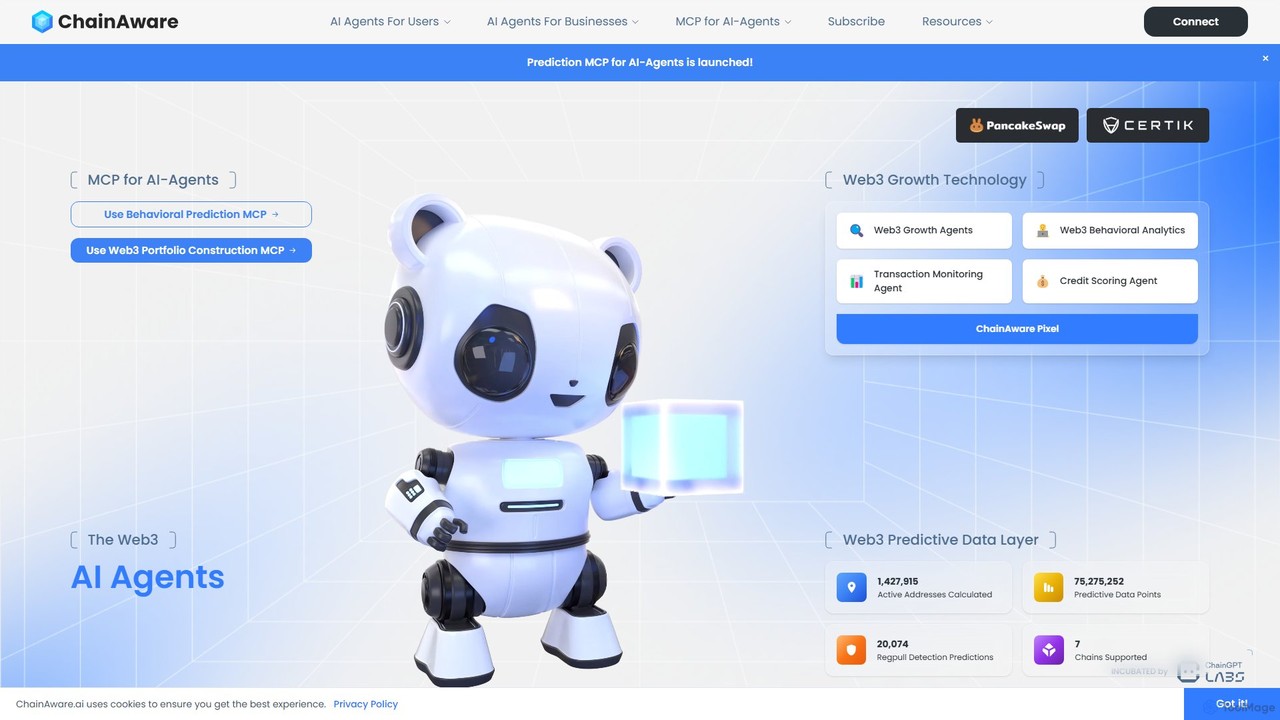
ChainAware.ai is a Web3 AI platform offering a suite of predictive agents for blockchain security and growth. It provides tools for fraud detection, rug pull alerts, wallet auditing, and user behavioral analytics, empowering both individual crypto users and businesses to operate securely and make data-driven decisions.

Api
Visits 22.7KFavorites 138Likes 122
Helsing

Helsing

Helsing is a European defence technology company that develops advanced artificial intelligence and software to enhance the defence capabilities of democratic nations. It focuses on providing autonomous and precision mass capabilities for land, air, and sea domains to ensure national security and technological sovereignty.

Defense
Visits 215KFavorites 149Likes 163
CompliantChatGPT
Freemium

CompliantChatGPT

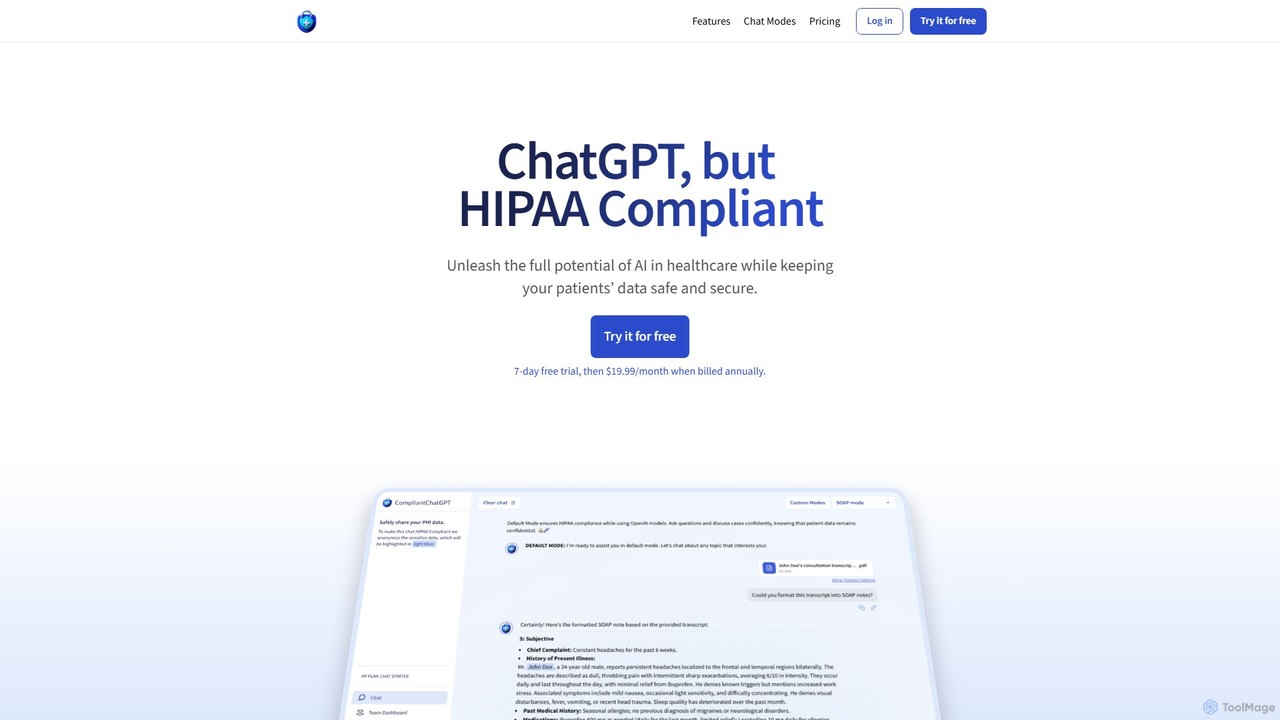
CompliantChatGPT is a HIPAA-compliant AI chat assistant designed for healthcare professionals. It leverages AI to streamline clinical workflows by securely handling tasks like generating SOAP notes, analyzing bloodwork, and creating treatment plans. By anonymizing Protected Health Information (PHI), it ensures patient data privacy and helps organizations avoid costly data breaches, enhancing both productivity and security in a clinical setting.

Medical Assistant
Visits 22.6KFavorites 127Likes 126
oopsbusted
Paid

oopsbusted

Oopsbusted is an AI-powered service designed to discreetly discover if a partner is using dating apps. By leveraging advanced facial recognition technology, it scans major dating platforms like Tinder, Bumble, and Hinge to find hidden profiles. The service offers a secure, private, and fast way for users to gain clarity and peace of mind in their relationships by providing concrete evidence, such as profile screenshots.

Relationship
Visits 6.9KFavorites 138Likes 129
GPT-AdBlocker
Freemium

GPT-AdBlocker

GPT-AdBlocker is an advanced browser extension that leverages the power of GPT-4 to provide a comprehensive ad-blocking experience. It not only blocks traditional ads like banners and pop-ups but also intelligently identifies and skips sponsored segments within YouTube videos. With built-in tracker blocking and a future-proof architecture, it offers a faster, safer, and more seamless browsing and viewing experience, all from a single, lightweight extension.

Browser Extensions
Visits 5.5KFavorites 123Likes 153
noporn
Paid

noporn

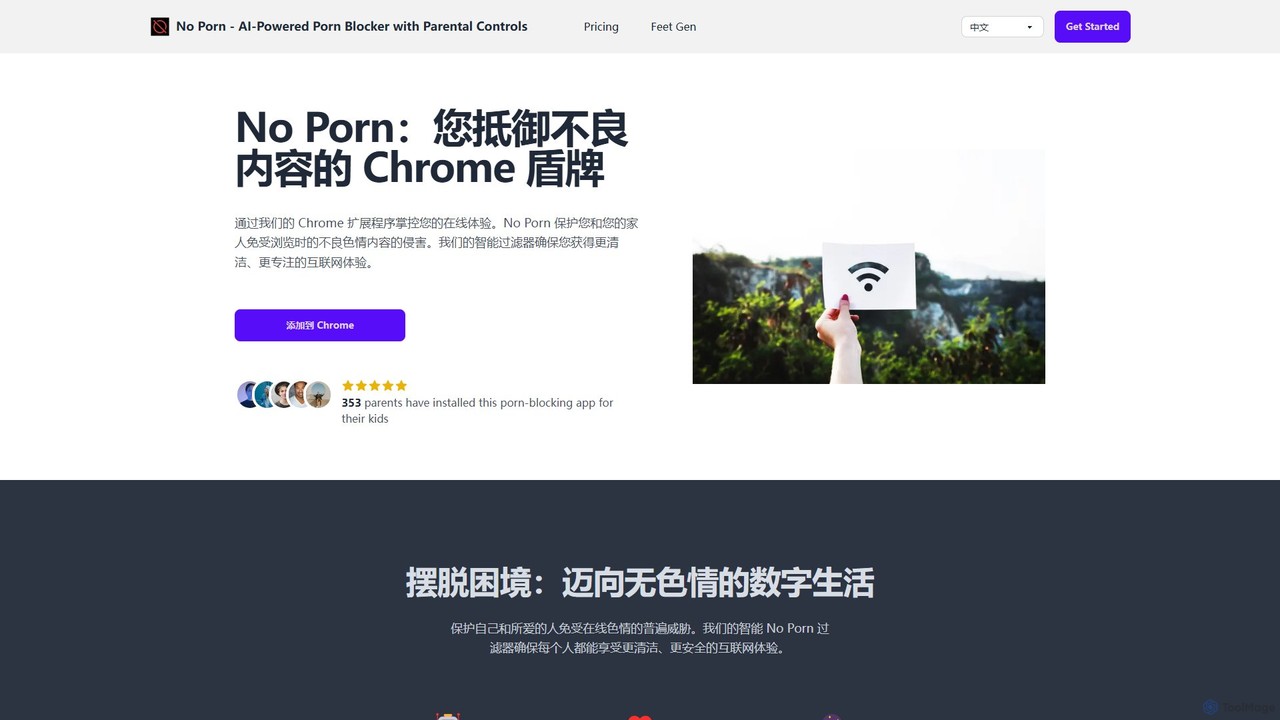
noporn is an AI-powered content blocker designed to protect users and families from explicit pornographic content online. Functioning as a Chrome extension, it uses advanced AI to detect and block inappropriate material in real-time. It offers customizable filtering, parental controls with activity reports, and a privacy-first approach, ensuring a cleaner, safer, and more focused browsing experience for all ages.

Digital Wellbeing
Visits 7.8KFavorites 141Likes 116
Inscribe
Freemium

Inscribe

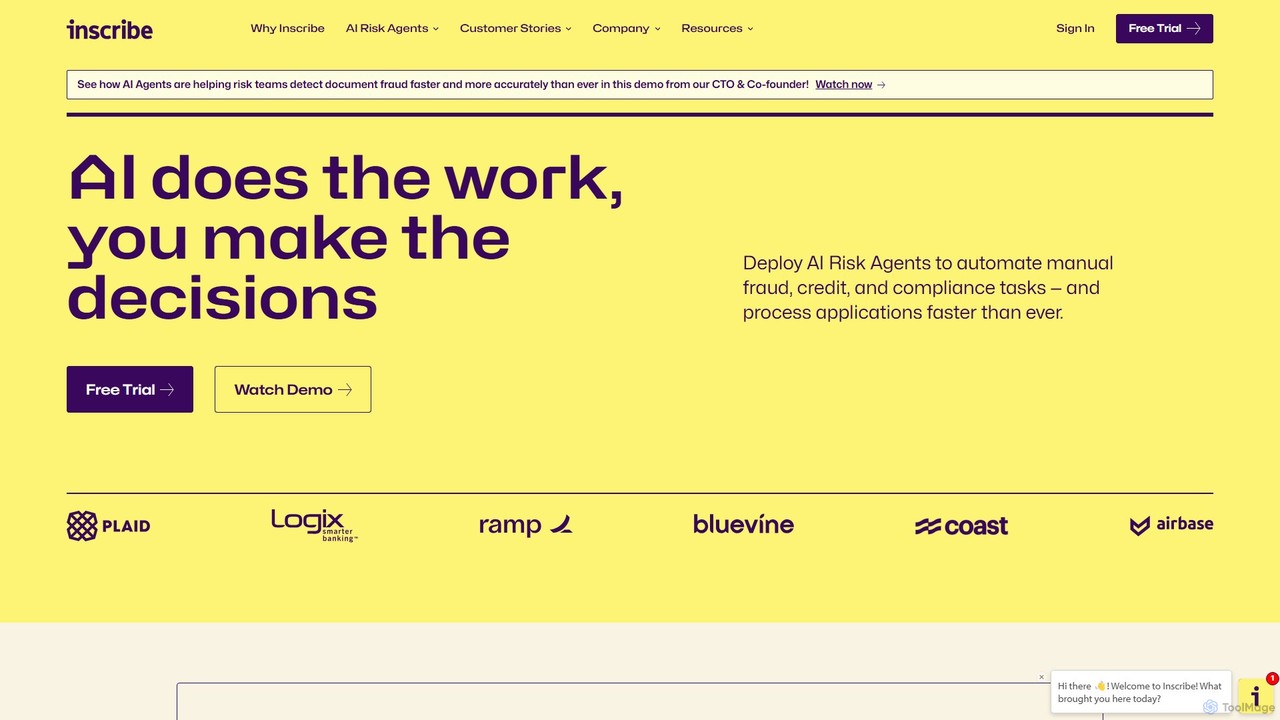
Inscribe is an AI-powered platform for risk teams in finance and fintech. It uses AI Risk Agents to automate fraudulent document detection, compliance checks (KYB), and credit analysis. Inscribe helps businesses speed up application processing, reduce manual workloads, and make faster, more accurate risk decisions.

Credit Analysis
Visits 22KFavorites 115Likes 118
Subex
Paid

Subex

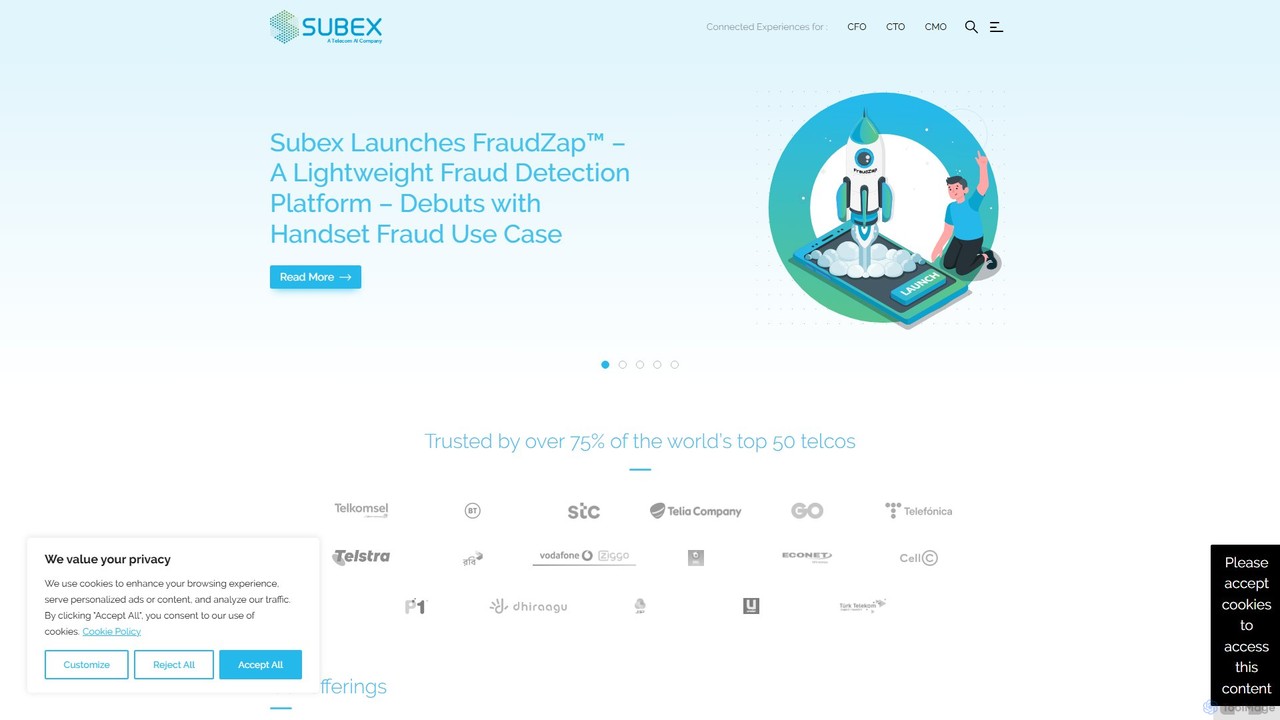
Subex is a leading enterprise AI company for the telecommunications industry. It provides a suite of AI-powered solutions, including the HyperSense AI platform, to help Communication Service providers (CSPs) optimize networks, enhance business assurance, prevent fraud, and manage partner ecosystems. Subex enables telcos to build and deploy custom AI applications to drive operational efficiency and create superior connected experiences for their customers.

Telecommunications
Visits 29.3KFavorites 128Likes 139
Privatemode AI
Freemium

Privatemode AI

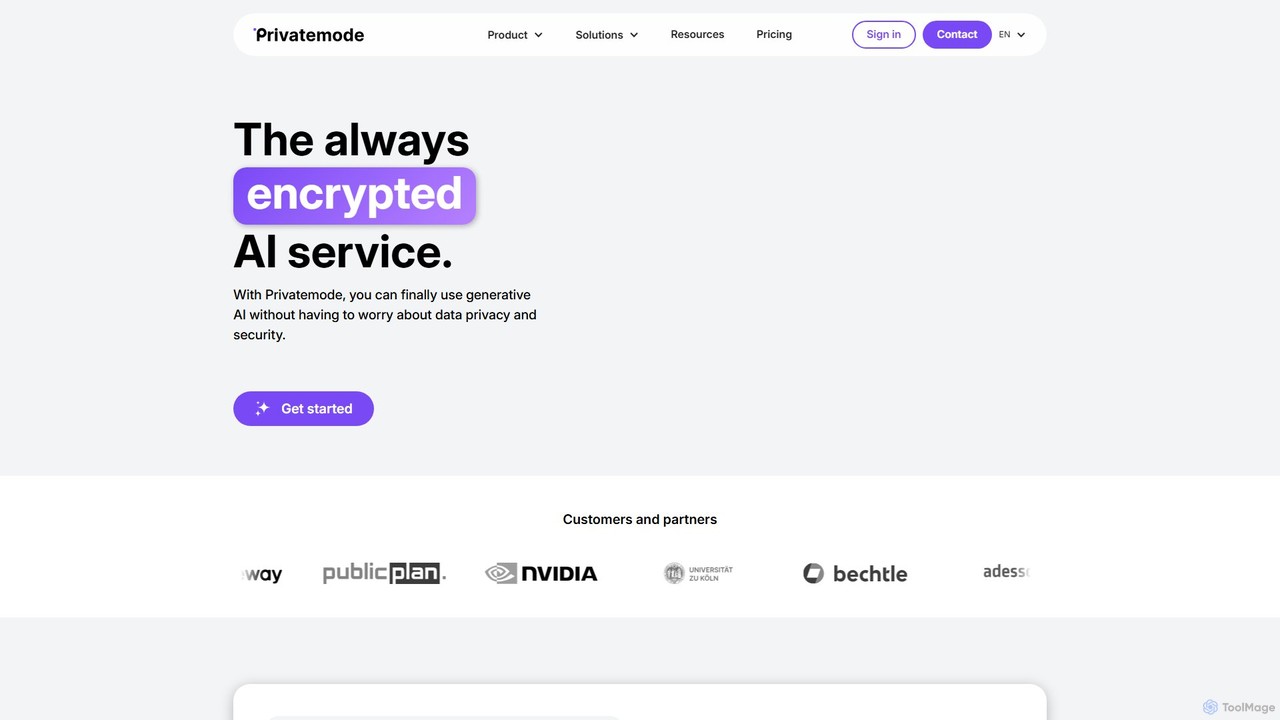
Privatemode AI is an ultra-secure, always-encrypted AI service built on confidential computing technology. It ensures your data remains encrypted even during processing, providing unparalleled privacy. Ideal for developers, enterprises, and industries handling sensitive information, it offers access to powerful LLMs like Llama 3 via a secure desktop app and API, guaranteeing that no one, not even the service provider, can access your conversations.

Api
Visits 11.9KFavorites 120Likes 137
railsguard
Paid

railsguard

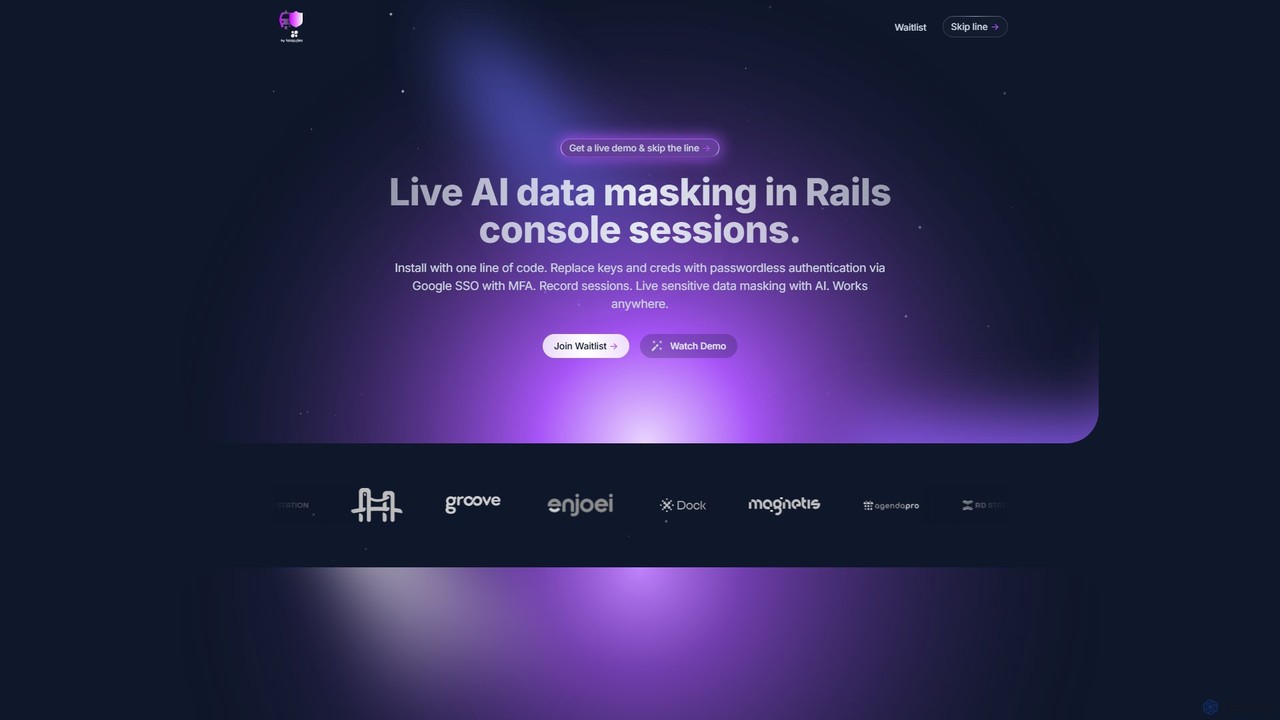
An AI-powered security tool for Ruby on Rails that provides live data masking, passwordless authentication, and comprehensive session auditing for console sessions. It enhances security and compliance without disrupting developer workflows.

Database
Visits 5.5KFavorites 107Likes 102
Jetpack
Freemium

Jetpack

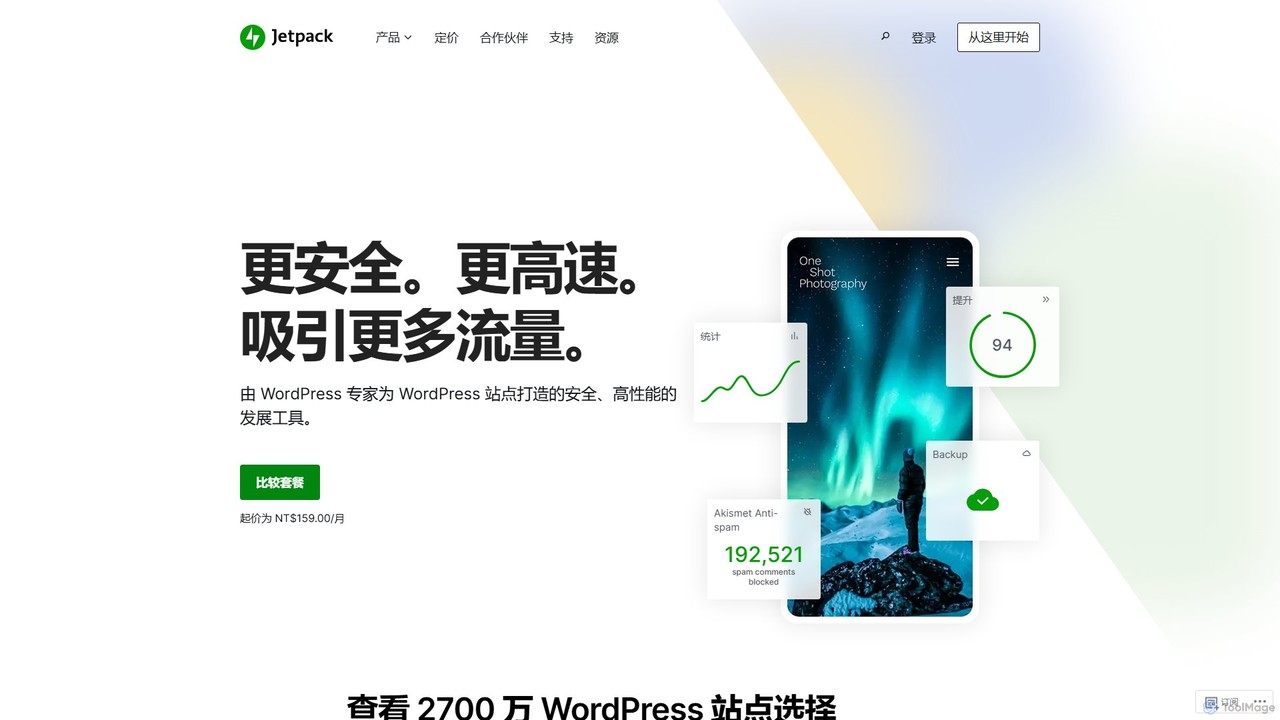
An all-in-one toolkit for WordPress that enhances security, performance, and growth. Jetpack provides real-time backups, malware scanning, a global CDN, advanced site stats, and an integrated AI Assistant to help you create content, protect your site, and grow your audience from a single plugin.

Analytics
Visits 357.4KFavorites 114Likes 123

About Security

AI Security tools are a class of solutions that leverage artificial intelligence and machine learning to proactively detect, predict, and respond to cybersecurity threats. These tools analyze vast amounts of data from networks, endpoints, and applications to identify anomalous patterns, malicious activities, and potential vulnerabilities that traditional signature-based systems often miss. Their primary value lies in automating threat hunting, accelerating incident response, and adapting to new, evolving attack vectors in real-time. This enables organizations to enhance their defensive posture, protect critical assets, and reduce the risk of data breaches and operational disruptions.

Core Features

  • Threat Detection and Prediction: Uses machine learning models to identify malware, phishing, ransomware, and zero-day exploits by analyzing behavioral patterns.
  • Automated Incident Response: Automatically contains threats by isolating infected devices, blocking malicious IP addresses, or terminating suspicious processes.
  • Behavioral Analytics (UEBA): Monitors user and entity behavior to detect insider threats, compromised accounts, and lateral movement within a network.
  • Vulnerability Management: Employs AI to scan systems, prioritize vulnerabilities based on exploitability and potential impact, and suggest remediation steps.
  • Fraud Prevention: Analyzes transaction data and user interactions in real-time to identify and block fraudulent activities like account takeovers or payment fraud.

Use Cases

AI Security tools are critical for organizations across various sectors, particularly finance, healthcare, e-commerce, and government, where sensitive data protection is paramount. Security Operations Center (SOC) analysts use them to reduce alert fatigue and focus on high-priority threats. IT administrators deploy these tools to secure cloud infrastructure and endpoints, while compliance teams rely on them to enforce security policies and generate audit reports.

How to Choose

When selecting an AI Security tool, consider its threat coverage and whether it addresses your specific risks (e.g., cloud, network, email). Evaluate its integration capabilities with your existing security stack, such as SIEM and SOAR platforms. Assess the level of automation and the tool's false positive rate to ensure it enhances rather than burdens your security team. Finally, consider its scalability to handle your organization's data volume and growth.

Featured tool rankings

Security use cases

1

Automated Phishing Attack Detection

An IT security team in a large corporation uses an AI Security tool to protect against phishing attacks. The AI continuously scans all incoming emails, analyzing not just sender reputation and keywords, but also the linguistic patterns, link destinations, and attachment structures. When an email mimicking a legitimate invoice but containing a malicious link is detected, the system automatically quarantines it and alerts the security team. This process prevents employees from ever interacting with the threat, reducing the risk of credential theft and malware infection across the organization without manual intervention.

2

Real-time Fraud Prevention for E-commerce

An online retail platform integrates an AI-powered fraud detection tool to secure its payment gateway. The system analyzes hundreds of data points for each transaction in real-time, including device fingerprint, IP location, purchase history, and mouse movement patterns. If a transaction exhibits behavior indicative of fraud—such as a user attempting multiple credit cards rapidly or using a proxy server—the AI flags it as high-risk. It can then automatically decline the transaction or route it for manual review, significantly reducing chargeback losses while maintaining a smooth checkout experience for legitimate customers.

3

Identifying Insider Threats with Behavioral Analytics

A financial institution deploys a User and Entity Behavior Analytics (UEBA) tool to monitor internal network activity. The AI establishes a baseline of normal behavior for each employee, learning their typical work hours, data access patterns, and application usage. One day, the system detects an accountant downloading large volumes of sensitive client files late at night, a significant deviation from their established baseline. The AI immediately flags this activity as a potential insider threat and generates a high-priority alert for the security team to investigate, enabling rapid intervention before a data breach occurs.

4

AI-Powered Network Intrusion Detection

A cloud service provider uses an AI-driven Network Detection and Response (NDR) system to protect its infrastructure. Unlike traditional firewalls that rely on predefined rules, the AI model continuously learns the normal flow of traffic within the network. When it detects a sophisticated, low-and-slow attack pattern, such as data being exfiltrated in small, encrypted packets over an extended period, it recognizes this anomaly. The system automatically blocks the communication channel and provides security analysts with a detailed timeline of the attack, helping them understand the threat and strengthen defenses against similar future attempts.

5

Smart Vulnerability Prioritization for DevOps

A software development company integrates an AI-powered security tool into its CI/CD pipeline. As developers commit new code, the tool automatically scans for vulnerabilities. Instead of just generating a long list of potential issues, the AI analyzes the context of each vulnerability. It considers factors like whether the vulnerable code is actually reachable in production, its potential business impact, and if an exploit is publicly available. This allows the DevOps team to focus on fixing the 10 most critical vulnerabilities first, rather than being overwhelmed by hundreds of low-risk findings, accelerating development cycles securely.

6

Securing IoT Device Networks against Botnets

A company managing a large fleet of industrial IoT sensors uses an AI security platform to prevent them from being compromised and used in a botnet. The AI first learns the normal communication patterns of each sensor—what data it sends, to which servers, and at what frequency. When a group of sensors is infected with malware and starts attempting to connect to an unknown command-and-control server, the AI detects this anomalous behavior instantly. It automatically isolates the affected sensors from the network to prevent the attack from spreading and alerts the operations team to remediate the devices.

Security FAQ

What are AI Security tools?

AI Security tools are advanced cybersecurity solutions that use artificial intelligence (AI) and machine learning (ML) to identify, predict, and prevent cyber threats. Unlike traditional security systems that rely on known threat signatures, AI tools analyze vast datasets and network behavior to detect novel attacks, anomalies, and suspicious patterns in real-time. Key functions include automated threat detection, behavioral analysis (UEBA), and intelligent incident response. They are designed to enhance security operations by reducing manual effort and improving the speed and accuracy of threat mitigation.

How to choose the right AI Security tool?

Choosing the right AI Security tool requires evaluating several key factors. First, define your primary security needs: are you focused on endpoint protection, network security, cloud infrastructure, or fraud detection? Next, assess the tool's integration capabilities with your existing security stack (e.g., SIEM, SOAR, firewalls). Consider the level of automation and customization it offers, as well as its reported false positive rate. Finally, evaluate the vendor's reputation, support services, and the tool's scalability to ensure it can grow with your organization's needs.

What is the main advantage of AI Security over traditional security?

The main advantage of AI Security is its proactive and adaptive nature. Traditional security systems are primarily reactive, relying on databases of known malware signatures and predefined rules, making them vulnerable to new, or 'zero-day', attacks. AI Security, in contrast, learns from data to establish a baseline of normal activity and can identify deviations that signal a potential threat, even if it has never been seen before. This allows for the detection of more sophisticated attacks, reduces false positives, and automates responses, enabling security teams to handle threats more efficiently and effectively.

What are the key functions of AI Security platforms?

AI Security platforms typically offer a suite of integrated functions to provide comprehensive protection. Key functions include:

  • Threat Intelligence: Aggregating and analyzing threat data from global sources to predict emerging attacks.
  • Network Detection and Response (NDR): Monitoring network traffic for suspicious patterns and anomalies that indicate a compromise.
  • Endpoint Detection and Response (EDR): Protecting individual devices like laptops and servers by analyzing process behavior to stop malware and ransomware.
  • User and Entity Behavior Analytics (UEBA): Baselining normal user activity to detect insider threats or compromised accounts.
  • Security Orchestration, Automation, and Response (SOAR): Automating routine security tasks and incident response workflows to speed up remediation.

Who should use AI Security tools?

AI Security tools are beneficial for a wide range of organizations, but they are particularly crucial for those handling sensitive data or facing a high volume of threats. This includes:

  • Enterprises: Large companies with complex IT environments use AI to manage security at scale and protect valuable intellectual property.
  • Financial Institutions: Banks and fintech companies rely on AI for real-time fraud detection and to comply with strict regulations.
  • Healthcare Organizations: Hospitals and clinics use AI to protect sensitive patient data (PHI) from ransomware and other attacks.
  • E-commerce Platforms: Online retailers use AI to prevent payment fraud, account takeovers, and protect customer information.
  • Government Agencies: Public sector entities deploy AI to defend critical infrastructure and national security interests.