ToolMage
Sign in

Best 77 It AI tools

Popular It AI tools include ManageEngine, SolarWinds, Ansible, SmartSuite, Factory, Portkey, Netify, Rootly, Truefoundry, and drdroid, helping you work more efficiently.

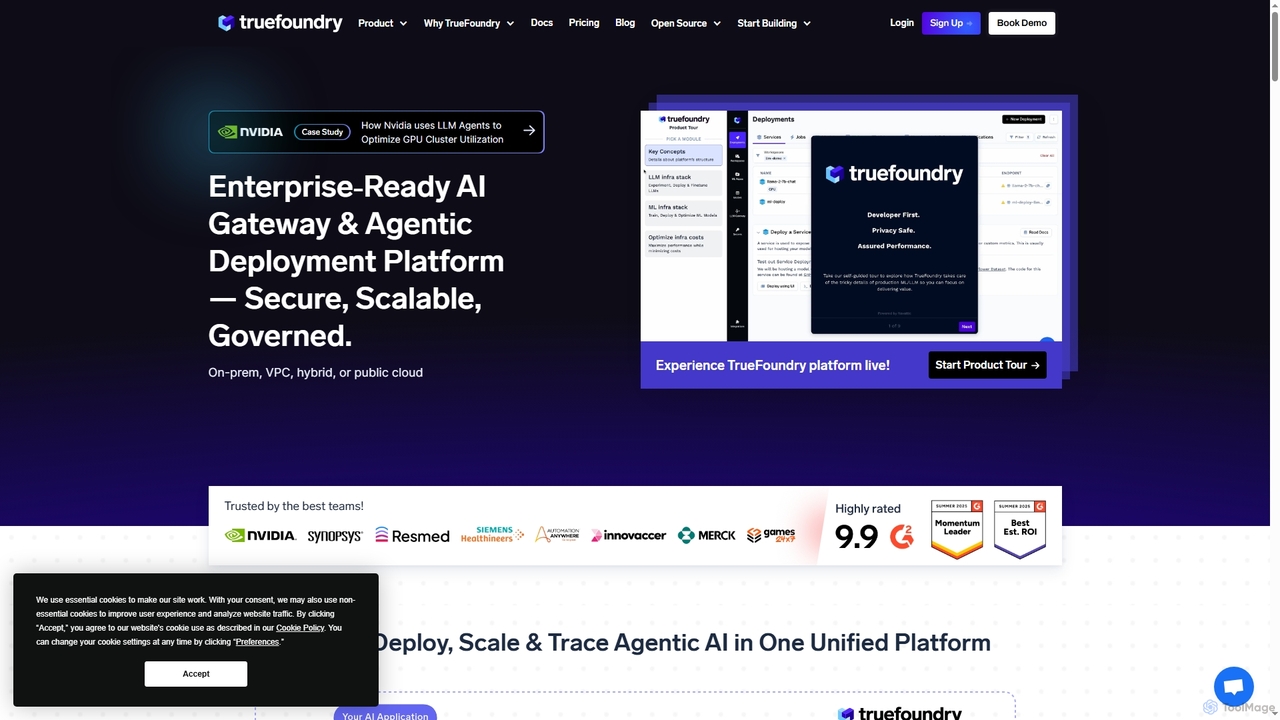
Truefoundry
Freemium

Truefoundry

Truefoundry is an enterprise-ready platform for deploying, managing, and scaling agentic AI applications. It provides a unified AI Gateway to orchestrate complex AI workflows, manage models, and ensure security, governance, and observability. Designed for developers and MLOps teams, it supports on-premise, cloud, and hybrid deployments, optimizing GPU utilization and accelerating time-to-production.

Cloud Computing
Visits 207.4KFavorites 92Likes 101
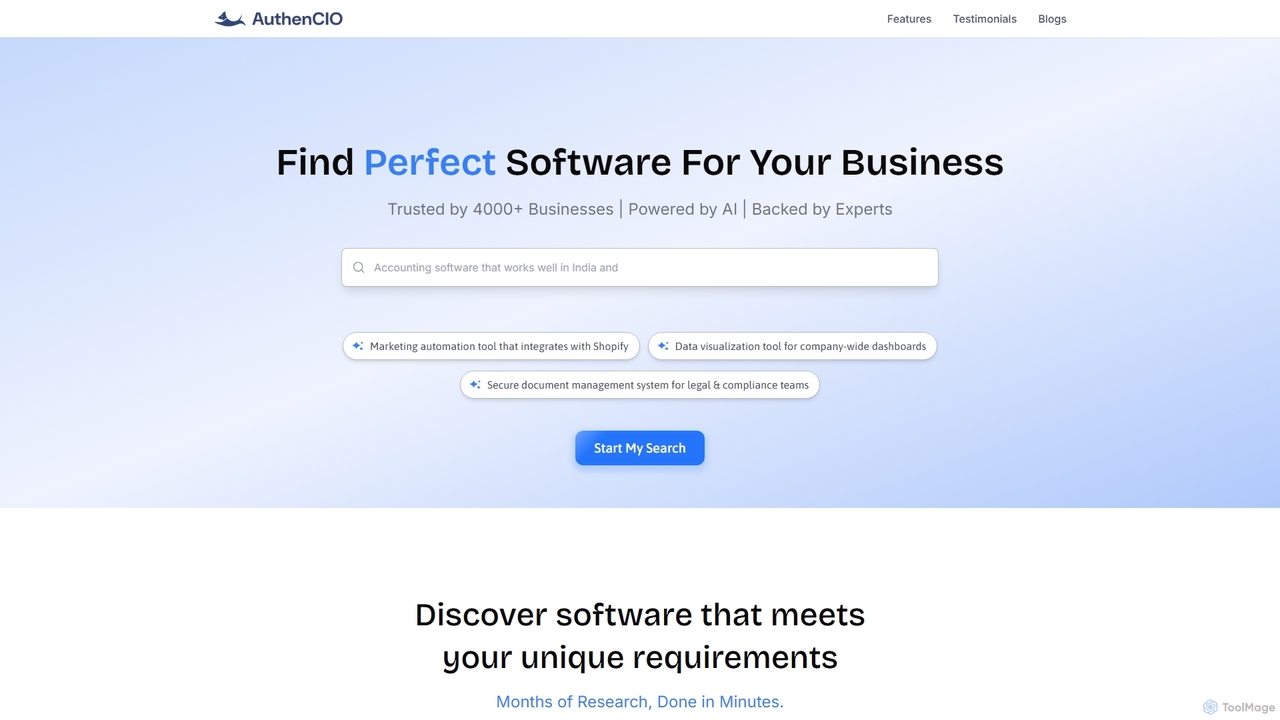
Authencio

Authencio

Authencio is an AI-powered platform designed to help businesses discover and evaluate the perfect software for their unique needs. It simplifies the complex software buying process, saving significant research time and enabling confident, data-driven decisions.

Software Discovery
Visits 18.7KFavorites 98Likes 95
FactoryDB
Paid

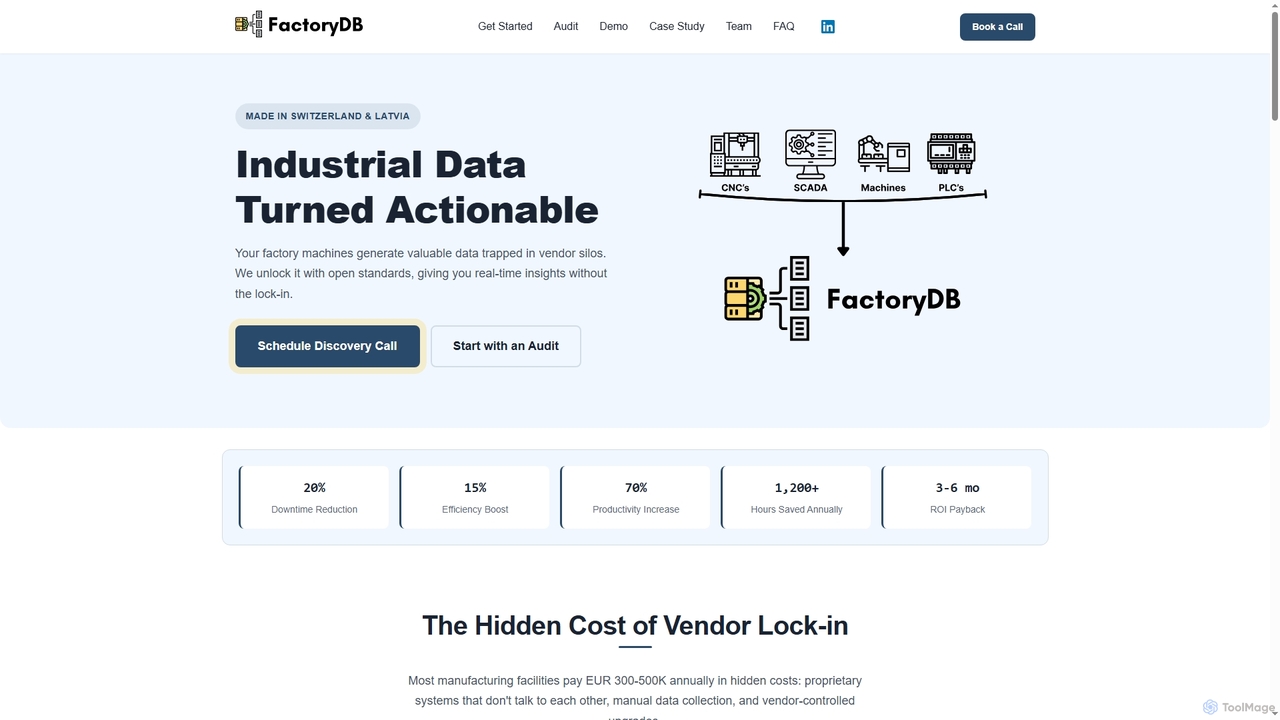
FactoryDB

FactoryDB is an industrial data infrastructure platform designed to eliminate vendor lock-in for manufacturers. Using open standards like MQTT, it unifies data from PLCs, SCADA, and MES systems into a single, vendor-neutral layer. This enables real-time analytics, predictive maintenance, and significant efficiency gains, particularly for regulated industries such as pharmaceuticals, food & beverage, and energy.

3D
Visits 6.5KFavorites 134Likes 132
Ansible
Freemium

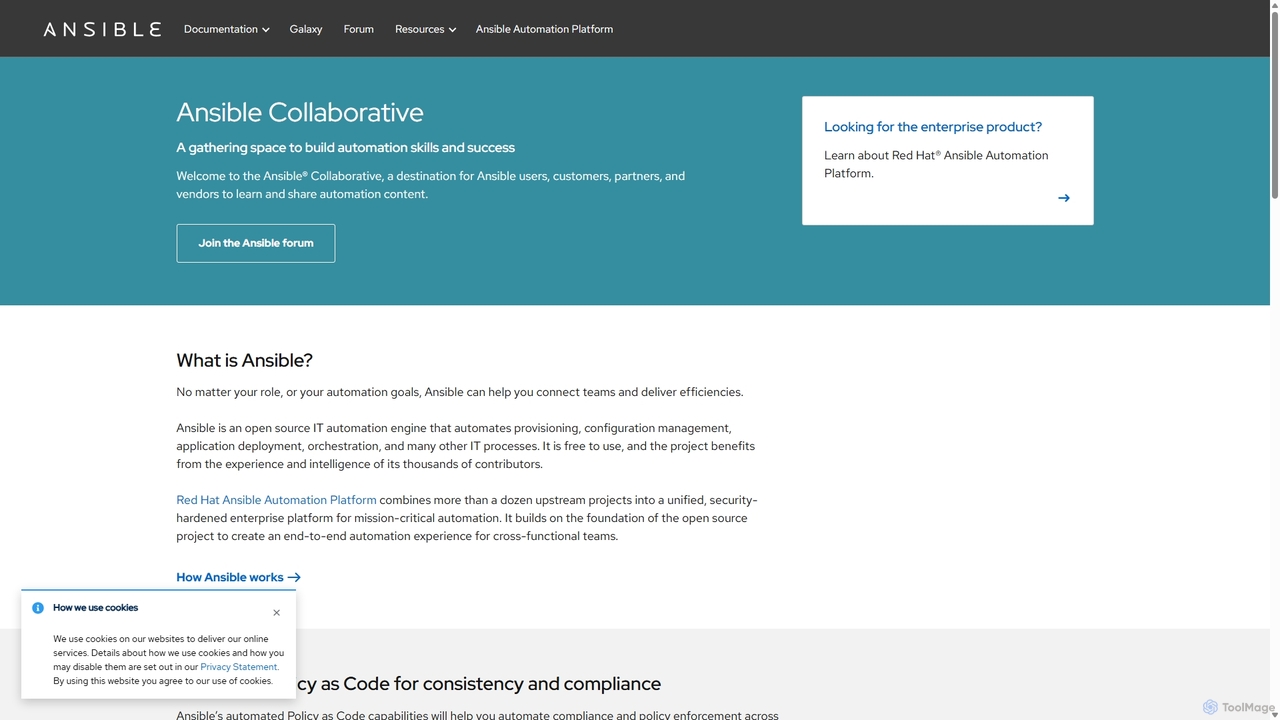
Ansible

Ansible is a powerful open-source IT automation engine that simplifies application deployment, configuration management, and orchestration. Using human-readable YAML, it automates complex IT processes without requiring agents on managed nodes, making it simple, efficient, and secure for DevOps, system administrators, and developers.

Devops
Visits 531.7KFavorites 156Likes 146
BlinkOps

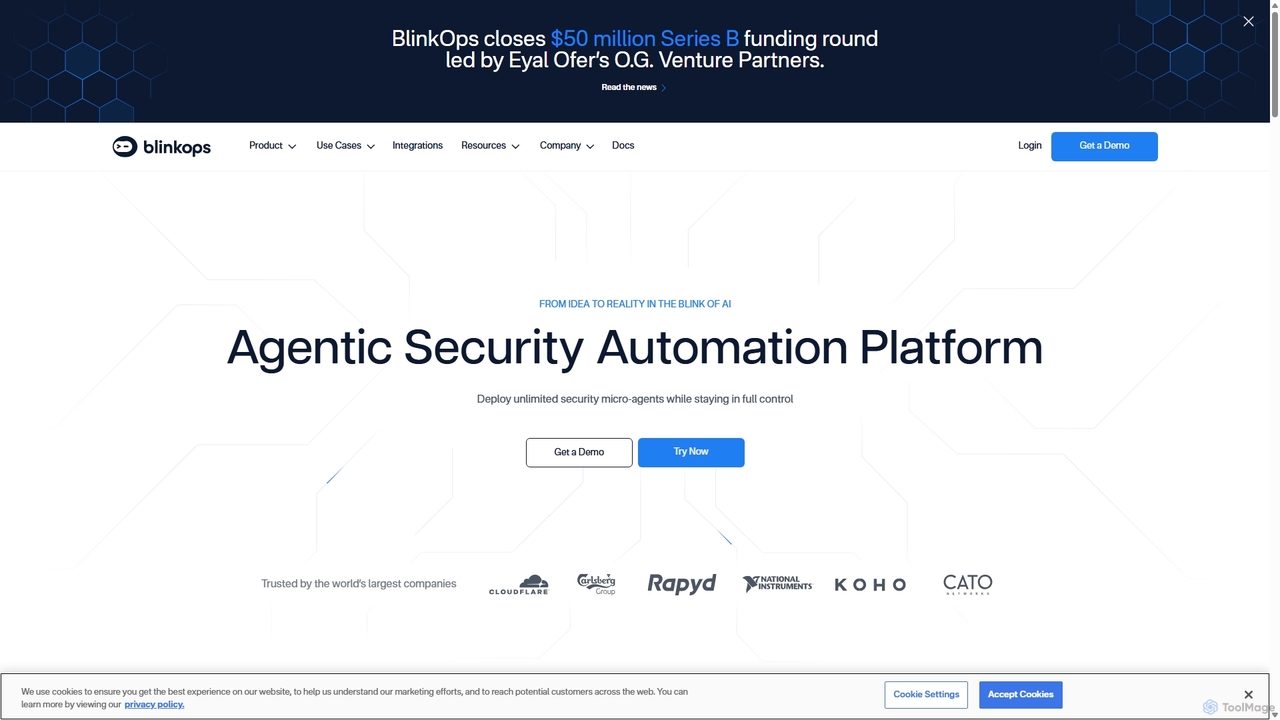
BlinkOps

BlinkOps is an agentic security automation platform that empowers security teams to convert natural language prompts into powerful, no-code workflows. It enables the deployment of customized security micro-agents to automate tasks across incident response, cloud security, compliance, and more, dramatically increasing efficiency and reducing response times.

No Code
Visits 35.7KFavorites 155Likes 145
Rootly
Paid

Rootly

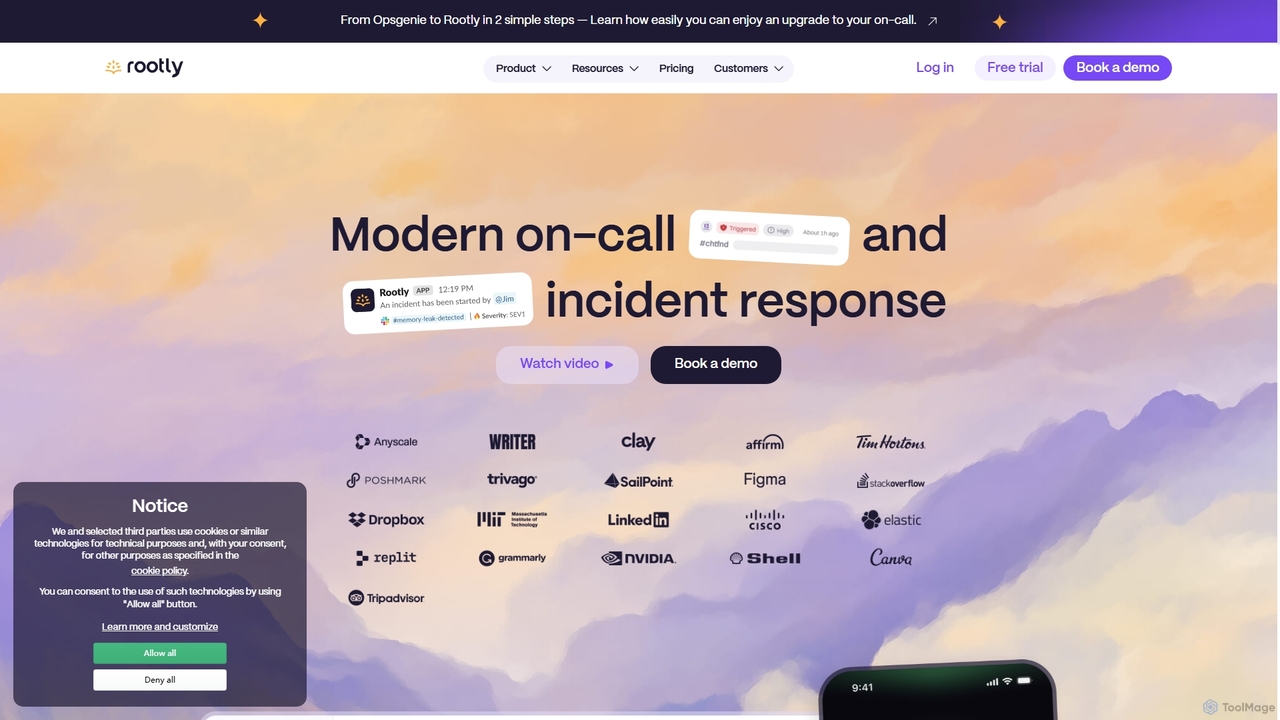
Rootly is an AI-powered, end-to-end incident management platform designed for engineering and SRE teams. It automates the entire incident lifecycle, from on-call scheduling and alert response to resolution and post-incident analysis. By integrating seamlessly with tools like Slack, Jira, and Datadog, Rootly streamlines workflows, reduces manual tasks, and helps teams resolve issues faster, ultimately improving system reliability and operational efficiency.

Incident Management
Visits 223.6KFavorites 149Likes 152
Anomify
Freemium

Anomify

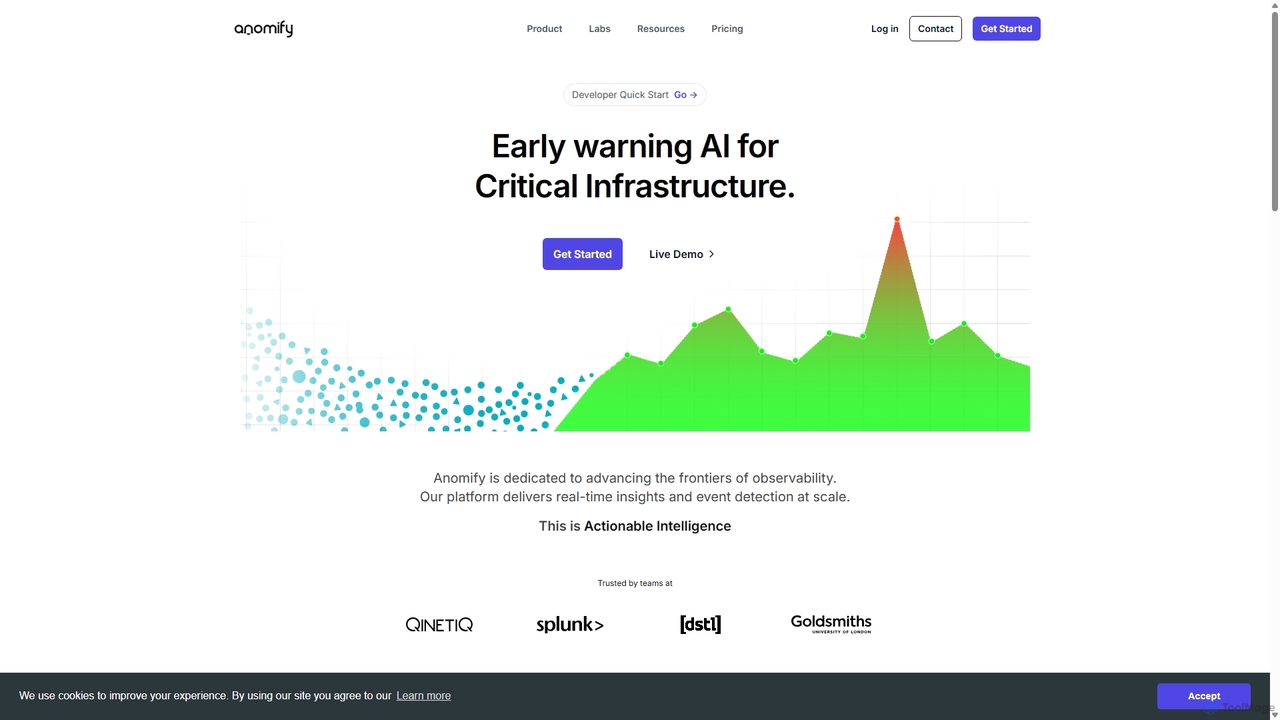
Anomify is an AI-powered early warning platform for critical infrastructure, offering real-time anomaly detection and observability at scale. It leverages multi-stage machine learning to analyze time-series data, significantly reduce false positives, and accelerate root cause analysis. Designed for DevOps, SREs, and IT teams, Anomify transforms monitoring from reactive to proactive, ensuring system performance and reliability.

Anomaly Detection
Visits 7.9KFavorites 139Likes 134
Rebolt
Freemium

Rebolt

Rebolt is an AI-powered platform designed to automate the entire software development lifecycle. It helps developer and DevOps teams build, test, and deploy applications faster and more reliably by leveraging AI for CI/CD pipeline optimization, code generation, and intelligent monitoring.

Code Assistant
Visits 6.5KFavorites 147Likes 131
CybertraceAI
Freemium

CybertraceAI

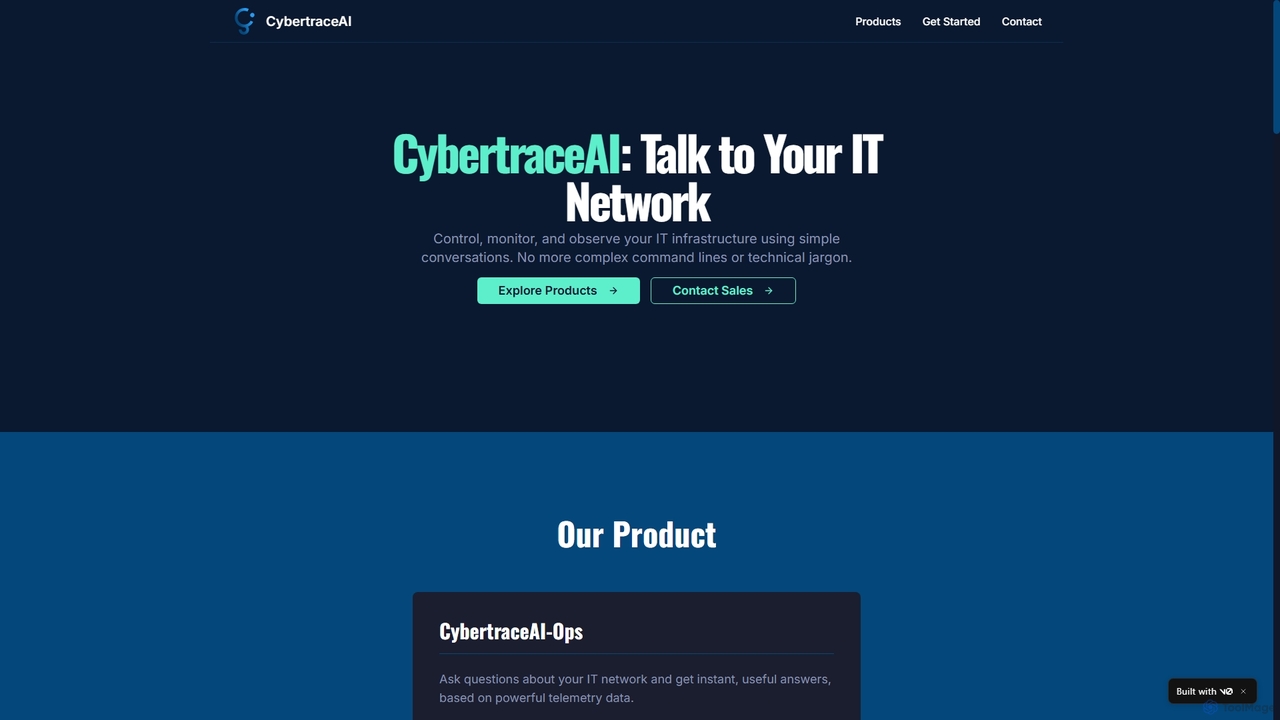
CybertraceAI is a conversational AI platform for IT network management. It enables professionals to monitor, control, and analyze their infrastructure using simple natural language queries. Replace complex command lines with intuitive conversations to get instant, verifiable answers based on real-time telemetry data, simplifying network operations and troubleshooting.

Devops
Visits 6.3KFavorites 132Likes 130
Aaspassapp
Freemium

Aaspassapp

aaspassapp is an AI-powered identity and access management platform designed to secure your digital life. It offers intelligent password generation, proactive breach monitoring, and adaptive multi-factor authentication. Ideal for both individuals and businesses, it simplifies security by automating access control and providing actionable insights to prevent threats before they happen.

Access Control
Visits 6.3KFavorites 140Likes 135
0ptikube

0ptikube

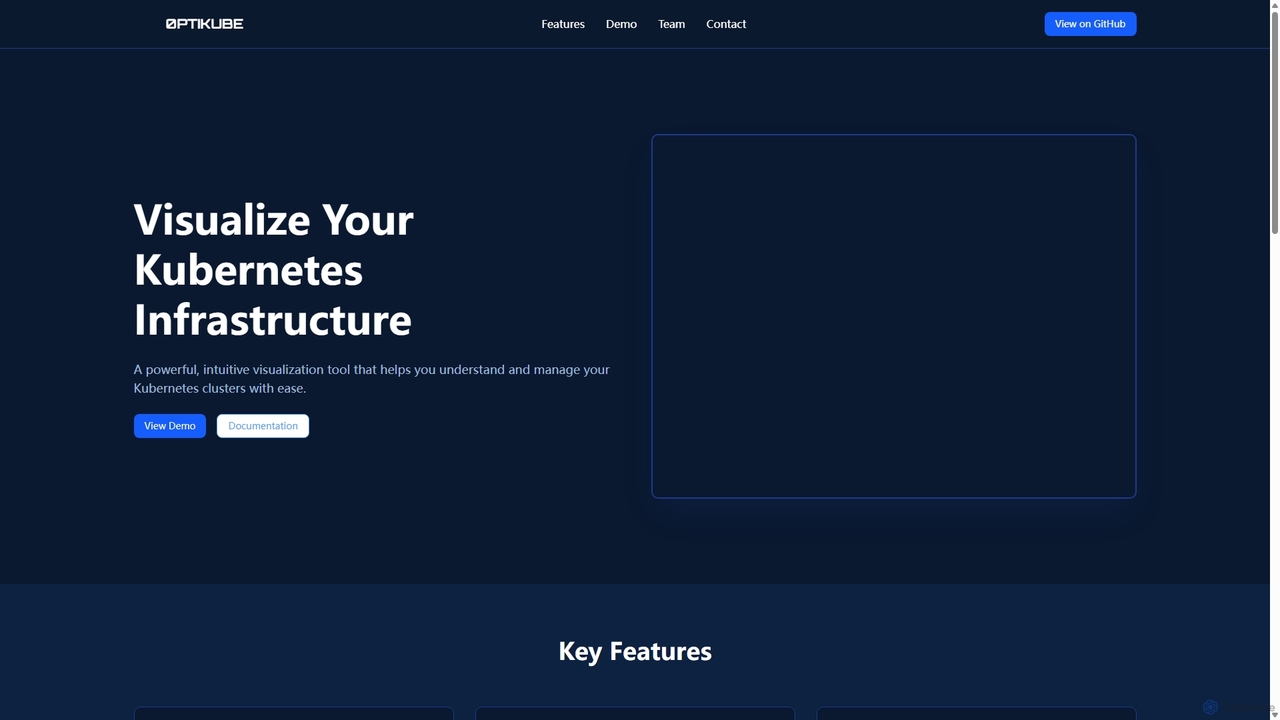
0ptikube is an AI-powered visualization and optimization tool for Kubernetes. It provides real-time monitoring and an intuitive dashboard to help DevOps engineers and SREs easily understand, manage, and optimize their cluster infrastructure, identify resource bottlenecks, and improve performance.

Cloud Computing
Visits 6.3KFavorites 135Likes 125
KubeHA
Paid

KubeHA

KubeHA is a GenAI-powered SaaS platform for Kubernetes, offering an all-in-one solution for Monitoring, Observability, Remediation, and Exploration (MORE). It unifies logs, metrics, traces, and events to provide AI-driven root cause analysis, smart fix suggestions, and 1-click remediation, eliminating tool sprawl and simplifying complex operations for SRE and DevOps teams.

Devops
Visits 8.8KFavorites 143Likes 151
ClearFeed
Freemium

ClearFeed

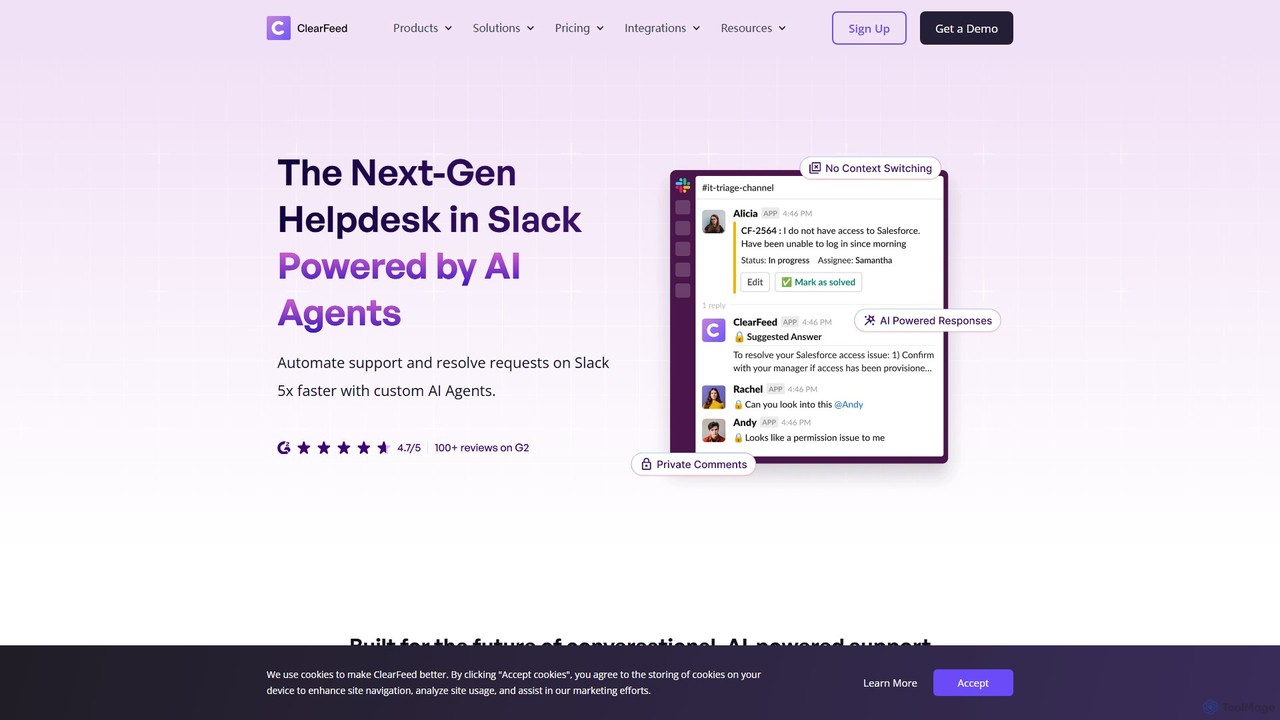
ClearFeed is an AI-powered conversational support platform designed to streamline customer and employee support directly within Slack and Microsoft Teams. It converts informal requests into trackable tickets, automates responses with GPT, and integrates seamlessly with major helpdesks like Zendesk, Jira, and Salesforce. This centralizes communication, improves response times, and provides key analytics to scale support operations efficiently.

Help Desk
Visits 32.2KFavorites 135Likes 146
Axal
Freemium

Axal

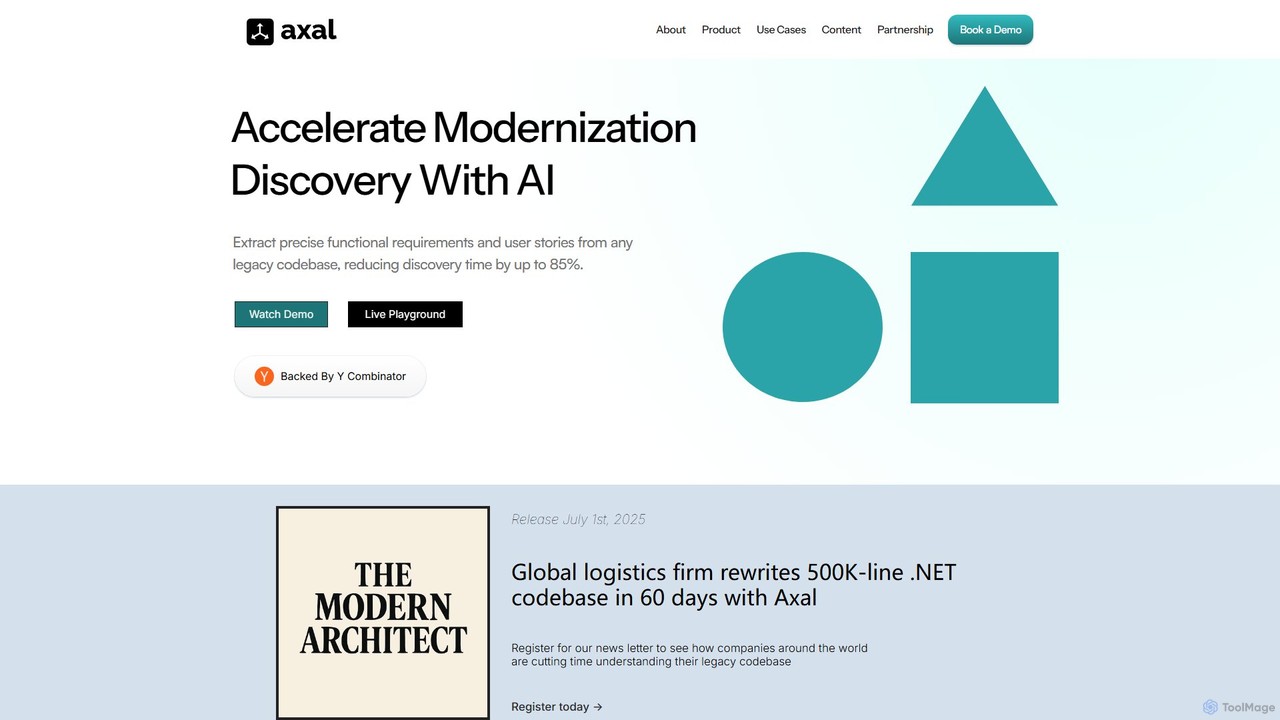
Axal is a Y Combinator-backed AI platform that analyzes legacy codebases to automatically extract functional requirements, user stories, and business logic. It accelerates software modernization by reducing discovery time by up to 85%, enabling teams to understand complex systems in hours instead of months.

Code Analysis
Visits 12.4KFavorites 126Likes 121
Digma
Freemium

Digma

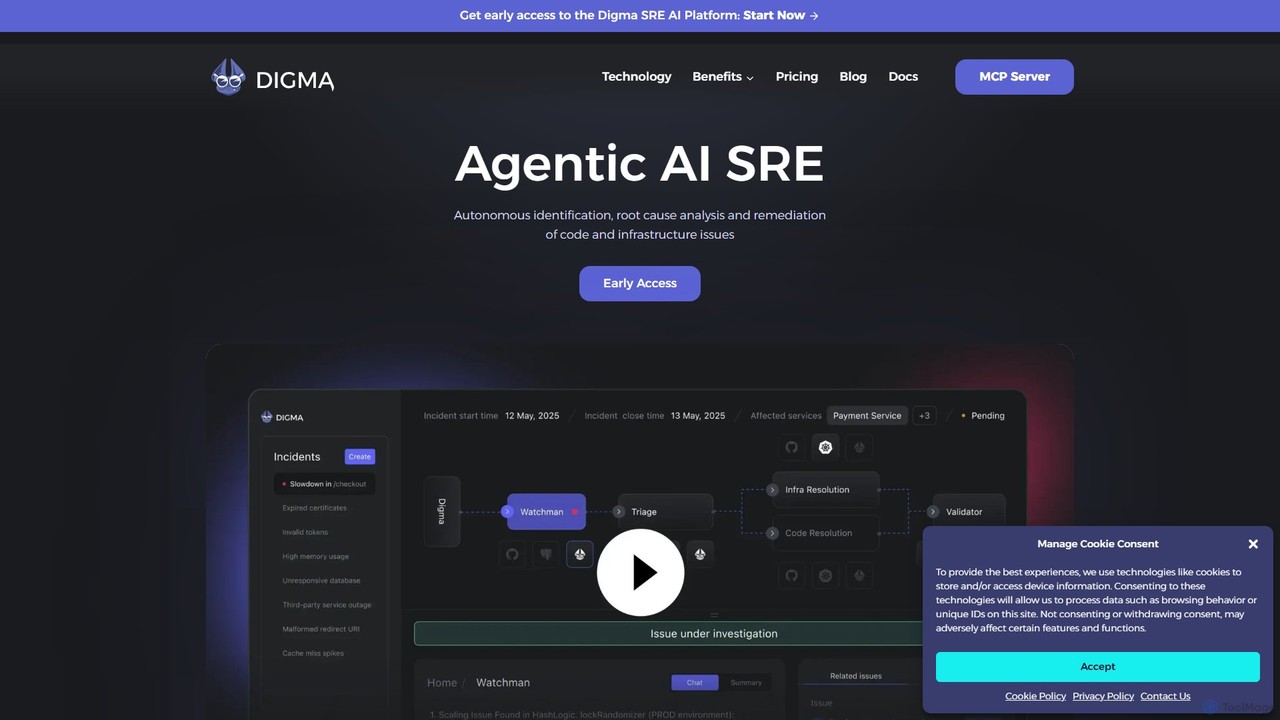
Digma is an agentic AI SRE platform that uses Dynamic Code Analysis (DCA) to autonomously identify, analyze, and remediate code and infrastructure issues before they reach production. It integrates with your observability stack to provide real-time insights, prevent breaking changes, and optimize application performance, significantly reducing resolution time and engineering effort.

Code Quality
Visits 18.8KFavorites 125Likes 154
eversql
Freemium

eversql

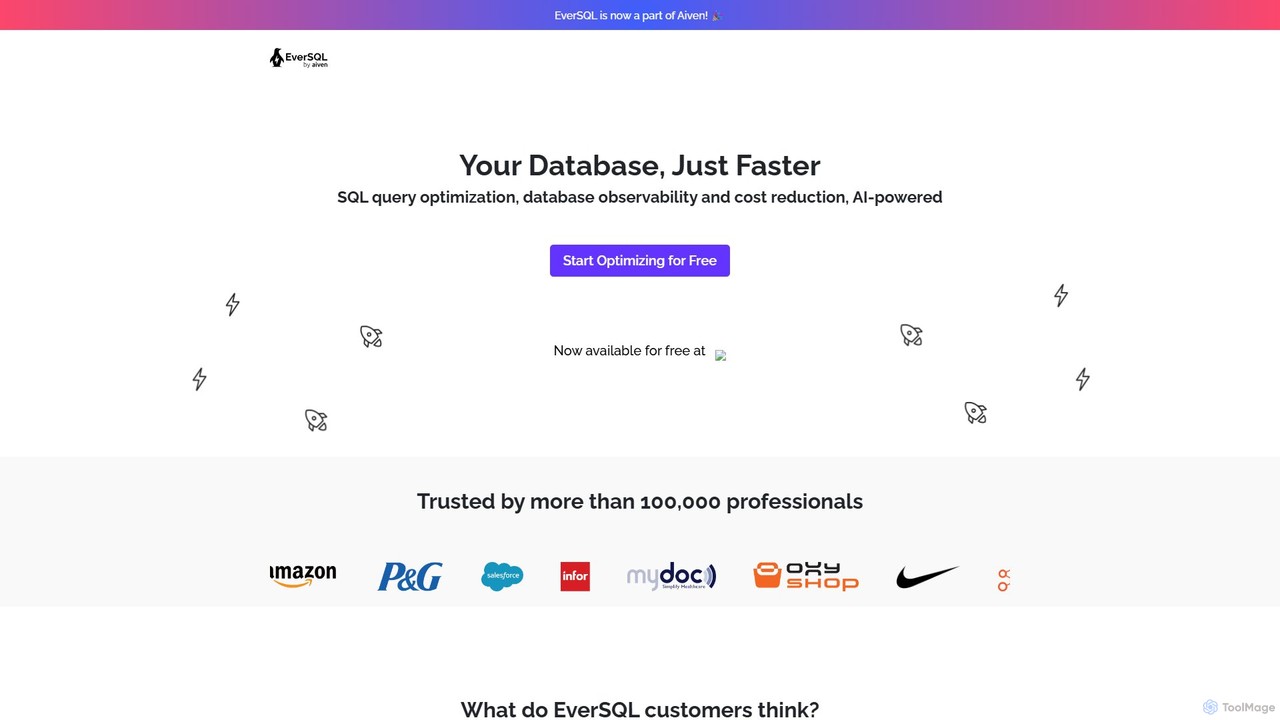
eversql is an AI-powered SQL optimization platform for PostgreSQL and MySQL. It automatically rewrites slow queries, suggests intelligent indexing, and provides continuous performance monitoring. By using smart algorithms, eversql helps developers, DBAs, and DevOps teams improve database performance, reduce infrastructure costs, and save significant time on manual tuning.

Database
Visits 12.9KFavorites 154Likes 151
Parny
Freemium

Parny

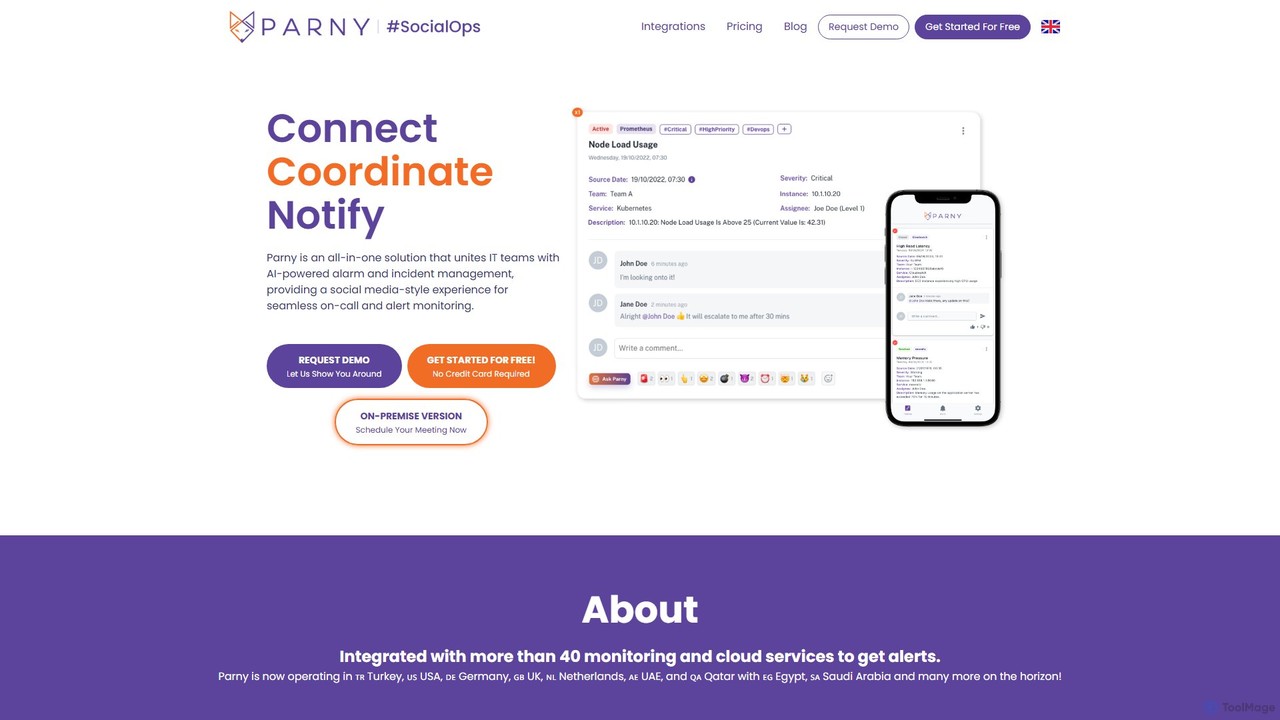
Parny is an all-in-one, AI-powered incident and on-call management platform. It unifies IT teams with a social media-style experience for seamless alert monitoring, smart scheduling, and insightful analytics, including DORA metrics. Parny serves as a powerful alternative to Opsgenie, offering advanced features like AI-driven recommendations and infrastructure mapping.

Incident Management
Visits 9KFavorites 156Likes 137
hubbleiq
Freemium

hubbleiq

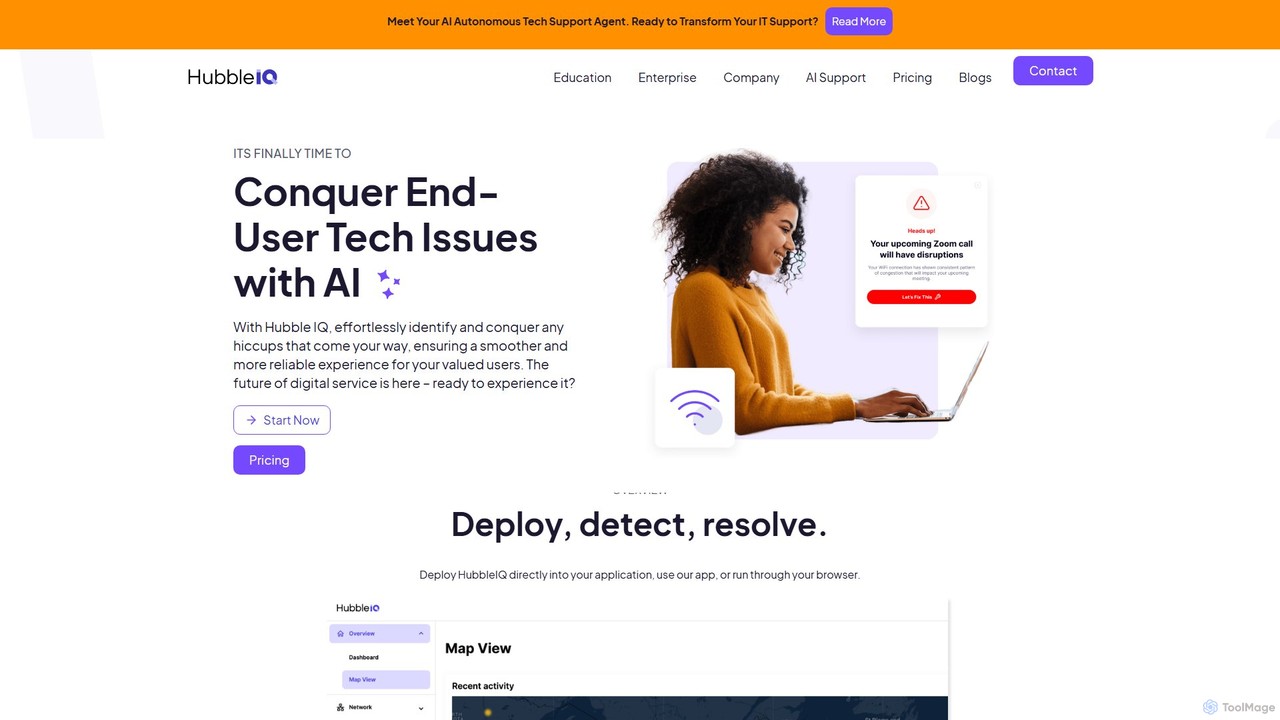
HubbleIQ is an AI-powered IT support platform that proactively detects, diagnoses, and resolves technology issues for end-users. It automates troubleshooting for networks, devices, and applications, significantly reducing helpdesk tickets and resolution times for businesses, educational institutions, and telehealth providers.

Analytics
Visits 6.4KFavorites 149Likes 156
robotika.ai
Paid

robotika.ai

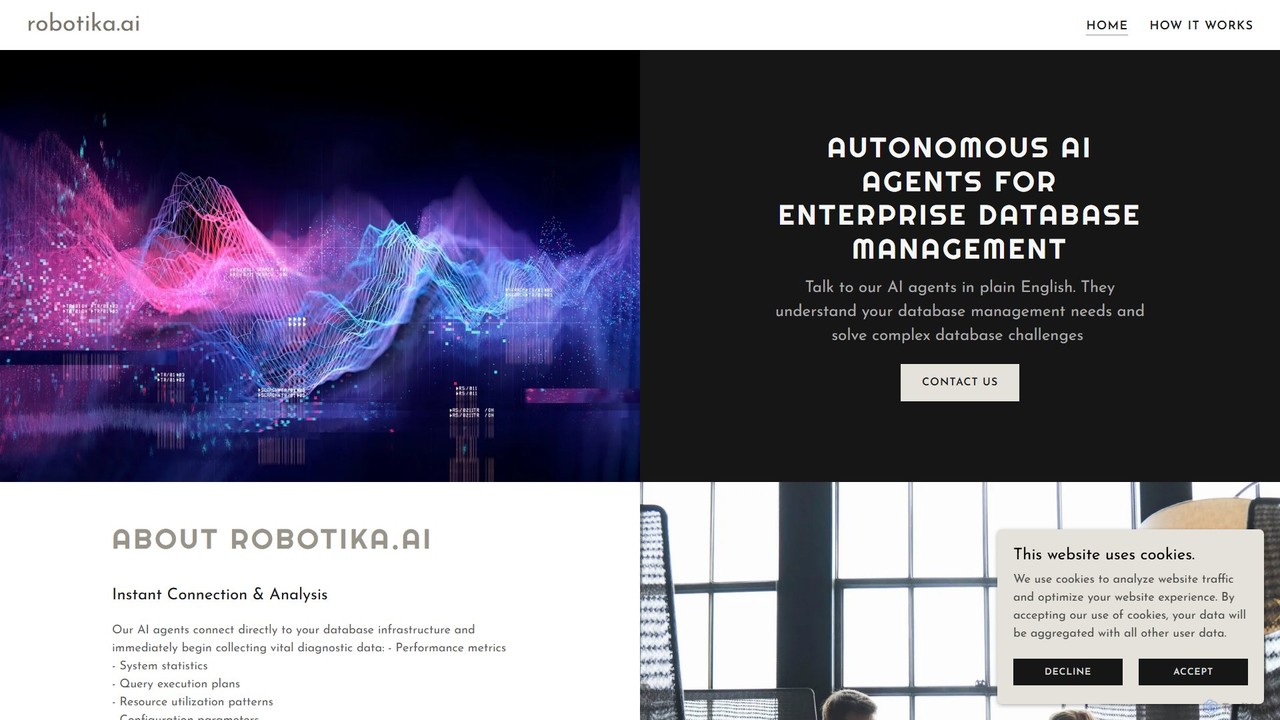
robotika.ai provides autonomous AI agents for enterprise database management. Interact with your database using plain English to diagnose issues, optimize performance, and receive 24/7 monitoring. These agents act as senior-level database administrators, offering instant analysis and proactive solutions.

Database
Visits 6.2KFavorites 131Likes 135
Apps365
Paid

Apps365

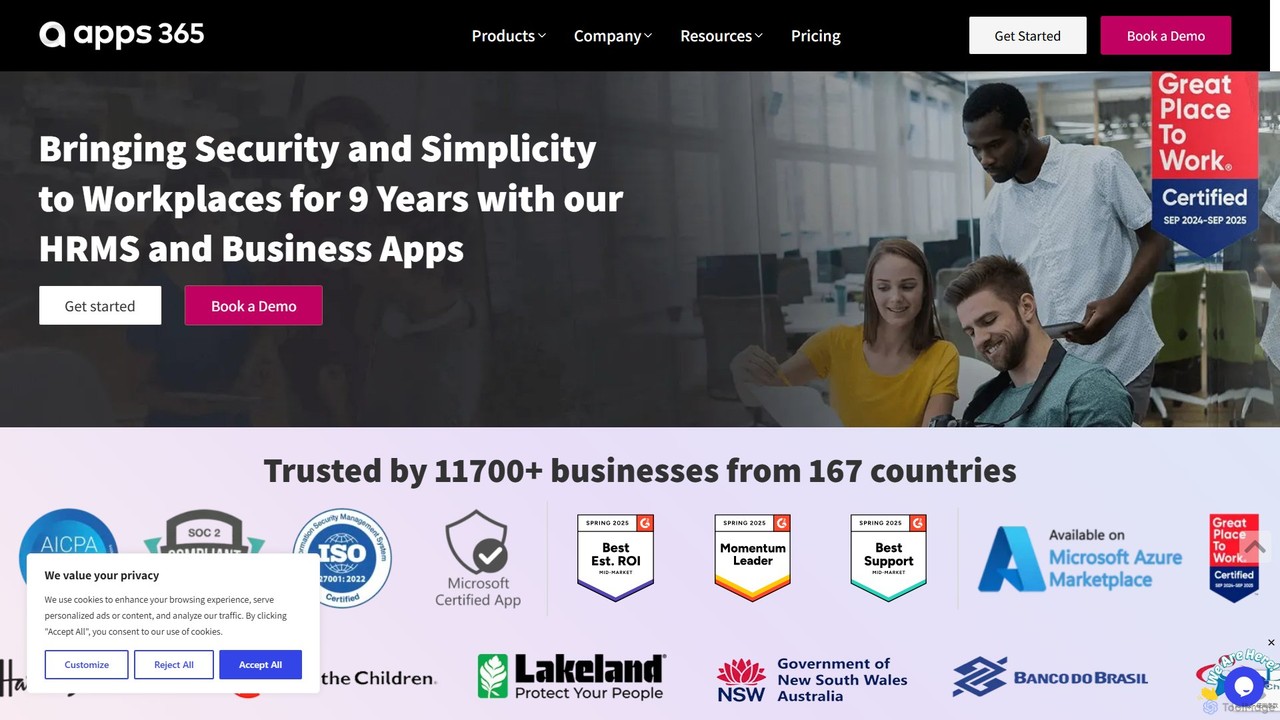
Apps365 offers a suite of AI-powered business and HR applications designed for the Microsoft 365 ecosystem. It provides secure, customizable solutions for SharePoint and MS Teams to streamline workflows in IT support, HR management, project tracking, and contract management, trusted by over 11,700 businesses globally.

Contract Management
Visits 34.8KFavorites 157Likes 150
Unthread
Freemium

Unthread

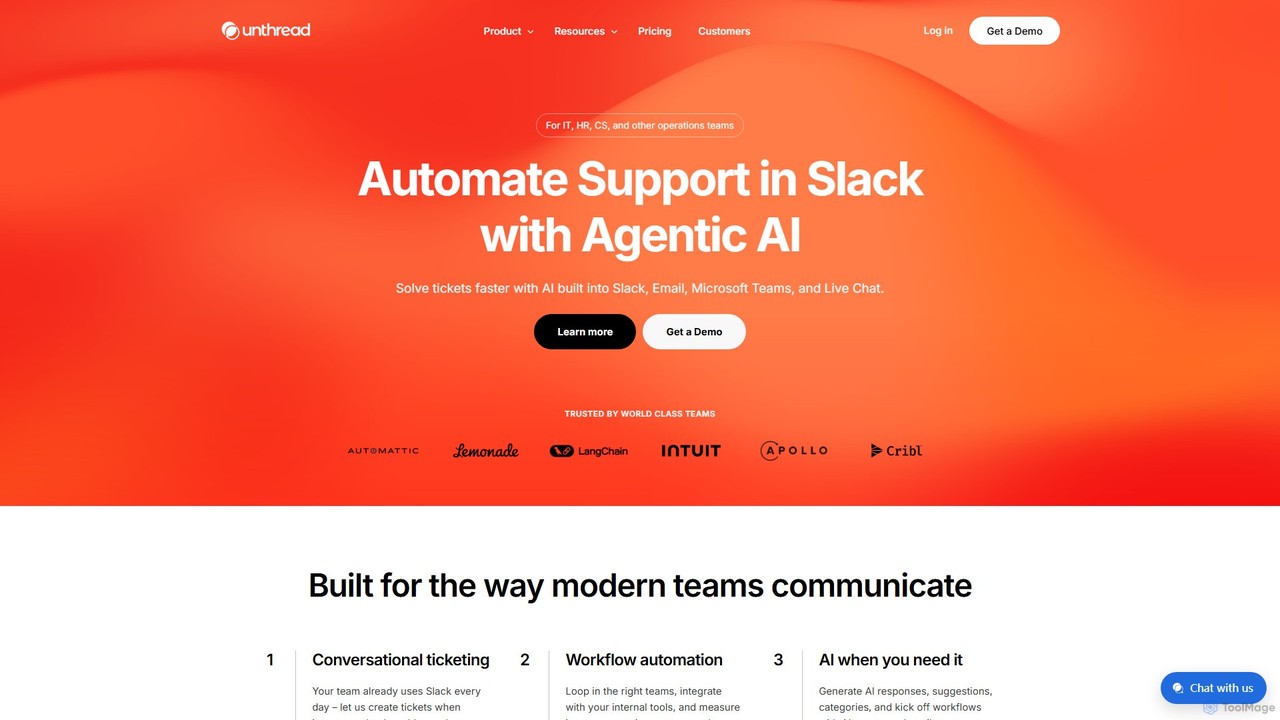
Unthread is an AI-powered support platform designed for modern teams using Slack, Microsoft Teams, and Email. It automates conversational ticketing, deflects common queries with AI agents, and provides a unified inbox to streamline workflows for IT, HR, and customer support teams, significantly improving response and resolution times.

Help Desk
Visits 28.2KFavorites 122Likes 120
leania.ai
Freemium

leania.ai

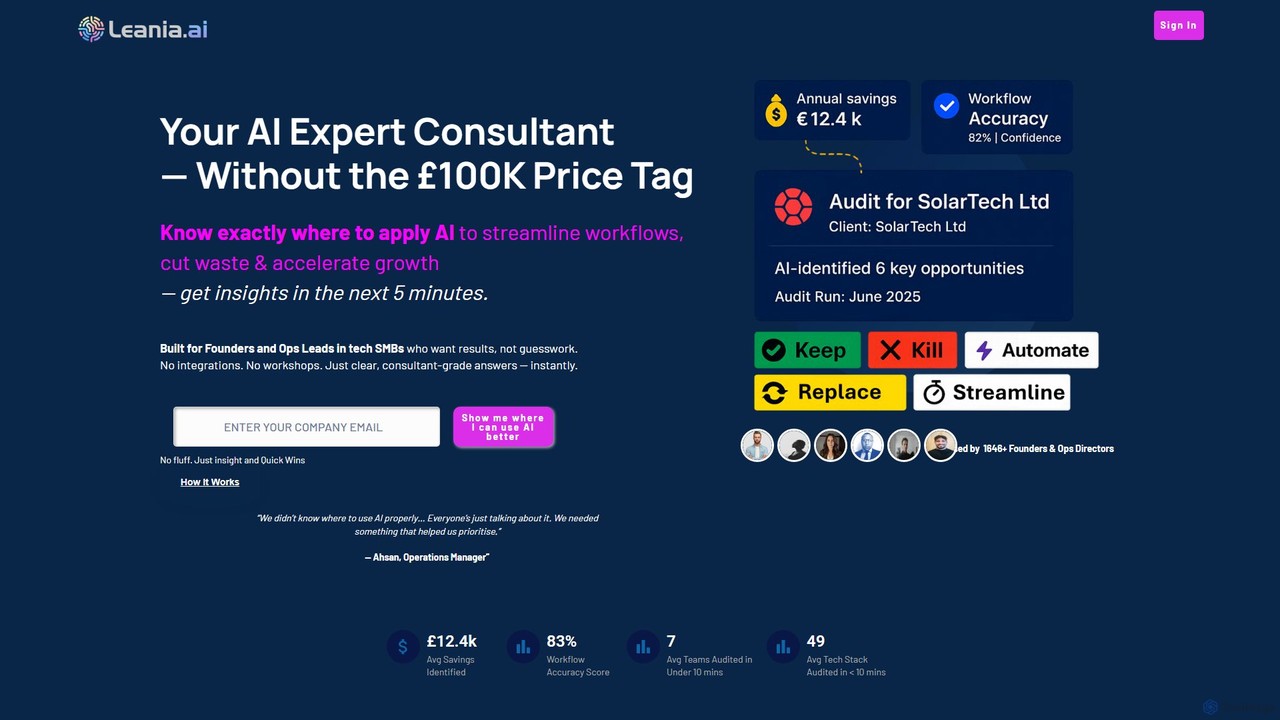
Leania.ai is an AI-powered consultant that analyzes your company's software stack and workflows to identify inefficiencies, cut costs, and recommend targeted AI solutions. It provides fast, actionable insights to help tech SMBs streamline operations and accelerate growth without expensive consulting fees.

Consulting
Visits 14.7KFavorites 114Likes 129
Backup Space
Freemium

Backup Space

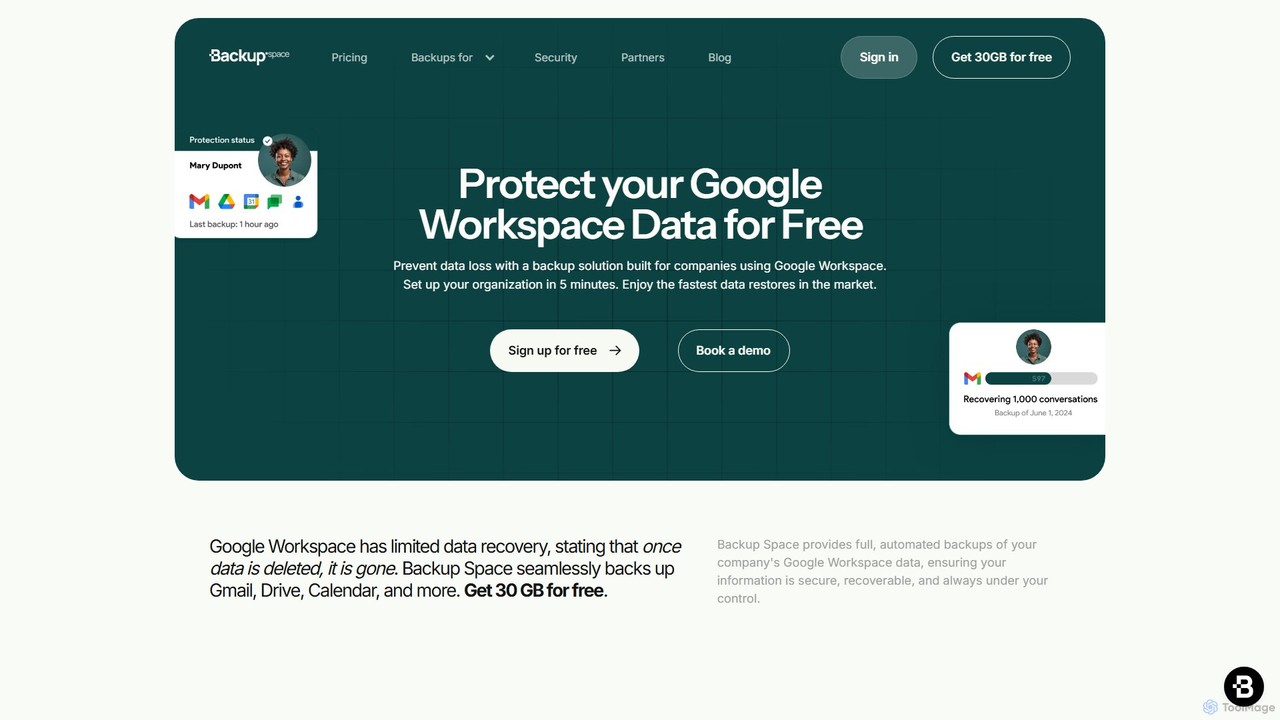
Backup Space is a dedicated cloud backup and recovery solution for Google Workspace. It provides automated, secure backups for Gmail, Drive, Calendar, and more, protecting your business data from ransomware, human error, and system failures. With point-in-time recovery and Swiss-grade privacy, it offers a robust alternative to Google Vault for true data protection and business continuity.

Cloud Services
Visits 6.4KFavorites 129Likes 113
FSH Technologies
Paid

FSH Technologies

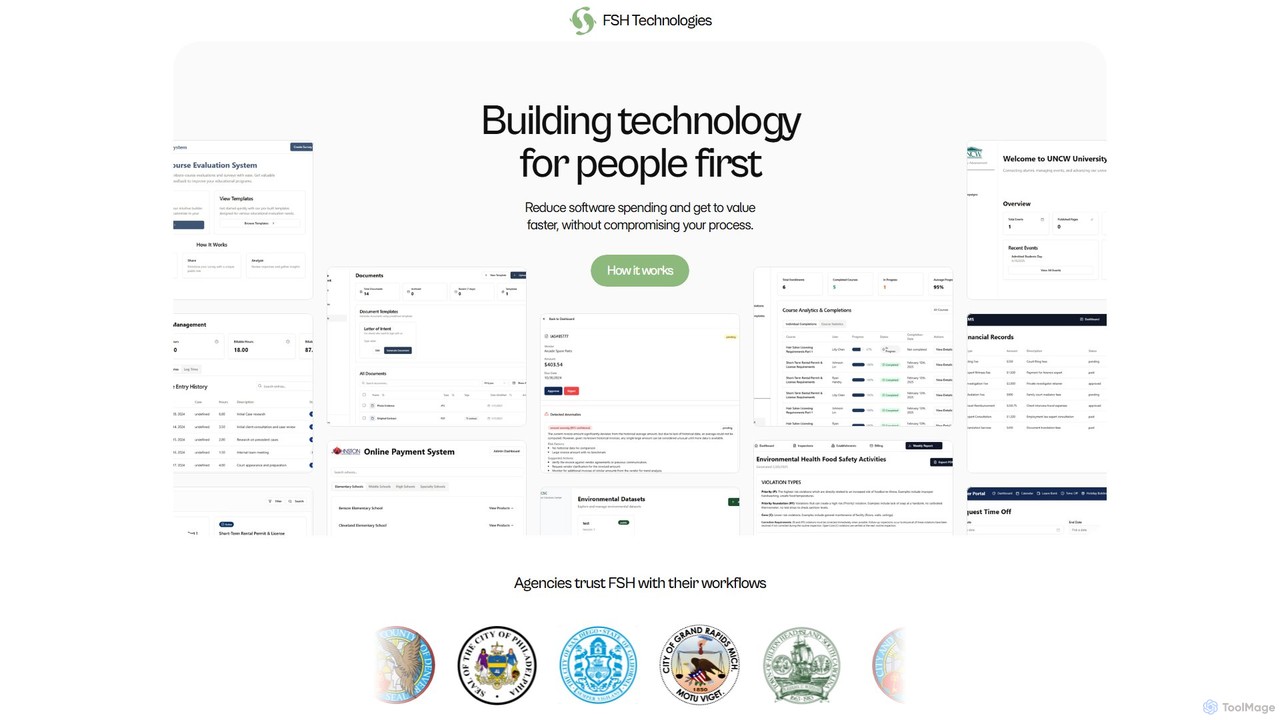
FSH Technologies provides custom software and workflow automation solutions for municipalities and public sector organizations. It focuses on rapid development, transparent pricing with no hidden fees, and creating tailored applications to streamline complex processes, reduce spending, and increase efficiency.

Custom Software Development
Visits 6.9KFavorites 142Likes 135

About It

IT AI tools are a class of AI-powered solutions designed to automate and optimize Information Technology operations, a field often referred to as AIOps. These tools leverage machine learning and big data analytics to monitor complex IT environments, predict potential issues, and automate responses. They help organizations enhance system reliability, strengthen cybersecurity, and improve operational efficiency by transforming reactive problem-solving into a proactive management strategy. This approach reduces downtime and frees up IT professionals to focus on strategic initiatives.

Core Features

  • Predictive Analytics: Analyzes historical data to forecast potential system failures, performance bottlenecks, and security vulnerabilities before they impact users.
  • Automated Root Cause Analysis (RCA): Rapidly processes vast amounts of log and event data to pinpoint the precise source of an IT incident, reducing investigation time.
  • Intelligent Automation: Automates routine IT tasks such as incident remediation, server provisioning, patch management, and network configuration.
  • Anomaly Detection: Continuously monitors system behavior to identify unusual patterns that may indicate a security threat or an operational issue.
  • Cloud Cost Optimization: Analyzes cloud infrastructure usage and provides actionable recommendations to eliminate waste and reduce spending.

Use Cases

IT AI tools are primarily used by enterprise IT operations teams, Site Reliability Engineers (SREs), DevOps professionals, and Managed Service Providers (MSPs). They are crucial in managing large-scale cloud environments, complex microservices architectures, and critical cybersecurity infrastructure where manual oversight is impractical. For example, an e-commerce platform might use these tools to prevent website crashes during peak traffic, while a financial institution could use them to detect fraudulent activity in real-time.

How to Choose

When selecting an IT AI tool, first consider its integration capabilities with your existing technology stack, including monitoring tools, cloud platforms, and ITSM systems. Evaluate the tool's specific focus—whether it excels in performance monitoring, security analysis, or cost optimization. Assess its scalability to ensure it can handle your data volume and complexity as your organization grows. Finally, consider the level of automation control it offers, allowing your team to define and customize workflows according to your operational policies.

Featured tool rankings

It use cases

1

Proactive Server Outage Prevention

An IT operations team at a large e-commerce company manages thousands of servers. Instead of waiting for monitoring alerts indicating a server has failed, they use an IT AI tool. The tool continuously analyzes performance metrics like CPU temperature, memory usage, and disk I/O patterns. By identifying subtle deviations from normal behavior, its machine learning model predicts a specific server's hard drive is likely to fail within the next 72 hours. This allows the team to proactively schedule maintenance, replace the hardware during a low-traffic window, and prevent a critical outage that could have resulted in lost sales and customer dissatisfaction.

2

Automated Security Incident Response

A Security Operations Center (SOC) analyst at a financial services firm is alerted to suspicious network activity. Using an IT AI tool, the system automatically correlates data from multiple sources: firewall logs, endpoint detection agents, and network traffic. It identifies a coordinated malware attack. Instead of manual intervention, the AI platform executes a pre-defined playbook: it automatically isolates the affected endpoints from the network to prevent lateral movement, blocks the malicious IP addresses at the firewall, and creates a detailed incident report for the analyst to review. This automated response contains the threat in seconds, rather than the minutes or hours it would take for a human to react.

3

Intelligent Cloud Cost Optimization

A fast-growing SaaS company sees its monthly cloud bill increasing unpredictably. The FinOps team deploys an IT AI tool that specializes in cloud cost management. The tool analyzes usage patterns across all cloud resources, such as virtual machines, storage, and databases. It identifies that a cluster of development servers is running 24/7 but is only actively used for 8 hours on weekdays. Based on this, the tool recommends an automated schedule to shut down these servers during off-hours, projecting a 60% cost saving for that resource group. It also flags oversized databases and suggests more cost-effective instance types, providing actionable insights to control spending without impacting performance.

4

Accelerating DevOps with Predictive Analysis

A DevOps team aims to increase their deployment frequency without introducing new bugs. They integrate an IT AI tool into their CI/CD pipeline. Before a new code release is pushed to production, the tool analyzes the changes and compares them against historical performance and incident data. It flags a specific database query in the new code as having a high probability of causing a performance bottleneck under heavy load. The developers are alerted, allowing them to optimize the query before deployment. This prevents a potential site-wide slowdown, improves the quality of releases, and builds confidence in a faster, more agile development cycle.

5

Automated IT Support Ticket Triage

A large enterprise's IT help desk receives hundreds of support tickets daily, ranging from simple password resets to complex network issues. A help desk manager implements an IT AI tool to automate the triage process. The tool uses Natural Language Processing (NLP) to understand the content of each ticket. It automatically categorizes the issue (e.g., 'Hardware', 'Software', 'Network'), assigns a priority level based on keywords and user history, and routes it to the appropriate support team. For common issues like password resets, it can even trigger an automated workflow to resolve the ticket without human intervention, significantly reducing response times and improving employee satisfaction.

6

Dynamic Network Traffic Management

A telecommunications company experiences fluctuating network demand, with major peaks during live sporting events. A network administrator uses an IT AI tool to manage traffic flow dynamically. The tool analyzes real-time traffic patterns and predicts congestion hotspots before they form. Based on these predictions, it automatically reroutes traffic across different network paths to balance the load and ensure a smooth streaming experience for all users. It can also prioritize critical traffic, such as video streams, over less sensitive data. This proactive management prevents buffering and service degradation, improving customer retention and optimizing the use of network infrastructure.

It FAQ

What are IT AI tools?

IT AI tools, often categorized under AIOps (AI for IT Operations), are software solutions that use artificial intelligence and machine learning to manage and automate information technology environments. They go beyond traditional monitoring by not just alerting on problems, but by proactively predicting issues, identifying the root cause of failures automatically, and automating remediation tasks. Key functions include predictive analytics for outage prevention, anomaly detection for security, and intelligent automation of routine IT workflows.

How to choose the right IT AI tool?

Choosing the right IT AI tool depends on your specific needs. Consider the following factors:

  • Integration: Ensure the tool integrates seamlessly with your existing infrastructure, including cloud providers (AWS, Azure, GCP), monitoring systems, and ITSM platforms like ServiceNow.
  • Use Case Focus: Determine your primary goal. Are you focused on application performance monitoring (APM), network security, cloud cost optimization, or general IT operations? Choose a tool that specializes in that area.
  • Scalability: Select a solution that can handle the volume and velocity of data generated by your environment, both now and in the future.
  • Ease of Use: Evaluate the user interface and the level of expertise required. Some tools are designed for general IT staff, while others require data science skills to configure and manage effectively.
What's the difference between IT AI tools and traditional monitoring tools?

The primary difference lies in their approach: reactive versus proactive. Traditional monitoring tools are reactive; they track specific metrics (like CPU usage) and trigger an alert when a pre-set threshold is crossed. They tell you *that* a problem occurred. IT AI tools are proactive. They analyze complex patterns across vast datasets to predict *when* a problem might occur, automatically diagnose *why* it happened (root cause analysis), and can even automate the *how* to fix it. In essence, traditional tools provide data, while AI tools provide actionable intelligence and automation.

Who benefits most from using IT AI tools?

While various roles can benefit, the primary beneficiaries are teams managing complex, large-scale IT environments. This includes:

  • IT Operations (ITOps) Teams: They gain proactive insights to prevent outages and reduce the mean time to resolution (MTTR) for incidents.
  • Site Reliability Engineers (SREs) and DevOps: They use these tools to automate operational tasks, improve system reliability, and ensure service level objectives (SLOs) are met.
  • Security Operations Centers (SOCs): Analysts use AI to detect sophisticated threats faster and automate incident response, reducing analyst fatigue.
  • Cloud and FinOps Teams: They leverage AI to optimize cloud resource allocation and control spiraling cloud costs.
How do IT AI tools improve cybersecurity?

IT AI tools significantly enhance cybersecurity by moving beyond signature-based detection. They establish a baseline of normal network and system behavior and use anomaly detection to flag suspicious activities that traditional tools might miss. This is effective for identifying zero-day threats and insider attacks. Furthermore, they can automate threat hunting by correlating events across the entire IT stack to identify attack patterns. Finally, through automated response playbooks, they can contain threats in real-time by isolating devices or blocking malicious traffic, drastically reducing the window of opportunity for attackers.