ToolMage
Sign in

Best 296 Data Analysis AI tools for Productivity

Popular Data Analysis AI tools in Productivity include Alchemer, Tableau, Ansy.ai, HEROZ, SurveySparrow, Amplitude, Fiscal.ai, TrendSpider, EarningsHub, and danelfin, helping you work more efficiently.

Dataslide.ai
Freemium

Dataslide.ai

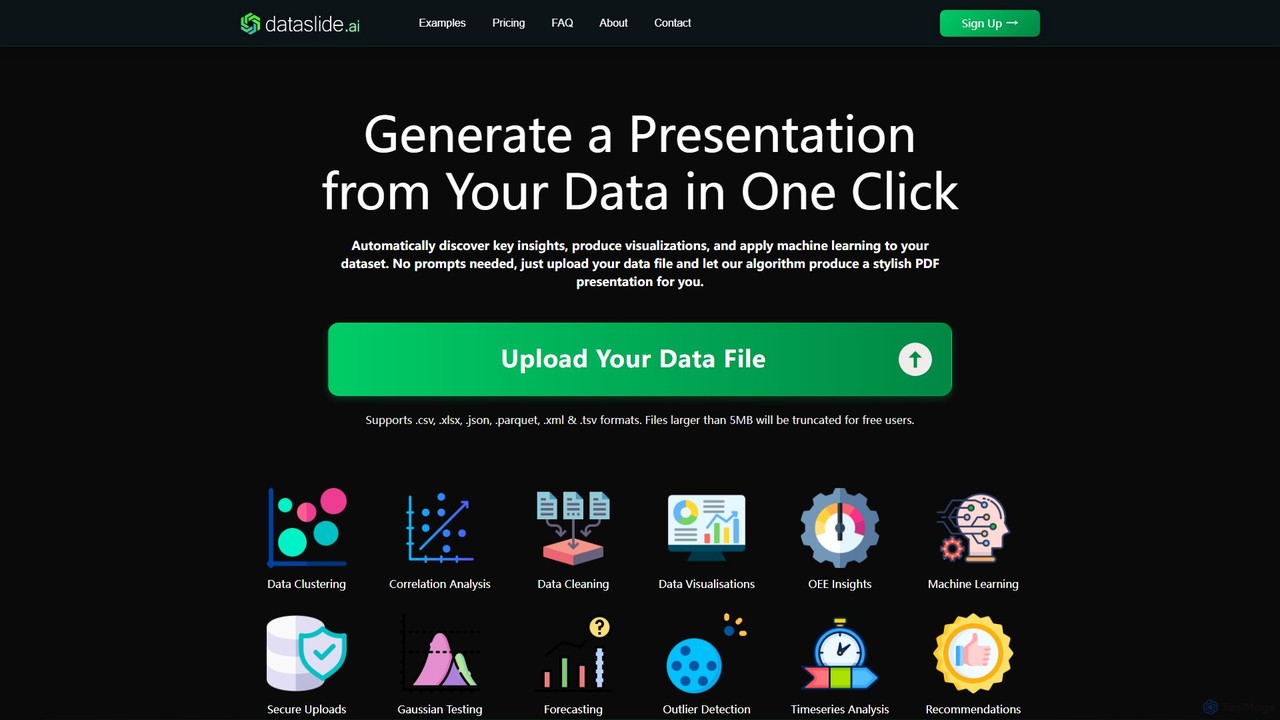
Dataslide.ai is an AI-powered tool that automatically generates insightful presentations from your data in a single click. Simply upload your data file (.csv, .xlsx, etc.), and it performs data cleaning, visualization, and machine learning to produce a comprehensive PDF or PowerPoint report, saving hours of manual analysis.

Business Intelligence
Visits 5.4KFavorites 128Likes 131
Definite
Freemium

Definite

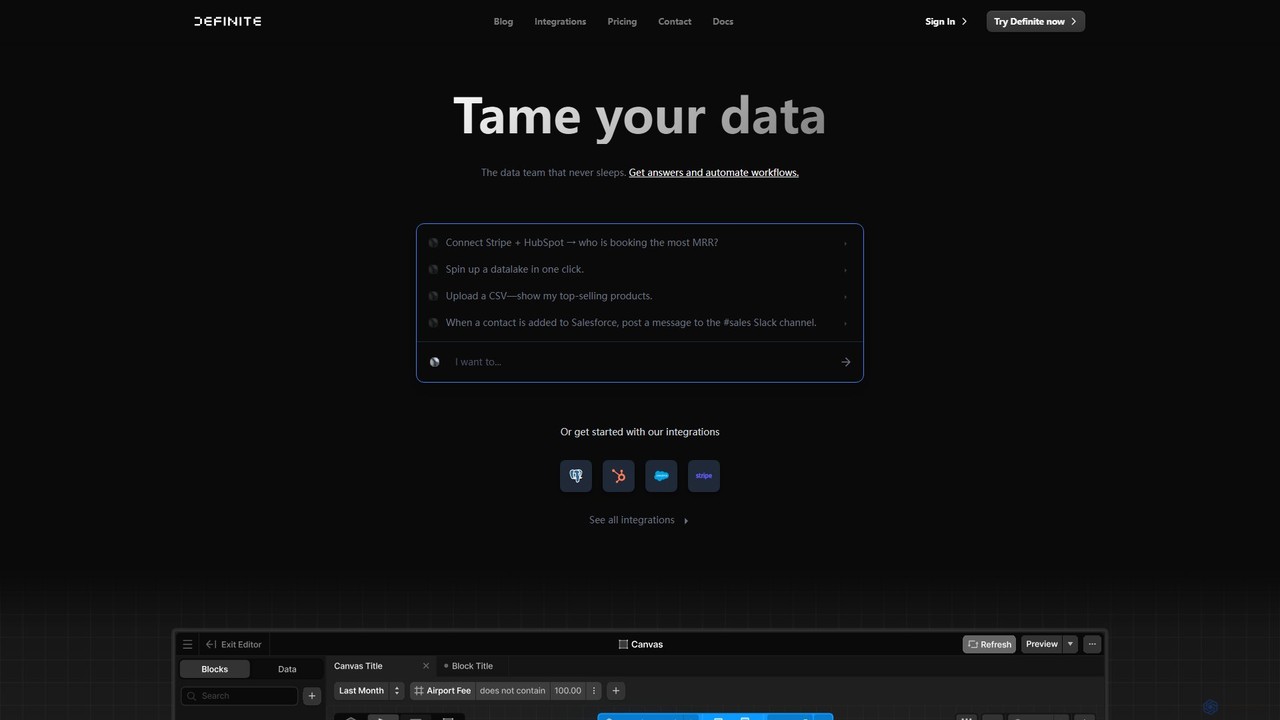
Definite is an AI-powered, all-in-one data analytics platform that combines data integration, warehousing, and business intelligence. It enables teams to connect hundreds of data sources, ask questions in plain English, and build dashboards without engineering support, turning scattered data into actionable insights in minutes.

Business Intelligence
Visits 20.9KFavorites 134Likes 123
CarbonChain
Freemium

CarbonChain

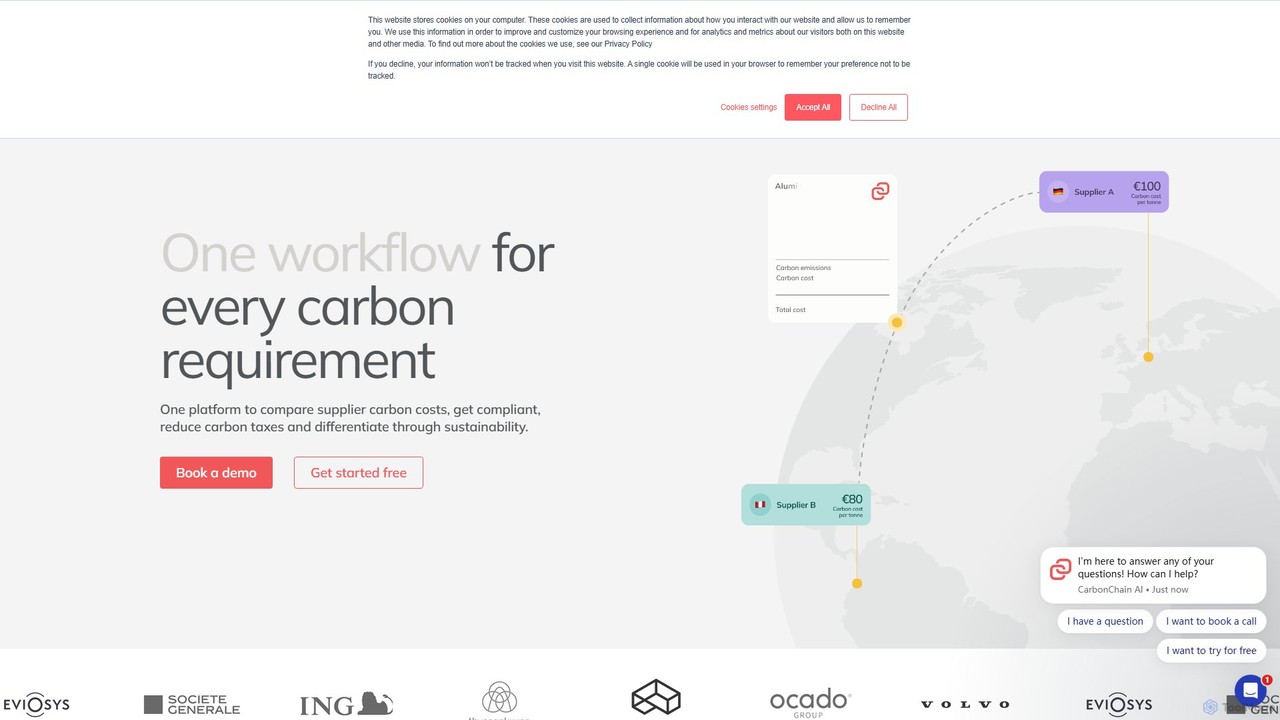
CarbonChain is an AI-powered carbon accounting platform designed for complex supply chains. It helps businesses in manufacturing, commodities, and finance to accurately track, manage, and reduce their carbon emissions, ensure compliance with regulations like CBAM, and drive commercial value through sustainability.

Sustainability
Visits 31KFavorites 159Likes 153
finlo
Paid

finlo

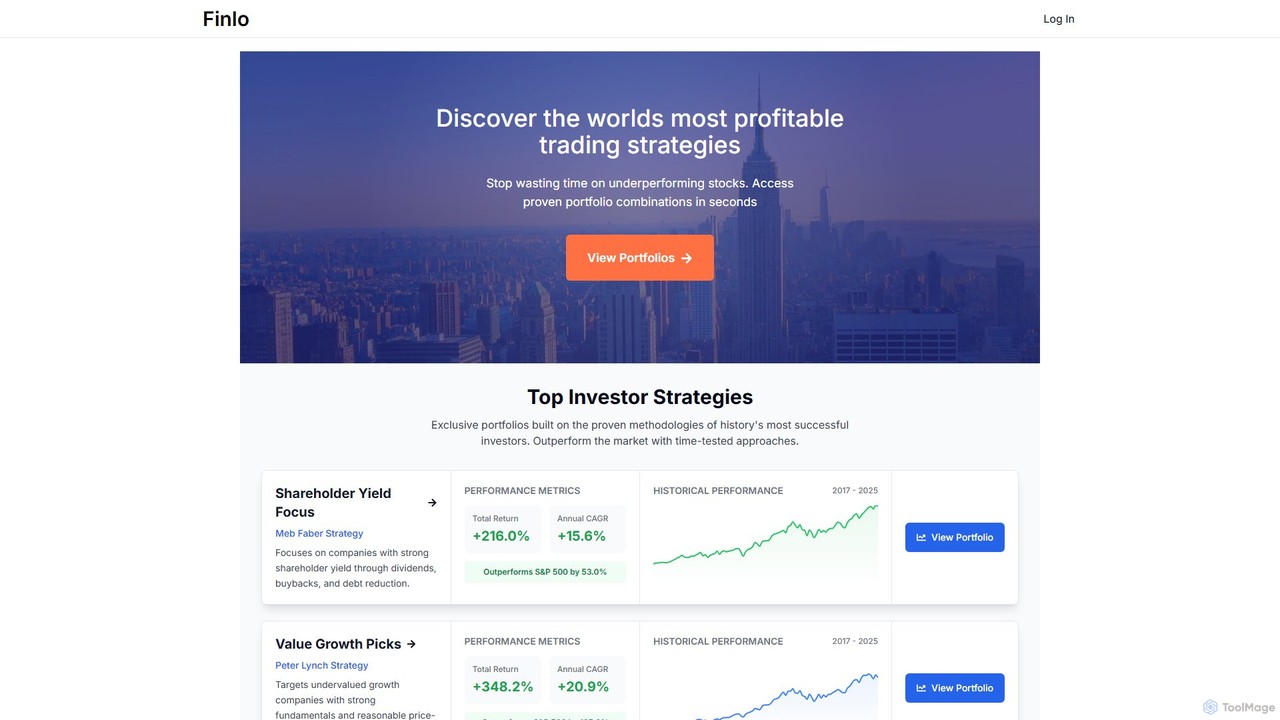
finlo is an AI-powered investment platform that provides access to expertly curated stock portfolios. It leverages proven strategies from legendary investors and proprietary algorithms to help users discover high-return investment opportunities, aiming to consistently outperform market benchmarks with minimal time commitment.

Investing
Visits 26.5KFavorites 116Likes 123
Quills
Freemium

Quills

Quills is an AI-powered business intelligence assistant that enables users to interact with their data through natural language. It connects to databases and files (CSV, Excel, PDF), automatically generates SQL queries from plain English questions, creates insightful visualizations, and integrates seamlessly with platforms like Slack to accelerate data-driven decision-making for teams.

Business Intelligence
Visits 7.9KFavorites 107Likes 115
papermoney
Free

papermoney

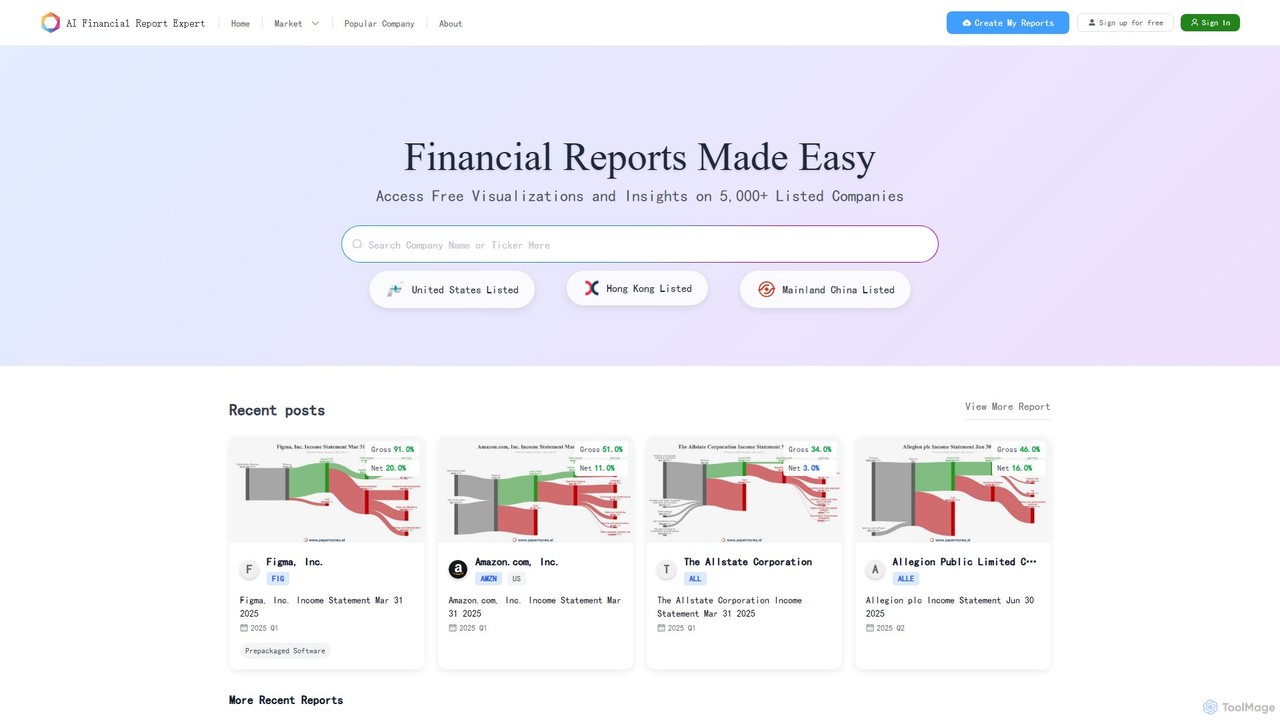
papermoney is an AI-powered financial analysis platform that transforms complex financial reports of over 5,000 public companies into intuitive visual charts. It provides free access to key insights from income statements, balance sheets, and cash flow statements for companies listed in the US, Hong Kong, and Mainland China. Ideal for investors, analysts, and students seeking to quickly understand a company's financial health.

Finance
Visits 8.1KFavorites 117Likes 126
GapScout
Paid

GapScout

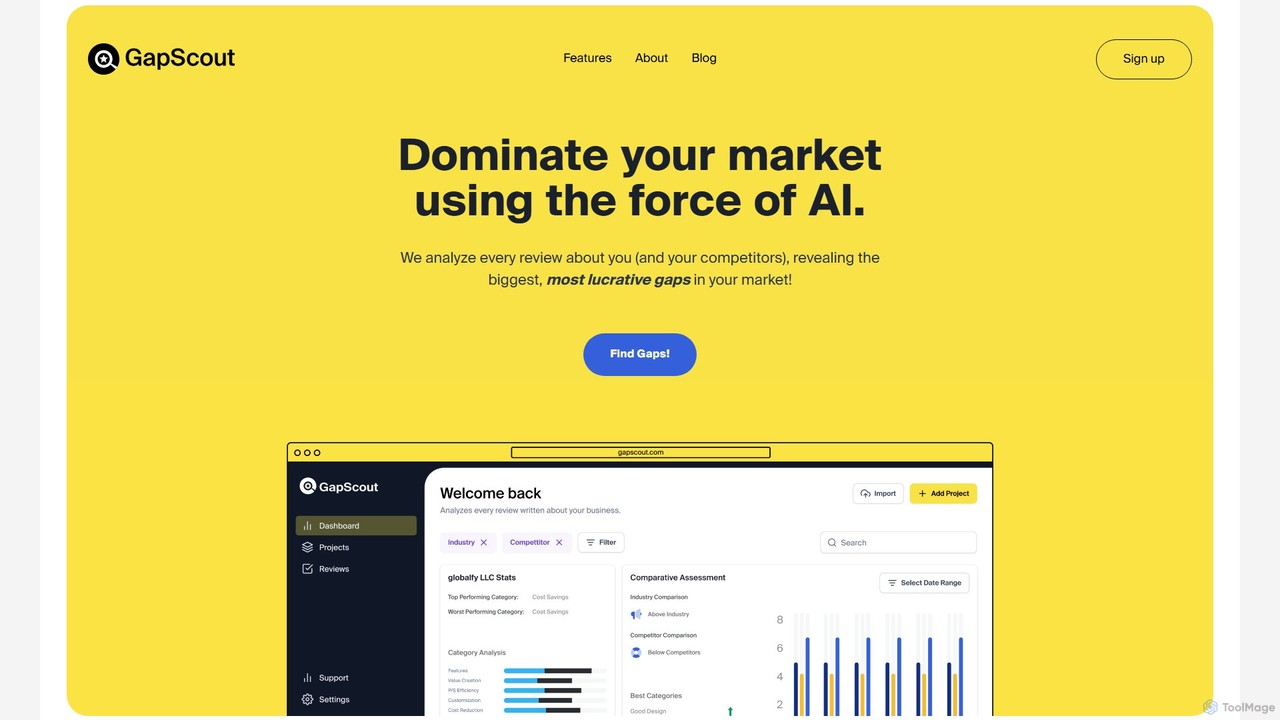
GapScout is an AI-powered market research platform that analyzes customer reviews to uncover market gaps, competitive insights, and customer sentiment. It transforms raw feedback from sources like Amazon, G2, and Trustpilot into actionable data, helping businesses refine products, improve marketing, and accelerate growth.

Competitor Analysis
Visits 8.3KFavorites 131Likes 139
WhoMakeMoney
Freemium

WhoMakeMoney

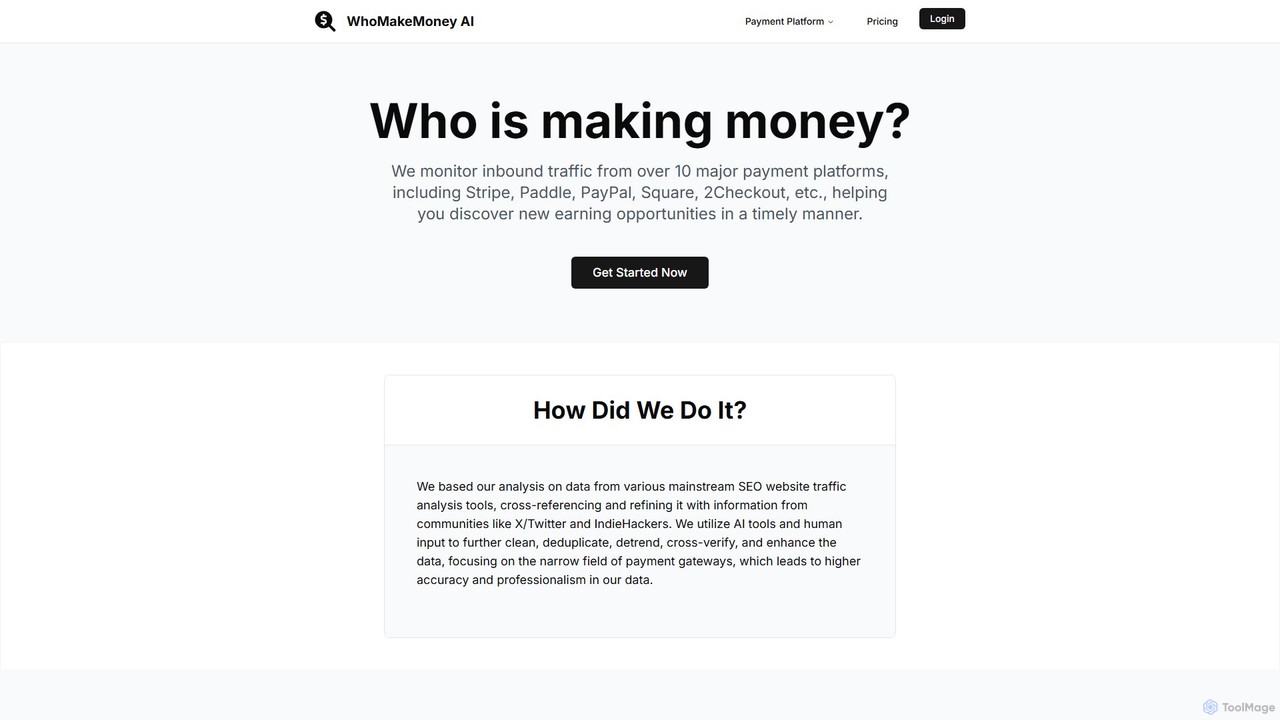
WhoMakeMoney is an AI-powered market intelligence platform that monitors inbound traffic to major payment gateways like Stripe, Paddle, and PayPal. It helps entrepreneurs, indie hackers, and businesses discover emerging trends, validate ideas, and identify new money-making opportunities by analyzing which websites are successfully generating revenue.

Market Research
Visits 5.4KFavorites 159Likes 128
sostocked
Paid

sostocked

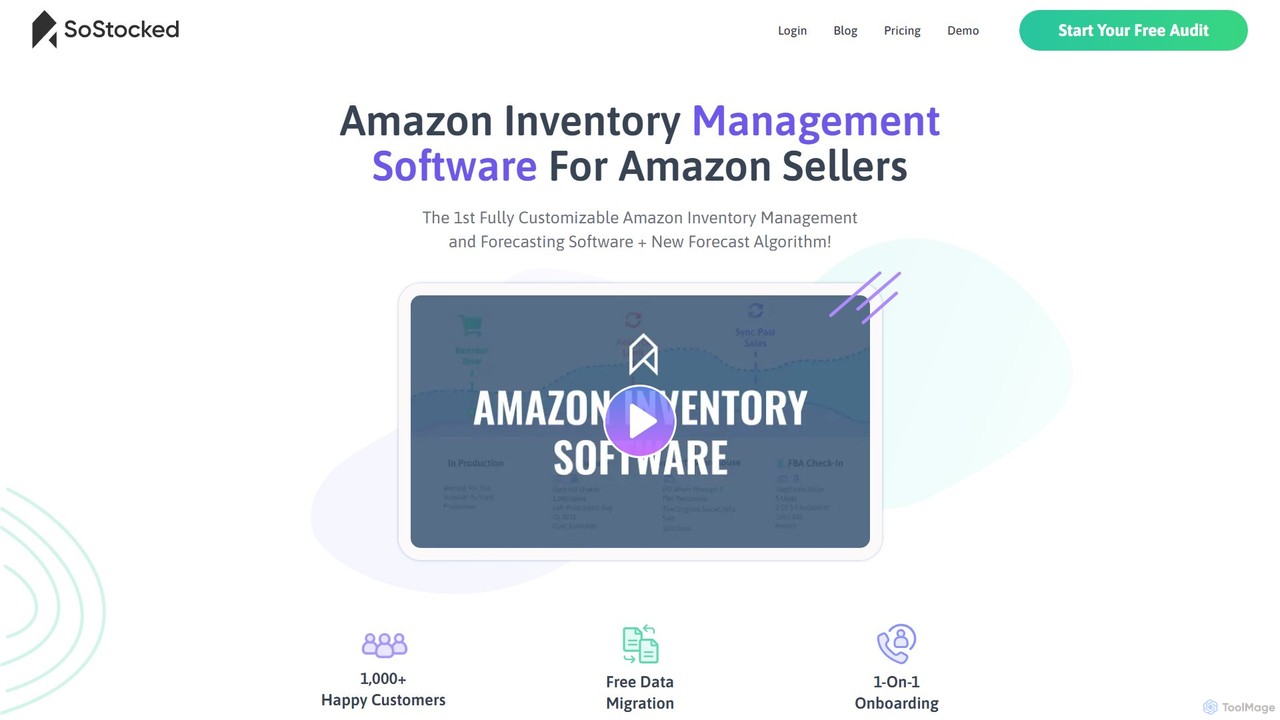
SoStocked is an advanced inventory management and forecasting software designed specifically for Amazon sellers. It helps prevent common issues like over-ordering and stockouts by using customizable forecasting models that factor in sales history, marketing plans, seasonality, and supply chain complexities. It provides a comprehensive solution for tracking, managing, and optimizing inventory across FBA, 3PLs, and warehouses.

Supply Chain Management
Visits 13.7KFavorites 126Likes 117
LakeSail
Freemium

LakeSail

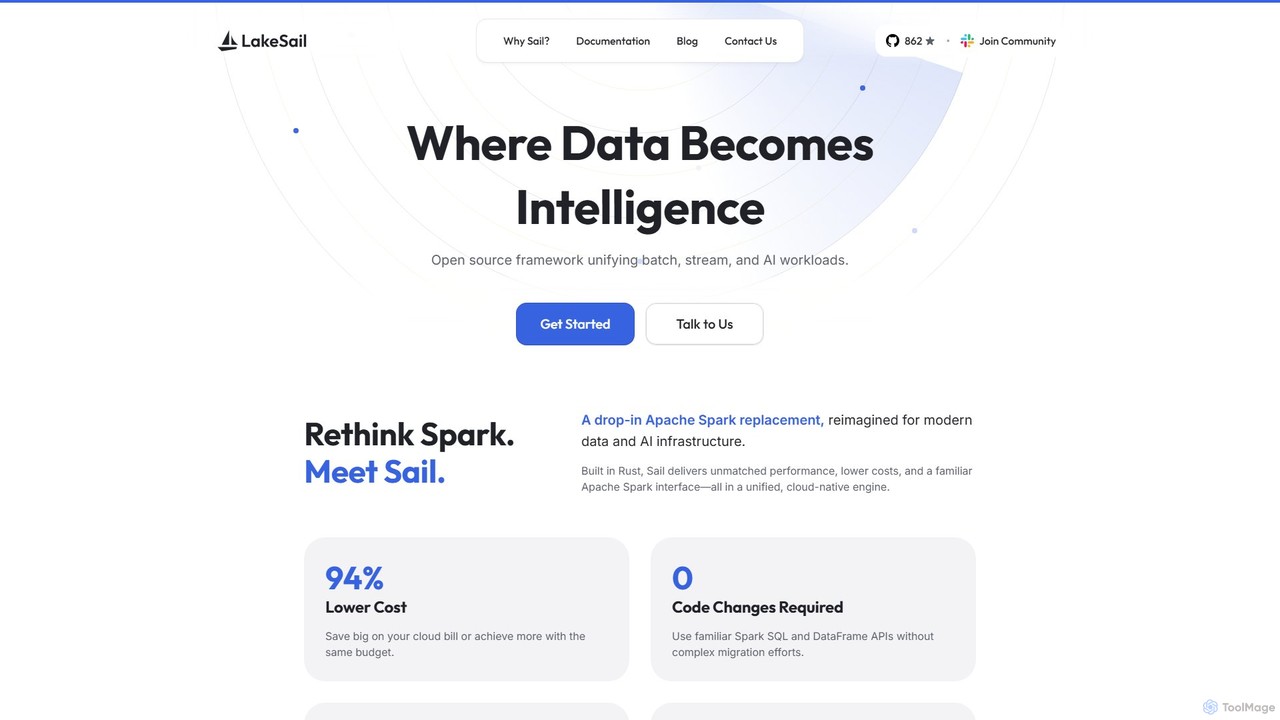
LakeSail offers a high-performance, open-source framework called Sail, designed as a drop-in replacement for Apache Spark. Built in Rust, it unifies batch, stream, and AI workloads, delivering up to 8x faster execution and 94% lower cloud costs without requiring any code changes. It eliminates JVM overhead for superior efficiency and scalability in modern data and AI infrastructures.

Big Data
Visits 11.3KFavorites 121Likes 139
QueryLab
Freemium

QueryLab

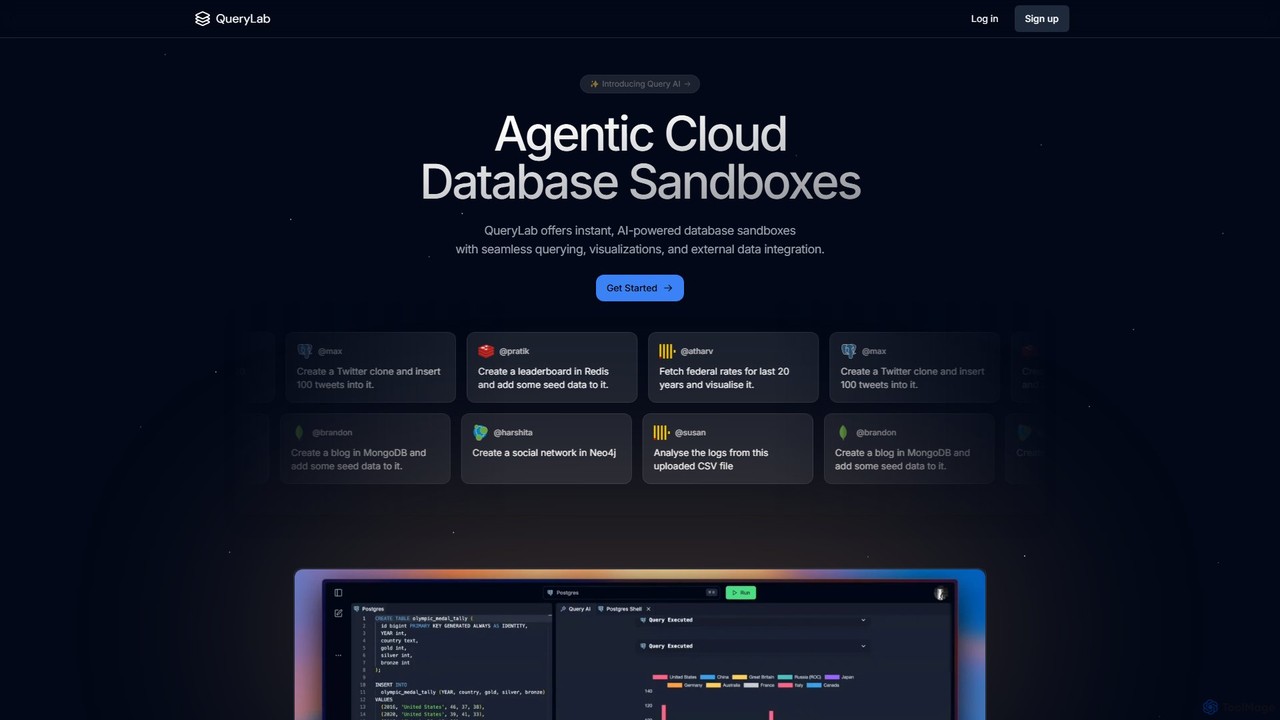
QueryLab is an AI-powered platform that provides instant database sandboxes. It allows users to interact with databases like PostgreSQL, MongoDB, and Redis using natural language, seamlessly integrate external data, and automatically generate visualizations from query results.

Visualization
Visits 5.5KFavorites 152Likes 155
UserCall
Paid

UserCall

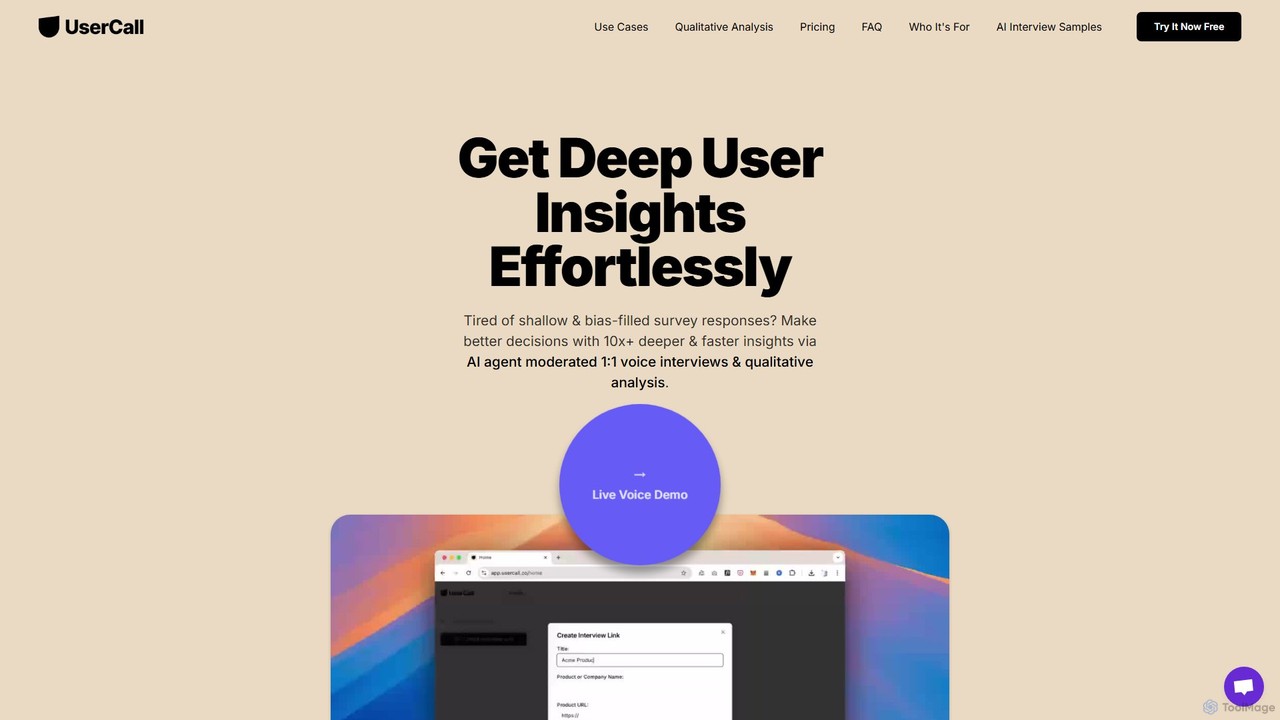
UserCall is an AI-powered qualitative research platform that scales user insights. It features AI-moderated voice interviews to capture deep, nuanced feedback asynchronously, eliminating scheduling hassles. It also offers automated thematic analysis to instantly turn transcripts and qualitative data into actionable themes, summaries, and quote clusters. Ideal for product, UX, and marketing teams needing rich insights at the speed of surveys.

Feedback Management
Visits 15.8KFavorites 146Likes 143
draxlr
Freemium

draxlr

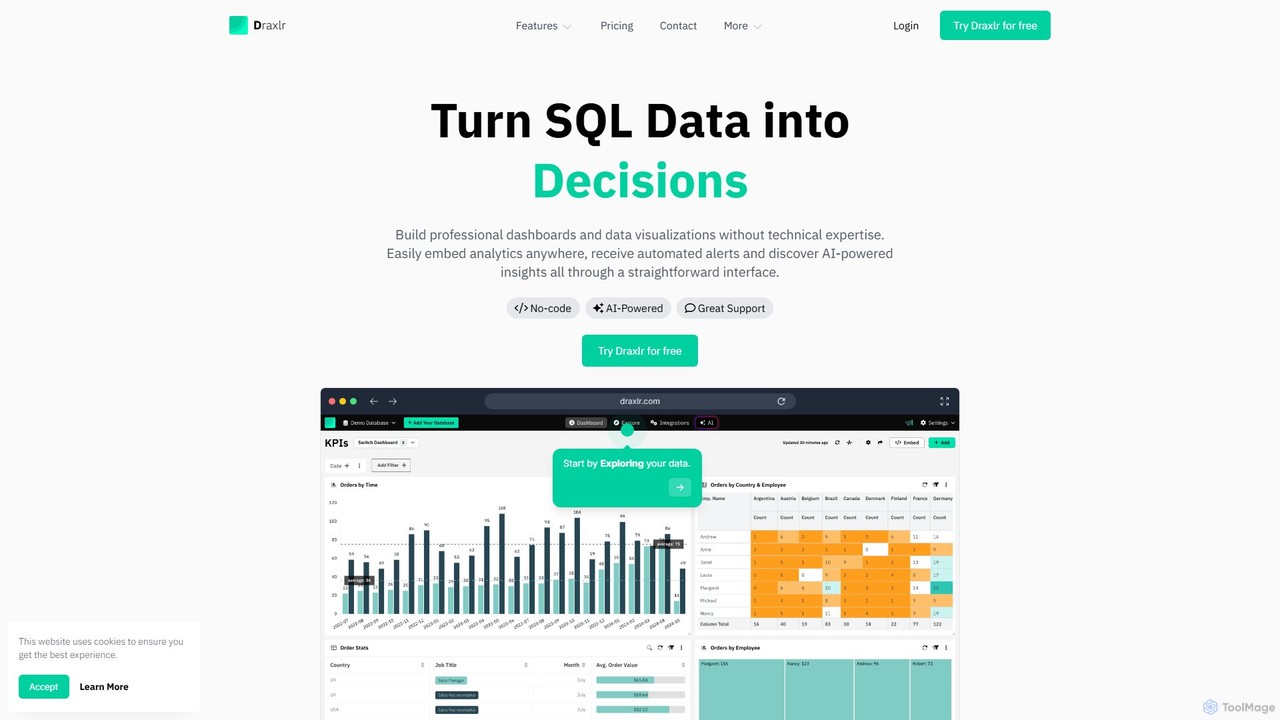
Draxlr is an AI-powered business intelligence platform that enables users to build professional dashboards and data visualizations from SQL databases without technical expertise. It offers a no-code query builder, embeddable analytics, and automated alerts to transform raw data into actionable decisions.

Business Intelligence
Visits 42.9KFavorites 105Likes 103
Vidrovr
Paid

Vidrovr

Vidrovr is an AI-powered intelligence platform that transforms massive volumes of pixel-based data (video, imagery, LiDAR) into actionable insights. Designed for defense, intelligence, and national security, it automates analysis to accelerate decision-making and enhance mission success.

Data Analysis
Visits 6KFavorites 190Likes 159
Veezoo
Freemium

Veezoo

Veezoo is an AI-powered, agentic analytics platform that enables users to get trusted insights from their data by asking questions in natural language. It combines a ChatGPT-like interface with a robust semantic layer (Knowledge Graph) to ensure data governance, accuracy, and consistency, democratizing data analytics for everyone in an organization.

Business Intelligence
Visits 9KFavorites 126Likes 115
Prospero.ai
Free

Prospero.ai

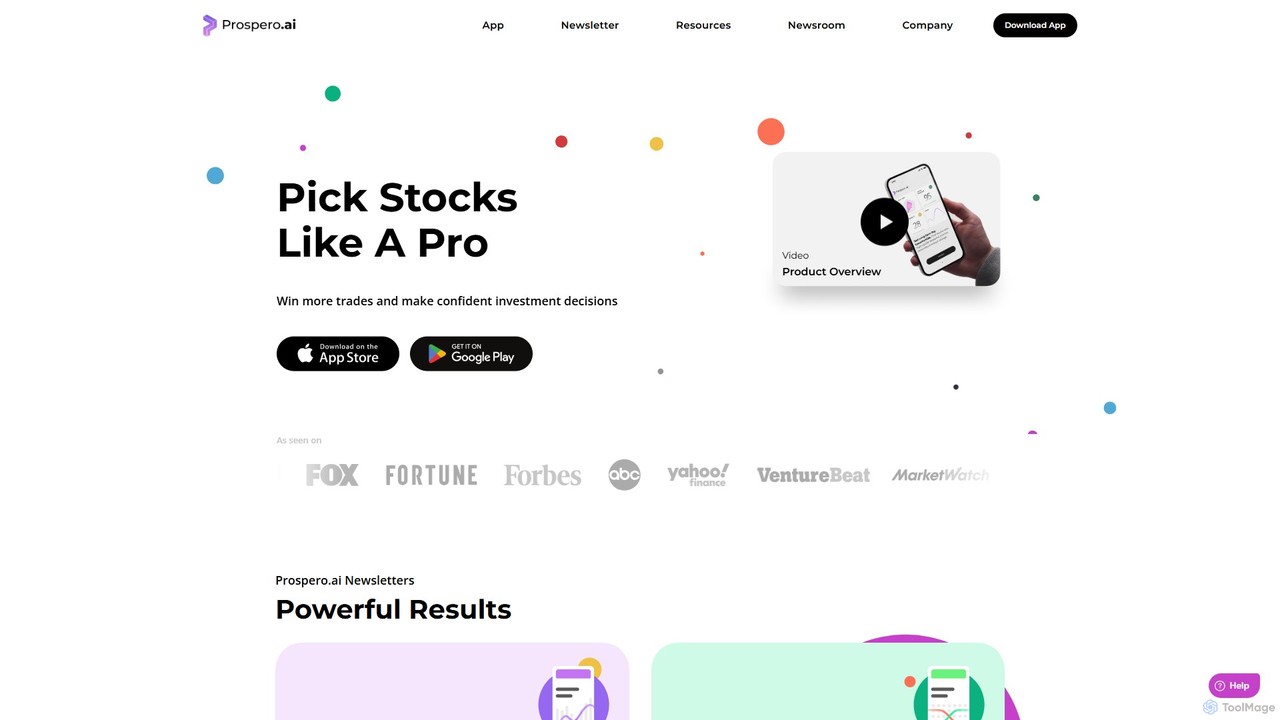
Prospero.ai is a free AI-powered investing app designed to provide retail investors with institutional-grade data and actionable signals. It analyzes millions of data points to offer insights on stock trends, market sentiment, and institutional activity, helping users make confident and profitable investment decisions.

Investing
Visits 86.2KFavorites 155Likes 152
eilla
Freemium

eilla

eilla is an AI-powered platform for Venture Capital, Private Equity, and M&A professionals. It uses specialized "AI Analysts" to automate and accelerate the deal-making process, from company research and market analysis to valuation and buyer scouting. By integrating with trusted data sources and internal files, eilla provides deep, cross-referenced insights, saving significant time and enhancing decision-making accuracy for investment professionals.

Investment
Visits 14.7KFavorites 131Likes 123
Sturppy
Freemium

Sturppy

Sturppy is an AI-powered financial modeling and planning platform designed for startups and small businesses. It replaces complex Excel spreadsheets with an intuitive interface, enabling founders to build investor-ready financial models, track key metrics, and generate business insights using GPT-4.

Startup Tools
Visits 14.7KFavorites 122Likes 142
Ragas
Freemium

Ragas

Ragas is an open-source Python framework for evaluating and testing Retrieval-Augmented Generation (RAG) pipelines. It provides a suite of metrics to measure the performance of your LLM applications, from context retrieval to answer generation. Trusted by industry leaders like LangChain and LlamaIndex, Ragas helps developers build more robust, reliable, and accurate AI systems by identifying and mitigating issues like hallucinations and irrelevant responses.

Mlops
Visits 134KFavorites 113Likes 119
Streamlined Finance
Freemium

Streamlined Finance

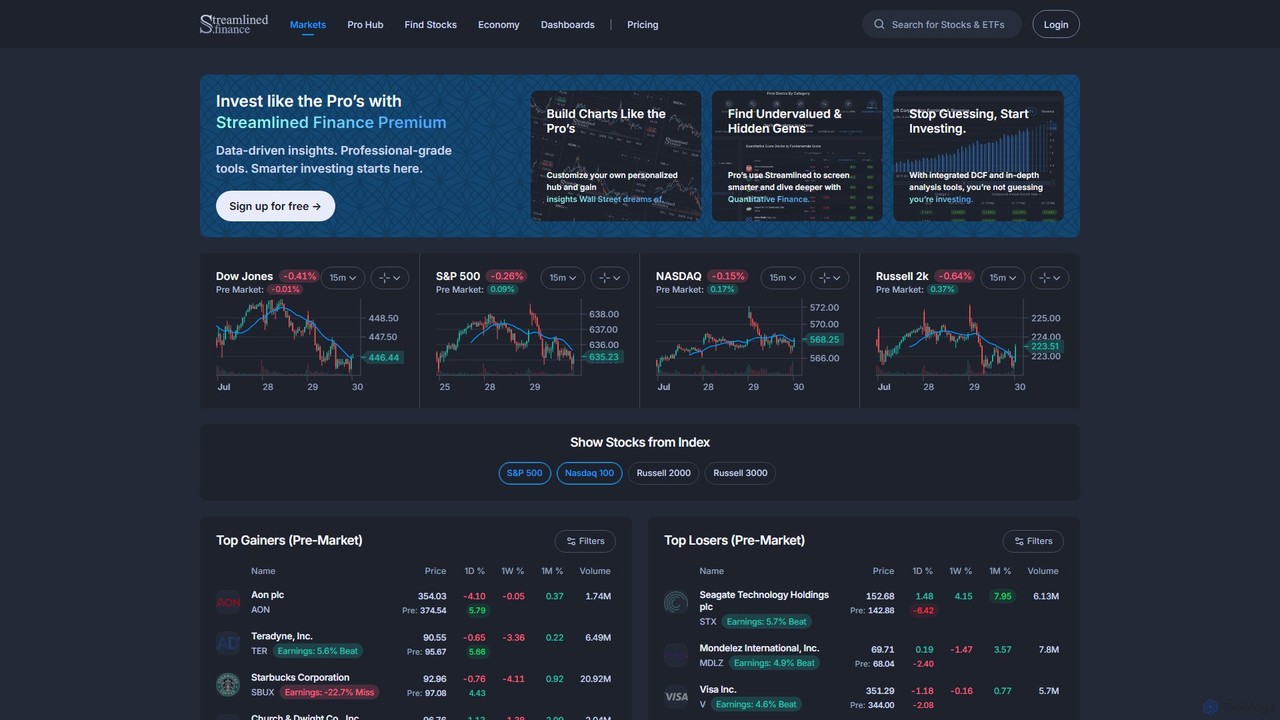
Streamlined Finance is a modern investment research platform that provides individual investors with professional-grade tools, data-driven insights, and AI-powered analysis. It offers customizable dashboards, advanced stock screeners, DCF models, and comprehensive market data to help users make smarter, more informed investment decisions and discover undervalued opportunities.

Investment
Visits 5.5KFavorites 137Likes 131

OneStream
Paid

OneStream

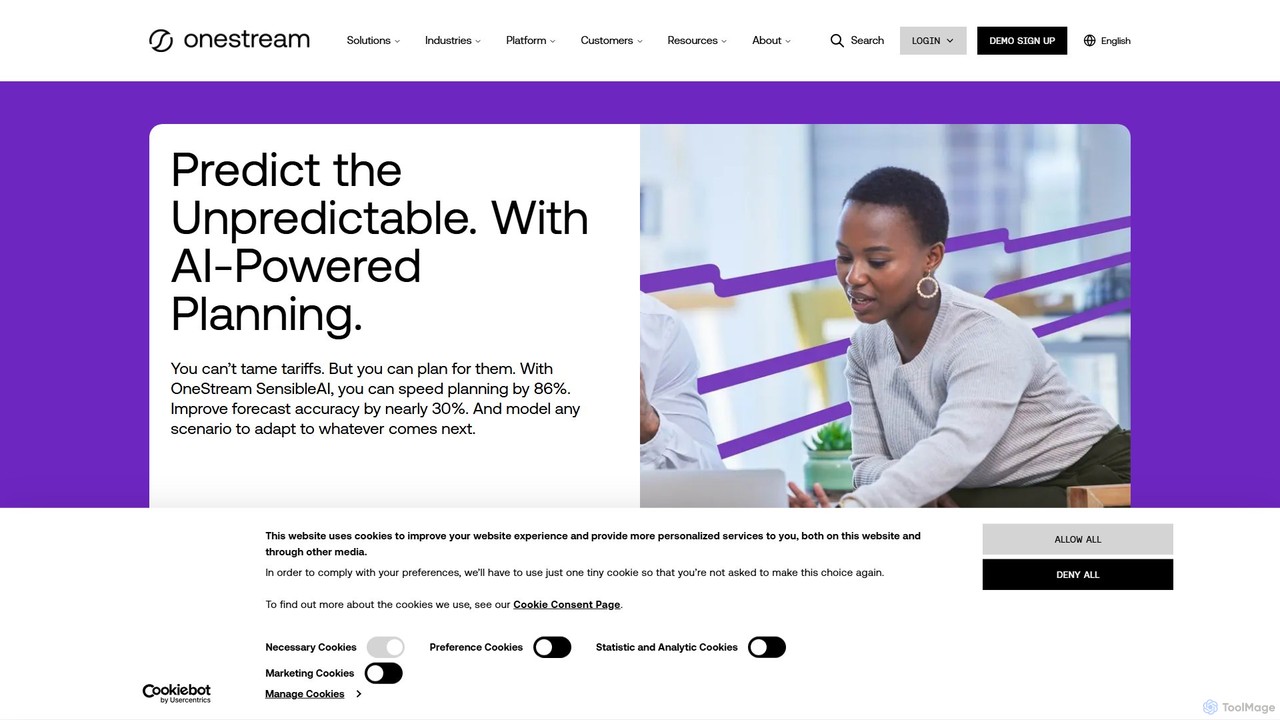
OneStream is an intelligent finance platform for enterprise-level Corporate Performance Management (CPM). It unifies financial consolidation, planning, reporting, and analytics in a single solution. Leveraging AI and machine learning, it helps large organizations streamline financial processes, gain predictive insights, and make faster, more informed decisions, replacing complex legacy systems with a modern, scalable, and extensible platform.

Financial Planning
Visits 156.1KFavorites 131Likes 125
B2Metric
Freemium

B2Metric

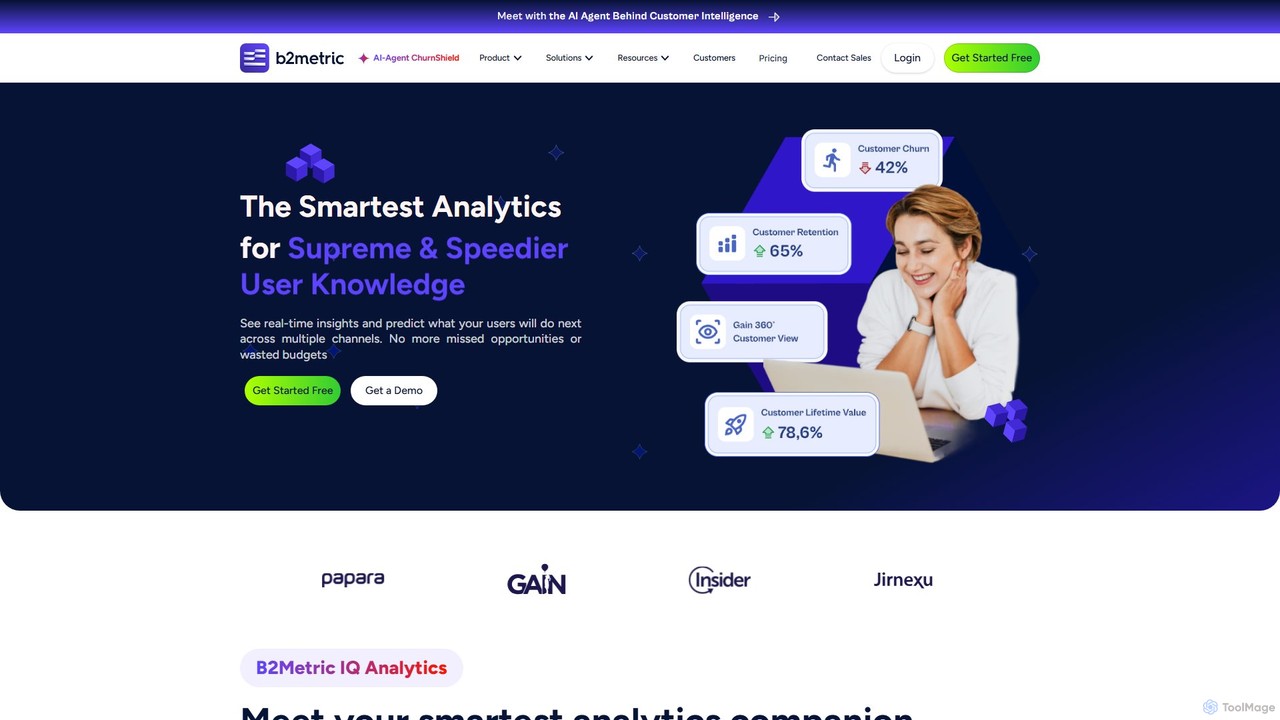
B2Metric is an AI-powered Customer Intelligence Platform that combines a Customer Data Platform (CDP) with advanced analytics. It helps businesses understand the entire customer journey, predict user behavior like churn, segment audiences with precision, and automate personalized marketing campaigns to drive growth and retention.

Customer Intelligence
Visits 11.3KFavorites 115Likes 114
AInvest
Freemium

AInvest

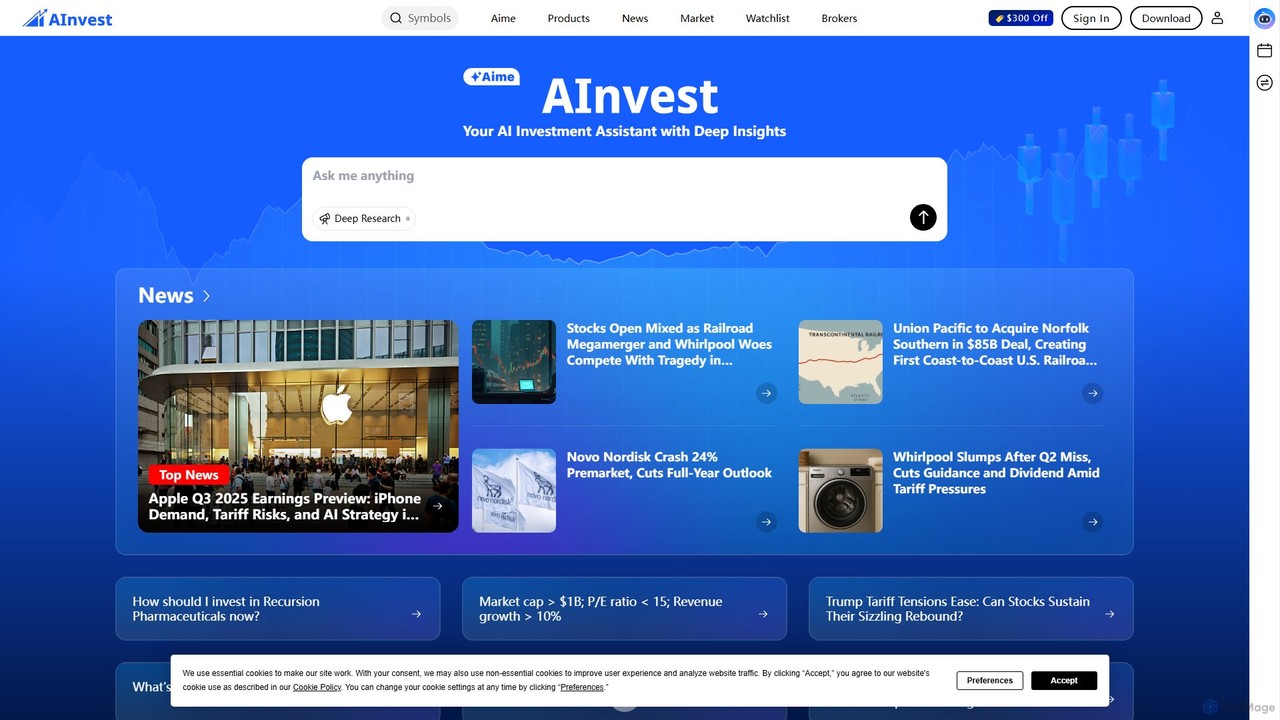
AInvest is an AI-powered investment assistant offering deep market insights, real-time stock analysis, and curated financial news. It provides tools like an AI-driven Q&A, advanced charting, stock screeners, and portfolio management. Catering to both novice and experienced investors, AInvest helps users make informed decisions by tracking stocks, crypto, and ETFs, and following expert analysis from Wall Street. Available on desktop and mobile, it aims to simplify complex market data into actionable intelligence.

Investing
Visits 365.3KFavorites 146Likes 141
Bytient
Paid

Bytient

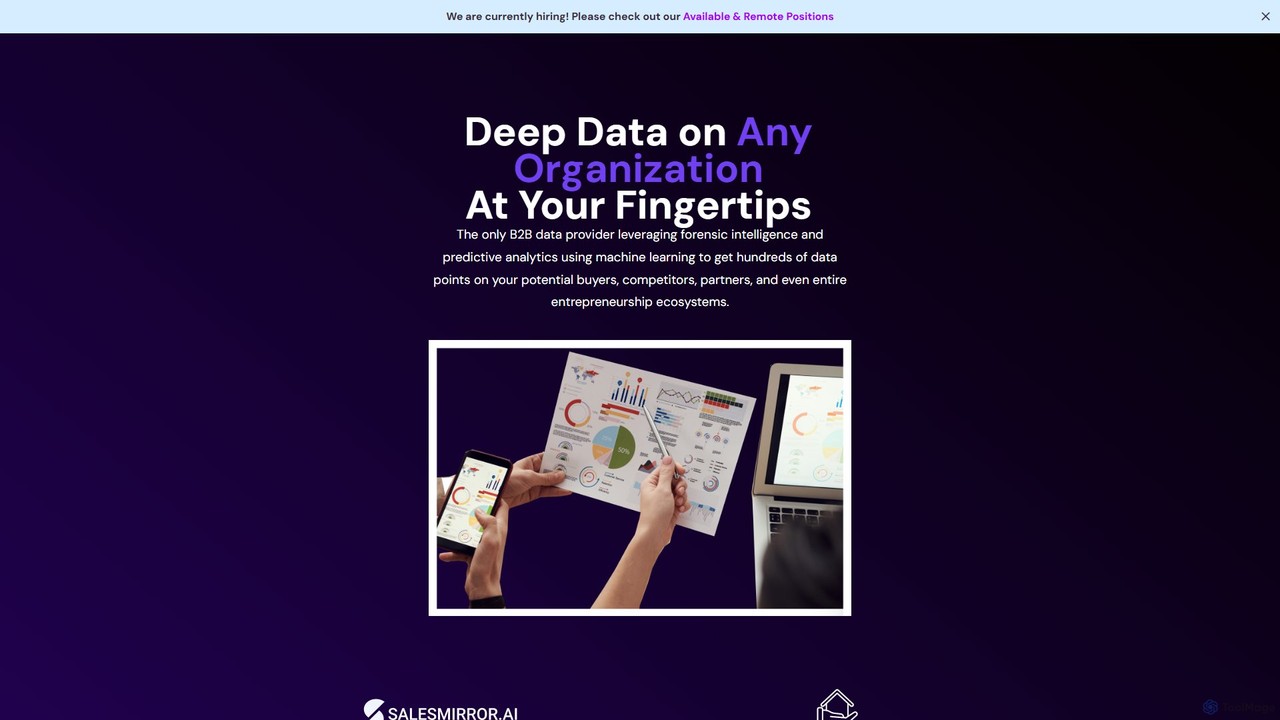
Bytient is an AI-powered B2B data intelligence platform that leverages forensic intelligence and predictive analytics. It provides deep, real-time data on organizations, including potential buyers, competitors, and partners, complete with direct executive contact information and access to extensive investor and real estate databases.

Market Research
Visits 6KFavorites 120Likes 130

About Data Analysis

AI Data Analysis tools are a specialized category of productivity software that use machine learning and natural language processing to automate the interpretation of complex datasets. These tools go beyond traditional spreadsheets by automatically cleaning data, identifying patterns, and generating predictive models. Their primary value lies in transforming raw data into actionable insights, enabling users without deep statistical knowledge to make informed, data-driven decisions quickly. They excel at uncovering hidden correlations and forecasting future trends with high accuracy.

Core Features

  • Natural Language Querying: Ask questions about your data in plain English, eliminating the need for complex code or formulas.
  • Automated Insight Generation: The AI automatically detects significant trends, anomalies, and correlations in your data and presents them as simple summaries.
  • Predictive Modeling & Forecasting: Build and deploy models to forecast future outcomes, such as sales revenue, customer churn, or inventory demand.
  • Automated Data Preparation: Automatically cleans, formats, and enriches raw data, saving significant time and reducing human error.
  • Interactive Visualizations: Generate dynamic charts, graphs, and dashboards that allow for intuitive exploration of data.

Use Cases

These tools are widely used across various departments. Marketing teams use them to analyze campaign performance and customer behavior. Financial analysts leverage them for forecasting and anomaly detection. Operations managers apply them to optimize supply chains and production processes. Essentially, any role that relies on data for decision-making can benefit.

How to Choose

When selecting an AI Data Analysis tool, consider the types of data sources you need to connect to (e.g., databases, SaaS apps, spreadsheets). Evaluate the user interface: is it a no-code platform for business users or does it require some technical expertise? Also, assess the depth of its analytical capabilities—whether you need simple descriptive analytics or more advanced predictive and prescriptive insights. Finally, consider scalability and pricing models.

Featured tool rankings

Data Analysis use cases

1

Analyze Marketing Campaign ROI

A marketing manager for an e-commerce brand needs to understand the effectiveness of various digital advertising campaigns. Instead of manually exporting data from Google Ads, Facebook, and email platforms into a spreadsheet, they connect these sources to an AI Data Analysis tool. The tool automatically unifies the data, calculates the return on investment (ROI) for each channel, and uses natural language to summarize key findings, such as 'The summer campaign on Instagram generated the highest conversion rate among users aged 25-34.' This allows the manager to reallocate budget to high-performing channels in minutes rather than days.

2

Forecast Future Sales Trends

A sales director for a retail company wants to prepare for the upcoming holiday season. They upload three years of historical sales data into an AI analysis tool. The tool automatically identifies seasonality, growth trends, and the impact of past promotions. It then generates a forecast predicting sales volume for specific product categories over the next quarter. The director can ask follow-up questions like, 'What if we offer a 20% discount on electronics?' and the model updates the forecast instantly. This data-driven approach helps in optimizing inventory levels and setting realistic sales targets for the team.

3

Identify Causes of Customer Churn

A product manager at a SaaS company notices a slight increase in customer churn. To understand why, they feed customer usage data, support ticket history, and subscription information into an AI analysis platform. The AI model analyzes the data to find common patterns among customers who churned. It might reveal insights like, 'Customers who do not use Feature X within the first 14 days are 70% more likely to churn,' or 'A high number of support tickets related to billing issues is a strong predictor of churn.' These specific, actionable insights allow the product team to improve onboarding and address critical issues proactively.

4

Optimize Supply Chain Logistics

An operations manager for a manufacturing company uses an AI data tool to analyze their supply chain. By integrating data from shipping carriers, warehouse inventory systems, and production schedules, the tool builds a complete picture of the logistics network. It identifies bottlenecks, predicts potential delays based on weather or traffic data, and suggests more efficient shipping routes. For example, it might highlight that a specific distribution center is consistently understocked on Tuesdays, allowing the manager to adjust delivery schedules. This leads to reduced shipping costs, faster delivery times, and minimized production downtime.

5

Detect Financial Anomalies and Fraud

An accounting firm needs to audit a large volume of financial transactions for a client. Manually checking every entry is impractical. They use an AI Data Analysis tool to process the entire transaction log. The AI is trained to recognize normal spending patterns and immediately flags deviations, such as unusually large payments to a new vendor, duplicate invoices, or transactions occurring at odd hours. The system provides a prioritized list of suspicious activities for human auditors to investigate, significantly increasing the efficiency and accuracy of the audit process and helping to uncover potential fraud that might otherwise be missed.

6

Analyze Customer Feedback at Scale

A product team receives thousands of customer reviews, survey responses, and support chats each month. It's impossible for a person to read and categorize them all. They use an AI Data Analysis tool with text analysis capabilities. The tool processes all the unstructured text, performs sentiment analysis (positive, negative, neutral), and identifies recurring themes or topics. It generates a dashboard showing that 'slow performance' is the most common negative topic this month, while 'new user interface' is receiving positive feedback. This allows the team to quickly prioritize bug fixes and feature improvements based on quantitative feedback data.

Data Analysis FAQ

What are AI Data Analysis tools?

AI Data Analysis tools are applications that use artificial intelligence, particularly machine learning, to automate the process of cleaning, analyzing, and interpreting data. Unlike traditional business intelligence (BI) tools that require users to manually explore data, AI tools can automatically surface key insights, identify trends, and build predictive models. They often feature natural language interfaces, allowing non-technical users to ask complex questions and receive easy-to-understand answers, charts, and summaries. Their goal is to make data science accessible to a broader audience within an organization.

How to choose the right AI Data Analysis tool?

Choosing the right tool depends on your specific needs. Consider the following factors:

  • Data Connectivity: Ensure the tool can easily connect to your data sources, whether they are databases, cloud applications like Salesforce, or simple CSV files.
  • User Skill Level: Select a tool that matches your team's expertise. Some are no-code platforms designed for business analysts, while others offer more advanced features for data scientists who can use SQL or Python.
  • Analysis Type: Determine if you need descriptive analysis (what happened), diagnostic analysis (why it happened), or predictive/prescriptive analysis (what will happen and what to do).
  • Scalability and Performance: Consider the volume of data you will be analyzing. The tool should be able to handle your current and future data needs without significant performance degradation.
What's the difference between AI Data Analysis and traditional BI tools?

The primary difference lies in automation and intelligence. Traditional Business Intelligence (BI) tools, like Tableau or Power BI, are excellent for data visualization and exploration but require the user to ask the right questions and manually build dashboards. AI Data Analysis tools augment this process. They can automatically discover insights, suggest relevant visualizations, and perform predictive analytics without explicit instruction. While BI tools answer 'what happened?', AI tools aim to also answer 'why did it happen?' and 'what will happen next?'. Many modern platforms now blend features of both.

Do I need coding skills to use AI Data Analysis tools?

Not necessarily. A major trend in this category is the development of no-code and low-code platforms. Many leading AI Data Analysis tools are designed specifically for business users, marketers, and analysts who do not have a background in programming. They use drag-and-drop interfaces and natural language queries to make analysis accessible. However, some platforms also offer advanced capabilities for data scientists, providing integrations with languages like Python and R for custom modeling and deeper analysis. So, there are tools available for every skill level.

What kind of data can these tools analyze?

Modern AI Data Analysis tools are versatile and can handle a wide variety of data types. This includes:

  • Structured Data: This is highly organized data typically found in spreadsheets and relational databases, such as sales figures, customer lists, and financial records.
  • Unstructured Data: This includes data without a predefined format, such as text from customer reviews, social media posts, emails, and support tickets. Many tools use Natural Language Processing (NLP) to extract insights from this type of data.
  • Time-Series Data: Data points indexed in time order, like stock prices, website traffic over time, or sensor readings, which are crucial for forecasting.

The best tools can often join and analyze data from multiple sources and formats simultaneously.