Freemium
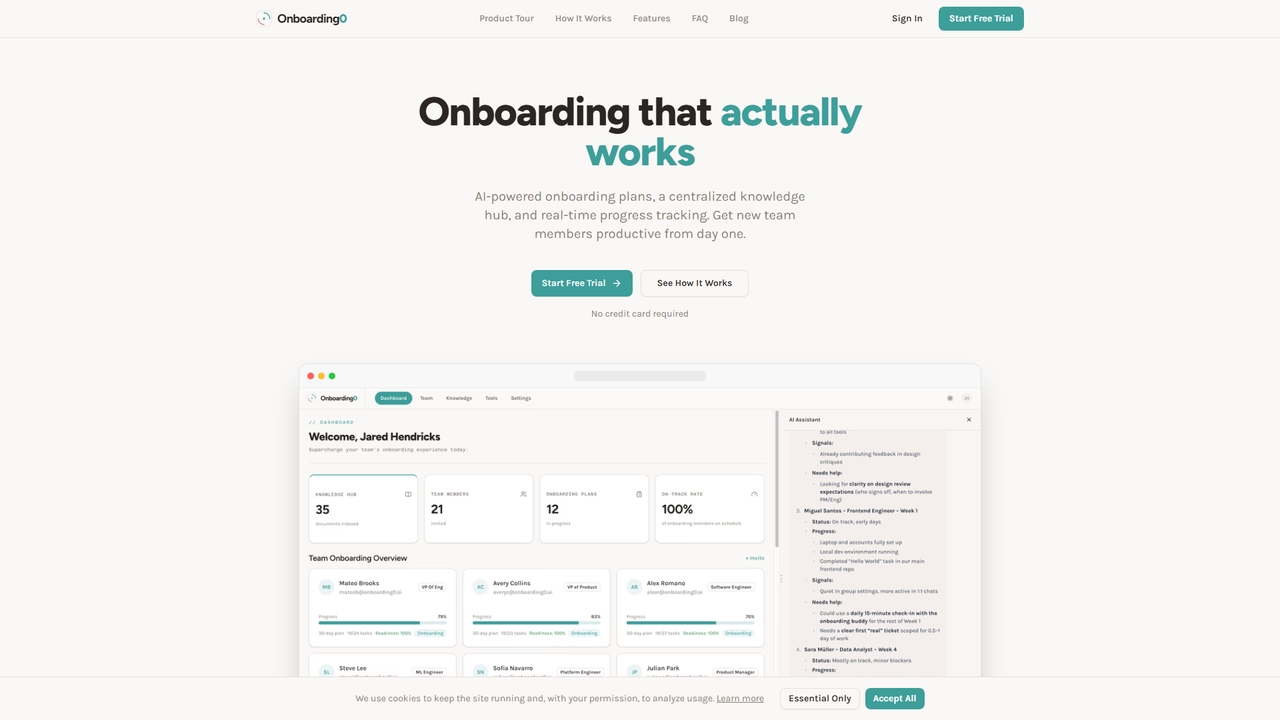
Onboarding0
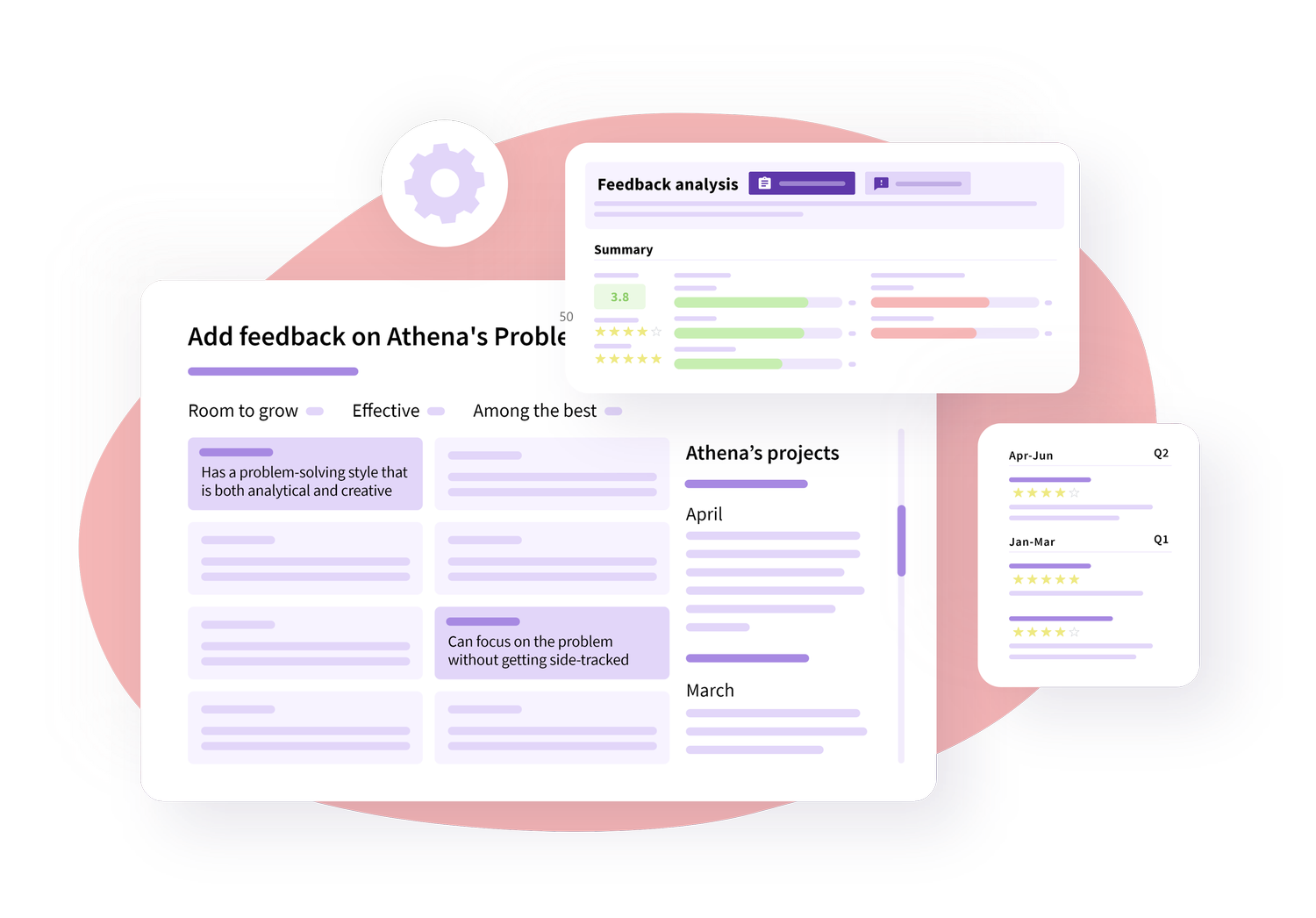
AI-powered employee onboarding platform that creates personalized plans, centralizes knowledge, and tracks progress to get new hires productive from day one.
Knowledge ManagementVisits 8.7KFavorites 67Likes 59
Popular Team Management AI tools in Productivity include Deel, Percipio, Arc, Go1, Section, RemotePeople, HireArt, Mesh AI, Betterworks, and Mercor Team, helping you work more efficiently.
AI-powered employee onboarding platform that creates personalized plans, centralizes knowledge, and tracks progress to get new hires productive from day one.
Knowledge Management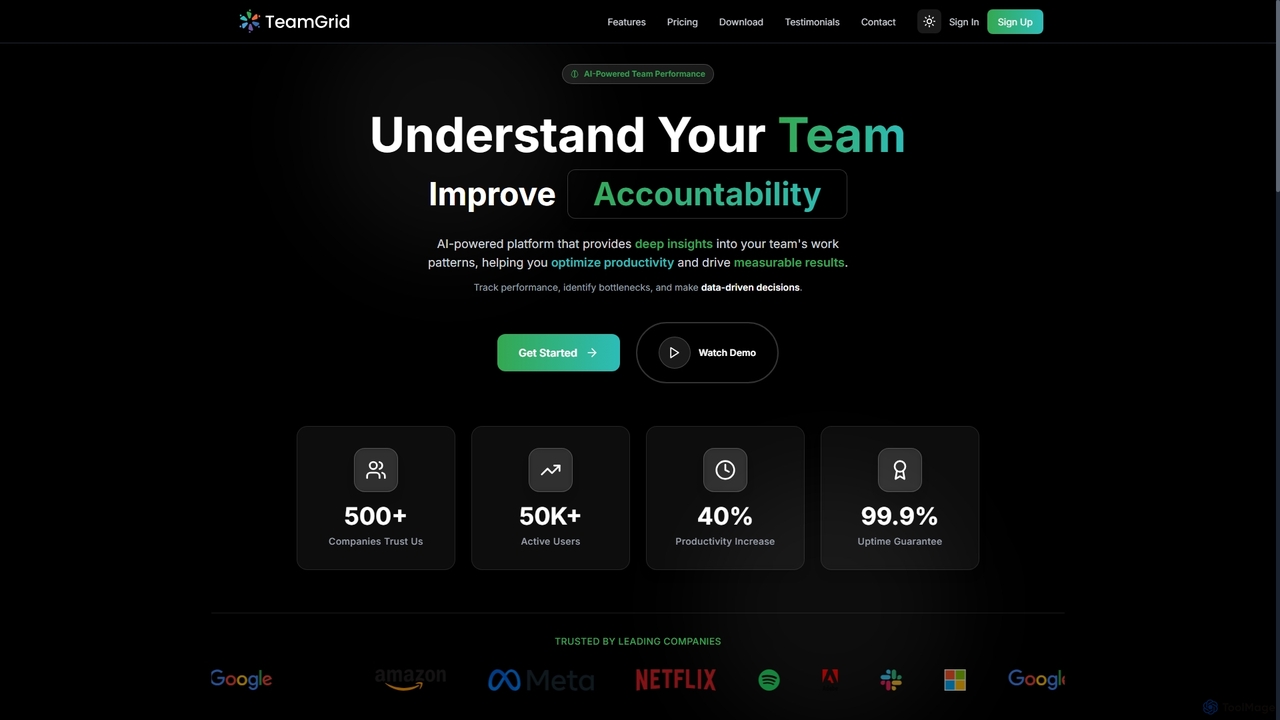
TeamGrid is an AI-powered platform designed to enhance team performance by providing deep insights into work patterns. It helps organizations optimize productivity, improve accountability, and drive measurable results through real-time monitoring, goal tracking, and advanced analytics.
Performance Monitoring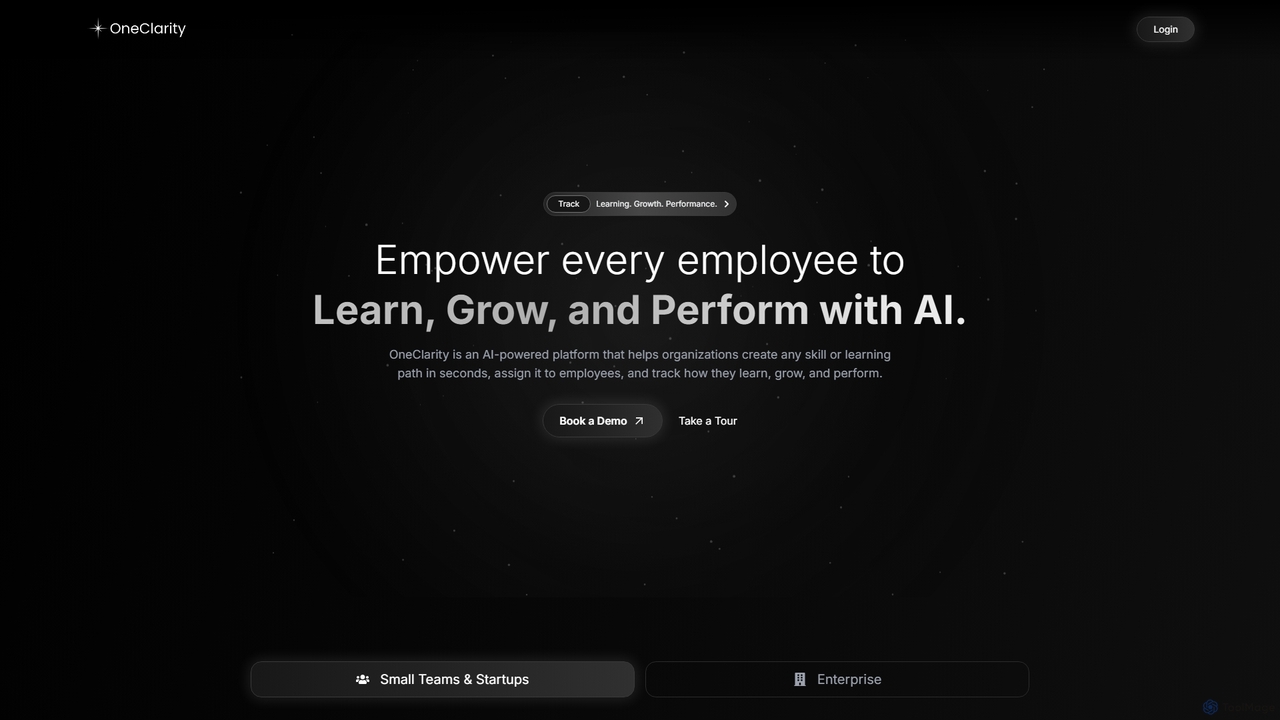
OneClarity is an AI-powered platform designed to empower organizations by streamlining employee learning, growth, and performance management. It enables the rapid creation of custom skill paths, assigns them to employees, and provides real-time tracking of progress and behavioral insights to foster a smarter, more aligned workforce.
Learning & Development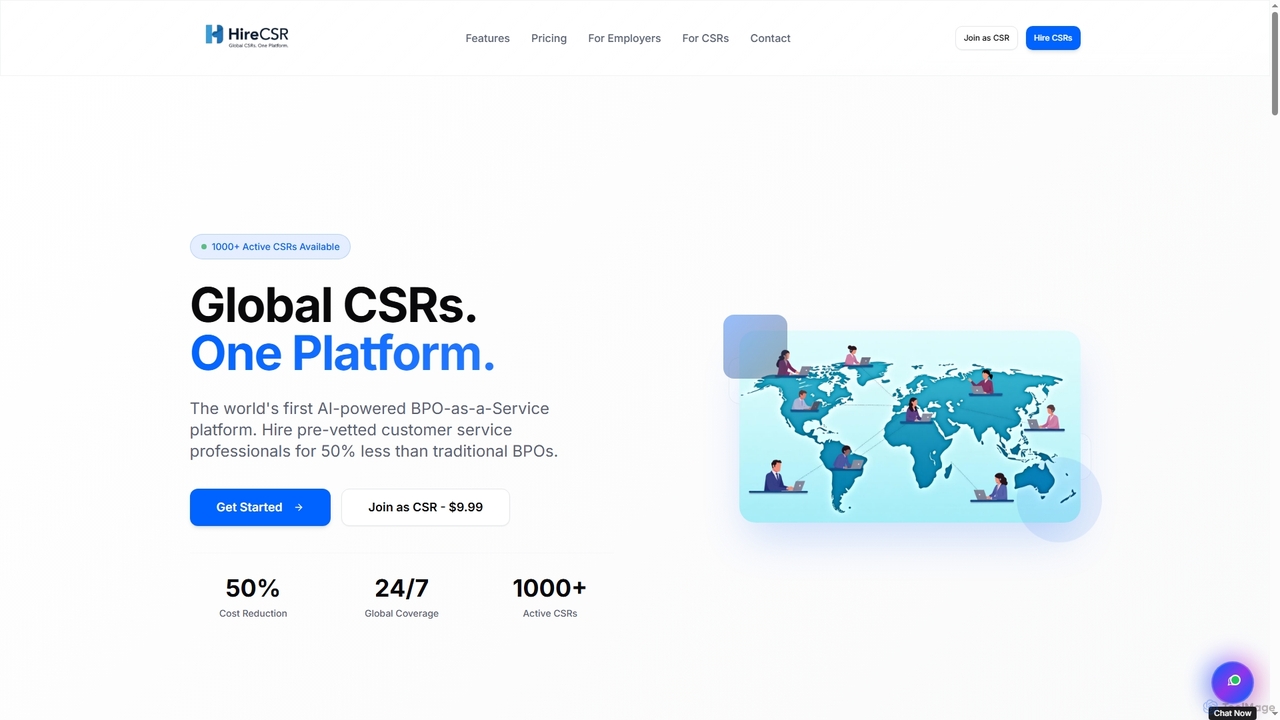
Hirecsr is an AI-powered BPO-as-a-Service platform connecting companies with vetted global customer service representatives (CSRs). It leverages AI to manage hiring, training, quality assurance, and performance monitoring, offering premium support at up to 50% lower cost than traditional BPOs.
Help Desk
Traincoach.app is an AI-powered platform for corporate training and employee development. It automates course creation, provides personalized learning paths, and uses interactive simulations to enhance skills. Ideal for onboarding, sales, and leadership training, it helps organizations build a more competent and efficient workforce.
Corporate Learning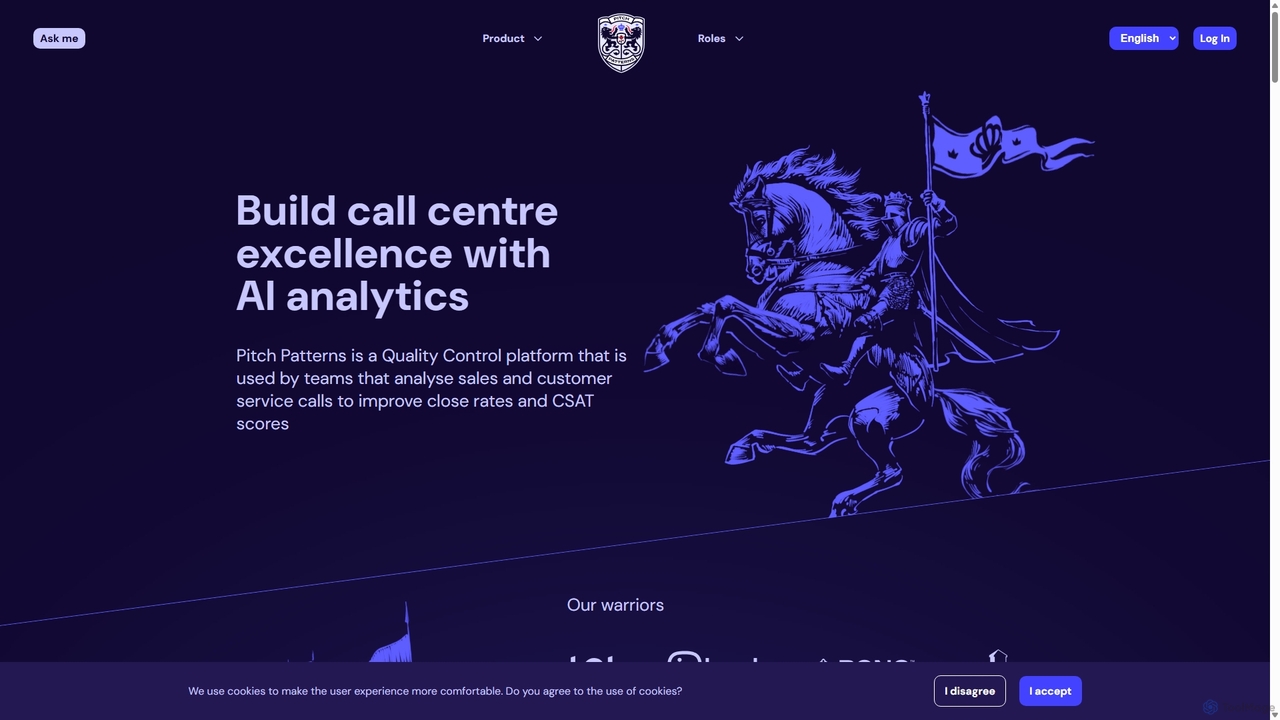
Pitch Patterns is an AI-powered Quality Control platform designed for call centers. It analyzes sales and customer service calls to enhance agent performance, improve close rates, and boost CSAT scores. By providing deep conversation analytics, it helps teams achieve operational excellence and drive growth.
Speech Analytics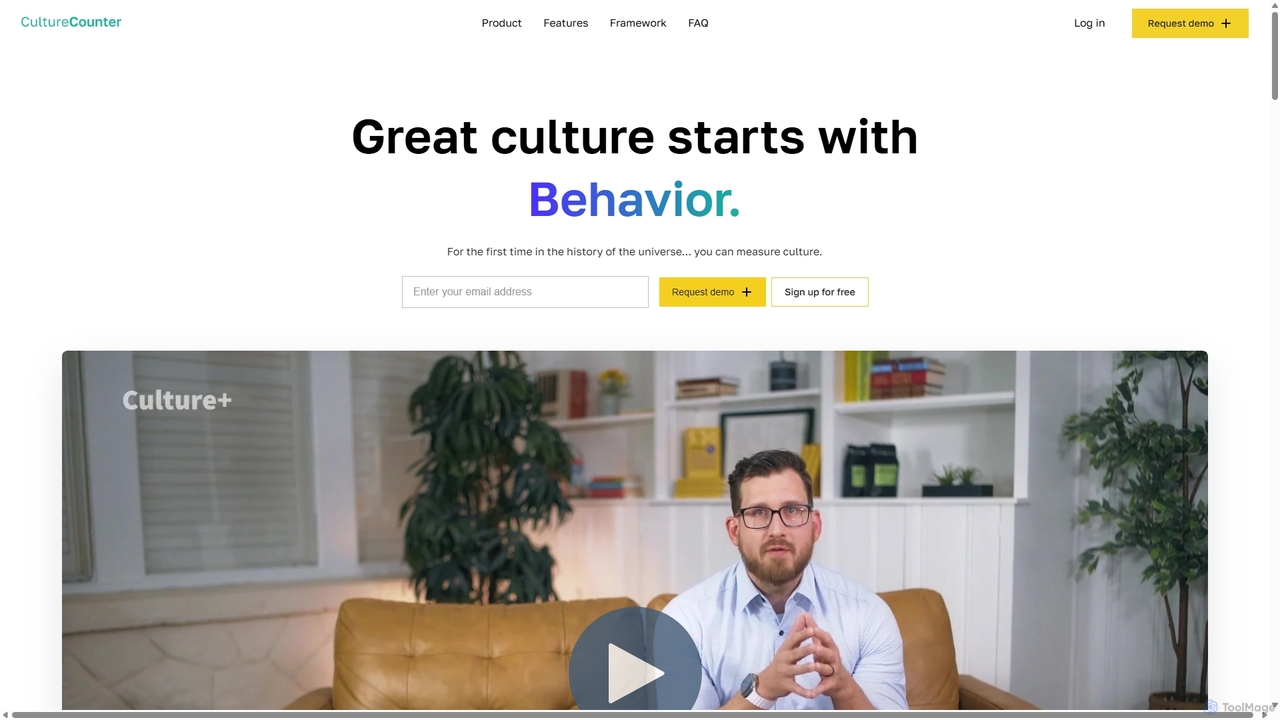
Culture Counter is a platform designed to measure and improve organizational culture. Based on the scientifically-backed 'Love as a Business Strategy' framework, it uses anonymous employee surveys to provide quantifiable data and actionable insights, helping leaders build high-performing, positive work environments.
Business Intelligence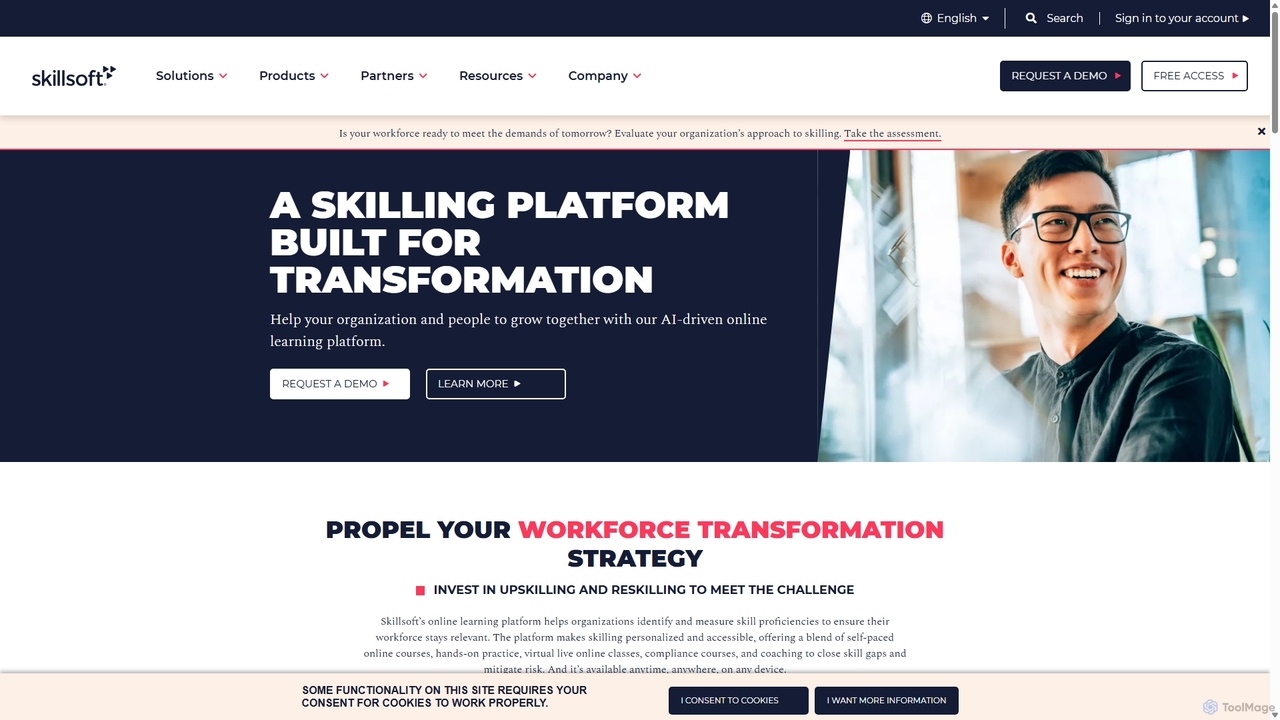
Percipio is an AI-driven immersive learning platform by Skillsoft, designed for enterprise workforce transformation. It helps organizations upskill and reskill employees through personalized learning paths, AI-powered recommendations, and comprehensive skill assessments. The platform offers a blended learning experience, including online courses, hands-on practice, virtual classes, and coaching, to close critical skill gaps and drive business growth.
Corporate Learning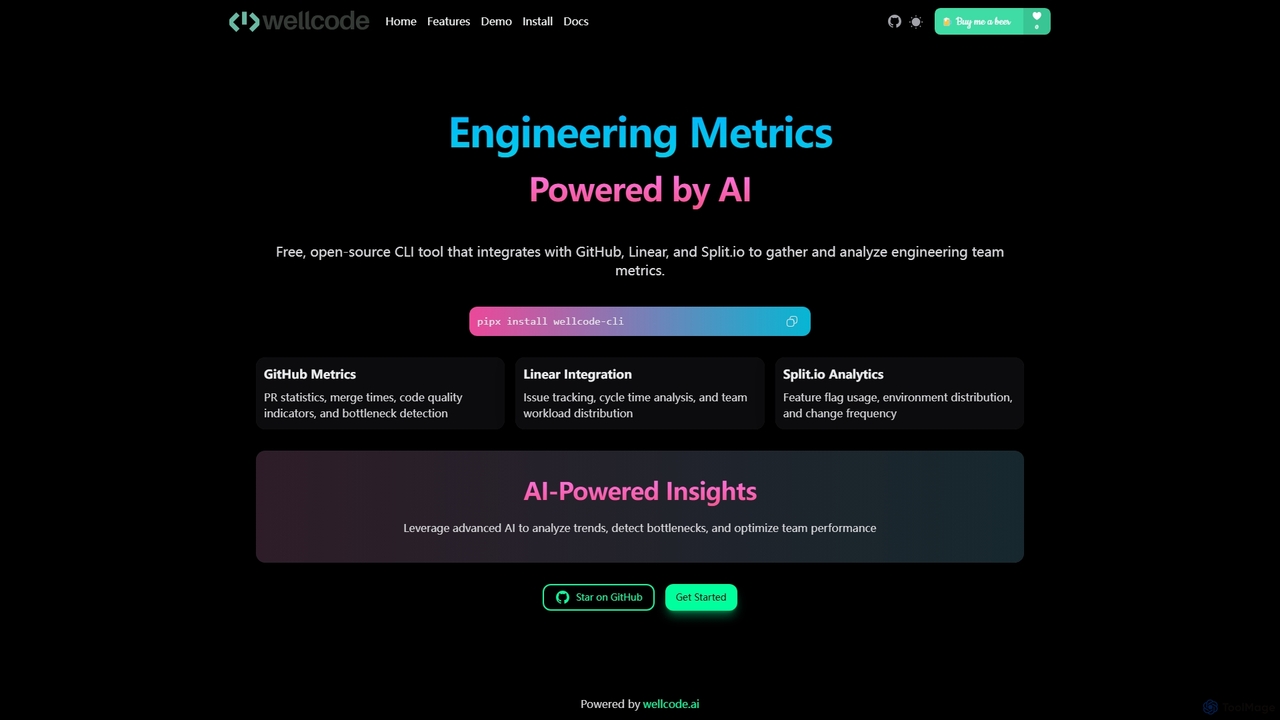
A powerful command-line interface tool that leverages AI to provide comprehensive engineering metrics. It integrates with GitHub, Linear, and Split.io to analyze pull requests, issue tracking, and feature flag usage, offering actionable insights to optimize team performance and development workflows.
Code Analysis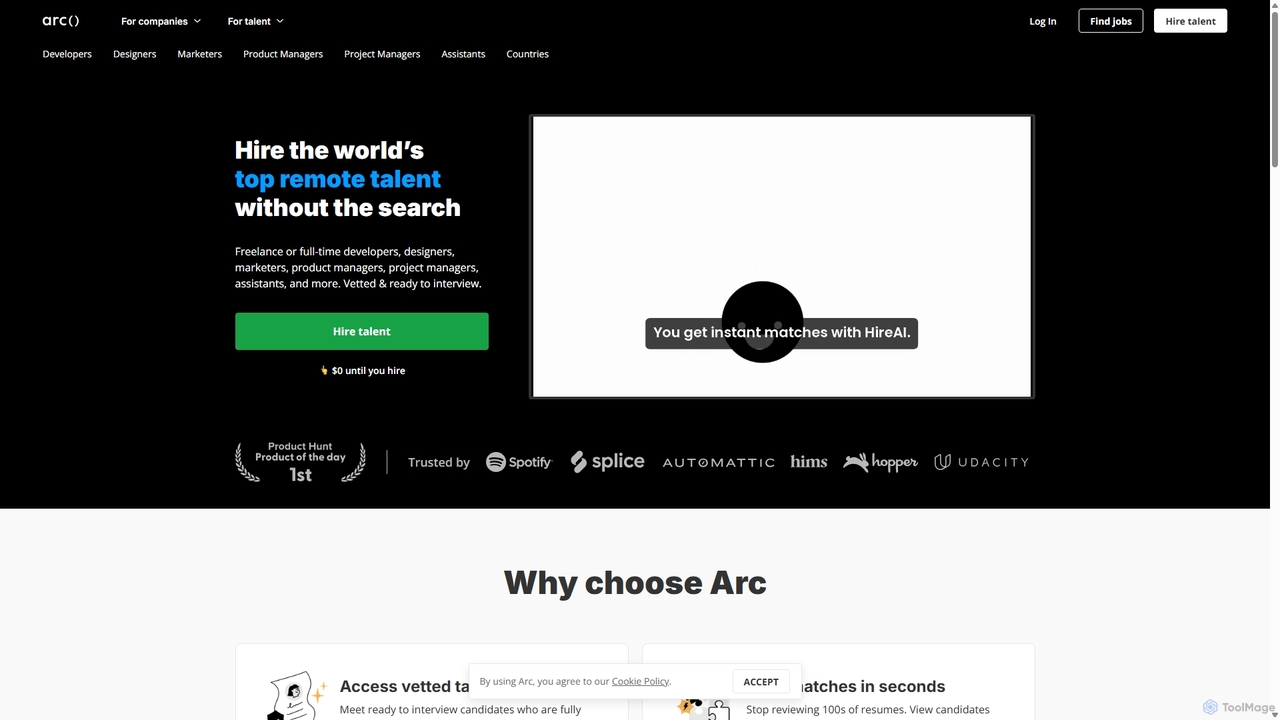
Arc is an AI-powered remote career platform that connects companies with the world's top 2% of pre-vetted remote talent. It specializes in sourcing developers, designers, marketers, and other tech professionals for both freelance and full-time positions, streamlining the hiring process with AI matching and expert support.
Freelance Platforms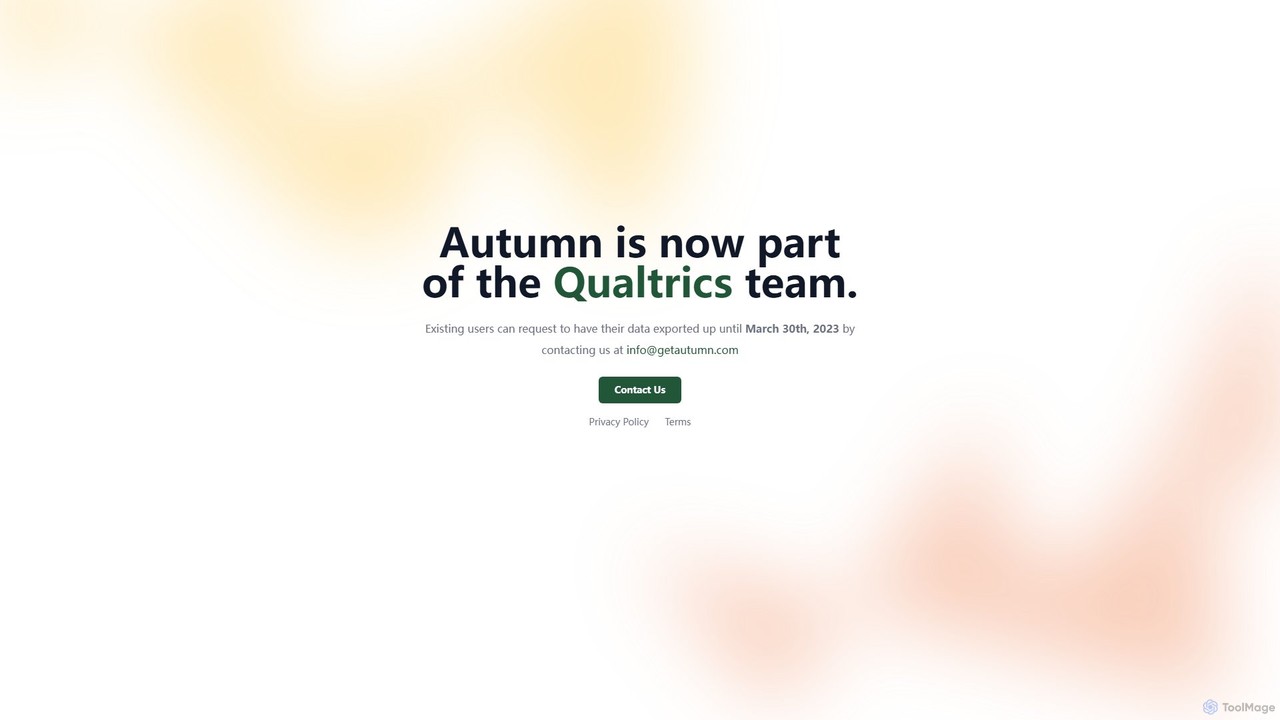
getautumn is an AI-powered platform designed to prevent employee burnout and improve team well-being. By using intelligent pulse surveys and real-time analytics, it provides managers and HR leaders with actionable insights to foster a healthier and more productive work environment. Note: getautumn has been acquired by Qualtrics and is no longer available as a standalone product.
Analytics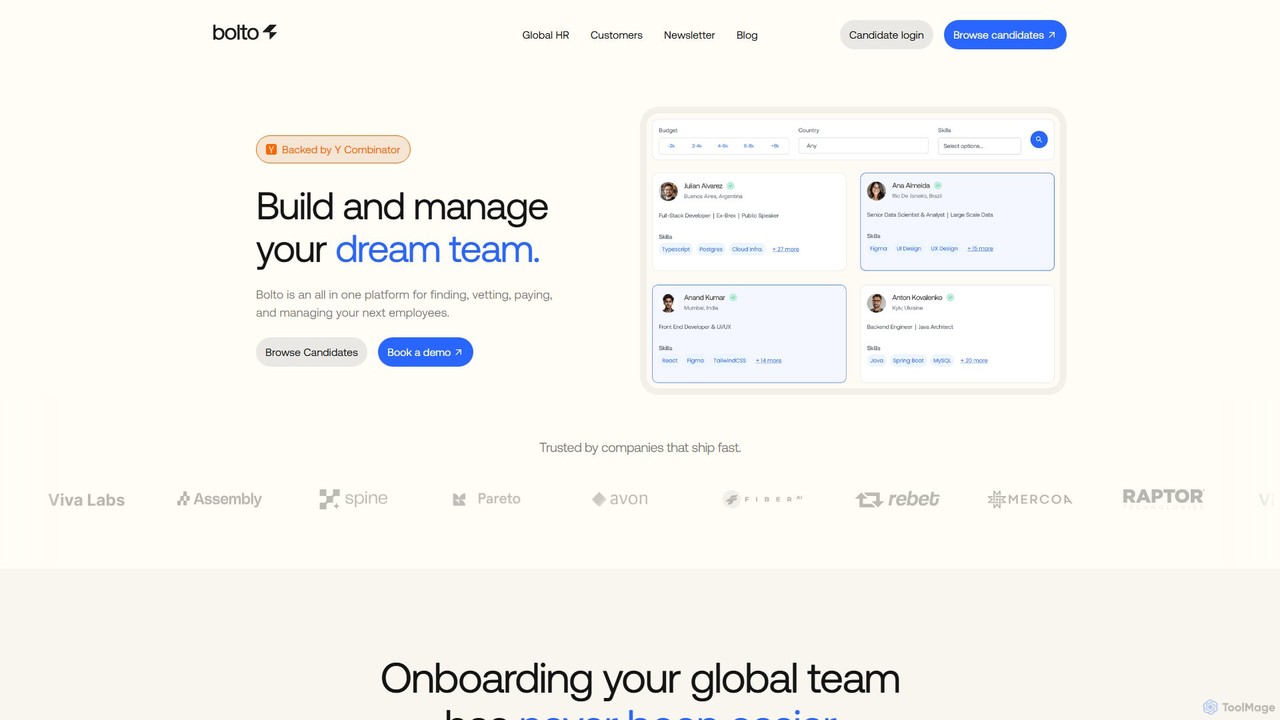
Bolto is an AI-powered, all-in-one platform designed to simplify and accelerate the process of hiring, onboarding, and managing global software developers. It uses AI to source, vet, and match candidates, handling everything from interviews and contracts to payroll and compliance.
Talent Platform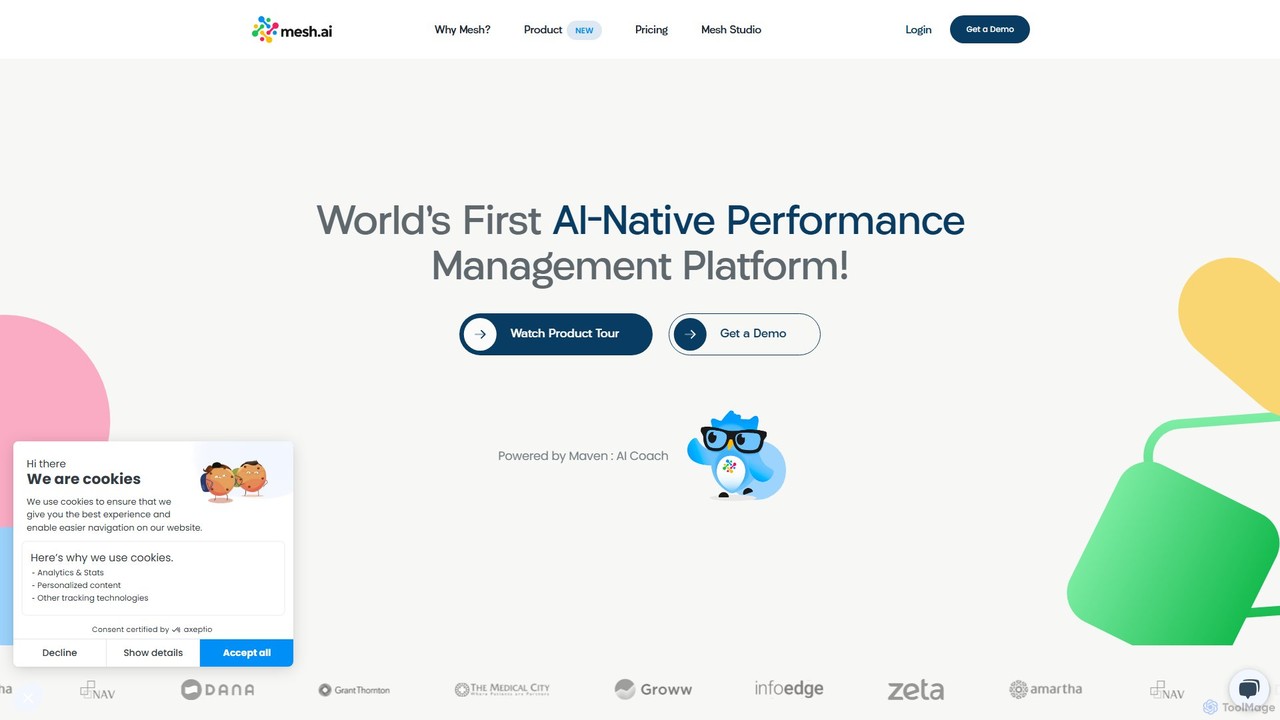
Mesh AI is the world's first AI-native performance management platform designed to enhance team productivity and achieve business goals. It leverages an AI coach, Maven, to provide real-time coaching, goal tracking, continuous feedback, and insightful analytics. Mesh helps organizations build a high-performance culture by simplifying performance dialogues, automating reviews, and empowering managers with actionable data to nurture talent.
Analytics
Mercor Team is an AI-powered platform for companies to hire top, pre-vetted remote tech talent from a global pool. It streamlines the entire recruitment process, from AI-driven candidate sourcing and matching to interview scheduling and team collaboration, enabling businesses to build their engineering teams faster and more efficiently.
Talent Marketplace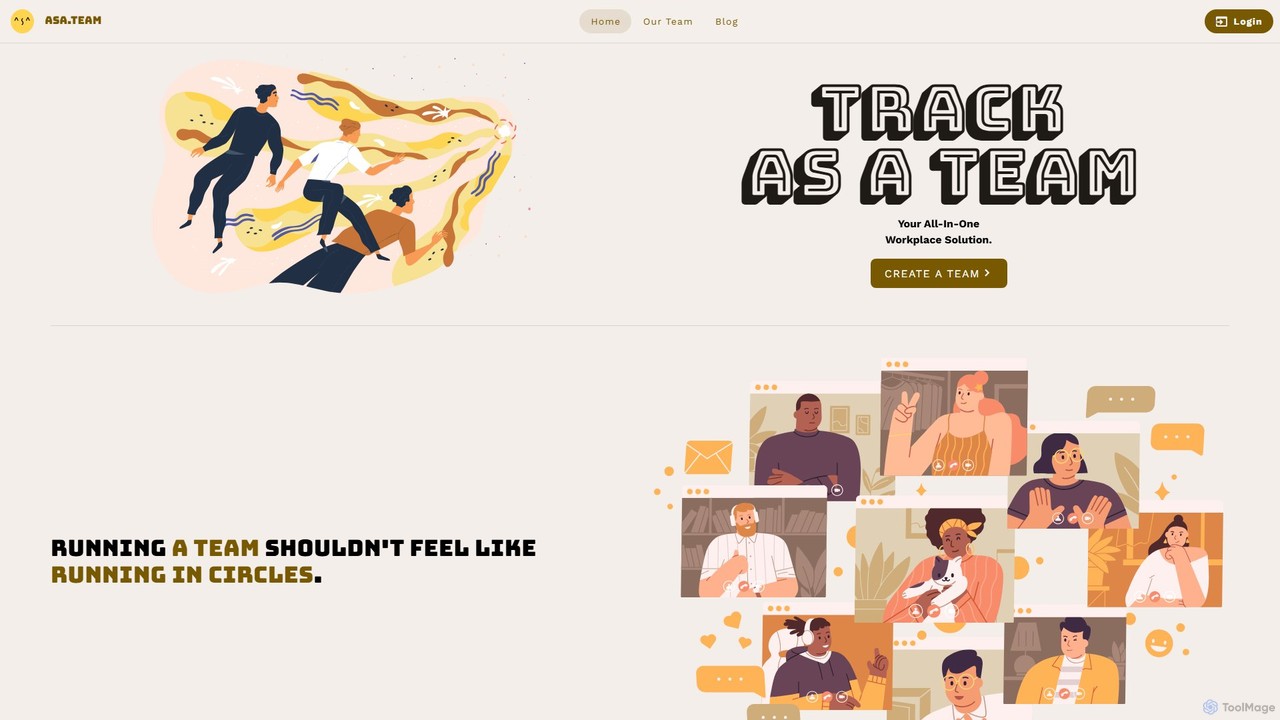
Asa.Team is an all-in-one AI workplace assistant designed to streamline team management for remote, hybrid, and on-site teams. It simplifies time tracking, monitors employee well-being to prevent burnout, and integrates seamlessly with Microsoft Teams and Telegram to boost productivity and foster a positive work environment.
Employee Engagement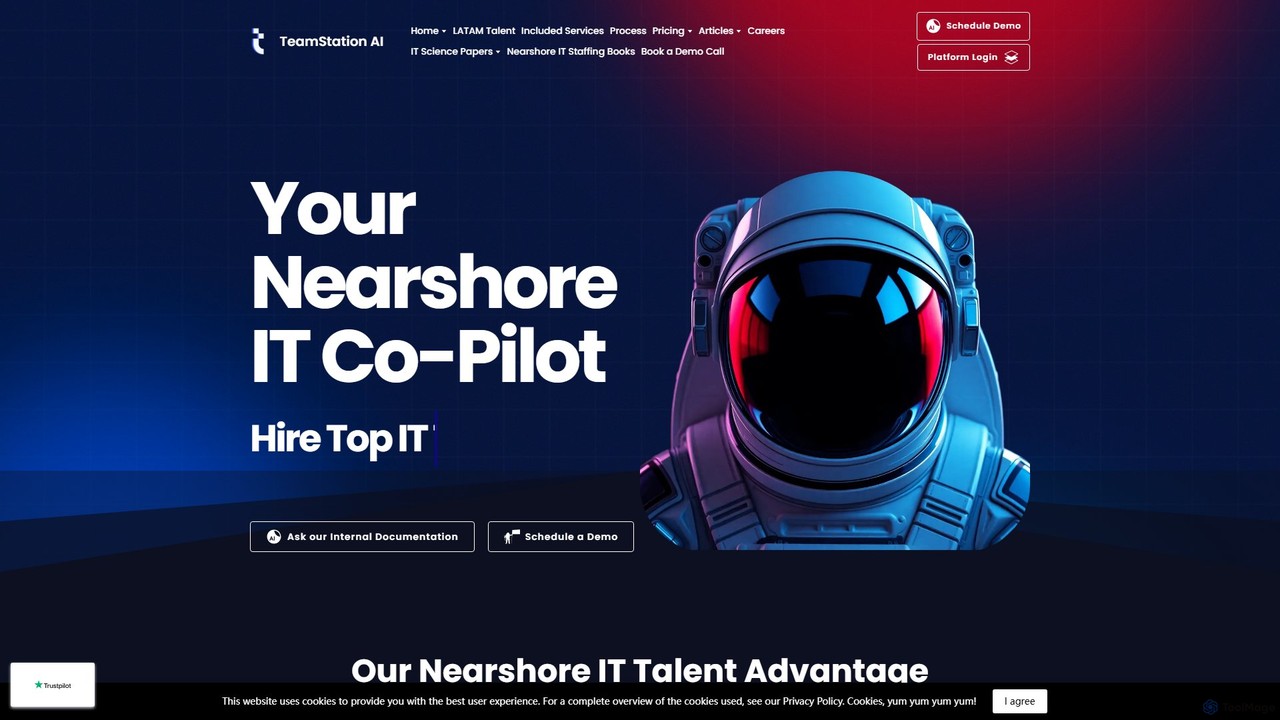
TeamStation AI is an end-to-end platform that uses AI to help U.S. companies build and manage high-performing nearshore IT teams from Latin America. It streamlines talent sourcing, vetting, hiring, payroll, and compliance, offering significant cost savings and faster time-to-hire while ensuring cultural and time-zone alignment.
Outsourcing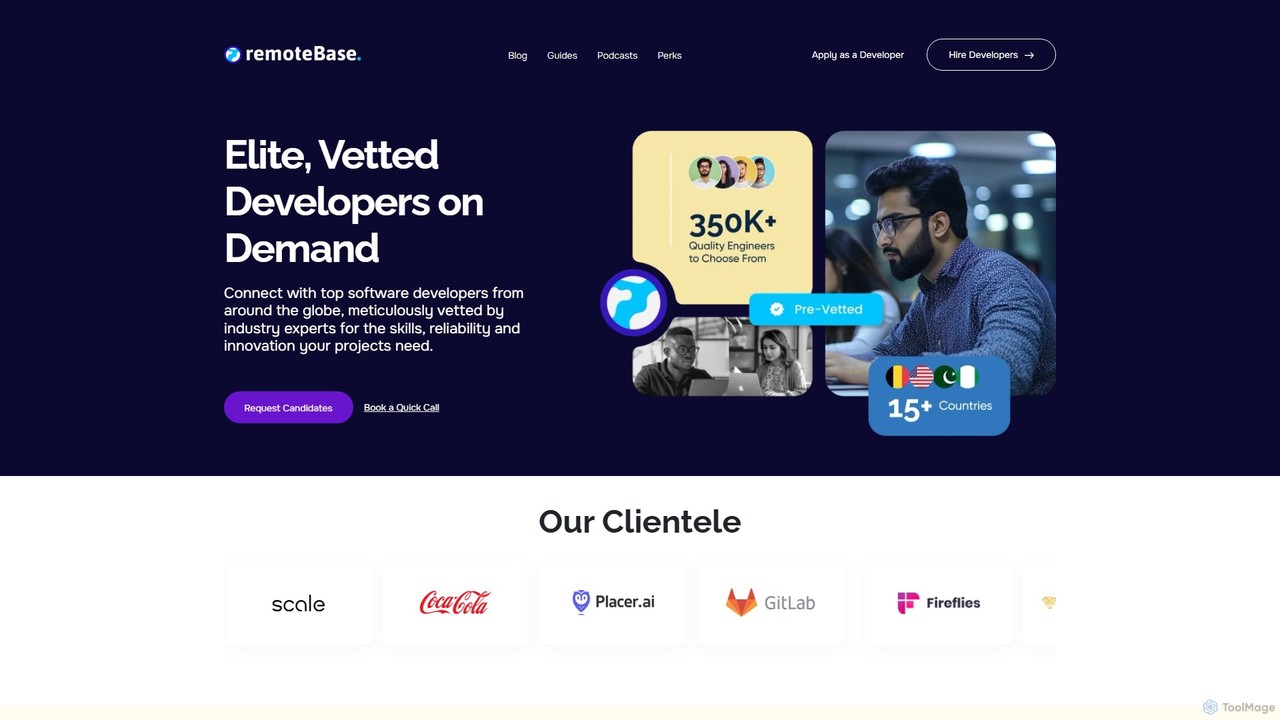
Remotebase is a talent platform for hiring pre-vetted remote software developers and engineers. It streamlines the recruitment process by using an AI-powered matching system to connect companies with top-tier talent from a global pool, including AI specialists, full-stack developers, and mobile engineers. Companies can build their tech teams quickly, often receiving candidate profiles within 24 hours, saving significant time and resources compared to traditional hiring methods.
Talent Marketplace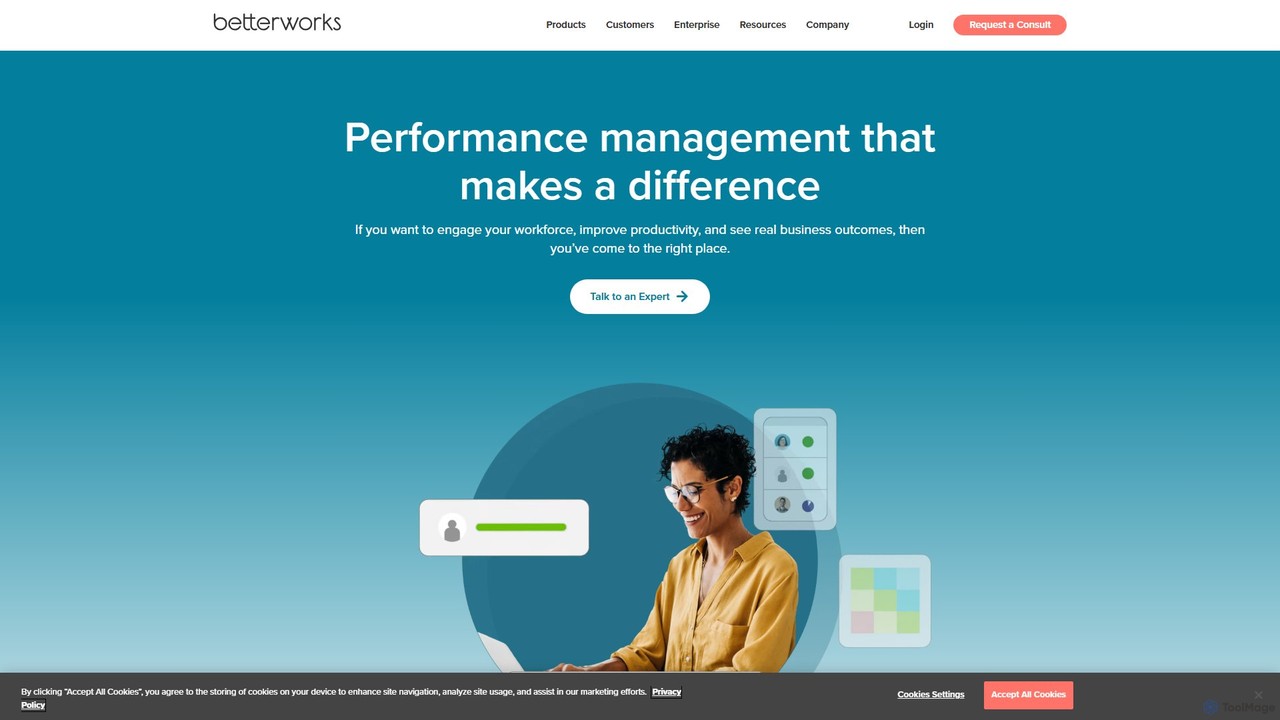
Betterworks is an AI-powered continuous performance management platform designed for enterprises. It helps align workforces, improve productivity, and foster a culture of continuous growth by replacing outdated annual reviews with agile goal-setting (OKRs), meaningful feedback, and effortless performance conversations, all enhanced by intelligent AI assistants.
Analytics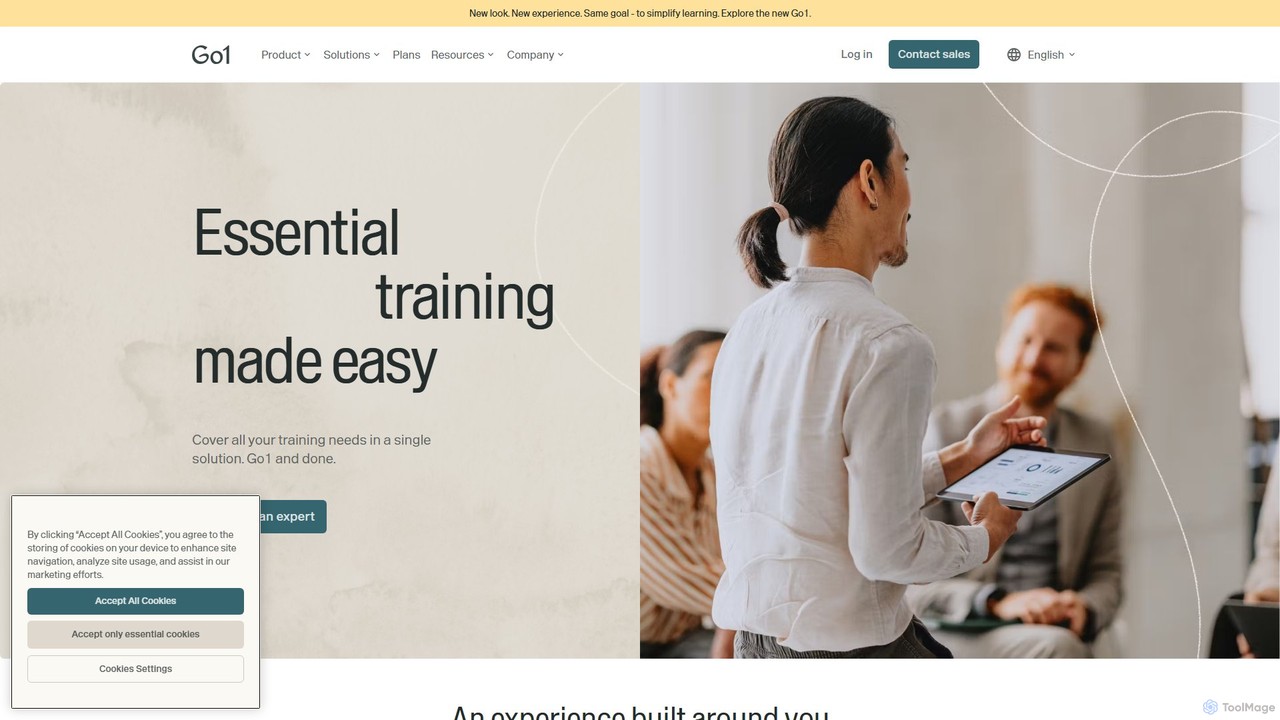
Go1 is a comprehensive corporate learning platform that simplifies Learning & Development (L&D). Through a single subscription, it provides access to a massive library of over 80,000 courses from 250+ top providers. Leveraging AI-powered tools, Go1 delivers personalized learning paths and content recommendations to help businesses upskill their workforce, ensure compliance, and drive employee engagement. It seamlessly integrates with existing HR and LMS systems, making it a flexible and powerful solution for modern corporate training.
Corporate Training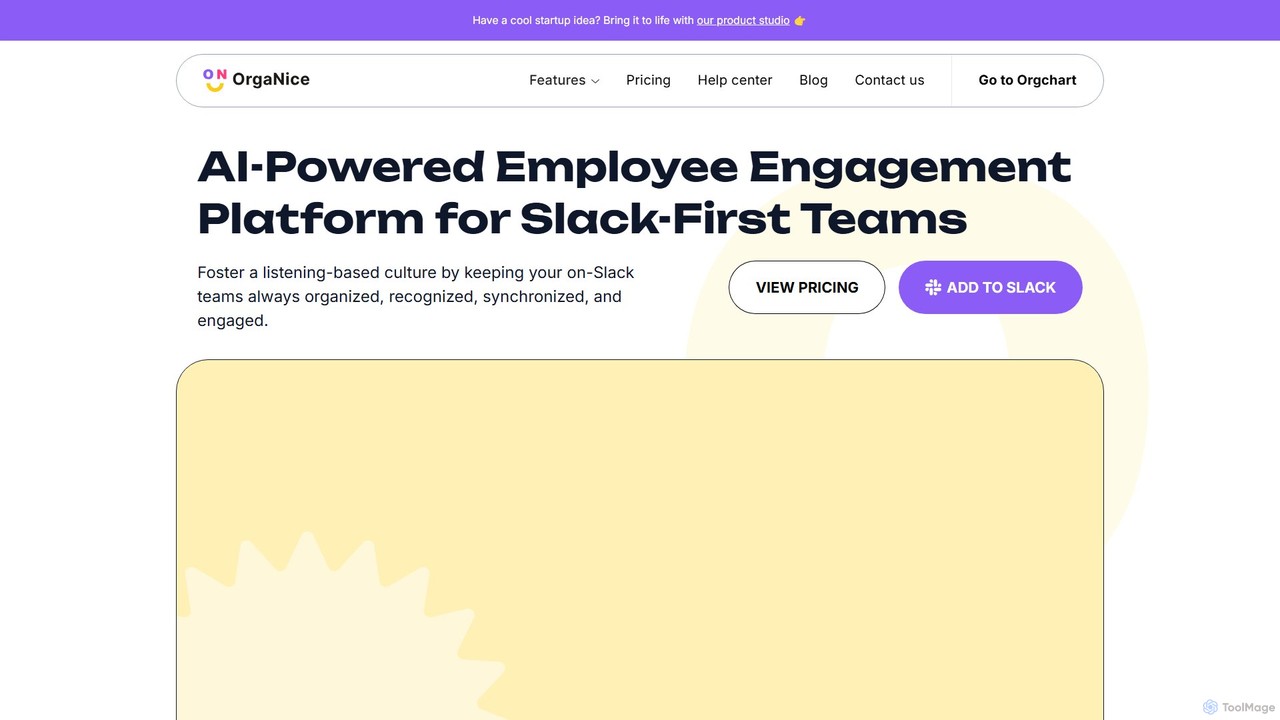
OrgaNice is an AI-powered employee engagement platform designed for Slack-first teams. It automates HR tasks, builds dynamic org charts, manages absences, and fosters a culture of recognition and feedback, all within Slack. This helps reduce administrative overhead for managers and increases employee engagement and connectivity.
Slack Integration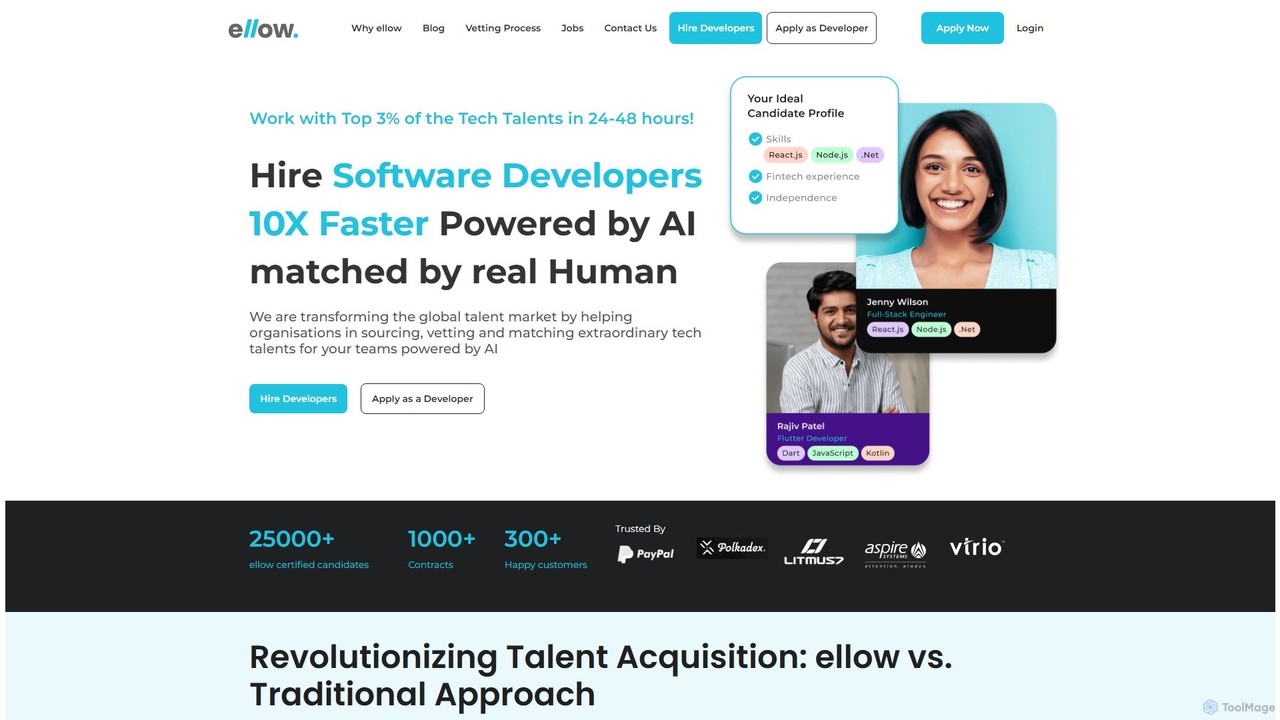
Ellow is an AI-powered talent marketplace that connects businesses with the top 3% of pre-vetted remote software developers globally. Leveraging a hybrid AI and human approach, it streamlines the hiring process, enabling companies to hire elite tech talent in just 24-48 hours. The platform handles sourcing, vetting, matching, and management, simplifying team scaling for startups and established enterprises.
Talent Marketplace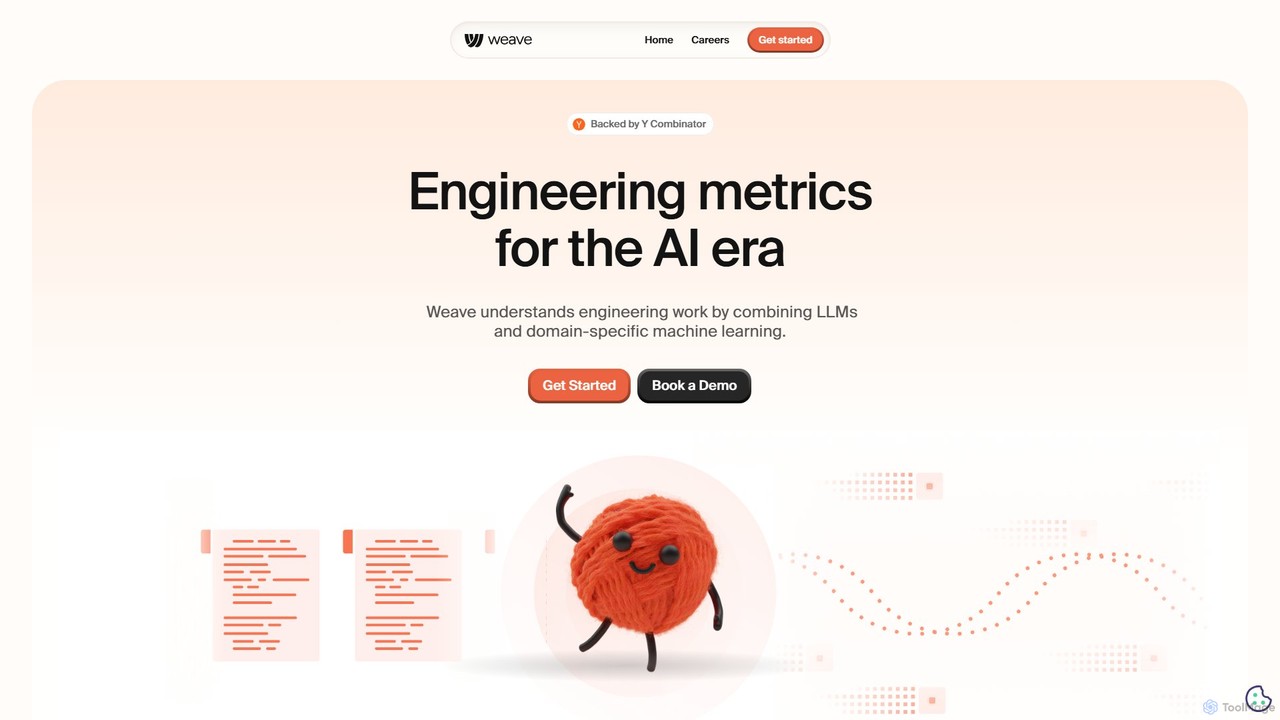
Workweave is an AI-powered engineering intelligence platform that provides 'X-ray vision' for software teams. It leverages LLMs and machine learning to analyze code repositories, quantify developer output, and measure the impact of AI coding tools. Designed for individuals, teams, and enterprises, it offers deep insights into productivity, process efficiency, and AI-generated code contribution, all within a secure, SOC 2 compliant environment.
Business Intelligence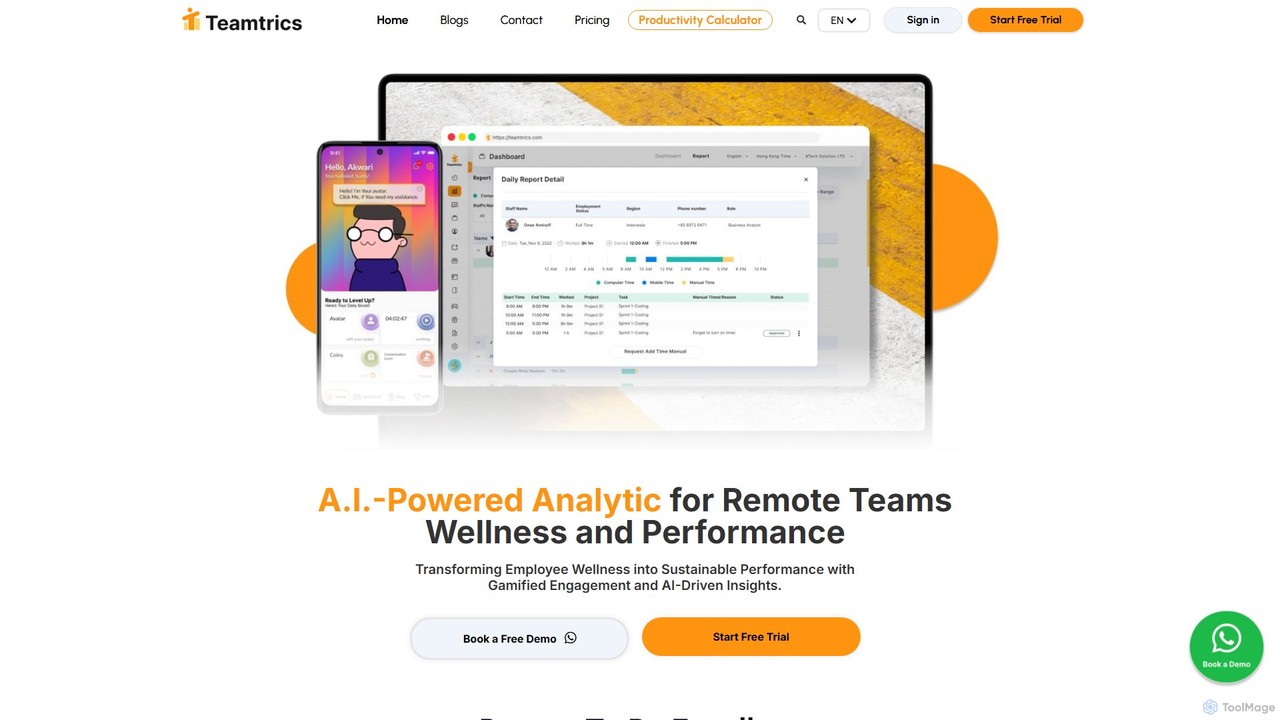
Teamtrics is an AI-powered platform designed for remote and hybrid teams, combining productivity management with employee wellness. It offers tools for time tracking, task management, HR processes, and provides AI-driven insights to optimize performance, prevent burnout, and foster a positive work culture through gamification.
Employee Monitoring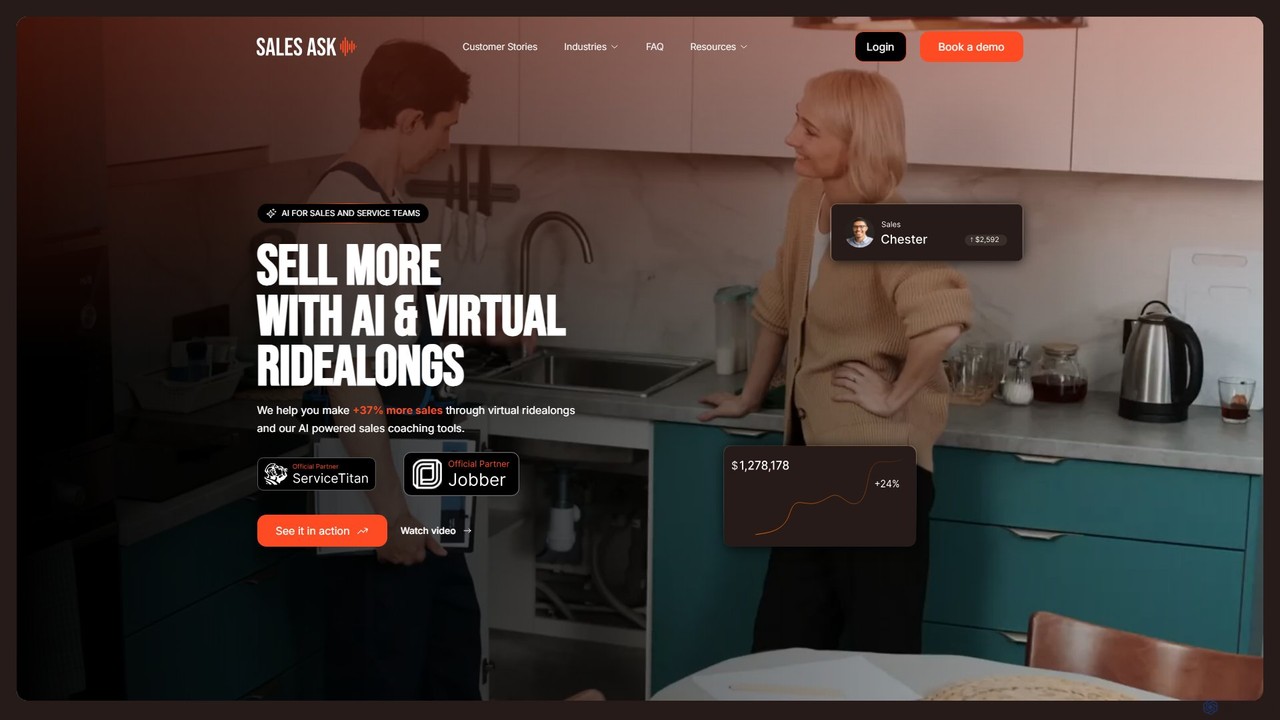
SalesAsk is an AI-powered sales coaching platform designed for home service and contractor teams. It uses virtual ride-alongs and conversation intelligence to analyze sales calls, provide actionable coaching, and help teams increase close rates and revenue by up to 37%. The platform records, transcribes, and analyzes every sales conversation to identify areas for improvement and replicate the success of top performers.
AnalyticsAI Team Management tools are a class of software that uses artificial intelligence to optimize team collaboration, monitor performance, and automate administrative workflows. These platforms analyze data from various work sources to provide predictive insights into project timelines, team workload, and potential bottlenecks. Their primary value lies in enhancing operational efficiency, fostering better communication patterns, and enabling data-driven decisions for managers. This approach moves beyond simple task tracking to actively improve team dynamics and productivity.
These tools are particularly effective for remote or hybrid teams where direct observation is limited. They are widely used by agile development squads to optimize sprints, by creative agencies to balance workloads, and by large enterprises to monitor the health and productivity of multiple departments.
When selecting an AI Team Management tool, consider its integration capabilities with your existing stack (e.g., Slack, Jira, GitHub). Evaluate the depth and actionability of its analytics; does it offer predictive insights or just historical data? Prioritize tools with strong data privacy policies and clear anonymization practices. Finally, assess its scalability to ensure it can support your team as it grows.
For a Scrum Master managing a remote development team, conducting daily stand-ups can be time-consuming. An AI Team Management tool integrates with chat platforms like Slack. It automatically prompts each developer for their daily updates: what they completed, what they're working on, and any blockers. The AI then compiles these individual updates into a single, concise summary report. This report is instantly available to the entire team, highlighting key progress and flagging impediments for the Scrum Master to address, saving approximately 30 minutes of meeting time each day.
A project manager in a busy creative agency needs to assign a new design project without overloading any single designer. The AI Team Management tool analyzes the current and planned workload of all designers, considering task complexity and deadlines. It identifies two designers who are nearing capacity and one who has upcoming availability. The system recommends assigning the project to the available designer and even suggests breaking down the project into smaller tasks to be distributed later if needed. This prevents team burnout and ensures project timelines are met.
A manager of a fully remote team is concerned about potential isolation and disengagement. The AI tool analyzes anonymized communication metadata (e.g., frequency of messages, response times, network of interactions within tools like Slack and Teams) without reading the content. It generates a 'team health' score and visualizes communication patterns. The manager notices that one sub-team has significantly fewer interactions than others. This data-driven insight allows the manager to proactively schedule a virtual team-building activity and check in with that team, addressing potential issues before they impact morale and performance.
A product manager wants to ensure a new software feature ships on time. The AI Team Management tool integrates with Jira and GitHub, analyzing data like task completion velocity, bug report rates, and code commit frequency. The AI model, trained on past projects, detects a slowdown in velocity combined with a spike in bug reports. It flags the project with a 75% risk of a one-week delay. This early warning allows the product manager to investigate the cause, reallocate resources to bug fixing, and adjust the project scope to mitigate the delay, ensuring a more predictable release schedule.
A resource manager at a consulting firm needs to staff a new client project requiring expertise in data science and financial modeling. Instead of manually searching through employee profiles, they use an AI Team Management tool. The manager inputs the required skills and project duration. The AI scans the profiles and current project loads of all consultants, identifying three individuals who not only possess the right skills but also have staggered availability that matches the project timeline. The system presents these candidates with a 'match score', saving the manager hours of manual planning and ensuring the client gets the best possible team.
An account manager at a digital marketing agency spends several hours each week manually compiling performance reports for clients from different platforms (Google Ads, Facebook, SEO tools). An AI Team Management tool with reporting features connects to these data sources. The manager sets up a template once, and the AI automatically pulls the latest data, calculates key metrics like ROI and CPC, and generates a draft report with charts and summaries. The account manager only needs to review the draft and add their strategic comments, reducing report creation time by over 70% and ensuring consistent, error-free reporting.
AI Team Management tools are software platforms that use artificial intelligence to analyze team activities and automate administrative tasks. Unlike traditional project management tools that focus on tasks and deadlines, these tools focus on the team's operational dynamics. They provide data-driven insights into workload distribution, communication patterns, and potential risks like burnout or project delays. The primary goal is to help managers make more informed decisions to improve team productivity and well-being.
The key difference lies in their focus. Traditional project management software (like Asana or Trello) is task-centric; it helps you track what work is being done. AI Team Management tools are team-centric; they analyze how the work is being done. They provide a layer of intelligence on top of project data, focusing on team dynamics, performance trends, and predictive analytics. While project management tools are for organizing work, AI team management tools are for optimizing the people and processes behind the work. Many teams use them in conjunction.
This is a valid concern that reputable tool providers address directly. Trustworthy AI Team Management tools are designed to protect individual privacy. They typically work by analyzing anonymized, aggregated metadata rather than the content of personal communications. For example, they might track the frequency of messages between teams, not what is said in those messages. The goal is to identify macro-level patterns—like a team becoming siloed or a general increase in after-hours work—to improve overall team health, not to monitor individual employees. It's crucial to choose tools with transparent privacy policies and data handling practices.
When evaluating these tools, focus on features that provide actionable insights. Key features include:
While many teams can benefit, certain groups find these tools particularly valuable. This includes managers of remote or hybrid teams who need better visibility into team dynamics without micromanaging. Agile development teams use them to optimize sprint planning and identify bottlenecks faster. Additionally, large organizations and HR departments leverage these tools to monitor overall organizational health, identify high-performing teams, and proactively address issues like widespread burnout or low engagement across multiple departments.