ToolMage
Sign in

Best 185 Ai Infrastructure AI tools

Popular Ai Infrastructure AI tools include codegate, OpenRouter, MongoDB, Nous Research, Databricks, LangChain, LM Studio, Firecrawl, Composio, and Vast.ai, helping you work more efficiently.

Trainloop AI

Trainloop AI

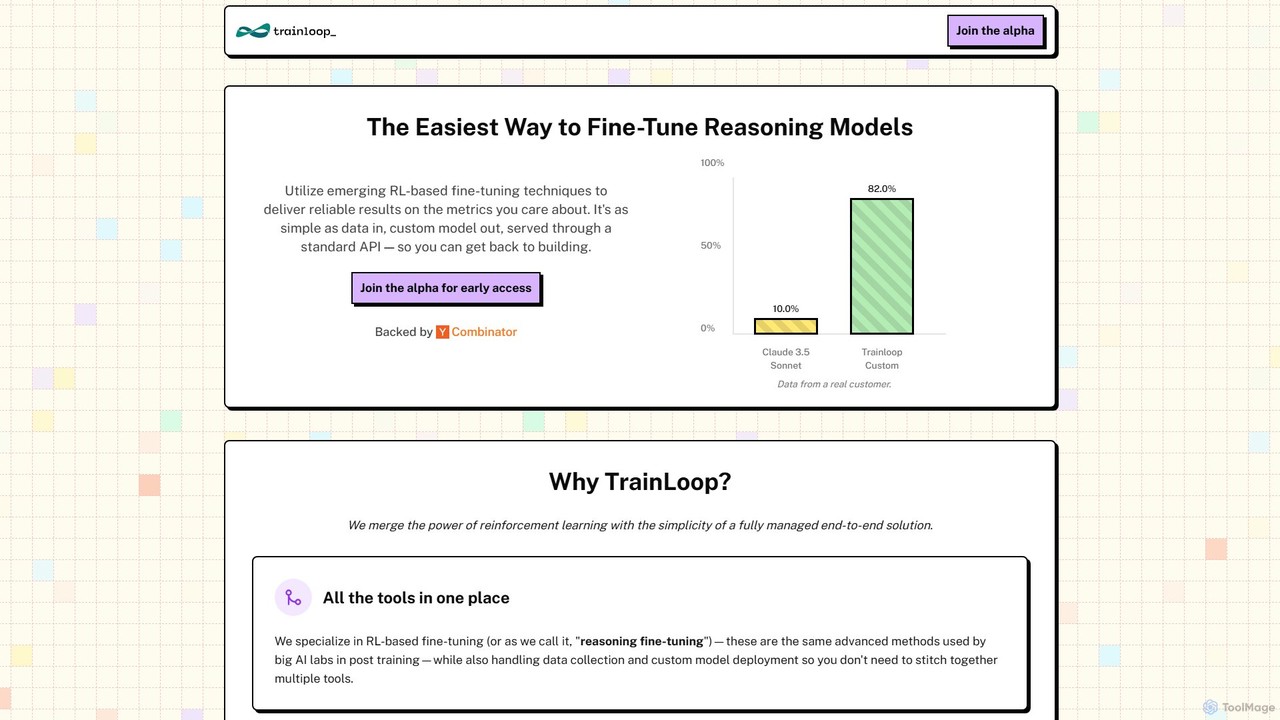
Trainloop AI is an end-to-end platform that simplifies the fine-tuning of AI reasoning models using advanced Reinforcement Learning (RL) techniques. It provides a complete solution from data collection to model deployment, enabling developers to build reliable, domain-expert AI models with less data and without complex prompt engineering.

Machine Learning
Visits 6.3KFavorites 118Likes 133

Prompt Octopus
Freemium

Prompt Octopus

A VSCode extension for developers to streamline prompt engineering. It enables side-by-side comparison of responses from over 40 LLMs (like OpenAI, Anthropic, Mistral) directly within the codebase, helping you find the best model for any task efficiently.

Model Management
Visits 5.9KFavorites 125Likes 123
PromptGround
Paid

PromptGround

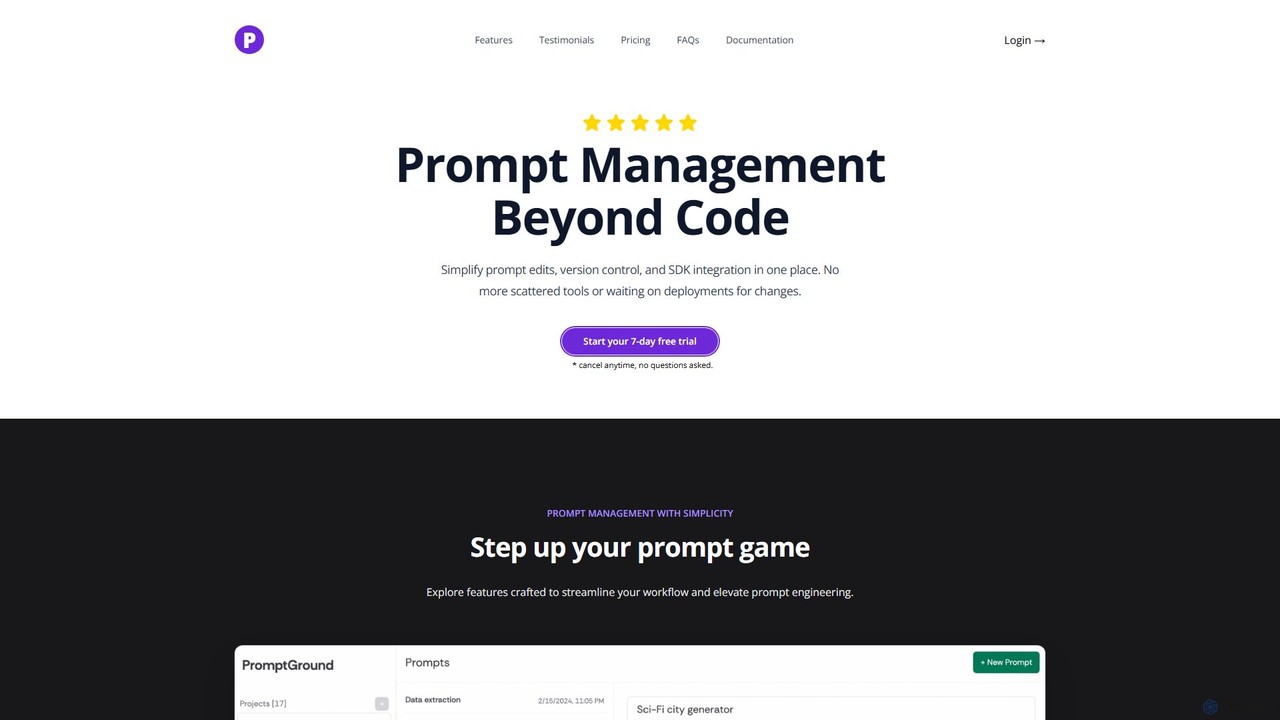
PromptGround is a centralized platform for developers and teams to manage, version, test, and analyze AI prompts. It decouples prompts from application code, enabling faster iteration, seamless collaboration, and data-driven optimization through a unified workspace with SDK integration.

Model Management
Visits 5.7KFavorites 102Likes 111
Ragas
Freemium

Ragas

Ragas is an open-source Python framework for evaluating and testing Retrieval-Augmented Generation (RAG) pipelines. It provides a suite of metrics to measure the performance of your LLM applications, from context retrieval to answer generation. Trusted by industry leaders like LangChain and LlamaIndex, Ragas helps developers build more robust, reliable, and accurate AI systems by identifying and mitigating issues like hallucinations and irrelevant responses.

Mlops
Visits 134.3KFavorites 116Likes 121
HIVE Digital Technologies
Paid

HIVE Digital Technologies

HIVE Digital Technologies is a global leader in building and operating cutting-edge, green energy-powered data centers. It provides high-performance computing (HPC) and GPU cloud infrastructure for AI solutions, alongside its large-scale Bitcoin mining operations, focusing on sustainability and data sovereignty.

Hpc
Visits 36KFavorites 120Likes 129
Roboto
Freemium

Roboto

Roboto is an advanced analytics engine designed for physical AI and robotics. It empowers robotics teams to organize, search, analyze, and automate workflows on vast amounts of multimodal data, including logs, video, and sensor data. This platform accelerates development, enhances system reliability, and helps uncover critical edge cases before deployment.

Robotics
Visits 15.9KFavorites 130Likes 120
Defang
Freemium

Defang

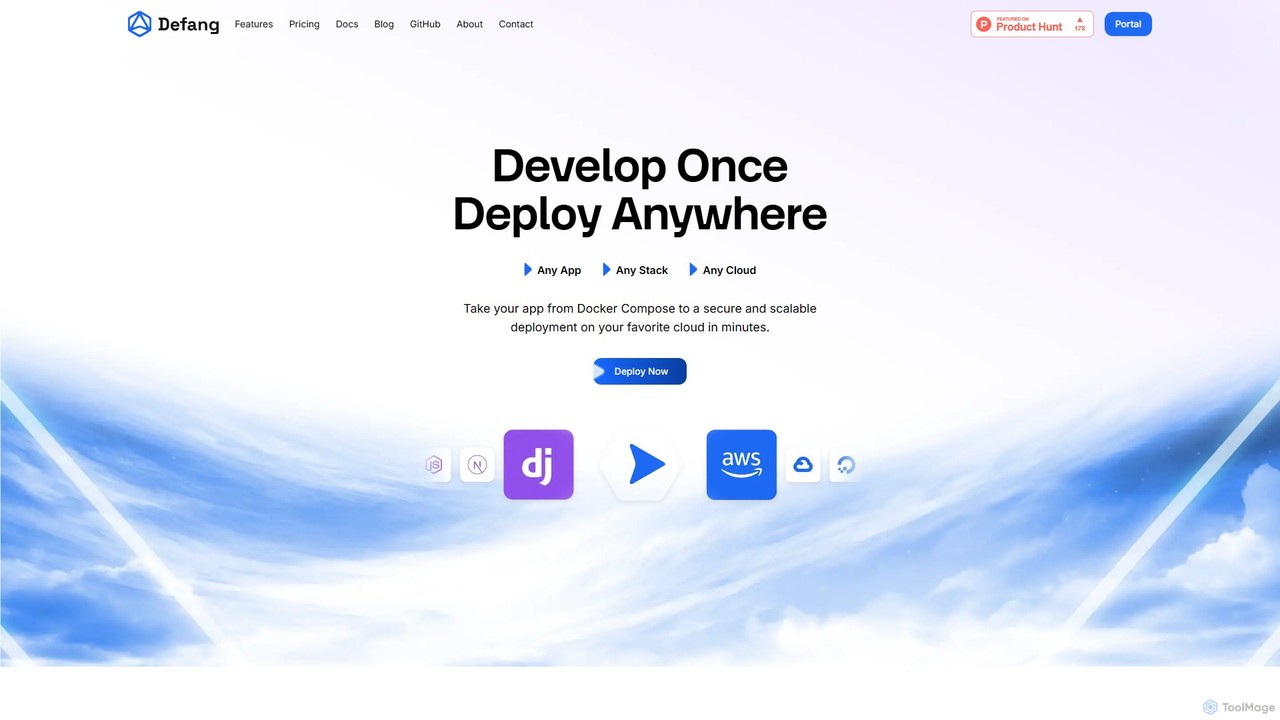
Defang is an AI-powered platform that simplifies cloud deployment. It enables developers to take any Docker Compose project and deploy it to major cloud providers like AWS and GCP with a single command, automating complex infrastructure setup, security, and scaling.

Platform As A Service (Paas)
Visits 26.1KFavorites 134Likes 125
Surge AI
Paid

Surge AI

Surge AI is a premier data labeling platform that provides elite human intelligence to power the development of advanced AI and AGI. Specializing in high-quality data for RLHF, model evaluation, and custom dataset creation, Surge AI partners with leading AI labs like OpenAI and Anthropic to train, align, and test next-generation models. They focus on the nuance and complexity required to build truly intelligent systems.

Mlops
Visits 224.1KFavorites 141Likes 137
Ratio1
Paid

Ratio1

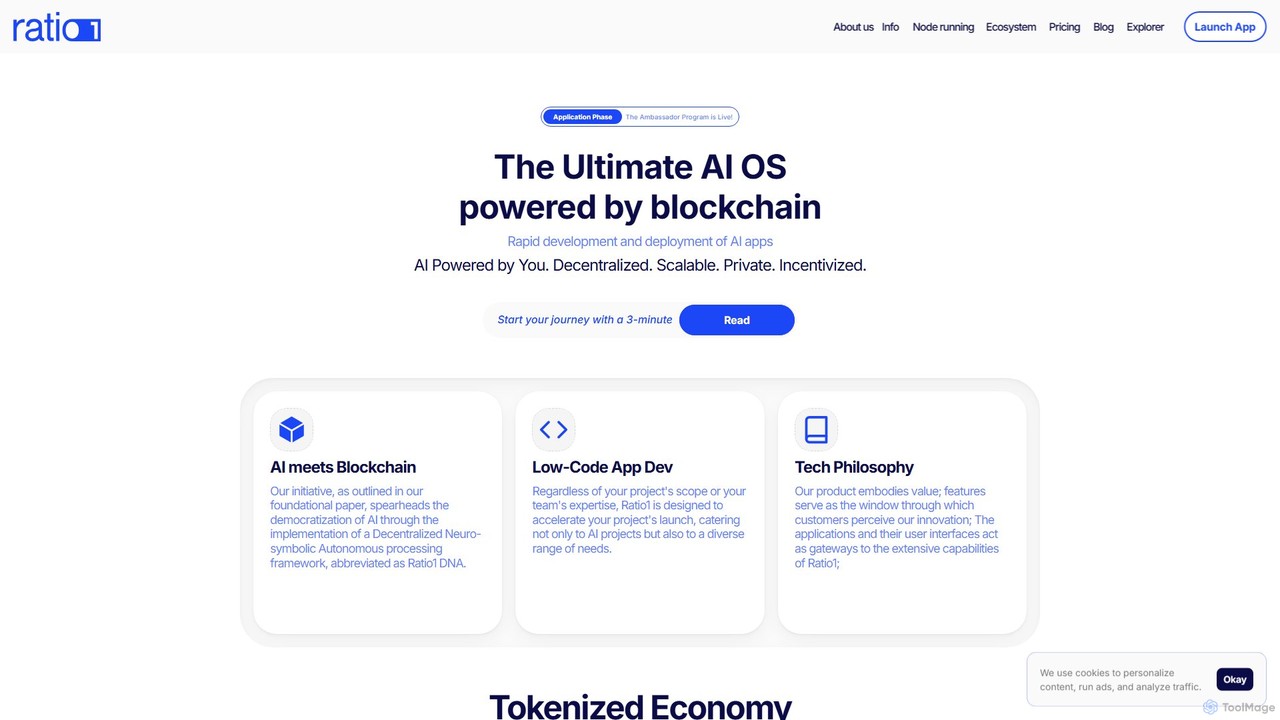
Ratio1 is a decentralized AI operating system powered by blockchain. It creates a global supercomputer by connecting idle devices, allowing users to monetize their hardware or access affordable, scalable GPU compute power for AI applications and development.

Gpu
Visits 5.9KFavorites 132Likes 142
HelixML
Paid

HelixML

HelixML is a private Generative AI platform designed for enterprises. It enables businesses to build, deploy, and manage secure, custom AI applications using their own data. With flexible deployment options (on-premise, VPC, cloud) and advanced features like RAG and fine-tuning, HelixML empowers industries like finance, healthcare, and energy to automate tasks, enhance decision-making, and drive revenue while ensuring full data privacy and compliance.

Model Deployment
Visits 6.7KFavorites 174Likes 146
Qubinets
Freemium

Qubinets

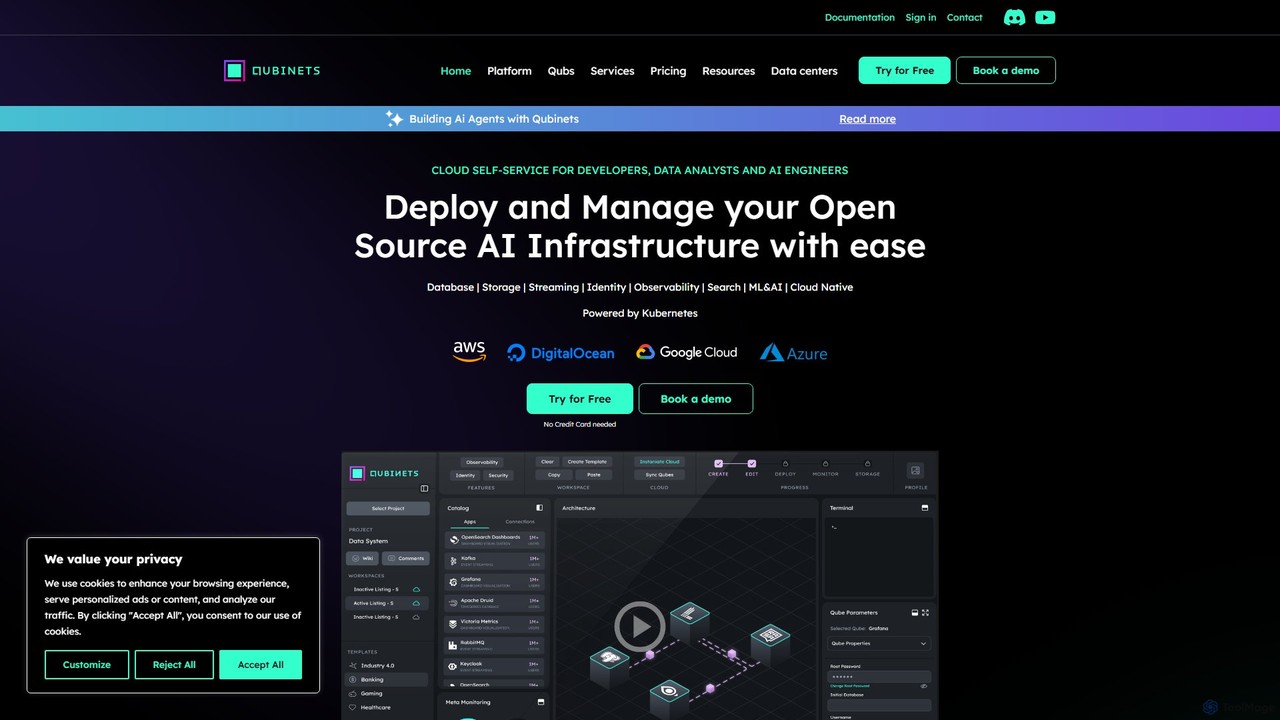
Qubinets is an AI-powered, self-service platform for developers, data analysts, and AI engineers. It simplifies and accelerates the deployment and management of open-source AI and data infrastructure on any cloud (AWS, Azure, GCP, DigitalOcean) using a Kubernetes-based, no-code UI. Focus on building applications, not on complex configurations.

Mlops
Visits 10.3KFavorites 127Likes 129
Grafbase
Freemium

Grafbase

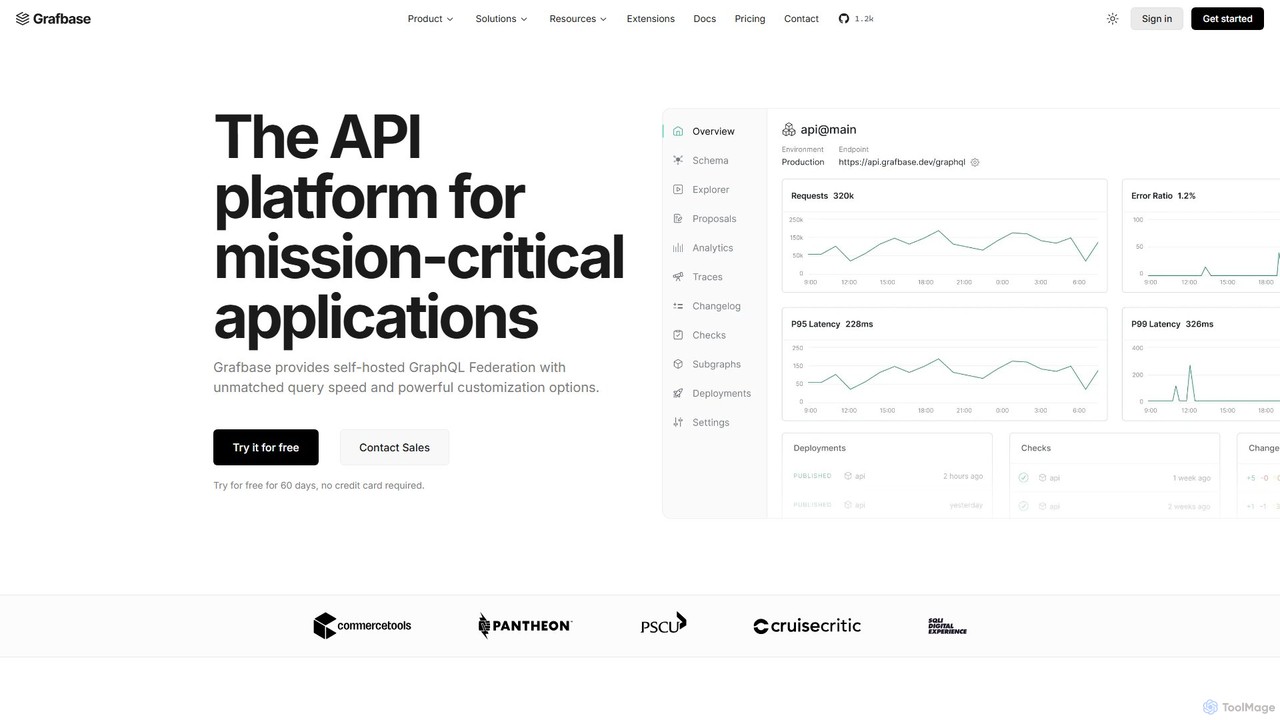
Grafbase is an enterprise-grade API platform for scaling GraphQL Federation. It provides a high-performance, self-hosted gateway built with Rust, offering unmatched speed and security. A key feature is its native support for the Model Context Protocol (MCP), enabling AI agents to query your APIs using natural language, making it a future-proof solution for building AI-powered applications.

Model Integration
Visits 9.4KFavorites 118Likes 119
SvectorDB
Freemium

SvectorDB

SvectorDB is a serverless vector database designed for developers. It simplifies building AI applications like recommendation engines, semantic search, and RAG systems with pay-per-request pricing, instant updates, and built-in vectorizers. Go from prototype to production with just a few lines of code.

Vector Search
Visits 8.1KFavorites 141Likes 160
Higress.AI
Freemium

Higress.AI

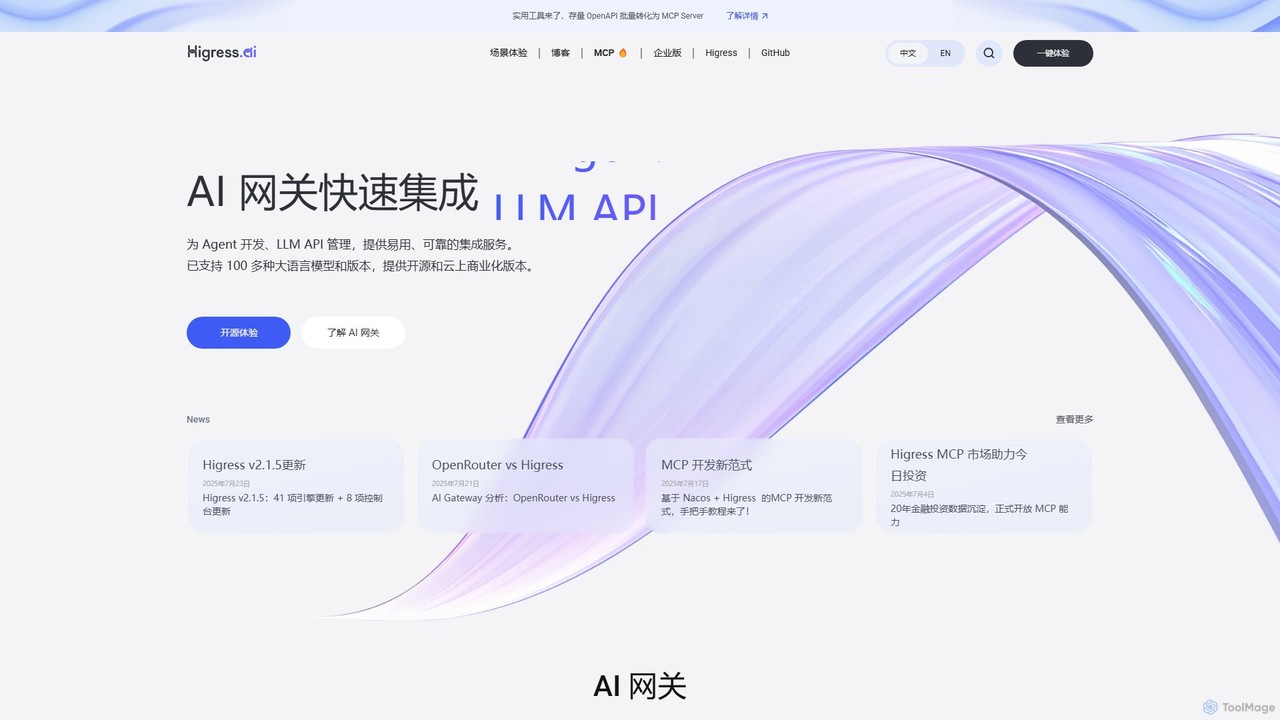
Higress.AI is an advanced, open-source AI Gateway designed for developers and enterprises. It simplifies the integration and management of Large Language Models (LLMs) and AI Agents by providing a unified API proxy for over 100 models. Key features include REST to MCP conversion, semantic caching, token-based rate limiting, and a robust plugin system, enabling secure, scalable, and observable AI application infrastructure.

Model Deployment
Visits 34.7KFavorites 104Likes 111
Visage Technologies
Paid

Visage Technologies

Visage Technologies provides advanced, high-performance computer vision solutions, specializing in face tracking, analysis, and recognition SDKs. With over 20 years of expertise, they offer custom AI development and edge AI optimization for industries like automotive, security, retail, and healthcare.

Sdk & Api
Visits 65.5KFavorites 157Likes 147
Voxel51
Freemium

Voxel51

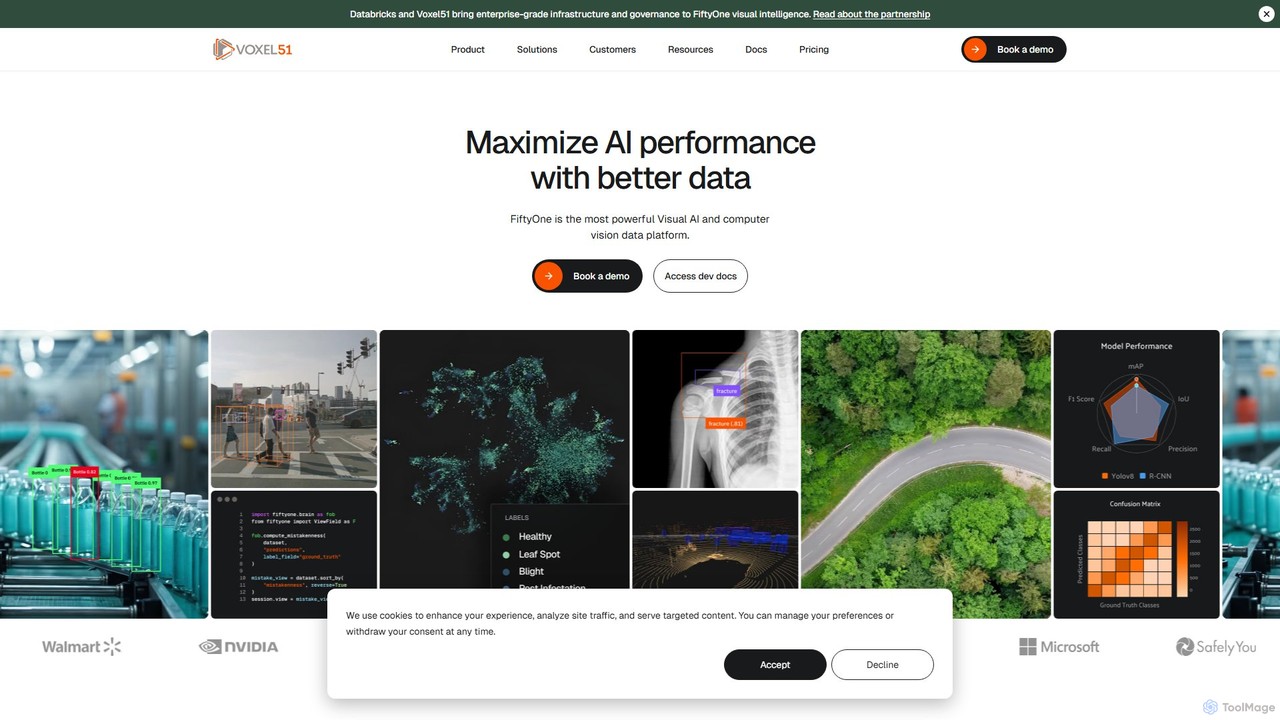
Voxel51 provides FiftyOne, an enterprise-grade computer vision and multimodal AI platform. It empowers developers and data scientists to curate, visualize, and evaluate complex datasets, leading to higher-performing models. By focusing on data-centric AI, FiftyOne streamlines workflows for data annotation, quality improvement, and model analysis, accelerating the entire development lifecycle.

Mlops
Visits 120.3KFavorites 125Likes 124
Imandra
Paid

Imandra

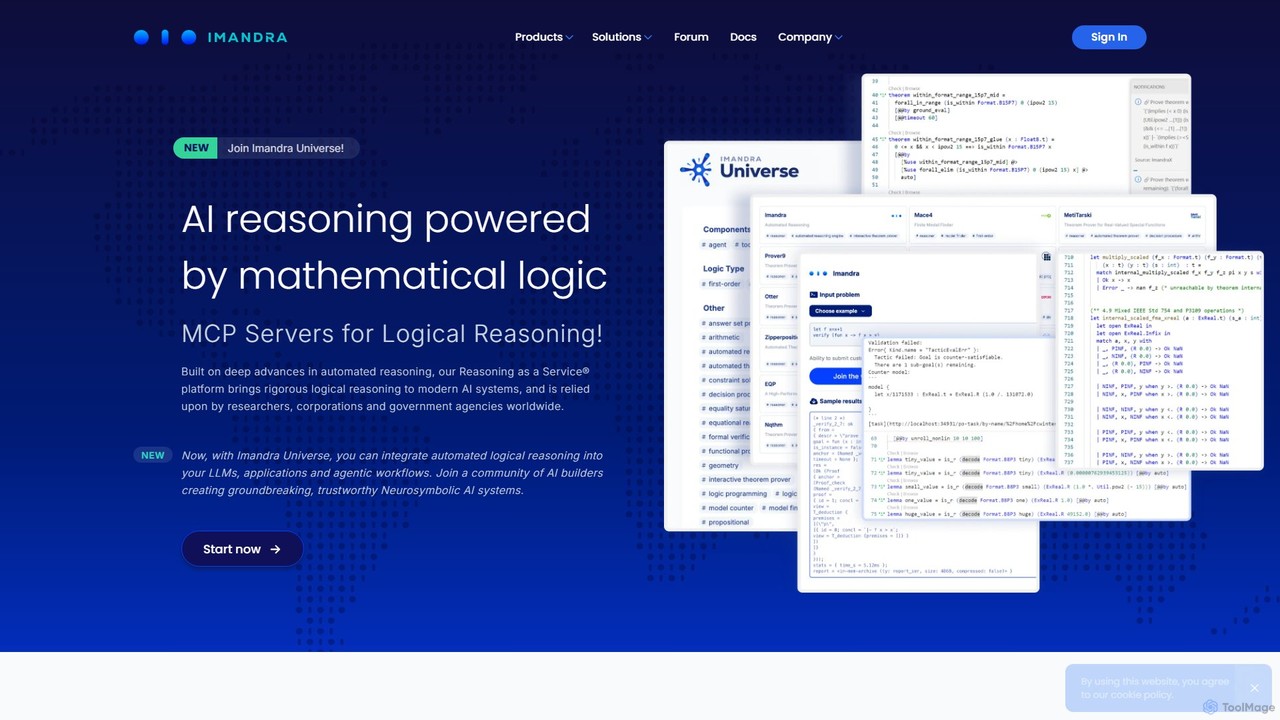
Imandra is a "Reasoning as a Service®" platform that brings mathematical logic and automated reasoning to AI and complex software systems. It enables formal verification, ensuring the correctness, safety, and reliability of critical algorithms in sectors like finance, defense, and autonomous systems.

Model Development
Visits 8.4KFavorites 117Likes 122
Teammately
Freemium

Teammately

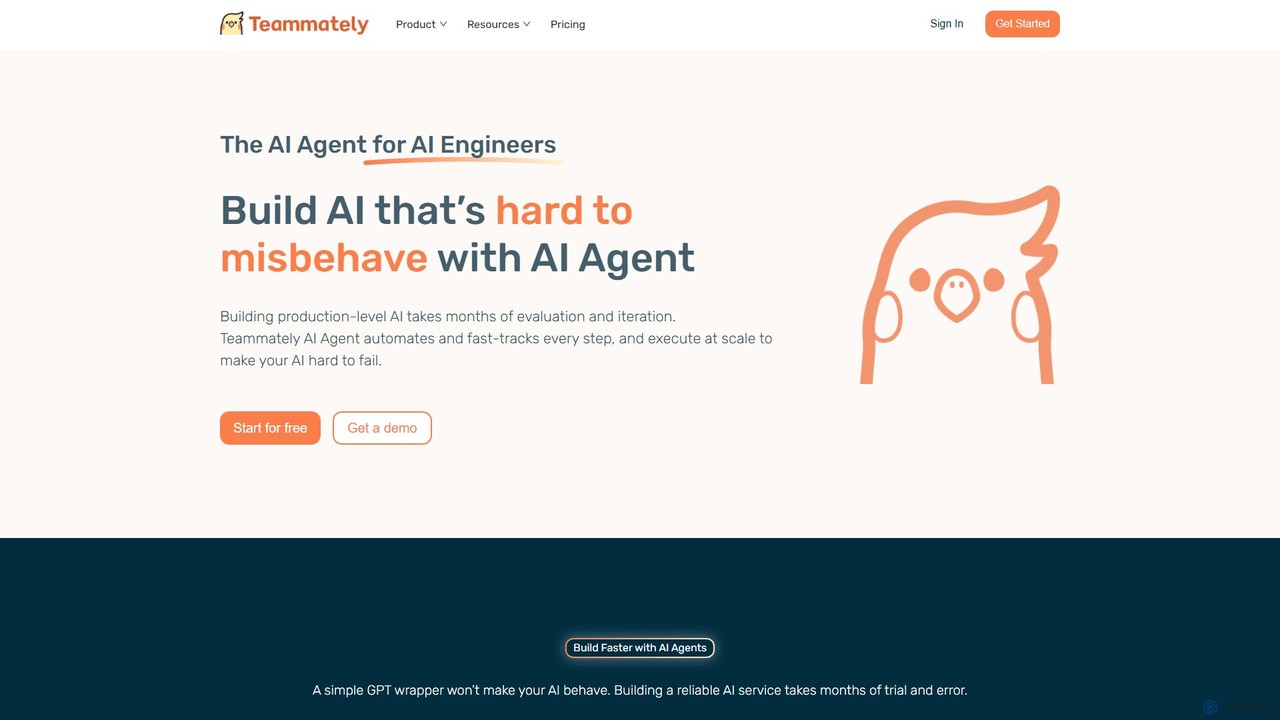
Teammately is an advanced AI agent platform for AI engineers. It automates and accelerates the entire AI development lifecycle, from prompt generation and RAG building to multi-dimensional evaluation and production observability. Build reliable, scalable, and secure AI applications that are hard to fail, in a fraction of the time.

Mlops
Visits 5.8KFavorites 138Likes 145
Narrow AI
Paid

Narrow AI

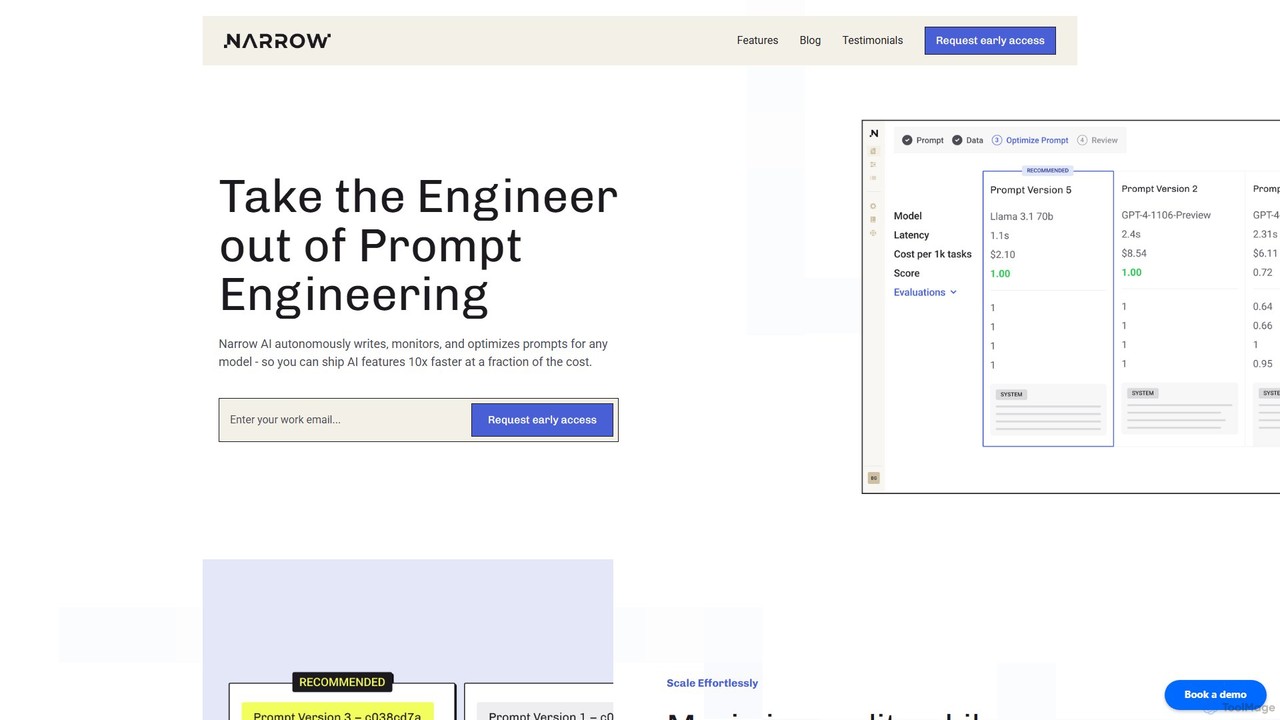
Narrow AI is an LLM optimization platform for developers that automates prompt engineering and model selection to drastically reduce AI operational costs by up to 95%. It streamlines workflows, improves accuracy, and accelerates the deployment of high-quality, low-latency AI features.

Model Optimization
Visits 7.6KFavorites 133Likes 140
Chroma
Freemium

Chroma

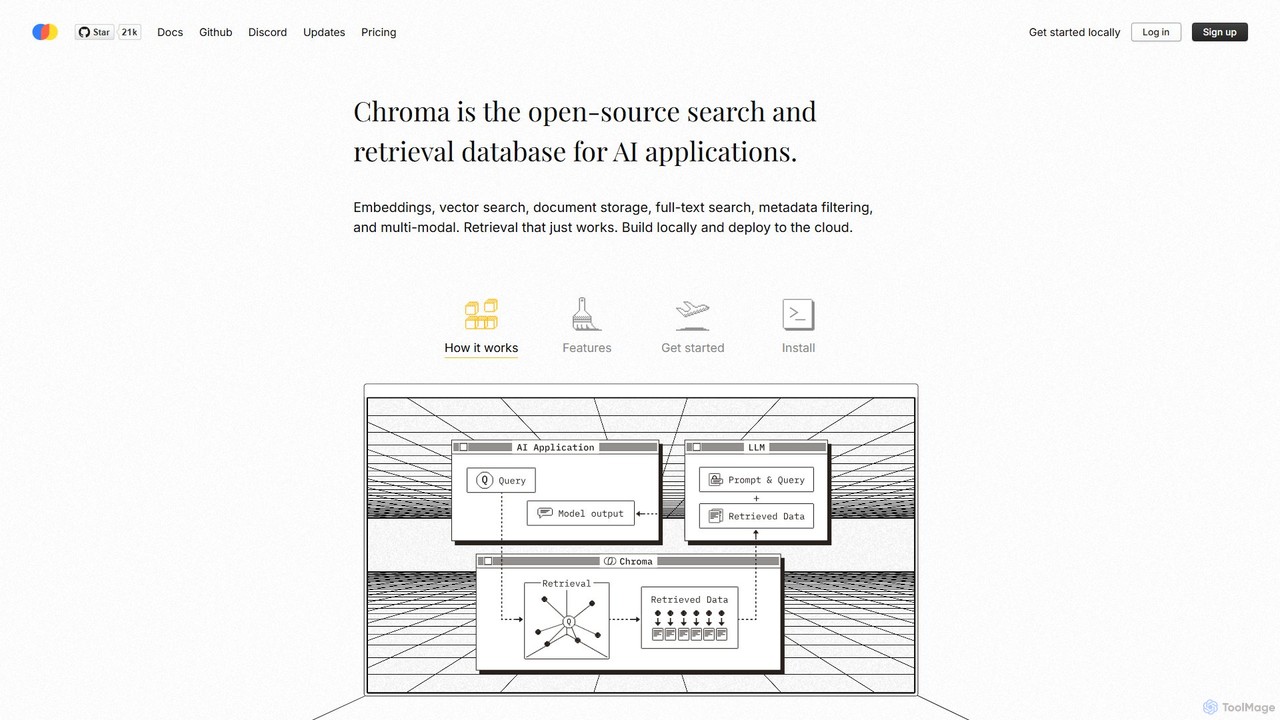
Chroma is the open-source, AI-native retrieval database designed for building powerful AI applications with Retrieval-Augmented Generation (RAG). It simplifies storing and searching embeddings, documents, and metadata, offering vector search, full-text search, and a scalable, serverless cloud platform. It's built to be easy to use, cost-effective, and powerful, from local development to large-scale production.

Vector Database
Visits 239.7KFavorites 152Likes 134
Wisent
Paid

Wisent

Wisent is a pioneering AI platform that utilizes representation engineering to provide unprecedented control over AI models. It allows developers to precisely modify and enhance the capabilities of existing LLMs like GPT-4 and Claude, such as creativity or safety, through a simple API. This offers a faster, more efficient alternative to traditional fine-tuning.

Model Deployment
Visits 5.8KFavorites 135Likes 135
LiveKit
Freemium

LiveKit

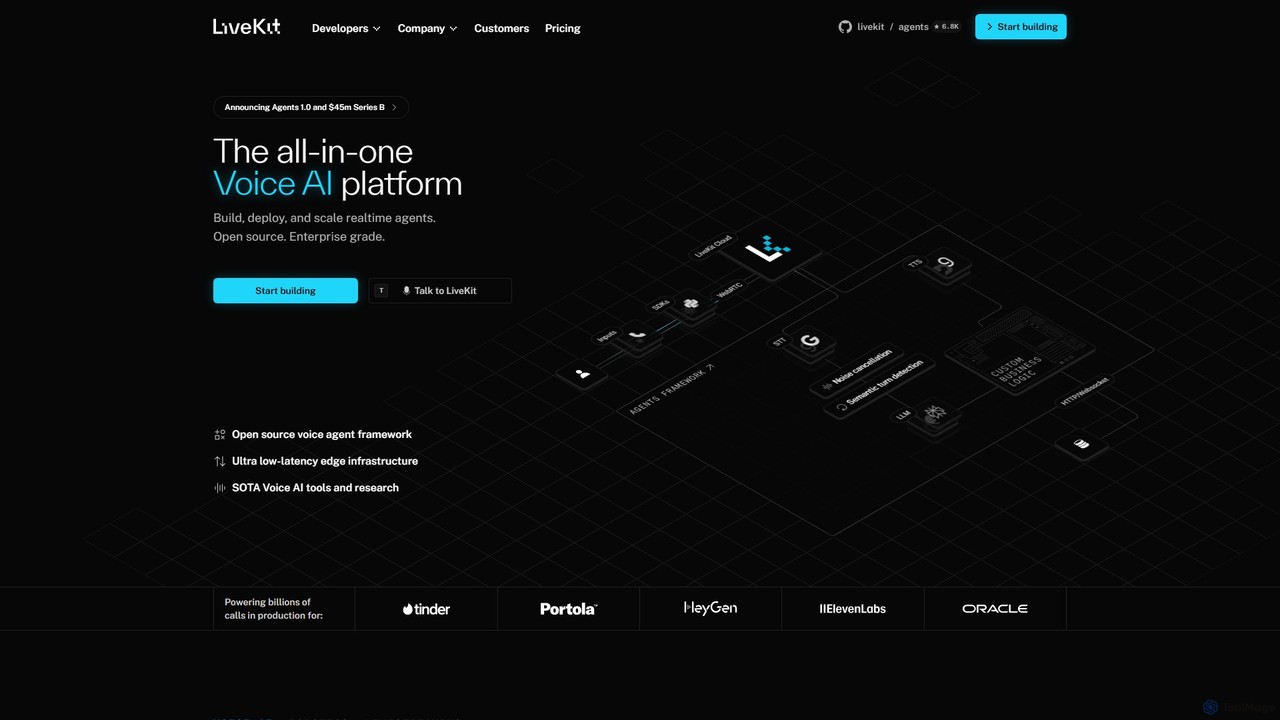
LiveKit is an all-in-one, open-source platform for building, deploying, and scaling real-time voice and video AI agents. It provides ultra-low latency infrastructure, powerful APIs, and state-of-the-art AI tools to enable developers to create conversational AI, robotics, and live streaming applications with enterprise-grade reliability and scalability.

Real Time Communication
Visits 545.6KFavorites 166Likes 166
AE Studio
Paid

AE Studio

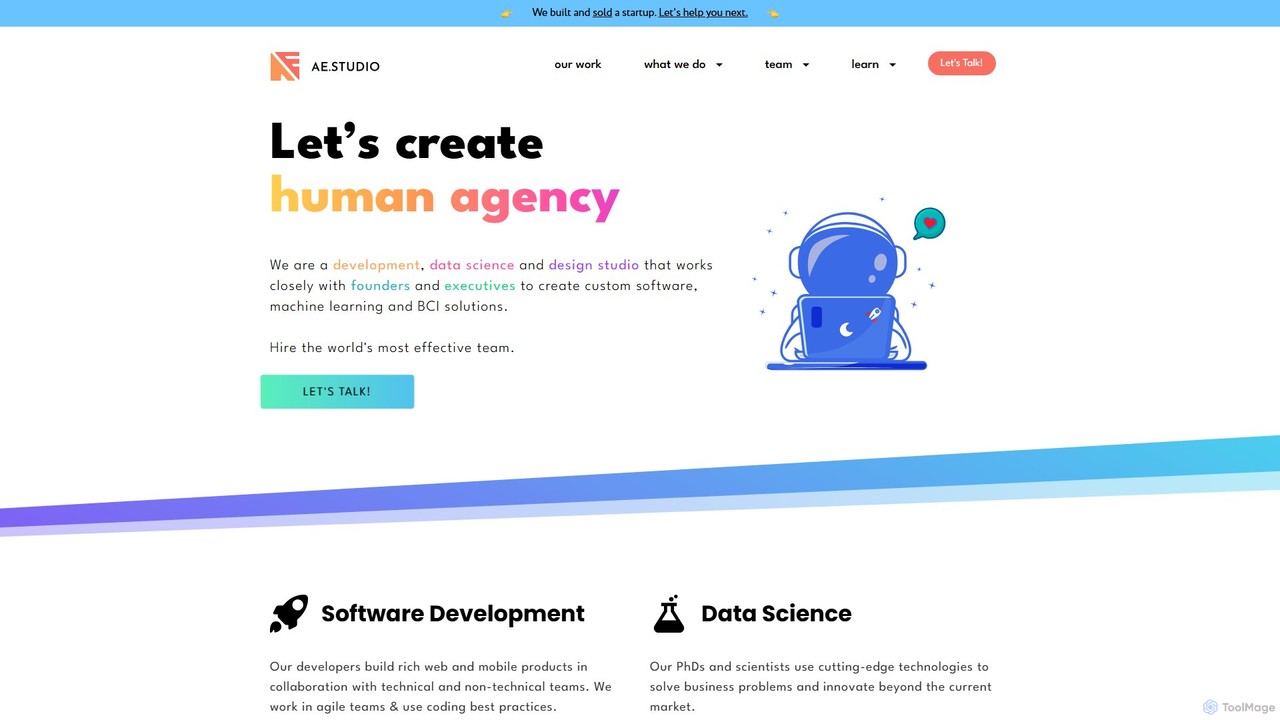
AE Studio is an elite development, data science, and design agency specializing in creating custom software, machine learning, and Brain-Computer Interface (BCI) solutions. They partner with founders and executives, acting as a dedicated team of senior experts to build innovative products with a focus on increasing human agency.

Custom Solutions
Visits 27.5KFavorites 122Likes 115
Flowise
Freemium

Flowise

Flowise is an open-source, low-code platform for visually building customized AI agents and applications. Using a drag-and-drop interface, developers and teams can rapidly prototype and deploy complex systems, from RAG-powered chatbots to multi-agent workflows. It supports over 100 LLMs, various data sources, and offers enterprise-grade features for scalable deployment.

Model Deployment
Visits 216.5KFavorites 141Likes 165

About Ai Infrastructure

AI Infrastructure provides the foundational hardware, software, and platforms necessary to build, train, deploy, and manage artificial intelligence models at scale. It encompasses specialized computing resources like GPUs, scalable data storage, and MLOps frameworks that streamline the entire machine learning lifecycle. This infrastructure is crucial for handling the immense computational and data requirements of modern AI, enabling developers and organizations to move from experimental models to production-grade applications efficiently. It acts as the essential power grid and plumbing for any serious AI development effort.

Core Features

  • GPU/TPU Compute Provisioning: Provides on-demand access to specialized processors optimized for the parallel computations required in deep learning.
  • MLOps Platforms: Offers integrated toolchains for automating model training, versioning, deployment, and monitoring (CI/CD for AI).
  • Scalable Data Storage: Delivers high-throughput storage solutions designed to handle petabyte-scale datasets for model training.
  • Model Serving Frameworks: Enables efficient deployment of trained models as scalable, low-latency APIs for real-time inference.
  • Data Processing & Labeling Tools: Includes services and frameworks for preparing, cleaning, and annotating large datasets to ensure model quality.

Use Cases

AI Infrastructure is primarily used by Machine Learning Engineers, Data Scientists, and AI Researchers within technology companies, research institutions, and large enterprises. It is fundamental for projects like training large language models (LLMs), developing computer vision systems for autonomous vehicles, or deploying real-time fraud detection algorithms in the financial sector. Any organization building custom AI solutions, rather than just using off-the-shelf AI tools, relies on this infrastructure.

How to Choose

When selecting AI Infrastructure, consider four key factors. First, evaluate the available computing power, specifically the types of GPUs or TPUs offered and their performance. Second, assess the MLOps capabilities for automation and lifecycle management. Third, analyze the cost structure, comparing pay-as-you-go models with reserved instances for long-term projects. Finally, check for compatibility with your preferred machine learning frameworks like PyTorch or TensorFlow and integration with your existing cloud ecosystem.

Featured tool rankings

Ai Infrastructure use cases

1

Training a Large Language Model (LLM)

An AI research lab needs to train a new foundation model from scratch. They utilize an AI infrastructure provider to provision a cluster of hundreds of high-performance GPUs. The platform allows them to manage a multi-terabyte text dataset, use distributed training frameworks to accelerate the process, and leverage an MLOps dashboard to track experiment metrics, manage checkpoints, and compare model performance. This setup reduces the training time from months to weeks and provides the necessary scalability to handle massive model parameters.

2

Deploying a Real-time Recommendation Engine

An e-commerce company wants to serve personalized product recommendations to millions of users. Their ML engineers use a model serving platform within their AI infrastructure to deploy a trained recommendation model as a scalable API. The platform handles auto-scaling to manage traffic spikes during sales events, provides low-latency inference to ensure a smooth user experience, and offers monitoring tools to detect model drift or performance degradation. This allows them to maintain a high-quality, responsive recommendation service without managing the underlying server complexity.

3

Building a Computer Vision Data Pipeline

An autonomous vehicle company collects petabytes of sensor data daily. Data scientists use AI infrastructure to build an automated data pipeline. This involves using scalable object storage to house the raw data, distributed computing frameworks to preprocess and transform it, and integrated data labeling services to annotate images for training. The infrastructure's ability to process massive datasets in parallel is critical for iterating on perception models quickly and improving the vehicle's safety and reliability.

4

Fine-tuning a Model for Enterprise Use

A financial services firm wants to use a generative AI model for internal knowledge management, but it needs to be trained on their proprietary data. They use a managed AI platform that provides a secure environment for fine-tuning. The infrastructure ensures data privacy and compliance. The MLOps tools allow them to version control the fine-tuned models, run evaluations to prevent harmful outputs, and deploy the specialized model as a secure internal API for employee use, all within a controlled and auditable environment.

5

Managing the Lifecycle of Multiple ML Models

A marketing technology company operates dozens of models for ad bidding and customer segmentation. Their DevOps team uses an MLOps platform to manage the entire lifecycle. The platform automates the retraining of models on new data, runs A/B tests to compare new versions against the current production model, and provides a central registry to track all deployed models. This systematic approach ensures models remain accurate and allows the team to manage a complex portfolio of AI services efficiently.

6

Providing AI-as-a-Service via API

An AI startup develops a proprietary algorithm for audio transcription. To monetize it, they use AI infrastructure to package the model into a secure, reliable, and scalable API. The infrastructure provider handles user authentication, rate limiting, billing integration, and provides a developer portal with documentation. This allows the startup to focus on improving their core AI model while the infrastructure handles the complexities of delivering it as a commercial service to thousands of developers and businesses.

Ai Infrastructure FAQ

What is AI Infrastructure?

AI Infrastructure is the complete set of foundational technologies used to build, train, and run AI models. It's not the AI application itself, but the underlying 'factory' that makes it possible. This includes specialized hardware like GPUs and TPUs for computation, scalable storage for massive datasets, high-speed networking, and software platforms like MLOps for managing the entire AI lifecycle from development to production.

How do I choose the right AI Infrastructure provider?

Choosing the right provider depends on your specific needs. Consider these factors:

  • Compute Requirements: Do you need access to the latest, most powerful GPUs (like NVIDIA H100s) for training large models, or are more cost-effective options sufficient for inference?
  • Scalability: Can the platform easily scale your resources up or down based on demand?
  • MLOps Tooling: Does the provider offer a comprehensive suite of tools for experiment tracking, model versioning, and automated deployment?
  • Cost: Compare pricing models. Pay-as-you-go is flexible for experimentation, while reserved instances can be cheaper for long-term, predictable workloads.
  • Ecosystem: How well does it integrate with your existing data sources, cloud services, and preferred ML frameworks (e.g., PyTorch, TensorFlow)?
What's the difference between AI Infrastructure and a pre-trained AI model?

The difference is like that between a car factory and a car. AI Infrastructure is the 'factory'—it's the entire collection of hardware (GPUs), software (MLOps), and services needed to build, train, and operate AI. A pre-trained AI model (like GPT-4) is the 'car'—a finished product created using that infrastructure. You use infrastructure to create new models, fine-tune existing ones, or run them for your applications. You use a pre-trained model to perform a specific task, like generating text or analyzing images.

What are the key components of AI Infrastructure?

AI Infrastructure is typically composed of several key layers:

  • Compute: This is the engine, primarily consisting of Graphics Processing Units (GPUs) or Tensor Processing Units (TPUs) that are highly efficient at parallel processing tasks common in AI.
  • Storage: High-performance, scalable storage systems (like object storage) are needed to hold and quickly access the massive datasets required for training.
  • Networking: High-speed, low-latency networking is crucial to connect compute nodes and storage, especially for distributed training across many machines.
  • MLOps/Software Platform: This layer includes tools for data management, experiment tracking, model versioning, automated deployment (CI/CD), and performance monitoring.
Who needs to use AI Infrastructure tools?

AI Infrastructure is essential for professionals who are actively building, training, or managing AI models, rather than just using AI-powered applications. Key users include:

  • Machine Learning Engineers: They build and maintain the production systems that run AI models.
  • Data Scientists: They use the infrastructure to experiment with data, build, and train models.
  • AI Researchers: They require massive computational power to train and test new, state-of-the-art architectures.
  • DevOps/MLOps Engineers: They focus on automating the deployment, scaling, and monitoring of models in production environments.

It is generally not intended for business end-users, marketers, or content creators who consume AI services through a finished application.