ToolMage
Sign in

Best 185 Ai Infrastructure AI tools

Popular Ai Infrastructure AI tools include codegate, OpenRouter, MongoDB, Nous Research, Databricks, LangChain, LM Studio, Firecrawl, Composio, and Vast.ai, helping you work more efficiently.

OpenLIT
Free

OpenLIT

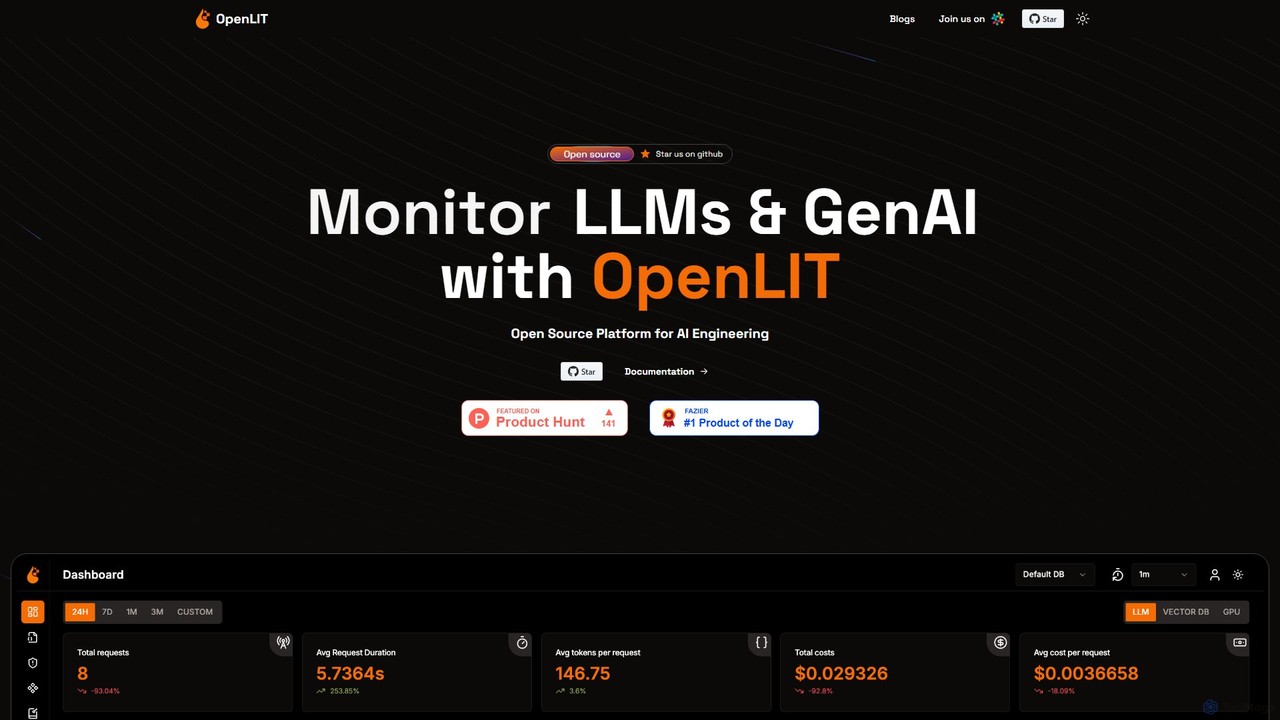
OpenLIT is an open-source, OpenTelemetry-native observability platform for Generative AI and LLM applications. It simplifies development with tools for request tracing, cost tracking, exception monitoring, and performance analysis. Featuring a centralized prompt repository, a secure vault for secrets, and a playground for comparing LLMs, OpenLIT provides a comprehensive solution for monitoring and scaling AI applications efficiently.

Model Management
Visits 14.8KFavorites 115Likes 115

EvalsOne
Paid

EvalsOne

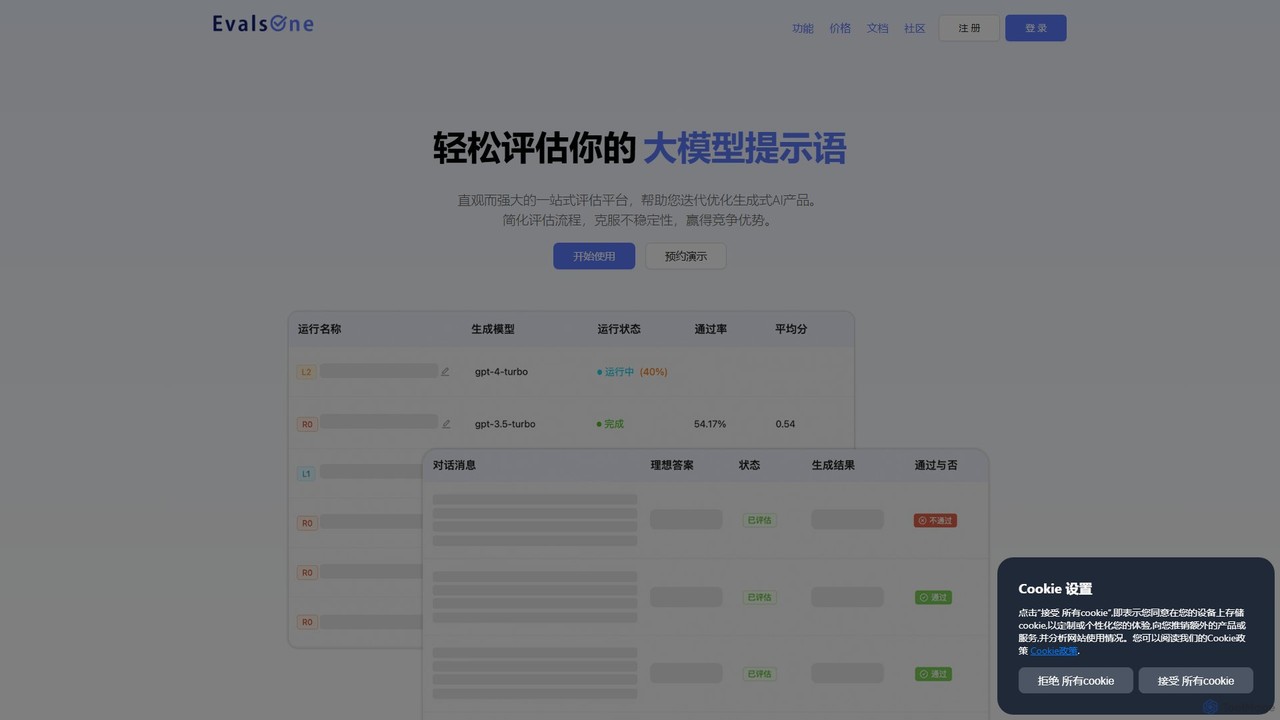
EvalsOne is an all-in-one evaluation platform designed for generative AI applications. It empowers teams to effortlessly assess, iterate, and optimize LLM prompts, RAG pipelines, and AI agents through a powerful, intuitive interface, ensuring robust and competitive AI products.

Model Management
Visits 6.3KFavorites 113Likes 111
Nous Research
Freemium

Nous Research

Nous Research is an AI research organization dedicated to developing open-source, human-centric language models. They focus on democratizing AI through decentralized training infrastructure, advanced model architectures, and powerful inference APIs, challenging the conventional closed-model approach.

Decentralized Computing
Visits 5.6MFavorites 146Likes 137
Anyscale
Freemium

Anyscale

Anyscale is a fully-managed compute platform for scaling AI and Python workloads. Built on the open-source Ray framework by its original creators, it empowers developers to build, run, and scale distributed applications, from LLM training to data processing, with optimized performance and cost-efficiency on any cloud.

Mlops
Visits 78.4KFavorites 127Likes 135
Wavify
Freemium

Wavify

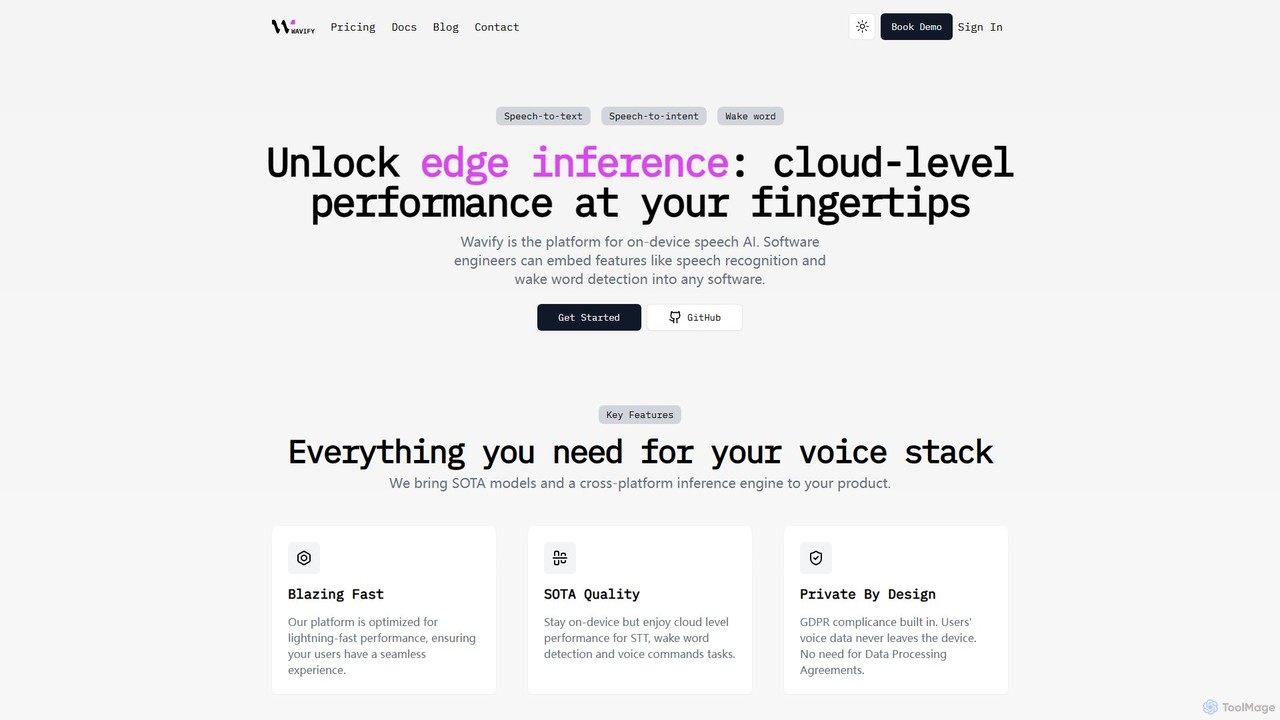
Wavify is a developer-focused platform for on-device speech AI. It provides high-performance, private, and cross-platform SDKs for integrating features like speech-to-text, wake word detection, and speech-to-intent into any application. It ensures cloud-level accuracy while processing all data locally on the user's device, guaranteeing privacy and offline functionality.

Edge Computing
Visits 5.7KFavorites 99Likes 117
David AI
Paid

David AI

David AI provides high-quality, research-grade audio datasets for training advanced speech and conversational AI models. It offers diverse, large-scale datasets, including multilingual conversations, multi-speaker audio, and expert dialogues, with options for custom dataset creation to unlock new AI capabilities.

Model Training
Visits 29.6KFavorites 89Likes 97
Oosto
Paid

Oosto

Oosto (formerly AnyVision) is a leading Vision AI platform specializing in real-time facial recognition and video analytics for enterprise security. It enhances physical security by identifying persons of interest, automating access control, and providing actionable operational intelligence from existing video streams.

Vision Ai
Visits 9.6KFavorites 133Likes 135
Matrices
Paid

Matrices

A specialized platform offering realistic Reinforcement Learning (RL) environments for training Large Language Model (LLM) agents. It enables developers and researchers to build, test, and deploy autonomous agents capable of performing complex tasks on computers, from web navigation to software operation.

Training Platform
Visits 9.6KFavorites 127Likes 129
SurrealDB
Freemium

SurrealDB

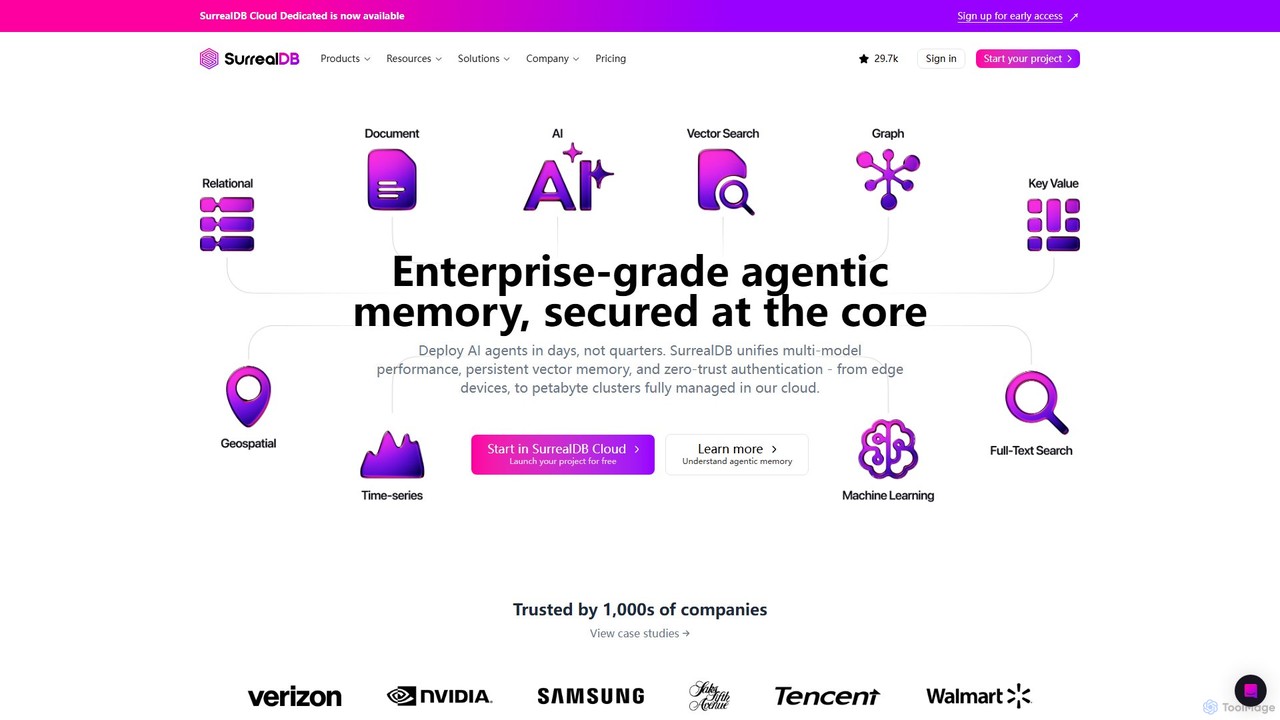
SurrealDB is a next-generation, multi-model cloud database designed for modern applications. It simplifies backend development by unifying document, relational, graph, and time-series models with built-in full-text search, vector search, and in-database machine learning. Built for scalability and real-time data, it empowers developers to build complex, AI-powered applications with unprecedented ease and speed.

Vector Database
Visits 103.2KFavorites 139Likes 138
Hailo
Paid

Hailo

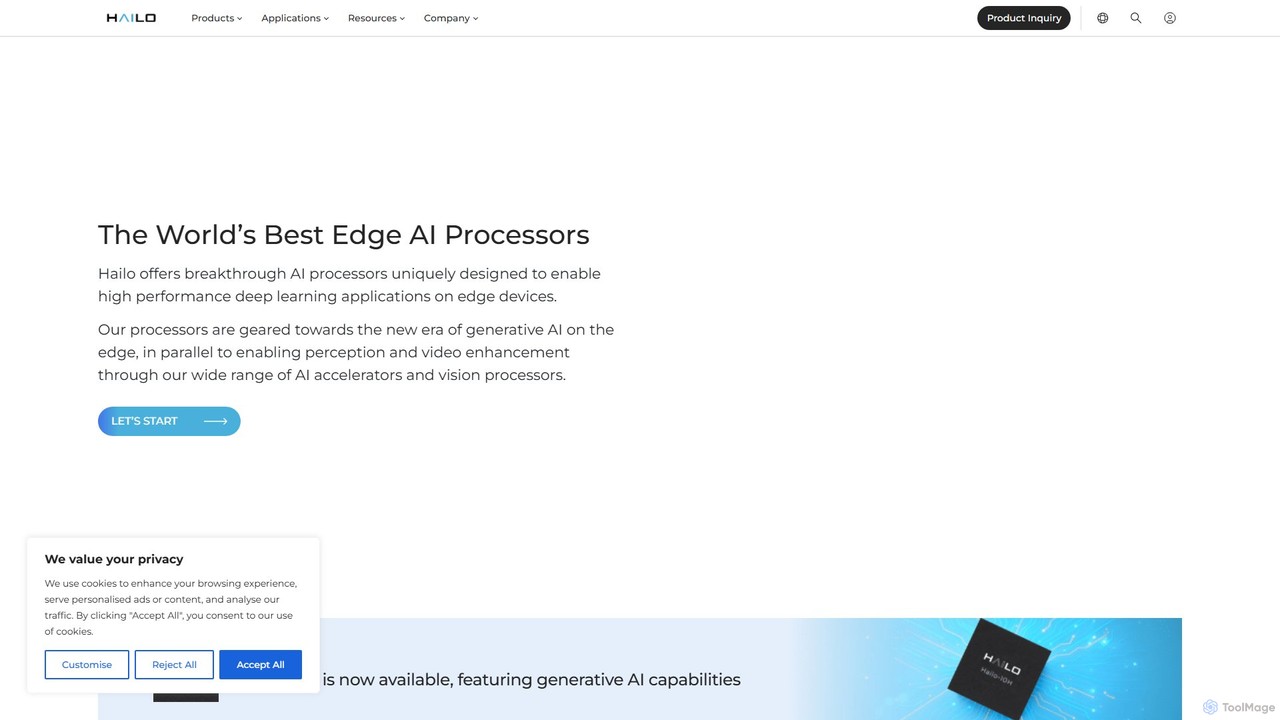
Hailo is a leading chipmaker of high-performance AI processors for edge devices. Their solutions, including the Hailo-8 and Hailo-10H accelerators, enable data center-class AI performance and generative AI capabilities directly on edge devices. They focus on exceptional power efficiency, low latency, and cost-effectiveness for sectors like automotive, smart cities, retail, and industrial automation.

Edge Computing
Visits 148KFavorites 154Likes 176
Gooey.AI
Freemium

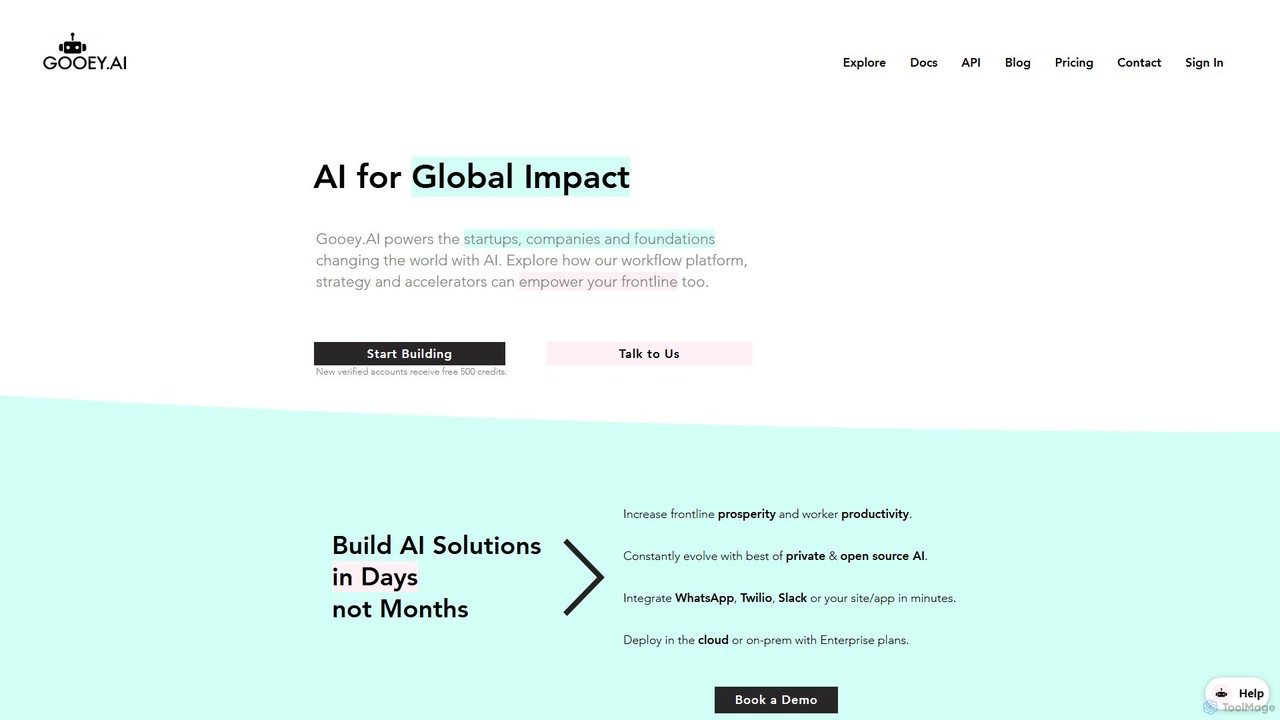
Gooey.AI

Gooey.AI is a powerful AI workflow platform that enables developers and organizations to build, deploy, and manage complex AI solutions. It provides unified access to the best private and open-source AI models, facilitating the rapid creation of multilingual chatbots, RAG-based copilots, and other generative AI applications with integrations for WhatsApp, Slack, and APIs.

Model Deployment
Visits 108.6KFavorites 149Likes 122
Atla AI
Freemium

Atla AI

Atla AI is an observability and evaluation platform designed for AI agents. It helps developers find, understand, and fix agent failures by providing deep insights into their behavior. The platform automatically detects errors, identifies recurring patterns, and offers actionable suggestions to continuously improve agent performance and completion rates.

Model Evaluation
Visits 8.7KFavorites 122Likes 119
PromptPoint
Freemium

PromptPoint

A collaborative, no-code platform for teams to design, test, deploy, and monitor LLM prompts. It offers automated testing, versioning, and multi-LLM support to ensure high-quality, predictable AI outputs.

Llm Ops
Visits 5.8KFavorites 164Likes 160
Juice
Freemium

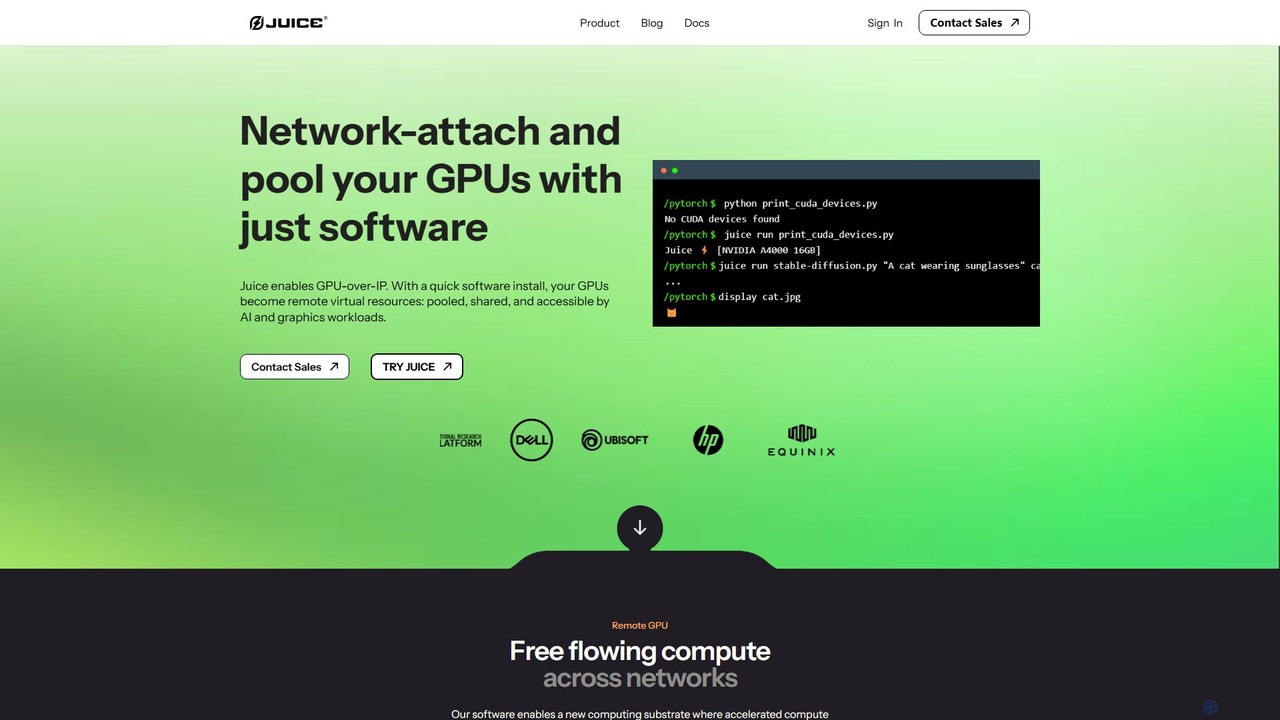
Juice

Juice is a software-only platform that enables GPU-over-IP, allowing you to access, share, and pool GPU resources across any standard network. It decouples GPUs from physical machines, turning any CPU node into a GPU-accelerated system on demand, optimizing utilization and significantly reducing costs for AI and graphics workloads without code changes.

Gpu Virtualization
Visits 6.9KFavorites 127Likes 127
Innovatiana
Paid

Innovatiana

Innovatiana is a specialized service providing high-quality, ethically-sourced training data for AI models. They offer custom dataset creation and data labeling for computer vision, NLP, generative AI, and document processing. By employing dedicated, trained teams instead of crowdsourcing, Innovatiana ensures superior data accuracy, security, and responsible AI development, helping companies build more robust and unbiased models.

Dataset Creation
Visits 66.7KFavorites 140Likes 139
QuarkIQL

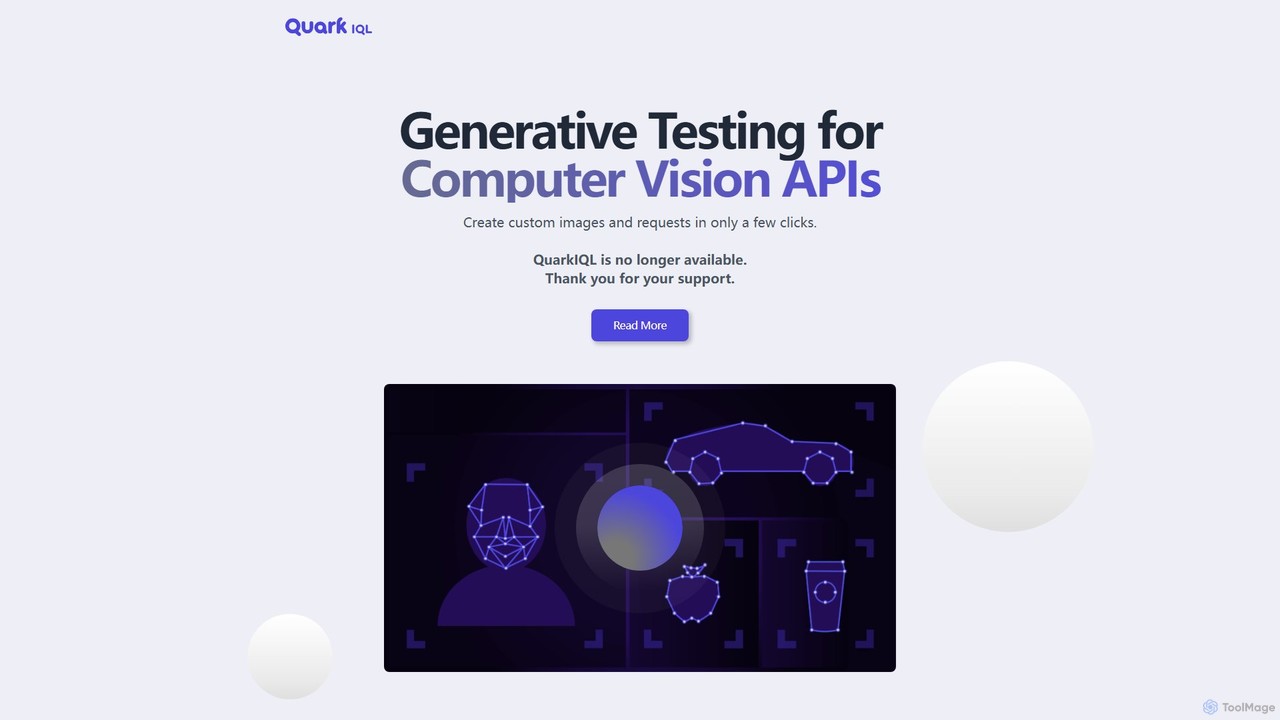
QuarkIQL

A former generative testing platform for computer vision APIs that allowed developers to create custom synthetic images and API requests to streamline testing workflows. Please note: This tool is no longer available.

Mlops
Visits 5.8KFavorites 163Likes 152
Labellerr
Freemium

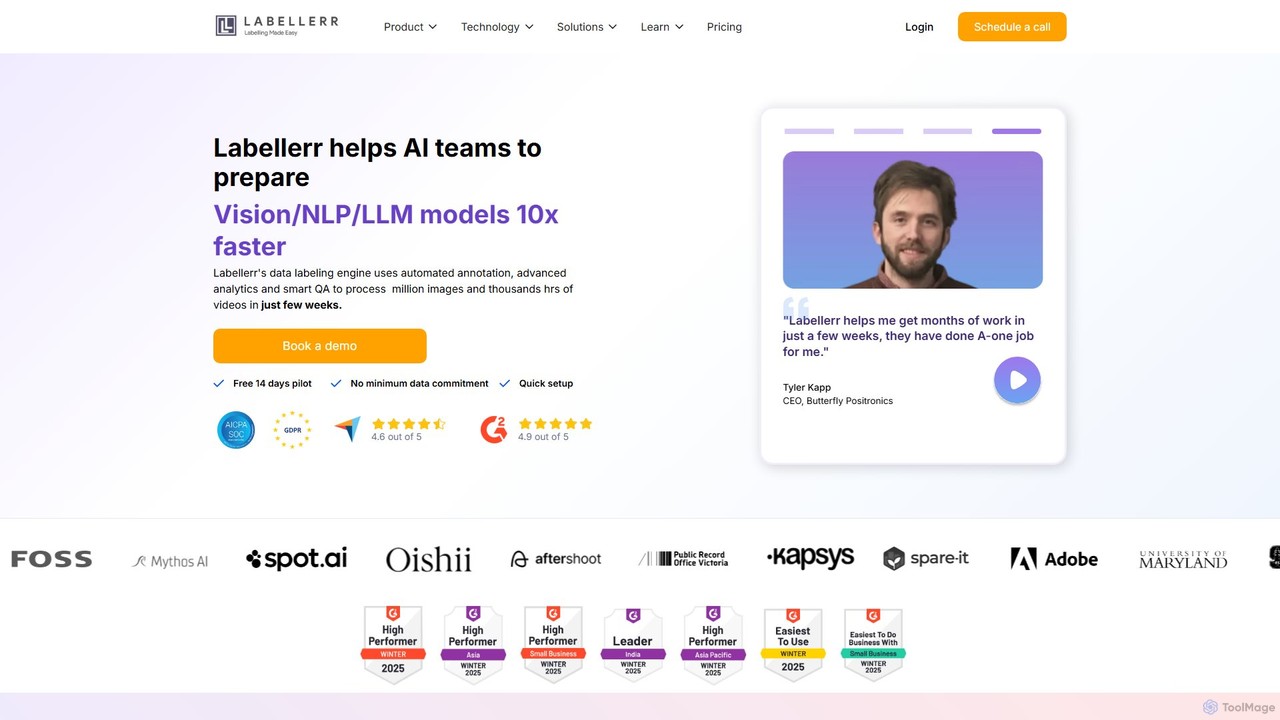
Labellerr

Labellerr is an AI-powered data labeling and annotation platform designed to accelerate the development of Vision, NLP, and LLM models. It offers automated annotation, smart quality assurance, and seamless MLOps integration to deliver 99% accurate labels up to 99x faster, significantly reducing data preparation time and development costs for AI teams.

Machine Learning Operations
Visits 115.5KFavorites 162Likes 163
Rerun
Freemium

Rerun

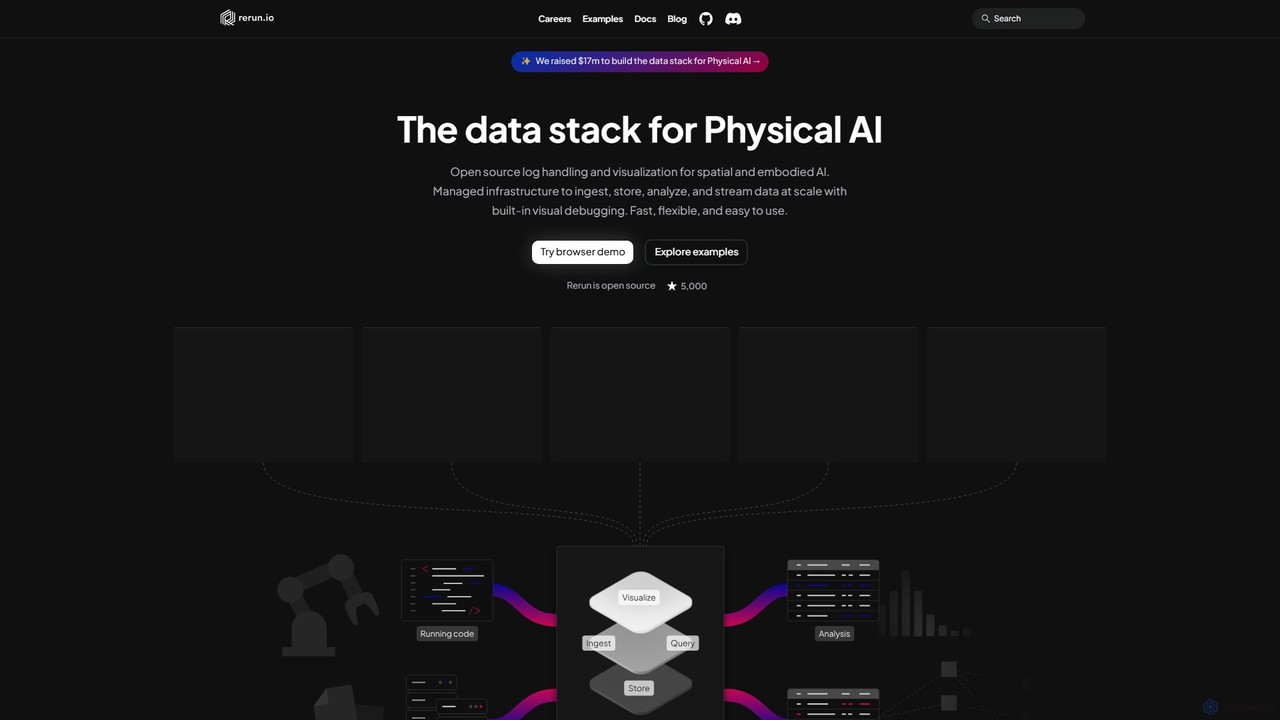
Rerun is an open-source data stack for Physical AI, providing powerful logging and visualization tools for multimodal, time-series data. Designed for robotics, computer vision, and spatial computing, it helps developers understand and debug complex systems with SDKs for Python, Rust, and C++.

Machine Learning
Visits 93.6KFavorites 129Likes 143
Firecrawl
Freemium

Firecrawl

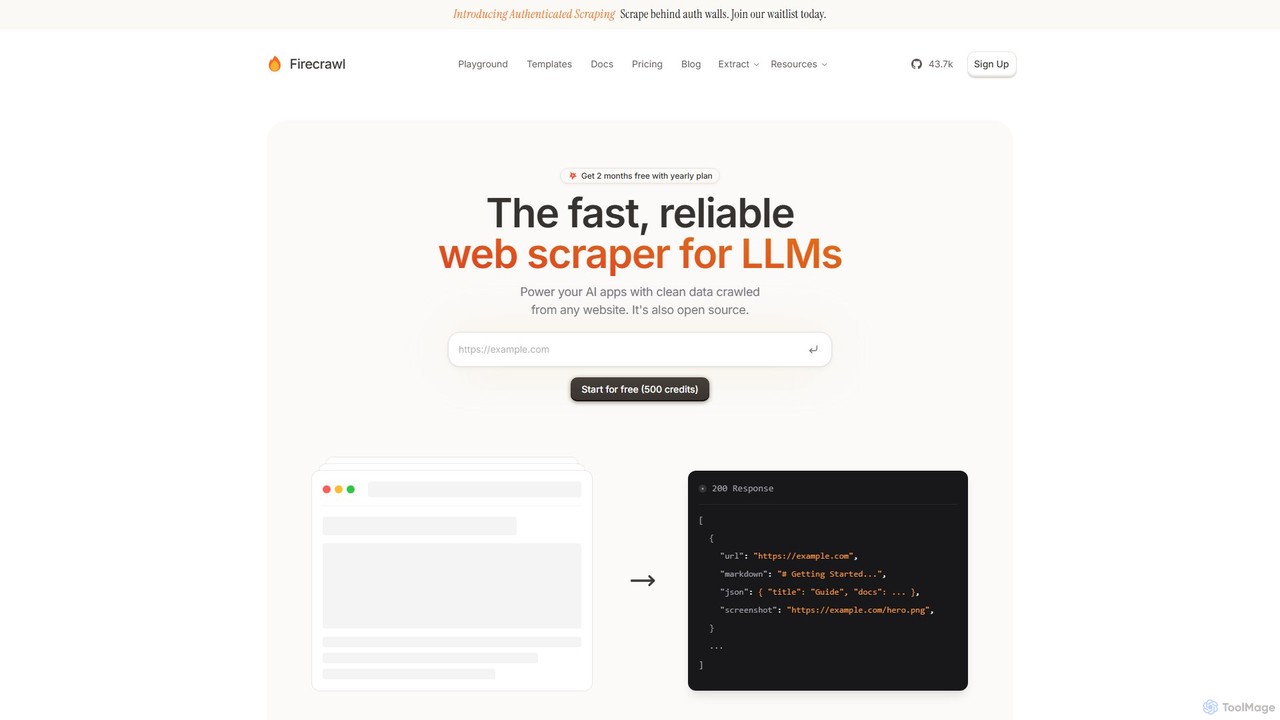
Firecrawl is an open-source, developer-first API that turns any website into clean, LLM-ready data. It handles all the complexities of web scraping, including JavaScript rendering, proxy rotation, and rate limits, allowing you to power AI applications, agents, and RAG systems with reliable web content. It offers scraping, crawling, and search functionalities through a simple API.

Data Collection
Visits 1.5MFavorites 140Likes 137
LanceDB
Freemium

LanceDB

LanceDB is an open-source, AI-native multimodal lakehouse designed for building and scaling AI applications. It provides a unified platform for storing, searching, and managing complex data like text, images, voice, and vectors. Ideal for RAG, semantic search, and model training, LanceDB offers blazing-fast hybrid search, massive scalability to petabytes, and significant cost savings, making it a powerful foundation for enterprise-grade AI.

Vector Database
Visits 76.2KFavorites 137Likes 128
TUGADOT
Paid

TUGADOT

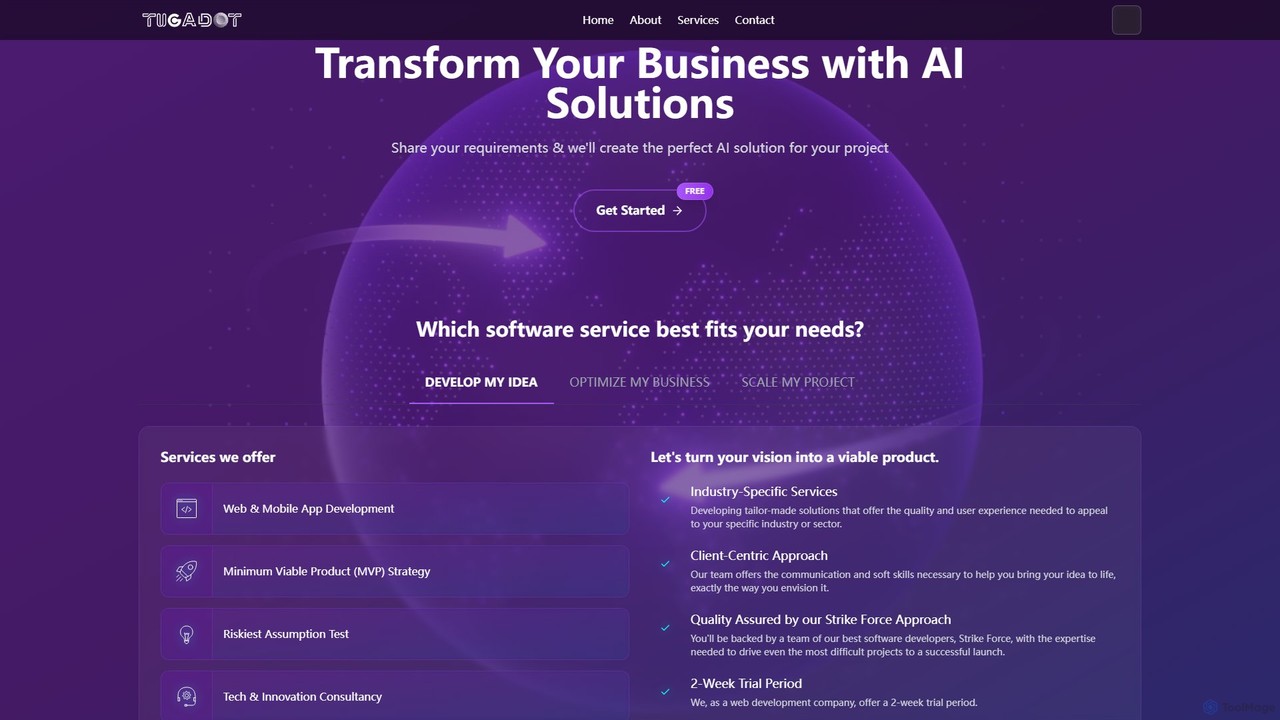
TUGADOT is a custom software development and AI integration agency. They partner with businesses to transform ideas into powerful, tailor-made technological solutions, including web/mobile apps, MVP development, and advanced AI systems.

Model Integration
Visits 5.8KFavorites 109Likes 116
LambdaTest
Freemium

LambdaTest

LambdaTest is an AI-powered, cloud-based testing platform that enables developers and QA teams to perform cross-browser, real device, and automated testing at scale. It offers a unified environment for web and mobile app testing to accelerate release cycles and ensure high-quality software delivery.

Cloud Platforms
Visits 342.3KFavorites 153Likes 158
LakeSail
Freemium

LakeSail

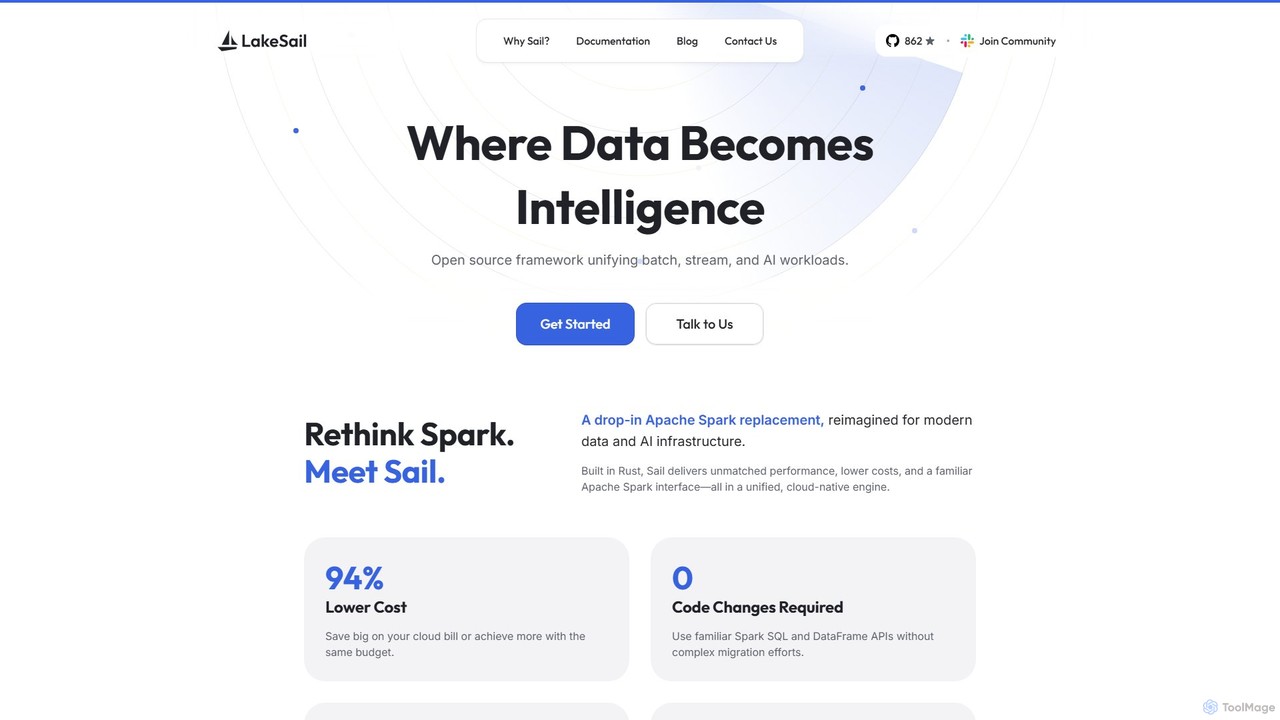
LakeSail offers a high-performance, open-source framework called Sail, designed as a drop-in replacement for Apache Spark. Built in Rust, it unifies batch, stream, and AI workloads, delivering up to 8x faster execution and 94% lower cloud costs without requiring any code changes. It eliminates JVM overhead for superior efficiency and scalability in modern data and AI infrastructures.

Big Data
Visits 11.6KFavorites 124Likes 141
Agents-Flex
Free

Agents-Flex

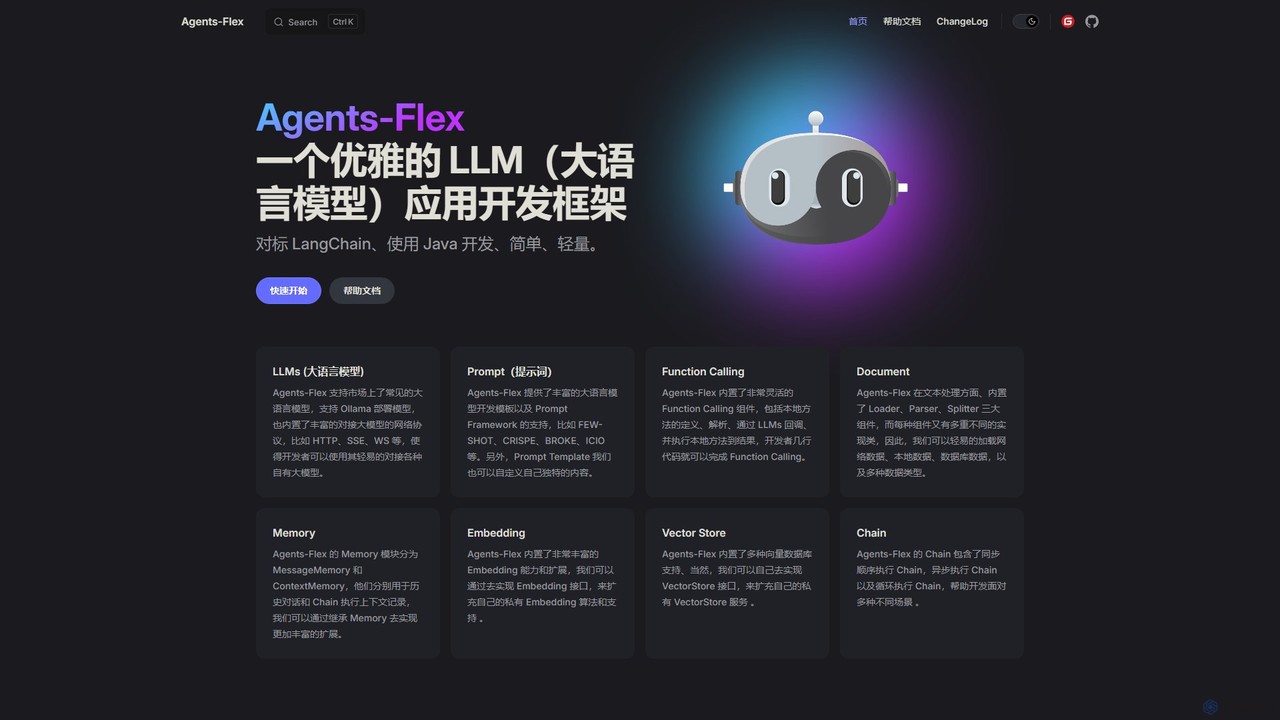
Agents-Flex is an open-source Java framework for building LLM-powered applications. As a lightweight and elegant alternative to LangChain, it simplifies development with a highly extensible architecture. It supports a wide range of LLMs, vector databases, and advanced features like function calling, RAG, and agent orchestration. Its framework-agnostic nature and low JDK requirement (8+) make it a versatile choice for any Java developer.

Llm Ops
Visits 7.9KFavorites 107Likes 115

About Ai Infrastructure

AI Infrastructure provides the foundational hardware, software, and platforms necessary to build, train, deploy, and manage artificial intelligence models at scale. It encompasses specialized computing resources like GPUs, scalable data storage, and MLOps frameworks that streamline the entire machine learning lifecycle. This infrastructure is crucial for handling the immense computational and data requirements of modern AI, enabling developers and organizations to move from experimental models to production-grade applications efficiently. It acts as the essential power grid and plumbing for any serious AI development effort.

Core Features

  • GPU/TPU Compute Provisioning: Provides on-demand access to specialized processors optimized for the parallel computations required in deep learning.
  • MLOps Platforms: Offers integrated toolchains for automating model training, versioning, deployment, and monitoring (CI/CD for AI).
  • Scalable Data Storage: Delivers high-throughput storage solutions designed to handle petabyte-scale datasets for model training.
  • Model Serving Frameworks: Enables efficient deployment of trained models as scalable, low-latency APIs for real-time inference.
  • Data Processing & Labeling Tools: Includes services and frameworks for preparing, cleaning, and annotating large datasets to ensure model quality.

Use Cases

AI Infrastructure is primarily used by Machine Learning Engineers, Data Scientists, and AI Researchers within technology companies, research institutions, and large enterprises. It is fundamental for projects like training large language models (LLMs), developing computer vision systems for autonomous vehicles, or deploying real-time fraud detection algorithms in the financial sector. Any organization building custom AI solutions, rather than just using off-the-shelf AI tools, relies on this infrastructure.

How to Choose

When selecting AI Infrastructure, consider four key factors. First, evaluate the available computing power, specifically the types of GPUs or TPUs offered and their performance. Second, assess the MLOps capabilities for automation and lifecycle management. Third, analyze the cost structure, comparing pay-as-you-go models with reserved instances for long-term projects. Finally, check for compatibility with your preferred machine learning frameworks like PyTorch or TensorFlow and integration with your existing cloud ecosystem.

Featured tool rankings

Ai Infrastructure use cases

1

Training a Large Language Model (LLM)

An AI research lab needs to train a new foundation model from scratch. They utilize an AI infrastructure provider to provision a cluster of hundreds of high-performance GPUs. The platform allows them to manage a multi-terabyte text dataset, use distributed training frameworks to accelerate the process, and leverage an MLOps dashboard to track experiment metrics, manage checkpoints, and compare model performance. This setup reduces the training time from months to weeks and provides the necessary scalability to handle massive model parameters.

2

Deploying a Real-time Recommendation Engine

An e-commerce company wants to serve personalized product recommendations to millions of users. Their ML engineers use a model serving platform within their AI infrastructure to deploy a trained recommendation model as a scalable API. The platform handles auto-scaling to manage traffic spikes during sales events, provides low-latency inference to ensure a smooth user experience, and offers monitoring tools to detect model drift or performance degradation. This allows them to maintain a high-quality, responsive recommendation service without managing the underlying server complexity.

3

Building a Computer Vision Data Pipeline

An autonomous vehicle company collects petabytes of sensor data daily. Data scientists use AI infrastructure to build an automated data pipeline. This involves using scalable object storage to house the raw data, distributed computing frameworks to preprocess and transform it, and integrated data labeling services to annotate images for training. The infrastructure's ability to process massive datasets in parallel is critical for iterating on perception models quickly and improving the vehicle's safety and reliability.

4

Fine-tuning a Model for Enterprise Use

A financial services firm wants to use a generative AI model for internal knowledge management, but it needs to be trained on their proprietary data. They use a managed AI platform that provides a secure environment for fine-tuning. The infrastructure ensures data privacy and compliance. The MLOps tools allow them to version control the fine-tuned models, run evaluations to prevent harmful outputs, and deploy the specialized model as a secure internal API for employee use, all within a controlled and auditable environment.

5

Managing the Lifecycle of Multiple ML Models

A marketing technology company operates dozens of models for ad bidding and customer segmentation. Their DevOps team uses an MLOps platform to manage the entire lifecycle. The platform automates the retraining of models on new data, runs A/B tests to compare new versions against the current production model, and provides a central registry to track all deployed models. This systematic approach ensures models remain accurate and allows the team to manage a complex portfolio of AI services efficiently.

6

Providing AI-as-a-Service via API

An AI startup develops a proprietary algorithm for audio transcription. To monetize it, they use AI infrastructure to package the model into a secure, reliable, and scalable API. The infrastructure provider handles user authentication, rate limiting, billing integration, and provides a developer portal with documentation. This allows the startup to focus on improving their core AI model while the infrastructure handles the complexities of delivering it as a commercial service to thousands of developers and businesses.

Ai Infrastructure FAQ

What is AI Infrastructure?

AI Infrastructure is the complete set of foundational technologies used to build, train, and run AI models. It's not the AI application itself, but the underlying 'factory' that makes it possible. This includes specialized hardware like GPUs and TPUs for computation, scalable storage for massive datasets, high-speed networking, and software platforms like MLOps for managing the entire AI lifecycle from development to production.

How do I choose the right AI Infrastructure provider?

Choosing the right provider depends on your specific needs. Consider these factors:

  • Compute Requirements: Do you need access to the latest, most powerful GPUs (like NVIDIA H100s) for training large models, or are more cost-effective options sufficient for inference?
  • Scalability: Can the platform easily scale your resources up or down based on demand?
  • MLOps Tooling: Does the provider offer a comprehensive suite of tools for experiment tracking, model versioning, and automated deployment?
  • Cost: Compare pricing models. Pay-as-you-go is flexible for experimentation, while reserved instances can be cheaper for long-term, predictable workloads.
  • Ecosystem: How well does it integrate with your existing data sources, cloud services, and preferred ML frameworks (e.g., PyTorch, TensorFlow)?
What's the difference between AI Infrastructure and a pre-trained AI model?

The difference is like that between a car factory and a car. AI Infrastructure is the 'factory'—it's the entire collection of hardware (GPUs), software (MLOps), and services needed to build, train, and operate AI. A pre-trained AI model (like GPT-4) is the 'car'—a finished product created using that infrastructure. You use infrastructure to create new models, fine-tune existing ones, or run them for your applications. You use a pre-trained model to perform a specific task, like generating text or analyzing images.

What are the key components of AI Infrastructure?

AI Infrastructure is typically composed of several key layers:

  • Compute: This is the engine, primarily consisting of Graphics Processing Units (GPUs) or Tensor Processing Units (TPUs) that are highly efficient at parallel processing tasks common in AI.
  • Storage: High-performance, scalable storage systems (like object storage) are needed to hold and quickly access the massive datasets required for training.
  • Networking: High-speed, low-latency networking is crucial to connect compute nodes and storage, especially for distributed training across many machines.
  • MLOps/Software Platform: This layer includes tools for data management, experiment tracking, model versioning, automated deployment (CI/CD), and performance monitoring.
Who needs to use AI Infrastructure tools?

AI Infrastructure is essential for professionals who are actively building, training, or managing AI models, rather than just using AI-powered applications. Key users include:

  • Machine Learning Engineers: They build and maintain the production systems that run AI models.
  • Data Scientists: They use the infrastructure to experiment with data, build, and train models.
  • AI Researchers: They require massive computational power to train and test new, state-of-the-art architectures.
  • DevOps/MLOps Engineers: They focus on automating the deployment, scaling, and monitoring of models in production environments.

It is generally not intended for business end-users, marketers, or content creators who consume AI services through a finished application.